In late August 1941, a military chaplain attached to the German 295th Infantry Division was led to a building in the occupied Ukrainian town of Bila Tserkva. German soldiers stationed nearby had drawn his attention to the site, disturbed by a sound that had not stopped since noon the previous day: the crying of children. When the chaplain and a Catholic colleague entered, they found conditions they would later describe as unbearable. Around ninety Jewish children, from infants only months old to seven-year-olds, lay or sat on the floor covered in excrement.
Flies covered the legs and lower bodies of the half-clothed children. Some of the older ones scratched lime wash from the walls and ate it. The smallest cried and moaned constantly. In an adjacent room, several women were held, one carrying an infant.
Soldiers told the chaplain that three truckloads of children had already been taken away that day under the supervision of an SD officer. The children who remained were the sons and daughters of Jews who had already been executed. One soldier remarked that he himself had children at home. The scene had not come about by accident.
It was the final stage of a massacre that had begun two days earlier, and its outcome still hung in the balance. Whether those children lived or died depended on a chain of command that reached from the building in Bila Tserkva to Field Marshal Walter von Reichenau, commander of the German Sixth Army. The Second World War had begun on September 1st, 1939, when Nazi Germany invaded Poland. On Sunday, June 22nd, 1941, under the code name Operation Barbarossa, Germany invaded the Soviet Union.
What followed was an unparalleled campaign of brutality. As the German military pushed eastward, Nazi forces—particularly the SS and its mobile killing units, the Einsatzgruppen—systematically targeted civilians, especially Jews, communists, and other groups labeled undesirable by Nazi ideology. Entire villages were annihilated in mass executions, and millions of Soviet prisoners of war faced starvation, forced labor, and execution without trial. Among the places caught in this expanding campaign of annihilation was Bila Tserkva, a town of about 35,000 inhabitants situated roughly fifty miles south of Kiev.
The German Sixth Army captured the city without resistance on July 16th, 1941, during its rapid advance toward the Ukrainian capital. The occupation did not bring stability or civilian administration. Instead, it opened the way for systematic mass murder. Shortly after the town was taken, a small SS detachment entered the area.
It operated as a Teilkommando, a subunit drawn from Einsatzgruppe C, one of the mobile killing formations created even before the invasion of the Soviet Union by the Security Police and the SD, the intelligence agency of the SS and the Nazi Party. Einsatzgruppe C was responsible for enforcing so-called political security behind the front lines. In practice, this meant the targeted murder of Jews, communists, and anyone defined by Nazi ideology as undesirable or dangerous. Although relatively small in number, these units were composed of trained and experienced killers.
In the first six months of the war against the Soviet Union, the Einsatzgruppen collectively murdered nearly 500,000 people, the overwhelming majority of them Jews. The Teilkommando operating in Bila Tserkva was led by SS-Obersturmführer August Häfner. It consisted of members of Einsatzgruppe C, a platoon of the Waffen-SS, the military branch of the SS, and auxiliary forces recruited locally from Ukrainian collaborators. Between August 19th and 20th, 1941, Häfner and his men carried out mass executions in which nearly the entire adult Jewish population of the town was murdered.
The Sixth Army provided logistical support for these killings, providing drivers, guards, weapons, and ammunition. A German army officer cadet who observed these shootings later provided a detailed account of what he witnessed. “I saw that in front of a deep pit about nine girls or women were kneeling. They were facing the pit.
Another nine girls were waiting nearby. I was particularly struck by the calmness and discipline of these people. Behind the girls kneeling in front of the pit stood two soldiers per person. They were SS men.
On the command of the senior officer, they shot them in the head with carbines. The people fell forward into the pit. Sometimes they turned over and sometimes one could see the top of the skull fly off. The executioners were splattered with blood.
They fired from a distance of about 5 m. It was a terrible sight. I recall that the senior SS man fired into the pit with a submachine gun, stepping up to its edge. Later, when the iron gates were opened, I approached the pit.
In front of the grave were places where blood had pooled. I did not descend into the grave. The pit was about 7 to 8 m long, a little over 2 m wide, and several meters deep. Inside, corpses lay in layers covered with earth.
”
He continued: “While I stood by the pit, an SS man was still walking around it, finishing off the wounded with shots. On that first evening, I saw about 162 people shot in this manner. Each time, nine people were killed while the next nine had to wait to be brought forward. The people to be shot moved like a procession toward the grave, quietly and calmly, meeting death.
Throughout the entire execution, I saw only two women who were crying. The executions always took place in the evenings around 6:00. I was in Bila Tserkva for about 6 weeks and personally witnessed six executions. During those about 800 to 900 people may have been shot.
Even today I recall the full picture of this. I myself held in my hand a piece of scalp with gray hair that lay not far from a grave. ”
The women were shot first. As far as the cadet could recall, he saw two children after the murder of the adult Jewish population of Bila Tserkva.
The killings continued with the systematic execution of the town’s youngest survivors. On August 20th, 1941, approximately ninety Jewish children, ranging in age from a few months to seven years old, were being held in a building in the town under guard. Their parents had been shot the previous day. The children cried without interruption from noon onward.
The chaplains who entered the building reported their observations to the local commandant, but responsibility lay with higher authority. Unable to locate the field commandant, they submitted a written report to the head of the garrison, the commander of the 295th Infantry Division. The matter was then handled by the division’s chief of staff, Oberstleutnant Helmuth Groscurth, in consultation with representatives of the SD. Groscurth tried to prevent the killing and forwarded an inquiry up the chain of command.
The final decision came from Field Marshal Walter von Reichenau, then commander of the Sixth Army. He rejected the chaplains’ and Groscurth’s objections and confirmed that the execution of the children was to proceed, stating that the action already begun must be properly carried out through to its conclusion. The murder of the children was later described in interrogation testimony given by August Häfner. He stated that he had been ordered by SS-Standartenführer Paul Blobel to have the children shot.
Blobel was commander of Sonderkommando 4a, a smaller killing unit which was part of Einsatzgruppe C. Häfner testified that he objected, questioning how young soldiers could be ordered to shoot small children, and suggested that the Ukrainian auxiliary police carry out the killings instead. This proposal was accepted. According to Häfner, a pit had been dug in advance by German soldiers.
The children were transported to the execution site on a tractor. Ukrainian auxiliaries stood nearby, visibly trembling. The children were taken from the vehicle, positioned at the edge of the pit, and shot so that they fell directly into it. Häfner recalled the screaming as unimaginable and stated that some of the children were shot four or five times before they died.
The executions took place in the late afternoon, around three or four o’clock, on the day following the negotiations with military command. With the murder of these children, the killings in Bila Tserkva reached their final and most explicit stage. It is estimated that more than 5,000 Jews were murdered in Bila Tserkva during the German occupation. Though many of those responsible for the Bila Tserkva massacre never faced trial, justice, or at least reckoning, eventually caught up with some of the perpetrators.
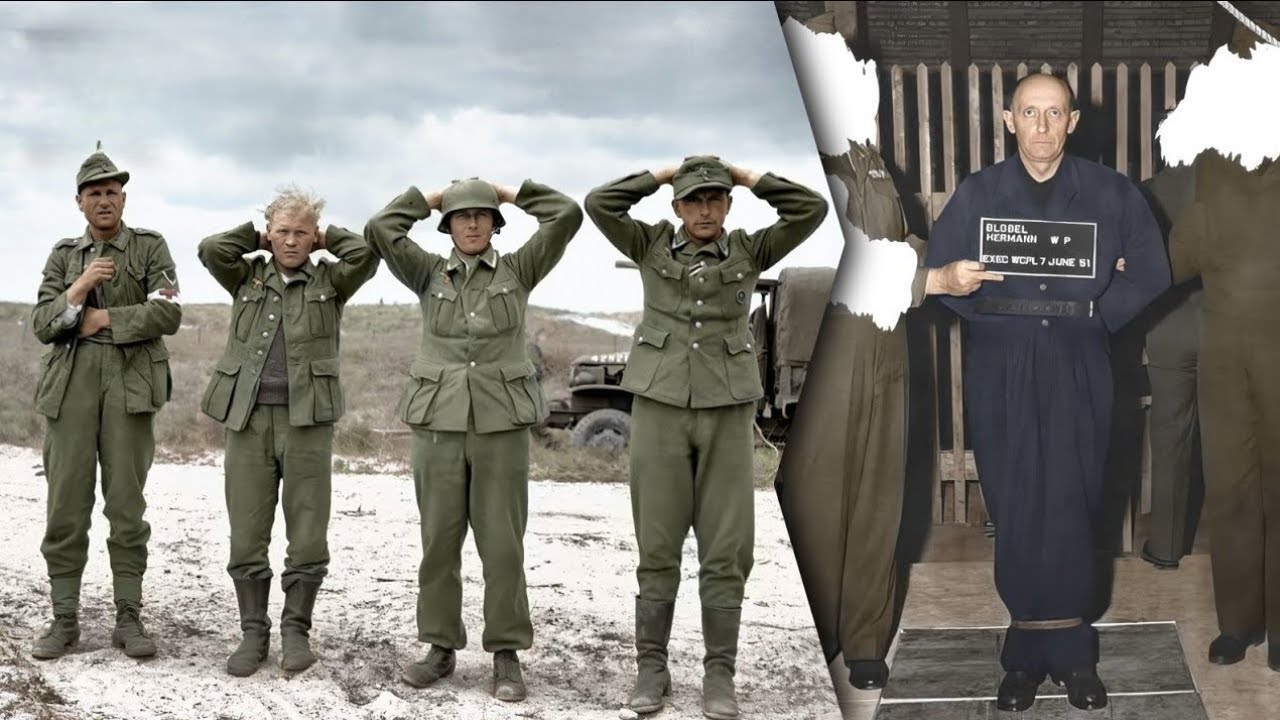
Paul Blobel, one of those directly involved, was prosecuted after the war during the Einsatzgruppen trial, one of the subsequent Nuremberg proceedings. Convicted of war crimes and crimes against humanity, he was sentenced to death and executed in 1951. Field Marshal Walter von Reichenau, commander of the German Sixth Army, never stood trial. In January 1942, he suffered a heart attack on the Eastern Front, followed by a fatal stroke during emergency transport to Germany, and died shortly thereafter.
The Sixth Army itself, once regarded as the Wehrmacht’s finest field formation, met destruction at Stalingrad, where between January 31st and February 2nd, 1943, it surrendered to the Red Army. German losses amounted to 147,200 killed and wounded and over 91,000 soldiers captured, including 24 generals and approximately 2,500 officers. Of those taken prisoner, only 5,000 to 6,000 would ever return to Germany after the war.
The rest perished in Soviet captivity, dying slowly from hunger, disease, exhaustion, and exposure in prison camps scattered across the frozen interior of the Soviet Union.






