At 2:30 on the afternoon of August 4th, 1971, three armed men walked through the front doors of the First National Bank of Anchorage’s branch in Seward, Alaska. Paul Thomas Stavenjord, Robert Garner Jet, and Randall Morris Simmons each carried weapons. Jet took position at the entrance with a shotgun while Stavenjord and Simmons, both armed with pistols, ordered employees and customers to lie face down on the floor. The robbery unfolded with terrifying efficiency.
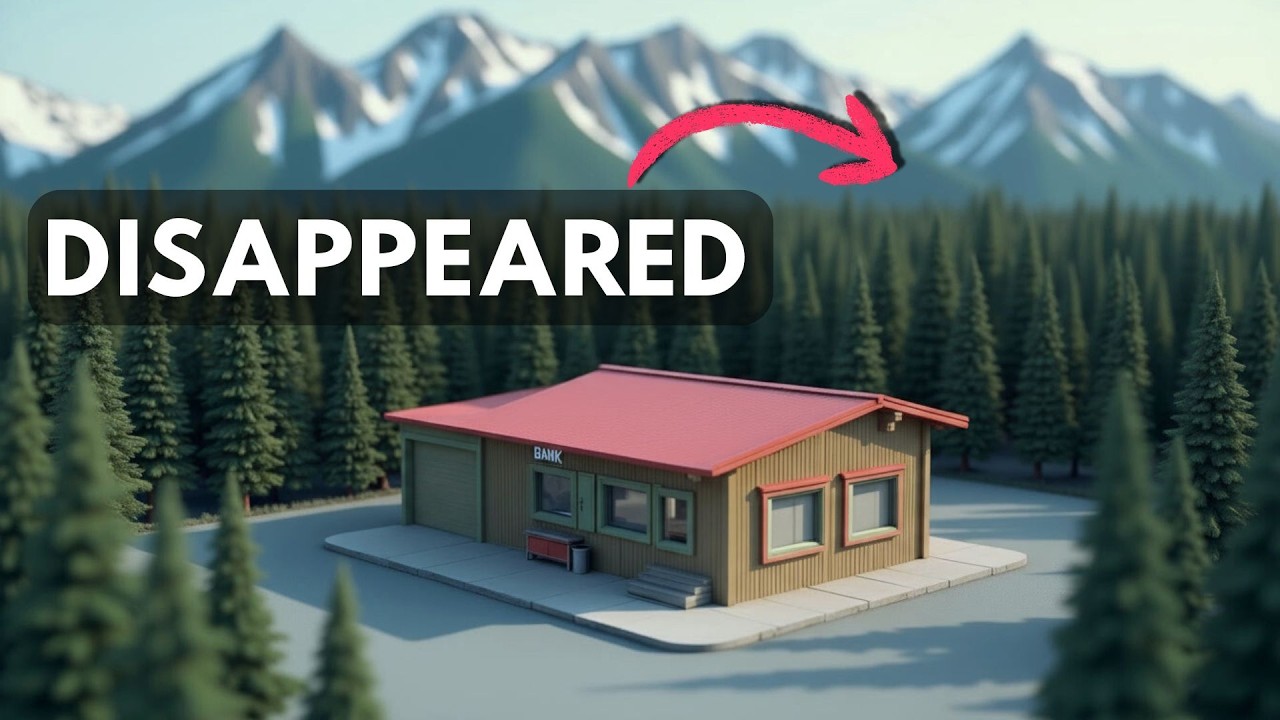
The trio forced the bank manager to open the vault and stuffed cash into a large rubberized bag. In less than five minutes, they made off with $150,000—the equivalent of over a million dollars today—the largest bank robbery in Alaska’s history. But the robbery turned out to be the easy part. Seward was a quiet fishing town pressed between towering mountains and the frigid waters of Resurrection Bay.
A dead end in every sense of the word: one road in, one road out. For most people, that isolation was part of the town’s charm. For three young criminals with a dangerous plan, it would prove to be their downfall. Stavenjord, born in 1951, had spent his teenage years bouncing between juvenile detention centers and courtrooms.
By age 20, he was already a seasoned criminal with a rap sheet that included breaking and entering, car theft, and armed robbery. Nothing, however, had prepared him for what he was about to attempt. The plan seemed simple enough. The bank sat right in downtown Seward.
How hard could it be for three armed men to walk in, clean out the tellers, and disappear into the Alaskan wilderness? They had weapons. They had a getaway car. And they had what they thought was the perfect escape route.
What they didn’t have was common sense. Lieutenant Donald Riley sat in his police cruiser across the street from the bank, having responded to a report that something strange was happening inside. He watched and waited, knowing that confronting armed robbers on a busy street could endanger innocent lives. Inside the bank, Jet spotted the police presence and shouted to his partners to hurry.
As the robbers burst out and ran to their stolen getaway car—a tan and white 1964 Chevy Nova—their problems were just beginning. Riley gave chase, along with several civilians who had witnessed the robbery. The high-speed pursuit wound through Seward’s streets at speeds reaching 60 miles per hour. Then came the moment that would define everything that followed.
Instead of trying to outrun the police on the highway, the three men abandoned their car at the base of towering Mount Marathon and fled into the wilderness, carrying their heavy bag of stolen money. They thought they were being clever. They thought the mountains would hide them. They had no idea they had just trapped themselves in one of the most unforgiving landscapes on Earth.
The Kenai Mountains surrounding Seward present extreme hazards to those lacking proper preparation and equipment. The steep ravines, thick brush, loose rock, and treacherous terrain have claimed the lives of many experienced hikers and mountaineers. For three young criminals carrying nearly forty pounds of stolen cash, it was a catastrophe in the making. Stavenjord, Jet, and Simmons had planned the bank robbery meticulously, but their escape plan was laughably naive.
They believed they could hike over the mountains to the Kenai Peninsula and then make their way north. Stavenjord dreamed of settling near the Yukon River to live as a trapper. It was a fantasy that would quickly meet the harsh reality of Alaska’s wild frontier. Within hours of entering the wilderness, the trio realized their mistake.
The money they had risked everything to steal became an anchor, dragging them down. Exhausted and unable to make progress with their heavy load, they made a desperate decision: they stashed the money in a thicket of alders, planning to return for it later. Back in Seward, one of the largest manhunts in Alaskan history was getting underway. Alaska State Troopers, led by Captain Dan Church, coordinated with FBI agents who had rushed to the scene.
They leased a helicopter from Anchorage and brought in a tracking dog—an eight-year-old German Shepherd named Heit. The Civil Air Patrol flew search missions until bad weather grounded them. In total, twenty-five law enforcement officials and numerous volunteers scoured the wilderness around Mount Marathon. They found the abandoned getaway car quickly enough, along with several sticks of dynamite the robbers had planned to use as a diversion.
But the men themselves seemed to have vanished into thin air. The decision to split up came on the evening of August 5th, after a cold, miserable night on the mountain. If they couldn’t escape together, maybe individually they could blend in with the population and find a way out of town. It was their last desperate gamble.
Stavenjord, carrying $580 in cash and the . 380-caliber Browning automatic he had used in the robbery, set off on his own. Jet and Simmons stayed together, hoping their combined efforts might succeed where the group had failed. Near midnight on Thursday, August 5th, Police Chief William T.
Bagnell was fighting exhaustion after working more than fifteen hours straight. He could have gone home. He could have left the search to others. Instead, he decided to check one more area: the woods near the country store on the Seward Highway.
Sitting in his patrol car in the rain, Bagnell caught movement out of the corner of his eye. There, stepping out of the woods onto the highway, was Paul Stavenjord. Stavenjord was so focused on his own misery that he failed to notice the police cruiser parked just fifty feet away. When Bagnell called him over, Stavenjord offered no resistance.
The fight had gone out of him completely. A search revealed the pistol, the cash, ammunition, and what was described as a dagger. The mountain escape had ended in complete failure. With Stavenjord in custody, the net quickly closed around his accomplices.
The authorities now had a name, and with the name came a criminal history that led them straight to Jet and Simmons. The pair had stayed together after the split, but they too were cold, hungry, and desperate when they finally gave up on their mountain escape and returned to Seward. The exact details of their capture vary. Some reports say they were trying to mingle with other citizens.
Others claim they were seeking help getting out of town. One colorful account has them captured at a local diner while eating chili. Regardless of how it happened, by Friday morning all three members of the gang were behind bars in the Seward jail. Their great escape had lasted just three days.
The money they had risked everything to steal was recovered and returned to the bank. The aftermath moved swiftly through the legal system. Federal charges were filed, and the three men were transported to Anchorage for arraignment, facing the prospect of long federal sentences. All three eventually accepted plea deals, each receiving six years in prison.
But this was just the beginning of Paul Stavenjord’s story. While his accomplices would serve their time and largely fade from public attention, Paul had bigger plans. He was going to turn his life around. He promised he was going to go straight.
And for more than twenty years, it looked like he might actually succeed. When Stavenjord walked out of the federal penitentiary in Lompoc, California, in 1975, he was a changed man—at least that’s what he told everyone, including himself. The bank robbery had been a youthful mistake, he said. He was older now, wiser.
He’d learned his lesson. For the next two decades, it seemed like he had. Paul took a job with the Alaska Railroad, repairing and inspecting tracks. It was honest work, hard work, and he was good at it.
For the first time in his life, he was building something instead of tearing it down. He met Peggy Hogerty, a waitress who saw something in the reformed bank robber that others might have missed. They married and together built a life in the wilderness near Chitina, a remote area accessible only by train, snow machine, or three- or four-wheeler. It was the kind of isolation that might drive some people crazy, but for Paul, it was perfect.
The couple lived in a dry cabin with no electricity, no running water, and no connections to the outside world beyond the occasional train whistle. They had two children together—a daughter and son, born in 1984. Paul threw himself into the role of father and provider. During those quiet years, he also discovered an artistic side no one could have predicted.
He began casting small pewter animals and buttons, intricate work that required patience and skill. He carved wooden flutes and taught himself to play them, even composing his own music. His scrimshaw work on ivory, bone, and antlers was beautiful enough to sell in souvenir shops at the Alaska Fur Rendezvous. For eleven years, this was Paul’s life in Chitina.
He worked on the railroad, created art, played music, and raised his children in the Alaskan wilderness. It was a redemption story that seemed genuine: the bank robber who found peace in the Last Frontier. But even paradise has its problems. By the early 1990s, Peggy had grown tired of the isolation.
Living without modern conveniences was romantic in theory, but the reality of no electricity, no running water, and no school for the children wore her down. She wanted a different life, one with more connection to the outside world. Paul, perhaps recognizing that his wife’s happiness mattered, agreed to move. They bought two and a half acres in Trapper Creek and built a cabin with a generator for electricity, though still no running water.
Paul even took on additional work, caring for special education children during their school bus rides. But the marriage couldn’t survive the changes. In 1991, Paul and Peggy separated and divorced. Peggy gained custody of both children, and Paul found himself alone for the first time in nearly two decades.
The divorce was amicable. They remained friends, and Paul stayed active in his kids’ lives. But during the divorce proceedings, Peggy told the court that Paul hadn’t supported her emotionally or financially. While she washed dishes and cleaned houses to supplement their income, he lost money working on his crafts.
It was a harsh assessment, but the split remained friendly. Still, Paul seemed to be managing. He had his art, his music, his relationship with his children. He’d successfully stayed out of trouble for more than twenty years.
The bank robber who had once made headlines was now just a middle-aged man trying to make his way in the world through honest work and creative expression. Then came Memorial Day weekend, 1997. Rick Bier and Debbie Rehor thought they had found their slice of paradise in the remote wilderness near Chitina. Rick, a 48-year-old electrician and Vietnam veteran, had inherited land homesteaded by his father.
Debbie, 40 years old, worked in customer service for the Matanuska Electric Association. Together they had built a large cabin on the property—their dream retirement home—where they could escape on weekends. The cabin was eight miles from the Parks Highway, accessible only by four-wheeler in the summer and snow machine in the winter. Their nearest neighbor, approximately one mile away, was Paul Stavenjord.
It should have been a peaceful arrangement: two parties living quietly in the vast Alaskan wilderness. But tensions had developed between the neighbors. Rick and Debbie suspected Paul of stealing fuel from their cabin. When Rick sold Paul a cellular telephone antenna, Paul helped himself to a cable that wasn’t part of the deal.
When Rick demanded fifty dollars for the cable, Paul cut it into pieces before returning it. Rick also suspected Paul of taking a snow machine and a . 22-caliber rifle from their property. Rick Bier was a big man with what’s been described as a hot temper, and he confronted Paul about the thefts.
But the issues were never resolved, and the bad blood between the neighbors continued to fester. Memorial Day weekend 1997 was supposed to be a quiet getaway for Rick and Debbie. Rick headed to the cabin a day early, and Debbie followed on Friday after work. She parked near the Parks Highway, where Rick met her on his four-wheeler, and together they headed to the cabin.
Both planned to return to work on Tuesday. But when neither showed up, their employers and co-workers found their absence strange. Debbie’s boss contacted her brother, Don Tidwell, and the alarm bells immediately went off. His sister was reliable, responsible.
She would never disappear without a word. Tidwell rushed to the remote cabin to check on Rick and Debbie. What he found was deeply troubling. The couple’s two dogs were locked inside the cabin, obviously unfed for days.
They had gone to the bathroom inside and were clearly distressed. Tidwell knew his sister and brother-in-law would never abandon their pets. Fearing the worst, Tidwell walked to Paul’s cabin to ask if he had seen Rick and Debbie. Paul’s response was strange.
He claimed he and Rick had argued and hadn’t spoken in over a year. But Tidwell picked up what he later described as a “strange vibe” from Paul. As Tidwell continued searching, he heard footsteps behind him on the trail. Turning, he saw Paul Stavenjord following him, claiming he had decided to join the search.
The encounter left Tidwell deeply unsettled. He was convinced Paul knew more about Rick and Debbie’s disappearance than he was admitting. That night, Tidwell stayed in Rick and Debbie’s cabin with his gun nearby, certain something terrible had happened to his relatives. On Wednesday morning, Tidwell contacted the Alaska State Troopers and reported Rick and Debbie missing.
The troopers responded immediately, and what they found confirmed Tidwell’s worst fears. Rick Bier’s body was discovered on May 29th in a creek two miles from his cabin, two hundred feet from his abandoned four-wheeler. He had been shot in the head, execution style, at point blank range. There was no sign of Debbie, and her four-wheeler was missing.
A week later, on June 5th, Alaska State Troopers made another grisly discovery. Debbie’s body was located downstream from Rick, partially covered with grass and tree limbs. She was naked from the waist down and had been shot in the head. An autopsy revealed she had been subjected to rough sexual assault around the time of her death.
The evidence painted a horrifying picture. This wasn’t a robbery gone wrong or a neighbor dispute that had escalated. This was cold-blooded murder preceded by sexual violence. Stavenjord initially tried to establish an alibi, claiming he had been in Fairbanks during Memorial Day weekend.
He provided detailed information about restaurants where he had eaten and gas stations where he had stopped. But when investigators followed up, nothing checked out. No one remembered seeing him at any of the places he claimed to have visited. Then more damning evidence emerged.
Gavin Sawa, a 21-year-old who had been camping in the area, reported seeing smoke from Stavenjord’s cabin chimney during the time Paul claimed to be in Fairbanks. The timeline of Paul’s supposed trip was falling apart. When investigators asked Paul for a DNA sample, he initially refused. But faced with a court order, he allowed a trooper to swab his mouth.
Soon after providing the sample, Paul Stavenjord disappeared. Railroad workers reported seeing him walking along the tracks, clean-shaven after years of wearing a beard and mustache. A railroad security guard witnessed him crash a red four-wheeler into a bridge before running into the woods. When troopers examined the crashed vehicle, they discovered it was Debbie’s missing ATV.
Then the DNA results came back, and they were conclusive. The sample from Paul Stavenjord’s saliva matched the semen collected from Debbie Rehor’s body. Combined with the other evidence, it painted an undeniable picture of guilt. Warrants were issued charging Paul with first-degree murder of both Rick Bier and Debbie Rehor, as well as sexual assault.
But Paul Stavenjord had vanished into the same Alaskan wilderness that had defeated him twenty-six years earlier during his bank robbery escape attempt. This time, however, he was better prepared. Paul had spent decades living in the wilderness, learning its rhythms and secrets. The manhunt that followed was one of the most intensive in Alaska’s history.
But Paul remained elusive for over a month. Finally, on July 12th—nearly seven weeks after the murders—Paul Stavenjord called his attorney, Carmen Gutierrez, and arranged to surrender. He met with her in Anchorage before turning himself in to the Alaska State Troopers. Paul’s explanation for his weeks in hiding was straightforward.
He had returned to his cabin twice during the manhunt: once to retrieve Debbie’s four-wheeler, and again after the search had moved to other areas, when the security guard had waved at him. Paul thought the guard was a trooper and panicked, crashing the ATV and fleeing on foot. He then made his way to Fairbanks, staying there for a week, and traveled south to Homer, where he camped for two weeks before finally returning to his cabin and deciding to surrender. The trial that followed in April 1998 was closely watched.
Paul’s defense team, led by Carmen Gutierrez and Jim McComas, presented a narrative that was hard to believe. According to their version of events, Rick Bier had surprised his wife and Paul during a consensual sexual encounter in the wilderness. Paul claimed Rick started shooting when he discovered them, accidentally killing his own wife. Paul then shot Rick in self-defense.
The prosecution, led by Bill Estelle, characterized Paul’s testimony as lies. The evidence against him was overwhelming: the DNA match, the stolen four-wheeler, the lies about his alibi, and the implausibility of his self-defense claim. In a bizarre moment during the trial, Paul’s attorneys asked him to play the same song on his flute that he claimed to have played for Debbie before the alleged encounter. The judge dismissed the jury for this performance.
The jury deliberated for several days before finding Paul Stavenjord guilty on two counts of first-degree murder. He was sentenced to 198 years in prison, ensuring he would never again walk free. The bank robber who had vanished into Alaska’s wilderness in 1971 had returned as something far worse: a cold-blooded killer who destroyed not just his victims’ lives, but his own carefully constructed redemption story. Paul Thomas Stavenjord would spend the rest of his days behind bars.
In the end, the wilderness that had once defeated a young bank robber also hid the crimes of a middle-aged murderer. But Alaska’s vast spaces, while they conceal many secrets, can’t hide from justice forever.