On the night of April 22, 1944, George Lascelles was exactly where duty had placed him: an officer with the Grenadier Guards, on active service in Italy. Then the Germans seized him. For more than a year afterward, the man born sixth in line to the British throne—the first grandchild of King George V and Queen Mary—would be confined within Colditz Castle, the fortress the Reich set aside for the Allied officers it valued most. His royal lineage turned him into a trophy.
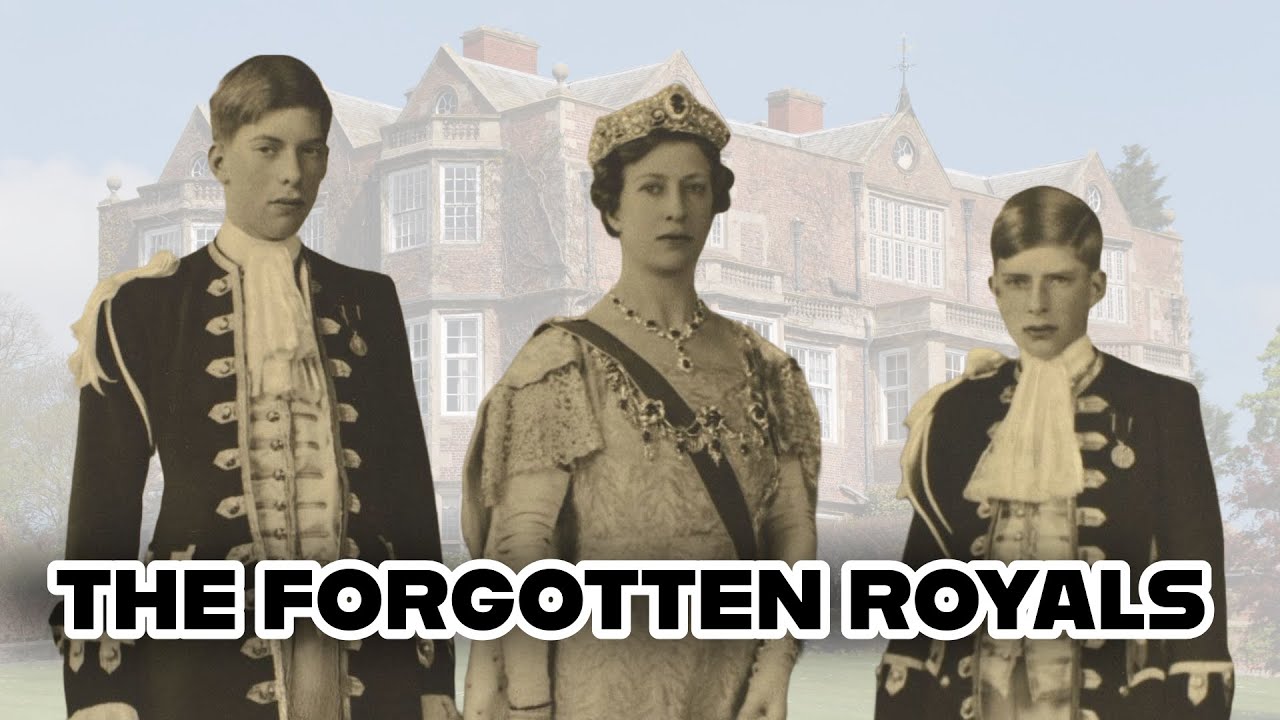
He would not lean on that lineage. He bore the long months of captivity with a quiet, unshakable composure that stayed with him for the rest of his days—long before he encountered the scandal that would eventually cost him his place in the Queen’s inner circle. Yet that tale reaches back well before the war. It starts with a princess and the two sons she raised amid privilege and expectation.
On February 7, 1923, at Goldsborough Hall in Yorkshire—a wedding present from King George V to his daughter Princess Mary and her husband Henry Lascelles—a son was born. He was christened George Henry Hubert Lascelles, and from his first breath his course was fixed by what others expected of him. As the sovereign’s first grandchild, George was more than a peer’s son. At birth he stood sixth in line to the throne.
He held no princely title, yet royal blood ran in his veins, and he stood to inherit the distinguished Harewood earldom. Princess Mary was fiercely devoted to her children, a hands-on mother within the rigid bounds of royal protocol. Young George grew up surrounded by wealth, but the privileges of his position came tethered to pressure. He was sent to Eton, where, like many boys of his station, his days revolved around riding, cricket, and tradition.
Even so, George was from an early age drawn more to books than to sport—a quiet onlooker in a world built on ceremony. A year after George arrived, a second boy followed. On August 21, 1924, Gerald David Lascelles was born, the spare in that ancient heir-and-spare arrangement. Yet Gerald would grow into something considerably less conventional.
If George was studious and reserved, Gerald was high-spirited and ungoverned. Raised in the same gilded halls, at Harewood and during court appearances, Gerald moved with greater liberty, never weighed down by the direct inheritance of a title or an estate. He loved fast cars, jazz, and defiance—the sort of aristocrat who felt more at ease at the races than at a state banquet. He occupied a respectable place within Britain’s upper circles, but Gerald never truly played the royal game.
In time he became an odd footnote in royal history—near enough to royalty to be counted in, yet distant enough to vanish whenever it became awkward. When the Second World War broke across Europe, both brothers entered the fight. George, ever the dutiful heir, was captured by the Germans in Italy in 1944 while serving with the Grenadier Guards. For more than a year he was held as a prisoner of war at Colditz Castle, the notorious fortress for high-profile Allied officers.
His royal standing made him a valuable prize, but he would not trade on it. In later interviews, George recounted the ordeal with stoic clarity, a stretch of time that tested not only his endurance but his very sense of self. Gerald, for his part, served with the Royal Armoured Corps, though his service drew far less attention. The war steadied both brothers.
Yet while George went back to public life and royal duties, Gerald took a different road—one of comparative obscurity but greater personal freedom. After the war, in 1949, George Lascelles made what appeared to be a respectable match. He married Marion Stein, a gifted Austrian Jewish concert pianist and the daughter of musician Erwin Stein. It was a modern pairing—an aristocrat wedding a commoner, and a Jewish one at that.
It was also deeply romantic. The couple were celebrated in intellectual and cultural circles. Their home at Harewood became a gathering place for music, the arts, and royalty. They had three sons: David, born in 1950, who would one day become the eighth Earl of Harewood; James, born in 1953; and Jeremy, born in 1955.
The Lascelles line seemed secure, forward-looking, and flourishing. Gerald’s private life, in the meantime, went its own way. In 1952 he married Angela Dowding, a glamorous West End actress, in a match some regarded as unconventional. Though she held no royal blood herself, Angela soon became a tabloid favorite—strikingly beautiful, modern, and unafraid of the spotlight.
They had one son, Henry Ulick Lascelles, born in 1953—another boy raised between titles and tabloid headlines. But in the 1960s, the fairy tale fractured. George began an affair with Patricia Tuckwell, an Australian-born violinist and former model widely known as Bambi. Their relationship was no hushed, discreet affair.
It burst into the headlines. At the time, George was still legally married to Marion. In 1967, George divorced her, setting off a royal scandal. Divorce, though increasingly common by the sixties, was still looked down upon by the royal family—especially among relatives so close to the Queen.
Making matters worse, George married Patricia only days after his divorce became final, and their son, Mark Lascelles, arrived mere months later. George became the first senior royal figure in modern history to divorce and remarry in such a public manner—a quiet act of rebellion that deeply embarrassed the monarchy. The Queen did not attend his second wedding. Nor did Princess Mary, who had died two years earlier, but who had reportedly disapproved of the affair.
The fallout did not leave Gerald untouched. In the 1970s, his marriage to Angela fell apart, and the couple separated before ultimately divorcing—yet another royal-adjacent scandal in a family that prized discretion. Gerald later married Elizabeth Colvin, a society figure, in 1978. Unlike George, Gerald never chased the limelight.
Instead, he followed his passion for motorsports, serving as president of the British Racing Drivers’ Club and becoming a familiar figure at Silverstone. He lived quietly in Sussex, often taken for an earl or forgotten altogether. His legacy was one of quiet defiance—a man born near a throne who chose his own course. Among Princess Mary’s grandsons, it was David Lascelles, George’s eldest son, who would come to shape the family’s future.
Born in 1950, David was educated at Eton and the University of York. A film and television producer by profession, he inherited Harewood House in 1997 and became the eighth Earl of Harewood. His productions centred on social issues, and he carried on his father’s artistic legacy at Harewood, opening the estate to the public and to cultural events. But David, too, inherited the family tradition of a complicated personal life.
He married Margaret Messenger in 1979, the daughter of a local doctor, and they had three children. Yet by the 1990s, their marriage had collapsed. He later married Diane Howse, an artist with whom he has a son. His children—Alexander Lascelles, Viscount Lascelles, and the Honourable Emily and Benjamin—carry the Harewood line forward, though none of them hold royal titles.
As the family moved further from the throne, the Lascelles became members of Britain’s nobility rather than official royals. So how are Princess Mary’s sons remembered within the royal story today? George, the seventh Earl of Harewood, died in 2011, leaving behind an extensive musical legacy after directing the Royal Opera House and chairing many cultural organizations.
His obituary described him as the most gifted of his generation. Even so, his scandal kept him permanently outside the Queen’s inner circle. Gerald, the youngest son, passed away in 1998, mostly forgotten yet deeply admired by those close to him. He had built a life in the shadows rather than the spotlight.
Together, they embody the quiet redrawing of royal lines, from crown to court, from palace to personal liberty. And their mother, Princess Mary, the composed Princess Royal, endures as a figure of grace, perhaps never knowing that her sons would eventually help shape a modern royal story through love, defiance, and quiet resilience. Two sons, one born to inherit, the other born to wander.
Both grew up in the gilded world of Windsor, yet were meant to write their stories beyond the palace walls.
