Mohamed Al-Fayed spent his life acquiring the symbols of belonging. Born in Alexandria in 1929 to a schoolteacher, he had sold Coca-Cola on the streets as a young man before climbing into the orbit of the Khashoggi family, the trusted financiers of Saudi royalty. His marriage to their daughter Samira ended in disgrace in 1956, and he was cast out of the grandest world he had ever entered. From that humiliation he built an empire, and he never forgave the world that had expelled him.
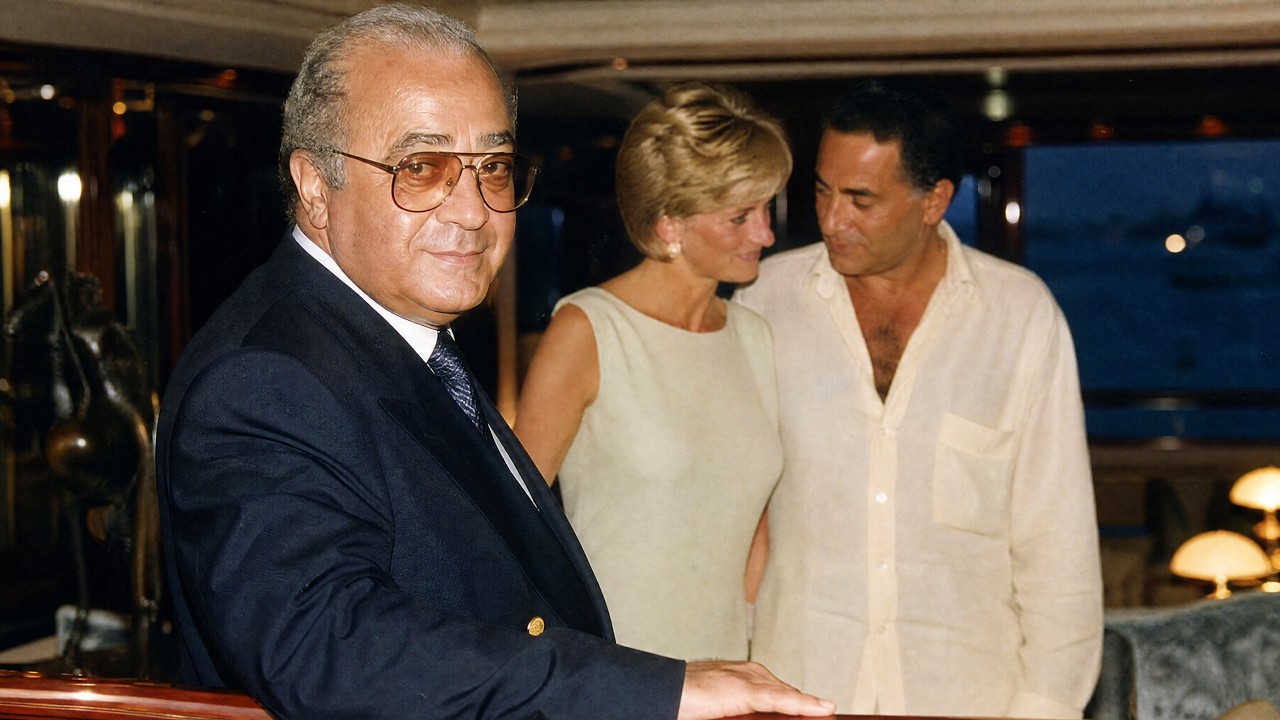
He bought the Ritz in Paris in 1979 for a reported $30 million and poured a quarter of a billion more into restoring it. He advised the Sultan of Brunei and purchased the Dorchester on his behalf. In 1985, after a bitter takeover battle, he acquired Harrods for £615 million. He bought a manor in Surrey, took up shooting and horses, and adopted the prefix Al-Fayed to suggest a lineage he did not possess.
Yet the British establishment let him understand that he remained a guest inside it. He applied for British citizenship three times and was refused each time. In 1990, a Department of Trade and Industry report concluded that the Fayed brothers had dishonestly represented their origins, wealth, and resources. No charges were ever brought, and he kept Harrods, but the finding defined his standing.
He responded by going to war with the establishment, revealing in 1994 that he had paid Conservative MPs to ask questions in Parliament. The scandal damaged the government, but it never bought him acceptance. His son Dodi was the product of the failed marriage. Born in Alexandria in 1955, he was educated expensively and remembered indistinguishably, dismissed by one director as mediocre and by his own producing partner as one of the laziest human beings he had ever come across.
His father installed him as chief executive of a film company that was actually run by someone else. The only credit that mattered was Chariots of Fire, which won Best Picture at the Oscars while the real producer, David Puttnam, publicly thanked the Fayeds for putting their money where his mouth was. Puttnam later said he had thrown Dodi off the production for supplying cocaine to the cast and crew. Dodi lived on an allowance of $100,000 a month, unearned, into his forties.
His father controlled him through alternating warmth and withdrawal. A producer who worked with the family described it as training a dog with a choke chain, a little freedom, then a pull. Dodi ran up debts his father refused to settle, was sued by American Express, and bounced checks. He proposed to model Suzanne Gregard, married her in 1986, and lost interest within eight months.
He bought another model a penthouse, then sued her when it ended. By 1997, he had never once been required to face the consequence of a broken promise. In the summer of 1997, Diana, Princess of Wales, was newly separated from the heart surgeon Hasnat Khan and under impossible press pursuit. Mohamed Al-Fayed offered her his compound above Saint-Tropez, Castel Saint-Thérèse, with a private jetty that kept cameras off the land while pushing every private moment out onto open water where long lenses could reach.
The holiday that July was genuinely happy. Diana’s sons remembered it as heaven, and Diana wrote warm letters to her darling Dodi. Mohamed had bought the Jonikal, a 64-meter superyacht, only weeks before. He had also just bought Fulham Football Club.
He summoned Dodi to join the holiday, and Dodi came as he always came. The father assembled the stage piece by piece: the villa, the jetty, the yacht, and the son. But Dodi was already with another woman. Kelly Fisher, an American model, believed she was engaged to him.
He had given her a sapphire and diamond ring, promised her $500,000 to give up modeling, and bought a $7. 3 million home in Malibu on July 2. When Diana arrived at Saint-Tropez on July 11, Dodi flew Kelly to the south of France and left her on a smaller boat called the Kujo while he spent his days on the Jonikal with the princess, returning to Kelly at night. She learned the truth the way the world did.
On August 10, a photograph of Dodi kissing Diana filled the front page of a British newspaper under the single word KISS, earning its photographer an estimated one to three million pounds. The following week, Kelly Fisher announced a lawsuit for breach of contract, saying they had been due to marry on August 9. She was still wearing the ring. Dodi died before the case went anywhere, and she withdrew it.
The photograph focused every paparazzo in Europe on the couple. Nobody has ever established how the photographer knew where to point his lens. The father’s own employees have been suspected, but no court or inquiry ever found it. What is certain is the consequence: it put a price on their privacy.
At the end of August, Diana and Dodi took a second cruise on the Jonikal. On the afternoon of the 30th, they flew to Paris. Dodi visited the jeweler Repossi and came away with a ring from a line called Tell Me Yes. Whether it was an engagement ring chosen for a proposal, or a last-minute gesture later dressed up as one, has never been resolved.
A senior assistant at the Ritz testified under oath that the engagement story had been built after the fact, and that Dodi had picked the cheapest ring alone. Diana’s butler testified that she would not have become engaged, and that she found the ring rather gaudy. Late that night, the couple left the Ritz by a service entrance while a decoy car drew the photographers to the front. Henri Paul, the hotel’s acting head of security, drove.
The bodyguard Trevor Rees-Jones sat in front. Diana and Dodi sat in the back. None of them wore seatbelts. Henri Paul’s blood later showed alcohol at three and a half times the French legal limit.
On the Pont de l’Alma underpass, at more than 100 kilometers an hour, the Mercedes struck the thirteenth pillar. Henri Paul and Dodi were killed instantly. Diana died at the Pitié-Salpêtrière Hospital at four in the morning. She was 36.
Dodi was 42. Mohamed Al-Fayed buried his son in Surrey within days. Then he began to rebuild the story. He insisted for the rest of his life that the couple had been engaged and that Diana had been pregnant.
He built memorials inside Harrods, a glass shrine holding photographs and a wine glass, and later a bronze statue of the couple dancing barefoot. He claimed the couple had been murdered by British intelligence on the orders of Prince Philip, because the royal family could not bear a Muslim marrying the Princess of Wales. Every claim was investigated and rejected. A police inquiry examined around 175 conspiracy allegations and found no conspiracy and no evidence of pregnancy.
The inquest, after hearing from 250 witnesses at a cost of more than £12. 5 million, returned a verdict of unlawful killing caused by the grossly negligent driving of the following vehicles and the Mercedes itself, naming the driver’s impairment by drink and the failure to wear seatbelts. The jury made no finding of an engagement. Lord Justice Scott Baker told the jury there was not a shred of evidence that Prince Philip had ordered Diana’s death.
The photographers who chased the car were convicted on appeal of invasion of privacy and fined one symbolic euro. In 2010, Al-Fayed sold Harrods for £1. 5 billion. In 2018, the new owners cleared away the memorials to Diana and Dodi.
The shop that he had bought to prove he belonged forgot him within a few years of his leaving it. Kelly Fisher married a Russian pilot, raised a daughter in the American South, and built an ordinary life. She is the only central figure still alive, and she has chosen for nearly three decades not to speak about that summer. Mohamed Al-Fayed died on August 30, 2023, at the age of 94, one day before the 26th anniversary of the crash.
He was buried near his son on the Surrey estate. After his death, a documentary aired allegations from more than 400 women of sexual assault, including several of rape, spanning his decades at Harrods. He was never charged, tried, or convicted of any of it in his lifetime. What remains is the story of a man who assembled an entire summer out of ambition, and then reassembled it out of grief.
He bought the villa, the yacht, and the son’s position aboard it, and when the summer ended in a tunnel, he built an engagement no court could find. The one thing he never had to construct was the genuine affection between two lonely people. It needed no jetty and no monument, and it was the first thing lost in the construction.






