The water off Mullaghmore was glass that morning, the kind of perfect Atlantic calm that holiday brochures promise and rarely deliver. Lord Mountbatten stood at the wheel of the Shadow V, his thirty-foot wooden boat, wearing his old fishing clothes, content in the ritual of it all. The plan was simple: motor out to the lobster pots, catch some fish for tea, breathe the sea air. A statement of defiance, really, that a lord of the realm would not be driven from his own holiday by the threat of terrorists.
At seventy-nine, he had survived torpedo attacks in war. He had told his security advisors, who begged him not to come to Ireland, that no one would want to kill an old man like him. The boat pulled away from the harbor wall, leaving a clean white wake in the blue water. Onboard were Mountbatten, his daughter Patricia, her husband John, the twin boys Nicholas and Timothy, aged fourteen, and Paul Maxwell, the fifteen-year-old local boy hired for the summer as a boat hand, thrilled to have a job helping a lord and admiral sail the bay.
The engine churned, mixing diesel fumes with salt air. The twins pushed toward the bow. The adults settled in the stern. The boat was about two hundred yards out, passing the last breakwater, when the world ended.
The sound was not a bang but a physical assault on the senses. Fifty pounds of gelignite, hidden aboard the Shadow V, detonated with a force that tore the wooden hull apart at thousands of feet per second. Witnesses on shore described a scene beyond imagination. One moment there was a boat; the next, a vast cloud of grey smoke, a fountain of water, and a hail of splintered wood raining from the sky.
The Shadow V had simply vanished. The blast was heard for miles. Windows rattled in the village of Mullaghmore. Birds scattered in panic.
At Classiebawn Castle, the sound echoed over the cliffs like thunder. Amanda Knatchbull heard it. Everyone heard it. The explosion had targeted the engine block, where Mountbatten stood.
The great earl, the last Viceroy of India, the man who had drawn the borders of India and Pakistan, died instantly. His legs were severed; his internal injuries were catastrophic. He was dead before he touched the water. His grandson Nicholas, fourteen years old, was also killed instantly, his small body shattered by the force.
Paul Maxwell, the boat boy who had been so happy to land a summer job, was dead too. The survivors struggled in water thick with debris and slick with oil. Patricia, Amanda’s mother, had been thrown clear of the boat. She was conscious, but her injuries were horrific.
Shrapnel had torn her face. Both legs were broken. Her lungs filled with water and smoke. Her husband John floated nearby, legs shattered.
Timothy, the surviving twin, screamed, blinded by the blast, burns covering his body. The elderly Lady Brabourne, John’s eighty-three-year-old mother, was still alive, bobbing weakly among the wreckage. Local fishermen, shaking off their shock, raced their boats toward the smoke. They pulled the living and the dead from the water.
It was a bitter, blood-stained harvest. They laid the bodies on the decks of their fishing boats, the same boats that normally carried crab and lobster, and hurried back to the harbor. Back at Classiebawn Castle, the first reports were confused. An accident, they said.
An engine failure. But Amanda knew the truth by instinct. The blast was too loud to be accidental. The silence that followed was too heavy.
When the confirmation came that it was an IRA bombing, her world collapsed. She was twenty-two years old. In the space of a heartbeat, her grandfather was dead. Her brother was dead.
Her grandmother was dying—she would pass away in hospital the next day. Her parents were critically injured. Amanda rushed to Sligo General Hospital. The scene there was chaos.
Doctors and nurses worked frantically to stabilize the survivors. Amanda walked into a waking nightmare. She saw her mother, the elegant Patricia, unrecognizable behind a mask of blood and bandages. She saw her father broken and sedated.
She saw her surviving brother, Timothy, in shock and pain. And she saw the bodies. She had to identify them. The man who had engineered her future, who had guided her hand toward the crown, was now a shattered wreck.
The brother she had played with only hours before was gone. It is impossible to overstate the psychological impact of that moment on Amanda Knatchbull. This was not grief. Grief is natural; it is part of the human contract.
This was trauma. This was political violence directed personally at her family. She understood, with a clarity that cut through her shock, why it had happened. They were not killed because they were wealthy.
They were not killed because they were landowners. They were killed because they were royal. They were killed because Mountbatten was a symbol of the British crown. The proximity to the throne—the very thing Charles was offering her—had killed her brother.
In a statement issued days later, the IRA claimed responsibility and called it an execution. They said Mountbatten was a legitimate target to draw attention to the British occupation of Northern Ireland. For Amanda, reading those words, the message was clear. The crown was a death sentence.
Amanda showed a composure that was frightening in its determination in the days that followed. With her parents incapacitated in intensive care, she became the pillar of the family. She took charge. She handled the press.
She dealt with the police. She found strength for her surviving brother. She was a Mountbatten woman, as her grandfather had raised her to be: strong, capable, unyielding. But something inside her had changed fundamentally.
The romantic haze of the Caribbean holiday, the mutual affection with Prince Charles, the glitter of palaces—all of it turned to ash. She looked at the engagement ring Charles had not yet given her and saw not a diamond but a target. Prince Charles heard the news while fishing in Iceland. He was devastated.
He wrote in his diary that life would never be the same again. He had lost his mentor and grandfather, the man who had been more of a father to him than Prince Philip. He was distraught, weeping openly, consumed by a mix of grief and a furious, helpless anger. He hurried back to Britain.
He wanted to see Amanda. He wanted to comfort her. Perhaps he thought this tragedy would bring them closer together. Shared grief, after all, is a powerful bond.
He imagined they would cling to each other in the storm. He was wrong. When they finally met in the aftermath, Charles found a different woman. The carefree girl of Eleuthera was gone.
In her place stood a survivor with haunted eyes. Amanda was compassionate. Yes, she was kind. But there was a wall between them.
She had seen the price of the game he was asking her to play. Lord Mountbatten’s funeral at Westminster Abbey was a grand state occasion. Kings and queens from across Europe attended. The full pageantry of British military ceremony was on display.
Charles walked behind the coffin, looking shattered. Amanda walked with her family, a mask of solemn grief on her face. But as the world watched the ceremony, Amanda was thinking of the empty seats. The place where Nicholas should have been.
The place where Paul Maxwell should have been. She did not see the soldiers lining the streets as an honor guard; she saw them as a security necessity. She saw the bulletproof glass. She saw the snipers on the rooftops.
She realized that if she married Charles, this would be her life forever. Every car ride, every holiday, every public appearance, she would scan the crowds for a gunman. She would check under her car for a bomb. She would wonder if her children would be the next victims, like Nicholas.
The bomb on the Shadow V had not just killed a viceroy. It had shattered the illusion of royal inviolability. It proved that castle walls were not high enough. In the quiet, painful months that followed, Charles pressed again for her hand.
He was desperate. He was lonely. He needed Amanda now more than ever. He believed that marrying her would be the highest tribute to Mountbatten’s memory.
It would complete the plan. It would be a victory for love over terror. He formally proposed a second time. He asked her to be his wife, to be Princess of Wales, to help him bear the burdens of monarchy.
Amanda looked at the man she loved as a cousin and a friend. And she looked at the institution that had just cost her half her family. She made the decision that would change the course of history. Winter 1979 in Britain was bleak.
The Winter of Discontent had just passed, leaving a nation exhausted by strikes, power cuts, and economic stagnation. But inside the gilded cage of the royal family, a different kind of winter had set in—a winter of grief and panicked ambition. Prince Charles was lost. At thirty-one, he was a man worn down by loss.
Mountbatten’s death had taken his compass, the only voice that had guided him through the treacherous waters of royal duty and personal desire. Now he sailed alone, and his desperation to fulfill his grandfather’s last wish—to marry Amanda—bordered on obsession. For Charles, the logic was unassailable. The IRA had tried to destroy Mountbatten’s legacy.
Marrying Amanda would be the ultimate act of defiance. It would prove the crown could not be broken. It would bind the two families together in a union sanctified by shared blood and shared trauma. He believed, with the naivety of a man who had never been told no, that Amanda would eventually change her mind.
He thought her hesitation was just grief, a temporary fog that would lift to reveal her destiny. But for Amanda, the fog had already lifted, revealing a scene that grew more terrifyingly clear by the day. In the months after the bombing, she spent her days in the quiet, sterile rooms of the hospital, watching her parents endure the slow, painful process of recovery. Her mother, once a vibrant beauty, now carried scars.
Her face was a map of the violence that had torn their lives apart. Her father was a shadow of his former self. Every time she looked at them, she saw the price of proximity to the throne. Charles visited her often.
He was kind, attentive, loving. He sat with her, held her hand, talked about the future. But there was a distance between them. Charles spoke of duty as a sacred obligation.
Amanda had come to see it as a hazardous occupation. When he spoke of public service, she thought of police protection officers, bomb sweeps, armored cars. Sometime in late 1979 or early 1980, the moment of truth arrived. The exact date and location remain secret, buried in the memories of the two people who were there.
But the outcome is part of the historical record. Charles pressed his suit. He asked Amanda to marry him. He offered her the world—the title of Princess of Wales, the future title of Queen, palaces, jewels, the adoration of millions.
Amanda looked at him. She loved him as a cousin, as a friend, as a suffering young man in a cruel world. But she did not love the cage. She said no.
And it was not a equivocal no. It was not a “not yet. ” It was a flat, final refusal. She explained her reasons with the brutal honesty Charles had always admired in her.
She told him that the self-effacement required by monarchy was absolute, and she was not prepared to make that sacrifice. She told him the shadows of the bomb were too long, that the fear of being a target would poison their lives. She told him, in essence, that she chose freedom over duty. Charles was stunned.
He was the most eligible bachelor in the world. Women threw themselves at him daily. The idea that the one woman he actually wanted, the perfect woman for the role, would refuse him was incomprehensible. He tried to argue.
He tried to persuade. But Amanda was immovable. She had seen the monster up close and refused to feed it. The refusal broke something inside Charles.
It was not just heartbreak. It was panic. Mountbatten’s plan was dead. His own life’s plan had been torn apart.
He was thirty-one, heir to the throne, and alone. The pressure from his father, Prince Philip, and from the press was unbearable. “Charles the Cha Cha,” the papers called him, wondering why he could not find a bride. The palace went into crisis mode.
They needed a substitute, and they needed one fast. But the criteria had changed. They could no longer look for a woman who was his equal. Amanda had proven that an equal would refuse.
They needed someone younger, more naive, someone who did not realize the price. They needed a blank canvas. Enter Lady Diana Spencer. The contrast between Amanda Knatchbull and Diana Spencer could not have been starker.
Amanda was twenty-two, educated, worldly, realistic, and cynical about royal life. Diana was nineteen, a dropout working as a kindergarten assistant, romantic and utterly dazzled by the idea of a prince. Where Amanda saw a target, Diana saw a fairytale. Where Amanda saw a cage, Diana saw a castle.
Diana’s engagement was swift, almost predatory in its speed. Charles met her in the summer of 1980, just months after Amanda’s final refusal. He was not in love with her. Not the way he loved the idea of Amanda, or the way he burned for Camilla Parker Bowles.
He saw her as a solution. She was aristocratic, a Spencer. She was a virgin—a non-negotiable requirement at the time—and she was good-natured, just as Mountbatten had advised. But most importantly, she was willing.
When Charles proposed to Diana in the nursery at Windsor Castle in February 1981, he was not seeking a soulmate. He was closing a business deal because the preferred candidate had withdrawn. Diana, young and fooled by the romance novels she adored, said yes immediately. She did not know she was the second choice.
She did not know she was filling a vacancy left by a woman who had fled the scene of the crime. The wedding of Charles and Diana on July 29, 1981, was the wedding of the century. But for those who knew the truth, it was a tragedy in fancy dress. Amanda Knatchbull was present.
She sat in St. Paul’s Cathedral and watched the spectacle unfold. It must have been a surreal, out-of-body experience. She saw the archbishop.
She saw the dress with its twenty-five-foot train. She saw the crowds weeping with joy, and she must have felt a profound and terrifying relief. She must have thought: “That could have been me. That dress could have been mine.
Those pressures could have been mine. ” As Diana stumbled over Charles’s names during the vows, Amanda knew the truth. Diana was not marrying a man. She was marrying an institution that devours people.
Amanda had stepped out of the line of fire. Diana had stepped into it, unaware. The years that followed were a confirmation of Amanda’s fears. The fairytale marriage of Charles and Diana unraveled with a speed and violence that shocked the world.
The press intrusion was relentless. Diana was hunted. Every outfit, every glance, every tear was analyzed, commodified, and sold. The “War of the Waleses” turned the monarchy into a soap opera.
In later accounts, Diana described her severe psychological suffering and the overwhelming impact of media intrusion. Amanda withdrew entirely from the royal spotlight. She gave no interviews. She did not become a royal rebel.
She simply went to work. She later worked in social care and charitable roles, largely out of the public eye. It was a poignant choice. The woman who could not save her brother from violence devoted her career to saving other children from harm.
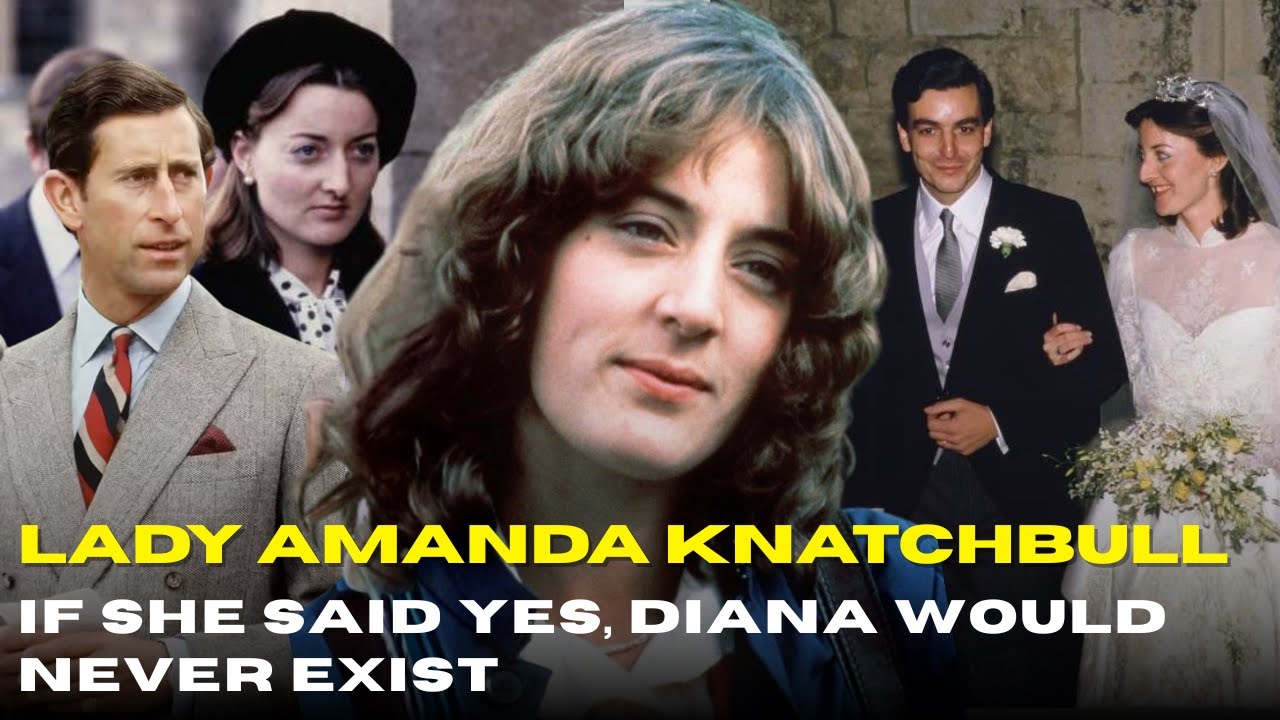
In 1987, eight years after the bomb, Amanda married. Not a duke or a prince. She married Charles Ellingworth, an author and property developer. It was a private, respectful marriage.
They had a traditional wedding, but it was not a state occasion. There were no television cameras, no miles of cheering crowds—just family and friends. They had three sons: Luke, Joseph, and Louis. They lived in a comfortable house in the country.
They hosted dinner parties. They went on holidays without bodyguards. They argued about ordinary things, not constitutional crises or mistresses. Amanda had achieved the one thing Diana never could: a normal life.
Yet she remained close to Charles. The bond forged by the bomb was stronger than the refusal. Charles respected her choice, even as he regretted it. They remained friends, keepers of secrets, two people who shared a history no one else could understand.
When Charles was attacked by the press in the 1990s, vilified for his affair with Camilla and his treatment of Diana, Amanda was one of the few who did not judge him. She knew the pressures he was under. She understood that he was a man trapped in a role he had not chosen, just as she was a woman who had managed to escape a role she did not want. Then came August 31, 1997.
The news broke in the early hours of the morning. A Mercedes, a tunnel in Paris, a crash. Princess Diana was dead. The parallels were sickening.
Another violent death. Another young life ended by proximity to the crown. Another tidal wave of public grief that bordered on hysteria. For Amanda, Diana’s death must have been a terrifying moment of déjà vu.
It was an echo of Sligo. The crown had claimed another victim. The royal curse was real. If Amanda had said yes in 1980, would she have been the one in that car in Paris?
Probably not. She would not have been dating Dodi Fayed. She would not have leaked stories to the press. She would have played the game differently.
But she would have been the target. And in a different way, the system might have destroyed her too. Diana’s death was the final bloody proof that Amanda Knatchbull was the smartest woman in royal history. She had looked into a crystal ball in 1979 and seen the crash coming.
She had gotten off the train before it derailed. For years, the shadow of August 1979 hung over the Mountbatten family and their royal relatives like a radioactive cloud. The name “Sligo” was synonymous with death. The family never returned.
The castle stood empty, a Gothic monument to the massacre. The political situation in Northern Ireland remained tense. The Troubles rumbled on. But Amanda, as a social worker, had a unique perspective on trauma.
She knew that wounds do not heal if you ignore them. They fester. While she kept her own life private, her surviving brother Timothy Knatchbull, the boy who had been blinded and battered on the boat while Nicholas died beside him, began a public journey of recovery. He wrote a book, “From a Clear Blue Sky,” confronting the horror of that day.
Amanda supported her brother from the shadows, advocating for the idea that the family needed to process the grief, not just suppress it with stiff upper lips. It was a radical departure from the old royal approach, the Queen’s approach, of silence. Amanda proved to be a modern woman, applying the lessons of therapy and social work to the most rigid family in the world. Then came the geopolitical earthquake that brought the story full circle.
In 2015, thirty-six years after the explosion, Prince Charles announced he would do the unthinkable. He would visit Mullaghmore. It was a delicate act requiring immense diplomatic and personal courage. The heir to the throne was returning to the scene of the crime, to the very harbor where his grandfather had been assassinated, to a country where republican sentiment still ran deep.
For Amanda, it must have been a moment of paralyzing complexity. She did not join the official trip. That was for the parties concerned, for Charles and Camilla, and for her brother Timothy, who represented the family. Amanda stayed home, but her spirit was surely on that quay.
On May 19, 2015, under a grey Irish sky, Prince Charles walked along the harbor wall at Mullaghmore. There were no bombs this time. There were snipers, yes, but they were protecting him, not hunting him. The locals, the people of Sligo who had carried the trauma of the violence done to their guests, turned out in their thousands.
They did not jeer. They cheered. They reached out to shake his hand. In a speech that won widespread acclaim, Charles spoke directly about the pain of the loss.
At Mullaghmore, he talked about Mountbatten’s death and acknowledged the broader suffering across these islands. “At the time, I had no idea how we would come to terms with the pain of such a deep loss,” he said. Then he did something extraordinary. He connected his loss to the loss of the Irish people.
“Through this terrible experience, I now understand in a profound way the suffering that so many have borne in these islands, regardless of their faith, their tribe, or their political allegiance. ”
It was a masterful gesture of empathy. And back in England, Amanda must have felt a great weight lift from her shoulders. Mountbatten’s legacy had finally evolved.
It was no longer about ruling an empire. It was about healing a division. Charles had finally become the man Mountbatten had wanted him to be—not by marrying the perfect bride, but by demonstrating perfect humanity. The visit proved Amanda’s refusal right in a new way.
Had she married Charles in 1980, she would have been the face of the British Empire during the worst years of the Troubles. She would have been a direct target for hatred. By stepping aside, she had allowed Charles to make this journey as a man seeking peace, rather than a husband defending a dynasty. Her absence allowed the focus to remain on the victims and on reconciliation, rather than a royal photo opportunity.
The “Amanda Knatchbull rule” also began to manifest in the next generation during these years. As Prince William courted Catherine Middleton, the lessons of Amanda and Diana were clearly being applied. William did not rush. He waited ten years.
He made Kate see the cage before he asked her to step into it. He exposed her to the cameras, the pressures, the protocol. He essentially subjected her to the Amanda test: Can you handle this? Do you want this?
Kate Middleton was the “Amanda” who said yes—but she said yes with her eyes wide open, fully inoculated, completely prepared. She was steady, university-educated, strong. The stability of the Wales family today is a direct result of the lessons learned from the refusal of 1980. Amanda’s life, meanwhile, had settled into a quiet rhythm.
She continued her charitable work, sitting on trusts and school boards. She built a life of public service and philanthropy without ever holding a public royal role. The title she earned was earned, not acquired by marriage. There is a quiet dignity to her life in the 2000s, standing in stark contrast to the noise of the Harry and Meghan saga that was about to erupt.
While the new Sussexes complained about privacy invasion while filming Netflix documentaries, Amanda actually lived privacy. She proved that it was possible to be close to the royal family and remain normal. You just have to want to live a normal life more than you want fame. As the decade drew to a close, the Queen’s health began to decline.
The inevitability of Charles ascending the throne loomed. Mountbatten’s plan was entering its final phase, albeit forty years late and with a different cast. But the ghost of the “hidden fee” had been laid to rest. The visit to Sligo had drawn the poison from the wound.
Amanda was able to look at the ocean now without seeing blood. She was able to look at Charles without seeing a victim. They had both survived. They had both found their way home, taking different paths through the same dark forest.
By 2019, the fortieth anniversary of the bombing passed with solemn remembrance but without the raw terror of the past. Lady Amanda Ellingworth was sixty-two years old, her face carrying the lines of a life well lived, bearing a strong resemblance to her mother Patricia, but without the scars of the blast. She walked her dogs in a damp English field, miles from the palaces. She stopped to check her phone.
The news was full of royal drama: Prince Andrew’s scandals, Harry and Meghan’s departure. She put the phone away. The wind was cold but refreshing. She was free.
On September 8, 2022, the news flashed across screens around the world. Queen Elizabeth II had died. The second Elizabethan age was over. And immediately, the spotlight that had hovered over the monarchy for seventy years swung its bright beam onto the new sovereign, King Charles III.
As Charles ascended the throne, looking older, greyer, and visibly weighed down by the burden of grief and destiny, the ghosts of his past walked with him. Camilla, now Queen Consort, stood at his side, a triumph of persistence over protocol. But for those with a sense of history, another figure hovered on the margins of that historic moment. Somewhere in the quiet English countryside, Lady Amanda Ellingworth watched the accession on television, just like the rest of us.
It was the moment she had been prepared for since birth. It was the moment Mountbatten had planned for, and died for. If she had said yes forty-two years earlier, she would have been the one standing on the balcony of Buckingham Palace. She would have been Queen Amanda.
Her face would have been on the new banknotes. Her children would have been the heirs to the throne. The contrast between that alternate reality and the actual one is the ultimate vindication of her life’s choices. Look at the reality Charles faced upon accession.
He inherited a kingdom in crisis, a family torn apart by the exile of Prince Harry and Meghan Markle, a public skeptical of the monarchy’s relevance. The media scrutiny was ferocious. Every leaked pen, every facial expression, was analyzed. The Harry and Meghan story, in particular, was a replay of the eighties nightmare—a royal couple tearing each other apart in front of the public, driven by trauma and intrusive journalism.
Amanda had predicted this. She had foreseen that the machine would never stop devouring its children. By refusing to offer herself or her children to that machine, she had spared them the fate of the Sussexes. Her sons, Luke, Joseph, and Louis, do not sell secrets to Netflix.
They do not write tell-all memoirs or turn their public disputes into global entertainment. They are ordinary citizens living private lives. That normality is an invaluable legacy, one that no amount of royal dukedoms could purchase. Moreover, Amanda’s very survival is a quiet triumph over the terrorism of 1979.
The IRA bomb was meant to destroy the British establishment, to break the spirit of the ruling class. In a way, it left its scars. But it failed to destroy Amanda. She did not let the trauma define her as a victim, nor did she let it drive her into a life of bitterness and revenge.
She chose the most radical response to terrorism imaginable. She chose to live a happy, productive life. She built a family. She served her community.
She endured. In the final analysis, the story of Lady Amanda Knatchbull is a mirror reflecting our obsession with the royal family. We consume their lives as a form of entertainment. We project our fantasies onto them.
We assume the crown is the ultimate prize. But Amanda shattered that mirror. She showed us that the crown is, in fact, a burden, a heavy golden hat that comes with a lifelong sentence of scrutiny. She is the winner who was never crowned.
She won the game by withdrawing from the match. Her relationship with King Charles today is a testament to what might have been. They are friends, survivors. When they meet, perhaps they do not talk about “what ifs.
” Perhaps they talk about their grandchildren, about the gardens at Highgrove or Broadlands, about the changing seasons. They share a silence louder than words. The silence of the bomb that went off, and the silence of the life that continued after the smoke cleared. As we watch the reign of King Charles III unfold, we should spare a thought for the woman who is not there.
We should remember that the stability of the monarchy today is built on the ruins of past mistakes. The Amanda Knatchbull rule—do not marry someone who is not ready, do not try to force something into a place it does not fit—is the unwritten constitution of the modern Windsor establishment. Queen Astrid of Belgium died in a car crash in 1935. Princess Charlotte of Wales died in childbirth in 1817.
Princess Diana died in a tunnel. Lady Amanda Knatchbull lived. She lived to see her hair turn grey. She lived to see her children grow up.
She lived to turn off the television when the royal drama got too loud, and to walk out into her garden, into the quiet and beauty of a life she chose for herself, far from the lights. In the history books, she will be a footnote, the girl who said no. But in the reality of human existence, she is the headline. She is the proof that sometimes the bravest thing you can do is walk away from the fairytale.
The tragedy of the Shadow V in 1979 tore a breach in history. It took the life of a great man, Lord Mountbatten, and shattered the innocence of a royal dynasty. But from the wreckage, two distinct paths emerged. One led to St.
Paul’s Cathedral, to Diana, to global fame, and ultimately to a pillar in the Alma Tunnel in Paris. The other led to a quiet country church in 1987, to social work, to privacy, and to life. Lady Amanda Knatchbull stood at the crossroads of the twentieth century. On one side was the crown, glittering and deadly.
On the other was obscurity, quiet and safe. She looked at the blood in the water and made her choice. She refused the crown to save her soul.
And in doing so, she became the only royal woman of her generation to live a truly happy ending.






