Vance killed the engine at the alley’s entrance. The heavy door stood exactly where the kid had promised, buried in the brickwork of the old icehouse, all rusted iron and gloom. Next to him Rossi was sweating right through his coat, rapping an unlit cigar against his knee in a jittery beat that was beginning to grate on Vance’s last nerve. They had come too far to turn back now.
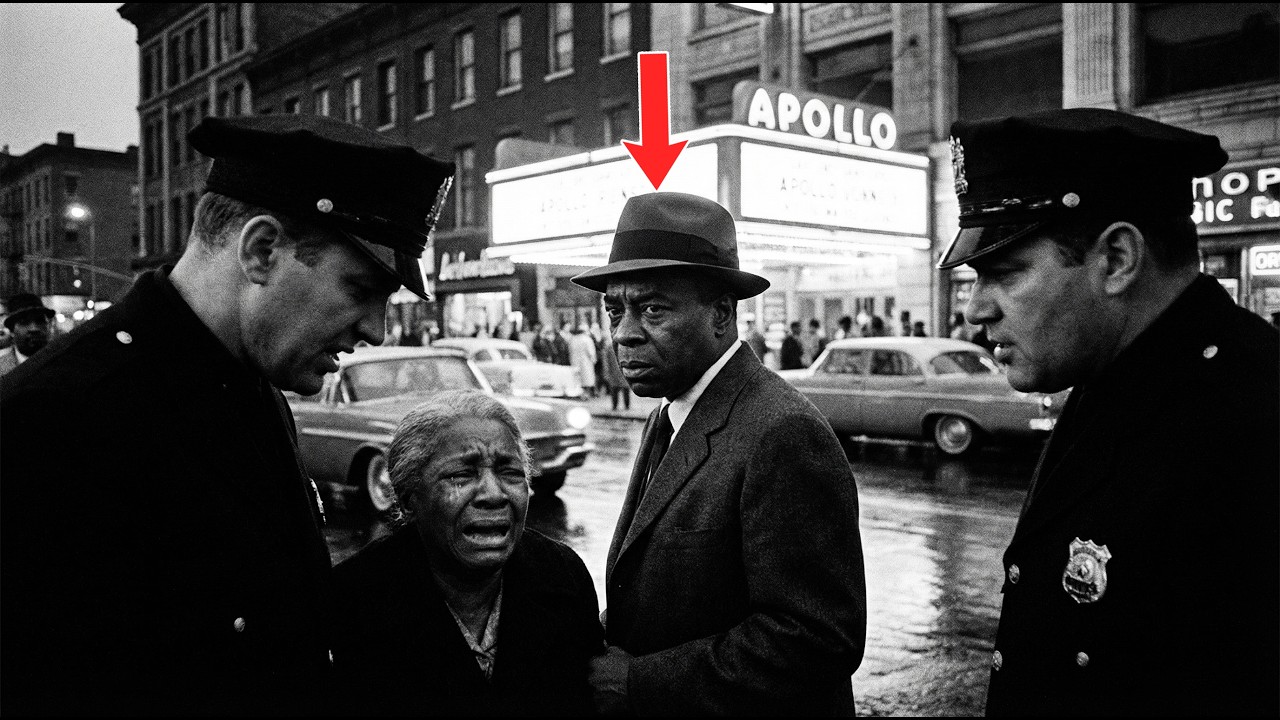
The cash was waiting in there, half a million in clean, untraceable bills, packed into duffel bags and guarded by a pair of drowsy old-timers who would never see it coming. It was too simple. That was the trouble. Vance climbed out of the Plymouth and flattened himself against the clammy brick, moving with the seasoned quiet of a man who had spent years mastering the art of the hunt.
Rossi trailed behind, his breathing shallow and panicked. The alley stank of dead river silt and diesel fuel. The rain was warm and wretched, gluing their hair to their foreheads. They came up to the iron door and listened.
Only the faint, far-off drone of a generator inside. No voices, no scuffing footsteps, no chime of coins. Vance grinned into the darkness. The prize was sitting right there, waiting behind a rusted door.
He stretched out his hand, braced to break the lock, braced to spend five noisy minutes wrenching the frame loose from the brick. The knob rotated under his fingers with no resistance at all. The mechanism was slick with fresh oil. The heavy iron door swung inward with a gentle click.
Some small, instinctive voice at the back of Vance’s mind shrieked a warning. It was too simple. Before he could draw his hand back, before he could utter a word to Rossi, a noise floated out of the black emptiness inside the warehouse. A slow, steady, measured noise.
Clap. Clap. Clap. Somebody was standing in the pitch dark, applauding them.
Then a voice emerged from the shadows, smooth as old velvet and cold as a grave dug that morning: “I have always held that a genuinely greedy man will gladly march straight into the fires of hell so long as you persuade him the devil dropped a dollar bill on the floor. Welcome to the icehouse, gentlemen. Please, don’t be shy. Step on inside and collect your prize.
”
Vance went rigid. His heart clenched in his chest. At his side, Rossi produced a pitiful, involuntary squeak. Vance’s hand shot beneath his coat toward his off-duty revolver.
Before his fingers could find the grip, six enormous magnesium floodlights fired on at once with a noise like a thunderclap, blazing down from the rusted rafters and scorching their eyes. Vance staggered backward, flinging his arms across his face. Rossi yelled out and lost his leather sap. When their sight returned, they saw they had not entered an abandoned warehouse.
They had entered a trap of the most flawless, pitiless design. At the middle of the huge concrete floor, seated alone beneath the crossbeams of blinding light in a grand high-backed antique chair upholstered in crimson velvet, was Ellsworth Bumpy Johnson. He was dressed impeccably in a midnight blue suit, a gray silk tie, and a soft gray fedora. A lit cigar glowed between his fingers, one leg draped casually over the other.
He appeared completely at ease. He looked like a king upon his throne. And he was not by himself. Sliding slowly out of the shadows around the whole perimeter came men.
Dozens of them, taking shape from behind rusted machinery and crumbling pillars. They closed into a tightening ring of hard muscle and cold steel around the two officers. At Vance’s left stood Junie Byrd, a pump shotgun propped over his shoulder, his face carved from stone. At his right stood Nat Pettigrew, gripping a Thompson submachine gun, its drum magazine glinting in the harsh light.
Behind them, men carrying lead pipes, brass knuckles, and long switchblades sealed off every exit. There was no money. There were no drowsy old guards. There was only the king of Harlem, waiting patiently for the rats to wander onto the glue trap.
Rossi’s knees buckled. He sagged against the damp brick, fighting for breath. Vance tried to muster his authority. “What is this?
You’re making an enormous mistake, Johnson. We’re on the job. You lay a hand on a badge and the whole city comes crashing down on your head. ”
Bumpy drew a long, deliberate pull from his cigar and let out a plume of blue smoke.
“You cats are badly mixed up. You think you’re standing on a city street where that little scrap of stamped tin carries weight. It doesn’t. You stepped off the map the second you came through that door.
You’re standing in my house now. And in my house, the only law that counts is the one I write. ”
He told Junie to help the guests get comfortable. Junie crossed the floor with the terrifying, unstoppable grace of an avalanche.
Vance grabbed for his gun, screaming that he would drop him. Junie kept coming. He covered the distance in three strides, clamped his huge hand over Vance’s hand and the revolver, crushing it halfway out of the holster. Vance shrieked and dropped to his knees.
Junie seized him by the lapels of his trench coat and hoisted him clear off the ground. “You pull a piece in front of Mr. Johnson, and I’ll make you eat the bullets one at a time before I break your jaw. You dig?
” Vance whimpered and let go of the gun. Junie ripped it free and flung it carelessly over his shoulder. Rossi was flattened against the wall, weeping, hands raised. “I don’t have a gun.
I got a bad heart. Don’t hit me. ” Junie collected his sap and his badge and his wallet, then set the badges, the wallet, and the revolver on a wooden crate beside Bumpy’s chair. He withdrew into the shadows.
Bumpy lifted one of the silver badges and turned it over in his hands. He spoke of the covenant it was meant to stand for, the promise to shield the weak and uphold the law. “But power is a funny, dangerous thing, isn’t it, gentlemen? For men of weak character, this badge is not a shield.
It is a skeleton key. A license to steal. You believed this scrap of tin made you invisible to consequence. You believed you were wolves hunting in a forest of sheep.
But you forgot one fundamental rule of the jungle. When you hunt in someone else’s territory, you eventually draw the attention of the lion. ”
Vance tried to bargain. Money.
A blind eye on the avenue. Patrol cars kept clear of the clubs. Bumpy laughed, a low, mirthless sound. “You think this is a negotiation?
You’re bankrupt. You have nothing I want. ”
Then he made them remember Clara Higgins. A 72-year-old woman with arthritis in her hands who baked pies for the church.
The grandmother of the block on 135th Street. The woman they had extorted. The woman Vance had shoved into a wooden shelf. The woman whose collarbone was cracked and whose ribs were bruised when she struck the floor.
The woman whose floor Rossi had spat on before strolling out with her crumpled dollar bills tucked in his pocket. Rossi came completely apart. He dropped to his knees, his forehead jammed against the wet concrete, weeping without restraint. “I’m sorry.
Oh God, I’m so sorry. Tommy made me do it. I got a wife. I got kids in Queens.
I was only following his lead.”
Bumpy gazed down at him with a coldness that chilled the bone. “You did not think of your family when you stole Clara’s livelihood. You did not think of your children when you spat on a grandmother.
You only think of them now because you have grasped the size of the bill you have run up, and you do not wish to settle it.”
Vance played his last card. If two white cops turned up dead in Harlem, the whole city would go up in flames. The mayor would clamor for blood.
Every tactical unit would be rushed downtown. Bumpy could not weather the storm of a cop killing. He had to let them walk. Bumpy smiled, a thin, blade-edged expression.
“You are absolutely correct, Thomas. If I put a bullet in your head right now, the backlash would be severe. They would make martyrs out of you. They would drape your caskets in the American flag.
But you misunderstand the nature of your punishment at its core. Martyrs inspire people. Martyrs start wars. I have no intention of making you a martyr.”
“
While they had been enjoying his hospitality, Bumpy explained, his men had been busy. A team was inside Vance’s apartment in Hell’s Kitchen, clearing it out, stripping away his expensive suits and his hidden stash of cash, leaving his mistress a convincing note saying he had fled the country to dodge Internal Affairs. Another team had paid a quiet visit to Rossi’s Italian bookie in Queens, telling him that Rossi had skipped town on his debt. A portion of the stolen money had been planted in Rossi’s car, which was being driven to long-term parking at Idlewild Airport.
They were not going to die. They were going to be erased. Their reputations destroyed. Their families left with the shame of a cowardly father who abandoned them.
The precinct would not mourn them. They would despise them. “Please,” Vance whispered, his voice utterly broken. “Just shoot me.
Don’t do this to my name.”
“You did this to your name the moment you touched Clara Higgins. You wrote this script, Thomas. I am simply providing the stage direction.”
“
He gave the order. Junie and his men moved with brutal speed. Foul-tasting rags were jammed into their mouths. Thick rope was wrapped around their wrists and ankles.
They were hauled across the concrete floor, out of the light, into the darkness of the rear loading docks. Bumpy stood alone in the center of the light, listening. He heard the muffled grunts. The heavy metallic clank of a rusted iron door sliding open.
Then, from the black waters of the Harlem River, the low, throaty rumble of a boat engine idling in the dark. The thud of canvas sacks dropping onto a wooden deck. The iron door slamming shut with the finality of a crypt sealing. The engine revving, fading away down the dark currents of the river, carrying the two officers out into the deep, cold, unforgiving waters of the Atlantic.
Bumpy took one final drag of his cigar, dropped the stub onto the concrete, and crushed it out meticulously beneath the polished heel of his shoe. “Turn out the lights,” he ordered the empty room. The floodlights snapped off, plunging the icehouse back into absolute darkness. The king of Harlem walked out into the night.
The next morning, the sun rose over Harlem with the same oppressive, suffocating heat. The avenues filled with vendors and transistor radios and the soulful sound of Sam Cooke. Nobody on the street knew anything about the surgery that had been performed in the dark corners of the city the night before. Downtown, at the local precinct, morning roll call was underway.
The captain barked out the sector assignments. When he called for Sector 6, he paused. “Where the hell are Vance and Rossi? Their shift started 20 minutes ago.”
“
A young patrolman checked the locker room. The lockers were empty. Their street clothes were gone. No sign of them.
The captain ordered someone to call their homes, then turned to a paper a pale desk sergeant handed him. There was the call from the Hell’s Kitchen precinct about Vance’s abandoned apartment and the frantic mistress. There was the call from the Queens precinct about Rossi’s abandoned car at Idlewild, its trunk full of cash, a mob bookie demanding his blood. The captain looked out at the room full of officers.
He didn’t see brave men. He saw a precinct on the verge of a humiliating scandal. He crumpled the paper in his fist. “Vance and Rossi are gone.
They have abandoned their posts. They are suspected of severe corruption and fleeing the jurisdiction. They are no longer police officers. You are not to speak of them to the press.
You are not to investigate this. Internal Affairs will handle the warrants.”
The room emptied in stunned silence. The officers knew the truth, even if they couldn’t prove it.
Vance and Rossi had been shaking down the avenues, and they had crossed an invisible line in Harlem. The darkness had simply reached out and swallowed them whole. Later that same sweltering afternoon, Clara Higgins sat in the cramped back room of her bakery, an ice pack pressed against her bruised collarbone. The front door was locked.
The closed sign hung in the window. She was staring at a stack of unpaid bills, a single tear cutting a track down her flour-dusted cheek, trying to figure out how to tell her landlord she was ruined. She heard a soft, polite knock at the back door. She froze.
“We’re closed. Please go away.” The knocking did not resume. Instead, she heard something heavy slide under the gap beneath the door, then the sound of retreating footsteps fading down the alley.
She waited three full minutes, holding her breath. Then she pushed herself up, grabbed her cane, and limped to the door. Lying on the dusty floorboards was a thick, heavy, unmarked manila envelope. Inside were neat, perfectly banded stacks of crisp $20 bills.
More money than she had seen in her entire life. Enough to pay the rent for five years. Enough to buy a new glass display case. Sitting on top of the stacks was a small, elegant cream-colored card.
The handwriting was flowing and precise, written in dark blue fountain pen ink: “For the sweet potato pies and for your unflinching dignity, the neighborhood apologizes for the temporary disruption in service. Please reopen your doors tomorrow. The streets are perfectly safe again. Respectfully, a grateful neighbor.”
“
Clara kept her eyes fixed on the card for what felt like a very long time. The dread that had been sitting in her chest since Tuesday afternoon simply dissolved. She brushed the tear from her cheek and let a small, real smile cross her face. Setting the envelope down on the table, she crossed to where her apron hung on the hook and tied it slowly around her waist.
There were peach cobblers waiting to be baked for the next day. Far above the swelter and commotion of the avenue, inside the cool, shadowed quiet of the Lenox Terrace penthouse, Bumpy Johnson sat still in his tall leather-backed chair. Mayme came in carrying two crystal glasses of amber liquid over ice and placed one in her husband’s hand. “I caught the news on the radio this afternoon.
The police commissioner gave a press conference. He said two rogue officers ran out of state to dodge corruption charges. They’re opening a sweeping internal investigation into the precinct.”
Bumpy gave the bourbon a slow swirl.
“A genuine shame. It’s always a tragedy when men given public authority misplace their moral compass and give in to greed. It leaves an awful mark on the institution.”
Mayme offered a small smile, one that suggested she understood more than she said.
She stepped around behind his chair and laid her hands softly on his shoulders. “And what about Clara Higgins?”
“Clara will have the bakery open right at eight tomorrow morning. I’m told by very reliable sources that she’ll be offering a fresh batch of apple turnovers.
I think we ought to send Junie down to bring back a dozen for the men. Supporting local, respectable businesses in the community matters.”
Bumpy settled back into the leather chair, shut his eyes, and let the sorrowful cry of the jazz trumpet sweep over him. The balance of power in Harlem had been challenged, tried, and forcefully set right without so much as a drop of blood on the pavement.
The wolves were gone. The grandmother had been restored. The unseen crown on his head stayed entirely secure. The king was at rest.
And the streets, for the moment, were safe.
