The county clerk copied out Sally Crabtree’s entry in his finest handwriting, and then someone came along afterward and bound it shut with string. Not ripped out, not set to flame, merely tied. The book still lay flat and closed on the shelf, and any man reaching for it would feel the knot beneath his thumb and conclude he’d meant to take a different volume anyway. That page remained tied for sixty-one years.
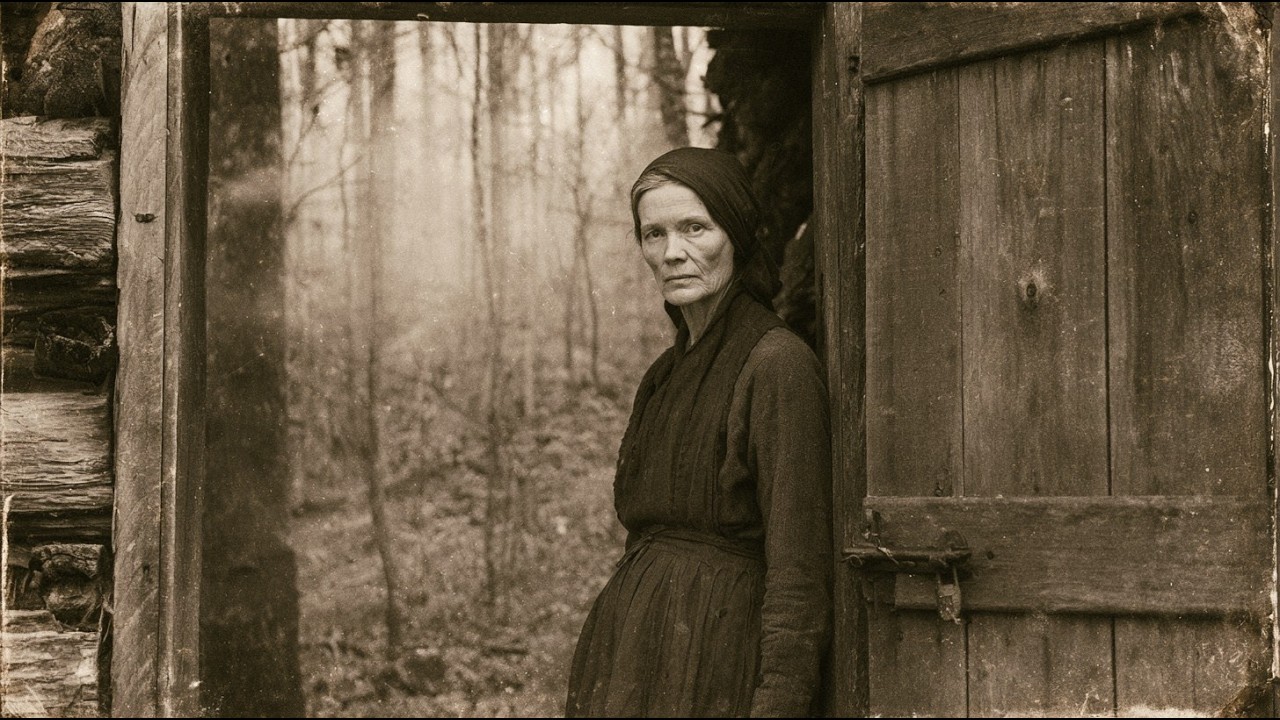
When the string was finally severed, the man who cut it said he wished he had never touched it. The account opens in a stretch of Missouri that the maps of that era hardly acknowledged, down among the southern hills where the streams run clear and frigid over gravel and the ridges crumple against one another so tightly that sunlight never reaches the bottoms until the morning is half spent. A settlement stood there called Six Mile, which was less a town than a store, a smithy, a meeting house, and a smattering of cabins raised wherever a man could locate ground flat enough to plant a chimney. Six miles from the county seat, hence the name, though the road joining the two was the sort you measured in hours rather than miles, on account of the fords, the mud, and the climbing.
Above Six Mile, tracing a thin ribbon of water they called the Naked Fork because little of note grew along its banks, lay a hollow. The locals named it Weather Hollow after the bellwether of a flock, the lead sheep, though no one could explain why a hollow containing no sheep bore that name. It was a cramped place, steep on either side, with timber crowding down near the water. Oaks and hickory so ancient and so dense that even at midday the light down there wore the hue of weak tea.
Cold as well. Colder than it had any business being. A man would step off the ridge road into the mouth of that hollow and feel the temperature fall against his face as though he had entered a springhouse. In that hollow, during the autumn of 1884, dwelt a woman by the name of Sally Crabtree.
Most of what people would afterward say of her was said once she was gone, and grief and dread reshape a person until you would hardly recognize them. This is how her neighbors knew her before any of it began. She was forty-one years old that autumn, a widow. Her husband, Dorsey Crabtree, had died four winters earlier, carried off by a fever that swept through the hollows in one cold year.
After his passing she remained alone in the cabin he had built at the deep end of Weather Hollow, where the water emerged from the hillside in a small spring. She was not a big woman, but she was sturdy in the wrists and the back, the way women became who drew their own water and split their own kindling. Her hair had turned gray early, the shade of gray that is nearly white, and she kept it pinned up firmly beneath a dark cloth. Her face was long and weather-beaten, and her eyes were a pale, faded blue, the color the sky takes on just before snow.
When she looked at you, the old-timer said, she looked a beat too long. Not unkindly. Only long enough that you began to wonder what she was seeing. Sally Crabtree was what the hill people termed a yarb woman.
An herb woman. She knew which root to dig under which moon for which ailment, the bark that broke a fever, the leaf that kept a cut from turning foul, the bitter tea that soothed a body’s pains when nothing else would. When a man up the Naked Fork caught a chill that settled into his chest, his wife did not send for the doctor in the county seat, six muddy hours off and charging money nobody possessed. She sent for Sally Crabtree.
And Sally would come, stepping out of that cold hollow with a basket over her arm, and more often than not the man would recover. So she was respected. She was not feared, not at first, not the way the tales would later claim. She was the woman you sent for.
And there was a curious double feeling the hill folk held toward a woman of that kind. They were grateful to the one who knew the secret thing that saved them. And they were uneasy with her, too, for precisely the same reason. Because what sort of person learns the secret things?
What must you spend your nights doing to know the dark medicine the rest of us are thankful we need not know? Sally kept to her hollow. People came to her or sent for her, and she helped them. They left offerings on her step, a sack of meal, a cured ham, a bolt of cloth, because she would not accept money, saying money had a way of altering what the medicine was for.
The store at Six Mile was run by a man named Elam Grimshaw, a heavy-set fellow with a bad hip and a cautious manner of speaking. It is Elam Grimshaw’s account, set down years later, that supplies most of what we know about how the trouble began, because Elam was the first to notice that Sally Crabtree had stopped coming down. It was the tail end of October, the leaves fallen, and Elam realized, standing in his store one gray afternoon, that he had not seen Sally Crabtree in three weeks. Ordinarily that would mean nothing.
She kept to herself in cold weather. But there had been a man up the fork, old Asbury Thorn, laid up with his lungs, and someone had gone for Sally to tend him, and she had not come. Someone went a second time, and she had not come. That was not like her.
In four years she had never once failed to come when she was sent for. So Elam Grimshaw, on a raw afternoon with the light already fading, shut up his store and walked the road up the Naked Fork to Weather Hollow to see about her. This is the first piece that does not sit right. As he came up the hollow toward her cabin, he could see smoke from her chimney, a good steady thread of smoke, the way a fire looks when it has been fed and banked properly and somebody is home tending it.
He was relieved. He called out to her from the path, the way you do so as not to come up on a body unannounced. He got no answer. He called again.
Not a sound. Once he reached the dooryard, he realized the smoke he’d been following all the way up wasn’t rising from the chimney at all, but from a fire built out in the yard itself. Green wood, damp and smoldering, rolling out that heavy gray smoke, and laid out in a ring. A circle of stones, the wet wood burning inside it, and within that, bedded down in the ash, things Elam Grimshaw in his written account called only objects I did not care to name and will not.
He wouldn’t name them. In sixty years he never did. The nearest he came was setting down that they were small and arranged and put me in mind of a person trying to keep something out or trying to keep something in and not being certain which. The cabin door stood open.
Sally was within, seated in her chair beside a hearth gone cold, the door flung wide and the October air spilling through it. When Elam came up onto the threshold, she turned her head, fixed those pale eyes on him, and said in a voice as ordinary as could be, “You ought not to have come up the hollow this late, Elam. It’s nearly dark. ”
He told her about Asbury Thorn, about the lungs, about the two times they had sent for her.
Sally Crabtree heard him out, and then she spoke the words Elam Grimshaw carried with him to his grave. “I can’t come down anymore, Elam. It started following me when I come down, and I won’t lead it to other people’s doors. ”
Then her gaze went past him, out through the open door to the smoldering ring of smoke in her yard and the dark timber rising behind it, and she said, lower, “It’s most particular about the doors.
”
Elam Grimshaw was not a man given to fancies. He ran a store. He weighed out flour and carried credit and set his figures down in a straight column. Years afterward he wrote that he stood on that threshold and felt the hair lift along both his arms, and that for a single moment, looking at the gray-haired woman in the chair and the cold hearth and the open door, he had the strong and groundless certainty that the two of them in that cabin were not alone.
That there was a third thing in the room. He couldn’t have said where. Behind the chair, perhaps. Up in the loft, in the corner the light never reached.
He knew only, the way you know when someone is standing at your back, that the room held one too many. He did not stay. He told her he was sorry, and he meant it, and he went back down the hollow through the fading light faster than his bad hip cared to carry him. He wrote that the whole way down he never once looked behind him, and that not looking behind him was the hardest walk of his life.
Once Elam Grimshaw had made his visit, the word traveled around Six Mile, quiet and swift, handed along from porch to porch. Sally Crabtree had gone queer. Sally Crabtree would not come down. Sally Crabtree was burning fires in her yard and talking about a thing that followed her.
The hill folk did what hill folk do with a tale like that. Some laughed, mostly the young men, brave enough in daylight. Some fell silent and made certain their own doors were latched. A few of the older women, especially, nodded as if this were something they had half expected, the way you nod when word comes that a sick old dog has finally died.
But there was one woman who neither laughed nor nodded. Her name was Verlie Ashmore, and she lived closer to Weather Hollow than anybody, down at its mouth where the Naked Fork met the bigger creek. She had been Sally Crabtree’s friend, as near to a friend as a yarb woman keeps. Verlie Ashmore was sixty-three that winter, a small, straight-backed woman whose knuckles had swollen from years of work.
She would not abide leaving a friend alone in a cold hollow after she had gone strange. So in the first week of November, Verlie Ashmore walked up to Sally’s cabin to sit with her. What Verlie found, she afterward told the constable, and her words were taken down. She found Sally thinner than she had been, gray in the face, not sleeping.
The cabin was as clean as it ever was, but every window had been hung with dark cloth so no light could get in, and more to the point so nothing could see in. Lines of salt had been poured along every threshold and every sill. Sally Crabtree sat in her chair facing the door. She told Verlie Ashmore the whole of it in a calm and reasonable voice.
Verlie said that was the most frightening part, because a person raving you can dismiss, but a person calm you have to consider. Sally told her it had begun in late summer. She had gone deep into the timber, farther than she usually went, up over the back of the ridge into a stretch of woods the hill folk did not go into, hunting a particular root that grew only in the oldest and dampest ground. She found it and dug it, and on her way back out in the green dim beneath those old trees she heard something following her.
Not an animal. She knew every animal in those woods by its step and its breath. This was a step that tried to match her own, she said. When she walked, it walked.
When she stopped, after a half beat it stopped. She had never once laid eyes on it. No matter how quickly she turned, she had only ever caught at the very edge of her eye the suggestion that something tall had just gone still behind a trunk that was not wide enough to hide it. She came home that day and thought little of it.
But it had followed her home. From that night on, it had been at the edge of her clearing every dusk. She could not see it, but she could feel the woods change when it arrived, the way a room changes when somebody comes into it. The birds would go quiet, the cold would deepen, and she would know it was there, just inside the tree line, watching her cabin, watching her door.
And it was learning. That was the thing she could not make Verlie understand, the thing that had her hanging cloth over the windows and pouring salt on the sills. Every night it came a little closer. The first nights it stayed up in the timber.
Next it reached the rim of the clearing, and then the woodpile. “And now,” she said — and here Verlie noted that Sally’s voice stayed perfectly level, which somehow made it worse — “now it’s come up onto the step.” Night after night, soon after full dark fell, she heard it mount the step and stand at her door, and she heard it work at the latch. A latch is beyond it, Sally told her.
Not yet. Its hands are wrong for the job. But it’s studying that latch, Verly. Each night it studies a little longer, and one of these nights it will work it out.
Verlie Ashmore did not flee. She stayed the night. The two old women sat up together in that cabin, the dark cloth over the windows and the salt on the sills, a lamp burning low between them. Verlie Ashmore lived another nineteen years, and to anyone who asked, until the day she died, she swore that everything Sally Crabtree foretold came true that night.
Soon after full dark, the woods fell silent. The cold descended. Something heavy and slow came up the path and onto the step with a tread that was almost, though not quite, the tread of a person. It stood at the door, close, just on the far side of the boards, near enough that both women heard it breathe.
After a long while, a hand — or something like a hand — took hold of the latch and worked it up and down and up, patient, testing it, studying it, exactly as Sally had said. Toward the gray of morning it went away. The birds returned, the cold lifted, and Verlie Ashmore came down out of that hollow on legs that would hardly carry her. She went straight to the county seat, the full six muddy hours, to fetch the constable.
Somewhere along that road she had resolved that whatever was happening to Sally Crabtree, a man with a badge and a gun ought to be made to come and stand in that yard at dusk and see it for himself. The constable of that county was a man named Ambrose Teague. He was thirty-eight years old, lean and dark, an old soldier who had come west after the war with a limp and a name for not being easily frightened. The records make plain that he did not believe a single word of Verlie Ashmore’s story.
He took it for an old woman gone simple in a lonesome hollow, and another old woman who had sat up all night and frightened herself. He resented the long ride. But Ambrose Teague was a conscientious man in his fashion, and a woman alone and unwell up a hollow was technically his business. So in the third week of November 1884, Constable Ambrose Teague rode up the Naked Fork to Weather Hollow to look in on Sally Crabtree.
What he set down in his report over the following several days is the heart of this story. It is the part that got the string tied around the page. He found her as Verlie had described. The cloth on the windows, the salt on the sills, the thin gray sleepless woman in the chair by the door.
He questioned her. He wrote that she answered every question plainly and sanely except for the matter of the thing in the woods, on which she was immovable and entirely calm. He examined the ground around the cabin for tracks, expecting to find a bear or a panther or a man playing a cruel trick. Here is the first line in Ambrose Teague’s report that the later clerk underlined twice.
He wrote that he found tracks on the step and the path, and that he could not account for them. They were deep, he wrote, the depth of a heavy man or a heavier animal, but they were not the tracks of any man or animal he knew. They had the rough shape of a bare human foot, but too long and too narrow, with the toes too many and set wrong. The impression of the heel was scarcely there at all, as though the weight came down forward on the front of the foot, the way a man’s would if he walked always on the point of pouncing.
He was a practical man, and a practical man faced with something he cannot explain will sit up and wait for the explanation to arrive. So he decided he would stay the night. He would sit up in that cabin with the woman and her salt and her dark windows. When the bear or the trickster came around to frighten her, he, Ambrose Teague, would step out onto that step with his pistol and his lantern and put an end to it.
He wrote down with the flat confidence of a man who has not yet learned better, “I anticipate this matter will resolve itself by morning.”
It did not resolve itself by morning. There is a particular quality to the handwriting of a man whose mind is changing as he writes. The early pages of Ambrose Teague’s report are written in a firm, even soldierly hand.
The later pages are not. They grow smaller and crowd against each other, the lines run uphill, and in two places the pen has dug clean through the paper. This was a hard man, a man who had seen a war, and the war did not put that into his handwriting. This did.
He wrote that just after full dark, exactly as the women had said, the woods went silent. Every insect, every settling bird gone quiet at once, as though a hand had been laid over the mouth of the whole hollow. Then the cold. He wrote that the temperature in the cabin dropped so fast that their breath came visible from their mouths, though the fire was built up high.
Sally Crabtree did not so much as turn her head. She only said, “Lo, it’s come.”
Then the step. The slow, heavy, almost right tread coming up the path onto the step, the standing, the breathing on the far side of the door.
Ambrose Teague was a brave man, and he did the brave thing, the thing he had come to do. He stood up, took his lantern in one hand and his pistol in the other, and against Sally Crabtree’s whispered warning, he threw the latch and pulled open the door to confront whatever stood on the other side of it. There was nothing there. The step was empty.
The dooryard was empty. The lantern’s glow rested on bare, chilled earth and the dark timber wall past it. Yet Ambrose Teague set down that he stood in that open doorway with the cold spilling over him, and he knew, just as Elam Grimshaw had known weeks earlier, that the thing was present. It stood in the dooryard six feet away, precisely where the lantern light fell, and the light simply passed through the spot where it stood and landed on the ground beyond, as if nothing blocked the way.
He could not see it. But he could feel the weight of its attention shift from the door, where it had been fixed, to him, where he now stood. He wrote this line, the one I dwell on more than any other. “I have been looked at by men who meant to kill me.
This was not that. This was the way a man looks at a door he intends to learn to open. ”
Then Sally Crabtree seized his coat from behind and hauled him back inside hard, slammed the door, threw the latch, and stood with her back pressed against it. The two of them listened while the thing on the other side, which they could not see, took hold of the latch and worked it up and down, up and down, patient, studying.
Ambrose Teague, the old soldier, sat down in the chair by the cold hearth and did not rise again until the gray of morning. He wrote that he prayed, which he had not done since the war, and that he did not feel it helped. He stayed three more days. Some of what he wrote in those three days about the nights, about the breathing that began to take on the shape of words it could not quite form, about the morning he found the salt on the sill disturbed and a single long, narrow, wrong-toed track pressed into the dirt of the cabin floor just inside the door, three inches past the salt line — some of that does no one any good to hear.
But his conclusion is the thing the county could not abide, the thing that got the page tied shut. He concluded that Sally Crabtree was telling the truth. That there was in fact a thing in Weather Hollow, that it had followed her home from the deep timber, that it was real enough to leave tracks and chill the air and move a latch, and that it was slowly and methodically, like a patient man learning a craft, teaching itself how to get through her door. And he concluded in the last clear lines he ever wrote on the matter that the only mercy in the situation was that it was slow.
That whatever it was, it did things at the pace of seasons, not of nights, and that this gave them time. He wrote that he intended to bring Sally Crabtree down out of that hollow, by force if he had to, and lodge her somewhere with people and lamplight and locked doors and distance between her and that timber. He believed, he hoped, that if you took the woman far enough from the hollow, the thing would lose her trail. He was wrong about the time.
He thought it was slow. He thought he had until spring, maybe, before it learned the latch. He did not know that the thing had been learning faster than any of them understood, that it had only seemed slow because it was being careful, the way a thing is careful when it is close to getting what it wants and does not wish to spoil it by haste. He rode down out of the hollow on the fourth morning to fetch a wagon and another man, because you do not move an unwilling woman six muddy hours alone.
By the wagon’s account, he was gone eleven hours. He came back up the Naked Fork in the dark with a hired man named Lonzo Pruitt, a wagon and a horse. They came up into the dooryard of Sally Crabtree’s cabin near midnight, and the door of the cabin stood open. The door stood open, and the salt across the threshold was swept back in a long smear, as though something had stood at the open door and brushed it aside with the side of its foot, almost idly, the way you would brush aside a thing that had finally stopped mattering.
Ambrose Teague and Lonzo Pruitt went into that cabin with their lanterns. What they found, Ambrose Teague did not describe. Not in his report, not ever, to anyone. He wrote one line.
“The condition of the cabin was such that I sent Pruitt to wait by the wagon. And what I saw within, I will carry alone, and I will not set it down for the sake of those who loved her, and for the sake of my own remaining nights. ”
That is all. The man who had written pages and pages, who had described the tracks and the cold and the breathing, came to the one room and the one thing he was sent to find, and he laid down his pen and would not.
Sally Crabtree was never seen again, not living, not otherwise. There was no funeral because there was nothing the men of Six Mile were willing to bury. The few who came up to that cabin in the days after to help Ambrose Teague nail the door shut and pile the windows over came down again, gray-faced and silent, and never spoke of it for the rest of their lives. Verlie Ashmore was not permitted to go up.
Ambrose Teague rode the six hours to her house to tell her himself. He stood on her porch with his hat in his hands, and the only thing he would say to her was, “She kept it from your door, Verly. To the last she kept it from coming to other people’s doors. You ought to know she managed that much.
”
Then he rode away. Verlie Ashmore sat down on her porch step and wept, she said, not only for grief, but because she understood, finally and fully, what her friend had been doing all those weeks alone in the cold with the cloth on the windows and the salt on the sills. She had not been protecting herself. She had been the door it wanted.
And she had stayed where she was and not let it down among the rest of them on purpose. Most tellings of the Sally Crabtree story stop there. But the matter did not end with the open door and the swept salt and the thing in the cabin that Ambrose Teague would not describe. It got worse afterward, and it got worse in a way that is harder to bear than anything before it.
That is why the page was bound shut for sixty-one years rather than simply left to fade from mind. Ambrose Teague boarded up the cabin and told the folks of Six Mile to keep clear of Weather Hollow. For a time they did. But a hollow cannot be kept empty of people forever.
There is timber in those hills, a spring, and rich bottom land, and it takes only a handful of years for a grim story to wear down into a tall tale that young men wager each other over. By the late 1880s, people were heading up the Naked Fork once more, hunting, hauling wood, courting in the cool of the bottoms. What they started to report, the thing that filled out the rest of that bound-shut page, was this. The thing did not depart when Sally Crabtree was taken.
It was still there in Weather Hollow, only it had altered. It no longer lurked at the timber’s edge and trailed people from the corner of the eye. Now, the report said, it came to your door. Anyone’s door.
Any cabin in or near that hollow, on certain windless nights, would hear just past full dark a slow, heavy, near-enough-right tread climbing onto the step. It would stand at the door. It would breathe on the far side of the boards. And then it would grip the latch, and work it up and down, and the latch would rise.
Because it had learned. It had passed those patient weeks at Sally Crabtree’s door studying. Sally Crabtree had kept it busy with her own door so exactly that it would not learn on anyone else’s. Now that she was gone, it knew.
It carried that knowledge with it. It could open a door now. Any door. It had learned the latch.
For years afterward the people of that hollow took up a practice that the constable’s report records in its closing lines, one Ambrose Teague himself taught them before he surrendered his badge and left that county and dropped out of the record entirely. At night they began to bar their doors with a length of timber. Not a latch. Latches it understood.
A bar set into iron brackets that no working of a latch could lift. And they took up the other practice too, the one the old folks in that stretch of the Ozarks would keep up for two full generations after and never quite explain to outsiders. When they heard the tread on the step after full dark and heard the latch start to lift, they gave no answer. They said nothing.
Whatever they did, they did not open the door. They sat still and waited and let it study the bar it could not solve. After a long while, it would leave. Come morning, they would sometimes find a single long narrow wrong-toed track pressed into the dirt of the step.
Ambrose Teague’s report closes with the bar and the silence and the instruction never to open the door. Then comes the clerk’s later note, the note from the man who tied the string, written in a different ink in 1891. It says only this: “Sealed by order. This account being of no use to the living and of considerable harm to their peace.
Let those who must go up the Naked Fork bar their doors and keep their counsel. The rest need not know.”
So the string was tied and the book shut flat on the shelf. Sally Crabtree slipped out of the county’s official memory and into the kind of story grandmothers tell with the lamp turned low.
The story of the gray woman who lived up Weather Hollow and held the thing at her own door so it would not come to yours. Who in the end was taken through that door. Whose great and terrible kindness was that she taught it patience at her own threshold so it would learn slowly when it might have learned fast. The man who finally cut that string open wished he had left it be.
He was the county historian who went through those old sealed pages in the 1940s, a careful and skeptical man who believed none of it. He cut the string and read Ambrose Teague’s report and Verlie Ashmore’s deposition and Elam Grimshaw’s account. In a letter, now itself part of the dossier, he wrote that he had read the whole thing through twice and could explain none of it. What unsettled him was not the impossibility of it, but the consistency.
Three witnesses, he wrote, of different temperaments in different years, none of whom could have read the others’ words, all describing the same wrong-toed track, the same studied latch, the same cold, the same patient and learning thing. He wrote one more thing at the very bottom of his letter, almost as an afterthought. He wrote that on the night he finished reading the report alone in his house in the county seat, the modern county seat, with electric light and a paved road outside and the twentieth century all around him, he had heard, just after full dark, a slow heavy tread come up onto his porch and stop at his door. He sat very still in his chair and told himself it was a stray dog, a settling house, the wind.
After a while he heard, distinctly, the handle of his door turn once. He did not get up. He did not answer. He did not open it.
In the morning there was nothing on the porch at all, no track, no sign, nothing. He told himself the whole thing was the fancy of a tired man who had been reading frightening papers too late. He believed that, he wrote. He mostly believed that.
But he never read those papers again. He tied the string back on himself with his own hands, put the book back on the shelf, and wrote at the bottom of his letter, “I do not say it followed the account out of the hollow. I do not say a thing learns a latch and then learns a doorknob and then learns to find the man who reads about it. I do not say any of that.
I only say that I bar my door now, where I never used to, and that I do not answer it after dark, and that I would advise anyone who reads this to do the same. And I am aware of how that sounds, and I no longer care.”
The cabin is long gone. The hollow is on no map you can buy.
But the Naked Fork still runs cold and clear over its gravel somewhere down in those Missouri hills, and the timber at the head of that hollow is older now than it was then, and darker. I have never been able to find out whether the people who live nearest to it still bar their doors at night. I suspect they do.
