On December 11, 2008, at seven in the morning, FBI Special Agent Theodore Cacioppi rang the doorbell of a penthouse at 133 East 64th Street in Manhattan. When Bernard Madoff opened the door, the agent asked if there was an innocent explanation for what investigators suspected. Madoff answered calmly: there was none. Within hours, the world learned that the chairman of NASDAQ, the man who had helped modernize American stock trading, had been running the largest Ponzi scheme in history.
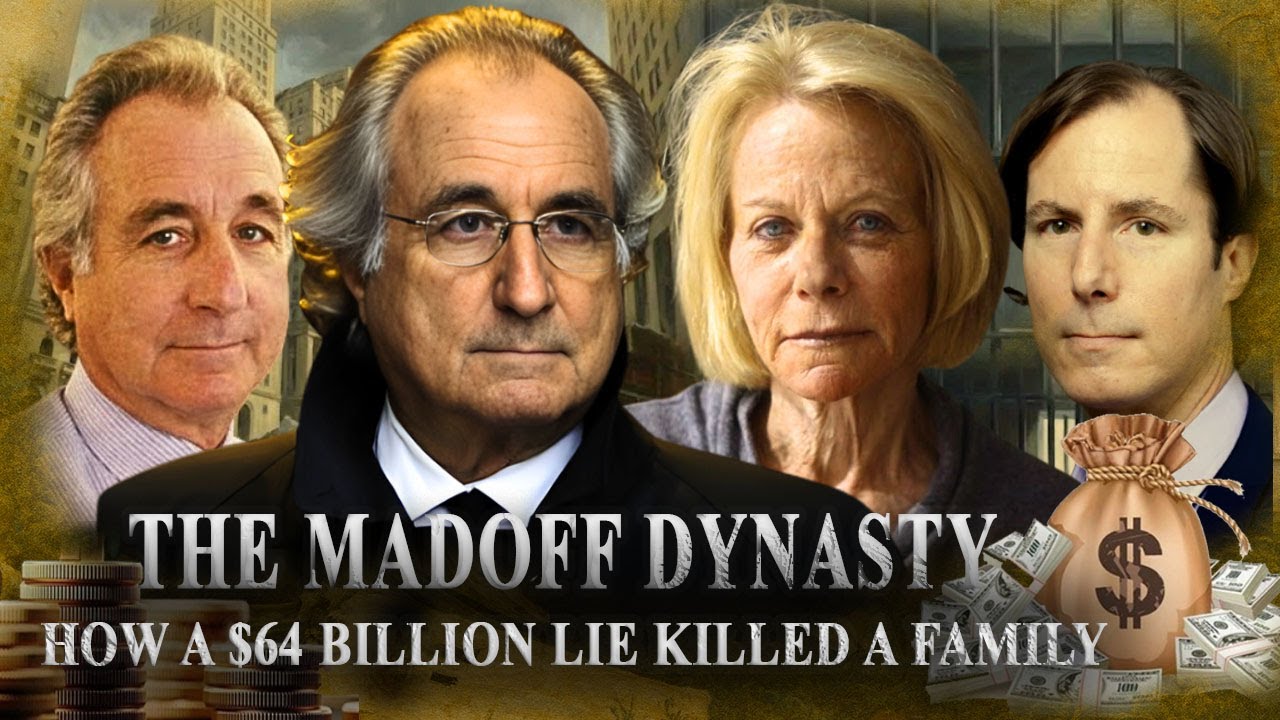
The sum involved reached an estimated $64. 8 billion. The rise that made the fall possible began modestly. In 1960, at age twenty-two, Bernard Madoff registered his investment firm with the Securities and Exchange Commission.
He started with five thousand dollars, money scraped together from summers working as a lifeguard on Long Island and installing underground sprinkler systems. He traded penny stocks from a borrowed corner of his father-in-law’s accounting office. But Madoff saw something the old Wall Street establishment missed. During the 1970s and 1980s, he built a system that used computers to match buyers and sellers electronically, bypassing the slow, inefficient floor traders of the New York Stock Exchange.
The innovation was real, and it made him a legitimate pioneer. His technology became the blueprint for the NASDAQ exchange, and by 1990, the former lifeguard from Queens was its chairman. This genuine success provided the perfect cover. No one investigates the man who helped build the alarm system.
While the legitimate market-making business flourished on the 19th floor of the Lipstick Building, a separate reality operated on the 17th floor. There, access was strictly limited, blinds were permanently drawn, and the technology was deliberately outdated. At the center of this floor sat an old IBM server from the 1980s. It did not trade stocks.
It was programmed to print lies. Bernie’s brother, Peter Madoff, served as chief compliance officer, responsible by law for ensuring the firm followed regulations. Instead, he signed fraudulent filings, created fake compliance manuals, and designed a computer program that randomized fake trades to make them look human. He knew the vault was empty, yet he reported to work every day and played his part.
Madoff promised investors steady returns of ten to twelve percent year after year, regardless of market conditions. In a volatile world, it was a mathematical impossibility, a flat line in a chaotic system. But investors did not ask for the math. He refused to advertise or chase clients.
When billionaires begged to invest, he often said the fund was closed. This artificial exclusivity inverted the power dynamic. Victims felt privileged to be allowed in, believing they had entered a secret society, when in fact they were walking into a trap. To scale the fraud, Madoff needed industrial quantities of cash.
He outsourced the recruitment of victims to feeder funds. The most notorious was the Fairfield Greenwich Group, run by Walter Noel, which funneled over seven billion dollars into Madoff’s hands. Madoff charged these feeder funds no management fees, an unheard-of practice. This allowed them to charge their clients enormous fees for doing nothing but handing money to Bernie.
They had a fiduciary duty to conduct due diligence, to verify the trades and assets. They did none of it. If they asked too many questions, Madoff would threaten to return the money, and the stream of fees would stop. The mechanism behind the fraud was simple.
Madoff claimed to use a split-strike conversion strategy, buying a basket of S&P 100 stocks and using options to protect against losses. It sounded sophisticated. In reality, the trades did not exist. The telltale sign was the equity curve.
Legitimate charts look like jagged mountain ranges. Madoff’s was a smooth forty-five-degree line rising toward infinity. Harry Markopolos, a quantitative analyst, examined that line and needed only a few hours to prove mathematically that Madoff would have had to buy more options than existed on the entire Chicago Board Options Exchange. He concluded that the world’s largest hedge fund was a fraud.
Markopolos submitted detailed warnings to the SEC in 2000, 2001, 2005, 2007, and 2008. The SEC did nothing. When investigators finally questioned Madoff in 2006, he charmed them. He dropped names and lectured the junior lawyers on how the market worked.
When they asked for his trading records, he gave them a list of trade numbers. They never made the five-minute phone call to the clearing house that would have confirmed the trades never happened. They accepted his word. They were blinded by the halo effect.
They could not conceive that the former chairman of NASDAQ was a common thief. The fraud survived the crash of 1987, the recession of 1990, and the bursting of the tech bubble. But in September 2008, the collapse of Lehman Brothers triggered a global panic. Investors who had trusted Madoff as a safe haven suddenly needed cash to cover losses elsewhere.
Redemption requests flooded the 17th floor. By early December, requests totaled seven billion dollars. The bank account that served as the scheme’s lungs held less than three hundred million. Madoff began a desperate campaign to raise fresh cash.
He approached Carl Shapiro, a ninety-five-year-old philanthropist and old friend, and claimed he was raising a special fund to capitalize on the market crash. Shapiro gave him another two hundred fifty million dollars. On the 19th floor, Madoff’s sons, Mark and Andrew, were asking for their annual bonuses paid out early. They were planning holidays to Nantucket and Aspen while the firm was insolvent.
On the morning of December 10, 2008, Bernie told his sons he wanted to pay out the company’s remaining one hundred seventy million dollars in bonuses to employees and family. They demanded an explanation. Mark asked the question that ended the dynasty: where is the money coming from? Bernie could not answer.
He brought them to the penthouse and confessed. It was all one big lie, he said. It was basically a giant Ponzi scheme. He estimated the fraud at fifty billion dollars and said he planned to surrender within a week.
First, he wanted to use the last money to take care of family and friends. Mark and Andrew walked out into the December cold. They went to a lawyer, then they made the call that flipped the story of Abraham and Isaac. They reported their father to the FBI.
The next morning, Madoff was arrested. After a court appearance, he was released on ten million dollars bail. As he pushed through the crowd of photographers, he looked into the cameras and smiled. The image sparked national fury.
He went home to his penthouse, where the sidewalks outside became a stage for rage. Death threats arrived. One package contained the ashes of a victim who had committed suicide, with a note addressed to the family. In March 2009, Madoff pleaded guilty to all eleven felony counts.
There was no plea deal. By pleading guilty, he shut down the discovery process, preventing prosecutors from subpoenaing decades of records and dragging his wife, brother, and sons onto the witness stand. In June 2009, Judge Denny Chin sentenced him to 150 years in federal prison. He left the courtroom stripped of his bespoke suit.
Bernard Madoff was dead. Inmate number 61727-054 was born. The government seized the family’s assets. Ruth Madoff was allowed to keep 2.
5 million dollars from an estimated eighty million. No co-op board in New York would approve a tenant with the name Madoff, so she moved from place to place, a pariah in the city she once ruled. Mark Madoff was forty-five years old. He had spent his adult life building a legitimate trading desk on the 19th floor.
Overnight, the world saw him not as Mark the trader but as Bernie’s son. He became obsessed with the news, reading thousands of online comments from strangers urging him to kill himself. He sent out resumes, but headhunters rejected them the moment they saw the name. Friends crossed the street to avoid him.
He was suffering a social death, a ghost walking among the living. From prison, Bernie reached out. He sent letters and tried to call, acting as if nothing had changed. Mark’s reaction was a cold, hardening rage.
He realized his father’s guilty plea had been a tactical firewall. The FBI did not charge Mark, but they did not clear him either. The investigation stayed open, a sword of Damocles over his head. Bernie had used his sons as human shields, placing them on the shiny 19th floor to distract regulators from the filth below.
On the morning of December 11, 2010, exactly two years after his father’s arrest, Mark Madoff sat alone in his Soho loft. His two-year-old son was sleeping in the next room. He sent two emails: one to his lawyer, one to his wife, telling her he loved her and to send someone to take care of Nick. Then he took a dog leash, threw it over a metal pipe on the ceiling, and hanged himself.
His father-in-law found the body the next morning. When the prison chaplain told Bernie that Mark was dead, he collapsed and wept. He blamed the media, the lawsuits, everyone but himself. His request to attend the funeral was denied.
Mark’s widow banned Ruth from the service, and the mother who had refused to leave the monster was denied the right to bury her child. Andrew Madoff had survived cancer years earlier. After the scandal, the investigation, and his brother’s suicide, the disease returned in 2011, aggressive. He told the press, one way or another, my father killed my brother and he’s killing me.
He died in September 2014 at age forty-eight. Bernie Madoff had outlived both his sons. Inside the federal correctional complex in Butner, North Carolina, Madoff thrived. He was treated by other inmates with reverence, a celebrity.
He cornered the market on hot chocolate packets in the commissary. In interviews, he showed no remorse. He complained he was misunderstood and blamed his victims, suggesting they should have known the returns were impossible. On April 14, 2021, Bernie Madoff died of end-stage renal disease at age eighty-two.
No one claimed his body. There was no funeral, no grave. The Bureau of Prisons cremated him, and his ashes were placed in a cardboard box. The location remains unknown.
Less than a year later, in February 2022, police found Bernie’s eighty-seven-year-old sister, Sander Wiener, and her husband dead from gunshot wounds in their Florida home. The police ruled it a murder-suicide. The couple had lost millions in Bernie’s scheme. The trustee recovering money for victims managed to recover over fourteen billion dollars, nearly eighty percent of the stolen principal, an unprecedented result in financial fraud.
But the money could not restore the years lost to stress, the marriage destroyed in Florida, or the life of Mark Madoff at the end of a dog leash. The man who wanted to build an eternal legacy was reduced to unclaimed dust. The empire he built on confidence vanished when the confidence ran out, leaving behind only empty chairs and silence.
