The shot came out of the darkness, and Captain Frank Jones went down. His men were in Mexico, across a border they had never meant to cross, and now the bandits they had been pursuing were closing in around them. The Frontier Battalion of the Texas Rangers had walked into an ambush. With his captain dead, John Hughes took command of the shattered unit and made a decision that would define the rest of his life: he would not let the men who killed Frank Jones get away.
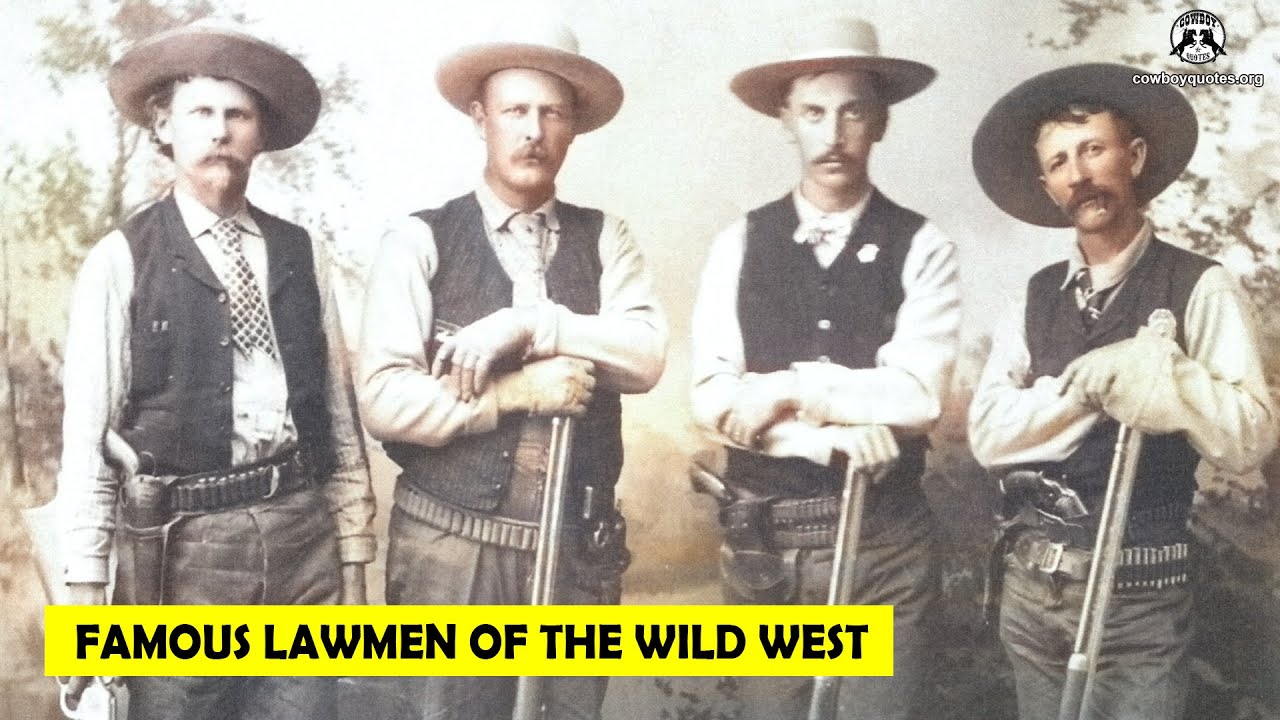
That was not how Hughes had planned to spend his days. He had never set out to become a Texas Ranger. His early years were spent working as a rancher, and he later lived for considerable time among various Native American tribes. Eventually he settled down as a farmer in Liberty Hill, Texas, and there he might have stayed, a quiet man living off the land, if a neighbor had not lost his horses in 1886.
Thieves stole the animals, and Hughes took it upon himself to pursue them. He tracked the rustlers all the way to New Mexico, where he confronted them in a gunfight. When it was over, two of the thieves were dead, the rest were captured, and the horses were returned to their rightful owner. The bold act did not go unnoticed.
Word of it reached Ira Aten, a well-known Texas Ranger, who recognized Hughes’s abilities and enlisted his help in capturing a fugitive murderer named Jud Roberts. Hughes succeeded. After that, Aten encouraged him to join the Rangers, and Hughes became part of the prestigious Frontier Battalion, a unit tasked with bringing outlaws to justice along the Texas-Mexico border. It was during one of those pursuits that the unit crossed into Mexican territory without knowing it and was ambushed.
Captain Jones was killed, and Hughes had to think fast. The situation was complicated by the fact that the surviving bandits could not be tried in the United States, since the attack had happened on Mexican soil. Hughes did not care. He was determined to hold those responsible for the loss of his captain accountable, and he set about identifying the men involved.
Through resourcefulness and persistence, he was able to name eighteen of them. Then he led his Rangers on an extensive pursuit across the region, tracking down each one. The relentless commitment to justice ensured that those responsible for Captain Jones’s death were either captured and executed or met their fate through other means. A man who had been an ordinary farmer had become a legendary lawman, driven by a deep sense of duty and honor.
Harry Wheeler faced his first major test as an Arizona Ranger in 1904 in Tucson, Arizona. He was alerted to a robbery taking place at a nearby saloon, and the situation set the stage for a traditional standoff between himself and the suspect. In that tense encounter, Wheeler’s quick reflexes gave him the upper hand, and he emerged unharmed. The success established his reputation as a capable Ranger who could handle high-pressure situations.
A few years later, Wheeler faced another significant standoff, the Benson shootout, where he clashed with a man named Jack Tracy. The encounter mirrored a scene from western folklore, as both men sustained injuries. Tracy ultimately succumbed to his wounds, while Wheeler made a full recovery. The incident reinforced his resilience and elevated his standing as a lawman skilled in handling even the most dangerous situations.
His fearlessness and consistent skill in confronting outlaws led to his promotion to sheriff of Cochise County. By 1917, he found himself in yet another showdown, the Gleason gunfight, one of the last of its kind in the Old West era. Wheeler and his deputy were tracking a group of smugglers when they were caught off guard in the middle of the night. Despite the dark and the numbers against him, Wheeler demonstrated his sharp aim, hitting a member of the group and causing the smugglers to eventually withdraw.
In each engagement, Wheeler’s calm approach and disciplined focus under pressure reflected the methods of a lawman who relied not on brute force but on honed skills and clear judgment. He is remembered as one of the final figures from an era of legendary law enforcement, upholding order with dedication and composure even as that era drew to a close. John Hicks Adams first arrived in California during the Gold Rush, one of many hopeful forty-niners. He eventually settled on a farm near Gilroy and turned his attention to public service.
Adams entered politics, and when the sitting sheriff of Santa Clara County unexpectedly passed away, Adams was elected to complete the term. That role marked the beginning of a long and storied career in law enforcement. During his tenure, Adams learned of a group known as Captain Ingram’s Partisan Rangers, a band of Confederate sympathizers who had gained a reputation for criminal activities across the county. Determined to bring the gang to justice, Adams swiftly organized a posse to pursue them.
The mission culminated in an intense confrontation at a small house where most of the Rangers had taken refuge. After surrounding the building, Adams and his men succeeded in apprehending or dispersing the entire group, effectively dismantling the threat. The successful campaign earned Adams considerable respect and helped secure his reelection as sheriff for four additional terms. During his extended service, Adams encountered another challenging case with the Mason-Henry gang, a far more aggressive group than Ingram’s Rangers.
Known for their brutal tactics, Mason and Henry had gained the media’s attention and were often called the Copperhead murderers. Unlike previous outlaw groups, these men not only targeted Union supporters but also left a trail of fear and instability in the region, making their capture a priority. Although Adams pursued the Mason-Henry gang relentlessly, they often evaded capture, slipping out of his grasp multiple times. His continuous efforts eventually pressured the gang into abandoning Southern California altogether, forcing them to scatter and ultimately meet their ends in other parts of the state.
Through persistent work, John Hicks Adams safeguarded his community, leaving a legacy as a determined sheriff committed to law and order amidst the tensions of post-Civil War California. William Barclay “Bat” Masterson is often remembered today for his famous friendship with Wyatt Earp. The two met while serving as deputies in Dodge City, Kansas, a bustling frontier town known for its unruly reputation. Their bond grew as they shared the challenges of maintaining order, and Masterson would go on to support Earp through various critical events, strengthening their mutual respect and camaraderie.
Masterson’s first significant confrontation took place in 1876 in Sweetwater, Texas, when he was only twenty-two years old. A dispute over a woman named Molly Brennan with a local soldier escalated into a gunfight. Tragically, both Brennan and the soldier lost their lives in the exchange, and Masterson himself was injured. Recovering from his wounds, Bat resolved to channel his skills into law enforcement, setting a new direction for his life.
The decision led him to Dodge City, where he joined his brothers Jim and Ed, who were already deputies in the notoriously rough town. It did not take long for Bat to establish his own authority, and he was soon elected sheriff of Ford County. In 1878, Bat and his brother Ed found themselves in a dangerous situation when two armed men confronted them. Ed was critically injured in the encounter, leaving a lasting impact on Bat.
Nevertheless, Bat managed to subdue both attackers, an act that furthered his reputation as a determined lawman. One of Masterson’s most notable incidents took place during what would later be called the Battle of the Plaza in 1881. Bat had traveled to Tombstone, Arizona, at the request of his friend Wyatt Earp. While there, he received alarming news that two men in Dodge City were planning to harm his brother over a disagreement.
Without delay, Bat boarded the next train to Dodge City, arriving prepared to address the situation. In the resulting confrontation, shots were exchanged, and although two individuals were struck, one of the men involved and a bystander, thankfully neither was seriously harmed. In line with Dodge City standards, the incident was ruled to be fair, and Bat was charged only an eight-dollar fine, wrapping up the affair and departing the city later that same day. Throughout his career, Bat Masterson earned a reputation not just for courage but for commitment to protecting his family, friends, and communities.
His legacy lives on as one of the most storied lawmen of the Old West, marked by a rare blend of loyalty, bravery, and a distinct code of honor. Henry Thomas, a member of the renowned Three Guardsmen, encountered challenges and conflict from an early age. In 1862, at just twelve years old, Henry joined his father and uncle during the Civil War, acting as a messenger on the battlefield. Following the war, his father became city marshal in Atlanta, and young Henry soon followed in his footsteps, beginning his career in law enforcement as a police officer.
After some time, Thomas moved to Texas, where he took on the role of a railroad guard. It was there that he faced off against Sam Bass, one of the most infamous train robbers of the era. Bass and his gang frequently targeted the Texas Central Railroad, hoping for lucrative hauls. During one confrontation, Henry sustained an injury but cleverly thwarted the gang’s plans by placing decoy packages in the safe, ensuring they left empty-handed.
Although Bass and his men escaped, the experience showed Henry’s ability to think quickly under pressure. His dedication soon propelled him up the ranks. He first became a detective, and later, in 1886, accepted a position as a deputy marshal, moving his focus to Oklahoma. He took on the challenge of tracking down numerous outlaws, including members of the Pyle gang, solidifying his reputation as a relentless lawman.
In 1891, Thomas joined forces with Bill Tilghman and Chris Madsen to confront the most notorious criminals in Oklahoma. Together, they became known as the Three Guardsmen. Among their primary targets was Bill Doolin, leader of the formidable Doolin gang. In 1893, the Guardsmen, alongside a larger posse, attempted to capture the gang during the Battle of Ingalls.
The standoff was intense, and although the gang mostly escaped, three lawmen lost their lives. The Doolin gang’s escape at Ingalls only intensified the Guardsmen’s pursuit. Three years after that encounter, Henry Thomas once again crossed paths with Bill Doolin. This time, Thomas was determined to put an end to Doolin’s criminal pursuits.
The capture concluded one of the most challenging pursuits of Thomas’s career, sealing his legacy as a dedicated lawman of the Old West who played a crucial role in bringing justice to a region fraught with danger. William David “Dave” Allison dedicated much of his life to law enforcement, beginning his career at just twenty-seven years old in 1888, when he became the youngest sheriff in Texas. Over six terms in office, he cemented his reputation as a capable and courageous lawman. After his notable run as sheriff, Allison continued to serve in various roles, including as an Arizona Ranger, a Texas Ranger, and later as a detective.
His years of service and consistent bravery earned him respect from notable figures, including a young George Patton, who reportedly considered Allison the most noted gunman in Texas. While Allison was widely known for his courage, he also struggled with a penchant for gambling, which occasionally cast a shadow over his otherwise honorable career. One of his most significant and debated achievements came in 1915, when he led a posse that located and confronted Pascual Orozco, a revolutionary figure from Mexico who had become a wanted outlaw. Orozco’s reputation had won him supporters, and rumors swirled that he may not have been given a fair chance during the confrontation.
Although accusations arose that Orozco had been treated unfairly, Allison and his posse were later cleared of all charges, though the incident remained a point of controversy. In his later years, Allison transitioned to work as a detective, taking on cases for the Texas Cattle Raisers Association. His efforts were dedicated to tracking down cattle thieves and protecting the region’s ranchers. On one particular case, he built a strong case against two suspected rustlers in Seymour, Texas.
However, before the trial could begin, the defendants took drastic measures, tracking Allison and his colleague to the hotel where they were staying and confronting them. Allison’s commitment to justice cost him dearly that night, marking a somber close to a career defined by bravery. His legacy remains that of a lifelong lawman whose determination left a lasting impression on the Texas frontier. John Barkley Armstrong’s story stands out among many of his Old West peers because he ultimately passed away peacefully at home, unlike the numerous lawmen who met tragic ends in heated conflicts.
Armstrong achieved most of his early recognition as a Texas Ranger before going on to serve as a United States Marshal in Williamson County. His time with the Rangers was marked by his role as second in command to the renowned Captain Leander McNelly in a special force unit. The close partnership earned Armstrong the nickname “McNelly’s Bulldog” for his loyalty and fierce dedication. When McNelly retired in 1877, the force disbanded, and Armstrong received a promotion that propelled him further in his law enforcement career.
One of Armstrong’s most notable achievements came while serving as a Texas Ranger lieutenant, when he pursued the infamous John Wesley Hardin, a highly feared figure in the Old West. Hardin had previously managed to escape capture, but Armstrong took on the task despite recovering from a gunshot wound. His search led him to a train, where he found himself in a tense standoff with Hardin and four of his companions. Although clearly outnumbered, Armstrong’s calm under pressure allowed him to subdue Hardin and his men without escalating the situation further.
He safely brought Hardin back to Texas, where Hardin was later sentenced to twenty-five years in prison. Armstrong’s handling of the incident was seen as an impressive show of courage and control, reinforcing his reputation as a tenacious but level-headed lawman. In addition to his success with Hardin, Armstrong contributed to capturing other notable outlaws of the period. He was involved in tracking down the notorious outlaw King Fisher and took part in the posse that pursued the infamous train robber Sam Bass.
These accomplishments, alongside his lifelong dedication to maintaining order, underscored Armstrong’s legacy as a steadfast and skilled officer of the law who approached his work with both bravery and discipline. Bill Tilghman’s career as a western lawman spanned nearly fifty years, making it one of the most notable of his time. He began in 1875, at just twenty-one years old, when Bat Masterson himself appointed him as a deputy sheriff. Tilghman remained committed to his role until his final days, passing away in 1924 at age seventy while still serving in law enforcement.
Throughout his long career, he gained the respect of prominent figures including Wyatt and Virgil Earp, the Masterson brothers, and Wild Bill Hickok. Masterson even praised Tilghman as “the greatest of us all. ”
Known for his restraint, Tilghman developed a reputation for using force only as a last option. This approach did not hinder his success.
He reportedly earned more reward money than any other lawman of the Old West, a reflection of his effective, careful methods, which allowed him to handle high-risk situations while keeping the peace. Tilghman’s work alongside marshals Henry Thomas and Chris Madsen earned them the moniker the Three Guardsmen, and together they tirelessly pursued Oklahoma’s most notorious gangs. Tilghman’s most famous capture involved Bill Doolin, a well-known outlaw of the time. Doolin, a former member of the Dalton Gang and leader of his own Wild Bunch, was considered dangerous.
In their encounter, Tilghman approached Doolin calmly, convincing him to peacefully give himself up. Doolin later confided to a reporter, “If it had been anyone else, I would have drawn my gun. ” Tilghman’s calm, steady approach even in challenging situations solidified his legacy as one of the most respected and level-headed lawmen in the Old West. Sheriff Pat Garrett’s name became etched in Old West history when he famously took down one of its most notorious outlaws, Billy the Kid.
Garrett stepped into his role as Lincoln County sheriff in 1880, just after the violent Lincoln County War, a deadly feud marked by bloody shootouts. Initially, Garrett and Billy the Kid, also known as William Bonney, were rumored to share a friendly rapport. Stories suggest they were even seen gambling together at local saloons. Yet once Garrett assumed his position as sheriff, he was determined to bring Bonney to justice.
A five-hundred-dollar bounty on the outlaw’s head might have strengthened his resolve. In the early stages, Garrett managed to capture Billy the Kid under legal conditions with the help of his deputies. He confronted Billy and his gang in a tense standoff in which two members of the gang were killed. Garrett successfully apprehended Bonney, who was then brought to trial, gaining Garrett temporary praise as a heroic figure.
The court sentenced Billy the Kid to hang in Lincoln, marking a hard-won victory for Garrett. However, the tale did not end there. Billy escaped from jail in a dramatic fashion, killing two guards on his way to freedom. Garrett soon resumed his pursuit, ultimately locating Bonney near Fort Sumner.
This time, Garrett chose to lie and wait, hiding in the shadows until Billy arrived. Without giving him a chance, he shot the outlaw in the chest, killing him instantly. While this final act brought Billy’s story to a close, it had a lasting impact on Garrett’s own reputation. Many criticized him, claiming he had ambushed Billy in cold blood rather than giving him a fair chance.
The backlash haunted Garrett, and he later lost his bid for reelection. Despite his efforts to uphold the law, the manner of that killing tarnished his legacy, and Pat Garrett carried the weight of that final act for the rest of his days.
