The grievance widow stood before the court in West Germany, arguing that she was entitled to a state pension because her late husband had been a general in the police force when he was killed in the line of duty. The state refused, pointing out that Reinhard Heydrich had organized the Holocaust. Lena Heydrich did not accept the refusal quietly. For years she pressed the case through the courts, and in 1956 and again in 1959, the judges ruled in her favor.
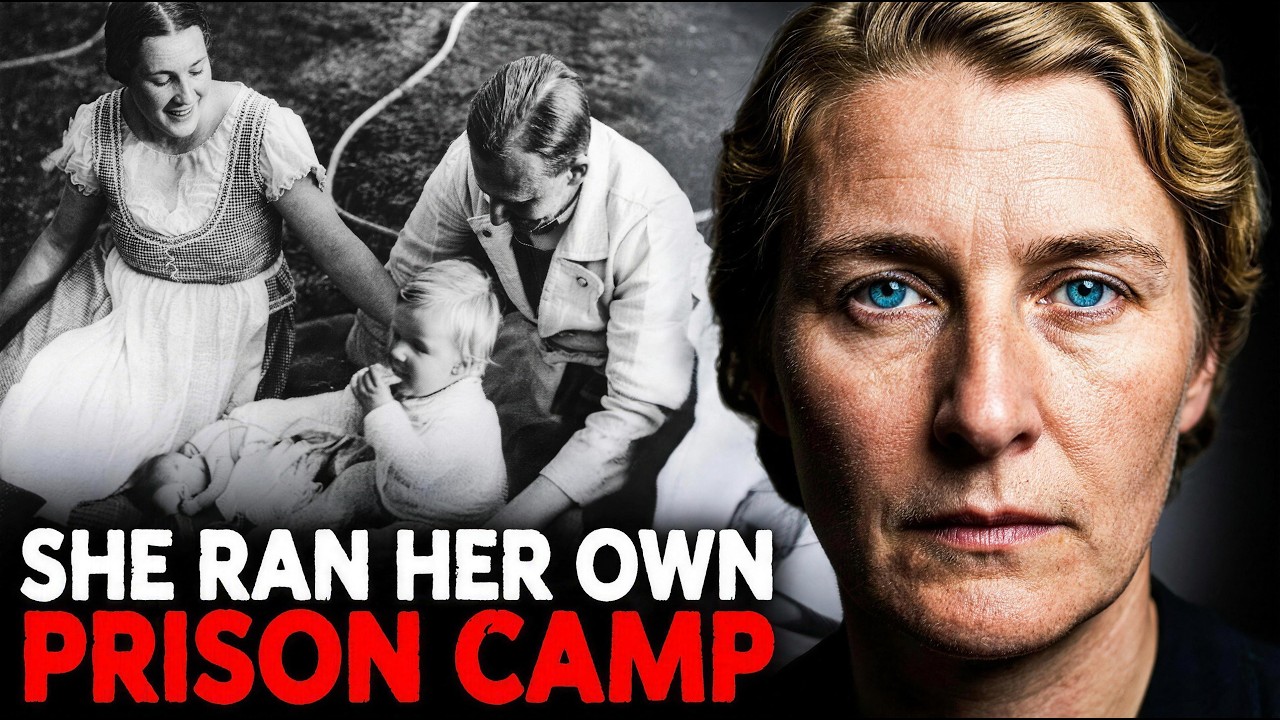
A West German court determined that a police general killed while performing his official duties entitled his widow to a substantial pension, roughly equal to that of a retired government minister, regardless of the moral character of the office he had held. The rulings caused public controversy and grim irony throughout the young republic, funded by taxes that included contributions from Holocaust survivors. For Lena, the outcome was simply vindication, another data point in the lifelong narrative she was constructing. In that narrative, she and her husband were the victims of history’s judgment, not its perpetrators.
She had joined the Nazi party two years before she ever met the man who would make her name infamous, receiving membership number 121,380 as an eager eighteen-year-old on the windswept Baltic island of Fehmarn. Born on the 14th of June 1911, the daughter of a village schoolteacher who claimed minor aristocratic lineage, she grew up surrounded by low hills, sheep pastures, and fishing villages. Her brother Hans had joined the Sturmabteilung, the Nazi party’s brownshirted paramilitary wing, and his enthusiasm rubbed off on his younger sister. In 1929 she attended a political rally where Adolf Hitler himself spoke.
Whatever she heard left a deep impression. Shortly afterwards she joined the party, placing herself among the true believers years before the movement seized power. Everything changed on the 6th of December 1930, when Lena, then nineteen, attended a ball hosted by a rowing club in the northern port city of Kiel. There she met a tall blonde naval lieutenant named Reinhard Heydrich, a signals officer serving aboard the training ship Berlin.
The attraction was immediate. Within days the two were inseparable, and on the 18th of December, just twelve days after their first meeting, they announced their engagement. The whirlwind concealed a scandal already in motion. Heydrich had been informally promised to another woman, the daughter of a well-connected shipbuilder with ties to the German Navy’s senior leadership.
When that spurned woman’s family learned of the sudden engagement, they lodged a formal complaint. A naval court of honor convened in the spring of 1931, and in April, on the recommendation of Grand Admiral Erich Raeder, Heydrich was dismissed from the Navy for conduct unbecoming an officer and a gentleman. Lena in later interviews dismissed Raeder as a petty and moralistic little man, but the damage was done. At twenty-six, with the Depression at its brutal height, Reinhard Heydrich suddenly had no career, no income, and no clear future.
It was Lena who suggested that he look into the fledgling Schutzstaffel, the SS. Through her own party connections, she was aware that Heinrich Himmler was quietly building a security and intelligence apparatus within the movement. A family friend arranged an introduction, though Himmler nearly cancelled the meeting at the last minute. According to later accounts, Lena ignored the cancellation message, packed her fiancé’s suitcase herself, and put him on a train to Munich.
Himmler asked the former naval officer to sketch out his ideas for an SS intelligence service on the spot. He was so impressed that he hired Heydrich immediately, appointing him head of what would become the Sicherheitsdienst, the SD. It was a decision that would eventually place the machinery of the Final Solution in Heydrich’s hands, set in motion in no small part by his fiancée’s stubborn refusal to let a cancelled appointment end his career before it began. They married on the 26th of December 1931 in a small church in Gremup, not far from her childhood island.
Lena adjusted to the itinerant existence of an SS officer’s wife. The couple established a household on a shoestring budget while Reinhard built his fledgling intelligence service from almost nothing, reportedly starting with little more than a shoebox of index cards on the party’s internal enemies. Within the household, Heydrich himself would later half-jokingly acknowledge the arrangement, remarking that Lena directed and administered her own private Reich within their home. Their first son, Klaus, was born on the 17th of June 1933, followed by a second son, Heider, on the 23rd of December 1934.
Heydrich’s star rose rapidly. In 1934 he took charge of the Gestapo, and in 1936 he took command of the newly unified security police. Each promotion meant more hours away from home and more frequent relocations for Lena and the growing family, first through Munich, then to Berlin. Later in life, Lena offered a detailed, almost admiring account of her husband’s punishing schedule.
Reinhard began his mornings while being shaved, pouring over the overnight intelligence reports. Breakfast was hurried, and during the thirty-minute drive to his office, he would continue reading files in the back of the car. He never allowed his staff a moment’s rest, she said, adding that he had lost all sense of ordinary human measure. While Reinhard vanished into this world of files and fear, Lena’s days ran on an entirely different clock: managing meals, tending to sick children, corresponding with tradesmen, and maintaining the household’s public face.
As her husband’s rank climbed, so did the expectation that she participate in the elaborate social rituals of the SS elite. She later admitted to disliking Himmler’s wife intensely, and she cultivated a reputation among her peers as sharp-toned, opinionated, and entirely unafraid to voice her views. Her genuine passions ran toward horseback riding, croquet, and the outdoor pursuits she had grown up with on Fehmarn. By 1939, Heydrich had engineered the merger of the SD, the Gestapo, and the criminal police into the newly formed Reich Security Main Office, an organization that would eventually employ roughly 100,000 people and serve as the administrative backbone of the Holocaust.
The strain took a serious toll on the marriage. Reinhard’s long absences, his notorious womanizing, and the sheer intensity of his work left Lena managing the household alone for extended stretches, and the couple reportedly came close to divorce. They reconciled in time to welcome a third child, a daughter named Silka, born on the 9th of April 1939. Heydrich doted on his infant daughter, proudly showing her off to colleagues.
In September of 1941, Hitler appointed Heydrich as acting Reich protector of Bohemia and Moravia, effectively making him the supreme German authority over occupied Czechoslovakia. The appointment came with a residence befitting the role: the Lower Castle at Panenské Břežany, a neoclassical chateau roughly twenty kilometers north of Prague. The property had a grim provenance. It had originally belonged to Ferdinand Bloch-Bauer, a wealthy Jewish sugar industrialist who fled Czechoslovakia after the Nazi occupation of 1939, and whose confiscated art collection would later become the subject of one of the most famous restitution battles in modern history.
Before Heydrich moved in, the estate had served as the residence of his predecessor, and the family’s neighbor in the neighboring Upper Castle was Karl Hermann Frank, the brutal higher SS and police leader for Bohemia and Moravia. For Lena, the move meant stepping into a life of genuine aristocratic grandeur. The estate’s sweeping lawns and elaborate interiors stood in dramatic contrast to the modest schoolteacher’s cottage on Fehmarn. Each morning, Reinhard departed by chauffeur car for the twenty-kilometer commute into Prague along a route German officials nicknamed Heydrich’s Curve, a road that would later gain grim historical significance as the site of his assassination.
With her husband gone for the day, Lena settled into the role of chatelaine, managing an estate staff and overseeing the upbringing of Klaus, Heider, and Silka amid the surroundings of a stolen Bohemian manor house. Survivors and household staff who later testified about conditions at the estate described a woman firmly and often harshly in command of her domestic sphere, someone who expected obedience from those beneath her, whether they were Czech domestic staff or, in the years soon to follow, forced laborers drawn from concentration camps. She attended official functions, entertained visiting dignitaries from Berlin, and moved within a small, insular community of German occupation officials and their families. She would later famously describe this existence to a biographer decades afterward as feeling like a fairy tale land, one in which she herself felt like a princess.
On the 27th of May 1942, a team of British-trained Czech and Slovak soldiers, part of an operation code-named Anthropoid, ambushed Heydrich’s car along the very curve he traveled every morning. When his submachine gun jammed, one of the attackers, Jan Kubiš, hurled a modified anti-tank grenade at the vehicle instead. The explosion tore through the car’s side, driving fragments of shrapnel, upholstery, and horsehair deep into Heydrich’s body. He was rushed to a nearby hospital, and for several days his condition appeared to stabilize.
But sepsis set in, poisoning his blood, and on the 4th of June 1942, Reinhard Heydrich died. He was 38 years old, and Lena, 30 herself, was suddenly a widow with three young children, one month away from giving birth to a fourth. The Nazi regime turned his death into a spectacle of state mourning. Hitler himself traveled to Prague to view the body and later presided over an elaborate funeral in Berlin, awarding Heydrich the highest posthumous honors the Reich could bestow.
The assassination became the pretext for one of the most savage reprisal campaigns of the entire occupation, one that culminated in the annihilation of the Czech village of Lidice, where every adult male was executed and the settlement itself raised to the ground. A second village, Ležáky, suffered an almost identical fate just weeks later after German investigators discovered evidence that a radio transmitter used by the paratroopers had been hidden nearby. Beyond these two infamous reprisals, the broader wave of retribution launched throughout the protectorate claimed several thousand additional lives. Lena attended these state ceremonies as the grieving widow of a fallen hero of the Reich.
Six weeks after Reinhard’s death, on the 23rd of July 1942, she gave birth to a daughter whom she named Marte. Those who knew the family remarked that the infant bore a striking resemblance to her late father. In the immediate aftermath, Lena faced urgent practical decisions. She began liquidating some of the family’s Berlin-area properties, selling the house in the capital as well as a hunting lodge near Jena.
Yet she made a deliberate decision to hold onto the grandest prize of all: the Lower Castle at Panenské itself. In recognition of Reinhard’s service, Hitler formally gifted the estate to Lena outright, and the property took on a new, distinctly Germanized name in official correspondence: Jungfern-Breschan. It was supposed to remain in Heydrich family hands in perpetuity, a monument to a fallen hero. For the next three years, it would become the stage for the strangest and darkest chapter of Lena Heydrich’s life.
Himmler took on an informal role as Lena’s legal guardian, arranging for her financial security. But he quickly discovered that she had no intention of retreating into quiet, respectable mourning. She remained in Czechoslovakia, ran her thirty-two-room country villa with an energy and visibility that Himmler found distinctly unwelcome, entertaining, corresponding, and involving herself in local affairs. Himmler eventually felt compelled to reprimand her directly for behaving, in his words, like a politicizing widow.
Beginning in 1942, Himmler arranged for a workforce of approximately thirty Jewish prisoners from the Theresienstadt ghetto to be sent to the estate to perform forestry and agricultural labor. Lena, now mistress of the property in full, assumed direct responsibility for overseeing their daily work. According to postwar testimony from survivors, she did not merely delegate the supervision of the prisoners to estate staff or SS guards. She personally involved herself in their treatment, and multiple witnesses later testified that she subjected prisoners to physical abuse.
The picture that emerges is a chilling one: a woman whose mornings might begin with breakfast with her children and end in the afternoon walking among prisoners laboring in her orchards, meting out punishment for perceived slights or insufficient productivity. By February of 1944, the site had been formally designated an official subcamp of the Flossenbürg concentration camp system. The original Jewish forced laborers from Theresienstadt were replaced by a smaller contingent of fifteen prisoners drawn from Germany, the Netherlands, Poland, and Czechoslovakia, most of them Jehovah’s Witnesses who had been imprisoned for refusing to swear loyalty oaths to the Nazi state. All fifteen of these later prisoners would remarkably survive to see liberation in May of 1945.
The earlier Jewish laborers, deported onward in February of 1944, met grim and unstated fates during a period of intensified deportations from Theresienstadt. Tragedy struck the family again on the 24th of October 1943, when her elder son Klaus, then ten years old, was cycling with his younger brother in the courtyard of the estate. Seeing that the driveway gates to the public road had been left open, Klaus rode his bicycle out onto the street, where he was struck by a passing truck. He died from his injuries later that same afternoon.
Lena, consumed by grief and fury, demanded that the truck’s driver and passengers be executed. An official investigation ultimately acquitted them, finding the collision to be a tragic accident. Klaus was buried in the garden of the estate. By the beginning of 1945, the fairy tale was collapsing entirely.
In April of 1945, Lena packed up her remaining three children and joined the desperate exodus of Germans fleeing west ahead of the advancing Soviet forces. The family made their way first to Bavaria, then eventually back to the island of Fehmarn, where she had been born and raised. The family home there had been requisitioned by the British army, but by the end of 1945, the British had moved out and Lena was permitted to reclaim the property. The denazification process established by the Allied occupying powers subjected Lena to formal scrutiny in the years immediately following the war.
Remarkably, she emerged from these proceedings cleared of wrongdoing. Despite the wartime testimony regarding her mistreatment of forced laborers, she never stood trial. She was officially cleared and permitted to retake full possession of her financial assets and her house on Fehmarn. Freed from formal legal jeopardy, Lena turned her attention to securing a state pension as the widow of a fallen German official, an effort that would produce one of the most bitterly contested legal sagas of any Nazi widow’s postwar life.
Her argument rested on a technicality: Heydrich had held the rank of a general in the German police force at the time of his death. She won her case in 1956 and 1959. With her pension secured, her days on Fehmarn settled into a pattern that combined the ordinary rhythms of small island life with an increasingly public role as the keeper of Reinhard Heydrich’s memory. She managed her property, corresponded extensively with historians and journalists, and cultivated relationships within a network of former SS officers and sympathizers who treated her and the memory of her husband with continued reverence.
Her home became an informal gathering point for this circle, and she eventually opened a small guest house and restaurant on the property, a business that catered, at least in part, to former SS men who traveled to the island to socialize and exchange stories of what they still referred to as the good old days. In 1965, while on holiday in Finland, she met a Finnish theater director named Mauno Manninen, the son of the well-known Finnish poet Otto Manninen. Manninen had reportedly first become curious about Lena after reading an article about her and traveled to Fehmarn specifically to meet her. The two married later that year, though by her own account and the assessment of those who studied the union, the marriage was one of practical convenience rather than romantic passion.
It allowed her to shed the surname Heydrich. As Frau Manninen, she could move through public life with less immediate recognition. Together, the couple took over full operation of the family’s former summer house on Fehmarn, converting it into a restaurant and inn known as the Imbria Parva. The business drew not only ordinary tourists, but also a steady stream of former SS officers and Nazi sympathizers.
That chapter came to an abrupt end in February of 1969, when welding work being carried out within the building’s roof space accidentally ignited the structure’s thatched roof. The resulting fire gutted the Imbria Parva. Later that same year, Mauno Manninen died, leaving Lena a widow for the second time. Throughout these years, her children grew up under the shadow of their father’s infamy.
Heider, her surviving son, pursued a career as an engineer and settled later in life in the Bavarian town of Viersen, where he would spend decades declining to discuss his father publicly at all. Silka maintained a low public profile. Marte remained on Fehmarn into adulthood, at one point running a small fashion shop in the nearby town of Burg, living a life so quiet and undocumented that historians have found remarkably little public information about her adult experiences. Where Lena spent her life aggressively shaping public perception, her children appear to have collectively chosen the opposite path, retreating into private lives conducted almost entirely outside the historical record.
Perhaps the most extensive record of how Lena spent her later years comes from her long relationship with the American writer Nancy Dougaty, who first began interviewing Lena in the 1970s for what would eventually become a sprawling dual biography. Dougaty conducted three extended interview sessions with Lena at her home on Fehmarn, tape recording hours of conversation. What emerges from these interviews is a portrait of a woman who spent an enormous amount of her postwar time constructing, refining, and defending a very particular narrative: that Reinhard Heydrich had been a dutiful professional and a loving family man who happened to work in a field that placed him in proximity to terrible things he did not personally orchestrate or even fully understand. She insisted repeatedly that she had never interfered with her husband’s work and had never truly grasped its details.
She offered vivid, humanizing anecdotes about his skill at riding, sailing, fencing, and tennis, his considerable musical talent on the violin, his close bond with his children. Yet when the conversation turned to the machinery of the Holocaust itself, Lena’s account shifted into a register of denial and deflection. She insisted that the mass murder of Europe’s Jews was, in her words, technically not at all possible on the scale historians described, and she characterized talk of atrocities committed in the camps as nothing more than a kind of fairy tale. In 1976, she released her memoir, titled Leben mit einem Kriegsverbrecher, or Life with a War Criminal, a title she selected with deliberate irony, intending it as a jibe at how history had come to judge her husband.
She would later admit to regretting the title, not because she had changed her assessment of Reinhard, but because so many readers took the phrase at face value. Years later, the memoir would be reissued under a new title, My Life with Reinhard, with an introduction contributed by her son Heider. Lena’s role as guardian of Reinhard’s reputation reached its most public flashpoint in 1978 and 1979, when West German television broadcast the American miniseries Holocaust. Lena gave interviews denouncing the production as irresponsible, arguing that it distorted the historical record.
She dismissed the on-screen depiction of her husband as unrecognizable. In one widely reported interview, she went further still, suggesting that the Final Solution had nothing to do with her husband at all and offering the extraordinary claim that Europe’s Jews had simply been shipped to the Urals rather than exterminated. She remained on Fehmarn, close to the site of both her childhood and the burned ruins of the inn she and Manninen had once run together. She died on Fehmarn on the 14th of August 1985 at the age of 74, having outlived her first husband by more than four decades, having outlived her second husband by sixteen years, and having spent nearly the entirety of that long widowhood defending, explaining, and mythologizing the eleven years she had spent married to Reinhard Heydrich.
What became of the grand Bohemian estate? Jungfern-Breschan, or Panenské as it reverted to being known, was seized by the reconstituted Czechoslovak state at the end of the war. Its once grand grounds gradually filled with workshops and industrial buildings as the state repurposed the estate for practical use. The chateau eventually came under the administration of a state metal research institute before falling into extended disuse and disrepair.
Decades after Lena and her children fled westward, historians and memorial researchers identified Jungfern-Breschan’s role as an official satellite camp of Flossenbürg, adding the estate to the broader historical record of the more than 1,000 subcamps that fed forced and slave labor into the German war economy. Historians who have studied Lena Heydrich’s life closely have arrived at sharply divergent assessments of how much credibility to extend to her own account. Robert Gerwarth, whose 2011 biography of Reinhard Heydrich, titled Hitler’s Hangman, remains widely regarded as the standard scholarly work, drew on extensive archival research to construct a portrait that leaves little room for the sympathetic, apolitical technocrat Lena spent decades describing. Nancy Dougaty’s posthumously published dual biography, by contrast, leaned heavily on her direct interviews with Lena, drawing criticism for accepting Lena’s self-serving narrative with insufficient skepticism.
The tension between these two approaches mirrors a broader challenge running through the entire history of the Third Reich’s perpetrators and their families: how much weight should be given to the personal testimony of people who lived inside the machinery of genocide, but who in the decades afterward had every reason to minimize, deny, or simply forget their own proximity to its worst crimes. What emerges when applied specifically to the question of what Lena Heydrich actually did all day is a portrait considerably more damning than the one she spent a lifetime constructing. Yes, she managed a household, raised four children, played croquet, rode horses, and hosted dinners. But she also joined the Nazi party two years before meeting her husband, actively steered him toward the SS when his naval career collapsed, benefited enormously from the plunder and privilege that came with his rise, occupied a mansion confiscated from a Jewish industrialist, and when given direct authority over concentration camp prisoners on her own estate, allegedly subjected them to physical abuse.
The estate’s connection to one of the most famous art restitution sagas of the modern era runs through its original owner. Ferdinand Bloch-Bauer was not merely a wealthy sugar industrialist, but also a major art collector whose family had commissioned and owned some of the most celebrated paintings by the Austrian artist Gustav Klimt, including a portrait of his own wife, Adele Bloch-Bauer, that would later become world famous under the title Woman in Gold following a decades-long legal battle for its return to the family. When the Nazis seized Bloch-Bauer’s properties, his art collection was scattered and looted alongside his real estate. The Bloch-Bauer restitution case would not reach its famous resolution until the early twenty-first century, when Maria Altmann, a niece of Adele Bloch-Bauer, successfully sued the Austrian government for the return of the Klimt paintings.
The woman who once described her stolen Bohemian estate as feeling like a fairy tale land was living inside the plundered legacy of a family whose own fairy tale had been violently interrupted by the same system of persecution that made her privileged life possible. Lena Heydrich’s story fits within a broader and increasingly well-documented pattern of female complicity within the Nazi system. Scholars have documented thousands of cases of German women who served as camp guards, administrative staff processing deportation orders, and wives who, like Lena, benefited materially and socially from their husbands’ positions within the apparatus of persecution while maintaining a fiction of domestic innocence. Her case stands out not because her complicity was unique, but because the scale of documentation surrounding her life, thanks to her own eagerness to grant interviews and publish a memoir, makes her an unusually well-illustrated example of exactly how that fiction could be constructed and maintained across four decades.
How is Lena Heydrich remembered today? Her name persists primarily within the specialized literature devoted to the senior leadership of the Third Reich and their families. Nancy Dougaty’s posthumously published biography brought renewed attention to her story in the early 2020s, prompting reassessments that largely concluded that Lena’s own account required significant skepticism and correction against the documentary record. Visitors to Fehmarn today will find little in the way of formal memorialization connected to her.
In the Czech Republic, by contrast, the site of Panenské has attracted more sustained historical attention from researchers and memorial organizations documenting the Flossenbürg subcamp system. What did Lena Heydrich actually do all day? The honest answer is that it depended on which decade and which version of her story one chooses to believe. As a teenager on Fehmarn, she rode, attended dances, and absorbed the political resentments of a defeated postwar Germany.
As a young SD wife, she managed a household on a shoestring budget. As the wife of a rising Berlin power broker, she raised children, hosted dinners, and navigated the petty rivalries of the SS elite. As the mistress of a stolen Bohemian estate, her days blended the domestic and the monstrous in equal measure, managing children and household staff in the morning and, according to multiple survivor accounts, mistreating enslaved laborers in the afternoon. And across the four decades of her long widowhood, she spent an extraordinary proportion of her waking hours constructing, defending, and publicly repeating a version of her own history that minimized her husband’s crimes, denied the scale of the Holocaust itself, and painted her own domestic existence as one of blissful ignorance.
She never fired a weapon, never signed a deportation order, and never sat in a room where the fate of millions was decided. But she joined the party before her husband did, pushed him toward the career that would make him one of history’s great mass murderers, benefited from every privilege and every stolen property that career generated, and when finally given direct personal authority over people the regime had condemned, allegedly chose cruelty over even the most basic decency. Her life poses with unusual clarity one of the central and still unresolved questions of Holocaust historiography: how should history judge those who stood not at the center of the killing machinery, but immediately adjacent to it, who benefited from its fruits, who occasionally participated in its smaller cruelties, and who spent the rest of their lives insisting they had simply been housewives, mothers, and bystanders to history rather than participants in it. Her life traced a near-perfect circle, beginning and ending on the same small island in the Baltic Sea.
Fehmarn asked nothing of her in return for this refuge. It simply remained as it always had, a quiet island of beaches, farmland, and fishing villages, indifferent to the extraordinary and terrible history that had passed through the life of one of its own daughters. In the end, the question of what Lena Heydrich actually did all day resists any single tidy answer, and that resistance is itself the most important lesson her life offers. She was by turns an ordinary schoolgirl, an eager young convert to a murderous political movement, a devoted and resourceful fiancée, a harried young mother, the mistress of a stolen mansion who allegedly abused the enslaved people forced to work its grounds, a grieving widow demanding vengeance for her son’s accidental death, a shrewd litigant who forced a reluctant state to fund her comfortable retirement, an innkeeper serving nostalgic old Nazis their dinner, a prolific correspondent defending an indefensible legacy, and finally an old woman on a quiet island still insisting until her last breath that the Holocaust had been little more than a fairy tale.
No single label captures the totality of those decades. And that perhaps is precisely the point.






