They gathered on account of the Earps and the Clantons in the autumn of 1881, and the tale of that clash in Tombstone has been recounted so many times that it has been polished into legend. Yet the men striding toward the O. K. Corral that October afternoon were not resolving some private quarrel between good and evil.
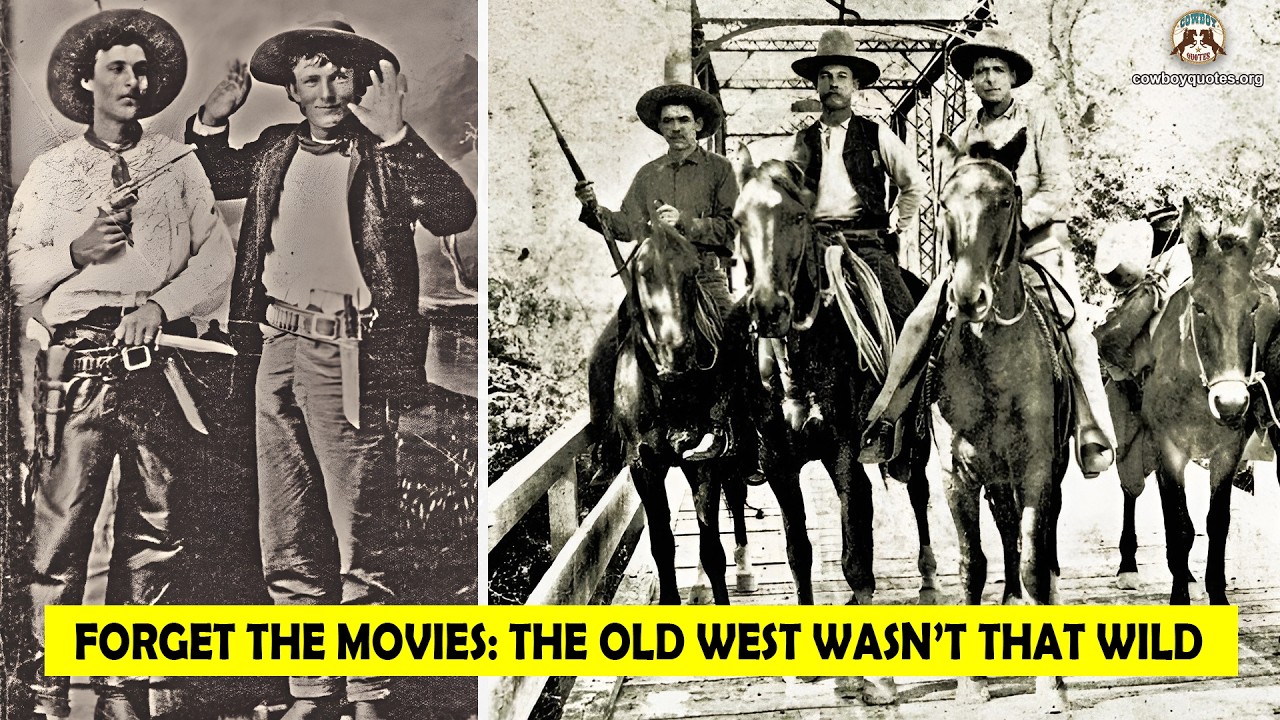
They were carrying out a local ordinance. Tombstone had enacted a law that April requiring a special permit to bear a weapon within town boundaries, and on that day the officers acted against men who were breaking it. The celebrated gunfight, recalled ever after as the confrontation that came to define the Wild West, actually started as ordinary municipal law enforcement in a town that, like countless frontier settlements, had concluded that public order was the basis of its survival. That fact sits awkwardly beside the picture of the American West that Hollywood has spent over a century training us to see.
We envision a lawless expanse where shootouts break out in the streets, bandits control entire towns, and death lurks behind every saloon door. The actual frontier was much more complicated, and in many places much less violent than the legend suggests. Tight gun regulations, well-organized communities, and uneventful daily routines seldom turn up in Western movies, since the reality was frequently less thrilling than the fiction. So how wild was the Wild West truly, and how much of what we accept was fabricated afterward by dime novels and Hollywood?
When researchers pored over town records, court documents, and old newspapers from the late nineteenth century, they uncovered something quite unlike the legend. Robert Dykstra examined five major cattle towns in Kansas—Wichita, Abilene, Caldwell, Ellsworth, and Dodge City—during the height of the cattle-drive period from 1870 to 1885. Even with thousands of cowboys arriving after long trail drives, those five towns combined witnessed just 45 killings across fifteen years. That works out to roughly three incidents a year among all of them.
Dodge City itself, so frequently depicted as the most perilous town of the period, logged only 15 killings over the entire decade of its boom years as a cattle hub—about one and a half annually, with some years completely free of homicides. Local newspapers mirrored this reality. The Dodge City Times placed crop reports, railway timetables, town meetings, and everyday troubles such as stray livestock on its front pages, not accounts of daily danger. When a serious event did happen, it was covered as startling front-page news precisely because it was so uncommon.
Tombstone offers a comparable picture. Despite a reputation resting entirely on the O. K. Corral, coroner’s records from 1880 to 1884 reveal that, aside from that celebrated episode, fewer than twelve people died from violence in Tombstone during those years.
Most recorded deaths resulted from mining accidents, disease, or illness, not from quarrels. Setting homicide rates per 100,000 people side by side between these frontier towns and the larger eastern cities of the same period makes the case even clearer. Though a single incident in a town of merely a thousand residents could generate a high statistical rate, the real day-to-day figures indicate that inhabitants of places like Abilene or Tombstone were generally safer than those living in major eastern cities such as New York, Baltimore, or Chicago, which were grappling with serious gang violence and the disruptions of the industrial age. Most people who headed west were not seeking conflict.
They were families, shopkeepers, and tradesmen hoping to establish stable, peaceful lives. Endless disorder would have made it impossible for their communities and businesses to endure. Shut your eyes and conjure a classic frontier street, and you will likely picture every man, from the bartender to the traveling merchant, openly wearing a sidearm. Film and television have taught us that bearing a gun on the frontier was not merely common but essential for everyday survival.
The figure of the armed frontiersman has become impossible to separate from how we envision the American West. But if you stepped down from a stagecoach into a real, thriving western town in the 1870s or 1880s, you would have encountered the reverse of what popular culture implies. Numerous frontier towns actually possessed some of the tightest gun regulations in American history, in certain cases stricter than many present-day cities. The founders of these towns grasped a simple truth: disorder was bad for business.
Investors would not fund mines or railroads in towns that appeared unsafe. So once a settlement became an official town, local councils typically enacted strict limits on carrying weapons within town boundaries. In Dodge City, Kansas, around 1878, a large sign near the center of town made the policy unmistakable, plainly declaring that carrying firearms was not allowed. Local ordinances barred anyone except law enforcement from carrying guns inside the city limits.
Cowboys arriving after long cattle drives were required to hand over their weapons to the sheriff or the hotel clerk before doing anything else. They got a token to retrieve their equipment only when they were prepared to leave town. This was not particular to Kansas. Tombstone, Arizona, passed a similar ordinance in April 1881 requiring a special permit to carry arms within the city limits.
Historical reports from local papers such as the Tombstone Epitaph demonstrate that the rule was enforced seriously. The famous incident at the O. K. Corral in October 1881 is often recalled as a personal dispute, but it in fact started as a law enforcement action connected to that local ordinance.
Officers acted to handle individuals carrying weapons in breach of the rule. The newspapers of the day suggest that many residents backed these restrictions. Editors regularly commended local officials for keeping order in their towns. One Kansas newspaper in 1882 characterized carrying a gun in a settled community as a mark of poor manners rather than a sign of confidence.
Being armed inside town was not regarded as heroic individualism. It was typically met with suspicion. Those who broke these ordinances faced genuine penalties. Fines could amount to a worker’s wages for weeks, and those unable to pay might serve jail time or labor to settle the debt.
So while popular media frequently depicts the frontier as a place of perpetual chaos, the historical record tells another story. The people who built these towns depended not on continuous conflict but on clear rules, practical enforcement, and a strong longing for order and stability. A safe, organized town square was regarded as the true basis of a society that could endure. When we picture legendary western outlaws such as Butch Cassidy, the Sundance Kid, Jesse James, or the Dalton Gang, a familiar scene springs to mind.
Masked riders charge into a quiet town, storm the local bank, fill sacks with gold, and disappear before the sheriff can respond. It is one of the most frequently repeated tales in Western fiction. But historians who examined the financial and legal records of the era discovered that the classic bank robbery was in reality exceedingly rare and seldom successful. Historian Larry Schweikart carried out a comprehensive review of records across fifteen states and territories between 1859 and 1900.
Across more than forty years and thousands of settlements, he turned up only around a dozen verified bank robberies throughout the whole American West. To put that in perspective, a modern city today might record more bank holdups in a single month than took place during the entire frontier period. There were sensible reasons for this. Frontier banks were never simple targets.
They tended to be constructed as solid brick or stone buildings in central, highly visible spots, secured by heavy, intricate safes that could not be opened in a hurry. Forcing one open was neither fast nor easy. The layout of frontier towns made matters even worse for aspiring robbers. Banks generally stood close to the sheriff’s office, busy shops, or other occupied structures, so any commotion would draw notice almost at once.
In small towns where many people knew how to handle firearms for hunting and self-defense, anyone attempting a quick getaway would find the entire community reacting swiftly. The Dalton Gang’s raid in Coffeyville, Kansas, on October 5, 1892, is a prime example. The gang tried to hold up two banks simultaneously, but local residents recognized them fast, grabbed their weapons, and moved to defend the town. The raid ended in disaster for the gang.
Most of its members died in the fight, and the lone survivor was badly wounded before being taken prisoner. The town made it plain that it would not let its resources be seized without a fight. Since towns were so well defended, seasoned outlaws generally steered clear of them. Newspaper archives, including the Rocky Mountain News, reveal that criminals mostly went after isolated stagecoaches or passing train shipments in remote places, where fewer people blocked their path and fleeing into the wild was simpler.
The widespread notion that frontier banks lived under constant danger comes from film and television far more than from history. In truth, these institutions were carefully guarded, and communities took pride in protecting the financial stability they stood for, which made frontier banks some of the most secure and well-protected elements of western life. When movies and TV shows portray western towns and mining camps, they usually lean on a familiar premise: complete lawlessness, where the strongest seize whatever they want and arguments are settled by violence. That works as dramatic entertainment, but it does not survive scrutiny as historical economic fact.
Had the frontier really operated that way, westward expansion would most likely never have succeeded. Historians who examined the records of the era, camp regulations, and legal agreements uncovered a more encouraging reality. The western economy rested largely on voluntary cooperation, mutual aid, and organized agreements. Long before federal courts or formal governments arrived in the territories, settlers had to work out ways to share resources fairly among themselves.
They frequently accomplished this by establishing their own local systems of governance. In the mining camps of California, Colorado, and Nevada during the mid-nineteenth century, strangers from many backgrounds arrived quickly at remote sites. Rather than settling disputes through conflict, these communities often organized themselves around written, shared rules. Historian John Umbeck’s research on the early California gold rushers found that miners would establish districts, elect representatives, and adopt detailed rules governing claim sizes, required work, and how to resolve disagreements.
When conflicts came up, such as over who had found a resource first, camps often held informal hearings with a jury of peers to reach a ruling. Those who disregarded the community’s rules usually faced social and economic exclusion rather than confrontation, a harsh penalty in a setting where cooperation was vital to survival. This spirit of mutual aid carried over to the overland trails as well. Wagon trains ran like small mobile communities, often organized under formal agreements before setting out.
These agreements covered travel order, guard duties, and basic standards of conduct. When equipment failed or livestock went missing, travelers would usually pause to help with repairs and share supplies, recognizing that cooperation was vital to survival on the journey. The cattle industry reflected similar values. Large cattle operations demanded careful coordination, and ranchers often formed groups, such as the Wyoming Stock Growers Association, to manage branding systems, grazing arrangements, and cooperative roundups, establishing order through organization rather than conflict.
Water rights, one of the most vital resources in the arid West, offer further proof of this pattern. Instead of turning to conflict over access, settlers drew up formal water-sharing agreements and cooperative irrigation companies, joining forces to build irrigation systems and share resources on agreed terms. The true story of the American West was shaped not by lone individuals acting alone but by communities that prized order, fairness, and cooperation. Even without extensive formal government, many frontier communities found ways to build stable, effective societies through joint effort and mutual agreement.
When you hear the word cowboy, you probably picture a rugged, independent drifter. A spotless hat, a fine horse, evenings passed in saloons, always braced for dramatic showdowns. It has become an enduring emblem of American individualism. But the actual diaries, payroll records, and photographs from cattle drives between 1866 and 1886 tell a very different tale.
The real cowboy’s life was punishing, badly paid, and largely routine, closer to farm labor than to adventure. Let us begin with the myth of the wealthy, glamorous cowboy. Most cowboys were young, often teenagers or men in their early twenties, pushed into the work by a shortage of other opportunities. According to the National Cowboy and Western Heritage Museum, cowboys generally earned between 25 and 40 dollars a month, on par with factory wages back East, but without steady housing.
They also had to purchase their own gear, such as saddles and boots, which frequently left them owing money to the ranch owners. The makeup of cattle drives might astonish those who know only Hollywood stereotypes. Historians estimate that roughly a quarter of cowboys were Black, many of them former slaves seeking fresh opportunities after the Civil War. Another sizable share were Mexican vaqueros, who created much of the profession’s equipment and terminology.
Words such as lasso, chaps, and rodeo all come from Spanish. Native American and white workers toiled alongside them too. On the trail, practical skill counted for more than background, producing a degree of diversity rare elsewhere in the country at that time. Daily life on a cattle drive was defined by grueling routine more than excitement.
A journey from Texas to the Kansas railheads could take two to three months, with cowboys spending as much as 15 hours a day in the saddle, often riding through the thick dust churned up by the herds. This was where the bandana came from, serving a practical purpose rather than the theatrical one usually shown on screen. Even after nightfall the work went on. Cowboys took turns watching the herd through the night in shifts, often singing softly to help keep the cattle calm.
The biggest threat they encountered wasn’t a showdown with outlaws but the herd’s sudden, unpredictable panic, which could put anyone in its path in danger, particularly after dark or across rough terrain. Once cowboys finally arrived in towns such as Abilene or Dodge City, their wants were plain and practical. A haircut, a hot bath, clean clothes, and a proper meal after weeks of plain trail fare. Their pay vanished quickly, and before long most cowboys were signing on for another drive simply because they needed the work.
Far from a glamorous adventure, the cowboy’s existence meant relentless, demanding labor that called for stamina, teamwork, and patience. We all recognize the picture of the classic frontier lawman: the tall, silent man of absolute integrity who wears the badge, takes a firm stand against wrongdoing, and is motivated by justice alone. Names such as Wyatt Earp, Wild Bill Hickok, and Bat Masterson have entered American folklore. They are frequently recalled as faultless heroes, yet a closer examination of court records, city council minutes, and newspaper commentary from the period shows a more complicated reality.
Many legendary lawmen were driven by politics and business, frequently blurring the boundary between enforcing the law and twisting it for private advantage. In the nineteenth century, serving as a town marshal or county sheriff was not simply a civic duty. It was often a profitable and politically charged role. Lawmen typically did not draw a plain salary.
Instead, they took a cut of collected taxes, fees for serving warrants, and a share of the fines paid by those they arrested. This fee arrangement created genuine incentives for dubious conduct. Rather than concentrating solely on stopping wrongdoing, some lawmen made more money by letting profitable businesses—saloons, gambling halls, and the like—keep running, since those establishments produced the fines and fees that supplied their income. In some instances, lawmen held financial stakes in those very establishments.
Wyatt Earp, perhaps the best-known lawman in American history, is often depicted as a heroic figure who brought order to Tombstone. The historical record complicates that portrait. Before he became a lawman, Earp ran into legal trouble in Indian Territory in 1871 over horse theft, and he departed the area before the matter was settled. Later, while serving as a police officer in Wichita, Kansas, he was dismissed after a dispute with a local political figure over town funds.
In Tombstone, Earp was entangled in business interests tied to gambling and saloons, and he harbored political ambitions that placed him in direct rivalry with the county sheriff, Johnny Behan, over control of the lucrative tax collection duties. The famous clash between the Earp family and the Clanton-McLaury group is better understood not as a straightforward contest of good against evil but as the outcome of a tense local feud involving political power and business interests. Wild Bill Hickok’s record is similarly tangled. For all his reputation, he devoted much of his time to card games, socializing, and saloon dealings rather than to actual law enforcement.
During his brief tenure as marshal in Abilene, Kansas, in 1871, residents became uneasy about his heavy-handed manner, and the city council removed him from office in under eight months. His exit followed an unfortunate episode in which he accidentally wounded his own deputy, Mike Williams, during a noisy street disturbance—an event that left townspeople feeling his presence was no less a danger than the disorder he was meant to stop. Bat Masterson, another prominent Old West figure, actually spent most of his life as a gambler and later as a sports writer rather than as a lawman. While serving as sheriff of Ford County, Kansas, rival newspapers accused him of favoring certain gambling operations tied to his allies while going after their competitors.
The badges these men wore were not necessarily emblems of impartial justice. They often stood for political influence and economic opportunity. Many residents regarded local lawmen with a measure of caution, aware that these men might be as eager to collect fines as to protect the community. Looking past the popular image, the people who shaped law enforcement in the West were complicated individuals operating in a system where policing and the pursuit of personal profit were tightly bound together.
If the historical West was in fact a place of low crime rates, strict local regulations, rare bank robberies, and everyday cooperation, that poses an intriguing question. How did the popular image of the turbulent frontier come to dominate our imagination? The answer lies in the media, marketing, and entertainment of the early nineteenth century. The dramatic version of the West that many of us grew up with was not really historical truth.
It was a commercial invention, shaped and sold to the public long before the era itself actually ended. This process started in the 1860s and 1870s with the rise of dime novels. These were cheap, widely distributed booklets, much like today’s pulp fiction, popular among factory workers and city dwellers in the East. Publishers realized that urban readers, looking to escape their daily routines, wanted exciting stories.
Writers, most of whom had never traveled West, began turning out wildly exaggerated tales about real and fictional characters from those regions. One notable example is Edward Judson, who wrote under the name Ned Buntline. In 1869 he met a young scout named William F. Cody in Nebraska and, through a series of dramatic stories, transformed him into a legendary character called Buffalo Bill.
These tales were far removed from Cody’s actual daily work, but readers loved them. Soon many real western figures realized they could earn more money by adopting these exaggerated personas than by continuing their ordinary frontier work. Cody went further by launching the Buffalo Bill’s Wild West show in 1883, an elaborate touring production that traveled across the United States and Europe for decades, drawing huge crowds, including members of European royal families. The show featured dramatic theatrical scenes, simulated robberies, battles, and shooting exhibitions, shaping how many people perceived the West, especially in eastern cities, where they had no other way to see it.
As the actual frontier era drew to a close at the turn of the twentieth century, the emerging film industry picked up where the traveling shows left off. Early films, such as The Great Train Robbery in 1903, helped cement the genre’s lasting elements: masked characters, dramatic confrontations, and thrilling chases that shaped Western storytelling for decades. Later filmmakers, including directors like John Ford and stars like John Wayne, built on these prototypes, turning a relatively short historical period into a broader cultural mythology, often replacing the complex, cooperative reality of frontier life with a simplified narrative of conflict and individual heroism. The version of the Old West celebrated in cinema and television is a powerful piece of storytelling.
Yet it was largely shaped by writers, artists, and filmmakers rather than historians. In truth, the settlers who filled the American West developed those areas through relentless labor, mutual support, and a deep longing for security and community. An accomplishment that, while less spectacular on screen, tells a genuinely striking story of endurance and shared endeavor. The Old West we grew up with—its gunslingers, its lawless streets, its everyday shootouts—proves to be closer to legend than to fact.
The genuine history is quieter, yet perhaps more extraordinary. Towns rose not from disorder but from collaboration, agreements, and a common resolve to build something enduring from the frontier. It serves as a reminder that the truth is often more fascinating than the myth, once you are willing to seek it out.
