On a slender mountain trail known as Pound Gap, as dusk settled over 1892, a wagon train hauling the Mullins family home from market rolled straight into a trap. Gunfire burst from the gathering darkness of the woods. The lead horse shrieked and collapsed; men fell into the dirt before their hands could find their weapons. Jacko Fraser stepped out from among the trees and walked amid the wounded and the slain, finishing off survivors where they lay and relieving the corpses of their money.
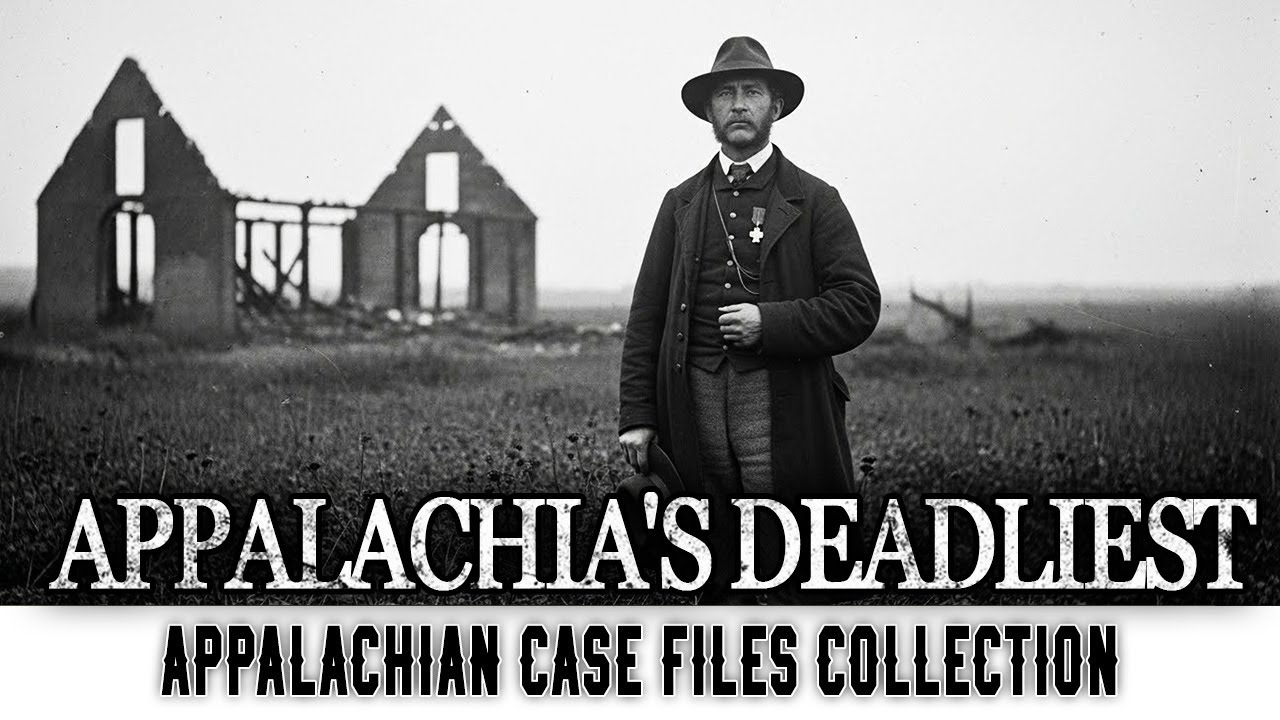
Within mere minutes, a well-off family coming back from a profitable day of trade was left as wreckage, scattered flour, and stillness. The theft alone was enormous—several hundred dollars, a fortune in those hills—yet it was the way the killing was done that made the day infamous. This was no robbery. It was an execution, and it turned John Fraser the outlaw into something altogether different: the White Devil, a name spoken in whispers throughout the Cumberland Mountains of Virginia and Kentucky.
The world that shaped Jacko Fraser had been hammered into being a generation before by the Civil War. The settlements strung along the rugged Virginia-Kentucky line had been torn apart by the fighting and abandoned in grinding poverty. Soldiers came back to broken farms and a law that was far away and never dependable. In the remote hollows, the old rules still governed: family above all, an insult to one was an insult to every one of them, and honor was settled in blood.
These were the years of the great Appalachian feuds, when violence was woven into the fabric of everyday existence. Looking out for oneself was the only real safeguard. A county sheriff might carry weight in the dusty courthouse square, but out along the twisting creeks and lonely cabins, his authority dwindled to nothing. Men put their faith in their kin, their rifles, and their own judgment.
Jacko Fraser was a child of that world. He was reputed to be a Confederate veteran, a man who had witnessed the war and carried it within him long after. He came back not in search of peace but harboring a grudge against all of humanity. He drew lesser men to his side—partners in crime such as Henley Cox—and assembled a web of informers and petty thieves who purchased his stolen wares and swapped neighbors’ whereabouts for silver dollars.
For years before the massacre, his name spread through the mountains like a sickness. A peddler disappeared while passing through Pound Gap. A farmer lost his finest mule. Travelers reached settlements pale and trembling, speaking of a man with cold, pale eyes who had robbed them on the road.
None of these episodes were serious enough to draw the law down from the state capital, yet together they laid a groundwork of terror. The community was being slowly poisoned not merely by Fraser’s actions, but by the dread of what he might do next. The Mullins family was the exact opposite of everything Fraser represented: a large, widely respected clan, a pillar of the community. They made an ideal target for a man determined to prove that no one and nothing was beyond his reach.
On the day of the massacre, several members of the family, among them Ira Mullins and his wife, had made the long wagon trip to town and sold their goods at a good profit. Their pockets were heavy with cash as they set out for home through Pound Gap. The assault was ruthlessly efficient. The narrow pass turned into a killing ground.
Fraser’s men advanced with frightening deliberateness, stepping out of the treeline like ghosts. Ira Mullins lay wounded in the dirt, and Fraser stood above him holding a revolver, his expression as unreadable as stone. One shot finished him. Then Fraser knelt and coolly took the roll of bills from the dead man’s pocket, going through the same motions as the gang worked its way from body to body.
When they departed, they melted into the forest. All that was left was the ruin of a family and a silence that seemed to shriek. Word raced through the mountains on the wind, carried from cabin to cabin in hushed, urgent whispers. The raw savagery of the attack could no longer be overlooked, not even by the far-off and frequently uncaring hand of the law.
Authorities in both Virginia and Kentucky, pressed by frightened communities, at last took action. A sizable bounty was posted for Fraser and his gang, and notices were tacked to courthouse doors and the walls of general stores. The manhunt brought in professional detectives from the Baldwin-Felts agency and a legendary mountain lawman, Marshal Big Ed Hall, who knew every hidden trail and secret hollow. Riding with them were the kin of the murdered Mullins family, men with faces like stone who sought no reward money but only to settle a family debt.
For weeks, the posse scoured the ridges and ravines. The mountains that tormented the hunters were Fraser’s strongest ally. They came upon warm embers and footprints, only for the trail to disappear. Every stirring in the brush might be an ambush; every shadowed rock formation a sniper’s perch.
The posse grew tired, their determination worn thin by frustration and the unsettling sense of being watched. In the end, it was neither a tracker’s craft nor a detective’s reasoning that brought the White Devil to bay. It was human frailty. An informant, lured by the bounty or frightened into cooperating, revealed where Fraser was hiding.
The tip brought them to an isolated cabin close to the Kentucky line. They encircled it in the dead of night, and at first light, Big Ed Hall gave the word. A last burst of gunfire shattered the quiet morning as Fraser attempted to shoot his way free, but he was a single man against a small army. When they hauled him into the light, the posse steeled themselves for a monster.
What they saw instead was a man—worn, haggard, his eyes cold and vacant. There was no fear, no remorse, not even rage. Only a chilling hollowness and the weariness of a man who understood his road had run out. The arrest caused a sensation.
Fraser’s trial in Wise, Virginia, pulled people from three states who arrived on foot, on horseback, and in wagons. The courthouse lawn turned into a sprawling encampment of spectators. Inside, the air was thick enough to choke as witnesses recounted the horrors of Pound Gap, their voices shaking with grief and terror. They pointed toward the defendant’s table, where Jacko Fraser sat displaying no remorse, no fear, not even a hint of interest.
He observed the weeping survivors with the detached curiosity of a man watching an insect crawl across a windowsill. His cold, defiant composure was deeply unsettling. The trial was a formality. The evidence was overwhelming, the testimony impossible to shake.
The jury brought back a verdict of guilty, and the judge sentenced John “Jacko” Fraser to be hanged by the neck until dead. On September 15, 1893, the trap door swung open in Wise, Virginia, and the physical life of Jacko Fraser ended. A collective sigh of relief passed through the crowd, as though a poison had been cleansed from the air. He was laid in an unmarked grave so that his final resting place could never become a shrine or a target for desecration.
The man was gone, but his ghost was only starting to stir. The Mullins family carried on, laying their dead to rest and holding the memory of the massacre not as some spooky tale but as a raw and aching chapter of their own bloodline. Their descendants still dwell in those hills today, and the family names are chiseled into stone in old graveyards, the dates of death standing as a lasting, unyielding reply to the violence that sought to wipe them out. Since then, the modern world has cut a highway straight through Pound Gap.
Motorists cross the site of the ambush at seventy miles an hour, never knowing. Yet if you pause and listen, the woods remain deep, the shadows remain long. The old courthouse in Wise still stands. And the legend of Jacko Fraser endures as a grim ballad sung around fires late at night.
As with every notorious outlaw, word spread that he had hidden a fortune in gold and silver somewhere among the caves and crevices of the Cumberland Mountains, and for decades treasure seekers burrowed into the hillsides, chasing the ghost’s promise of cursed gold. That treasure was never found. The facts of the case have dimmed into yellowed records collecting dust in courthouse archives, but the mountains remember for a long time. So how does a man turn into a monster?
The tale of Jacko Fraser offers a chilling answer. He was not born a demon. He was shaped in the fires of a savage war and beaten into form on the anvil of a lawless, desperate land. He was the final product of a world in which civilization was a far-off rumor and survival was a daily fight.
And how does a monster turn into a legend? His cruelty was so complete, so far past the ordinary feuds of the mountains, that people had to make him something more than human to comprehend him. It was simpler to believe he was a ghost who could dissolve into the fog than to accept that a person could be capable of such cold, hollow evil. The legend of the White Devil was not merely a story told to scare children.
It was a story grown-ups told themselves to make sense of what made no sense.
