The back room of that Queens social club was meant to host the crowning moment of Tommy Desimone’s life. It was roughly eight in the evening on January 14th, 1979, and Tommy, twenty-eight, came through the door with a smile. He had been promised he was about to be inducted as a made man in the Lucchese crime family. His sponsor was already inside, waiting.
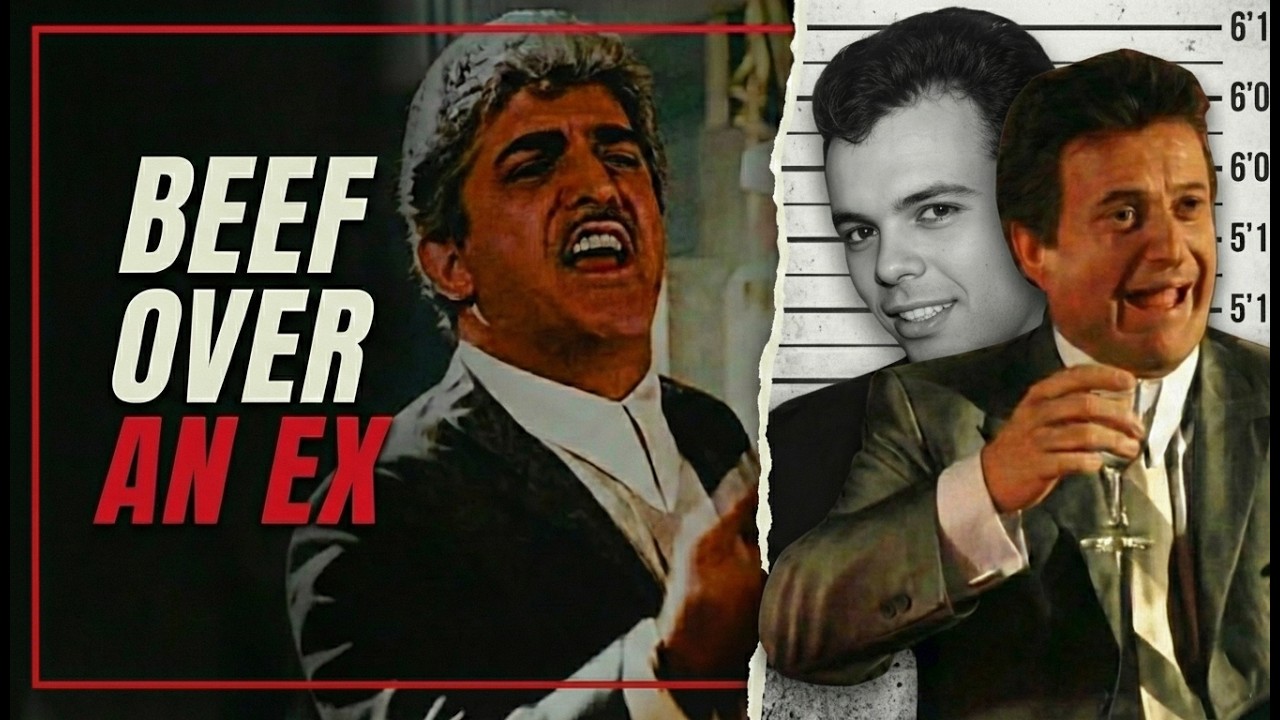
Everything was set for the ceremony. He stepped into the back room and instead found two men from the Gambino family. One shot him in the back of the head. The whole thing was over in under two minutes.
His body was never recovered. Tommy Desimone was no ordinary mob associate. By January 1979 he had become Jimmy Burke’s most dependable killer, a man responsible for at least eight murders, among them William “Billy Bats” Bentfena, a made member of the Gambino family. The film Goodfellas frames Tommy’s death as unavoidable karma, the violent conclusion of a violent man who finally got what he deserved.
The reality is messier. Tommy wasn’t simply caught. He was steered into a trap, and pulling off that trap demanded coordination, silence, and institutional consensus across several layers of organized crime. This is the account of who actually set Tommy Desimone up: Paul Vario’s deliberate silence, Jimmy Burke’s well-timed absence, the Gambino family’s patience, and Tommy’s own reckless violence.
It wasn’t a single betrayal. It was a system concluding that one man could be sacrificed. And once the system reaches that conclusion, the individual has no chance. Thomas Anthony Desimone was born on May 24th, 1950, in Brooklyn, New York.
His parents were Italian immigrants. His father did construction work; his mother raised six children. Tommy came up in a neighborhood run by the Lucchese crime family. By twelve he was running errands for local bookies.
By fifteen he had quit school and was working full-time for Paul Vario’s crew. Tommy wasn’t smart. He wasn’t strategic. But he was violent, and violence has its uses in organized crime.
Paul Vario, forty-nine in 1970, was a Lucchese capo controlling operations in Brooklyn and Queens. He oversaw hijacking crews, bookmaking, loan sharking, and fencing stolen goods. Vario needed enforcers—men who could hurt people without flinching, men who didn’t ask questions. Tommy Desimone was a perfect fit.
By eighteen, Tommy had committed his first murder, beating a truck driver to death with a tire iron after the man resisted during a hijacking. Vario got wind of it and pulled Tommy deeper into the crew. Tommy stood five-foot-eight, lean and wiry, with curly hair and cold eyes. He dressed well and could turn on the charm when it suited him.
Underneath it all, though, Tommy was a psychopath. He didn’t kill out of necessity. He killed because he liked it. Henry Hill, who worked alongside Tommy for years, later called him the most dangerous person he’d ever met—not because Tommy was the toughest fighter, but because Tommy had no off switch.
Most criminals deploy violence with a purpose. Tommy deployed it for fun. By 1970, Tommy was working closely with Jimmy Burke. Burke, thirty-nine, was a Lucchese associate running hijacking operations out of Robert’s Lounge in South Ozone Park.
Burke and Tommy formed a team. Burke planned the jobs; Tommy carried them out. Between 1970 and 1979, they hijacked hundreds of trucks, ran bookmaking operations, and murdered at least a dozen people. Burke depended on Tommy.
But dependence isn’t protection, and Burke grasped something Tommy never did: in the mafia, loyalty runs upward, not downward. William Bentfena, known as Billy Bats, was a made member of the Gambino crime family, forty-nine in June 1970. Bats had just left prison after six years for drug trafficking. While he was locked up, Tommy Desimone had begun dating Bats’s ex-girlfriend.
When Bats got out, word reached him. On June 11th, 1970, Bats walked into a Queens bar where Tommy and Jimmy Burke were drinking. Bats spotted Tommy and began taunting him, calling him a shoeshine boy and cracking jokes about Tommy dating his leftovers. Tommy said nothing.
He just sat there. Burke told Tommy to drop it. Tommy nodded. But Tommy never dropped anything.
Two weeks later, on June 24th, 1970, Bats was back at the same bar. Tommy and Burke were there, and so was Henry Hill. Around midnight, drunk, Bats started mocking Tommy again. This time Tommy exploded.
He crossed the room to Bats, drew a .38 caliber revolver, and pistol-whipped him. Bats went down. Tommy kept swinging.
Burke piled in. They beat Bats unconscious. Then the reality hit them. They had just assaulted a made member of the Gambino family in a crowded bar, with witnesses all around.
That was a death sentence. Burke made the call: they had to finish it. They couldn’t let Bats wake up and report what had happened. Burke, Tommy, and Henry Hill loaded Bats’s limp body into the trunk of Hill’s car and drove to Burke’s mother’s house in Brooklyn.
Burke’s mother wasn’t home. They carried Bats into the basement. He was still breathing. Tommy stabbed him repeatedly.
Burke shot him twice in the chest. They wrapped the body in plastic and buried it in a shallow grave in the backyard. The entire sequence, from the bar fight to the burial, took roughly three hours. Bats was a made man.
Killing him without Commission approval was among the most serious violations in mafia law. Tommy Desimone had just signed his own death warrant. He just didn’t know it yet. Here’s where it gets complicated.
When a made member is killed, his family has the right to retaliate. But retaliation requires confirmation. The Gambinos had to know for certain that Billy Bats was dead and who had done it. That kind of information doesn’t appear out of thin air.
Someone had to tell them. So the question becomes: who informed the Gambinos about Billy Bats, and who helped set up Tommy Desimone nine years later? Start with Paul Vario. Vario was Tommy’s boss and knew about Bats’s murder.
Henry Hill later testified that Vario learned of the killing within days. Vario’s reaction was silence. He didn’t report it to Lucchese leadership. He didn’t try to negotiate with the Gambinos.
He didn’t punish Tommy or Burke. He simply let it sit for nine years. Why? Because Tommy was useful.
Tommy was Burke’s main enforcer, and Burke’s hijacking operations were pulling in hundreds of thousands of dollars a year for Vario. As long as the Gambinos hadn’t confirmed Bats was dead, Vario could keep using Tommy. But the moment the Gambinos confirmed Bats’s death, Tommy turned into a liability—and liabilities get sacrificed. Vario’s math was simple.
If he shielded Tommy from the Gambinos, he would ignite a war: the Luccheses against the Gambinos over a low-level killer who was not even a made member. Vario would lose that fight. But if Vario surrendered Tommy, he would earn credibility with the Gambinos. He would demonstrate respect for mafia law.
He would prove the Lucchese family was honorable. And he would remove a dangerous, unstable enforcer who was becoming more trouble than he was worth. For Vario, Tommy’s death was a win. He only needed plausible deniability.
He could not actively set Tommy up, but he could remain silent while others did. Then there was Jimmy Burke. Burke was Tommy’s mentor and partner; they had worked together for nearly a decade. Burke depended on Tommy for murders, enforcement, and intimidation.
But by late 1978, in the aftermath of the Lufthansa heist, Burke was in full paranoia mode. He was systematically murdering everyone connected to the robbery: Stacks Edwards, Martin Krugman, Richard Eaton, Joe Manri, Theresa Ferrara. Burke killed six people in five months to protect himself. Tommy knew about all of it, and Tommy had participated in some of it.
That made Tommy a witness, and Burke did not leave witnesses alive. But Burke had a problem. He could not kill Tommy himself. Tommy was too close, too loyal, too useful.
If Burke killed Tommy, it would look suspicious. People would ask questions. Vario might intervene. But if the Gambinos killed Tommy for the Billy Bats murder, Burke was off the hook.
Tommy’s death would look like mafia justice, not Burke covering his tracks. Burke’s incentive was clear: let the Gambinos handle Tommy. Do not protect him. Do not warn him.
Just stay silent and let institutional forces do the work. Burke did not need to actively betray Tommy. He just needed to not save him. By early 1979, the Gambino family knew Billy Bats was dead.
How? Because too many people knew. Henry Hill knew. Jimmy Burke knew.
Paul Vario knew. Angelo Sepe knew. The men who helped move the body knew. In the mafia, secrets do not stay secret.
People talk. They brag. They hint. They use information as currency.
At some point between June 1970 and January 1979, someone told the Gambinos that Tommy Desimone had killed Billy Bats. That someone could have been an informant, a rival mobster looking to cause trouble, or a member of the Lucchese family who wanted Tommy gone. The Gambinos did not need a single confession. They just needed enough corroboration to act.
Once the Gambinos confirmed Bats was dead, they went to the Commission, the ruling body of New York’s five mafia families. When there is a dispute between families, the Commission mediates. The Gambinos presented their case: Billy Bats, a made Gambino member, had been murdered in 1970 by Tommy Desimone, a Lucchese associate. The Gambinos demanded justice.
The Commission agreed. Tommy had violated mafia law. He had to die. But there was a procedural problem.
Tommy was not a made member. You cannot simply kill a man connected to another family without permission. The Commission needed the Lucchese family to cooperate. The Lucchese family leadership, which included Paul Vario, agreed to the hit.
They did not fight it. They did not negotiate. They did not demand evidence. They just said okay.
Why? Because Tommy Desimone was expendable. He was not made. He was not related to anyone important.
He was just a killer, and killers are replaceable. By agreeing to Tommy’s execution, the Lucchese family maintained good relations with the Gambinos, showed respect for mafia law, and eliminated a man who was becoming a liability. Tommy’s death solved multiple problems for multiple people. That is why it happened.
But the execution required a setup. You cannot just shoot a man in the street. Tommy was paranoid. He was armed.
He was dangerous. The Gambinos needed Tommy to come to them willingly, so they used the one thing Tommy wanted more than anything: respect. Tommy had spent his entire adult life working for the mafia, watching made members enjoy privileges he could never have because he was not Italian on both sides. His father was Italian, but there was a question about his mother’s heritage; some accounts suggest she had Irish ancestry that disqualified Tommy from being made.
But in January 1979, someone told Tommy that the rules had changed, that the family was making an exception, that he was about to become a made man. Henry Hill later testified about this. He said Tommy was ecstatic. Tommy told Hill that his sponsor, John Gotti, had confirmed the ceremony.
Gotti, thirty-eight years old in 1979, was a rising star in the Gambino family. Tommy trusted Gotti. Why would he not? Gotti was famous.
Gotti was connected. If Gotti said Tommy was getting made, it must be true. But Gotti was not Tommy’s sponsor. Gotti was his executioner.
The whole ceremony was a lie, and Tommy walked right into it. On January 14th, 1979, Tommy was told to go to a social club in Queens for the ceremony. He dressed in his best suit. He was nervous but excited.
Henry Hill offered to drive him. Tommy said no. He wanted to arrive alone. That decision probably saved Hill’s life.
Tommy walked into the club around eight o’clock that evening. He went to the back room where the ceremony was supposed to happen. Two men were waiting. According to FBI sources, they were Gambino family members acting under orders from the Commission.
They shot Tommy once in the back of the head. He died instantly. His body was moved to an unknown location and buried. It has never been found.
Tommy Desimone, twenty-eight years old, was erased. What makes the setup so effective is that it required coordination at multiple levels. The Gambinos had to confirm Bats’s death. The Commission had to authorize the hit.
The Lucchese family had to agree not to protect Tommy. Jimmy Burke had to stay silent. Paul Vario had to refrain from intervening. And Tommy had to believe he was being honored, not executed.
Every piece had to fall into place. It did, because everyone involved wanted the same outcome: Tommy’s death. Who specifically told the Gambinos about Billy Bats? The most likely candidates are informants or rivals.
The FBI had informants embedded in multiple New York families by the late 1970s. It is possible an informant passed the information to the Gambinos through back channels. It is also possible that someone in the Lucchese family, someone who resented Tommy or Burke, leaked the information to cause trouble. The mafia is full of internal rivalries; men jockey for position and undermine each other.
Giving the Gambinos information about Tommy could have been a power move by someone looking to weaken Burke’s crew. Another possibility is that the information came from the Bats family itself. Billy Bats had relatives in the Gambino family, and those relatives would have been asking questions about his disappearance. At some point, someone might have told them the truth to gain favor or settle a debt.
Within the mafia, information functions as currency. Someone paid for Tommy’s life and received something in return; we simply lack the names and the terms. Yet the essential fact remains: the identity of whoever dialed first is irrelevant.
What counts is that after that call went out, no one intervened. Paul Vario offered Tommy no cover. Jimmy Burke gave him no heads-up. The Lucchese brass never lifted a finger on his behalf.
All of them stood by and let it unfold, since Tommy had exhausted whatever worth he once carried. He had taken a life without sanction. He had brought shame on the family. He had turned into a burden.
Burdens in that world are never given a second shot; they receive funerals, or in Tommy’s situation, graves nobody marks. Weigh what each figure stood to gain from Tommy’s removal. Paul Vario earned standing with the Gambinos: he demonstrated respect for mafia protocol, removed a volatile enforcer who might have turned against him, and sidestepped a war.
Jimmy Burke bought himself distance: Tommy knew about Lufthansa and the killings, and with him gone, Burke had one fewer witness to fret over. The Gambinos secured payback for Billy Bats and made clear to the other families that killing their people carries a price. The Luccheses bought calm with the Gambinos by steering clear of a fight over a non-made associate. And Tommy lost it all.
He perished still believing he stood on the brink of the very thing he had craved his whole life: respect, a button, recognition. What he got instead was a bullet and a grave with no marker. That is the genuine tragedy of Tommy Desimone. Not that he died for killing Billy Bats, but that he died because his usefulness had run dry.
The Billy Bats killing was merely the pretext. Had it not been Bats, some other reason would have surfaced. Tommy was doomed from the start, since men cut from his cloth never retire. They are not permitted to simply walk off.
They are too risky, too erratic, too tangled up in too many secrets. The sole means of neutralizing such men is to eliminate them. And the instant Tommy turned into more of a headache than an asset, his fate was fixed. Tommy never absorbed the rule that runs the mafia.
Your worth is measured by how useful you are. The instant you cease to be useful, you cease to count. Tommy imagined loyalty carried weight. It does not.
He imagined his bond with Burke would shield him. It did not. He imagined his standing as a killer would render him untouchable. It did not.
None of that carried any weight. What carried weight was the arithmetic done by the men over him, and their sums concluded that a dead Tommy outweighed a living one. So who truly set Tommy Desimone up? Everybody.
Paul Vario set him up by holding his tongue. Jimmy Burke set him up by withholding a warning. The Lucchese leadership set him up by signing off on his execution. The Gambinos set him up by dangling the promise of a button as bait.
And Tommy set himself up by killing Billy Bats without sanction, by acting recklessly, by shaming the families, by making himself impossible to shield. The setup was never a single phone call. It was institutional and systematic, the whole mafia edifice concluding that one man could be spared. In January 1979, as Tommy entered that Queens social club, he believed he was stepping into his future.
In truth he was stepping into a verdict reached months before by people he trusted, people he had killed for, people he took to be his family. They were not his family. They were his employers. And when employees turn into burdens, employers let them go.
In the mafia, letting someone go means killing them. Tommy Desimone was let go. Once Tommy was gone, the crew carried on. Jimmy Burke kept killing, taking out at least four more people tied to Lufthansa in the months after Tommy’s execution.
Burke was ultimately arrested in May 1980 and convicted of conspiracy tied to the Boston College point-shaving scandal. He died behind bars in 1996 of lung cancer at sixty-four. Paul Vario was convicted of extortion in 1984 and died in prison in 1988 of respiratory failure at seventy-three. Henry Hill cooperated with the FBI in May 1980 and went into witness protection.
He died in June 2012 of heart disease at sixty-nine. Tommy Desimone’s body was never recovered. His family reported him missing in January 1979. Police looked into it but turned up nothing.
The FBI suspected the Gambinos had killed him but had no way to prove it. For years Tommy’s mother clung to the hope that he was alive somewhere. He was not. Tommy died on January 14th, 1979, in a Queens social club, convinced he was about to be honored.
Instead, he was executed. He was twenty-eight years old. Tommy’s death lays bare what the mafia truly is. It is not about loyalty, honor, or family.
It is about usefulness. The mafia will shield you only so long as shielding you serves its interests. But the moment your death becomes more advantageous than your life, you are finished. No negotiation.
No second chances. No mercy. Tommy Desimone learned that lesson six seconds too late. One bullet, one betrayal, one institutional decision.
That was all it took. The true betrayal was not one man placing one phone call. It was everyone concluding Tommy could be spared. Paul Vario’s silence, Jimmy Burke’s absence, the Lucchese leadership’s consent, the Gambinos’ patience, Tommy’s own recklessness: all of it fused into a perfect trap.
And Tommy strolled straight into it. Because in the mafia, when everyone wants you dead, you are already a ghost. You simply do not know it yet.
