The handcuffs snapped shut on Maurice Dixon’s wrists in 1996, just two weeks after a twenty-two-year-old economics graduate named Debbi Dorian was found dead on her bedroom floor in northeast Fresno. Her wrists were taped behind her back with duct tape. Her ankles were taped together. The tape ran from the top of her skull down to her jaw, sealing her mouth, nose, and eyes entirely.
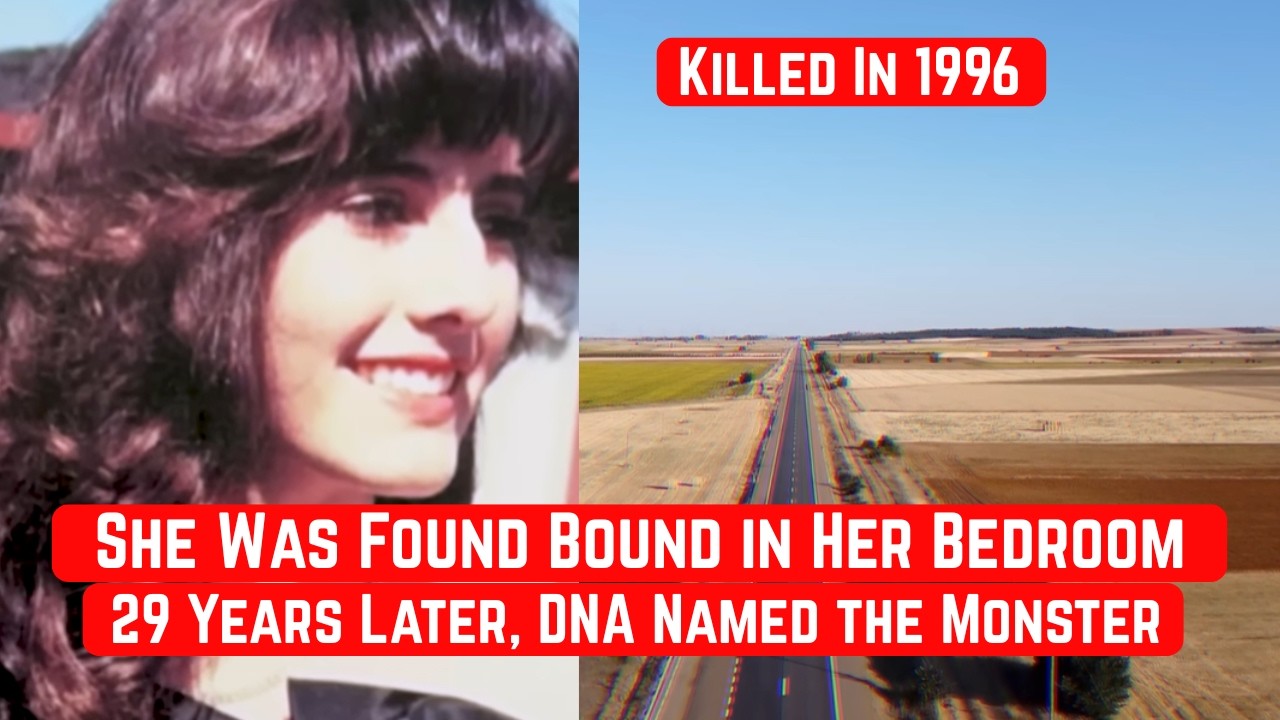
She had suffocated. The killer had brought the tape with him. There was no forced entry, no broken lock, no overturned furniture. Someone chosen.
Someone let in. Or someone who moved so fast and so controlled that Debbi never had a moment to react. Debbi had graduated from Fresno State with a degree in economics. She wanted to become an audiologist like her father, Peter.
She had a boyfriend she loved, an apartment she was proud of, and a father-daughter trip planned for August 22nd, 1996. Money was tight, so she had put up flyers and placed ads for a roommate. A handwritten list of names and numbers sat on her dining room table. That list would become evidence in her own murder investigation.
When Debbi didn’t show up for the trip, Peter drove to her apartment. Her car was parked where it always was. The door opened without resistance. The television was still running.
He found her in the bedroom, on her side, motionless. He stumbled to the phone, called his wife, who dialed 911, and then called Debbi’s mother, Sara Lovin. Sara ran through her house screaming no over and over. Forensic teams recovered DNA from the crime scene and entered it into CODIS, the national DNA database.
The result came back empty. No match. The man who had walked into Debbi’s home had never been arrested. He existed completely outside the system.
Investigators had his exact genetic code. They just had no way to read it yet. The roommate list on the dining room table looked like the only door still open. Debbi’s boyfriend, John Thomas, was cleared quickly; he had been working wildfire duty in northern California the day she was killed.
One name on the list came with a red flag. A registered sex offender named Alvin walked into the police station on his own after hearing about the murder on the news. He admitted he had met Debbi, paid a deposit, and planned to rent her spare room. His DNA was tested and he was excluded.
But Alvin handed investigators a new thread. He mentioned he hadn’t come to Debbi’s apartment alone. A friend drove him and waited nearby. That friend was Maurice Dixon.
Maurice Dixon was twenty-eight, an army veteran with zero criminal record. He told police he had never met Debbi Dorian, never entered her apartment, never seen her face until her photograph appeared on the news. During questioning, unprompted, he mentioned he had recently bought two rolls of duct tape to tie off rope ends on a punching bag. Nobody had told him duct tape was used to bind Debbi’s body.
That detail had never been released publicly. To detectives drowning in pressure, that was not a coincidence. They searched his home. The duct tape was there, exactly as described, a different brand and width.
It didn’t match what was used on Debbi. Then came the DNA. In 1996, forensic testing was far less precise. The result didn’t say he did it.
It simply said the technology couldn’t rule him out. In a high-profile murder case with a frightened city watching, that gray area became a weapon. Maurice Dixon was arrested. His face was flashed across evening news.
His name printed next to the word murderer. He sat in custody for just over two weeks. Then an advanced DNA test came back. Maurice Dixon’s DNA did not match the evidence from Debbi Dorian’s crime scene.
Not inconclusive. Simply, it did not match. Charges were dropped. He walked out.
His family has refused every interview request to this day. The investigation collapsed back to nothing. And the actual killer had watched the entire thing unfold. He had watched police build a case against the wrong man, arrest him, put his face on television, and then watch the whole machine collapse.
He had learned something that would make him far more dangerous going forward. The police were beatable. Three years later, in Visalia, sixty miles south of Fresno, he acted on that knowledge. On the night of July 30th, 1999, nineteen-year-old Beth was cycling home from her job at an ice cream parlor along Walnut Avenue.
A shadow stepped directly into her path. He grabbed her handlebars with both hands. He was wearing a hoodie, his face partially hidden. He pulled a gun from his waistband.
Get off your bike and get on your knees. He told her if she didn’t, he was going to kill her. She believed him. He forced her between a parked vehicle and a line of bushes, a narrow, shadowed pocket of space invisible from the street.
What happened there was calculated and controlled, the same signature documented in Debbi Dorian’s bedroom three years earlier. But Beth was watching him. She was memorizing the street. She was paying attention to exactly where she was.
Inside the terror of that moment, a thought formed: I’m going to get you. You’re not going to get away with this. When he was finished, he walked away. Beth didn’t go straight home.
She circled the blocks first, deliberately, methodically, because she understood that if he was watching her, home was no longer safe. She rode in a wide loop, checking the darkness behind her until she was certain she was alone. Then she went inside and called the police immediately. She walked investigators back to the exact spot on Walnut Avenue and pointed to the precise location between the bushes and the parked vehicle.
They found DNA evidence on the sidewalk. They collected it, labeled it, and logged it. And then it sat in a database, waiting. Between 1999 and 2002, more young women were attacked in Visalia under conditions so similar they couldn’t be coincidence.
Same dark hoodie. Same gun produced without warning. Young women approached alone at night in residential areas. Former Visalia detective Steve Pyeatt would later describe the pattern with chilling simplicity.
He’d find a young woman, late teens, early twenties. He’d find her alone. That was the entire criteria. He had refined his approach to something efficient and invisible, and he was applying it across the same city with the confidence of a man who believed the law couldn’t touch him.
For years, he was completely right. Then came 2006. Inside CODIS, an analyst ran a routine comparison. Two files matched each other.
The DNA recovered from Beth’s assault in 1999 and the DNA recovered from Debbi Dorian’s apartment in 1996. Same profile, same man. For the first time since 1996, investigators had a thread connecting everything, a single biological identity running through a decade of violence. But a thread is not a name.
They knew his crimes. They knew his method. They still had nothing that could tell them who he was when he went home at night. Investigators intensified the search.
They fed the profile into CODIS over and over. The system kept coming back empty, since the killer had no arrest record to match against. That left only one path: brute force, done by hand. Detectives went down the list, man by man, flagging anyone tied to Debbi’s world, no matter how thin the connection.
Names from the roommate list. Names from the neighborhood. Names that had turned up in tips. Every one of them was contacted. Every one of them gave a sample. Every sample went off to the lab.
And every result landed the same way. Excluded. Not him. One hundred forty-six times.
Through all of it, one detective would not let go. Vince Zavala had made a promise to Sara Lovin back when the investigation was still young. She had put the question to him plainly: What happens when you retire? What happens to my daughter’s case once you’re gone?
Zavala looked at her and gave an answer few detectives would ever put on the record. I won’t retire till I solve it. He wasn’t posturing. When his career officially came to an end, Zavala simply kept working.
No paycheck, no badge, no official standing. Just a retired detective who couldn’t leave the same folder closed. He had given a mother his word. For him, that was enough.
By 2009, a new threat loomed. California’s statute of limitations on the Visalia sexual assault cases was running out. Without a name soon, the law itself would permanently shield whoever was responsible. Prosecutors came up with a workaround.
They filed a John Doe warrant charging not a person but the DNA profile itself. The genetic sequence was named as the defendant, and the clock stopped running. In a legal sense, the killer’s DNA had become a wanted fugitive. Then, in 2018, something happened on the far side of California that changed everything.
Joseph James DeAngelo, the Golden State Killer, was arrested after forty years of total invisibility. Investigators had not relied on CODIS. They had used forensic genetic genealogy, drawing on public DNA databases filled by ordinary people who had voluntarily uploaded their profiles to ancestry websites. The Fresno team reached out to the same Sacramento County DA team and started the identical process.
After months of painstaking work, every branch of the tree pointed to a single person. Days after the final analysis, a name appeared on a screen and the room went dead silent. He had been living in Visalia the whole time. His name was Nikki Dewayne Stain.
Married. Father of two. Active in his children’s school. He ran a restaurant inside a Visalia mall. He showed up to PTA meetings. To the people around him, he was a familiar, unremarkable face.
He had worn that second skin for twenty-three years. But a family tree and a photograph are not a DNA match. Investigators needed a fresh sample from the man himself. On trash collection day, an investigator dressed as a sanitation worker took up position near Stain’s property.
When the household garbage went out, the team swapped the cans and hauled the discarded contents away for processing. Among the items recovered were used razor blades. The sample was logged as number 147, the 147th person tested in a twenty-three-year investigation. Two weeks later, the result came in.
A match. Not partial. Not inconclusive. A full, definitive match between the DNA on those razor blades and the DNA recovered from Debbi Dorian’s apartment in August 1996.
Before the arrest, Vince Zavala, the retired detective who had worked the case without pay, walked into that mall with his partner and asked for the manager. Stain came out and shook their hands. Relaxed. Cooperative. They asked him about Debbi Dorian.
He said he didn’t know her. They asked whether he had ever been violent toward anyone. No. No violence against anybody.
They asked if he would voluntarily give a DNA swab, just for elimination purposes. Routine, they told him. Something in Stain’s expression shifted, just slightly. He said he wasn’t sure he wanted to do that.
Then he stood, straightened his jacket, and delivered the line that would later be replayed in courtrooms and on news broadcasts. I hope you find him. Have a good day. He turned and walked back into the mall.
He made it maybe thirty feet. The arrest team moved in fast and clean. The handcuffs closed around his wrists in the same mall corridor where, an hour earlier, he had been managing lunch orders. In jail, Stain placed a call to his family.
Every call from that facility is recorded. In that conversation he said something prosecutors would later play in open court. I’ve done bad things. When investigators searched his home, they carried out twenty-five boxes of potential evidence.
They also found a fake Facebook profile he had built under the name Nick Steel, posing in restaurant booths with a beer in hand, grinning like a man with nothing to hide. A fantasy identity layered over everything he actually was. Nick Dwayne Stain pleaded not guilty to all charges. A jury trial was set for January 2026.
The death penalty was on the table. Then, seven months before that trial was to begin, something happened in a Fresno courtroom that nobody saw coming. May 15th, 2025. Fresno County Superior Court.
No jury. No competing narratives. Just a judge, a defendant, and twenty-nine years bearing down on everyone in that room. The judge asked the question.
Mr. Stain, how do you plead to a felony violation of penal code 187? That is first-degree murder. Nick Dwayne Stain stood at the defense table and said one word.
Guilty. The Visalia assault charges followed. Jane Doe 2 was in that courtroom. She sat there as the man who had destroyed a piece of her life spoke the words aloud on the record, under oath.
Guilty, sir. Twelve felony counts, all of them. The deal was straightforward. Stain pleaded guilty to everything.
In exchange, prosecutors withdrew the death penalty. The sentence would be life without the possibility of parole. Outside court, his defense attorney said he had pleaded guilty not only to avoid death but to be accountable, and so the families wouldn’t have to endure a trial. Sara Lovin would not sit through weeks of testimony.
Beth would not relive every detail under cross-examination. June 12th, 2025, sentencing day. Sara took the stand and faced Nikki Stain directly. I lived in a world of hard work, love, and kindness.
I believed that if you worked hard and did all the right things, evil wouldn’t come into your life. I was naive. I was wrong. Evil is closer than we realize, and it enters our lives when we least expect it.
He cruelly extinguished my daughter’s life and brought heartbreak to me and my family. Though he took my precious Deb, he did not take my soul. Beth also took the stand. Twenty-six years of PTSD and flashbacks, and the particular darkness that comes from surviving something no one should have to survive.
She stood in that courtroom and looked directly at him. I wish I could show him how much pain he caused me. The judge reviewed a handwritten letter Stain had submitted from custody, acknowledging responsibility and describing rehabilitation programs he had completed while awaiting trial, then handed down the sentence. Life without the possibility of parole.
Sentences to run one after another — thirty-two years and four months, then forty-six years to life — were layered on top of the permanent term. Stain was to be moved to California Medical Facility in Vacaville. He gave up his right to appeal. The case was shut for good.
Vince Zavala, the retired detective who had carried on without a paycheck, who had been in that mall the day the cuffs clicked shut, who had given a grieving mother his word and then devoted most of his adult years to honoring it, at last closed the file. Beyond Sara Lovin’s window, the pine she planted the Christmas after Debbi was killed still stands, fifty feet tall and three feet around. That’s a long time to grow, Sara said at the press conference after sentencing. It reminds me of how long we’ve been working on this case.
Debbi’s birthday fell on June 20th. The sentencing came on June 12th. Eight days later, she would have been fifty-one. Sara pictured what Debbi might say if she could witness this moment.
She knew without a doubt. She’s going, Yahoo, Mom. The tree keeps growing. Justice finally caught up.
And Debbi Dorian — the young woman with the roommate list on her dining table, a father-daughter trip on the calendar, and an entire life ahead of her — is remembered not just for how she died, but for all that she was before that August morning. She was twenty-two years old. She deserved fifty more years.
