When Eva Perón died on July 26, 1952, no one could have anticipated the extraordinary journey her body would take over the next twenty-four years. Instead of being buried in a final resting place, the former First Lady of Argentina became the center of a political struggle that continued long after her death. Her embalmed remains were displayed, hidden, secretly transported across the Atlantic, buried under a false name in Italy, exhumed, moved to Spain, and finally returned to Argentina. It was not until 1976, nearly a quarter century after her death, that Eva Perón’s body finally reached its permanent grave, where it rests to this day.
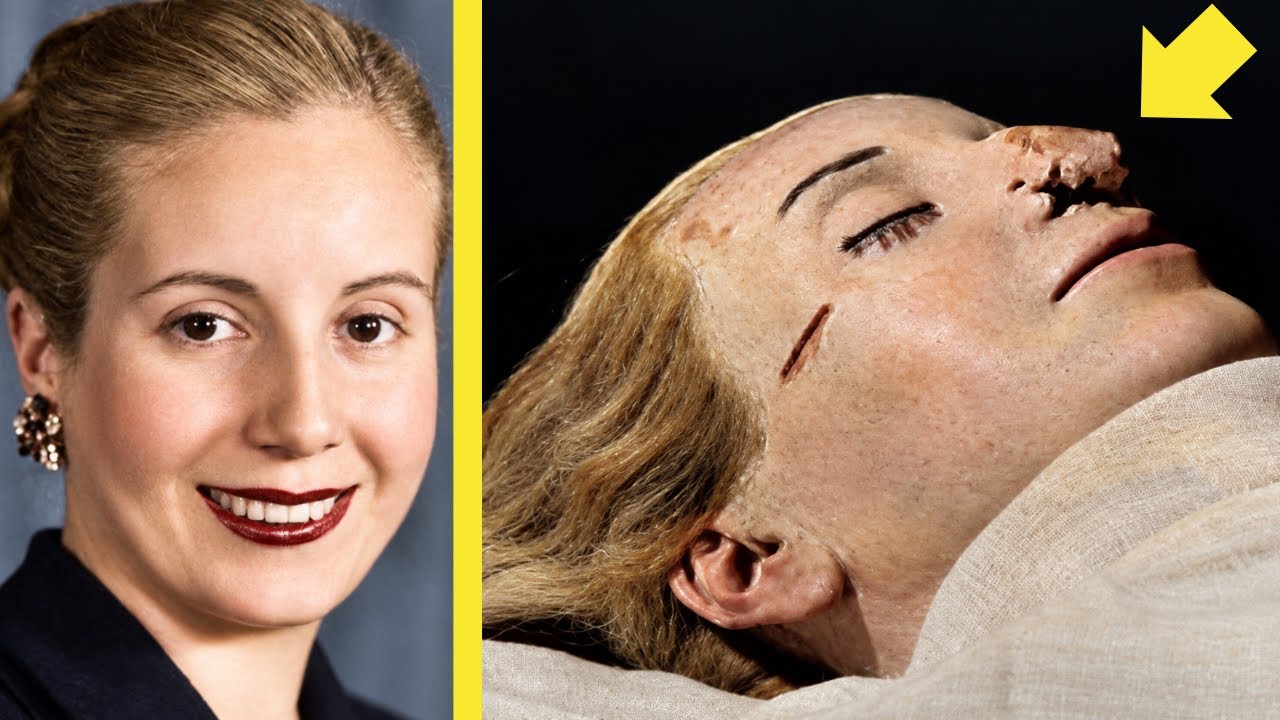
Affectionately known as Evita, Eva Perón was one of the most famous and controversial women in Argentine history. Born Eva Duarte in 1919, she grew up in relatively modest circumstances and later became an actress in Buenos Aires. Her life changed dramatically when she met Colonel Juan Domingo Perón in the 1940s. They married in 1945, and when Juan Perón became president of Argentina the following year, Eva became a public figure of immense influence.
She developed a close relationship with Argentina’s working class, whom she often referred to as the descamisados, or the shirtless ones. Through the Eva Perón Foundation, she distributed money, clothing, and other aid to poor Argentines. She was also closely tied to the organized labor movement and supported the campaign for women’s suffrage, which was implemented nationwide in Argentina in 1947. To her supporters, Eva became a near-saintly figure.
To her opponents, she was inseparable from an increasingly authoritarian and divisive Peronist government. That political division became critical after her death. Eva fell ill with cervical cancer and died in Buenos Aires on July 26, 1952, at the age of thirty-three. Her passing triggered scenes of unprecedented public grief.
Vast crowds gathered in Buenos Aires, and people waited for hours to pass by her coffin. Her funeral became one of the largest outpourings of sorrow in Argentine history. But Eva was not buried in the traditional manner immediately. Juan Perón wanted to preserve his wife’s body.
The task was given to Dr. Pedro Ara, a Spanish anatomist specializing in preservation techniques. Ara carried out a meticulous embalming process designed to maintain Eva’s appearance over the long term. The goal was not merely to make Eva look peaceful at her funeral; there was a far broader plan for her remains.
The Perón government intended to build a massive monument dedicated to the descamisados. Eva’s preserved body was to be displayed in the great national memorial, turning her final resting place into something like a shrine. The political situation in Argentina changed before the project could be completed. In September 1955, Juan Perón was overthrown in a military uprising known as the Revolución Libertadora, or the Liberating Revolution.
Perón fled Argentina and went into exile. Eva’s body remained in the country, and this created a genuine dilemma for the new authorities. The governments that replaced Perón sought to weaken Peronism, so symbols associated with the former president and his movement were suppressed. Yet perhaps the most powerful symbol of Peronism was not a flag, an image, or a political slogan, but Eva herself.
Even three years after her death, Eva Perón remained deeply loved by many Argentines. The authorities feared that if her body were buried publicly, her grave might become a shrine where Peronists would gather and lay flowers. Political demonstrations could erupt around it, and the burial site could become a physical focal point around which opposition to the new government could form. So the authorities decided to hide Eva’s body.
In November 1955, her remains were moved from the headquarters of the General Confederation of Labor in Buenos Aires, where they had been kept while the monument plans were being made. What followed became one of the strangest chapters in modern Argentine history. Eva’s coffin was moved between secret locations, and many accounts later emerged about where exactly the body was kept. The secrecy surrounding the operation fueled rumors that are sometimes difficult to separate from documented events.
Colonel Carlos Eugenio de Moori Koenig, an Argentine military intelligence officer, was closely associated with the operation to hide Eva’s remains. The authorities faced a simple but difficult question: what could they do with the body? Destroying it would be extremely dangerous. If Perón’s supporters ever discovered that Eva’s remains had been deliberately destroyed, it would have provoked enormous outrage.
But burying her publicly posed the opposite problem, since her grave might become a shrine. In the end, the authorities decided to secretly move Eva’s body abroad. In 1957, her remains were taken to Italy in a covert operation. Eva was given a false identity, becoming María Maggi de Magistris.
Under that name, Eva Perón was buried in the Maggiore cemetery in Milan. It was an extraordinary situation. One of the most famous women in Latin America lay beneath an Italian grave, largely unknown to the world. Eva remained buried in Milan for roughly fourteen years.
This means the common description that Eva was not buried for twenty-four years is not entirely accurate. She was buried between 1957 and 1971. What she lacked during almost all that time was a permanent, publicly recognized resting place in her own country. The purpose of the secret burial was to remove Eva from Argentine political life.
But her disappearance only deepened the mystery surrounding her. For years, many Peronists demanded to know what had happened to Eva. Her missing body became another symbol of the conflict between Juan Perón’s supporters and his opponents. By the early 1970s, Argentina’s political situation shifted once again.
The military government began negotiations with the exiled Juan Perón, who was then living in Spain. In 1971, Eva’s grave in Milan was opened, her coffin was removed, and her body was transported to Spain, where it was handed over to Juan Perón at his residence at Puerta de Hierro near Madrid. After nearly sixteen years of separation, Perón finally recovered the remains of his second wife. Yet Eva was still not given a proper burial.
Her embalmed body remained at Perón’s Spanish residence while Argentina continued to suffer from political instability. Juan Perón returned to Argentina in 1973 after years of exile and was elected president once again. His return seemed to open the way for Eva’s body to come back as well, but Perón died on July 1, 1974, and the presidency passed to his third wife, Isabel Perón. Later that year, another striking chapter in Eva’s story began.
Her remains were finally brought back to Argentina in November 1974. More than twenty-two years after her death, Eva’s body was placed temporarily beside the remains of Juan Perón. There were plans to include them in a massive national monument, sometimes referred to as the Altar of the Fatherland. Once again, politics prevented those plans from being completed.
Argentina descended into a spiral of political violence and instability. In March 1976, the armed forces overthrew Isabel Perón, and the new military authorities had to decide Eva’s fate. This time, instead of secretly moving her out of Argentina, they allowed her family to arrange a permanent burial. In October 1976, Eva Perón was finally laid to rest in the Duarte family mausoleum at the Recoleta cemetery in Buenos Aires.
She had been dead for twenty-four years, and her extraordinary journey had come to an end. Eva died in Buenos Aires, her body was preserved rather than buried immediately, hidden after a military coup, secretly taken to Europe, buried under a false identity in Milan, exhumed, delivered to Juan Perón in Spain, and then transported once more across the Atlantic to Argentina. The reason for this extraordinary treatment was ultimately political. Eva Perón’s enemies understood something important: burial places can carry political power.
Graves are not merely places that hold human remains; they can become shrines, places of remembrance, and gathering points for political movements. The authorities that overthrew Juan Perón in 1955 feared that Eva’s grave could become exactly that. So they tried to erase her from public memory by hiding her body. The plan most likely backfired.
The disappearance of Eva’s corpse added another dimension to the legend surrounding her. The question of where Eva had been taken became part of the broader mythology of Peronism. Even after her death, Eva remained politically significant. Today, visitors can find her grave in the Recoleta cemetery under her family name, Duarte.
It is much more modest than the grand monument originally envisioned during Juan Perón’s presidency, yet it has become precisely what the government that hid her body decades earlier had feared: a place where people come to remember Eva Perón. Her posthumous story demonstrates why her remains were treated in such an exceptional manner. Eva was not merely a deceased former first lady. For millions of people, she represented a political movement, social change, and a deeply emotional period of Argentine history.
That is what made possession of her remains politically significant. For nearly twenty-four years after her death, different governments and political factions struggled over the fate of Eva Perón’s body. In 1976, that strange journey finally ended with her burial in the Duarte family mausoleum in Buenos Aires, where she still rests today.
