On November 9, 1841, Queen Victoria gave birth to her first son, Albert Edward, at Buckingham Palace. The birth carried immediate constitutional weight. Victoria had mounted the throne in 1837, and a male heir secured the succession for another generation. Within days, the infant was created Prince of Wales.
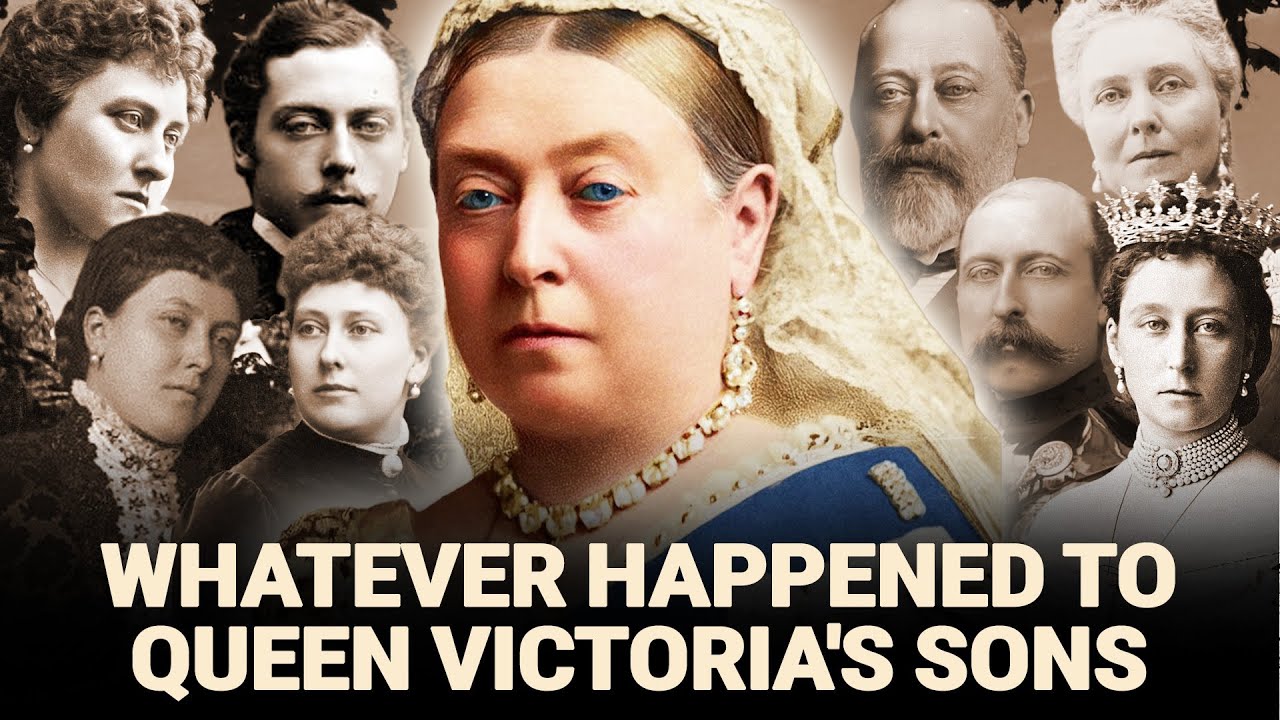
From that moment, his life was structured around one destination: he would be king. Victoria and her husband, Prince Albert, approached child-rearing with strict moral seriousness. The nursery ran on set schedules, early religious instruction, and constant supervision. Albert designed a demanding curriculum for his eldest son, covering languages, history, mathematics, science, and moral philosophy.
But Albert Edward struggled academically, found the workload overwhelming, and showed a lively, easily distracted temperament that alarmed his parents. Comparisons to his academically gifted older sister only worsened his sense of inadequacy. He was sent to Oxford at seventeen and later to Cambridge, but he studied under heavy supervision and achieved little academic success. A North American tour in 1860 proved a diplomatic success, showing the prince’s natural sociability.
The following year, while training in Ireland, he had a brief affair with an actress, Nelly Clifton. The news reached Prince Albert, already in failing health, who traveled to confront his son. Weeks later, Albert died. Victoria held Albert Edward partly responsible for her husband’s death, a belief that poisoned their relationship for years.
In 1863 he married Princess Alexandra of Denmark. She was beautiful, well-mannered, and from a respectable Protestant family, and the public adored her. The marriage brought stability, though Albert Edward’s extramarital liaisons became widely known. Alexandra remained patient and dutiful.
They had six children. The eldest son, Albert Victor, died of pneumonia at twenty-eight, ending his potential reign. The second son, George, became heir and eventually succeeded his father as King George V in 1910. Daughters made significant dynastic marriages, including Maud, who became queen consort of Norway.
Albert Edward spent nearly sixty years as Prince of Wales, longer than any heir in British history. Victoria kept him far from political power, distrusting his discretion and disapproving of his lifestyle. He filled the time with society life, horse racing, lavish entertaining, travel, and ceremonial appearances. Critics dismissed him as frivolous, but his ease with foreign royalty and political figures proved useful.
When Victoria died in January 1901, he became King Edward VII. His nine-year reign saw him take an active interest in foreign affairs, cultivate relationships with European leaders, and support the Entente Cordiale with France. He died on May 6, 1910, after a series of heart attacks, aged sixty-eight. His funeral drew European royalty from across the continent.
He was succeeded by George V, who carried the line through World War I and the modern transformation of the monarchy. The second son, Prince Alfred Ernest Albert, was born August 6, 1844, at Windsor Castle. As a younger son, he was not destined for the throne, and his father chose the Royal Navy as his career. Alfred entered the service as a midshipman in 1858 at fourteen.
He served on HMS Euryalus and HMS St. George, passed his examinations, and reached the rank of captain by 1863. He was professional, disciplined, and content in a role that was his own. In 1867, he became the first British royal to visit Australia.
The tour was a triumph, but in March 1868, while at a public picnic in Sydney, he was shot in the back by an Irish nationalist, Henry James O’Farrell. The wound was serious but not fatal. O’Farrell was quickly tried and executed, and the incident drew widespread sympathy for the prince. In 1874, Alfred married Grand Duchess Maria Alexandrovna of Russia, daughter of Tsar Alexander II.
The match was politically significant, linking the British and Russian royal families during a period of rivalry. Victoria had reservations, and the marriage was not warm. Alfred and Maria kept separate social circles. They had five children.
The son, known as Young Affie, died in 1899 at twenty-four, officially of tuberculosis, though rumors of suicide persisted. The daughters married into European royal houses, most notably Marie, who became queen of Romania and a significant political figure in her own right. In 1893, the death of his uncle, Duke Ernest II of Saxe-Coburg and Gotha, without legitimate heirs, passed the German duchy to Alfred after Albert Edward declined it. Alfred left naval service and took up the duties of a German sovereign prince.
He never fully adapted to the role. His final years were marked by grief, administrative strain, declining health, and heavy drinking. He died on July 30, 1900, at Schloss Rosenau near Coburg, aged fifty-five. With his son already dead and his daughters barred from succession by male-only inheritance law, the duchy passed to his nephew, Charles Edward.
Prince Arthur William Patrick Albert was born May 1, 1850, at Buckingham Palace, on the Duke of Wellington’s eighty-first birthday. His parents took the coincidence as auspicious, and Arthur was named in part after the Duke. He enjoyed a warmer relationship with his mother than his elder brothers. Victoria found him dutiful and obedient.
A military career was planned for him from an early age. He entered the Royal Military Academy at Woolwich in 1866 at sixteen, received his commission in 1868, and transferred to the Rifle Brigade. His service was real, not ceremonial. He trained with his units, advanced through the ranks on merit, and served across the empire, including a posting in Canada in the 1870s.
During the Anglo-Egyptian War in 1882, he saw active combat and was present at the decisive Battle of Tel el-Kebir. He rose to field marshal in 1902. In 1879 he married Princess Louise Margaret of Prussia. The marriage was stable and affectionate, producing three children.
His daughter Margaret married Crown Prince Gustaf Adolf of Sweden, later King Gustaf VI Adolf, making her queen consort. Arthur’s son and namesake faced scandal and was stripped of his British titles after a failed marriage. From 1911 to 1916, Arthur served as Governor General of Canada. His tenure coincided with the outbreak of World War I, and he represented the monarchy during a period of national mobilization, visiting troops and supporting the war effort.
He was regarded as dignified and capable, respectful of Canadian institutions. Arthur died on January 16, 1942, at Bagshot Park, aged ninety-one. He was the last surviving son of Victoria, having lived through two world wars and the collapse of monarchies across Europe. His legacy was one of duty, service, and stability.
The youngest son, Prince Leopold George Duncan Albert, was born April 7, 1853. His birth was notable because Victoria was administered chloroform during labor, one of the earliest uses of anesthesia in royal childbirth. Within months, it became clear something was wrong. Leopold bruised easily, bled excessively from minor injuries, and suffered painful swelling in his joints.
He had hemophilia, a hereditary bleeding disorder with no cure and a constant threat of death. His childhood was defined by caution and restriction. He could not run, climb, or play roughly. He spent long periods confined indoors, often separated from his siblings.
The restrictions bred frustration and resentment. But his intellectual education proceeded, and he proved intelligent and academically gifted. In 1872 he entered Christ Church, Oxford. His time there was among the happiest of his life.
He lived in college, attended lectures, made friends, and engaged with ideas in a way his restricted childhood had never allowed. He did not take a formal degree, as was common for royal students, but Oxford gave him identity beyond his illness. Leopold longed to serve in the military like his brothers, but his condition made it impossible. He pressed the issue repeatedly, arguing he could serve in an administrative capacity.
His mother and his doctors refused outright. The denial deepened his frustration. In 1881, Victoria created him Duke of Albany. He undertook public duties, supported charitable causes connected to education and disability, and gave speeches and opened buildings.
But his role was always constrained by his health. He could not travel freely or commit to extended engagements. In 1882 he married Princess Helen of Waldeck and Pyrmont. The marriage was affectionate and supportive.
Their daughter Alice was born in 1883 and was healthy. Helen was pregnant with their second child when, in March 1884, Leopold traveled to Cannes seeking warmer weather for his joint pain. On March 27, he slipped and fell at his residence, striking his head. Internal bleeding in the brain followed, caused by the trauma and worsened by his hemophilia.
He lost consciousness and died early the next morning. He was thirty years old. His daughter Alice lived a long and active life, becoming a prominent member of the royal family and dying in 1981 at ninety-seven, the longest-lived grandchild of Queen Victoria. His son, Charles Edward, born four months after his death, inherited the duchy of Saxe-Coburg and Gotha after Alfred’s death.
His later life was controversial, marked by German nationalism and support for the Nazi regime, and his British titles were stripped in 1919. Leopold’s hemophilia passed through the female line into several European royal families, a genetic legacy that shaped dynasties across the continent. His life was brief, defined by both the possibilities and the limitations of his condition, and his descendants carried forward his blood and the complexities of his inheritance.
