Autumn, 1929. A servant finds a woman alone in a garden, arms wrapped around an old tree, dazed, hours after the last of her furniture is sold to strangers. Her name was Princess Victoria of Prussia, Queen Victoria’s granddaughter, Kaiser Wilhelm II’s own sister, born into the most powerful family in Europe. She had waited all afternoon for one of them to come and stop the sale.
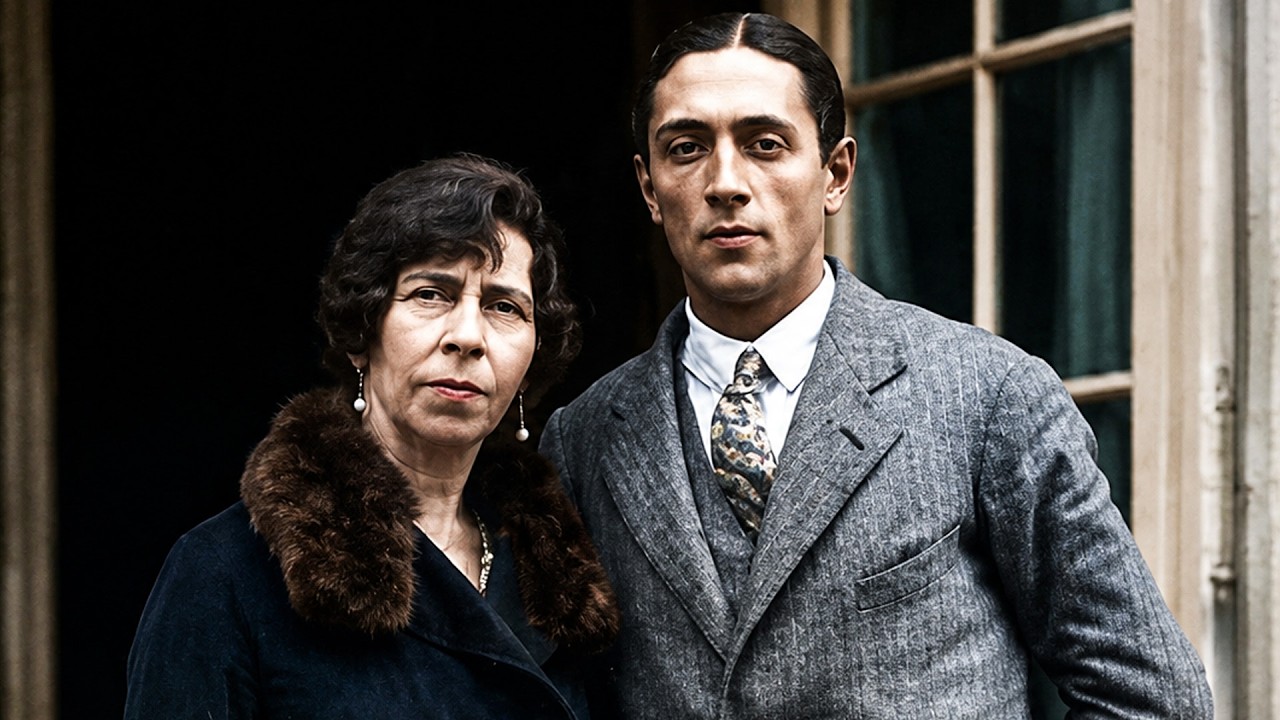
Not one of them did. This is the story of a woman her family could always find time to refuse, and never quite enough to save. There is a kind of loneliness history rarely bothers to record. Not the loneliness of being unknown, but the loneliness of being watched by everyone and helped by no one.
This story begins in one of the most famous families Europe has ever produced. At its head stood two names every student of history still knows: Queen Victoria of England, who gave her children and grandchildren to nearly every throne on the continent and earned the title the grandmother of Europe, and her grandson, a young man who would one day rule as Kaiser Wilhelm II of Germany and lead that empire into the war that ended it. This is not their story. It belongs to the woman who stood just behind them in every family portrait, Victoria’s favorite granddaughter, Wilhelm’s own sister.
Born into the golden nursery of a dynasty that seemed in the 1860s as though it would last forever, she was raised to believe that a name like hers came with protection, that the family who gave her a title would also, when it mattered, give her a life. She would spend the next sixty-three years discovering exactly how much that belief was worth. Because in that family, in that world, love was never simply love. It was a matter of state, a question to be weighed by chancellors and emperors, granted or refused by men who never had to live with the answer they gave.
She would ask permission to be happy twice in her life. Twice, the answer would cost her everything. Her name was Princess Victoria of Prussia. The people who loved her best called her Moretta.
Her story turns, more than once, on a letter. One letter arrives too late to matter. Another she writes herself in her final year to a man who will not bother to read it. What lies between those two letters is the real subject of this story: not scandal, not politics, but the particular arithmetic of a life in which every door marked happiness was guarded by someone else’s permission.
She began as the most protected woman in Europe. She would end it sharing a rented room with a woman who had once been her own servant. It started in a palace in Potsdam in the spring of 1866, when a fifth daughter was born into an empire that did not yet know it was dying. On the 24th of May, 1866, her grandmother’s forty-seventh birthday, an infant princess was carried into a chapel in Potsdam to be baptized.
The King of Prussia himself held her. Princess Marie of Hohenzollern stood at his side. Word of the christening would reach Queen Victoria in England within days, carried by the kind of letter that in this particular family seemed never to stop moving between London and Berlin. They named her Friederike Amalie Wilhelmine Victoria.
It was a name built for state documents, not for a nursery. The people who loved her simply called her Moretta. Her mother was Victoria, Princess Royal, Queen Victoria’s eldest daughter, married at seventeen into a Prussian court that never quite forgave her the marriage. She had brought with her an English liberalism the Berlin aristocracy found faintly scandalous: a belief that a person’s worth was not only their bloodline, and that love, given a fair chance, ought to be allowed to matter.
Behind her back, the court called her the Engländerin, the Englishwoman. She raised her children on the same conviction that made her an outsider. The household she built at the Neues Palais ran by the standards of European royalty on unusually warm lines. There were English governesses.
There were long afternoons in the gardens at Bornstedt, where the children were encouraged to run rather than pose. There was a father, Crown Prince Frederick William, known within the family simply as Fritz, who was gentle by temperament and progressive by conviction, a soldier who privately hoped he would never have to use the army he commanded. Into that household eight children were born, though not all of them lived to grow up in it. Moretta was the fifth, younger than Wilhelm, the heir; younger than Charlotte, sharp-tongued and quick to gossip; younger than Henry, who would spend his life at sea; older than Waldemar, who would die of diphtheria before he turned eleven; and older than Sophie and Margaret, the youngest, the sister who would, four decades later, stand outside a hospital room in Bonn and not be allowed inside.
None of that had happened yet. In the 1870s, they were simply a large, loud, English-influenced family in a Prussian court that regarded them all with faint suspicion. Moretta absorbed her mother’s conviction more completely than any of her siblings. She grew up between two very different inheritances.
From her Hohenzollern father’s side came duty, hierarchy, the cold formality of rank. From her mother came the opposite instinct entirely: the quiet, dangerous idea that a princess might be permitted to choose. By the time she was fifteen, she had become the tallest of the three younger sisters, which in the arithmetic of a royal household meant one thing. She was now old enough to be considered for marriage.
Her mother and grandmother had already settled in their own minds on the man they wanted for her. His name was Alexander of Battenberg. He was the reigning prince of Bulgaria, nine years Moretta’s senior, and by nearly every surviving account, extraordinarily handsome. He first visited the Prussian court in 1881 at her mother’s invitation, ostensibly to be looked over as a prospective match.
Moretta was fifteen that year and merely curious. When he returned the following spring, something in her had changed entirely. She was, in the words of one biographer, “thoroughly and helplessly in love. ”
For a while, it even seemed possible.
Her parents approved. Her grandmother wrote from Windsor with unmistakable enthusiasm. Alexander, for his part, appeared willing enough. But a Hohenzollern princess did not simply fall in love and marry.
Her grandfather, the elder Emperor Wilhelm I, and his Chancellor Otto von Bismarck watched the courtship with open alarm. Alexander’s rule in Bulgaria had already provoked the Tsar of Russia, and a marriage tying him to the German Imperial family, Bismarck feared, would provoke Russia further still. Her own paternal grandmother, Empress Augusta, put the family’s opposition rather more bluntly. “As long as she lived,” she was reported to have said, “a Hohenzollern princess would never marry a Battenberg.
”
Even inside her own household, the match found no shortage of quiet enemies. Her eldest sister Charlotte, who had never much cared for Moretta’s happiness at the best of times, took to spreading gossip about her love life through the court—gossip precise enough and cruel enough that Moretta eventually told her grandmother she no longer wished to marry at all. It did not last. Nothing, it seemed, could make her stop wanting Alexander.
For seven years, whether she would be allowed to marry the man she loved stopped being a private matter at all. It became, quite literally, a question of foreign policy, debated in ministries, weighed against the temper of a Russian court an ocean away from anything Moretta herself had a voice in. Bismarck tried more than once to steer her elsewhere. In 1885, the King of Portugal offered his own son, Crown Prince Carlos, as an alternative on the single condition that Moretta convert to Catholicism.
She refused. A year later, Carlos married someone else. Moretta, heartbroken over a match she had never even wanted in the first place, was sent across the channel to spend the summer with her grandmother. It was there, in that long English summer, that she wrote to Queen Victoria the kind of letter a twenty-year-old writes when she has run out of other people to tell the truth to.
“My thoughts are not here tonight,” she wrote, “but far away where they always are. You know where, dearest Grandmama. ”
By 1887, the waiting had cost Alexander something, too. Under mounting pressure from every direction—Russia, Bismarck, a Bulgarian throne he could no longer safely hold—he abdicated as Prince of Bulgaria in September of 1886.
The following year, while Moretta and her parents traveled to London for her grandmother’s Golden Jubilee, and then on to the warm coast of San Remo, word reached her mother that Alexander himself had all but given up. He wrote asking to be released from any claim on Moretta’s hand, “without any regard to himself,” as he put it, as though the kindest thing left for him to do was to stop being the reason she suffered. Her mother did not accept the release. Neither in her heart did Moretta.
They had come to San Remo that winter for another reason entirely. Fritz’s voice had gone hoarse and would not clear, and the doctors gathered around him spoke to each other more than they spoke to his family. According to Moretta’s own later account, it was there, on the Italian coast, in the last months before he became emperor, that her father personally promised her his blessing, regardless of what Bismarck or Wilhelm or anyone else had to say about it. He would have very little time left to make that promise good.
The hoarseness that had followed Fritz from Berlin to San Remo did not clear. By the time the family understood what it actually was—a cancer of the larynx, already advanced—there was very little left for the doctors to offer beyond honesty, and not all of them were willing to offer even that. German physicians and English physicians argued over his diagnosis for months, each side reluctant to be the one who confirmed what the other already suspected. Fritz knew anyway.
A man does not need a medical degree to understand what it means when he can no longer make himself heard. On the 9th of March, 1888, his own father, the old Emperor Wilhelm I, died in Berlin. Fritz, too ill by then to speak above a whisper, became German Emperor Frederick III. He would hold the title for ninety-nine days.
It was during those ninety-nine days at the Neues Palais and later at Charlottenburg that Moretta watched her father do something almost no one in her family had managed in seven years: use the only leverage he had left. He could no longer command an army, negotiate with Bismarck, or outlive the men working to keep his daughter from the marriage she wanted. But he could still hold a pen. On the 12th of April, 1888, with his voice already gone, his throat too damaged to form the words aloud, Frederick III wrote by hand to his eldest son and heir.
“Should your mother or myself be suddenly called to depart this life,” he wrote, “I hereby wish to state definitely that I give my full consent to the marriage of your second sister with the ex-prince of Bulgaria, Prince Alexander of Battenberg. I charge you, by the love you bear your father, to carry out this, my wish. ” He signed it simply, “Your loving father. ” It was not a request.
It was the closest thing to an order a dying man could still give, written to a son who was, within two months, going to inherit the power to grant it. He did not live to find out whether that son would. On the 15th of June, 1888, Frederick III died. From Balmoral, Queen Victoria wrote to her own widowed daughter the moment the telegram reached her, a letter with no diplomacy in it at all, only the plain language of a mother trying to reach a child across an ocean.
“Darling, darling unhappy child,” she wrote, “I clasp you in my arms and to a heart that bleeds. I can’t write what I feel. I can’t collect my thoughts. I feel stunned.
” It was, for once, a letter that arrived exactly when it was needed. It simply could not do very much. Moretta’s mother, now the Dowager Empress Frederick—a title with considerably less power attached to it than the one she had held ninety-nine days earlier—gathered her three youngest daughters and withdrew to Bornstedt, a modest farmhouse outside Potsdam that stood in almost comic contrast to the palace they had just left. There was no court there to manage, no chancellor to negotiate with.
There was only a mother trying to shelter three grown daughters from a brother who now controlled all of their futures, and very little left with which to do it. Wilhelm, now Kaiser Wilhelm II, twenty-nine years old and emperor of a nation he had waited his entire life to rule, moved through the Neues Palais within days of his father’s death, ordering every room searched for his mother’s private correspondence. He wanted the letters his English-born mother had exchanged with her family, letters he suspected of undermining a court he now intended to run very differently than his father had. He did not find them.
His mother, widowed less than a week, had already removed every page. What Wilhelm did find waiting for him was his father’s letter about Moretta. In November of 1888, five months after her father’s death, seven years after she first fell in love with Alexander of Battenberg, Moretta made one final appeal to her brother in person. She asked him directly to honor what their father had written.
Wilhelm listened, and Wilhelm refused. The reasoning he gave was in its essentials the same reasoning Bismarck had offered for seven years: a marriage to Alexander still risked antagonizing Russia, still threatened to complicate a delicate balance of European alliances that a new Kaiser, only months into his reign, was not willing to disturb for the sake of one sister’s happiness. Bismarck, for his part, had never much cared for the English influence he believed Moretta’s mother had instilled in all her daughters, and he made no secret of being glad to see it checked. Whatever Alexander of Battenberg had once been to her—a prince, a possibility, the answer to seven years of waiting—he now became simply the answer she was not permitted to have.
He would go on, within a year, to marry an opera singer in Austria. Moretta would not speak to her brother about him again. What she kept instead was the knowledge of what her father had wanted for her, written in his own hand in the final month he could still hold a pen, and the knowledge that the man with the power to honor it had chosen not to. She was twenty-two years old.
She had just learned, in the most permanent way a person can learn something, that in her family, even a dead man’s last wish carried less weight than a chancellor’s calculations. A husband would still need to be found for her. Within two years, one was. A man Moretta had not chosen and did not love, but who came, at least, with her brother’s approval already attached.
In November of 1890, two years after the letter her brother chose not to honor, Moretta married Prince Adolf of Schaumburg-Lippe. There is remarkably little to say about the wedding itself, and that, in its own way, tells the story better than any detail could. No biographer records what she wore. No letter survives describing her face that day, the way three separate accounts describe her face on her second wedding day, decades later.
The archives that hold seven years of anguished correspondence about Alexander of Battenberg hold almost nothing at all about Adolf. He was not unkind, as far as history records. He was not cruel, not unfaithful in any way that made the newspapers, not a man anyone ever accused of ruining her. He was simply not the man she had spent seven years fighting for.
And Moretta, twenty-four years old and finally out of options her family found acceptable, married him with her brother’s approval already in hand, which was by then the only kind of approval that had ever mattered. What followed were twenty-six years that most accounts of her life pass over in a single sentence. It is worth sitting for a moment in that sentence. Twenty-six years is a length of time longer than the entire courtship with Alexander had felt to her.
It is long enough to grow old in, long enough that the passionate, headstrong young woman who once told her grandmother her thoughts were always far away grew quietly, and without anyone documenting exactly when, into a woman the court simply described as dutiful. There were no children, the biographers record. There were no scandals. There were, as far as anyone can now find, no love letters worth preserving between husband and wife, which is its own kind of evidence.
A life that produces no letters worth keeping is not necessarily a life without feeling. Sometimes it is simply a life in which a woman has learned very thoroughly not to write down what she feels. The one correspondence she did keep faithfully through those quiet years was with her youngest sister, Margaret. Mossy, the baby of the family, married by then to a Hessian Landgrave, remained the one relative Moretta never stopped writing to.
Those letters survive still, gathered today in an archive at Fasanerie Palace. Ordinary letters, the kind sisters write when nothing dramatic is happening, full of small news and small comforts. It was not much of a life, but it was, for twenty-six years, a life with at least one door that reliably opened when she knocked on it. In 1915, in the middle of a war that would end her brother’s empire, Moretta and Adolf left Berlin for Bonn, where they settled into the Palais Schaumburg, a castle grand enough that one American newspaper, writing about her years later, would describe her at this point in her life as fifty years old but very wealthy and young-looking.
It is a strange, almost throwaway detail, but it is also the last time in the record that anyone describes Moretta as fortunate. Adolf died the following year, in 1916, at the age of fifty-six, killed by the same war that was already dismantling the world both of them had been raised to inherit. Moretta was fifty years old. She had spent more than half her life married to a man history barely bothered to record, and she was now, for the second time, waiting to find out what her family would allow her to do next.
She did not wait long to ask. Adolf had a nephew, young enough, close enough in the family, that a marriage between them would have kept Moretta within the same social world she had always known. She went to her brother once more and asked his permission. Wilhelm refused.
No chancellor needed to weigh in this time. No foreign power stood to be offended. There was no Bismarck left to blame, no Russia to appease, no plausible reason of state left to hide behind. It was simply Wilhelm’s answer, offered, as far as any surviving account shows, without much explanation at all.
Twenty-eight years earlier, he had refused her a prince because a marriage might have provoked the Tsar. Now he refused her a nobleman for no recorded reason whatsoever. The first refusal had at least worn the costume of politics. The second did not bother to wear a costume at all.
Moretta did not fight this one the way she had fought for Alexander. She was fifty years old. She had already spent one war of attrition against her own family and lost it decisively. She stayed in Bonn, in the castle by the Rhine, a widow with a title and for the moment still a fortune.
That fortune, however, no longer meant what it once had. The war that killed Adolf also broke the currency both of them had trusted their whole lives. Germany’s defeat in 1918 was followed within a few years by an inflation so total that fortunes built over generations could be reduced to nothing within months. A family’s entire savings by 1923 sometimes worth less than the paper the banknotes were printed on.
Moretta did not lose everything in those years, not yet. But the castle that had once seemed like permanent, unshakeable security began, quietly and without any single dramatic event to mark it, to feel less permanent than it had. For eleven years she lived largely alone in it. The empire her brother had ruled collapsed entirely in that same November of 1918, and Wilhelm, the man who had twice decided who Moretta was and was not permitted to love, fled into exile in the Netherlands, stripped of the throne he had once weighed against her happiness so carefully.
Whatever power he had once held over her marriages, he no longer held any power over anything at all. It should have changed something. In one sense it did. There was no longer an emperor to ask permission of.
In another sense, it changed nothing whatsoever. Because by the time Wilhelm’s power vanished, Moretta had already spent a lifetime learning what it felt like to want something and be told, calmly and without apology, that the answer was no. Sometime in the mid-1920s, running low on money in a way her family’s old fortune could no longer quite disguise, Moretta accepted a paid offer to write her memoirs. She had no way of knowing, as she began setting her life down on paper, that the story was not yet finished, or that the ending she would eventually write for herself would arrive from a direction none of her family’s chancellors and none of their careful calculations about kings and tsars had ever thought to guard against.
In the summer of 1927, Moretta opened the gates of Palais Schaumburg to a crowd of university students. It was, by the standards of her life, a small and unremarkable gesture, the kind of afternoon garden party a wealthy widow might host for young people from the local university, a way of filling rooms that had grown very quiet since Adolf’s death eleven years earlier. Students from Bonn wandered the grounds in the July light, and Moretta, sixty-one years old, moved among them as a hostess, not yet as anything else. Among the guests that day was a twenty-seven-year-old law student who called himself Alexander Anatolyevich Zubkov.
He told her he had once been a baron in Russia, that he had fled the revolution with nothing, that everything he had once been entitled to had been taken from him by history in exactly the way Moretta might have thought that history had a habit of taking things from people who least expected it. He was Russian. He was charming. And his name, in its familiar form, was Sasha.
It is worth pausing on that name, because history rarely repeats a detail this precisely without meaning to say something by it. Forty-five years earlier, the man Moretta had loved and been forbidden to marry went by his own diminutive, Sandro. Now, in a garden in Bonn, a stranger with the same first name, called by the same kind of nickname, was standing in front of her. The second Alexander of her life, though this one had walked in through a side door of history rather than a throne room.
Whether Moretta noticed the echo herself, no letter records. What the record does show is how quickly she stopped being merely a hostess to him. Within weeks, she was showering him with gifts. Within two months, he had proposed.
Around the university, and soon around Bonn society more widely, questions about the young Russian had already begun circulating before Moretta ever heard them. No one could confirm the barony he claimed. No one could confirm very much about him at all beyond a string of odd jobs—dishwasher, waiter, dancer, occasional film extra—that sat uneasily beside his talk of a lost estate and a title stripped from him by revolution. It was the kind of gossip that, in a smaller decision, might have reached her in time to matter.
It reached her anyway. She did not appear to let it change anything. Her family reacted the way her family had always reacted to Moretta’s attempts to choose her own happiness, except that this time, there was no Bismarck to consult, no Tsar to appease, no plausible argument dressed up as statecraft. There was only a sixty-one-year-old widow and a twenty-seven-year-old stranger nobody in her circle could vouch for, and a family that was, by every account, united in horror.
Word of the engagement reached her brother in Doorn, the small Dutch estate where the former Kaiser had lived in exile since 1918, stripped of an empire, but apparently not of opinions about who his sister was permitted to marry. He made his disapproval known. It changed nothing. For possibly the only time in her adult life, Moretta had stopped waiting to hear what Wilhelm thought.
She did not ask her brother this time. She did not write to anyone for permission. Whatever it had cost her across forty-six years to keep asking and keep being told no, she appeared to have finally run out of patience for the asking itself. On the 19th of November, 1927, she married him.
First in a civil ceremony at Bonn’s town hall, as German law required. And then in a Greek Orthodox chapel, where custom and Zubkov’s own faith took over. She wore for that second ceremony the same lace bridal veil her mother had worn nearly seventy years earlier at her own wedding to Frederick III in 1858. A piece of family lace that had by then survived an empire, a war, and a revolution, only to be brought out one more time for a marriage almost no one in the family believed in.
The chapel was small enough that the empty pews were impossible not to notice. No brother, no sister, no cousin, aunt, or childhood friend from the golden years at Bornstedt. Only witnesses, a priest, and a groom. The date was not an accident.
It was the thirty-seventh anniversary to the day of her wedding to Adolf. No one has ever fully explained why she chose it, whether it was meant as a private joke at her own expense, a way of folding one loveless marriage inside a new one she still believed might be different, or simply the only date that happened to be free. What is certain is that not a single member of her family came to see her marry on the anniversary of a marriage none of them had wanted for her either. To the press that gathered outside, curious about a Hohenzollern princess marrying a penniless Russian student less than half her age, Moretta gave an answer that read in the newspapers the following morning less like scandal and more like relief.
She was, she said, seeking to exchange the title of princess for that of a happy woman. It is of everything she has recorded as having said in sixty-three years perhaps the most honest sentence attributed to her. It is also, in hindsight, almost unbearable to read. She renounced her royal rank and her German citizenship to marry him.
Gave up in a single afternoon the one inheritance no chancellor, no Kaiser, and no war had ever managed to take from her. For a short while afterward, by the thin evidence that survives, she seemed genuinely happy. A woman in her sixties, newly married, telling anyone who would listen that she had finally found the companionship a lifetime of royal calculation had never allowed her. Whatever Zubkov actually was, and the truth as it would soon become clear bore very little resemblance to the baron he claimed to be, Moretta walked toward him with both eyes fully open, believing at sixty-one that this time the door might actually stay unlocked.
She could not have known, standing in that half-empty chapel in her mother’s veil, that she had just married a man whose only fluency was in the very thing her family had spent her entire life protecting her from: taking something that was never really his to take. The happiness, when it came, did not last through the winter. By the early months of 1928, the young husband who had proposed after two months of acquaintance had begun spending Moretta’s dwindling fortune with the same speed and confidence he had once used to describe a Russian barony no one could ever quite locate. There were debts.
There were nights he did not come home. There were, soon enough, headlines. Zubkov’s name appearing in the German press, attached to bar fights, to bounced checks, to a public misconduct serious enough that within months of the wedding, German authorities deported him from the country entirely. He crossed into Luxembourg.
He found work there almost immediately in a restaurant willing to make use of exactly the kind of story he told so well. The owner hung a sign in the front window where every passerby could read it: “The emperor’s brother-in-law is serving you here. ” It is worth sitting with that sentence the way one sits with a wound. The man Moretta had married to escape the weight of her own title now traded on that same title for tips, in a language of irony he almost certainly did not intend, in a country his wife had never once visited with him.
He was expelled from Luxembourg before long as well, on charges that mirrored the ones that had gotten him thrown out of Germany. He returned to Bonn only briefly, long enough, it seems, to be photographed once more beside the woman who was still, on paper, his wife, before the pattern repeated itself a second time. Somewhere in the middle of it, a Bonn barmaid became part of the story, too. An affair Moretta would later cite, formally and without much elaboration, as grounds for the divorce she was no longer willing to delay.
By 1929, the fortune that had once made her one of the wealthier widows in the Rhineland was almost entirely gone. What Zubkov had not spent outright, his creditors were now pursuing through her. In October of that year, the contents of Palais Schaumburg—furniture, portraits, silver, the accumulated inheritance of a woman who had once been a Hohenzollern princess—were sold at public auction to satisfy claims against her totaling, by newspaper estimates at the time, somewhere near $180,000. She had believed, until very nearly the last hour, that someone would intervene.
According to the Chicago Daily Tribune, Moretta held out hope that her brother, or some other member of her family, would step in at the final minute and stop the sale before it happened. They did not. The auctioneer’s gavel fell on the last of it, and no one came. A servant found her afterward, alone in the garden of the castle that was no longer, in any meaningful sense, hers.
Standing with both arms wrapped around the trunk of an old tree, dazed, as though the tree were the only solid thing left in a life that had just been sold out from under her in a single afternoon. She moved, not long after, into a single rented room in Mehlem, a modest suburb on the edge of Bonn, sharing the space with a woman who had once worked for her as a servant. There was a certain arithmetic to that arrangement that no one needed to spell out. The distance between employer and employed had simply collapsed, the way distances tend to collapse once the money that maintained them disappears.
She had one card left to play, and she tried to play it. She reached out to Zubkov through lawyers now, not through affection, with an offer to settle 10,000 marks on him—a little over $2,000—in exchange for a batch of her own letters he was reportedly holding somewhere in Luxembourg. What those letters said, or why she wanted them back so badly that she would pay for their return with money she barely had, no source has ever fully explained. What is certain is that even at the end, even with almost nothing left, Moretta was still trying to control what the world would be allowed to know about her own heart.
In early November of 1929, she filed for divorce. The petition stated plainly what the marriage had become. Zubkov’s conduct, it read, had left him unable to support his wife, and no true matrimonial union had existed between them for some time. It was around this same period that her memoir reached bookstores, the one she had agreed to write for money back when her fortune had first begun to thin.
She had written it before the wedding, before Luxembourg, before the auction, before the rented room in Mehlem. She had written it while she still believed, with the particular conviction of a woman who has waited sixty-one years to be right about something, that Sasha was the answer at the very end of a very long question. Its final lines, printed and bound and sitting in shop windows the same autumn her furniture was being carried out of Palais Schaumburg under a creditor’s inventory, read: “I feel that a fresh life has opened out to me, one that, with the graciousness of providence, will be full of happiness in my newly found companionship. ” No one could recall the words and pull them back.
They were already in print, in her own name, in her own hand, a promise to herself that the world could now read at exactly the moment it stopped being true. She wrote one more letter that year that survives. It was addressed to Sasha, dated the 13th of July, 1929, months before the auction, months before the divorce filing, when the unraveling was already well underway, but not yet complete. It said, in full, what sixty-three years of careful diplomatic language had never once allowed her to say to anyone who mattered.
“Well,” she wrote, “such is life. Nothing but disappointments and misery. ” No answer to that letter has ever been found. Whether Zubkov read it and chose not to reply, or never read it at all, the record does not say.
Either way, it joined a small, quiet collection: her father’s letter decades earlier asking for a happiness he did not live to see granted, and now this one, asking for almost nothing at all, and receiving in return exactly nothing. By the first week of November, Moretta was ill. It would not take long for anyone left who was watching to understand that this time there would be no petition, no memoir, and no letter that could change what came next. On the 6th of November, 1929, a doctor forced his way into a room in Mehlem that no one outside its four walls had thought to check on in some time.
He found a sixty-three-year-old woman burning with fever, too weak to have called for help herself, sharing a bed with the former servant who had become by then the only person left in her daily life. She was carried out to Bonn’s Hospital of St. Francis. The diagnosis, when it came, was pneumonia.
The kind of illness that in a healthier body, in a less exhausted year, might have simply passed. Word reached her family quickly. Word, by then, always did. Her sister Margaret, the one relative who had never stopped writing back, whose letters filled an archive at Fasanerie Palace with three decades of small, ordinary, faithfully answered news, traveled to Bonn and arrived at the hospital within days.
She was not permitted to see her. No account fully explains the decision, or whose it actually was. What survives is simply the fact of it: a sister standing somewhere in that hospital, close enough to be in the building, and a door that stayed closed to her anyway on instruction, until it no longer mattered whether it opened at all. In Berlin—or rather, from the modest Dutch estate at Doorn, where he had lived in exile for eleven years—a spokesman for the former Kaiser Wilhelm II answered questions from the press about whether he intended to attend his sister’s funeral.
His attendance, the statement read, was wholly out of the question. Princess Victoria of Prussia, Moretta, granddaughter of a queen who had once been called the grandmother of Europe, sister to the man who ruled and then lost an empire, died on the 13th of November, 1929, in a hospital bed in Bonn. She was sixty-three years old. She died under the name of a man who was, by then, somewhere in Europe she could no longer track, still calling himself a baron to whoever was willing to believe it.
She was buried three days later, on the 16th of November, not in any palace that had ever belonged to her, but at Schloss Friedrichshof, the home her sister Margaret had inherited. The one address in her entire life that had never once turned her away. It is worth remembering, at the end of a story like this one, what actually happened and what did not. No one poisoned her.
No one struck her. No war was fought over her broken heart. No country rose or fell because a chancellor once decided her happiness was worth less than a foreign policy. What happened to Moretta happened quietly across sixty-three years, in a series of rooms getting smaller: from a golden nursery in Potsdam, to a castle by the Rhine, to a rented room she shared with a woman who had once curtsied to her, to a hospital bed no family member was allowed to sit beside.
She had asked, across her whole life, for one particular thing: permission to choose for herself who deserved her. Twice she was refused by men who had every reason in the world and used none of them particularly well. And once, only once, she stopped asking and chose for herself anyway. It cost her everything she had left.
Somewhere in an English archive today, in a box among letters between a queen and the daughter she called “unhappy child,” sits the paper trail of a family that wrote to each other constantly, urgently, across sixty years and two world wars, and somehow still could not manage to be in the same room when it mattered most. The lace veil she wore twice—once for her mother’s sake in 1858, and once for her own in a chapel with empty pews in 1927—does not appear again in any inventory after the autumn of 1929. No record says what became of it. It simply stops being mentioned, the way most of what belonged to her stopped being mentioned.
Folded into an auctioneer’s ledger, and carried out through a door that closed behind it.
