On the night of January 28th, 1918, a group of riders arrived in the village of Porvenir in Presidio County, Texas, on the banks of the Rio Grande. They were Company B of the Texas Rangers led by Captain James Monroe Fox, along with four local ranchers and troopers of the 8th US Cavalry. Before daybreak, they seized Longino Flores from his home and took fourteen other men and boys. The youngest was sixteen.
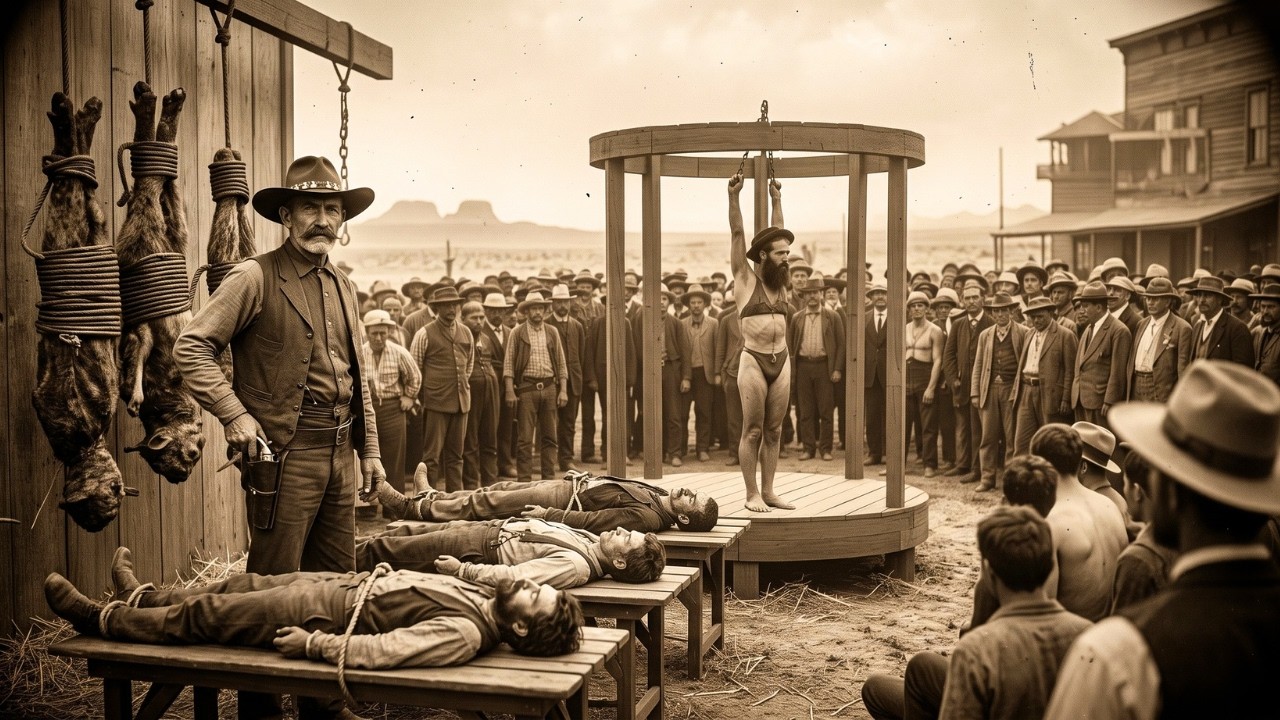
The oldest was in his seventies. By sunrise, the survivors were loading wagons and crossing into Mexico. The village emptied. The one-room school shut down.
But a schoolteacher named Harry Warren, who taught in Porvenir and whose wife was the daughter of Longino Flores, recorded the names of every man and boy taken that night: Manuel Morales, Roman Nieves, Eutimio Gonzalez, Ambrosio Hernandez, Antonio Castaneda, Tiburcio Jaques, Macedonio Huertas, Alberto Garcia, Pedro Viviano, Severiano Herrera, and Juan, Serapio, and Pedro Jimenez. Fifteen names on a list that would not remain hidden. How the Rangers became the men who rode into Porvenir, and how they became the most famous lawmen in the West, is a story that winds through two centuries of muster rolls, budgets, and blood. It starts with ten men, a dollar and a quarter a day, and a single word.
In 1823, Stephen F. Austin, a Virginia-born land agent holding a Mexican grant on the Brazos River, issued a call for ten men to serve as Rangers for the common defense. The word was not a title. It described the job: ranging, riding the open country between scattered farms, because the colony had no fort, no garrison, no soldiers within a hundred miles.
A man owned a cabin, a corn patch, and a flintlock, and his nearest neighbor was a half day’s ride through the cane. Karankawa and Tonkawa raiding parties knew that. So did Austin. The terms were plain.
A man brought his own horse, his own rifle, his own powder and lead, and served short stretches—weeks, not careers—until the trouble passed. No uniform, no badge, no oath to a state that would not exist for another twenty-two years. Austin paid partly in land. These were armed neighbors, not soldiers, and under the law, it was not clear what they were.
Twelve years later, the muddle got its first official shape. On November 24th, 1835, delegates meeting at San Felipe de Austin passed an ordinance creating a corps of Rangers: three companies of fifty-six men each, one hundred sixty-eight in all, under Major Robert McAlpin Williamson, the lawyer everyone called Three-Legged Willie. The pay was a dollar and twenty-five cents a day, and that sum covered pay, rations, clothing, and horse service. The ordinance said nothing about arrest, warrants, judges, jails, or criminal jurisdiction.
The men answered up a military chain, not to any court. A man signed on at a crossroads store, hand on a ledger, no badge pinned to his coat because none existed. He was a soldier hired by the month to ride the gaps between settlements, watch the river crossings, and report what the dust told him. When the campaign ended, the company dissolved, and he walked back to his corn.
Out of that dollar and a quarter a day, a man fed himself, his horse, and his gun. At the muster, a clerk wrote down the man’s name, then the horse’s color, brand, and an appraised value, because if the animal died in service, the Republic owed the owner the appraisal, not a replacement. Men put their horses at sixty, eighty, one hundred dollars—more than two months’ wages. Lose the horse to a Comanche arrow or a snapped leg at a creek crossing, and you walked home and waited on a claim that might take years.
Texas bought your time. Everything else you brought yourself, including, for a long stretch, whatever you happened to be wearing. For the first century, there was no badge at all. The star in a wheel that would become the symbol of the Rangers began as a private habit.
A ranger walked into a jeweler’s shop, laid down a Mexican five-peso coin—heavy silver, about an inch and a half across—and paid to have the center cut away into a five-pointed star, the rim left standing as the wheel around it. No two came out alike, because no two jewelers cut the same. Plenty of men carried nothing at all. Riding into a settlement in 1878, a ranger wore a slouch hat and a brush jacket bought with his own money, nothing pinned to his chest.
His proof was a folded warrant of authority signed by his captain and the word of the men beside him. Texas did not issue an official badge until 1935, the year the legislature folded the Rangers into the new Department of Public Safety, and no single standard design was set until 1962, when DPS had them struck from those same five-peso coins. Eighty years of service with no mark of office. In 1874, the legislature gave these men something they had never had.
On April 10th of that year, Governor Richard Coke, a Waco lawyer who had been sworn in that January, signed the Act of the 14th Legislature creating the Frontier Battalion. It was the first time Texas paid for a standing ranging force out of a budget line instead of an emergency. The appropriation was $75,000. The battalion had six companies of seventy-five men apiece.
Command went to Major John B. Jones of Corsicana, a slight man, barely 135 pounds, who did not drink, did not curse, and wore a tailored black coat in 100-degree heat. Jones strung six camps, companies A through F, along the broken frontier line from the Red River down toward the Nueces: canvas tents, picketed horses, a mesquite fire, two men on night herd. Then he rode the whole line himself, roughly a thousand miles of inspections, checking rolls and horseflesh.
A private in that battalion drew forty dollars a month and still furnished his own mount, saddle, and six-shooter. Corporals made forty, sergeants fifty, lieutenants seventy-five, captains one hundred. Set that beside the trail hand pushing longhorns north to Kansas that same season, who made twenty-five to thirty dollars a month—except the outfit fed him, mounted him on a string of six to ten horses, and swapped out any animal that broke down. A man riding for the state got the same wage and none of the extras.
Out of his thirty dollars came the horse, the saddle, the Sharps or the Winchester, every cartridge, the coffee and bacon, the boots and the hat. At the paymaster’s table at a camp on the Llano, under a canvas fly for shade, a clerk wrote your name in a ledger, you made your mark beside it, and coin was counted into your palm. Often the money came months late, because the legislature’s appropriation ran dry before the year did. Good men quit over it.
Each captain in the battalion owed Austin a monthly return: a ruled form listing every private by name, his horse and the animal’s appraised worth, the miles he had scouted, arrests he had made, stock he had recovered, and in the remarks column, the terse notes killed, wounded, deserted, discharged. A camp clerk hunched over a plank table, lantern flickering, tallying days on a muster roll while horses stamped in the dark outside. Those returns fed the adjutant general’s yearly report to the governor, which was printed and set before the legislature, since the battalion’s funding came up for renewal and the lawmakers wanted figures, not narrative. In 1878, Adjutant General William Steele handed the state printer a volume the men nicknamed the Bible: the roster of fugitives from justice, county by county, upward of four thousand names, each carrying the charge, the filing date, and whether the man remained at large.
Rangers carried it in a saddlebag until the covers grew limp. The bound copies rest today at the Texas State Library and Archives in Austin. The battalion’s campaigns were not always waged against outlaws. On July 16th, 1839, Chief Bowles, whom his own people called Duwali, fell on a slope above the Neches River in what is now Van Zandt County.
He was struck from his horse while bearing a sword and silk sash that Sam Houston had given him years before. The order had issued from Austin that May, when President Mirabeau B. Lamar wrote to the Cherokee that they held no title to their East Texas land and would be removed peaceably if they departed, by force if they refused. Bowles, past eighty, told the commissioners his people would not sign.
On July 15th and 16th, roughly five hundred Texans—militia and ranging companies under Colonel Edward Burleson and General Kelsey Douglas—pushed the Cherokee through cornfields and timber. Texans named it the Battle of the Neches. By the second morning, cabins were ablaze, a corn patch beaten flat, families trudging north on foot with whatever they could carry. By the Texans’ own tally, more than eighty Cherokee lay dead.
The survivors crossed into Indian territory and never came back. Thirty-six years afterward, a Ranger captain crossed the river the other way on his own authority. On November 19th, 1875, Captain Leander McNelly ferried some thirty Rangers over the Rio Grande into Mexico, two at a time in a hand-pulled skiff, chasing stolen Texas cattle at a ranch called Las Cuevas. No treaty permitted it, no act of Congress, no order from Austin.
In the darkness they struck the wrong ranch and killed men who were not the thieves. By midday they were pinned against the riverbank while the ranchero Juan Flores Salinas lay dead in the brush. Down in the cane, cartridges were counted out on hat brims, Mexican rifles held the rise above them, and US Army troops stood on the Texas side under orders not to cross. A telegram arrived from the Secretary of War, relayed through Major A.
J. Alexander at Fort Ringgold: “Advise McNelly to return at once to Texas. ” McNelly replied that he would stay and recross at his own discretion, and told them to convey his compliments to Washington. He came out with roughly sixty-five head of cattle.
Mexico lodged a protest through its legation. No one was charged. For another forty years the river remained a suggestion. It was precisely that attitude that led to Porvenir.
But before the Rangers could be held to account for what happened there, something else had to shift. In June of 1918, Governor William P. Hobby disbanded Company B and discharged five Rangers. Fox resigned.
No one stood trial. Yet a legislator from Brownsville had read Harry Warren’s list, and he was not done. On January 31st, 1919, Jose Tomas Canales, a Brownsville lawyer and the only Mexican-American then serving in the Texas House, presented to the legislature a numbered list of nineteen charges accusing Rangers of murder, torture, and the killing of prisoners along the border. That February a joint House and Senate committee opened hearings in Austin.
A stenographer recorded testimony that ran past sixteen hundred pages. Witnesses from the valley described men taken from their homes at night and never seen again. Friends urged Canales to let it drop. He stayed at the table.
The committee’s report conceded that Rangers had broken the law and that officers went unpunished—then recommended that the force be retained. In March, the legislature passed Senate Bill 5: four companies of about seventeen men, a headquarters detail, higher pay, a bond posted by every man, and the right of any citizen to file a sworn complaint with the Adjutant General. The transcript went into boxes in Austin and sat there for decades. Porvenir got its marker in 2018, when a granite monument rose in the desert of Presidio County bearing the fifteen names.
The Texas Historical Commission approved it—an agency of the very state that once signed that company’s payroll. Behind the application stood five historians: Monica Muñoz Martínez, John Morán González, Benjamin Johnson, Sonia Hernández, and Trinidad González, working under the name Refusing to Forget, footnoting every claim and waiting out county boards for years. Two years before, the Bullock Texas State History Museum in Austin had mounted an exhibition called Life and Death on the Border, 1910–1920, hanging those killings on the wall of the state’s own museum. At the abandoned town site, archaeologist David Keller of Sul Ross State University sifted the caliche and turned up spent cartridge casings where the bodies had lain.
By the 2023 bicentennial, descendants were reading the names aloud at the roadside. The notion of the Ranger who rides in alone and sets things right by sundown came from somewhere else entirely, and it took hold. The most famous line tied to the service was carved into a stone base at Dallas Love Field in 1961, when a statue was unveiled. Four words: “One riot, one Ranger.
” The man who posed for the statue was Captain J. Banks—not the Ranger the saying is pinned to. That would be William Jesse McDonald, born in Mississippi in 1852, a captain from 1891 to 1907. The story circulates in several versions.
One has him stepping off the train at Dallas in 1896, greeted by a nervous official who asks where the rest of the company is; McDonald says he is enough, since there is only one prize fight. Another places it in Sherman, Grayson County, in 1906 during a riot. A third sets it at a Waco gambling case. Albert Bigelow Paine wrote McDonald’s biography in 1909, with the captain still alive and talking, and the line appears nowhere in it as a quote.
What Paine does record is McDonald’s actual motto: “No man in the wrong can stand up against a fellow that’s in the right and keeps on a coming. ” The famous slogan has no date, no witness, no record. The men who wore that reputation were chosen by rules nobody printed for a long time. In 1874, the Frontier Battalion asked only that a man be sound, sober, able-bodied, and able to furnish a horse and a six-shooter, with a captain willing to sign his name on the roll.
There was no written test, no proof of age, nothing at all to keep a nineteen-year-old from riding out of camp with a rifle laid across his saddle. The 1919 reorganization brought in an oath, a bond, and a record kept in Austin. Then in 1935 the legislature put the Rangers under the Department of Public Safety and made the job something earned by promotion rather than handed out as a hire: a man worked his way up through the highway patrol, appeared before a board, and waited his turn. Year after year, the roster stayed entirely white and male.
It was not until September 1988 that Leroy Young Jr. pinned on the star—the first black man to wear it in the 165 years since Austin’s ten riders. He was forty-one, born in Del Rio, an Army veteran of Vietnam who already had fifteen years in the Department of Public Safety. Highway Patrol came first, then narcotics work.
He went through the promotion process more than once before a slot in Company D finally opened. Five years on, in 1993, Christine Nix and Marie Reynolds Garcia were promoted into the division, the first women ever to hold a Ranger commission. Nix was a trooper out of Waco who climbed precisely the ladder the 1935 law had set out: years in uniform, a written exam, a board, a signature from above. That 1935 law was a direct response to a collapse.
In 1933, Governor Miriam Ma Ferguson, fresh from beating Ross Sterling, fired every Ranger on the rolls for backing her opponent, then handed out special Ranger commissions by the thousands—some to men under indictment. Roughly forty Rangers were thrown out of work. The legislature slashed the appropriation, leaving about thirty-two Rangers for 254 counties and close to six million Texans. One man covered ground the size of Ohio, driving his own car and paying for his own gas.
Special commissions went to bankers, oilmen, and men with criminal records, some two thousand three hundred of them. Bank robberies climbed. On August 10th, 1935, the 44th legislature created the Texas Department of Public Safety, and on September 1st the Rangers ceased to be their own outfit and became a division within it, alongside the highway patrol under a three-man public safety commission appointed by the governor. The act fixed the force at roughly thirty-six men: a headquarters company in Austin and five field companies policing a state of six million.
At the new headquarters at Camp Mabry you would find what no ranging camp ever had: a fingerprint file, a ballistics microscope, radio sets, a classroom with desks. The gear the early Rangers carried had a strange history of its own. In January 1847, Samuel Colt signed an order for a thousand revolvers at twenty-five dollars each. The man who talked the army into it was Captain Samuel Hamilton Walker, a Ranger from Maryland then serving with the US Mounted Rifles in Mexico.
Colt was broke; his Paterson plant had shut in 1842, and he owned no factory and not a single machine. Walker rode to New York and sat down with him over a drawing asking for six shots instead of five, a trigger guard, and a lever under the barrel so a man could reload in the saddle without taking the gun apart. What came back was a .44 nearly fifteen and a half inches long, four pounds nine ounces of iron, sixty grains of black powder behind each ball—heavy enough to hang in a saddle holster, not a belt.
Colt had them built at Eli Whitney Jr.’s armory in Whitneyville, Connecticut, because he had nowhere else to go. Walker got his pair that fall and was killed at Huamantla on October 9th, 1847. The contract saved Colt’s company.
Those guns, and the five-peso stars, sit today behind glass at the Texas Ranger Hall of Fame and Museum in Waco, the state’s official repository since 1968. The image most Americans carry of the Ranger came from a radio station in Detroit, not from Texas history. On January 30th, 1933, station WXYZ put a masked man on the air three nights a week. The show was The Lone Ranger, built in Michigan.
Owner George W. Trendle wanted a Western for kids, and Fran Striker, a writer in Buffalo, New York, mailed in the scripts. The setup: six Rangers ambushed at Bryant’s Gap, one left breathing, nursed back by a Comanche named Tonto, riding out alone in a mask with silver bullets and Rossini’s William Tell Overture behind him. Earl Graser voiced him until he died in a car wreck in April 1941; Brace Beemer took the reins.
By then the program ran on better than 140 stations. Set that beside the record. A frontier battalion company was seventy-five men—a captain, a sergeant, a camp cook, a clerk keeping the monthly return, horses picketed in a line. Nobody rode alone.
The state would not pay for it. The masked man was not history. He was Detroit advertising. Ask for the Ranger papers at the Texas State Library and Archives in Austin, and a clerk rolls out gray boxes: muster rolls from 1835, monthly returns listing each horse and its appraised value, payrolls where a private’s thirty dollars is counted out in ink, and the sixteen hundred pages of testimony José Tomás Canales forced onto the record in 1919.
Set your hands on those pages and you hold the whole thing. Ten men hired on the Brazos in 1823 for one job. A corps voted up at San Felipe de Austin with no power of arrest. A battalion Governor Coke funded in 1874.
An investigation the legislature ran on its own force. And after August 10th, 1935, a division inside the Department of Public Safety with a fingerprint file and a case number. Ninety miles north in Waco, the museum keeps the Colt Walkers and the five-peso stars behind glass. Same two centuries, two different rooms.
Hollywood built a man who rides in alone and fixes it by sundown. The archive kept the ledgers, the names, and the dates.
