In 1845, Alice Clay Gwyn was born into a distinguished American family in Cincinnati, Ohio, a modest town on the verge of becoming a leading city of the expanding Midwest. Her mother’s father had served as mayor of New Haven, Connecticut, and her ancestors included veterans of the Revolutionary War. But when Alice was just nine years old, her father died, and her mother later remarried a writer and journalist. The family soon relocated to New York City, a move that would alter the course of Alice’s life entirely.
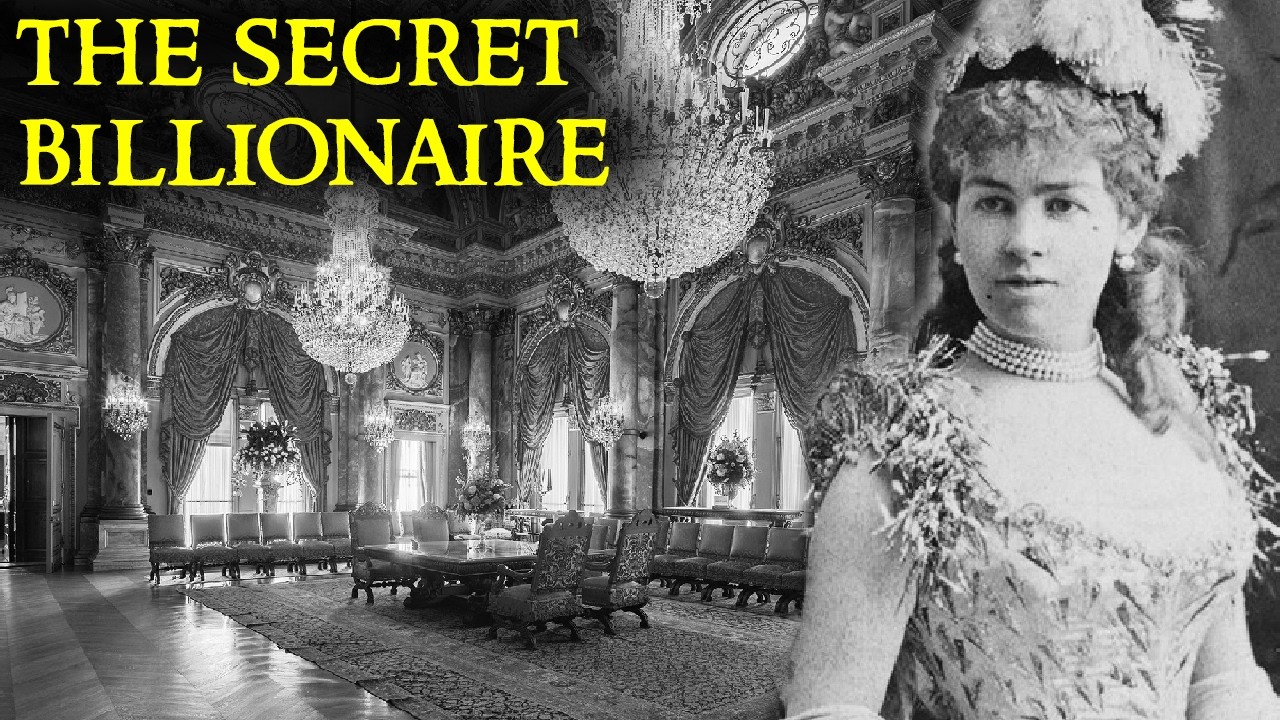
Entering New York society in the mid-1860s, at a time when the city’s social elite was rapidly taking shape during the Gilded Age, Alice became active at St. Bartholomew’s Episcopal Church on Park Avenue. While teaching Sunday school there, she met Cornelius Vanderbilt II, heir to one of the wealthiest and most powerful business dynasties in America. Just two years her senior, Cornelius was already marked for prominence.
Their courtship was swift, and on February 4, 1867, Alice, just twenty-one years old, married into the Vanderbilt family, tying her life forever to one of the greatest names in American history. To understand how Alice’s life was transformed by that marriage, one must first grasp the staggering fortune she stepped into. Saying she married into money hardly captured it. When Alice wed Cornelius in 1867, his grandfather, the Commodore, Cornelius Vanderbilt, was still alive, presiding over a fortune so vast it dwarfed nearly every other in the nation.
The Commodore had started in the 1810s working on the boats that ferried people between Manhattan and the surrounding shores. He became an early adopter of steam ship technology, built a fleet that controlled a vast share of east coast shipping, and earned his nickname as the head of a fleet. By the mid-nineteenth century, he was pouring that wealth into America’s booming railroads, playing a pivotal role in developing lines on the east coast and linking New York to rising Midwestern cities like Chicago and Cleveland. When the Commodore died in 1877, he left behind over one hundred million dollars, an almost unimaginable sum at the time, equivalent to over three billion dollars today.
Despite having more than a dozen children, he left ninety-five percent of his estate to Alice’s father-in-law, William Henry Vanderbilt. William Henry worked hard, and his father’s monopoly on America’s railroads guaranteed that his fortune would only increase. By the time he died in 1885, less than nine years after his father, his one hundred million dollar inheritance had doubled to two hundred million. He left most of it to his two elder surviving sons, Cornelius II and William Kissam Vanderbilt.
So, eighteen years after their marriage, Alice and Cornelius, already very wealthy, now stepped into almost unimaginable riches, catapulting Alice into a life of even greater luxury and cementing her role as matriarch of the most dazzling dynasty in America. For all their wealth, family life was not without its problems, though it was comfortable, to put it mildly. In 1883, Alice and Cornelius began overseeing construction of the Cornelius Vanderbilt II mansion at the intersection of Fifth Avenue and West 57th Street in Manhattan. It was the largest private residence in New York City, with a salon, music room, and conservatory on the first floor, while the dining room was large enough to double as an art gallery.
It served as a powerful symbol of the family’s immense wealth and influence. Alice herself was far less obsessed with social recognition than her ambitious sister-in-law, Alva Vanderbilt, who waged a delicate war with Mrs. Astor to secure her place among the city’s old money elite. Still, in March 1883, at one of Alva’s legendary masquerade balls, Alice stunned the crowd with a gown that would become immortalized in history as the electric light dress.
Made of white satin wired to carry electric current and studded with glass beads arranged like lightning bolts, the dress literally glowed, a dazzling nod to the brand new electrical lighting recently installed in New York City. Alice’s bold choice became the sensation of the night and dominated press coverage, cementing her reputation as a quietly audacious figure. The event itself set a new standard for New York society, elevating parties to unprecedented heights of extravagance and signaling the Vanderbilts’ dominance in the glittering and competitive world of the Gilded Age elite. To further their prestige, in 1893 the couple began work on a grand summer residence at Newport, Rhode Island.
The Breakers was a vast seventy-room mansion, five stories tall, surrounded by a huge estate. While the Manhattan house was torn down in the mid-1920s to make way for the city’s growing number of skyscrapers, the Breakers remains on the National Register of Historic Places to this day. Despite her immense wealth, Alice would often occupy her grand homes alone, especially after her husband’s health declined. Cornelius suffered a debilitating stroke in 1896 and died three years later, aged fifty-five, leaving Alice a widow with a staggering fortune.
At his death, his estate was appraised at nearly seventy-three million dollars. Alice received a seven million dollar trust and an income of five thousand dollars per week, while the remainder was divided among his children. After his passing, Alice largely withdrew from New York society, turning her attention to her family. Yet from the sidelines, she witnessed with growing despair as her husband’s fortune was squandered by her children and grandchildren.
They, as well as extended family members, indulged in extravagant lifestyles and opulent mansions, oblivious to the erosion of their wealth. Having observed the spectacular rise of the Vanderbilt dynasty, Alice could do little to prevent the slow, inevitable fall of the House of Vanderbilt. As matriarch, Alice was also a devoted supporter of numerous charitable causes. A committed Christian, she backed the Manhattan YMCA and became an early American supporter of the Red Cross, contributing to relief efforts such as the response to the 1889 Johnstown flood in Pennsylvania.
Her philanthropy extended to education and culture. In the 1890s, after the death of their son William in 1892, she and Cornelius funded Vanderbilt Hall at Yale in his memory. She supported Newport Hospital until her death and made one of her most lasting gifts to New York City, an elaborate set of gates for Central Park, still standing today at the Conservatory Garden entrance near 105th Street. Alice was known for being something of a firebrand in her views, especially when it came to religion.
One story made the newspapers in the early 1920s when Alice was well into her seventies. It involved Dr. Leighton Parks, a controversial minister who had been made director of St. Bartholomew’s Church in New York in 1904, where he acquired a reputation for independent views on theological issues.
Parks held, for instance, that the idea that the Virgin Mary was in fact a virgin at the time of the conception of Jesus was not true. Alice was a member of the congregation for many years, until the day Dr. Parks preached a sermon outlining what could only be called a conspiracy theory, claiming that the Roman Catholic Church was aiming to take over the United Kingdom. The sermon reflected modern concerns in New York about the huge influx of Roman Catholics from countries like Ireland and Italy since the 1880s.
Alice made it clear she would not accept listening to such views, and she left the congregation, proving that even in her twilight years, she remained a formidable woman. Alice lived a very full life as matriarch of a sprawling family. She had well over a dozen grandchildren and played an active role in their lives. This was especially true of the younger children of her son Alfred, who were infants when Alfred perished in the sinking of the Lusitania in May 1915, meaning their grandmother played an important part in ensuring they had a good upbringing.
Alice’s life was difficult in other ways. Her youngest son, Reginald, developed a serious drinking problem and died in 1925 from cirrhosis of the liver at just forty-five. However, his passing prompted Alice and one of her children to reconsider old family rifts. In 1926, thirty years after Cornelius Vanderbilt III had married against his parents’ wishes and during which time they had not spoken, he and his mother finally reconciled.
The reunion was especially moving, as he was one of only three of her surviving children by that time. Reginald left behind a daughter named Gloria, born in 1924, who later became a fashion designer and model and was the mother of CNN presenter Anderson Cooper. Gloria’s inheritance from her father became the source of a scandalous trial in the 1930s between her mother and aunt, one that filled Alice with contempt in her final years, believing it was airing the family’s private affairs too much in public. Despite the many tragedies, Alice continued to play a major role as matriarch down to her death.
By the 1920s and 1930s, the family fortune had been widely dispersed. The Commodore’s vast wealth, once seemingly limitless, had been squandered and divided among hundreds of descendants over generations, diluting the empire he had built. In 1923, Alice moved into a townhouse at 857 Fifth Avenue, making way for the demolition of the grand mansion she had built alongside her husband at the height of Vanderbilt wealth. She remained there for the rest of her life, passing away on April 24, 1934, aged eighty-eight.
Remarkably, Alice left behind over ten million dollars, a testament to her disciplined life as a widow, since she had never lived beyond her allowance and carefully preserved her wealth. In doing so, she became one of the few Vanderbilts of later generations to die having spent less than she earned. She was laid to rest in the Vanderbilt family mausoleum on Staten Island, closing the final chapter on a life that had witnessed both dazzling heights and the slow decline of America’s most famous dynasty.
