At roughly 8:00 on the morning of July 3, 1863, Colonel Edward Porter Alexander received an order that would place him at the heart of the largest artillery bombardment ever attempted on the North American continent. General James Longstreet had chosen him to command the First Corps artillery during what would become known as Pickett’s Charge, assigning him the task of softening the Union line on Cemetery Ridge before the infantry went forward. Alexander understood what was being asked of him. He was to mass every gun he could bring to bear, weaken the Federal position, and pave the way for the assault that Robert E.
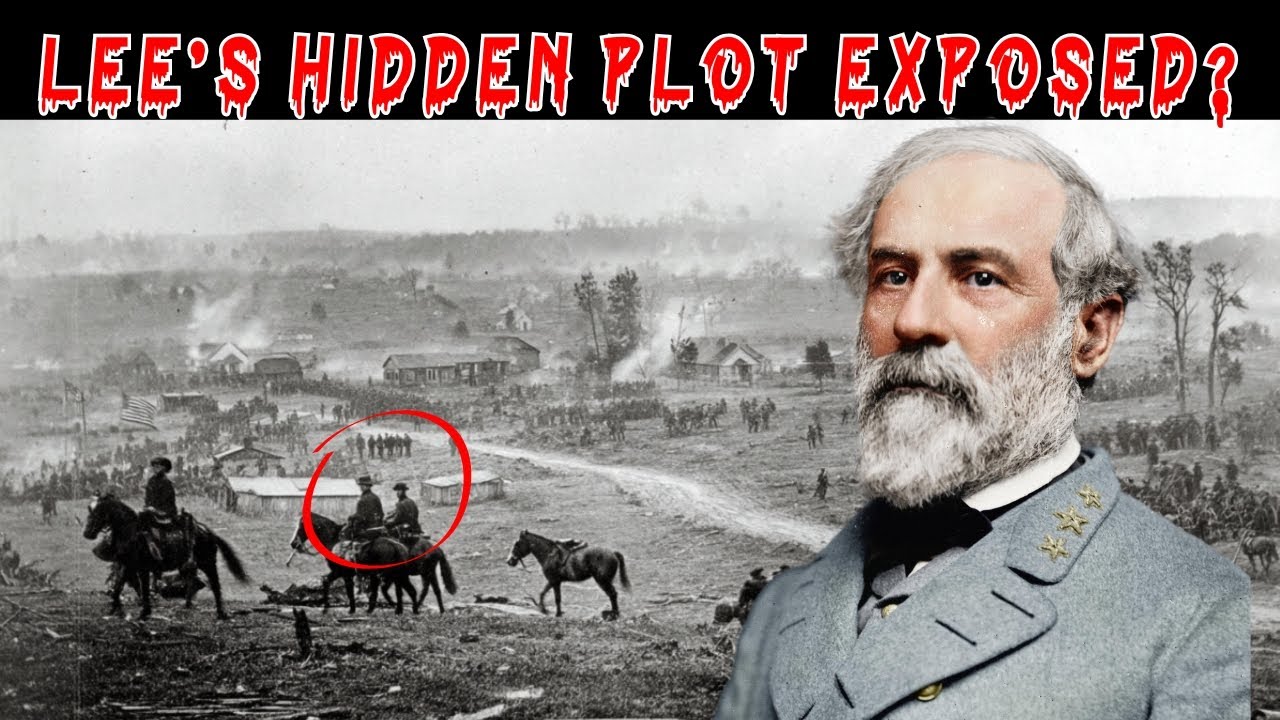
Lee believed would decide the battle, and perhaps the war, in a single stroke. The problem was that Alexander did not control nearly as many guns as the mission required, and the artillery he did command was not coordinated with the rest of the Confederate army. While he led the primary bombardment, batteries from other corps operated independently, firing without any unified plan. The result was a barrage that thundered across the valley for nearly two hours but never delivered the concentrated destruction the infantry needed.
When the guns fell silent and the Confederate infantry stepped out of the tree line on Seminary Ridge, the Union artillery on Cemetery Ridge, under Major General Henry J. Hunt, was still very much in the fight. Hunt’s gunners had held their fire through much of the bombardment, conserving ammunition, and when the Confederate infantry emerged, they were met with a devastating fire that broke the assault before it could reach the stone wall. The charge failed, and with it the Confederacy’s best hope of winning the Battle of Gettysburg.
Looking back on that day and the two that preceded it, Alexander had no doubt that the defeat was not the work of fate. He believed a cascade of grave errors, miscommunications, and tactical missteps had doomed the Confederates before the battle ever reached its climax. The first of those errors had occurred days earlier, far to the south. On June 25, 1863, as Lee’s Army of Northern Virginia advanced northward from Virginia into Pennsylvania, Lee issued directives to his cavalry commander, Major General J.
E. B. Stuart. The precise wording of those instructions remains a matter of historical debate, long argued over by officers and historians alike.
What is widely understood is that Lee ordered Stuart to collect intelligence on Union troop movements, shield the army’s advance, and guard the right flank of Lieutenant General Richard S. Ewell’s Second Corps. It was a straightforward mission, but Stuart, a commander known for his flair and his love of riding around the enemy, made a controversial choice. He moved his cavalry farther east than Lee likely anticipated, intending to capture supplies and disrupt Union operations.
In doing so, he placed the Union Army between his own force and the main Confederate army, leaving him no way to rejoin Lee except by riding still farther north and looping around the Federals. He would not rejoin the army until late on July 2, by which time the Battle of Gettysburg had already been raging for a full day. Lee spent the first two days of the battle without a vital portion of his cavalry. In an army on the move, cavalry served as the eyes of the command, scouting ahead, locating the enemy, and reporting his strength and movements.
Without Stuart’s horsemen, Lee was navigating blindly at a critical moment. He could not know where the Federal Army of the Potomac was, in what strength it was advancing, or which roads it would use to reach Gettysburg. His ability to make informed tactical decisions was severely hamstrung. Alexander, who would later write extensively about the battle, denounced Stuart’s ride as a tactical blunder of the first order.
Separating the cavalry from the main army, he argued, violated the fundamental military principle of keeping one’s forces concentrated for mutual support. Raids of the kind Stuart undertook rarely produced significant battlefield advantages, and they always carried unnecessary risk. Alexander insisted that unity and concentration of force should have taken priority over a speculative operation. Had Stuart been present at the battle’s outset, he believed, the cavalry could have provided the intelligence Lee needed to approach Gettysburg with far greater clarity, and the outcome might well have shifted in the Confederacy’s favor.
Many historians have since agreed with that assessment, whether the blame lies with Stuart’s decisions or with Lee’s ambiguous orders, the episode stands as a lesson in how miscommunication and tactical error can shape an entire campaign. The consequences of Stuart’s absence became painfully clear on June 30, when a brigade from Major General Henry Heth’s division was sent toward Gettysburg with orders to secure supplies, including badly needed footwear for Confederate troops. At that moment, Confederate commanders believed that Major General George G. Meade and the Federal Army of the Potomac were still encamped fifteen to twenty miles south of the town.
They did not expect serious resistance. As the Confederate brigade approached the outskirts of Gettysburg, however, it encountered a Federal cavalry unit under Brigadier General John Buford, already deployed and waiting. Heth, exercising some restraint, chose not to launch an immediate assault against dislodge the Union horsemen. Instead, he withdrew and returned the next morning with his entire division, while Major General William Dorsey Pender’s division remained in reserve behind him.
When Heth and Pender reached Gettysburg’s outskirts on the morning of July 1, they had roughly 12,000 men between them. Opposing them stood Buford’s Federal Cavalry Division, numbering only about 3,000. The Confederates had the numbers, but Buford’s troopers were superbly positioned and stubbornly resilient. They held the ground long enough for Federal reinforcements to arrive, including the First and Eleventh Corps of the Army of the Potomac, which swelled the Union force in the field to roughly 20,000 men.
Suddenly, the numerical advantage had reversed. Heth and Pender, who had expected to brush aside a small cavalry screen, found themselves facing two full Federal corps. Alexander later reflected on this encounter with a sense of bitter frustration. He noted that the absence of Stuart’s cavalry had been a decisive factor, stripping Lee of intelligence on Union positions.
With Stuart present, Lee might have avoided committing two divisions to a collision with two Union corps. He also criticized the lack of prudence in Heth’s advance, comparing it to an order Lee issued later that same day to Ewell concerning Culp’s Hill. Ewell was instructed to seize Culp’s Hill if feasible, but was explicitly cautioned against triggering a full-scale engagement unless conditions were favorable. Alexander argued that similar restraint should have guided Heth’s mission on the morning of July 1.
It did not. The consequences were severe. Heth’s leading brigade suffered heavy losses in its initial clash with Union forces, losses described as nearly decimating the brigade and leaving Heth’s division weakened for the remainder of the battle. Pender’s division also took significant casualties.
Alexander saw it as a cautionary tale of poor planning and inadequate intelligence, errors that diminished Confederate combat strength before the battle had properly begun. By the end of the first day, the Union army under Meade had secured a dominant position on Cemetery Hill and Culp’s Hill, high ground that gave the Federals a powerful defensive edge and allowed them to consolidate and reinforce their lines through the night. Ewell, whose Second Corps had been ordered to take Culp’s Hill if feasible, had not done so. Now he faced a critical decision: continue the assault on July 2, or pull back to Seminary Ridge and adopt a defensive stance.
Alexander later offered a careful assessment of the Confederate position at that moment. It was robust, he believed, but less advantageous than the Union position. He thought it defensible and unlikely to be easily overrun. He also believed that public sentiment would likely have pushed Meade to act aggressively, making a defensive Confederate strategy entirely feasible.
If Lee had chosen to stand on the defensive, Meade would have been under enormous pressure to attack, and he would have had to do so against a Confederate army holding strong ground, a far less favorable set of conditions for the Federals. Lee chose to attack on July 2. His reasoning was logistical: he believed his army was too far from its supply base to sustain a prolonged campaign in enemy territory. Alexander rejected that reasoning outright.
He pointed out that the Confederate army remained at Gettysburg for three full days and later foraged for supplies when it was delayed at the Potomac River for over a week. The logistical concerns, in his view, were exaggerated. A defensive strategy on July 2 would have been the wiser course. He estimated that Lee’s decision to go over to the offensive forfeited roughly sixty percent of the Confederacy’s prospects for a significant victory at Gettysburg.
It was, in his estimation, a critical juncture in the campaign, and the Confederates had chosen the wrong path. The Confederate position on Seminary Ridge was formidable, Alexander acknowledged, but it was simply not as strong as the Union position on Cemetery Hill and Culp’s Hill. He described the Union defensive setup as exceptionally robust, estimating that it amplified the Federal army’s already superior numbers and firepower by about fifty percent. The Union army fielded approximately 93,000 troops against the Confederates’ 71,000, and it held a notable edge in artillery, both in quantity and in quality.
The ground, the numbers, and the guns all favored the defense, and the defense belonged to Meade. Alexander also criticized the Confederate plan for July 2 on more specific grounds. There had been no thorough reconnaissance of the Union defenses, and there had been insufficient preparation overnight. The Federals, meanwhile, used the night to strengthen an already strong position.
Ewell’s Second Corps, ordered to advance closer to Gettysburg, failed to capture Culp’s Hill, a position Alexander considered nearly impregnable given its defensive strength. The corps was left in an ineffective position near Cemetery Hill, and for the remainder of the battle it was rendered largely ineffective, unable to influence the fighting in any meaningful way. Then came July 3, and the order that placed Alexander at the center of the Confederacy’s final gamble. His artillery was supposed to prepare the way for the infantry assault, but it never functioned as a unified force.
While Alexander commanded the main bombardment, other artillery from different corps operated independently, and the coordination that should have existed simply was not there. General William N. Pendleton, Lee’s chief of artillery, had assigned nine howitzers to Alexander’s command, but several were reassigned elsewhere without his knowledge, diminishing the support available to the infantry. Lieutenant General A.
P. Hill’s artillery on Seminary Ridge, some sixty-five guns, was underutilized, with no guns advanced to support the charge and valuable ammunition wasted earlier in the day. Ewell’s Second Corps contributed only one of its five artillery battalions to the bombardment, missing a chance to enfilade the Union positions. Alexander attributed these failures to the absence of a unified artillery command.
A competent chief of artillery, he argued, could have optimized the firepower of the entire army, concentrating it where it was needed most. Instead, the bombardment fell short of its purpose. Hunt and his Union gunners weathered the barrage, conserved their strength, and were ready when the Confederate infantry came forward. Pickett’s Charge was repulsed.
It was a decisive moment, not just in the Battle of Gettysburg but in the course of the entire Civil War. The Confederates had committed their best and suffered a catastrophic defeat. Alexander’s analysis of the battle remains one of the most detailed and influential assessments ever written by a participant. He saw a string of avoidable failures, each compounding the next.
Stuart’s cavalry was absent when it was needed most. Heth advanced without proper intelligence and paid for it with devastating losses. Lee attacked on July 2 when a defensive stance might have forced Meade to make the mistakes. And on July 3, the artillery, which should have been the hammer that opened the way for the infantry, never struck with the force it was capable of delivering.
It was not destiny that defeated the Confederates at Gettysburg. It was a cascade of critical missteps and missed opportunities that began before the first shots were fired.






