The gunfire erupted with no warning at all. Three captives, their wrists tied, bolted from the armed guards escorting them toward California. Before a single person could move, shots rang out. Two of the prisoners dropped, hit.
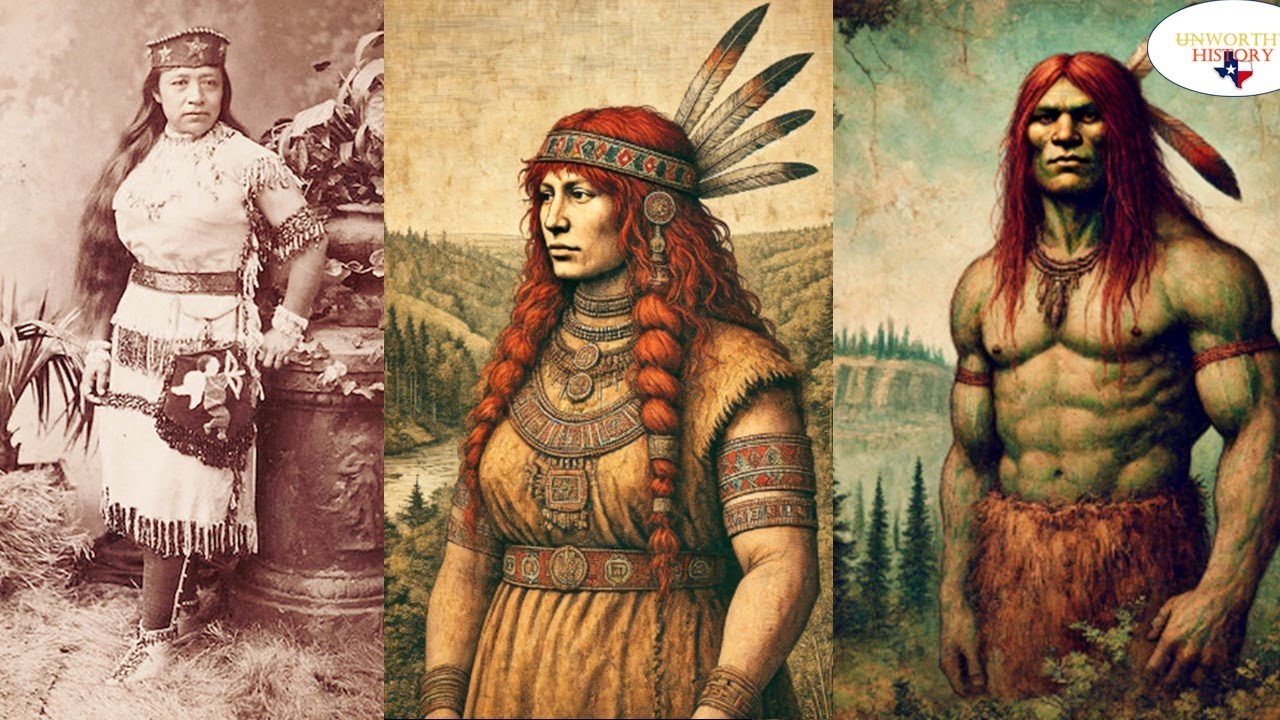
The third stumbled backward, hands lifted high, yet the shooting went on until all three lay motionless on the ground. Sarah Winnemucca watched it happen, a girl of roughly fifteen, and that image would stay with her for the rest of her days. The slain men were Washo Indians, and Sarah was utterly certain they were blameless. The whole affair had started several days before, in the late autumn of 1859, when two white men, John McMullen and McWilliams, had left their store on the Carson River to cross the mountains into California and purchase provisions for the winter.
They were carrying a substantial sum of money. They made camp in the mountains for the night, and sometime during those hours someone crept up and shot them both dead. The killer, or killers, then pressed arrows into their wounds so it would appear that Indians had done the deed. By the following day, word had spread that Indians had murdered McMullen.
When people wondered how the messengers could be so sure Indians were responsible, the explanation was plain enough: arrows had been used. Thirty men rode out that very afternoon and came back with the bodies, the arrows still lodged in them. Everyone declared that the Indians had killed the two men. Sarah’s brother, a peace chief by the name of Natches, was summoned, along with their cousin Young Winnemucca and a hundred other Paiutes.
They arrived within two days. Major William Ormsby, who led the Carson City settlers’ militia and whose family Sarah and her sister had been living with for two years, asked Sarah’s cousin which tribe the arrows came from. The cousin studied them and said they were Washo arrows. Major Ormsby then turned to Natches and asked whether the Paiutes would help bring in the Washo chief, so that the men who killed the two white men could be handed over.
Natches consented. That night the Paiutes held what Sarah would later describe as their first war dance, the first she had ever witnessed. A large crowd of white men and women came out to watch. When it was over, Major Ormsby gathered his men and they sang the Star-Spangled Banner, and Sarah, who had heard her grandfather sing it in his own fashion, thought it sounded nothing at all like that.
It was the very first time she had heard white people sing it. The following morning Sarah’s cousin, as war chief, dispatched five men to fetch the Washo chief. They came back with the chief and about ten of his people. The white men crowded around them, and Major Ormsby displayed the arrows and asked whether the Washos recognized them.
The chief, a man named Jam, replied that those were indeed his people’s arrows. Major Ormsby said that settled it. He instructed Natches to tell Captain Jam that his people had killed two men and must surrender the killers along with all the stolen money, after which no one would be harmed and matters would be set straight. The Washo chief answered that he knew his people had not killed the men, since none of his men had left camp.
They had all been together at Pine Nut Valley. He did not know what to make of the sorrowful thing that had occurred. Sarah’s cousin, the war chief, raised the arrows and gave the Washos ten days to produce the men who had killed the two white brothers. If they failed, he said, the Paiutes would be forced to fight them, because the white men had shown them such kindness.
Who could find it in their heart to kill them? The Washo chief departed with a very heavy heart. Once he had gone, Natches conferred with his men and asked what they made of it all. They agreed it was very strange indeed, and that only time would reveal whether the Washos had done it.
Six days afterward the Washo chief returned with three prisoners. One of them had a wife; the other two had only their mothers, who came along with them. The white men surrounded them, fastened handcuffs on the three Washos, and locked them in a small house for the night. The next morning all the white people came to look at them.
Some said to hang the devils on the spot. White boys pelted them with stones and hurled the most shameful insults. At around three in the afternoon, thirty-one white men arrived, every one of them carrying a gun on his shoulder. As they marched along, Sarah’s brother and cousin ran out to meet them.
One Washo woman started screaming that they had come to kill the prisoners. The wailing of those people could be heard for miles. Natches went to them and told them not to cry. But the women flung themselves at his feet.
They swore the three men had not killed the white men, had not left camp for more than a month. The chief had surrendered these three young men, they said, because they had no fathers to protect them. One young girl begged Natches, the mighty chief, to save her brother, for he was all that she and her mother had. One young wife, married that winter, threw herself down before the war chief and pleaded with him to speak for her husband, saying their own chief had given him up out of fear.
Then Natches told the Washos that the white men had come only to take the three prisoners to California and put them in jail. And in that instant one of the women cried out that the prisoners were being led out. Everyone looked. Before Natches could reach them, the three bound men broke loose and ran.
Of course they were shot. Two were wounded. The third ran back with his hands raised. All three died.
Sarah said she never expected to witness such a scene. At daybreak all the Washos rushed to where the men had been killed. The wife of the young man threw herself onto his dead body, weeping so bitterly it was enough to make the very mountains weep. They gathered the dead bodies into their arms, and they were covered in blood themselves.
Sarah ran to Mrs. Ormsby, crying, her heart nearly broken. She said she believed the Washo women, who swore their men were innocent and had not left camp. Mrs.
Ormsby replied that the Washo arrows had been found there, and the chief himself had brought the prisoners in, and her husband knew what he was doing. Sarah ran back to see what would be done with the dead bodies, for she had heard her people say the Washos were like the Digger Indians, who burned their dead. When she arrived, the Washo chief was speaking with her brother. She had not heard what he said before she got there, but from what she caught then, she knew he had been making a confession.
He gestured toward the men who had been slain without cause and declared that the women had spoken the truth. He himself was the one who had killed them. Their blood stained his hands. He understood that their spirits would pursue him and bring him misfortune for as long as he lived.
The wounded man also passed away. His mother wailed that the good spirit ought to visit the same curse upon the white men, so that they might all survive to witness the day when they would endure at the hands of their white brothers, as they called them. She turned to her daughter and told her she had no brother now, no one to cherish her, no one to bring her game. She was left entirely alone.
That was the first hardship the unfortunate Washos ever had with white people, Sarah wrote, and the only one they ever did have. The two dead Washos were carried off and burned, following their custom. The third was taken into California. Sarah’s little sister cried herself sick.
It was two weeks before they could go to their mother, and when they reached home it was winter, with so much snow that they remained in the mountains where Virginia City now stands, which was then their pine nut country. At some point during the winter the Washo chief came to them and reported that the white men who had killed McMullen and McWilliams had been captured. They had been tried and two of them had been hanged. Then he asked Natches to compensate him for the loss of the two Washos who had been killed.
Natches told him his people had no part in what the white people had done. It was the chief himself who ought to pay the poor mother and sister and wife of his own tribe, because he had surrendered those men himself. The Paiutes had merely done their duty. The following day Natches went to see for himself.
He gave the Washo chief a horse to ride, for the poor Washos had never owned a horse in their lives. Ten men accompanied him. The war of 1860 began in this manner. Two little girls, about twelve years old, went out into the woods to dig roots and did not return.
Their parents went in search of them. When they could not find them, all the Paiutes who were there came to help and searched thoroughly. They found trails that led up to the house of two white men named Williams, who lived on the Carson River near the Indian camp. The Williams brothers said they had not seen the children and told the people to come in and search the house themselves.
They did, as thoroughly as they thought they could, and found nothing. After a few days they sorrowfully gave up the search. The relations had nearly given the girls up for dead. Then one morning an Indian rode up to the cabin of the Williams brothers.
In those days the settlers did not hesitate to sell guns and ammunition to the Indians when they had anything to buy. The Williams brothers proposed to buy the Indian’s horse. They offered him a gun, five cans of powder, five boxes of caps, and five bars of lead. After some talk, the trade was made.
The men took the horse, put it in the stable, closed the door, and went into the house to give the Indian the gun, powder, and caps. But they would not give him the lead. The Indian would not take part of the payment. He gave back what he had taken and went out to the barn to get his horse.
Then they set their dog on him. When the dog bit him, he began to holler, and to his surprise he heard children’s voices answering him. He knew at once that it was the lost children. He made for his camp as fast as he could and told what had happened and what he had heard.
Natches and others went straight to the cabin of the Williams brothers. The father of the children demanded them. The brothers denied having them. They talked quite a while, and the brothers denied it again.
Then all at once the brother of the children knocked one of the Williams brothers down with his gun and raised it to strike the other. But before he could do so, the other Williams brother stooped down and raised a trap door on which he had been standing. It was a surprise to the Paiutes, who had never seen anything of the kind. The father peeped down first but could see nothing.
Then he went down and found his children lying on a little bed with their mouths tied up with rags. He tore the rags away and brought them up. When the Paiutes saw the condition of the children, they at once killed both brothers and set fire to the house. Three days later the news spread, as usual, that the bloodthirsty savages had murdered two innocent, hardworking, industrious, kind-hearted settlers.
Word was sent to California for army soldiers to come and demand the murderers of the Williams brothers. As no army soldiers were there just then, Major Ormsby collected 160 volunteers and came up. Without asking for or listening to any explanation, he demanded the men. The Paiutes would not give them up.
When the volunteers fired on them, the Paiutes flew to arms to defend the father and brother, as any human beings would do in such a case and ought to do. And so the war began. The war lasted about three months. After a few precious ones of her people and at least a hundred white men had been killed, a peace was made.
Among the dead was Major Ormsby, their dear friend who had been so hasty. Natches had tried to save him. He met the major in the fight, and as Natches was ahead of the other Indians, Major Ormsby threw down his arms and implored him not to kill him. There was not a moment to be lost.
Natches said, drop down as if dead when I shoot, and I will fire over you. But in the hurry and agitation Major Ormsby still stood pleading, and he was killed by another man’s shots. Some other friends of Natches, Judge Broomfield and his servants and a Spaniard, lived in a small cabin about twelve miles off. They were not fighting against the Paiutes, and Natches defended their lives and risked his own.
He stood at their cabin door and beat back the assaults with a club, and succeeded in driving the attackers off. But his uncle and cousins were so angry with him for saving white men’s lives that they whipped him with a horse whip. Sarah said she always knew her uncle loved them, that he was always kind to them, but she could never love him again as she had done after he whipped her brother. Her noble, patient brother bore his uncle no ill will, but was satisfied that he had saved the lives of his friends.
There was yet another time when Natches saved the life of his friend Mr. Seth Cook of San Francisco along with six others, though Sarah could not recall every detail and would not try to tell it. Mr. Cook had often given Natches valuable help, and he was still alive and able to recount the story of his escape himself.
At last the regular troops arrived at the grounds. After a brief fight they raised a flag of truce, to which Natches responded, and peace was concluded. A treaty granted the Pyramid Lake reservation to the Paiutes in 1860. They were to receive large supplies for as long as they remained peaceful.
Yet although thirteen agents served there over the course of twenty-three years, Sarah said she never heard of any issue after that first year. Among the traditions of Sarah’s people was one about a small tribe of barbarians who had lived along the Humboldt River many hundreds of years before. They used to lie in wait for the Paiutes and kill and eat them. At night they would dig large holes in the trails, and Paiutes traveling by night, which they did out of fear of these savage people, would often fall into them.
The tribe would even eat their own dead. They would come and dig up the Paiute dead after burial, carry them away, and eat them. Now and then they would come and make war. When they fought, Sarah’s people said, they were very brave.
They would leap into the air after the arrows that passed over their heads and shoot the same arrows back again. The Paiutes took some of them into their families, but could not make them like themselves, and at last they made war on them. That war lasted a long time. The tribe numbered about 2,600 people.
The war lasted some three years. The Paiutes killed them in great numbers, and the few who were left fled into the thick bush. The Paiutes set the bush on fire, right above Humboldt Lake. The survivors then made tuli, or bullrush, boats and went out onto Humboldt Lake.
They could not live there very long without fire, and they were nearly starving. The Paiutes watched them all around the lake and would kill them as fast as they could come on land. At last, one night, they all landed on the east side of the lake and went into a cave near the mountains. It was a most horrible place, for the Paiutes watched at the mouth of the cave and would kill them as they came out to get water.
The Paiutes would ask them if they would be like them and not eat people like coyotes or beasts. They spoke the same language, but they would not give up. At last the Paiutes grew tired. They gathered wood and began to fill up the mouth of the cave.
The poor fools began to pull the wood inside until the cave was full. At last the Paiutes set it on fire. At the same time they cried out to them, will you give up and be like men, and not eat people like beasts? Say quick, and we will put out the fire.
No answer came. The Paiutes thought the cave must be very deep, or far into the mountain. They had never seen it before, nor known it was there. They called out to them as loud as they could, will you give up, say so, or you will all die.
But no answer came. Then they all left the place. In ten days some went back to see if the fire had gone out. They went back to Sarah’s third or fifth great-grandfather and told him that they must all be dead, for there was such a horrible smell.
The tribe was called people-eaters. After the Paiutes had killed them all, the people around them called the Paiutes Sayu Cara, which means conqueror, and also enemy. Sarah did not know how they came by the name of Paiutes. It was not an Indian word, she thought, but a misinterpretation.
Sometimes they were called pine nut eaters, for they were the only tribe that lived in the country where pine nuts grew. The tribe the Paiutes exterminated had reddish hair, her people said. Sarah had some of that hair, handed down from father to son. She had a dress that had been in her family a great many years, trimmed with this reddish hair, which she intended to wear sometime when she lectured.
It was called the Morning Dress, and no one had such a dress but her family. Years later, the story found support from archaeological records. The cave was discovered by a company harvesting guano, and in 1929 the archaeologist Llewellyn Loud set down the accounts in a book about Lovelock Cave. John T.
Reed, a mining engineer in Lovelock, Nevada, gave his history. Reed’s father had run a general merchandise store at Lovelock from 1883 to 1895, where the son worked as a clerk, and through that work he came into contact with all the Indians of the region, old and young. Reed recalled that about 1887, when he was around sixteen, Captain Natches, two other Indians known locally as Coffee Charlie and Mustache Charlie, and Reed himself had set out to catch some wild horses that roamed in the neighborhood of the Carson and Humboldt sinks. In due time they came into contact with the horses, and the chase was on.
After running those horses all day long, they were obliged to camp overnight near the southern end of the Humboldt sink, on its eastern shore. The next morning they resumed the chase, following the horses over into the Carson sink desert. But there they had to turn around homeward, since they had no fresh saddle horses to pursue the mustangs further. On the way back they passed Lovelock Cave.
The hour being late, they decided to camp there for the night. Later, Captain Natches related to Reed the great calamity that had occurred in that cave to another race of people who had been exterminated by the Paiutes. In the tale Natches related, with the other two Indians aiding him and bringing out all the material facts, Reed was informed that about four or five generations back the Indians had fought to the extermination of a people who were red-headed and spoke their own language. The fact that the two peoples spoke the same language suggested that they had lived together for a long period of time.
Natches gave no explanation for how the conflict began, and Reed questioned whether he actually knew or whether any record existed, though his sister Sarah Winnemucca Hopkins claimed these people were cannibals who ate the Paiutes—something Reed considered difficult to reconcile with her further claim that the Paiutes had taken some of these people into their own households. Annie Lowry, a half-Indian woman married to an Indian named Mr. Sany, offered a different explanation: that these people had stolen their women and carried off their wild rice seed. Reed leaned toward believing the trouble centered on food, and that after a stretch of droughts the Paiutes resolved to wipe out the other people, who consumed the small and steadily shrinking supply of food available as wild seeds and wild fowl visiting the lakes.
Natches said these people had come from the southwest. A battle had raged for a long stretch on the Carson sink, at certain sand hills on the east and west sides of the Carson River, after which the Paiutes pushed these people northward into the Humboldt Lake region, then across the lake to the cave. Some entered the cave, while others continued northward. From what Reed gathered through Natches and numerous other old Indians, he concluded that this red-headed people had occupied the territory around the cave long before the Paiutes arrived from elsewhere.
Natches went on to describe how the Paiutes had gathered sagebrush in great quantity around and about the hills near the cave and piled it on the bluff above it. Then they set it alight and threw it down directly in front of the cave. The Paiutes kept to either side of the cave at a safe distance and watched for those inside to emerge for food or water, or to escape the smoke, which partly penetrated the cave. As they came out, they were cut down with well-aimed arrows.
Reed also secured an account from James H. Hart concerning the first excavation of Lovelock Cave in 1911. Hart had heard David Pew of Lovelock speak of an old Indian cave some twenty miles south of Lovelock. Pew said it was full of bat guano, into which he had dug four feet as a boy.
He had learned from the Indians where the cave was located, and that fires had burned inside it, since much smoke clung to the walls. Realizing that if the cave was as large as described the guano might be valuable, Hart arranged with Pew to file a mineral claim upon it and ship out the guano. They worked from the fall of 1911 to the spring of 1912. They drove a small tunnel into the mouth of the cave, or rather to one side of it, since the natural opening was too small to work through.
They removed about five carloads of guano, shipped to the Hawaiian Fertilizer Company of San Francisco. They soon began to uncover Indian relics and notified Dr. J. C.
Merriam of the University of California, who took the matter up with the University of Nevada and the Nevada Historical Society. They also wrote to the Smithsonian Institution, but the Smithsonian replied that it had no funds for collecting, accepting only donations. After some of the finest specimens had been destroyed, word came from the State Historical Society that, together with the University of California, they would send an investigator. This was Mr.
Loud. They gave him every possible facility for collecting. Many objects had been ruined by the weather, and others had been carried away. Reed remembered many boas, or ropes, of fine feathers, which lay scattered about in the open end of the cave in the workmen’s path and were irreparably damaged.
Some of these boas were found perfectly preserved. All the Indian objects began to appear about four feet below the surface of the guano. In the south end of the cave, about twenty feet deep, they unearthed some skeletons. In the north central part of the cave, about four feet deep, lay the striking body of a man, six feet six inches tall.
His body was mummified, and his hair was distinctly red. A grass rope encircled his neck with a knot under the left ear, the rope about eight feet long. His feet were bound together, and stout rope ran from the ankle to above the knees. The mummification was complete except for part of the abdomen.
The other mummies all had red hair. Reed believed there were either four or five of them. Those that appeared to be women were small, roughly the height of a Japanese woman, which was not entirely due to the shrinking of the bodies in mummifying, because the man was a giant. The women wore moccasins reaching clear to the knees, the buckskin beaded with shells.
Two of them wore a kind of buckskin coat or gown that came down to the knees. These bodies came from the deep south end of the cave. There were no bats in the cave when they went there to work. Besides David Pew, there worked in the cave Samuel Pew, Hansen, Cummings, and perhaps one or two others.
They screened the guano through a three-quarter-inch mesh, discarding everything that would not pass through the screen. Probably all objects that passed through the mesh were shipped away with the guano. After they finished working the cave, one George Stots worked on what remained in it for a while, and probably shipped out about a carload of guano. Sarah Winnemucca Hopkins died in 1891, eight years after the publication of her book.
The Pyramid Lake War had also cost the lives of three other men at the Williams Station, along with the two Williams brothers. They had been visiting the station saloon. A third Williams brother, James O. Williams, was not there at the time of the attack; he returned to find his brothers and the three patrons dead.
Most of the white settlers who fought the Paiutes alongside Major Ormsby had no military background and were poorly trained. Consequently, most of them died in the same battle where Major Ormsby was killed. The red-haired people of the cave had died hundreds of years before Sarah Winnemucca wrote her book, so they were probably not simply white outlaws who had joined a tribe and lived like Indians. Some have speculated that they were somehow descended from Vikings who reached America hundreds of years before English settlement began, or that they were related to an Asian group like the Ainu of Japan, who have been known to have blonde or red hair.
Some archaeologists speculated that the preserved red hair resulted from rust or another chemical process, and that these Indians did not truly have red hair.
