The shot rang out with no warning at all. Doc Holliday pushed through the saloon doorway in Las Vegas, New Mexico, revolver already cocked, and started firing before a soul there knew he had arrived. Charles Wright stood behind the bar pouring drinks for customers, yet in that instant he knew his old Dodge City adversary. Wright dropped low just in time.
The patrons flung themselves to the floor. Then Wright rose with his own revolver, and the two men launched a genuine duel—shot after shot traded at close quarters, not one of them striking its target. At last a bullet from Doc found its mark, and Wright fell to the floor in what the historian Mark Lee Gardner called a lifeless heap. Doc strolled outside without hurry and carried on with his business.
The fight was finished, or so it appeared. By later that same day Wright would be back on his feet, his injury nothing worse than a graze close to the spine that had briefly paralyzed him. The problem was that no two people could agree on what had really taken place. The whole account rested on one source—Miguel Otero’s book My Life on the Frontier, printed more than fifty years afterward.
It may have unfolded precisely as Otero said. Or Otero may have invented the entire episode. As with so much of Doc Holliday’s life, the record refused to yield a clear answer. By the time those shots echoed through Las Vegas, Doc Holliday had already been through more than most men encounter in a whole lifetime.
Back in 1878, Dodge City, Kansas, was a regular who’s who of the Wild West. Bat Masterson held the post of county sheriff. The famed Charlie Bassett occupied the office of town marshal, and a young lawman by the name of Wyatt Earp acted as his second in command. The town also counted Bill Tilghman, J.
J. Webb, the enigmatic Dave Mather, and a dentist turned gambler called Doc Holliday. It was in Dodge, sometime in the spring or summer of 1878, that Wyatt Earp and Doc Holliday struck up a friendship that would endure for the rest of their lives. The tale went that Earp one evening found himself hemmed in by a band of desperadoes.
Outnumbered with no avenue of escape, Wyatt had no option but to hold his ground and meet whatever came at him. Then, just as the situation turned desperate, Holliday burst from a saloon with a pistol in each hand, keeping the desperadoes at bay while Wyatt took them into custody. Doc and Wyatt had first met down in Texas months earlier, but according to Earp, it was that Dodge episode that made him Holliday’s friend for good. Other stories circulated about Holliday’s Dodge days, painting him as anything from a dangerous drunk to a confidence man.
Yet as far as the official records went, he kept a fairly low profile. Bat Masterson later confirmed that Holliday avoided trouble the whole time he was in Dodge. He did take out an advertisement in the Dodge City Times offering his services as a dentist, though how much dentistry he actually practiced was unclear, given all his drinking and gambling. He was said to carry what people described as a pocket dental office—a small case of basic tools he lugged about with him.
In time Doc and his companion Kate Elder trailed the railroad west to Trinidad, Colorado, a town one journalist once characterized as possessing all the numerous necessary evils you always find in a live, wide-awake, go-ahead town. Put another way, there were ample saloons and gambling houses to suit Doc’s trade. They would not stay in Trinidad for long. Possibly because Doc shot a man known as Kid Colton, or Kid Dalton.
Details of the incident were scarce. The only sources were Wyatt Earp and Bat Masterson, and the two could not even agree on the man’s name. By Masterson’s account, Doc shot him over a very trivial matter. After that, Doc and Kate moved on once more, this time roughly 130 miles south to Las Vegas, New Mexico—or more precisely, to the Montezuma Hot Springs just north of Las Vegas.
There was no cure for tuberculosis in those days, and Doc’s health was not improving. In fact, by the time they departed Trinidad, he was in poor shape. That was why they sought the hot springs, believed to have healing effects on assorted ailments, tuberculosis among them. The springs north of Vegas even had something called the Lungers Club.
Their motto ran: “Cure our maladies, we tuberculars unite. Coughing and wheezing, we continue the fight. For rest and recuperation, in hot springs we soak.” The springs offered no genuine remedy, of course—there was nothing magical in the water—but the warmth, the rest, and the dry air did leave Doc feeling somewhat better.
Once he was able, he and Kate moved into Las Vegas proper. There Holliday set up a dental practice once more and took up the gambler’s life again. The only trouble was that the territorial government had lately passed a law banning gambling. Over the following six months, Doc was arrested three times: twice for gambling and once for carrying a pistol.
One tale often told about Holliday was that he left Las Vegas in the spring or summer of 1879 to help Bat Masterson recruit gunfighters for Colorado’s Royal Gorge War. But there was truly no evidence of any kind that Holliday took part. Masterson never once mentioned Doc helping to recruit fighters. The sole source for Holliday’s involvement came from vaudeville actor Eddie Foy, who wrote of it in his 1928 autobiography and claimed Doc tried to recruit him.
But Foy had a reputation for stretching the truth. In reality, Doc stayed in the vicinity of Las Vegas. At one point he journeyed north to Otero, today the town of Raton, New Mexico, where he was alleged to have killed a man—but once again, there was nothing in the way of evidence to prove it. As the historian Mark Lee Gardner put it: “While in Otero, Doc may or may not have killed a man in self-defense.
Probably not.”
On July 19, 1879, Doc opened his very own saloon in Las Vegas, New Mexico—coincidentally the same day he killed a faro dealer named Mike Gordon. Gordon had been drinking in Doc’s establishment during the grand opening and tried to persuade one of the sporting girls to leave with him. When she refused, Gordon went outside, drew his gun, and began firing straight into the saloon.
What followed was chaotic, and the details varied from source to source. But it was known that Holliday managed to step outside and put a bullet squarely into Gordon’s chest. A coroner’s inquest was held, but Gordon had not been well liked, and no one was willing to name Doc as the shooter. He walked away scot-free.
Las Vegas, New Mexico, was much like Dodge City in that regard—crowded with notable Old West characters. Not only did it have the same men who had been in Dodge, such as J. J. Webb, Rudabaugh, and Dave Mather, but also Hoodoo Brown and Clay Allison.
In time, Billy the Kid would spend time there too. Rumors even placed Jesse James among its visitors. And somewhere in the late autumn or early winter of 1879, Wyatt Earp passed through as well—though his stay was brief. Wyatt had given up his job in Dodge City that September and was hoping to make his fortune in the fast-growing town of Tombstone.
Historian Mark Lee Gardner put it this way: “At Las Vegas came the cheerful reunion between Wyatt and Doc. Kate Elder, though, found nothing cheerful about it. She was jealous of anything or anyone she saw as competition for Doc’s intentions. She went into a rage when she once found another woman with Doc.
Wielding a large knife, Kate threatened to cut her open. Doc’s woman never threatened Wyatt directly, but she disliked him, and she particularly resented the powerful hold he had over her lover. And Kate held Wyatt responsible for all the trouble that later arose between her and Doc.”
“I love Doc and thought the world of him,” she would say many years afterward.
“And he was always kind to me until he got mixed up with the Earps.” That reunion, according to her, “meant the end of the happiness we had enjoyed.”
And Wyatt truly did wield a strong influence over Holliday. Before long he persuaded Doc to come along to Arizona, and Kate—despite her hatred of Wyatt—chose to go with him.
The party paused in Prescott, where Wyatt’s brother Virgil was living. Doc made little impression on Virgil’s wife. “Wyatt kind of casually introduced him to us as a dentist,” she remembered later. “Right away, I said, ‘How’d you like to yank out a loose tooth of mine?’
‘ He gave me a nasty look and said, ‘Keep your baby teeth in your mouth where they belong. I’ve got no use for them.’ Wyatt roared like it was a big joke.”
Wyatt and Virgil left for Tombstone only a few weeks afterward, but Doc and Kate decided to stay behind in Prescott—most likely because Kate urged it.
The region was wide open for the taking. There was even a section of town called Whiskey Row, which served prospectors as well as soldiers from the nearby Fort Whipple. For a veteran gambler like Holliday, it must have felt like easy pickings. Doc went back to Las Vegas in late February 1880 to get one of his old gambling charges thrown out.
And because he was already in town, he decided to go ahead and kill Charles Wright. Supposedly Doc and Wright had known each other back in Dodge City, where, according to Holliday biographer Gary Roberts, Wright had a dubious reputation. Roberts also claimed that Wright was related to Dodge City businessman Robert Wright—the very man who had tried to get Clay Allison to kill Wyatt Earp. And when money turned up missing from Robert’s store, Charlie falsely blamed Doc.
There was little evidence behind any of these claims, but if they were true, they might at least partly explain Holliday’s conduct in Las Vegas. Doc learned that Wright was in town working as a bartender, so he made a point of seeking him out. The duel that ensued left Wright paralyzed on the floor, and then, later that same day, back on his feet tending bar. As a side note, Charlie Wright had also allegedly seen action during the Second Battle of Adobe Walls.
Robert Wright had been a part owner of the store where several of the defenders took refuge. Fast-forward to Fort Worth in 1890, and Charlie Wright barely escaped death once more when he got into a gunfight with Luke Short. Both men were wounded but lived. Not only did Charlie Wright survive the Kiowa and Comanche, but he survived gunfights with two of the deadliest gunslingers of the Old West.
He outlived both of them, dying from a self-inflicted gunshot wound in 1907. All of this came with a very large asterisk. It was not certain that the Las Vegas Charlie was the same Charlie who shot Luke Short, nor whether he was related to Robert Wright, nor if the Charlie who died in 1907 was the same man who fought at Adobe Walls. And it was not even certain that Doc Holliday tried to kill him.
That entire story came from a single source, published more than half a century after the fact. This was a recurring theme throughout Holliday’s story. So many legends and tall tales surrounded him, but when you got down to it, many of his supposed exploits were completely lacking in credible sources. He may have shot Wright exactly as Otero claimed, but it was equally possible that Otero invented the whole incident.
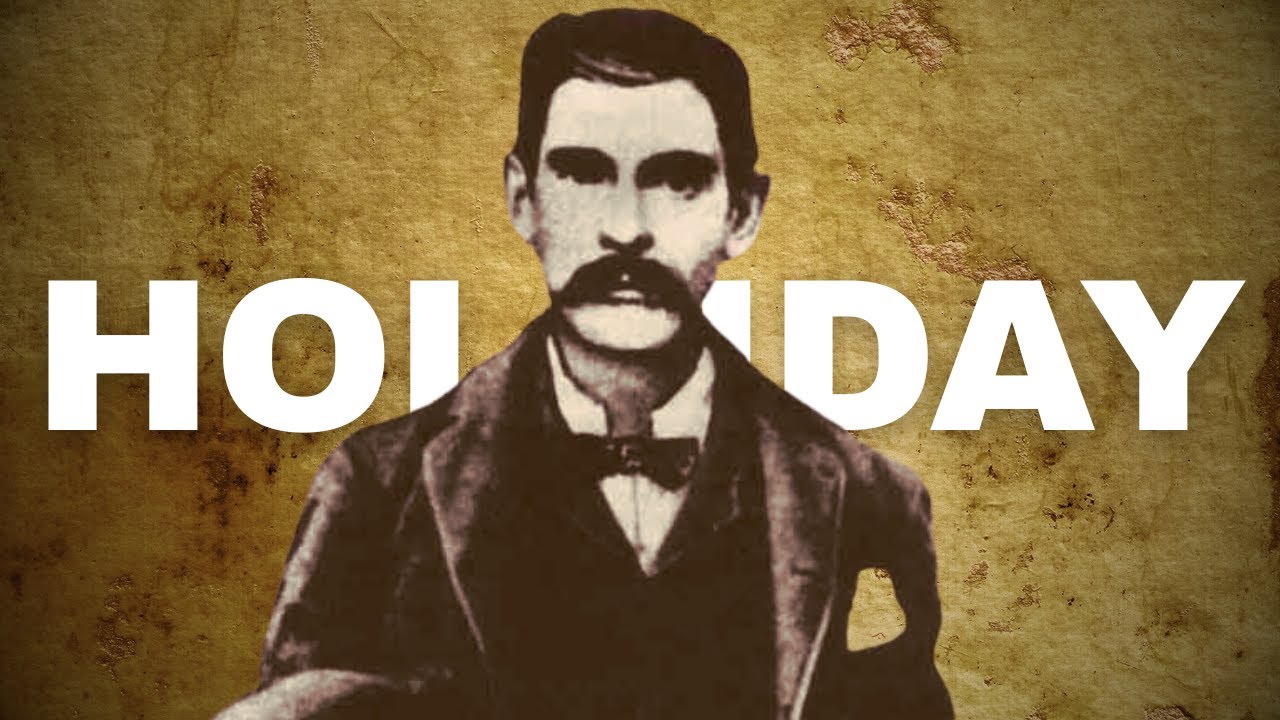
The evidence simply was not there. Either way, Doc headed back to Prescott soon afterward and had his likeness taken by photographer Daniel Mitchell. Believe it or not, only two images of Holliday as an adult were provably authentic: one from when he graduated dental school, and the one taken at Prescott. All the others seen online were either of unknown provenance or verified fakes.
The Prescott photograph was definitely genuine. By mid-September of 1880, Doc finally made the move to Tombstone. Quite a bit had changed since he and Wyatt had last seen each other. Wyatt and his brother Virgil had originally intended to start their own stagecoach business, but Tombstone already had a couple of stage companies.
So Wyatt took a job instead riding shotgun for Wells Fargo, while Virgil settled in as a deputy U. S. marshal. It was in Virgil’s capacity as marshal that the first clash between the Earps and the Cowboys occurred.
He had led a posse, including brothers Wyatt and Morgan, after some stolen army mules, which they found in the possession of the McLaury brothers, Tom and Frank. In time, the feud between the Earps and the Cowboys would greatly intensify. Wyatt Earp was not yet an official lawman when he had that run-in with the McLaurys. He was just working for Wells Fargo, doing a little speculating and a whole lot of gambling.
But by the time Doc arrived, Wyatt had already accepted a position as deputy sheriff for Pima County. Doc had not even been in Tombstone a full month before he got arrested. He and another gambler named Johnny Tyler—the madcap Johnny Tyler—began quarreling at the Oriental Saloon on the night of October 10th. Things escalated quickly, and just as Doc and Tyler were about to go for their guns, a crowd rushed in to separate them.
Pistols were confiscated, and the saloon’s manager, a man named Milt Joyce, ordered Tyler to get out. Joyce then turned his attention to Doc and started berating him for causing trouble. Holliday did not care for such loose talk, so he started giving it right back—at least until Joyce, a former blacksmith, physically threw him out the front door. Doc returned moments later demanding his gun, but Joyce told him to kick rocks.
That was likely not the wisest move. Doc reappeared later that night carrying a borrowed revolver, which he used to put a bullet through Joyce’s hand. He got off three shots in all before Joyce was able to lunge at him and wrestle the weapon away. As historian Mark Lee Gardner put it: “Virgil arrested Doc and escorted him from the saloon.
When Doc was at last brought before the justice of the peace, four witnesses oddly never showed up. The attempted murder charge was dismissed, and Doc entered a guilty plea to the lesser offense of assault and battery. He walked away with a fine and court costs. Milt Joyce, on the other hand, nearly lost his hand.
The wound healed in time, but the scar remained a sour reminder that Doc Holliday had tried to kill him. And the fact that Holliday ran tight with the Earps didn’t incline Joyce to think much better of the Earps, either. “
Once more, Doc wasn’t exactly making a stellar first impression. Barely a couple of weeks afterward, cowboy leader Curly Bill Brocius shot and killed Tombstone Marshal Fred White.
Unlike what several of the movies depicted, the killing was accidental. It was later established in court that the revolver had a defect that let it fire from the half-cock position. Marshal White was only about thirty or thirty-one years old when he died. Even though Brocius was otherwise a thoroughgoing outlaw, the charges were ultimately dropped.
A band of rustlers in Pima County went by the name the Cowboys. They amounted to a loose alliance of ranchers and, quite often, plain bandits who regularly banded together to rustle cattle and hold up stagecoaches. With all the hungry prospectors around, they had a ready outlet for stolen beef in Tombstone, and they also moved cattle to the reservation at San Carlos. Curly Bill Brocius was among the leaders, but the ranks also included the McLaury brothers; the notorious Johnny Ringo; Pony Diehl; Billy the Kid Claiborne; Frank Stilwell; Sherman McMaster; Michael Rourke, better known as Johnny-Behind-the-Deuce; and naturally the infamous Clanton brothers, Ike, Phin, and Billy.
Nobody agreed on how many there were, but Virgil Earp put the figure at roughly two hundred. For all their violence, the Cowboys were not universally despised. They had a fair number of allies in Tombstone. Again by Virgil Earp’s account, the Cowboys spent their money “free as water in the saloons, dance houses, and faro banks.
And that is one reason they have so many friends in town. That whole large class of degraded characters who gather the crumbs of such carouses stand ready to help them out of any trouble or into any new rascality. The saloons and gambling houses that ultimately end up with most of the money welcome them warmly and must be counted fast friends of the Cowboys. Plenty of the merchants are afraid to speak out against the criminal element because they want to hold on to the patronage of the Cowboys’ friends.
So it works out that whenever a clash between officers and cattle thieves or stage robbers takes place, followed by shootings around town, most of the opinions voiced come from the desperado class and their friends. And the men who ought to speak up the loudest and most firmly to set things right are usually the quietest. “
It wasn’t only the saloon owners who were thick with the Cowboys. Some of the local politicians likewise saw that the Cowboys made up a big voting bloc and courted their support in the same way.
When Pima County Sheriff Charles Shibell sought reelection in November of 1880, it was the Cowboys who carried him to victory by stuffing the ballots. Wyatt Earp ultimately resigned his post as deputy sheriff in protest after that rigged election. He then considered a run for sheriff of the newly created Cochise County, where Tombstone sat. Instead of chancing a loss to his rival Johnny Behan, the two struck a bargain: if Wyatt withdrew from the race, Behan would name him undersheriff.
Then they made the offer sweeter still. Behan consented to split the tax revenue. Back then, one of a sheriff’s chief duties was gathering taxes, and in many places the sheriff kept a share of the revenue to pay his deputies and cover assorted other costs. In 1882, the sheriff’s office in Cochise County took in more than $24,000 in taxes.
Wyatt figured it was a profitable arrangement, so he went along. The only catch was that once Behan got the appointment, he reneged on the deal entirely. And when Wyatt and Virgil helped capture a stagecoach robber, Behan refused to pay him back on the grounds that he had never been formally sworn in as a deputy. It goes without saying that there was no love lost in Tombstone between the Earps and the Cowboys and Sheriff Behan.
And that leaves out men like Milt Joyce. As for Doc Holliday, he kept busy as well. He tried his hand at a few mining properties and some water rights, and he even ran a faro bank at the Alhambra Saloon. He also got back together with Kate Elder.
It was probably a quarrel with Kate that landed him under arrest once more on March 10th, 1881. The Daily Epitaph ran the following: “A man about town named Doc last night, while under the influence of too much ‘family disturber,’ grew noisy and disorderly, and officers Ramsay and Kirkpatrick proceeded forthwith to take him in. While that transaction was in progress, the inevitable gun made its appearance and in the melee was somehow discharged. The shot fortunately striking no one.
The gunman was brought before Judge Wallace, and by the time that official was done with Doc, the latter was $25 poorer. “
Holliday had gotten drunk and fallen into a fight with Kate. She had at first decided not to accompany him to Tombstone, and when she at last turned up, she was still jealous over his bond with Wyatt Earp. And to be fair, this wasn’t merely a woman’s intuition.
By every account, Holliday truly was utterly devoted to Wyatt. Bat Masterson would say that Doc had his whole heart and soul wrapped up in Wyatt Earp, forever prepared to stake his life in defense of any cause that interested Wyatt. In Virgil Earp’s words: “Outside of us boys, I don’t think he had a friend in the territory. He was a slender, sickly fellow, but whenever a stage was robbed or a row started and help was needed, Doc was one of the first to saddle his horse and report for duty.
“
There was another man in Tombstone whom Doc counted as a friend: a dope fiend and fellow lunger named Bill Leonard. And it was Leonard’s part in the Benson stage robbery that, as fate would have it, would in time lead to the infamous gunfight at the O. K.
Corral.
