On the morning of June 6th, 1874, the window of the Hotel Donnlatt stood open, and the curtains stirred in the warm breeze. By midday a servant was rapping at the door of the suite, torn between fear of rousing the countess’s brittle temper and fear of saying nothing at all. No one answered. When the door was at last pushed open, the body of Matilda, Countess of Trani, was not in the bed.
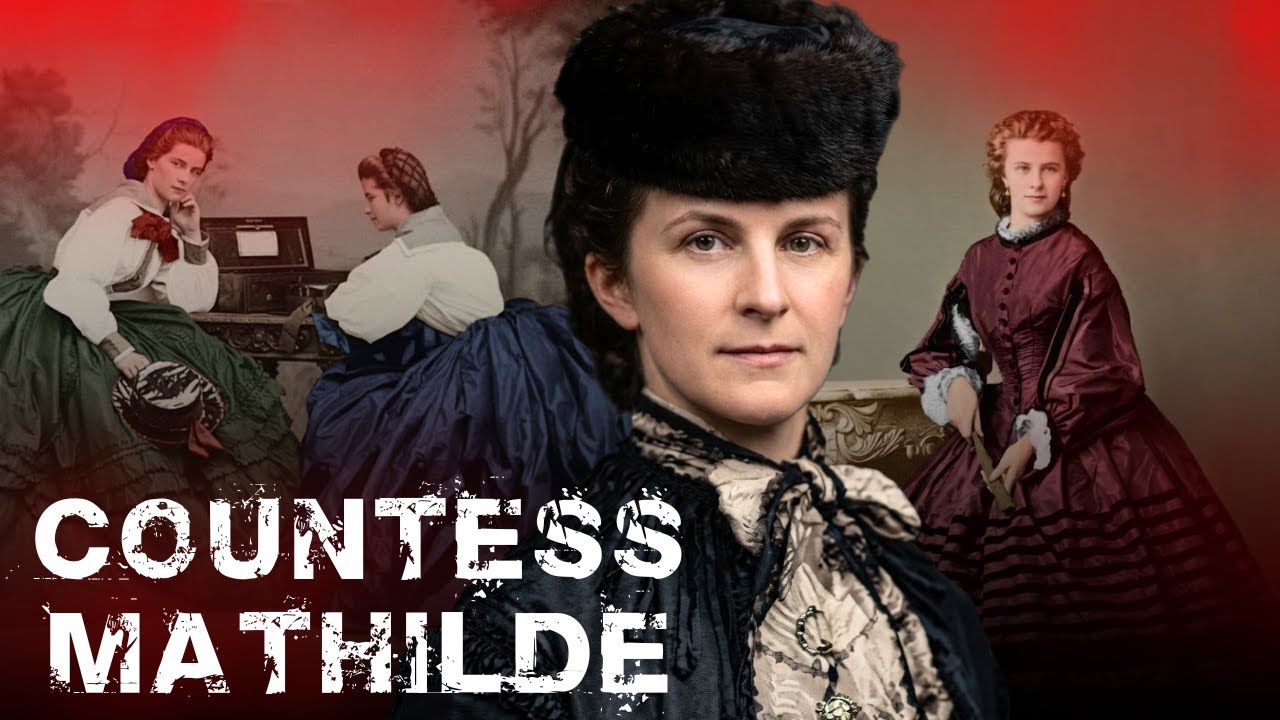
She lay on the pavement beneath, a shattered doll thrown down on the stones. Certain hushed reports spoke of poison, a vial drained while she stood at that open window, gazing out at a world she could no longer endure touching. The means mattered less than the resolve behind it. The sister of the most powerful woman in Europe had chosen to depart.
The official account was written out before the body had even grown cold. Her Royal Highness had succumbed to heart failure. It was a falsehood the servants recognized, the police files quietly buried, and the frightened family grasped all too well. Matilda of Bavaria, the sparrow, had spent her whole life in the blinding shadow of her sister, Empress Elisabeth of Austria, and she had died attempting to flee the very demons that pursued them both.
To grasp why she leapt, or why she swallowed the poison, one must return to the start, to the blood flowing in her veins. They named it the House of Wittelsbach. For seven hundred years they had ruled Bavaria—ancient, proud, and undeniably cursed. Historians call it the Wittelsbach eccentricity, a courteous phrase for saying they walked a razor’s edge between brilliance and insanity.
This was a family in which reality was a matter of choice. They raised fairy-tale castles on mountain summits so they might avoid speaking with people. They hallucinated. They heard voices.
They experienced everything with a perilous, uncovered intensity. Matilda came into this lovely, blazing house on September 30th, 1843, the fourth child of Duke Max in Bavaria and Duchess Ludovika. Her birth was no affair of state. Her father, Duke Max, was seldom at home.
Here was a duke who loathed being a duke, vanishing for months to strum the zither in peasant taverns, performing circus stunts in his private riding hall, and fathering illegitimate children with careless zest. He taught his legitimate offspring that authority was a farce and that freedom was the only god deserving of worship. Her mother, Ludovika, was his opposite. She was a king’s daughter, married beneath her rank to this eccentric duke.
She bore the resentment of a woman who believed she had been shortchanged, and she was fretful, ambitious, and fixated on marrying her daughters back into the lofty royalty she felt she had been denied. This was the air Matilda breathed from the cradle: a father who scorned every rule and a mother crushed by them. They were raised at Possenhofen Castle on the shores of Lake Starnberg. The paintings make it seem idyllic—children running wild through the woods, swimming in the lake, free of the rigid etiquette of the Munich court.
Yet Possenhofen was no paradise. It was a breeding ground for social anxiety. The children ran wild because they were untamed. Nobody taught them how to be royals; they were taught how to be creatures of the forest.
They spoke a rustic Bavarian dialect that appalled the courtiers of Vienna. They were shy to the point of agony, and crowds sent them into panic. Within this unruly brood, Matilda was the quiet one. Her elder sister, Elisabeth, known as Sisi, was the firebrand—demanding attention, difficult, complicated, radiant.
Matilda was made differently. They called her Sparrow. Contemporaries often murmured something history has since forgotten: Matilda was in fact the lovelier sister. Sisi’s beauty was sharp and daunting; Matilda’s was gentler.
She had the same tumble of chestnut hair, the same impossibly narrow waist, the same tall, willowy figure. But where Sisi met your gaze with a challenge, Matilda met it with a plea. She was fragile, with a lung ailment that left her voice breathless. She was a listener in a family of talkers.
She worshipped Sisi, six years her senior yet a soul cut from the same cloth, sharing the particular Wittelsbach affliction of melancholy. Today we would call it clinical depression, an anxiety disorder, perhaps anorexia. In the 1850s they simply said the sisters had bad nerves. Even as a child, Matilda had days when she could not face the sun.
She would withdraw into herself, roaming the lakeshore for hours, frightened of strangers, frightened of what lay ahead. In 1853 the future arrived and shattered the family’s quiet existence forever. The young emperor of Austria, Franz Joseph, was meant to wed the eldest sister, Helene. It was settled, a political arrangement.
But Franz Joseph came to the resort of Bad Ischl, caught sight of the fifteen-year-old Sisi, and fell violently, foolishly in love. He defied his mother, defied protocol, and married Sisi. It is presented as the ultimate romance. In truth, it was a tragedy for all concerned, above all for the sisters left behind.
Overnight, the untamed children of Possenhofen became the focus of European attention. Sisi was empress of Austria, the most powerful woman on the continent. For Matilda, only ten years old, this was a disaster. Duchess Ludovika suddenly possessed a new standard for success.
If Sisi could capture an emperor, the other girls could hardly settle for local German counts. They had to marry kings. The bar had been raised to the stratosphere. Poor sparrow Matilda was now a strategic asset, her worth soaring.
She was no longer merely a Bavarian duchess; she was the empress’s sister. As Matilda reached her late teens, the pressure cooker at Possenhofen grew intolerable. Sisi was in Vienna, famously wretched, starving herself, warring with her mother-in-law, sending frantic, miserable letters home. One might think this would serve as a warning.
Ludovika pressed on harder. She required another crown, and she found one in the south. The target was the Kingdom of the Two Sicilies, the Bourbons. The Bourbons of Naples were an old, wealthy, and crumbling dynasty.
They governed the southern half of Italy with a blend of absolute tyranny and chaotic incompetence, but they were kings. Matilda’s elder sister, Marie, had already been married off to the heir of this kingdom, Francesco. In 1859, Francesco became King Francis II, and Marie became queen of the Two Sicilies. Ludovika glimpsed an opportunity.
King Francis had a younger half-brother, Prince Luigi, the Count of Trani. If Matilda wed Luigi, it would be a triumph: two Wittelsbach sisters married to two Bourbon brothers. Sisi on the throne in Vienna, Marie on the throne in Naples, and Matilda right beside her as a royal princess of the South. On paper, it was flawless.
In reality, it was a death sentence, because the Kingdom of the Two Sicilies was already a corpse. It was 1860. The Italian Risorgimento was sweeping across the peninsula. Giuseppe Garibaldi and his Thousand Red Shirts were marching south.
The populace was in revolt; the Bourbons were despised. And then there was Luigi himself. Count Luigi of Trani was twenty-two, a name familiar in the courts of Europe, though not for bravery or brains. What he was known for were his Bourbon appetites.
He drank. He frequented brothels. He was morose, scornful, and deeply, gloomily depressive. He was a man who understood that his world was collapsing and chose to get drunk and watch it burn.
Matilda was eighteen, delicate, a devotee of poetry, frightened by loud sounds. Her mother handed her over to Luigi like a gift already wrapped. The warning signs were glaring red. Sisi from Vienna attempted to step in, knowing what it meant to be married to a man you did not understand, but she was too distant and too absorbed in her own unhappiness.
The marriage contract was signed. The sparrow was sold. History had a cruel turn waiting. Before Matilda could even pack her trunks for Naples, the kingdom she was meant to marry into had ceased to exist.
In late 1860 and early 1861, the Kingdom of the Two Sicilies fell apart. Garibaldi seized Naples. King Francis and Queen Marie fled to the fortress of Gaeta for one last desperate stand. Matilda watched from Bavaria as her sister Marie became a war heroine, pacing the ramparts of Gaeta under cannon fire, rallying the troops, and earning the name the Heroine of Gaeta.
It was splendid, and sorrowful, and a defeat. Gaeta fell in February 1861. The kingdom was no more. The Bourbons were overthrown, homeless exiles.
This was the moment Duchess Ludovika should have canceled the wedding. A contract is a contract, and the Wittelsbachs do not acknowledge mistakes. On June 5th, 1861, in Munich, Matilda walked down the aisle. The wedding was a gloomy affair.
Matilda was not becoming a reigning princess; she was joining the funeral procession of a fallen dynasty. She looked at Luigi. He saw a shy, dull German girl who would pester him about his drinking. She saw a stranger with lifeless eyes.
She was not moving to a sunlit palace in Naples; she was moving to Rome, into exile. Pope Pius IX had taken pity on the deposed Bourbons and granted them refuge in the Palazzo Farnese. This is where Matilda’s married life began. The Palazzo Farnese is a splendid Renaissance masterpiece, but in 1861 it was a tomb, crowded with furious, bitter Italian royals who had lost everything.
The air was heavy with conspiracy theories, prayers for a restoration that would never arrive, and the stale scent of old incense. Matilda, the girl who had grown up racing through Bavarian forests, was shut inside this stone box. The heat stifled her. The etiquette was unyielding.
Even in exile, the Bourbons insisted on strict protocol. She had to bow, to wait before speaking, to wear heavy black mourning silks for a kingdom she had never even seen. She was alone with Luigi. The marriage failed at once.
Luigi was furious at the world, furious that he was no longer a prince but merely a refugee, and he vented that fury on his wife. He ignored her. He ridiculed her German accent. He left her alone in the palazzo for days while he vanished into the Roman underworld, drinking cheap wine and sleeping with women who did not expect him to make conversation.
Matilda wrote home. Her letters from this period are heartbreaking. They are not the letters of a young bride; they are the letters of a captive. “I am like a bird in a cage,” she wrote to Sisi.
“The bars are made of gold, but they are cold iron all the same.” The depression truly took hold. At Possenhofen, Matilda’s melancholy had been a mood, a mist that came and went. In Rome, it became a solid wall.
She stopped eating. She spent days in bed with the curtains drawn. She developed a phantom cough, a psychosomatic excuse to avoid the suffocating dinners with the deposed king and queen. She was eighteen years old.
Her life was over. In Vienna, Empress Sisi was reading these letters, and she recognized the tone, the scream between the lines. Sisi realized her little sparrow was dying. In 1862, the sisters decided that if they were both going to be miserable, they should be miserable together.
They would turn their backs on their husbands and their duties and begin a frantic, desperate race across Europe, a race to outrun themselves. Cece reached out. The bond between Sisi and Matilda was not merely sisterhood; it was a survival pact. Sisi was the empress, so she had the power to command, and she began to summon Matilda: come to Bad Ischl, come to Possenhofen, come to Corfu.
For Matilda, these summonses were a lifeline, the key that unlocked the prison door of the Palazzo Farnese. Count Luigi could not refuse the Empress of Austria. If Sisi wanted her sister, Sisi got her sister. Matilda began to travel, and once she started, she never truly stopped.
When the sisters were together, the rest of the world ceased to exist. Contemporaries called it uncanny. They would shut themselves away in private apartments, banning ladies-in-waiting, husbands, children. They reverted to their childhood selves, speaking in a rapid-fire English dialect they had developed to keep their secrets safe from Austrian spies and Italian gossips.
They giggled, mocked the stiff courtiers, validated each other’s misery. But there was a dark side. They fed each other’s demons. Sisi was obsessed with her beauty, the one thing she could control, terrified of aging, terrified of gaining weight.
She infected Matilda with this obsession. The sisters engaged in competitive starvation, going on cures of weeks drinking only whey or cattle blood. They went on brutal six-hour hikes in heavy skirts, walking until their attendants collapsed just to burn off energy. They rode horses recklessly, jumping fences seasoned cavalry officers would refuse.
It was a frenzy, a manic attempt to outrun the depression nipping at their heels. Matilda was the weaker partner. Sisi had an iron will; Matilda just had nerves. She tried to keep up with the empress, destroying her body in the process.
She became painfully thin, and her lung condition worsened. But in the eyes of the world, they were magnificent: the Shadow Sisters, two tall, dark-haired, tragic beauties sweeping through the grand hotels of Europe, unapproachable and divine. Reality always crashes the party. Matilda had to go back to Rome.
In 1867, six years into her marriage, she finally produced an heir, a daughter, Maria Theresa. The family hoped a baby would fix things. It didn’t. Matilda was not a natural mother, and neither was Sisi.
They were women who had never been allowed to grow up themselves. Matilda looked at her daughter and saw another link in the chain binding her to Luigi. She loved the child in an abstract way, but she left the raising of Maria Theresa entirely to nannies. Luigi shrugged and went back to his mistresses.
Once the child arrived, the final pretext for closeness was gone. They slid into wholly separate existences. Luigi remained in his own chambers, drinking and nursing his bitterness over the kingdom he had lost. Matilda remained in hers, penning frantic letters to Sisi and scheming her next means of escape.
A woman cannot survive on correspondence alone. Matilda was young, full of passion, and deeply lonely. She craved something tangible, someone tangible. And because she was a Wittelsbach, she found him in the most scandalous manner imaginable.
His name was Salvador Bermúdez de Castro, the Duke of Ripalda. A Spaniard by birth, he was a diplomat, rich, refined, and impossibly charming. He possessed everything Luigi did not. Where Luigi was a dark cloud, Ripalda was the sun.
Luigi was a deposed prince with nothing ahead of him; Ripalda was a man of the world who made things happen. Luigi paid Matilda no attention; Ripalda adored her. Their paths crossed amid the churning social whirl of the 1860s, and for Matilda it struck like an explosion. Ripalda was oxygen.
He listened to her. He did not regard her as a dynastic bargaining chip or a vessel for heirs. He regarded her as a woman. He glimpsed the frightened sparrow trembling within the royal armor and gave her a safe place to land.
The affair began, a grand passion. Ripalda shaped his diplomatic schedule to align with Matilda’s journeys. The aristocracy of Europe was not foolish. In the salons of Paris and the ballrooms of Vienna, the whispers began.
Sisi knew, naturally, and she covered for them. She grasped the need for escape, having found her own consolation in Hungary with the dashing Count Andrássy. To Sisi, Matilda’s affair was no sin but a medical necessity. Ripalda was the only thing keeping Matilda alive.
The empress looked the other way, invited Ripalda to gatherings, made his presence seem ordinary. Luigi was a drunk, but he was not blind. He had lost his kingdom, lost his standing, and now he was losing his wife to a Spanish diplomat before the eyes of the entire continent. His response was ugly.
There are accounts of vicious quarrels in the Palazzo Farnese, shouting matches ringing through the marble corridors. Luigi did not battle for Matilda’s love; he battled for his pride. He banned her from traveling. He threatened to withdraw her allowance.
But Matilda had tasted freedom, and she had the Duke of Ripalda’s money at her back. She was no longer the frightened eighteen-year-old. She fought back, spending months away from Rome, in effect separating from Luigi. A legal divorce was out of the question for a Catholic royal, so she lived a double life.
In Rome, she was the tragic, pious countess of Trani, enduring in silence. In Baden-Baden or Paris, she was Madame Bermúdez in spirit if not in name, strolling the promenades beside the Duke, wearing the jewels he had given her. From this period comes a persistent, explosive rumor. Historians have tried to bury it, but it refuses to die.
It is said that in the late 1860s, Matilda vanished for a suspiciously long stretch to a secluded estate, officially for her lungs. The rumor holds that she was pregnant with Ripalda’s child. Some sources assert a baby was born, a daughter named Maria Salvador, instantly taken away, concealed in a convent or handed to a foster family, erased from the royal family tree. If true, it explains the desperation that followed: carrying the child of the man you love and being forced to abandon it to protect the reputation of a husband you hate.
Whether the baby existed or not, the affair with Ripalda transformed Matilda. It gave her peaks of ecstatic joy, but it made the depths so much deeper, because each time she left Ripalda, she had to return to being the Countess of Trani. She had to return to the cage. By the early 1870s, the strain was tearing her apart.
She was living two lives, and neither felt real. In 1873 she was thirty, her beauty sharpening into something brittle, almost painful to look at. She was thin as a rail. Her laughter was too loud, her silence too deep.
Sisi saw it. The letters between the sisters shifted tone once more. Sisi was no longer merely complaining of boredom; she was writing of death, of the peace of the grave. Matilda was listening.
The sparrow was weary of flying. In the summer of 1874, Matilda packed her trunks for Baden-Baden. Ripalda was waiting for her. Sisi was planning to meet her.
But this time Matilda did not pack only her dresses. She packed her despair. In May 1874, she had made her plans. She wrote letters to old friends that read like farewells.
She visited the family crypt. She spent extra time with her daughter, Maria Teresa, the child she scarcely knew. It was not a dramatic farewell tour. It was quiet, the behavior of someone tidying a room before checking out.
She reached Baden-Baden in early June. The chestnut trees were in bloom. The river sparkled. She checked into the Hotel Donnlatt and took a suite on the upper floor.
She unpacked. She waited for Sisi. Sisi was delayed. In that delay, in those few days of solitude, the darkness finally caught up with the sparrow.
She was alone. Ripalda was nearby, but he could not be with her around the clock. The nights were long. The silence in the hotel room was deafening.
When the door of the suite was at last opened, the official story said Matilda had been found in a sudden failure of the heart, a tragedy of natural causes. That was the lie printed in the newspapers, carved into the history books by a family desperate to protect its name. The truth lay in the whispered accounts of the hotel staff, in the quietly suppressed local police reports, in the terrified letters of relatives. The window of the suite was open.
Matilda was found on the pavement below. The precise method mattered less than the intent. It was not a medical event. It was an escape.
Suicide was a mortal sin, a scandal that could topple thrones. A Catholic princess, the sister of the Empress of Austria, taking her own life was impossible. So they made certain it was not true. Telegrams flew between Baden-Baden, Munich, and Vienna.
The local authorities were silenced. Doctors were summoned who knew what to write on a death certificate. Heart disease, stroke, apoplexy. The diagnosis shifted, but the conclusion was always the same: natural causes, no foul play, no sin.
The hotel staff were paid off or threatened. The guests were ushered away. The blood, if there was blood, was scrubbed from the stones. The vial, if there was a vial, vanished into a pocket.
By sunset, Matilda of Trani had been rewritten. She was no longer a suicide. She was a tragic victim of a weak constitution. Empress Sisi was traveling to Feldafing near their childhood home of Possenhofen, expecting to meet Matilda in a few days, looking forward to their walks, their secret language, their shared rebellion.
The news struck her like a physical blow. Sparrow is dead. Sisi collapsed. But her grief was instantly compounded by terror.
She understood Matilda, understood the shadows they both carried, understood the Ripalda affair, the wretchedness of life married to Luigi, the suffocating burden of the depression. The heart attack explanation never convinced her for a moment. For Sisi, this was more than a sister lost; it was an omen. Matilda had been her mirror.
If the mirror breaks, what becomes of the reflection? Sisi spiraled into panic. She read Matilda’s death as proof of the Wittelsbach curse. She would say later, in words that became famous, “We are all marked.
We simply await the end.” She hurried to Munich, arriving too late to rescue her sister, too late to halt the cover-up. She had to perform her role, mourning the sudden illness while something deep inside told her that her sister had leapt into the void to flee the very existence Sisi still endured. There was no lying in state for weeks.
They were determined to get Matilda into the ground as fast as possible. Her body was returned to Munich, robed in the heavy silks of a royal countess, her face arranged in composure, the secrets sealed behind her cold lips. She was laid to rest in the family crypt at Tegernsee Abbey, a hushed, private vault of the Dukes in Bavaria, a burial for a family member they wished to forget. Her husband, Count Luigi, stood beside the grave.
What passed through his mind is unknown: guilt, relief, or the dull hangover of a man who had long since ceased to feel anything. The Duke of Ripalda was absent. He could not be there. He had to grieve alone, far from the official mourning of the family that had broken the woman he loved.
The family ceased to speak her name. Duchess Ludovika, the ambitious mother, had lost a daughter but would not surrender her dignity. She tightened her grip on the family. No one was permitted to mention the incident.
The silences in the record speak loudest of all. The tragedy of Matilda is not merely how she died. It is that she lived in a world that gave her everything except a reason to remain. Matilda was the stone.
Her death in Baden-Baden in 1874 was the splash. But the ripples spread outward, washing over her daughter, drowning her husband, and wearing away her sister’s sanity until only a shell remained. Maria Theresa, called Mie, was seven years old when her mother went through that window. After the funeral, she was for all purposes an orphan.
Her father had no interest in raising a child, least of all a daughter who resembled so closely the wife he had failed. Mie was handed from one place to another, brought up largely by her grandmother, Duchess Ludovika, at Possenhofen. She grew up beneath the shadow of a secret, fed the heart failure lie, but children are not foolish. She caught the servants’ whispers, noticed how her aunts regarded her with pity and fear.
But the curse did not claim Mie. Perhaps because she had seen the wreckage of her parents’ lives at close range, she chose another road. She married Prince Wilhelm of Hohenzollern, became a mother, and lived a quiet, respectable, largely happy life until 1909. She was the exception, the one who broke the chain.
Her father, Luigi, had no such fortune. When Matilda died, his final tie to reality gave way. He did not remarry, did not attempt to rebuild his life. He simply hastened his own ruin, spending the following twelve years drifting through Europe, a ghost haunting the same spas and hotels where his wife had once stayed, drinking to forget the kingdom he had lost and the wife he could not hold.
Luigi died in Paris in 1886, the official cause heart disease. The rumors in Paris were identical to those in Baden-Baden: some claimed he threw himself into a river, others that he shut himself in a room with a bottle of arsenic. The parallel is chilling. Husband and wife, parted by life, joined by the same heart disease that looks suspiciously like despair.
Matilda was the canary in the coal mine. Her suicide in 1874 broke the seal. Before her, the family eccentricities were merely quirks. After her, they became a death spiral.
1886: King Ludwig II of Bavaria, Matilda’s cousin and Sisi’s soulmate, was declared insane, and days later was found dead floating in Lake Starnberg alongside his doctor. 1889: Crown Prince Rudolf, Sisi’s only son, Matilda’s nephew, carried a gun into a hunting lodge at Mayerling, shot his seventeen-year-old mistress, Mary Vetsera, and then shot himself. When Matilda died, Sisi wrote, “The universe is shrinking. The lights are going out one by one.
” Sisi spent the last twenty-four years of her life dressed in black, the Mater Dolorosa, traveling frantically, refusing to remain in Vienna, fleeing the ghost of Matilda, terrified that the suicide gene lay dormant within her. She did not kill herself with a gun or a vial of poison. She killed herself by degrees, starving herself, courting danger, walking into crowds unprotected, almost daring the world to harm her. When the Italian anarchist Luigi Lucheni finally stabbed her in Geneva in 1898, Sisi did not scream.
She scarcely reacted. She collapsed as though she had been waiting for that file to close for twenty-four years. Matilda is forgotten. Sisi’s face is on chocolate boxes and coffee mugs.
She is a brand. But Matilda’s story is the key to the whole era. Sisi is the fantasy we want to believe in, the beautiful rebel who fought the system. Matilda is the reality, what happens when you lack the power to fight, what happens when the depression wins.
She was the shadow empress, living the same life as Sisi, battling the same demons, but without the crown, without the guards, and without the glory. She fought alone. History is written by survivors, and the survivors decided Matilda’s death was shameful. They erased her pain to protect their prestige.
But the truth has a way of enduring. At Tegernsee today, her tomb is quiet and peaceful. There is no mention of the window, no mention of the poison, just a name and two dates. If you listen closely, you can almost hear the whisper of the wind through the Bavarian trees.
It sounds like a sigh. The sigh of a woman who finally set down a burden she was never strong enough to carry. The cage is open.
