In the winter of 1909, the East Orange police department received a call from a soft southern voice that asked for a coroner. It was half past four on the afternoon of November 29th, and no coroner was available at that hour, but a physician could be sent. The woman paused before giving an address on North 14th Street, and Dr. Herbert Simmons was dispatched to a house that looked abandoned, dark windows sealed and no smoke rising from the chimney against the cold New Jersey evening.
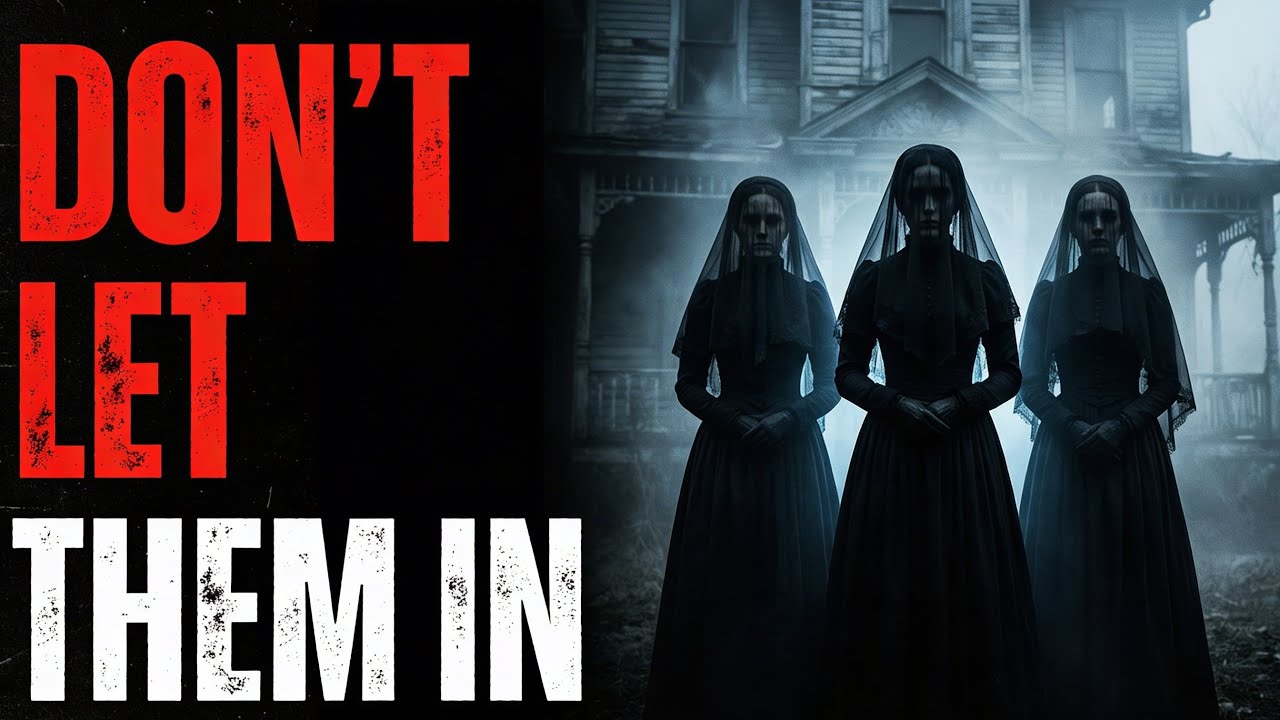
The figure who opened the door before he could knock suggested something else entirely. A tall, emaciated woman wrapped in a black cape wore layers of heavy veils that concealed her face entirely. She introduced herself as Virginia Wardlaw and led him through a bare house where every room was empty of furniture or belongings. At the end of the second-floor hallway she gestured toward a door without entering.
Inside, a gas lamp hissed from the wall. In the bathtub lay the body of a young woman, emaciated to the bone, her face submerged beneath the waterline. Pinned to the neatly folded clothing beside the tub was a suicide note signed O. M.
Snead, which read that death brought a blessed relief from suffering greater than she could bear. Virginia explained that her niece had asked for privacy in the bath and that she had simply respected the request for twenty-four hours. Dr. Simmons called the police, and within an hour Sergeant William O’Neil arrived.
The scene did not survive his scrutiny. The house was leased for exactly two weeks. There was no food in the kitchen and no belongings beyond what was necessary. The note was composed in a way that felt rehearsed, and the handwriting did not match samples of the dead woman’s writing.
In Caroline’s possession, police later discovered multiple suicide notes, all in the same hand, all following the same style, ready for a performance that had not yet been scheduled. The deeper investigators looked into the three sisters, the worse the story became. Born into a respected Georgia family in the mid-1800s, they were the daughters of John Baptist Wardlaw, a minister and former justice of the South Carolina Supreme Court. Virginia had been a progressive educator who studied at Wesleyan Female College and spoke Latin and Greek, running institutions for women with a vision rare for her time.
Caroline had married a Confederate colonel and businessman, and Mary had married Fletcher Tillman Sneed. They were the kind of women no one suspected of anything, and that was their greatest weapon. When Caroline’s husband died under circumstances that raised quiet questions, the family collected ten thousand dollars in insurance. When her seven-year-old son Hugh fell down a flight of stairs and died, they collected another twenty-two thousand.
No investigation followed. When Virginia took over the Soul Female College in Murfreesboro, Tennessee in 1892, the school flourished under her leadership. By 1903, Caroline arrived with her daughter, Ossie, and the three sisters began appearing in matching black gowns and veils, as if attending a funeral that never ended. Enrollment dropped as parents heard whispers of strange night wanderings and a campus that felt wrong.
The college failed, and the sisters moved on, reuniting in Christiansburg, Virginia, where Virginia took over Montgomery Female College. Mary’s eldest son, John Wardlaw Sneed, did not want to join them. He ran a sawmill in Tennessee with his brother Fletcher and had refused Caroline’s demands that he come teach at the college, even calling the police to have her removed from his property. But Caroline returned as she always did, and within weeks John relented, leaving his wife behind.
On a train trip with Caroline, he fell from the car, and near investigators believed it deliberate, Caroline insisted it was an accident. Weeks later, he was found in an open cistern and barely pulled out, with Virginia explaining he had been taking measurements. Then the morning came when Virginia raised the alarm and found John on the floor of his room, his nightclothes ablaze. He survived three hours.
The sisters insisted it was another accident, and the insurance companies paid out twelve thousand dollars. Evidence that kerosene had been deliberately applied never triggered a formal investigation. Caroline then turned her attention to John’s brother Fletcher. She lured him to Christiansburg under the pretense of family business, separated him from his wife, and he fell mysteriously ill under her supervision.
Eventually, the sisters arranged a marriage between Fletcher and Ossie, his own first cousin, binding her closer to the family and giving them access to her financial affairs. Fletcher fled to Canada under an assumed name when the pressure became unbearable, leaving Ossie entirely at the mercy of her mother and aunts. The sisters moved north with Ossie after the college in Christiansburg shut its doors. In a Brooklyn tenement that neighbors would later call the house of mystery, Ossie became isolated from the world completely.
She had no friends, no employment, no independence. She became pregnant twice, her first child did not survive infancy, and investigators later found small bones in the furnace that were never identified. Her second child, a daughter, died before reaching her second birthday under conditions described as severe neglect. The sisters took out life insurance policies on Ossie totaling thirty-two thousand dollars, a sum comparable to nearly a million dollars today.
They went without food themselves to keep up the premiums. They administered morphine, whether framed as medicine or comfort, and Ossie became dependent, weakened, and unable to resist. Her death fell on the last day of the two-week lease on the house in East Orange. Witnesses reported seeing more than one veiled figure moving through the property in the twenty-four hours before Virginia called for help, which suggested the sisters had spent a full day arranging the body and aligning their story.
By December 22nd, 1909, all three sisters were indicted for murder. Caroline evaded authorities for over two weeks before being captured, and the case became a national sensation. The trial was as bizarre as the crimes. The sisters arrived in their full mourning regalia, veils so heavy that neither the judge nor the jury could see their eyes.
Caroline interrupted hearings with outbursts, railing against police interference in what she called private Wardlaw family affairs. Then she stood before the court and declared loudly that she was God himself. Alienists, or psychiatrists, were divided on whether she was genuinely insane or performing to avoid a prison sentence. The most damaging testimony came from the sisters’ own brother, a Southern Baptist minister who testified against them and described decades of deaths, insurance claims, and disappearances.
The autopsy confirmed that Ossie had suffered severe malnutrition and contained traces of morphine. The official cause of death was drowning with starvation as a contributing factor. She had been too weak to lift her face from the water. But the sisters never faced the verdict the public expected.
Virginia Wardlaw sat in a cell at the Newark House of Detention and began hiding food under her mattress and behind furniture. She performed the act of eating without swallowing a bite. On August 11th, 1910, she died of what the jail staff recognized as deliberate starvation, the same patience and precision the sisters had used on Ossie. She never confessed and never explained.
Caroline pleaded guilty to a reduced charge of manslaughter and was sentenced to seven years in the New Jersey State Prison. In May of 1912, she was declared mentally unstable and transferred to the New Jersey State Lunatic Asylum, where she died on June 20th, 1913. Mary walked free. Because Caroline had pleaded guilty to a lesser offense, Mary could not be charged as an accessory, and the charges against her were dropped in exchange for her testimony.
She moved to Oakland, California, where she lived with her son. In 1930, twenty-one years after Ossie’s death, she gave an interview in which she insisted Virginia had been an angel on Earth and claimed Ossie had taken her own life. She expressed no remorse and offered no accountability. She lived until 1937 and never faced another courtroom.
The tombstone in Sunset Cemetery in Christiansburg, Virginia, for Virginia Oceana Wardlaw has lain cracked and flat against the ground for generations. The inscription still reads three words that have drawn visitors every Halloween since they were carved: She is not dead. The phrase was almost certainly a statement of Christian faith, but context gave it a darker weight. Locals have reported sightings of three figures in black walking through the cemetery after dark for generations.
Whether legend or something else, the sisters left behind questions that never received answers. The bones in the furnace were never identified. The first child’s death was never examined. Colonel Martin’s death was never reinvestigated despite evidence of poisoning surfacing years later.
Every death in the Wardlaw orbit followed the same pattern: a tragedy, an explanation, an insurance payout, and a world that moved on. Ossie Snead was twenty-three or twenty-four when she died, a captive of her own family for most of her life, controlled by the people who were supposed to protect her. Her photograph survives in the Library of Congress. No one was ever fully punished for what happened to her.
The law tried, and it failed.
