The milkman’s truck had barely disappeared down the street when the first clink of glass bottles sounded at the door. Before breakfast was even on the table, the familiar rhythm of the morning had already begun: the soft thud of crates, the rattle of glass, the small chocolate bottle left behind as a sweet surprise for the children. That sound was part of the pulse of an America that no longer exists, a world of $7,000-a-year salaries and one-income families, of white picket fences and neighbors who knew every name on the block. The average American salary in the 1960s hovered around $7,000 a year, a figure almost impossible to imagine today.
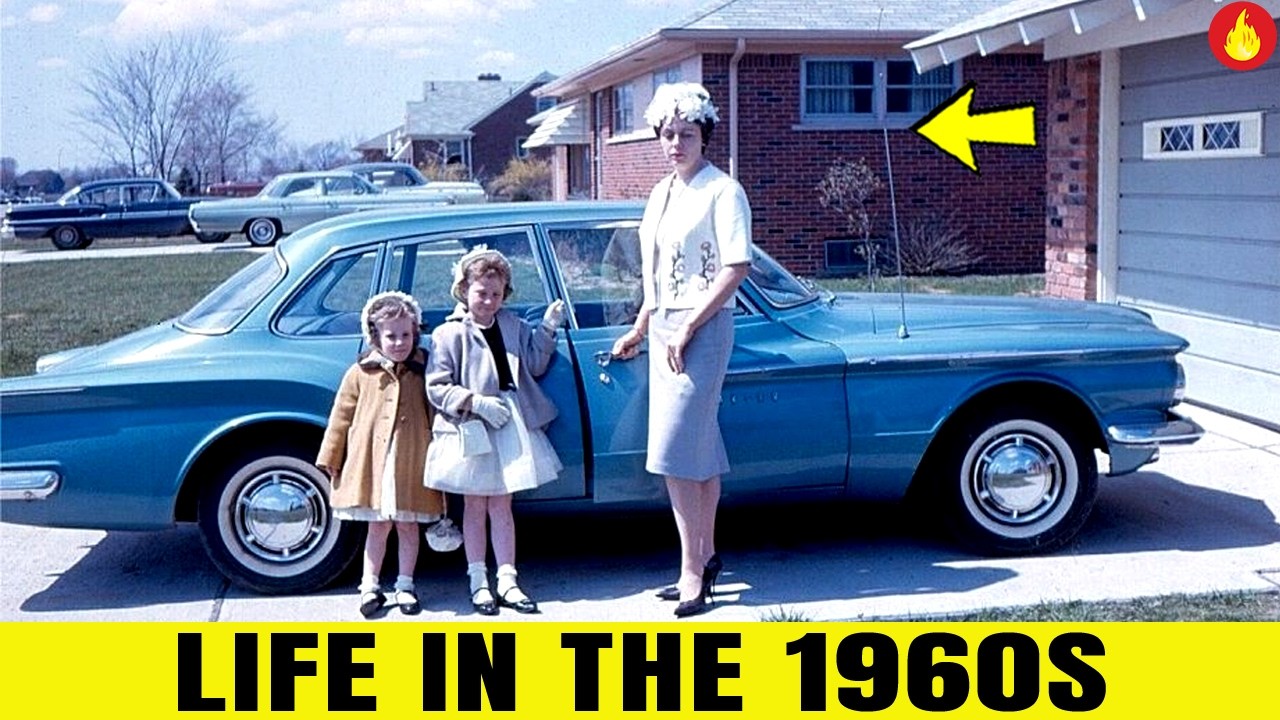
Yet that amount was enough for a father to go to work, support an entire family, fill the gas tank, and still put money aside for a summer vacation. Life was not luxurious, but no one felt they were falling behind. The dream of a house with a white picket fence, a spacious porch, and a working doorbell was not just about architecture. It was a symbol of a close-knit community where everyone exchanged daily stories, asked favors of one another, and felt safe within the embrace of the neighborhood.
Behind those fences, clotheslines stretched across backyards, full of clothespins and drying laundry. Bath towels might dry stiff under the sun and wind, but they carried a distinctive scent of freshness and warmth. No one needed a dryer to feel clean because the natural smell of the sun did it all. Life seemed more open, more connected to nature, content with the simple things.
When you drove into a gas station, an attendant in a cap would appear quickly. He would not just fill your tank. He would check the oil, clean the windshield, and might even offer a free map. There were no credit cards or touchscreens, just coins, a nod, and a friendly smile.
It was full, personalized service, a human connection that today’s automation has erased. Green stamps were everywhere, an indispensable part of daily life. You peeled them off grocery store receipts, carefully stuck them into small booklets, and patiently accumulated them. The goal was to exchange them for household items: a blender, an electric fan, or a brand-new toaster.
The redemption catalog was a world of dreams, and the feeling when you finally had enough booklets was pure joy, like winning the lottery. But beneath this surface of simplicity ran a current of fear. Although the peak of the Cuban Missile Crisis occurred in 1962, the anxiety of nuclear war haunted Americans throughout the late 1950s and into the 1960s. People kept radios close, listening carefully to every news bulletin, looking up at the sky a little longer than usual.
Schools practiced duck and cover, a simple but haunting exercise where students crawled under their desks, covered their necks, and pretended to be safe from nuclear fire. The whole world seemed to hold its breath, and that fear was deeply imprinted in the minds of a generation. Children wore saddle shoes, an indispensable fashion icon of the era, so worn they almost talked back to you. They were synonymous with school days, getting dirty before class and spending recess meticulously polishing them white again.
Somewhere between annoying and essential, almost every child had a pair because they were part of the uniform, part of the culture. To take a photo in low light, you needed flash bulbs that had to be replaced after each shot. They would pop, fizz, and quickly get hot. You carried a spare pack as if it were ammunition, and at family gatherings people were often blinded five times in a row just to ensure a good shot.
Every child had at least one View-Master reel, a magical device that transported you to other worlds with vivid 3D images of national parks, cartoon characters, and Disney scenes. That small red viewer took you, click by click, to places you had only heard about in books. In every neighborhood, a small barbershop with a spinning red and white striped pole was an unmistakable symbol. Inside, checkered tile floors, classic leather chairs, and a radio always playing the same channel.
This was where men gathered to discuss politics, baseball, and local gossip. No appointments needed. You just waited your turn and caught up on town affairs. Family memories were preserved on 8mm film projectors.
To watch them, you pulled out the screen, meticulously threaded the film, and turned off the lights. The film flickered, and suddenly everyone burst into laughter seeing themselves in grainy, shaky, slow-motion footage. Despite imperfect quality, those films held priceless emotional value, connecting families to sweet memories and endless laughter. The 1950s and 60s were the golden age of American cars.
Models like the Chevrolet Bel Air, Ford Thunderbird, and Cadillac Eldorado were not just means of transport but symbols of luxury and freedom. These cars often featured tail fins, creating a unique and recognizable style. They appeared everywhere, from bustling city streets to peaceful suburban roads. To get ice, you had to use both hands to lift the cold metal lever of an aluminum ice tray, secretly praying the cubes wouldn’t fly all over the kitchen.
When they popped out, the sound was loud enough to startle a sleeping dog. Yet ice from those aluminum trays somehow felt colder and fresher than anything from a modern refrigerator. Before seat belts became standard, the backseat of a station wagon was a true mobile playground for kids. It was a free space with blankets, toys, and sometimes even a dog running around unrestrained.
Nobody wore seat belts, but somehow kids survived every trip, bouncing with every bump, happily snacking, and fighting over who got to sit by the window. Elevators in the 1950s weren’t automatic. They always had a professional operator inside, wearing neat uniforms, some even white gloves. The operator would open the gate, turn a small crank, and call out the floors clearly: “Fourth floor, housewares, linens, toys.
” The elevator experience felt elegant, like you were going somewhere very important. Polaroid cameras appeared like a technological miracle. You pressed the button, heard the familiar hum, then waited. Someone would always exclaim “Shake it!
” as if it actually helped, though in reality it did nothing. When the photo finally appeared and gradually sharpened on the paper, it brought a magical feeling, visual proof of your existence in that moment. These photos were often stuck on the refrigerator or lost forever in an old drawer. Vending machines offered real food.
You dropped in a few coins and got a cold soda, a pack of gum, or even a sandwich if you were brave enough. No touchscreens or credit card readers, just old buttons and snacks that always seemed to get stuck on the top row. The melody from the ice cream truck was the signal that summer had started. You could hear that tune five blocks away and immediately scream for spare change from your parents.
Then you ran barefoot on the hot sidewalk to catch the truck. Whether it was a Bomb Pop or anything else, it tasted better when you had to race to get it. Metal lunch boxes were built like tanks. The lid featured images of your favorite shows or comics.
Inside was a small thermos that always faintly smelled of milk, no matter what you put in it. Latches broke and handles cracked, but you carried that box every day as if it were a suit of armor. Classic cartoons featured characters like Howdy Doody, Captain Kangaroo, and Hopalong Cassidy. The puppets looked strange, the settings were simple, and the jokes were old as the earth.
But kids didn’t care. It felt like those characters were talking directly to you, and that made all the difference. Walking to school was a free adventure. No navigation apps, maps, or adult supervision.
You just needed a backpack, a coat, and a directive to go straight home. Most of you didn’t, taking detours to the corner store for candy or exploring other interesting things before returning home just in time for dinner. Record players produced a soft click, a familiar hiss, then music filled the space. Every party, every Saturday, every first heartbreak had its soundtrack on shiny black vinyl.
You learned which 45s often slipped and the trick to fix them with a coin placed gently on the needle. No one played music just as background. People truly listened. Plastic rain bonnets were an essential item in every mother’s purse, neatly folded into small squares.
As soon as the sky turned dark, the bonnet appeared like a superhero cape, protecting perfectly styled hair. Not fashionable, but incredibly effective, and somehow no one ever wondered why every woman had one. Watching TV was a family team effort. Someone held the rabbit ears antenna tight while others yelled directions: “That’s it.
Stop. No. Back a little. Let go.
” You stuffed aluminum foil on top of the antenna and prayed for the picture to stay still. When it finally worked, you felt like you’d won a small battle. Street lights were the clock signaling time to go home. When they came on, no matter how good the game was, kids vanished like ghosts.
Mothers poked their heads out the door with a single firm word: home. No one argued. You simply knew. Candy could actually be bought for pennies.
You walked into the corner store with a handful of coins and left with a small brown paper bag full of treats: wax bottles full of fruit juice, button candies, or a jawbreaker that could last three recesses. Sugar was a symbol of freedom, and no one asked about ingredients. Before Google, you waited six to eight weeks to receive volume G of the encyclopedia set you ordered by mail. Salespeople knocked on doors promising smarter children and shiny gold-embossed book sets.
When they arrived, they were prominently placed on the living room bookshelf as intellectual royalty. You might only open volume T to look up dinosaurs, but their presence brought pride and a thirst for knowledge. Soda in glass bottles offered a different taste and feel. To open them, you needed a special bottle opener, often mounted permanently on the garage wall.
After opening, you lined up bottle caps on your workbench like trophies. No twist caps. You really had to work to enjoy those good things. Banks bribed customers with kitchen appliances.
Open a savings account and leave with a new toaster, a set of glass cups, or even a blender. Honestly, toasters back then were better than the interest rates you got. Families stopped everything when shows like Bonanza, Gunsmoke, or The Andy Griffith Show were on. Westerns were popular everywhere, accompanied by canned laughter.
Families watched together, not in silence, but with constant commentary: “He’s about to get hit. ” “That guy’s no good. ” “Turn it up. ”
The smell of freshly printed mimeograph paper hit like a wave, warm and strongly of ink, often with purple lettering.
Teachers handed out these papers, and half the class lifted them to their noses, sniffing as if holding something magical. No one knew why they smelled so good, but it became an unforgettable mark of school years. Homemade lunches were simple paper bags with a sandwich slightly flattened by heavy books, usually bologna and mustard, accompanied by potato chips in wax paper, an apple, and sometimes a cookie. Lunchtime was when deals were made under the table, trading snacks like a miniature stock exchange.
A family slide show began when the lights dimmed and the projector started clicking. The first thunk of the round slide tray was unmistakable. Fuzzy vacation photos, blurry birthday parties, and pictures of relatives filled the screen. Someone always narrated too loudly, and no one made it through without falling asleep.
Typing class was a chaotic orchestra of heavy keys, loud clicks, and fingers stained with ribbon ink. One mistake meant starting the whole page over. Forget to hit the carriage return and the entire paragraph would be misaligned. In the trunk of most family cars sat an old, sometimes itchy wool blanket, almost never used for its main purpose.
It was always there, just in case of an unplanned roadside picnic or an emergency snowstorm. You never actively chose to use it, but it was loyal, always ready when needed most. Sunday mornings meant church clothes that were itchy, shoes that were stiff, and a collar that never lay flat. You squirmed in hard pews, secretly counted ceiling tiles, and tried not to giggle during prayer.
Sometimes the sermon lasted forever, but sometimes grandma gave you a peppermint. Popcorn came from pouring kernels into a large metal pot with oil, then shaking continuously as if your life depended on it. It was a real arm workout. The fragrant smell filled the whole house before the first kernel popped.
TV dinners felt like a treat. You peeled back the foil from the small metal tray and waited forever while the kitchen filled with the smell of overcooked peas, Salisbury steak, mashed potatoes, and a brownie that never cooked evenly. A small metal tray symbolizing modernity and convenience. Christmas tinsel was thin, shimmering metal strands.
You meticulously placed each one onto the tree, and the twinkling lights behind them made the whole tree sparkle like a postcard. Tinsel stuck to everything, but no one minded. Classic radio buttons clicked like small safes. Push one in and the rest popped out like jealous siblings.
You set your favorite stations and found them with a single press, followed by the familiar crackling sound of music. Behind the old TV, small vacuum tubes emitted a faint orange glow, humming as if the machine was breathing. If the picture flickered, you tapped it. If the TV went out, someone took an old tube in a paper bag to the hardware store for a replacement.
Women wrapped hair rollers tightly before bed, both for beauty and secretly hoping not to crush their heads in their dreams. The next morning, you unrolled them like opening a gift, praying the curls would hold until lunchtime. School milk came in small paper cartons, always a struggle to open neatly. They tore, splattered, or simply refused to open.
The milk sat in metal crates, faintly smelling of metal, and warmed up by snack time. Grandma’s sewing machine ran entirely on foot power. She operated the pedal like a professional drummer, guiding fabric with steady hands. The machine made a steady clicking sound, creating perfectly straight stitches better than any digital machine today.
It always smelled faintly of dust and lemon polish. Coca-Cola came in heavy glass bottles cold from the freezer. In some diners, glowing cigarette vending machines sat in the corner with metal levers and small windows displaying packs. A satisfying thunk as a pack dropped out.
No one asked your age. Tang, the slightly sour orange powder drink, became an icon not because of its taste but because astronauts drank it. NASA’s advertisements had a powerful effect, and suddenly every child wanted to sip what space heroes were drinking. Rotary phones demanded patience.
If your friend’s number had too many nines, dialing could take all afternoon. If your finger slipped, you started over. Yet the sound of the clicky return spin felt more satisfying than any smartphone beep today. Bench seats in cars meant being thrown around corners and piled onto siblings.
The only restraint was your mother’s arm flying out in front of you at every stop sign, an instinctive protective reflex. Plastic sofa covers were a true summer curse. They trapped heat, making you feel hot and uncomfortable. You sat down in shorts and immediately regretted the sticky feeling, your back drenched in sweat.
Yet you weren’t allowed to remove them, at least not until guests left. The yellow pages weighed a ton, thick as a large dictionary, a treasure trove of information. It was tucked under the phone or used to prop up children at dinner. Need a plumber?
Flip to the P’s. Lost dog? Check the classifieds. Film came in small black canisters that you loaded into the camera yourself.
Once loaded, each press of the shutter felt like a small commitment. No previews, no second chances, just hope and a trip to the photo lab. Canned spaghetti was a lifesaver for busy weeknights. Distinctive orange color, a bit mushy, labeled Italian-style.
At least the brand said so, and you didn’t know any better. It was dinner, it was cheap, and it somehow satisfied hungry bellies. Drive-in movie theaters were a miracle on asphalt. You drove in, hung the metal speaker on the window, and secretly hoped it worked.
Families in station wagons, couples in convertibles, all staring at the glowing screen under the starry sky. If you spilled popcorn, no one minded because your car was probably already quite messy. Cloth diaper boxes had instructions right on the side: boil and bleach. No disposable diapers, just stacks of white fabric folded into perfect squares and fastened with safety pins.
The bucket in the bathroom had a specific purpose, and on laundry day the whole house filled with the smell of detergent and rubber diaper covers. Metal toy trucks were almost weapons. Sturdy, sharp-edged, and always missing a wheel, they survived sand pits, staircases, and being buried in the backyard. If your little brother threw one, it left a dent in the wall.
Job advertisements had two clear categories: help wanted male and help wanted female. No one questioned it. Secretaries here, mechanics there. The world seemed clearly divided.
Soda bottles were money in disguise. You brought them back to the store, clinking in a cardboard box, and got small nickels in return. Then you turned around and spent that money on candy. Before the main movie, you enjoyed a short cartoon: Bugs Bunny, Popeye, or Tom and Jerry.
A little bit of fun before the lights dimmed. A complete night out with popcorn, candy, and two hours of magic on the big screen. New plastic lunch boxes had a very distinct smell, sweet, sharp, slightly chemical. You peeled off the lid to reveal a bologna sandwich wrapped in wax paper and maybe a Twinkie if you were lucky.
That first whiff of vinyl meant lunch was truly ready. Nothing captures the spirit of the 1960s as vividly as a home preserved intact from that era. Stepping through the door, you’d be greeted by vibrant colors, unconventional patterns, and designs that broke the mold. Wallpaper could be as intricate as a painting.
Electronics were heavy and bulky, and every corner bore a distinct personal touch. In the living room, the first thing that caught your eye was the conversation pit, a sunken oasis inviting everyone to gather. Lined with plush cushions and arranged around a central coffee table or cozy fireplace, it encouraged an intimate, communal atmosphere perfect for lively discussions and warm gatherings. Unlike today’s rigid layouts, conversation pits blurred the lines between furniture and architecture.
In the kitchen, everything seemed finished in shiny chrome: toasters, stand mixers, percolator coffee makers, canister sets. Chrome brought not only beauty but symbolized progress and hygiene, a symbol of modernity and convenience. Wall-mounted rotary telephones in the kitchen often came in colors matching the interior: green, light pink, yellow. These were Western Electric 500 telephones, known for durability and beautiful design, popular until the 1980s.
The housewife could cook while chatting with friends or family. Bathrooms were pink and vibrant colored, a symbol of personality and glamour. Mamie Eisenhower, the first lady, with her famous love for pink, inspired a generation of homeowners. Pink was a statement of femininity, comfort, and a touch of luxury in the most private space of the home.
Built-in stereo systems were integrated into sleek wooden cabinets or stylish credenzas, blending seamlessly with mid-century decor. Whether playing the Beatles or smooth jazz, these players brought warmth to the living space. Placing a vinyl record on the turntable and listening to rich analog sound was an immersive, deliberate ritual. Wood paneling in walnut, oak, and mahogany added warmth and sophistication.
In the bedroom, it provided a warm, secluded feel for chilly winter nights, transforming the room into a private, relaxing space. Built-in planters incorporated greenery into interior design, often in room dividers, entryways, or kitchen counters. Whether cascading pothos, sculptural snake plants, or vibrant ferns, they added an organic, fresh element to mid-century modern space. Fondue parties were very popular in the late 1960s.
The metal or ceramic pot sat on a small burner with a gentle flame, keeping cheese or chocolate warm and liquid. Everyone used long multicolored forks to dip bread, fruit, or meat, laughter and chatter filling the space. Bold and patterned wallpaper with sharp geometric shapes and vibrant floral patterns adorned walls throughout the house. It was a strong statement expressing the homeowner’s personality and boldness, a clear way to feel the shift from the 1950s to the 1960s.
Sunken bathtubs embodied luxury, built flush with the floor, creating a seamless, modern look. Surrounded by tile, stone, or greenery, they offered a deep, utterly relaxing soak, a small natural oasis right inside the home. Retro diner kitchens featured black and white or red and white checkered floor tiles, chrome accents, bar-style seating or fixed booths. Vibrant reds, turquoise, and lemon yellow appeared everywhere, with appliances in pastel colors like avocado green or burnt orange.
Interior stone walls of river stones or rough slate added a natural, textured element. Light shining on the rough surfaces created shadows that changed throughout the day, bringing vibrancy to the space. Compact built-in bars featured mirrored backs, delicate glass shelves, and smartly designed storage cabinets holding liquor, glasses, and cocktail tools. Everything organized neatly, making home happy hour effortlessly luxurious.
Melamine dishes were durable, lightweight, and often colorful, easy to wash and perfect for busy families. Tupperware revolutionized food storage with airtight containers in standard colors like burnt orange and avocado green. Lattice room dividers divided spaces without completely closing them off. Made from wood, metal, or acrylic, they featured geometric patterns, allowing light to pass through and creating interesting patterns on the floor and walls.
Patterned linoleum flooring brought bold designs into kitchens, bathrooms, and entryways: checkerboard patterns, atomic-era swirls, vibrant floral motifs. Homeowners loved it for durability, easy maintenance, and affordability. Fold-down ironing boards integrated into walls, closets, or kitchen cabinets saved space. Open a cabinet door, pull out the board, start ironing, then fold it away, making it disappear.
Large console televisions in wooden cabinets with integrated speakers and storage were the focal point of the living room. The large screen, often protected by a glass panel, was a window to the outside world. Tiki-inspired decor reflected a fascination with Polynesian culture: small tiki bars, bamboo furniture, colorful tiki glasses, carved wooden statues, and grass mats. It reflected Americans’ interest in exotic cultures and the desire to bring a vacation atmosphere home.
Mid-century modern furniture featured sleek, minimalist pieces: Eames chairs, Danish teak sideboards, bean-shaped coffee tables. Designed with an emphasis on functionality and aesthetics, they gave rooms a light, airy feel. Sofas and armchairs were upholstered in shades of orange, green, and yellow, accented with wood. The combination with natural wood frames created a harmonious contrast between warmth and vibrancy, a statement of freedom of expression.
Smoking stands with large glass or ceramic ashtrays stood next to the father’s favorite armchair. Smoking was part of most households, and ashtrays came in many shapes, sizes, and colors, often of heavy sparkling glass or elaborately designed ceramics. Wooden magazine racks beside the sofa held the latest publications: Life, Woman’s Day, Boy’s Life. Each magazine was a window into the world of the 60s, and for boys, Boy’s Life shaped interests and values with adventure stories and scouting tips.
Family game night was a weekly event. Monopoly, Clue, Risk, and The Game of Life filled cabinets. The Game of Life, whose modern version was released in 1960, was especially popular, teaching that winning meant ending up with the most money and retiring to millionaire estates. Electric blankets from Northern Electric or GE with temperature controls were essential for cold nights when home heating and insulation weren’t like today.
Curled up in a warm blanket, plugged into the wall, you slept warmly and comfortably. For many, the electric blanket was a cherished Christmas gift, providing unparalleled comfort and memories of warm winter nights in the embrace of family.
