In October 1992, Edward Schwinn Jr. signed the papers that ended it all. The company his great-grandfather had built from nothing, the name that had glowed on a quarter of the bicycles in America, filed for Chapter 11 bankruptcy protection. Creditors had squeezed the last value from the brand, the factories had gone silent, and the family that had ruled the American bicycle market for nearly a century was about to lose everything.
The Gravedancer was already circling. How had it come to this? The answer begins in a small German village, with a master carpenter’s son who refused to accept that the future had to look like the past. Ignaz Schwinn was born on April 1, 1860, in Hardheim, Baden, the second of seven children.
His father, Frank, was a master carpenter whose craftsmanship still survives today in a pump organ that remains playable. From his father’s workshop, young Ignaz absorbed a love of detail, precision, and the patient mindset of a true artisan. When Frank died, Ignaz was only eleven. The boy found his own path, apprenticing as a machinist and then traveling across Germany to study the newest technological craze: the bicycle.
What he saw troubled him. The highwheelers, known as ordinaries, were popular but genuinely dangerous. One pedal stroke equaled one full wheel rotation, so riders sought ever-larger front wheels for speed, only to risk flipping headfirst over the handlebars. Ignaz knew the future belonged to something else.
He was drawn to James Starley’s revolutionary safety bicycle, with its smaller front wheel and chain drive, a machine that looked remarkably like the bikes we ride today. In his spare time, Ignaz tinkered with and improved the concept until he felt confident enough to show his designs to a man named Henrik Cler. Together, they built Germany’s first safety bicycles. Then came a disagreement over the coaster brake design.
Ignaz walked away from his homeland and set his sights on America. Chicago in 1891 was the bicycle capital of the United States, a roaring chaos of people and industry where more than three hundred manufacturers produced two-thirds of all the bikes in the country. Ignaz and his wife Helen arrived in the middle of it all. He worked for various companies, but his artisan soul was restless.
He needed room for his creativity. The turning point came in 1894, when he met Adolf Frederick William Arnold, a wealthy German investor from the meatpacking industry who also happened to be president of the Haymarket Produce Bank. Arnold had the capital. Ignaz had the engineering genius.
It was a perfect marriage of money and technical brilliance. On July 14, 1895, Arnold, Schwinn & Company was officially born. To make a mark on the crowded market, Ignaz held a contest to name his new line of bicycles. Four dealers independently suggested the name World.
Ignaz loved the sense of strength, longevity, and prestige it carried, and he paid each winner one hundred dollars in cash, a fortune in those days. These World bikes were not cheaply assembled machines chasing a trend. They were built on equipment Ignaz himself specified, with heavy-duty frames, precise welds, and scientifically sound geometry. When the bicycle market collapsed in the early 1900s, sales plummeting to just a quarter of their peak by 1905, hundreds of companies went bankrupt.
Of the three hundred manufacturers in Chicago, only twelve survived. Schwinn was one of them. The storm that destroyed so many others also brought a predator. The American Bicycle Company, a trust trying to corner the market, knocked on Schwinn’s door with a lucrative offer: cash and guaranteed contracts in exchange for independence.
Most owners would have signed without a second thought. Ignaz studied the corporation’s fake financial numbers and its fragile structure, then refused, with Arnold’s backing. Just three years later, in 1903, the ABC trust collapsed, dragging every member company into bankruptcy. Schwinn stood tall, independent, and stronger than ever.
Not content merely to survive, Ignaz became a hunter. He bought bankrupt factories for pennies on the dollar. He was not after the buildings; he wanted the finest machinery, the technical tools, and the precious patents. He purchased the March Davis company in 1899 simply to build a larger, more efficient factory.
In 1908, he bought out his partner Arnold, and after thirteen years of shared vision, Schwinn was his empire alone. But Ignaz saw the road ahead clearly: the automobile and the motorcycle were threatening adult bicycles. Staying still meant death, so he diversified. In 1911, he acquired Excelsior Motor Manufacturing and Supply.
A year later, an Excelsior Model X set a speed record of one hundred miles per hour, putting Schwinn on the map of speed. By 1914, he had built the world’s largest motorcycle factory. In 1917, he bought the struggling Henderson Company, creating the Excelsior-Henderson brand, which rose to become the third-largest motorcycle maker in America, trailing only Harley-Davidson and Indian. Motorcycles brought glory, but bicycles remained the foundation.
By 1914, Schwinn controlled more than twenty-five percent of the U. S. bicycle market. One out of every four bikes on American streets bore his name, and that name meant reliability, a durable investment passed down through generations, surviving even the most enthusiastic destruction by children.
During this era, his son Frank W. Schwinn, known as FW, joined the company after graduating as an engineer from the Illinois Institute of Technology. Unlike most heirs, FW had grown up on the factory floor. He understood every sound the machines made and exactly what the dealers needed.
The succession promised a solid future, even as dark clouds gathered on the horizon. In October 1929, the financial earthquake hit. Decades of American wealth evaporated in weeks. Ignaz Schwinn, now in his seventies, watched his personal fortune and the company’s value drop rapidly.
Unlike many panicked businessmen, he understood this was no temporary dip. It was a true economic disaster. In garages across America, those Excelsior-Henderson motorcycles, Schwinn’s pride, became luxury items no one could afford when there was not enough food on the table. In 1931, Ignaz made a decision that business historians still debate as both ruthless and brilliant.
He called his motorcycle leadership team together and announced he was shutting down the entire division, immediately. Imagine the shock in that room. Excelsior-Henderson had a full order book. They were the third-largest motorcycle maker in America.
Most importantly, they were still profitable. Engineers protested. Managers argued. Ignaz remained cold.
He understood motorcycles were discretionary spending, and in a depression, luxury dies first. He sacrificed the glittering empire to save the essential foundation. The bicycle. Bicycles were cheap transportation for workers and a livelihood for newsboys.
They were the only lifeboat left. As Ignaz stepped back toward retirement, FW took over with a powerful spirit of innovation. In the early 1930s, after a research trip to Germany, FW saw bicycles with wide tires gliding smoothly over steep, cobbled streets. Back in Chicago, he realized American bikes were dull, flimsy, poorly welded, and lacking personality.
He convinced the American Rubber Company to produce a tire two and one-eighth inches wide, a balloon tire never before seen on a bicycle. In 1933, Schwinn launched the B10E Motorbike, essentially a bicycle that looked like a miniature motorcycle, complete with a fake gas tank, a shimmering chrome headlight, and a ringing bell. The first version was heavy to pedal, but FW did not give up. He refined the design, and in 1934 he released the Aero Cycle with an aerodynamic frame, streamlined fenders, and a premium leather seat.
This was the beginning of the legendary cruiser, the paperboy bike that defined American childhood during the Depression. While the rest of the country collapsed, Schwinn innovated. Sales increased twentyfold in the 1930s. FW did not want to dominate just the kids’ market.
He wanted to prove American engineering on the world stage. After seeing adults in England and France use bicycles for professional sports, he decided to create an ultimate line. In 1938, he partnered with famed racing mechanic Emil Wastyn to create the Paramount series. Paramounts were not mass-produced.
They were handcrafted in a separate area of the Chicago factory using lightweight chrome-molybdenum alloy steel and exquisite brass brazing. FW knew the Paramount might never make huge profits, but it was a symbol of the superior quality found in every other bike bearing the Schwinn name. To prove their strength, Schwinn sponsored athlete Alfred Letourneur. On May 17, 1941, in Bakersfield, California, Letourneur reached an incredible 108.
92 miles per hour on a Schwinn Paramount while drafting behind a lead car, setting a world record and etching the name Schwinn into the chronicles of speed. Then World War II broke out, forcing every American manufacturer to pause civilian dreams. Schwinn, despite its German immigrant roots, showed fierce patriotism, volunteering for military production before it was required. From 1942, the lines that once made bike frames cast artillery shells, radar frames, machine gun mounts, and cockpit parts for airplanes.
Schwinn even developed a thirty-pound folding bicycle for paratroopers to carry when jumping into enemy territory, though the military later found it impractical for combat. And as the men of Schwinn left for the battlefields of Europe and the Pacific, a new workforce emerged: grandmothers, mothers, wives, and sisters stepped onto the factory floor. This Schwinn version of Rosie the Riveter kept the machines humming through those fiery years. After 1946, as soldiers returned and the baby boom began, consumer demand exploded.
FW spotted a fatal flaw in the traditional way of doing business. When Schwinn sold wholesale to department stores like Sears or JC Penney, the bikes carried the store’s private label, turning a high-tech product into a nameless, price-squeezed commodity. He made a second giant bet: he completely ended sales through major retail channels. Schwinn built a network of independent bicycle dealers, each shop given territorial protection and direct support from the factory.
In return, those dealers could only sell Schwinn bikes and had to follow the strictest service standards. When a parent walked into a bike shop, the answer they got was always, “You need a Schwinn. ” To boost their image, Schwinn launched a bold marketing campaign putting Hollywood stars on their posters. In the 1946 catalog, legends like Bob Hope, Humphrey Bogart, Lauren Bacall, and Bing Crosby smiled atop shimmering Schwinn bicycles.
The bicycle was no longer just a toy. It was part of a luxurious, durable, and free American lifestyle. While dominating the kids’ market, Schwinn felt a new breeze from Europe: English racers. These bikes were lighter, faster, and equipped with three-speed hubs or more, attractive to adults who wanted to exercise in the suburbs.
Schwinn initially reacted by creating heavier mid-range bikes to maintain their identity of durability. Then came the Varsity in 1960. Though mocked by professional racers as the heaviest lightweight bike ever built, historically the Varsity was America’s most important bicycle. It was designed with unique technology to be affordable yet durable enough for riders to feel the joy of cycling.
By 1987, the adult bike market in the U. S. had grown from less than one percent to over sixty percent, and the Varsity was the foundation of that revolution. With nearly two million units sold, it became the bestselling derailleur-equipped bike of all time.
It was the tool that helped adult Americans rediscover the joy of two wheels. But if you had to pick a single icon representing Schwinn’s absolute power, it would be the Stingray. In 1962, R&D director Al Fritz took a field trip to Southern California. He saw kids doing something strange: chopping up old bikes, putting on small wheels, high-reaching ape-hanger handlebars, and long banana seats to mimic the custom chopper motorcycles of their older brothers.
Fritz realized this was not just a fad; it was a new generation expressing itself. He rushed back to Chicago and proposed mass-producing this model under the name Project J38. At first, Schwinn leadership laughed, insisting the design looked ridiculous and no parent would buy it for a child. But Fritz did not give up.
He convinced FW to do a limited test run at dealers in June 1963. The result was an earthquake. American kids went crazy for the Stingray. Between 1963 and 1968, Schwinn sold nearly two million Stingrays, making it the bestselling model in company history.
If you grew up in middle-class America in the sixties, you either owned one or wanted one with all your heart. Schwinn pushed the excitement to its limit. In 1965, they launched the Fastback with slick rear tires inspired by drag racing. In 1966, they added frame-mounted shifters like the trendy muscle cars.
The peak was the Krate series in 1968, with vibrant names like Orange Krate, Apple Krate, Lemon Peeler, and Grey Ghost, featuring front disc brakes, spring fork suspension, and glossy paint. Even though they cost twice as much as a standard Stingray, Schwinn still sold about one hundred fifty thousand Krates every year. This was Schwinn at the height of its power, when design, manufacturing, and marketing ran like a perfect machine. In 1963, Frank W.
Schwinn passed away, leaving his legacy to his son, Frank Valentine Schwinn. At this point, Schwinn seemed unbeatable. But it was during these most brilliant years that the seeds of decline were sown. The company was too confident in its heavy steel designs and ignored the trend of lightweight racing bikes from Japan and Europe.
While competitors began using new alloys, TIG welding, and sleek frames, Schwinn’s Chicago factory still ran on machinery and methods from the 1930s. The Paramount line, once the pride of pro racers, fell behind due to a lack of modernization. By the late seventies, even the Paramount was overtaken by a new generation of custom bike builders at home and abroad. In the late sixties, Schwinn faced legal trouble when the Justice Department sued them for antitrust practices.
In 1967, the Supreme Court ruled that Schwinn violated trade laws by preventing distributors from shipping to unauthorized dealers. The ruling was later overturned, but Schwinn had to spend millions building regional warehouses to legalize their distribution, just as foreign competition was heating up. In the early 1970s, a deep cultural shift swept across America. Bicycles were no longer just toys for kids.
Jogging became a national obsession, gyms popped up everywhere, and adults began looking for bikes for fitness or commuting. The adult bike market, which had been less than one percent before, exploded to over sixty percent by the late eighties. But while customers craved lightweight, sleek ten-speed racers from Europe and Japan, Schwinn stuck to the old formula, releasing the Varsity and Continental in response. To true enthusiasts, the Varsity was a paradox: the heaviest lightweight bike ever built.
While brands like Peugeot, Nishiki, and Fuji used new steel alloys and precision welding, the Varsity was still made of heavy steel using an outdated electro-forging method from the 1930s. Schwinn marketed heavy bikes with kickstands, something pros had long discarded, to a market that was becoming increasingly sophisticated. Customers wanted sports cars; Schwinn gave them tanks. Schwinn’s greatest tragedy was not a lack of ideas, but a lack of belief in what they saw.
In the mid-seventies, kids in Southern California started taking their Stingrays to dirt lots to race and do stunts, giving birth to BMX. Schwinn leadership called it a dangerous sport, just a fad, and refused to join. Only after newcomers took over the market did they release the Scrambler and Predator, but those were too heavy by true BMX standards. Even more ironic was the story of the mountain bike.
Pioneers like Gary Fisher and Joe Breeze created the first mountain bikes by modifying old Schwinn frames from the 1930s, those built-like-a-tank clunkers. When they brought the idea to Schwinn engineers, the response was laughter. Who would ever want to ride a bike into the mud? That arrogance caused Schwinn to miss the biggest revolution in modern cycling.
While Specialized launched the first mass-produced Stumpjumper in 1981, Schwinn was still messing around with patchwork models like the King Sting. They entered the game seven years later than their rivals, a gap wide enough to turn an empire into a follower. The cracks were not just in design. They were in the heart of the empire: labor relations.
In October 1979, Edward Schwinn Jr. , the fourth generation of the family, took over as president. Ed was a nice man, but he lacked the decisiveness of his grandfather FW and the technical obsession of his great-grandfather Ignaz. He prioritized boardroom deals over fixing the stagnation on the factory floor.
In late 1980, dissatisfaction among Chicago workers exploded, driven by high inflation and worsening conditions in an eighty-year-old leaky factory. A massive thirteen-week strike broke out, with fourteen hundred workers walking off the job. It was not just a wage dispute; it was a total breakdown of the trust that had bound the Schwinn family to their craftsmen for generations. Instead of modernizing the Chicago factory, which they had refused to do in 1978, leadership made a fateful decision: they sought salvation in the east.
Paralyzed by the strike and cost pressures, Schwinn began outsourcing production. First to Panasonic in Japan, then, as the yen rose, to Taiwan, where a young company called Giant Manufacturing was hungry for opportunity. In 1981, Schwinn made what would later be seen as its biggest strategic blunder. They sent their best engineers, their most sophisticated designs, and modern machinery to Taiwan to teach Giant how to make high-quality bicycles.
Edward Schwinn Jr. believed Giant would always be a loyal supplier, a cheap henchman for his empire. He was wrong. Giant was a brilliant student.
They absorbed every bit of American technology, management processes, and quality culture. By 1984, Giant was producing seven hundred thousand bikes a year for Schwinn. When Schwinn tried and failed to buy a stake in Giant, Giant launched its own brand, selling bikes identical to Schwinn’s but fifteen percent cheaper, right in the U. S.
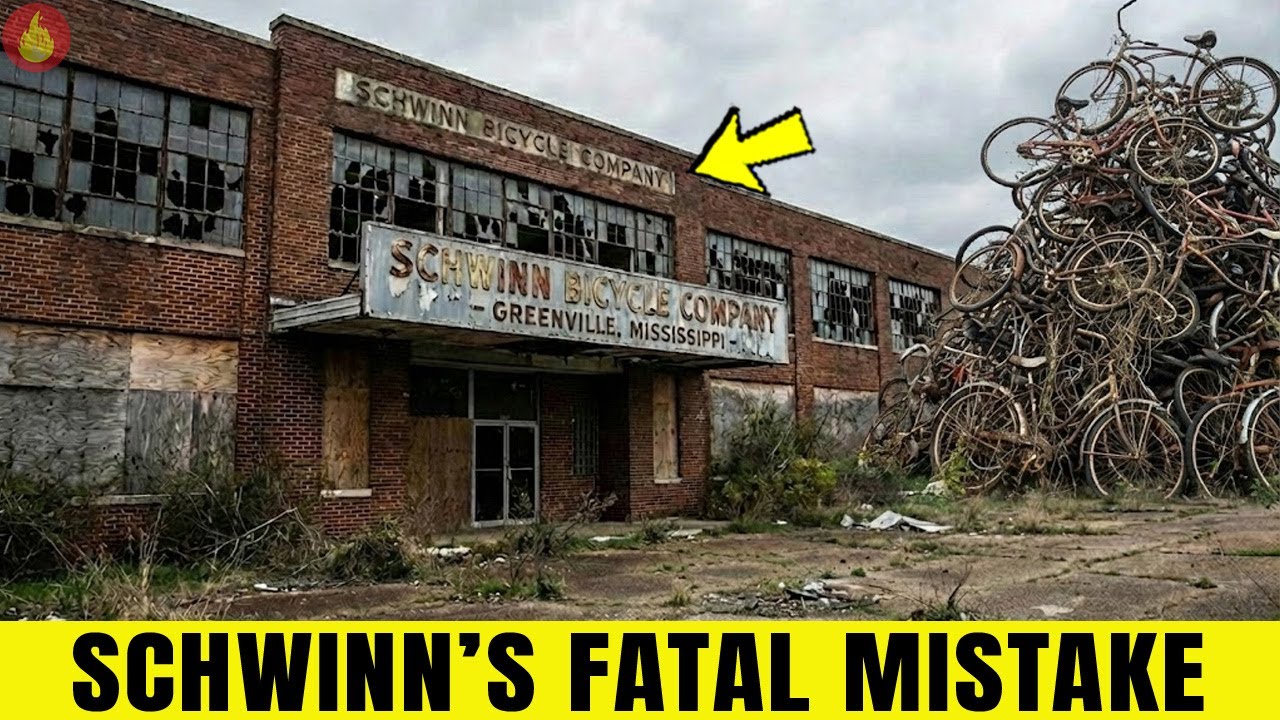
and European markets. The teacher had handed a weapon to the enemy. Bikes bearing the Giant name began pushing Schwinn off the very showroom floors they once dominated. In a last attempt to reclaim the Made in USA label and escape the Chicago unions, Schwinn built a new factory in Greenville, Mississippi, in 1981.
It was a logistical disaster from day one. The factory sat isolated, sixty miles from the nearest train station, far from the West Coast ports where parts from Asia arrived. People joked it was easier to get from Chicago to Taiwan than to Greenville. Worse, they could not find a workforce with the same high skill level as the craftsmen in Chicago.
The Greenville factory never made a single dollar of profit in its ten years of operation. By this point, Schwinn was no longer a real manufacturer. They were a marketing company slapping their name on frames made by rivals overseas. Experienced managers who understood the market were pushed out or left to join rising rivals like Trek and Specialized, taking decades of knowledge and passion with them.
Entering the 1990s, the Schwinn family stood on a financial precipice. In the Chicago headquarters, managers lived in denial, unable to believe the most famous name in American cycling could not sustain itself. By the late eighties, profits from traditional bicycles had almost completely evaporated. The company’s only life jacket was exercise bikes, especially the Airdyne series, which had high profit margins.
Schwinn once held a near-total monopoly there, but tragedy struck when their old rival Sears launched a similar model for much less. Airdyne sales dropped thirty-five percent, costing Schwinn eight million dollars in profits, money that could have saved the empire. In the early nineties, the company lost 2. 9 million dollars while carrying a massive debt of eighty million.
Edward Schwinn Jr. made a fateful miscalculation. He believed the banks would not dare let the company go bankrupt for fear of losing their equity, so he took a hardline stance, refusing to offer a realistic recovery plan. Family pride backfired when the banks started playing financial hardball, moving the loans to debt recovery departments to squeeze whatever was left from the Schwinn name.
On October 4, 1991, a worker in Greenville quietly finished the last bike of the day, turned off the lights, and locked his station. There was no celebration, no farewell speech. After ninety-six years, Schwinn officially stopped making bicycles in the United States. Closing Greenville transformed Schwinn from a true builder into a marketer, slapping its brand on products made entirely overseas.
Then came the 1992 bankruptcy. Venture capitalists circled the corpse of the empire. The Zell/Chilmark Fund, led by Sam Zell, nicknamed the Gravedancer for his specialty in buying distressed companies for cheap, jumped in. After tense negotiations, Zell/Chilmark bought Schwinn in 1993 for about forty to forty-three million dollars.
The Schwinn family received a pittance after nearly one hundred years of sweat and tears. The new owners purged the entire old staff in Chicago, deemed them unfit, and moved headquarters to Boulder, Colorado. The name Schwinn lived on the frames, but the bloodline and historical connection to the founding family were severed forever. In the ruins of the bankruptcy, one small flame of pure passion remained.
Richard Schwinn, great-grandson of Ignaz, along with partner Marc Muller, bought the high-end Paramount production shop in Waterford, Wisconsin from Zell/Chilmark in 1993. But because of the bankruptcy deal, Richard was not allowed to use his own last name as a brand, nor did he have the rights to the Paramount label. He founded Waterford Precision Cycles, continuing to hand-build exquisite steel frames for customers who loved beauty. While the mass-market Schwinn brand lost its identity on supermarket shelves, Richard quietly preserved the family’s traditional craftsmanship, serving pro racers and collectors until he officially closed the doors in June 2023.
Schwinn rose to the top thanks to Ignaz’s boldness, but it fell because of complacency and a lack of resolve against the tsunamis of technology and globalization. The family bloodline in the bicycle industry finally stopped when Richard Schwinn retired at age sixty-nine, closing a long chapter that had lasted over 130 years. But even though the empire has vanished, the name Schwinn remains etched in the hearts of millions of Americans.
Those old rusty bikes in the garage, those Stingrays auctioned for thousands of dollars, still tell the story of a time when we believed that anything made by the hands and mind of a master machinist could last forever.
