The shot came without warning. Kelly Finnegan, twenty-nine years old and co-owner of Legacy Rare Coins in Murray, Utah, was putting valuables into the safe at closing time on May 4, 1990, when the customer who had been browsing the store murmured something from behind him. Finnegan turned his head. In that split second, a small caliber bullet tore into his forehead.
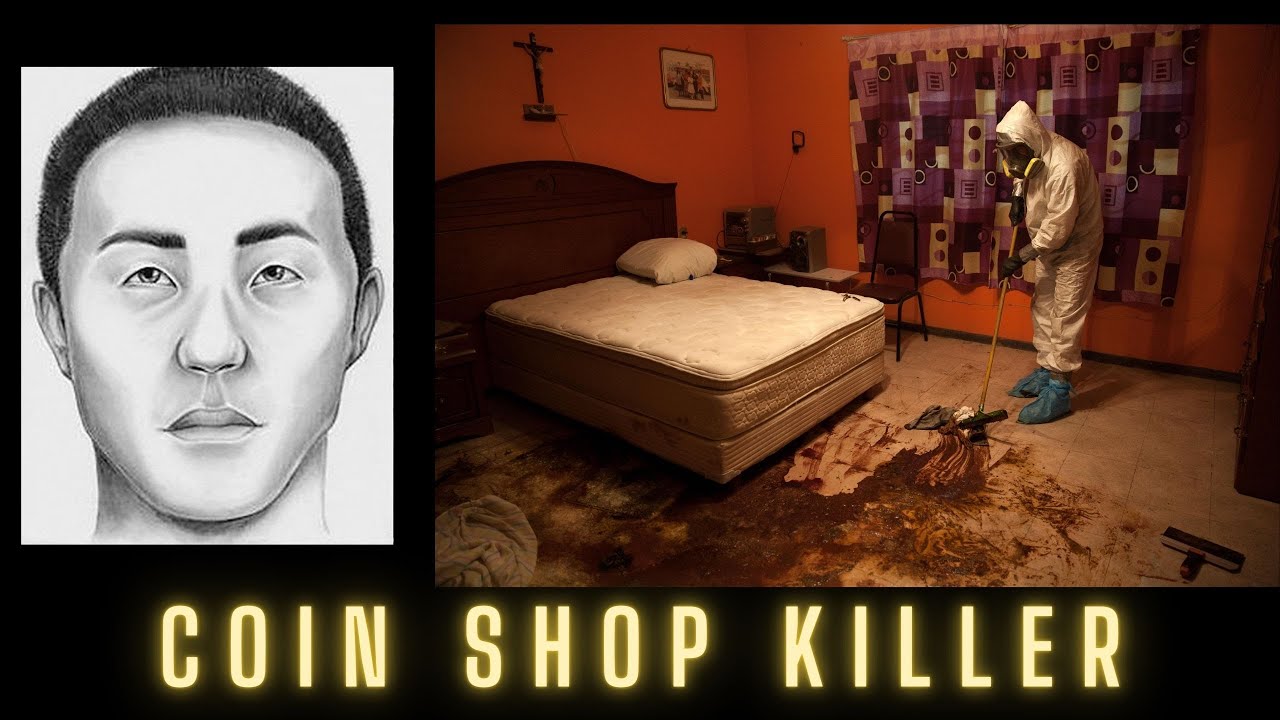
The man he knew as Jim Stockton had visited the shop several times over the preceding days, a polite Texan who said he wanted to invest in coins. Finnegan had grown used to him. Now, as he felt the bullet pierce the skin of his forehead, he had the presence of mind to play dead. The gunman walked back and forth across his body for several minutes, stripping the store of gold and rare coins, around sixty thousand dollars’ worth of merchandise, before escaping.
Finnegan stayed still and conscious the whole time. He remembered the man’s final remark to him, a remark he interpreted as a taunt: that Finnegan had been dumb to trust him, that he had let his guard down, and that the gunman had won the game. Finnegan survived. He described his attacker to Murray police as a polite, friendly man.
The bullet had only pierced the skin because he turned his head when he did. Murray police began an investigation into the attempted murder and robbery. Just over two months later, in Billings, Montana, a similar crime was committed. Charles Sparbo, a sixty-year-old self-made millionaire with real estate and other interests, ran a coin shop he had operated for ten years out of a lifelong hobby.
He worked alongside his assistant, forty-seven-year-old Catherine Newstrom, a likable woman. On the hot afternoon of July 31, 1990, their bodies were found inside the Treasure State Silver and Gold Coin Shop. Both had been shot in the head. Around fifty-four thousand dollars’ worth of coins and gold had been taken.
At first, locals assumed the outspoken, no-nonsense Sparbo had angered some disgruntled collector and paid for it with his life. But Sparbo had left detectives a clue. He had voiced concern about an odd new customer who had been hanging around the shop, a man who said he was a farmer from Laurel, fifteen miles up the road. The customer said he was selling his farm for one hundred thirty thousand dollars and wanted to invest the money in gold.
Sparbo’s son Jim and several others remembered the man well. They recalled that he parked his silver Pontiac some distance away and walked to the store, which the elder Sparbo found odd. The third time the farmer appeared, Jim Sparbo left the store. It was the last time he saw his father and Newstrom alive.
When he returned, he found them dead. He described the man to detectives as having a gap between his front teeth and a scar on his right hand. Jim also noticed something strange: the man had banker’s smooth hands, not the hands of a farmer. The story told by this customer was remarkably similar to one told in connection with a murder in Kansas City several years earlier.
On March 12, 1988, Leroy Hoffman of Kansas City, Missouri, was killed in his coin shop and robbed of several thousand dollars’ worth of coins. Before his death, Hoffman had told his wife that a local farmer who frequented his store had inquired about selling a large collection of coins. Hours after interviewing Jim Sparbo, Billings detective Sergeant Jerry Archer, who had led the department’s investigation, sent a description of the crime and the suspect out on police teletype. The following day, a Spokane, Washington police detective responded with information on a similar crime.
Coin shop owner Leo Kashid had been killed by a gunshot wound to the head in his store, robbed by an unknown assailant on July 14, 1987. Murray police also responded because of the Finnegan case and sent out a copy of the composite drawing of the suspect. It seemed the killer had a specific method of operation, and that method would prove to be the link between the crimes. The suspect would go to a coin shop, often many times, ingratiating himself with the owner, talking a lot, pretending to be a prospective buyer.
In fact, he was stalking his victims, familiarizing himself with their habits and routines so they would become accustomed to seeing him. Then, one day, he would return, usually near closing time, to rob and shoot to kill, using a small caliber weapon and always aiming at the head. Detectives across several states had been trying to solve separate crimes, but now it seemed possible they were all looking for the same man. The killer’s modus operandi was linked to several other homicides involving the murder and robbery of coin dealerships.
It was suspected the same killer was responsible for the murder of David Sutton of Everett, Washington, found dead of a gunshot wound to the head on January 27, 1980, his antique store robbed of eighty thousand dollars in silver dollars. The crime was similar to that of Thomas Rohr of Mishawaka, Indiana, killed during a robbery of the coin shop he managed on August 28, 1985, and to the murder of Reuben Lucky Williams of Vacaville, California, killed on November 5, 1986, with a gunshot wound to the head, his coin shop, the Golden Hills Coin Exchange, robbed. These murders stretched back across ten years, and all the victims were coin dealers who had been robbed. Spokane detectives called again to say that another shop owner had recognized a customer from the previous April named J.
C. Ware. They were able to locate a Washington state listed silver Pontiac registered to a J. C.
Ware. Sergeant Archer said Spokane let them know that this man’s driver’s license in Washington had been surrendered in Wyoming, so Billings detectives contacted Wyoming officials in Jackson Hole, the address listed on the new license. This would turn out to be a dead end, with sheriff’s deputies relaying that the address was phony. However, they did find a silver Pontiac at the local airport, and inside was a .
22 caliber handgun, a silencer, and coin wrappings from the Sparbo robbery. At the same time, Deputy Sheriff Pete Piccini in Jefferson County, Washington, was the lead investigator working an unsolved case, the disappearance of Robert and Dagmar Linton. The couple from Stockton, California, had gone missing from their trailer while camping at a Washington state campground on the Olympic Peninsula on August 22, 1986. During the summer of 1986, the Lintons had headed toward the Northwest with the intention of reaching Vancouver to see the World’s Fair.
During their first month of travel, as they made their way northward, they frequently contacted relatives back home. But when they reached Washington State, the telephone calls abruptly stopped. The red and white trailer they had been traveling in was found by a campground staff member, empty, at a campground in Washington on August 23, 1986. Their pickup truck was discovered abandoned at the Seattle-Tacoma airport.
Inside the mostly clean vehicle, small amounts of blood were found in the wooden ceiling material of the camper shell, including three distinct blood types: those of Robert, Dagmar, and a third from an unknown individual. The trailer showed signs of a struggle. Despite their bodies not being discovered, investigators concluded the Lintons had been murdered. The transactions made by the killer using the Lintons’ credit cards allowed Piccini to trace where the payments were being made across several states.
In one particular instance, a large bearded white man with his right hand bandaged was seen using the Lintons’ credit card to purchase an expensive clarinet. Once the credit card’s activity was reported by the media, the card’s usage stopped. During this investigation, Piccini interviewed numerous suspects, including a suspicious-looking man with a bandage on his right hand who frequented a pawn shop. Piccini interviewed the bandaged-handed man because of his suspicious behavior, but with no grounds to arrest him, the man was released.
When Piccini saw the original Billings teletype, he at first discounted a link, because the man seen using the Lintons’ cards was bearded and neither victim was a dealer of coins. But then he learned through Billings investigators that the suspect they were tracking had lived in Deming, Washington, which was not far from where a Linton credit card had first been used. By now, the search for the suspect had become a multi-state investigation. “It was one of the unique joinings of police departments in a widespread investigation,” Piccini said.
Piccini began his own investigation and found that the suspect’s teenage daughter played the clarinet, and that her school records had been transferred from Washington to Alaska. Meanwhile, Billings detectives pursued a lead from airline personnel at Jackson Hole who said that a J. C. Ware had flown to Anchorage two days after the Sparbo-Newstrom murders.
When they inquired further, they discovered the suspect had been picked up by his wife Debbie, who then sold around fifteen thousand dollars’ worth of gold there. It appeared J. C. Ware had moved with his wife and two children to Kenny Lake, an isolated enclave roughly eighty-five miles north of Valdez.
Archer, along with another Billings detective and several Alaska State Troopers, made an arrest there on August 13, 1990. They were greeted by a burly outdoorsman. Archer noticed the man had a gap in his front teeth and a scar on his right hand. Inside his pocket was one of Kelly Finnegan’s antique pocket watches.
His son was found to be wearing a Rolex watch that was previously owned by the co-owner of Legacy Rare Coins. The man was eventually identified as forty-four-year-old Charles Thurman Sinclair, who used a variety of aliases, including J. C. Ware and Jim Stockton.
He was suspected in as many as eight murders and one attempted murder. Piccini also suspected Sinclair of involvement in the Linton disappearances in August 1986, as well as the rape of a real estate agent that same month, and the November 1987 kidnapping and murders of a vacationing Canadian couple, including the rape of the woman. Piccini obtained a search warrant to sift through the family’s belongings kept in storage units in Washington, and officers found numerous items linking Charles Thurman Sinclair to the Spokane and Vacaville murders. There were instruments for the creation of false identifications, piles of maps, C4 explosives, Claymore land mines, and various valuable and rare coins.
“And we came up with a clarinet,” said Piccini, purchased with the Linton credit card. Under the weight of this evidence, along with the scars on Sinclair’s right hand, which matched the description of the man with his hand bandaged, Charles Thurman Sinclair was held in prison on a five hundred thousand dollar bond in Palmer, Alaska, while Montana authorities were seeking extradition. Montana authorities charged Sinclair with the murders of Charles Sparbo and Catherine Newstrom and requested his extradition to stand trial. Utah authorities added charges of attempted criminal homicide and aggravated robbery for the attack on Kelly Finnegan at Legacy Rare Coins.
Meanwhile, detectives set about trying to find out all they could about the mysterious Charles Thurman Sinclair. The youngest of four children from a working-class family, Sinclair grew up in Jal, a small oil and gas town in the southeastern corner of New Mexico. One of his aliases came from a former classmate at Jal High School, the real J. C.
Ware. His father died when he was still young, and his mother supported the family by operating a coin laundry business and taking in ironing. John Cooper, one of his former teachers, recalled he was an average student, not particularly different from anyone else. Sinclair developed a fascination for coins, and from this he started a coin shop during the 1970s in Hobbs, situated forty miles north of Jal, using his own collection as a starting point.
Locals remembered he did well and soon branched out into selling guns due to the demand. He renamed his store the Shooter’s Supply and catered to people who could afford a price range of eight hundred to one thousand dollars for collectible guns, hunting rifles, and even automatics. He was remembered as a friendly and well-liked outgoing man who could talk to anybody. Along with his wife Debbie, daughter Pam, and son Michael, they enjoyed competitive shooting as a family thing, and Sinclair would often go hunting with several law enforcement officers who were among his customers.
His prosperous business came to an end in 1985 when Sinclair’s shop burned down. According to Hobbs police, he was investigated for arson but not charged. Soon after, he defaulted on a bank loan, and when the lender moved to reclaim his guns as collateral, Charles Thurman Sinclair promptly left town with his family. His wife Debbie Sinclair was accused in absentia by New Mexico of embezzlement for failing to turn over money from hunting and fishing license fees sold through the store.
Many Hobbs residents were surprised by the way Sinclair left but not by the fact that he did. One of his close friends, who wished to remain anonymous, said, “He told me he wanted to set back on his heels for a few years, that he had enough of six-day work weeks. He said he had enough money saved to buy a place with some acreage, get some mules and some horses, that maybe he’d get into real estate. ”
At the time of his arrest, Charles Thurman Sinclair and his family had been living on the second floor of a rented wood frame house with no bathroom and an outside privy.
“He had no visible means of support,” said Alaska State Trooper Sergeant Charles Grutzmacher. After Sinclair’s arrest, his wife was extradited back to New Mexico, where she pleaded not guilty to the embezzlement charges and was released on bail. She would tell authorities that she had never questioned her husband about his income, and authorities believed she and Sinclair’s children had no knowledge of the murders. On October 30, 1990, Charles Thurman Sinclair died of heart failure in an Anchorage, Alaska jail cell.
His death would leave behind more questions than answers. Police had hoped he would talk to them, but he never did. According to a preliminary report, he suddenly died alone in his cell of heart failure. His only known surviving victim, Kelly Finnegan, had hoped to see him prosecuted.
Instead, of his death, Finnegan said, “I’m disappointed. I feel cheated. ” Billings Sergeant Archer said, “I’m not convinced we know everything this guy did. We may never find out.
” His family, especially his children, were devastated over his death. One friend reported that when the children talk about their father, they wistfully recall a different man who made a real effort to teach them about animals and about being independent and self-sufficient. Law enforcement were equally devastated by Sinclair’s death, as it meant they were left without answers. Piccini, who had doggedly hunted for Sinclair over the deaths of Robert and Dagmar Linton, said, “For me, this all but closes my case.
Have you ever been on a train rolling down a track feeling everything was great when you go across a trestle and the track just stops? That’s the only way to describe how I feel. What’s left to do but go back the way you came? ”
Many Hobbs residents who remembered Sinclair said they were shocked to learn that he could have been a killer.
One friend said, “It’s like a puzzle, but you can’t see the picture because half the pieces are missing. ” Sinclair’s death left associated cases without the closure of convictions or further information required. “We all felt Sinclair was a serial killer of the same stature of Ted Bundy,” said Piccini. FBI special agent Ken Mariskin said, “We are still working on known and unknown crimes.
There’s a lot of unanswered questions. ” The only one who knew the whole story took it to the grave with him.
