The news vans arrived first, then the photographers, then the headlines, each sharper than the last. Prince steps back. Duke loses titles. Royal Lodge future unclear.
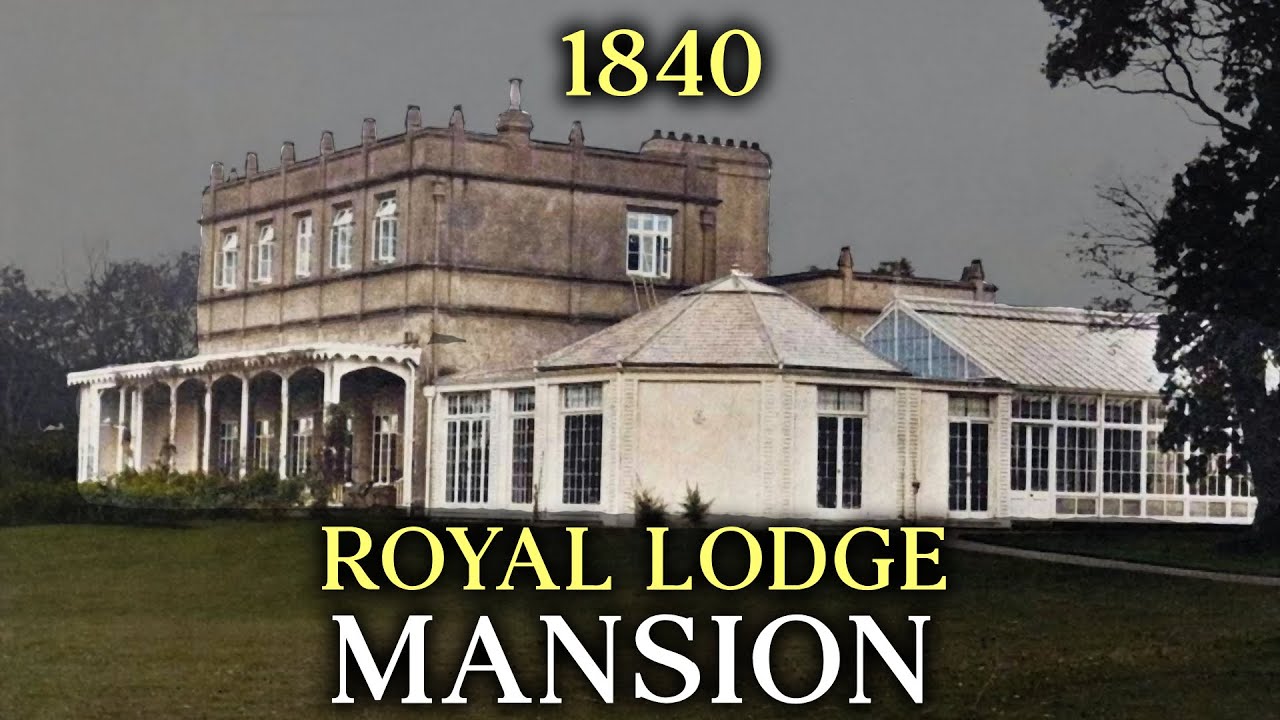
It was autumn 2022, and the gates of Windsor Great Park were shut. Security vans idled at the perimeter. Beyond the iron bars, the house looked calm: white walls, dark windows, old trees standing guard as they always had. But everyone inside knew the protective bubble had burst.
Royal Lodge was a $30 million home on almost 100 acres of land, and it cost up to five million pounds a year just to keep alive. The roof leaked. The paint cracked. The gardens threatened to turn into a jungle.
And the prince who lived there had no official royal job, no public salary, and a reputation shattered by one of the worst scandals in modern royal history. Outside the gates, the country was angry. Inside, the bills kept growing. The pressure from the palace was rising.
And the man in the middle refused to move out of what he called his last safe place. This was not a sudden collapse. Royal Lodge had been sinking for years, quietly, politely, the way old houses do when no one wants to admit the foundations are failing. The removal vans outside were not yet there to strip the rooms.
They were a precaution, an insurance policy, a warning that what once felt permanent might not survive much longer. To understand how Royal Lodge turned into the most toxic address on the royal estate, you have to go back—not just to the scandal, not even to Andrew’s first day in the house. You have to go back to when this place was built and see what it was always meant to be. A hiding place.
A retreat for people who needed to escape the weight of the crown without surrendering it completely. In 1662, Royal Lodge was nothing anyone would have called a mansion. It was a simple keeper’s lodge, a working building in Windsor Great Park where staff lived while managing the royal hunting grounds. Small rooms, low ceilings, built for function, not for show.
For more than a century, royals rode past it on hunts but never thought to live there. It was too plain, too far from the palace, too ordinary to belong to the world of crowns and ceremonies. Then, in 1812, the Prince Regent—the future George IV—noticed it. He was already turning Brighton into his fantasy palace and remaking Windsor Castle into a gothic fortress, yet he saw potential in the little lodge tucked among the trees.
He ordered it expanded: new wings, more rooms, classical proportions, a cottage large enough for a king but still small enough to feel private. By the time the work was finished, Royal Lodge had turned into something between a country house and a royal retreat. Comfortable, but not grand. Elegant, but never intimidating.
Queen Victoria never lived there, but she understood exactly what it was for. Windsor Castle was for state business and formal life. Royal Lodge was for escape. She let family members use it when they needed distance from palace corridors.
The pattern was set. Royal Lodge became the place you went when the palace felt too heavy, when you needed to ride horses without an audience, when you wanted your children to play in a garden that felt almost normal. It was never really about grandeur. It was about relief.
Within the family, it became known as a safe place, somewhere you could admit you were tired or frustrated without it instantly turning into a scandal. That reputation proved crucial in 1931. King George V was still on the throne, but his second son, Prince Albert, the Duke of York, was struggling. Shy, nervous, crushed by a stammer that turned public speaking into torture.
His older brother, the future Edward VIII, was charismatic and confident. Albert felt like the backup, the lesser son standing in the shadows. George V offered him Royal Lodge. Albert moved in with his wife, Elizabeth, and their two young daughters, Elizabeth and Margaret.
The family that would define the next era of Royal Lodge had arrived. For Albert, the house became a refuge. He could practice his speeches in private, walk the grounds without courtiers watching every move, be a father without photographers turning each moment into a headline. His daughters ran wild in the garden.
They climbed trees, built forts, played with the dogs. Elizabeth, the future queen, later called Royal Lodge the only place where her childhood felt real. In 1932, before he ever took the crown, the people of Wales gave Princess Elizabeth a gift that would define the estate for generations: a miniature house called Y Bwthyn Bach, the little cottage. It sat in the garden, a perfect replica of a Welsh cottage scaled down to child size.
Two small rooms, working doors and windows, tiny furniture, a little kitchen with running water. Elizabeth and Margaret treated it like their private kingdom. They swept the floors, arranged the dishes, invited guests for pretend tea. It was the only space in their lives where they had complete control.
When war came in 1939, Royal Lodge became a hiding place in the most literal sense. George VI and Queen Elizabeth refused to evacuate themselves; they stayed in London during the Blitz, but sent Elizabeth and Margaret to Windsor Castle for safety. Royal Lodge sat empty for months at a time, shuttered and dark, like a stage waiting for its actors to return. After air raids, the family retreated there to recover.
Staff remembered those years as strange: long silences, a tension in the air that never quite lifted, the king pacing the halls late at night, smoking too much, worrying about his country, his daughters, and whether the next night would be worse than the last. But Royal Lodge held him. It gave him space to fall apart in private, so he could hold himself together in public. The war ended.
Britain survived. George VI had proved stronger than almost anyone expected, but the effort had quietly destroyed his health. He died in 1952, suddenly, a heart attack in his sleep at Sandringham. Her daughter was now Elizabeth II, and the old life was gone.
The new Queen Mother could have moved anywhere: Clarence House, a grace-and-favor apartment, a smaller country estate with fewer memories. She chose Royal Lodge. She stayed for fifty years. She kept Albert’s rooms almost exactly as he had left them.
His books on the shelves, his favorite chair by the window, photographs on every surface. The garden became her obsession. She widened the flowerbeds, added new paths, and slowly turned the grounds into one of the most beautiful private gardens in England. Her grandsons—Charles, Andrew, Edward—played in the little Welsh cottage, just as Elizabeth and Margaret had before them.
By the time she reached her nineties, the house and the woman had become inseparable. The Queen Mother died in March 2002 at the age of 101. For the first time since the 1930s, Royal Lodge stood empty. Some suggested turning it into a museum.
Others argued it should be split into apartments for minor royals. A few voices said it ought to go back to the Crown Estate and be leased to someone outside the family. Queen Elizabeth II had a different idea. She offered it to her second son, Prince Andrew, Duke of York.
Andrew was fifty-two. He had been divorced from Sarah Ferguson for six years, living partly in a grace-and-favor apartment at Buckingham Palace and partly in a country house he still awkwardly shared with his ex-wife. He had two daughters, Beatrice and Eugenie, growing up split between parents, between locations, between the official version of royal life they were supposed to have and the messy reality they actually lived. Andrew wanted stability, something that felt permanent.
Royal Lodge looked perfect for that role. The Queen offered him a 75-year lease through the Crown Estate. The terms were complicated but generous. Andrew would pay £250 a week in rent, far below market rate.
In return, he would personally finance a massive renovation: new roofs, updated wiring and heating, repaired stonework, restored exterior details. The bill reportedly came to £7. 5 million. Andrew paid it.
He treated the deal as an investment in legacy. This was where his grandmother had lived, where his mother had played as a child, where royal history clung to every corridor. He moved in during 2004. Sarah moved in with him.
On paper they were divorced; officially they led separate lives. But they had never truly separated. They shared custody, shared holidays, shared the unspoken understanding that their marriage had failed but their partnership and loyalty to each other had somehow survived. Royal Lodge became the physical proof of that strange arrangement.
The girls loved it. They rode horses in the park, walked the dogs down quiet lanes, played in the same garden cottage their grandmother had played in some seventy years earlier. For Andrew, the house felt like redemption. His navy career had ended.
His marriage had collapsed. The tabloids had spent years sneering at him as a buffoon, a playboy, a prince who embarrassed the monarchy more than he helped it. Royal Lodge was supposed to rewrite that story. He hosted family gatherings.
The Queen visited regularly. Charles and his sons came for lunches. The house filled again with informal, warm, multi-generational life. Andrew felt safe.
The lease was secure. The renovations were finished. His daughters were happy. He believed the worst was behind him.
At that point, the math worked. Andrew still received money from the Queen’s private income. He had a Navy pension. Sarah contributed earnings from book deals and public appearances.
Royal Lodge cost roughly £250,000 a year to maintain. Expensive, but not impossible. No one warned him how fast that feeling of security could vanish. The lease Andrew signed was not a normal lease.
Most tenants pay something close to market rates; the landlord handles the big repairs. Royal Lodge operated on a completely different logic. For comparison, similar country houses in the area could rent for £500,000 a year or more. Andrew was paying less than three percent of the going rate—but the discount came with strings.
He had to fund every renovation himself, from roofs stripped and rebuilt to plumbing replaced and electrical systems brought up to code. He had to maintain the estate to Crown Estate standards: professional gardeners, tree surgeons, ground staff, regular inspections, immediate action whenever damp appeared or masonry cracked. He could not sublet, could not sell on the lease, could not turn it into a money-making asset. On paper it was a neat bargain.
In reality, it tied Andrew to a long, expensive commitment built on the assumption that he would always have serious money coming in. For many years, that assumption held. As a working royal, Andrew received an annual allowance from the Duchy of Lancaster, estimated at around £249,000 per year. He had his Navy pension, investment income, occasional consulting fees.
But by 2010, hairline cracks were starting to show. Tabloid stories questioned his business friendships. Expense scandals turned royal spending into a public minefield. Quiet muttering began about associates whose names would later sound radioactive.
Andrew ignored the signs. From inside its gates, Royal Lodge felt too solid, too rooted in history, to ever truly fall. By 2015, the house had become Andrew’s entire world. Mornings began with dogs—a rotating pack of corgis and other breeds drifting through rooms filled with antique furniture as if they owned the place.
Breakfast was informal; Sarah often joined him at the table. The rooms reflected Andrew’s taste more than inherited royal tradition. He had stripped away much of his grandmother’s gentle florals and soft pastels, replacing them with heavier furniture and darker shades. Photographs covered almost every flat surface: Andrew with world leaders, Andrew in naval uniform, Andrew with his daughters.
The walls repeated the story he wanted people to remember. Keeping that alive required a small army. Housekeepers, groundskeepers, cooks, security officers, drivers—the payroll ran to hundreds of thousands of pounds each year. Yet fewer visitors came than Andrew would have liked.
His official royal diary had thinned. His role as special representative for international trade and investment had ended badly, criticized as costly, ineffective, and uncomfortably close to controversial individuals. Royal Lodge became the compensation prize. If the institution no longer needed him as a visible working royal, he could still be the custodian of an important house.
Meanwhile, the bills kept growing. The £7. 5 million Andrew had poured into renovations was not a final bill. Old houses never stop asking for more.
New estimates pointed to another £5 million worth of work coming due: roofs again, failing drainage, structural repairs that could not be delayed without real risk. Andrew did not have five million pounds. He did not have one spare million sitting in an account. The lease that had once made him feel untouchable now looked like a snare.
He could not sell the house to unlock its value. He could not walk away without losing everything he had sunk into it. Then, in 2019, everything collapsed. Virginia Giuffre filed a lawsuit in the United States.
She alleged that Jeffrey Epstein had trafficked her to powerful men, including Prince Andrew. She described specific encounters, specific dates, specific places. One photograph showed Andrew with his arm around her waist. Ghislaine Maxwell stood beside them, smiling into the camera.
Andrew was in his early forties in that photograph from 2001. Virginia Giuffre was seventeen. This time, the bubble did not bend. It broke.
Andrew’s first instinct was denial. He admitted he had met Giuffre but insisted he could not remember the encounter. His advisers told him to stay quiet. Andrew ignored them.
In November 2019, he agreed to sit down with BBC Newsnight, genuinely believing he could explain everything and clear his name. The interview aired on a Saturday evening—forty-nine minutes that would dismantle what little remained of his reputation. He claimed he could not have been in London on the night in question because he was at a Pizza Express in Woking with his daughter. He said he did not remember ever meeting Virginia Giuffre, despite the photograph.
At one point he suggested the image might have been altered. He described his friendship with Jeffrey Epstein as a useful way to make business connections; staying at Epstein’s properties was simply practical. When asked if he regretted the friendship, Andrew talked about the opportunities it had offered him in terms of networking. The most damaging moment came when he tried to justify his visit to Epstein in New York in 2010, after the conviction.
Andrew said he had traveled there to end the friendship face-to-face because that was the honorable and right thing to do. The phrase landed like a brick. The interview went viral almost instantly. Within days, the palace announced that Andrew would step back from royal duties indefinitely.
He kept his title. He kept his honorary military roles. He kept Royal Lodge. But he no longer represented the Queen.
No more patronages, no more public engagements. Andrew withdrew to Royal Lodge, and the house narrowed into his only real territory. Outside the gates, the pressure intensified. Charities dropped his patronages.
Military regiments quietly created distance. Organizations scrubbed his name from their websites. The Queen made no public statement. Charles maintained a careful, chilly distance.
The message could not have been clearer: Andrew was on his own. The bills, however, did not care about narratives. Andrew’s income had collapsed. The private allowance from the Queen continued, but everything else had evaporated: no business deals, no paid appearances, no consulting work.
Royal Lodge cost around £250,000 a year simply to keep running. Andrew no longer had a clear, reliable way to pay that bill. In September 2022, Queen Elizabeth II died at Balmoral. Andrew was with her at the end, one of the few family members present.
For a brief moment, his scandal faded into the background. He walked behind her coffin during the funeral processions, stood vigil beside it at Westminster Hall, caught on camera in naval uniform with tears in his eyes. For a short time, the public softened. The softness did not last.
King Charles III took the throne with clear priorities: streamline the monarchy, cut costs, modernize, and quietly remove anyone who created more problems than they solved. Within weeks, he made his position unmistakable. Andrew’s allowance would end. No further funding from the Duchy of Lancaster, no support from the Sovereign Grant.
Andrew pushed back, insisting he had served in the Falklands War, worked as a trade envoy, given his life to the family and the Crown. Charles did not move. The numbers were unforgiving. Royal Lodge cost approximately £250,000 a year in basic maintenance alone.
Staff salaries added another large, unavoidable sum. Security, technically funded by the Metropolitan Police but constantly under review, was estimated at around three million pounds annually. Andrew’s Navy pension brought in roughly £20,000 a year. Sarah had no stable income.
The house itself needed immediate work: roof repairs, exterior painting, window restoration, structural checks. Estimates ran to several million pounds. Andrew could not pay. He went to Charles for help.
Charles refused. The confrontation quickly became family legend: two brothers fighting over money, status, and the meaning of loyalty. Behind the scenes, the palace floated other options. Frogmore Cottage, the smaller property vacated by Harry and Meghan, was available: recently renovated, big enough for Andrew and Sarah, far cheaper to run.
Andrew refused. Royal Lodge was his home. His lease remained valid for many decades. He had spent millions improving it.
Walking away would mean admitting defeat. Friends stepped in. Reports surfaced of wealthy contacts offering loans, former business associates providing quiet financial support. The details stayed vague, but the money clearly came from somewhere.
From the outside, it looked terrible: a disgraced prince with no visible income still managing to fund a multi-million-pound lifestyle. People began to ask obvious questions. Who was paying, and what did they expect in return? By early 2023, Royal Lodge had begun to look tired.
The white exterior paint had faded to patchy gray. Shutters were weathered, window frames flaked and cracked. Staff numbers had fallen; some roles were left vacant, others merged. Whole wings were allowed to go cold in winter to save on heating.
The roof needed urgent work. Leaks had appeared in several places. The heating system was decades old and increasingly unreliable. Outside, cracks crept along walls, and drainage problems left water pooling around the foundations after heavy rain.
The house and the man mirrored one another. Both had been impressive once. Both were now visibly deteriorating. Public anger hardened rather than faded.
Talk shows debated whether Andrew should keep his titles, keep Royal Lodge, keep armed security funded even indirectly by taxpayers. Opinion polls showed strong support for stripping all three. Members of Parliament began asking direct questions. How much did Royal Lodge really cost the public?
Could the Crown Estate terminate the lease? What powers did the King actually have to force Andrew to move? The answers were messy: the lease was legal and long-term, Andrew had met his renovation obligations, and the Crown Estate could not simply throw him out without clear cause. But the political cost of protecting him was rising faster than any maintenance bill.
In January 2024, the announcement came without drama. Buckingham Palace released a short statement. Prince Andrew would be required to leave Royal Lodge. The Crown Estate had ended lease negotiations.
Alternative accommodation had been arranged. No explanation. No apology. Just a dry administrative notice that quietly shattered decades of assumption.
Andrew had always believed his lease was untouchable: seventy-five years, legally binding, a contract the Crown Estate could not tear up without triggering a huge legal fight. He was wrong. The lease contained clauses and conditions: maintenance standards, ongoing financial obligations, evidence that he could sustain the property over the long term. On paper, he had failed on several counts.
The required renovations were unfinished. The maintenance schedule had slipped badly. Most importantly, he could no longer show he had the financial capacity to keep Royal Lodge in the condition the Crown Estate demanded. Andrew’s lawyers pushed back, arguing the breaches were technical and the standards were being enforced more harshly against Andrew than against anyone else.
Behind closed doors, his team insisted the real motive was political: Charles wanted his disgraced brother out, and ending the lease was punishment dressed up as contract law. Legally the arguments could go on forever, but in reality they no longer mattered. Charles had already made his decision. Andrew could leave voluntarily or face a formal eviction process.
Frogmore Cottage was still empty: five bedrooms, recently renovated, much smaller than Royal Lodge but more than enough space for Andrew and Sarah. The rent would be manageable. The maintenance bills would no longer swallow him whole. At first, Andrew refused even to consider it.
Moving to Frogmore meant conceding defeat, admitting he had been wrong, accepting that his rank no longer protected him. Sarah tried to bring him back to reality. They could not afford Royal Lodge anymore. The house was physically failing.
A legal fight would only drag everything into more public humiliation. The media followed every twist. Opinion polls showed huge support for forcing Andrew out. Protesters returned to the park gates in greater numbers, with hand-painted signs reading “Evict Andrew” and “No more royal freeloaders.
” Andrew watched from upstairs windows and realized, with a kind of numb clarity, that he had become the villain in a story that would not end until he left. The moving process began in the spring of 2024. Not with drama—no news cameras at the gates, just quiet logistics handled by staff who had done this choreography many times before. Andrew supervised from a distance.
He could not bring himself to fold his own clothes into boxes or take pictures off the walls. Staff wrapped photographs in tissue paper, boxed up books from his study, emptied wardrobes filled with naval uniforms he would never wear again. They packed his grandmother’s things separately—the Queen Mother’s chairs, her favorite lamps, the small ornaments Andrew had left exactly where she had placed them—and put them into storage. Sarah handled the practicalities.
She knew how to live through collapse; she had been bankrupted before, had faced front-page humiliation before. Beatrice and Eugenie came to help. They arrived separately, stayed only a short while, and left with tight faces and red eyes. The little garden cottage was the hardest part.
They walked through it together, Andrew, Sarah, and the girls, ducking slightly through the child-size doorways. No one said much. Beatrice cried quietly in a corner. Eugenie held her father’s hand.
Sarah took photos on her phone as if she were documenting a crime scene rather than a memory. Andrew just stood there saying nothing. Removal vans arrived early one morning, big trucks that blocked the drive. Staff loaded boxes in a steady rhythm, furniture wrapped in blankets, paintings slipped into crates.
Andrew stayed inside for as long as he could, watching from upstairs windows while his possessions vanished into the backs of the vans. In the end, Sarah persuaded him to leave before the final truck pulled away. Better, she said, to go while Royal Lodge still looked inhabited than to be the last figure walking out of an echoing empty shell. They drove to Frogmore in Andrew’s Range Rover, Sarah at the wheel, Andrew staring out of the window saying nothing.
The distance was short—less than three miles from Royal Lodge, close enough that Andrew could still glimpse his old home from certain roads. Close enough that the loss felt deliberate, almost taunting. Frogmore looked small after Royal Lodge: five bedrooms instead of something like thirty, modest gardens instead of sweeping parkland. Andrew walked through slowly.
His furniture looked oversized in these limited rooms. His photographs crowded the walls. This was Harry and Meghan’s old house. That thought would not leave him alone.
That first night at Frogmore, he could not sleep. The sounds were wrong, the ceilings felt low, the walls seemed too close. Sarah found him at three in the morning sitting at the kitchen table with all the lights off. He was not crying, not talking, just sitting very still, alone with the knowledge that this place would never feel like Royal Lodge.
Royal Lodge sits empty now. The furniture has gone. The photographs have been taken down. Rooms that once held decades of family life echo with nothing but the footsteps of staff carrying out routine inspections.
Yet one question hangs over the silence. Who actually owns this house? Royal Lodge belongs to the Crown Estate, a vast property portfolio that lives in its own legal category. It is not private property in the way a normal house is, nor government property in the usual sense.
The Crown Estate took shape in 1760, when King George III agreed to surrender the income from royal lands in exchange for a fixed annual payment from Parliament. The monarch does not personally own it, but it is not simply a public asset that ministers can sell off at will. Properties like Royal Lodge sit right in the middle of that gray area: historically important, tied to the identity of the monarchy, yet managed as commercial assets. For roughly two centuries, that setup worked quietly.
Royal Lodge housed working members of the family, who carried out engagements and represented the institution. In return, they lived in historic buildings whose upkeep was justified as the cost of monarchy. Andrew broke that balance. He kept the house after losing his role.
He tried to maintain the lifestyle while no longer offering the service that had once defended it. The Crown Estate’s decision to reclaim Royal Lodge was not only about leaky roofs and missed inspections; it was about redefining what royal privilege is supposed to mean inside a modern democracy. The house itself is Grade II listed, legally protected as a historic building. It cannot be demolished or heavily altered without official permission.
Its survival as a structure is not in doubt. The Crown Estate now has choices. It can lease Royal Lodge to another family member under stricter terms. Princess Anne’s name appears often in those conversations; she is approaching seventy-five and still works a heavy program of engagements.
Edward and Sophie are another theoretical fit. A second option is to open Royal Lodge to the public in a limited way: guided tours of selected historic rooms, access to parts of the gardens in summer, educational programs about George VI and the Queen Mother. Ticket revenue would help offset maintenance bills, though visitor facilities, parking, and crowd management systems would cost millions before a single ticket was sold. A third option is to repurpose the house purely for official use: high-level receptions, extra accommodation during state visits, private meetings that need discretion without the heavy symbolism of Windsor Castle.
A fourth option, mentioned rarely and nervously, is to lease Royal Lodge to someone outside the royal family entirely, shifting the financial burden to a private purse. For now, no final choice has been made. Royal Lodge sits in limbo. A skeleton staff keeps the basics going: groundskeepers still cut the grass, security teams still patrol the perimeter, lights still come on at night.
But the house has no resident, no clear assignment, no defined future. It has been here before. After George IV died, Royal Lodge drifted underused and half forgotten. After George VI died, it might easily have been closed or repurposed; instead, the Queen Mother claimed it and gave it another fifty years of vivid, lived-in history.
The house has survived by adapting, by attaching itself to people who needed exactly what it could offer. The problem now is that it is not clear anyone needs what Royal Lodge offers anymore. A mansion of roughly thirty rooms in a royal park costs millions of pounds a year to keep alive. What modern royal truly requires that much space?
What role justifies that kind of expense in an era of tight budgets and public scrutiny? Royal Lodge was built for a world where royals needed secluded retreats, where sprawling estates were normal rather than awkward, where a title automatically opened every door. That world is shrinking. It may already be gone.
Royal Lodge will almost certainly endure as bricks and stone. Historic buildings usually do. But it may endure as something entirely different from what it once was. Not a private home.
Not a secret refuge. Perhaps just a beautiful, costly monument to a system that took too long to decide what it wanted to be in the modern world. Andrew’s mistake was not loving the house. It was believing the house made him untouchable.
He spent twenty years treating Royal Lodge as proof of his importance, even as his reputation collapsed around him. The public saw a man hiding behind walls, clinging to symbols he had not earned, demanding privilege without accepting responsibility. The standoff revealed a fundamental truth: titles do not protect you from consequences. They just delay them.
For the monarchy, Royal Lodge became the price of credibility. Charles had to prove the institution could hold its own accountable, that family loyalty had limits, that being a prince did not mean immunity. Forcing Andrew out was not cruelty. It was survival.
Andrew’s tragedy was not losing Royal Lodge. It was wasting years fighting a battle he had already lost, pouring money he did not have into a house that could not save him, believing status would protect him when status was the problem. The house stands empty now, waiting for whatever comes next. The walls are still the same.
The gardens are still beautiful. The little cottage where princesses once played still stands in its corner of the grounds. What has changed is the meaning.
Royal Lodge has shifted from a symbol of royal comfort to a warning about royal accountability, from safe haven to cautionary tale.
