On the night of April 26, 2005, Raven Abaroa called 911 in a state of panic. His wife, Janet, had been shot, he told the dispatcher—at least that was what he believed when he walked into their home in Durham, North Carolina, and found her lying dead in a pool of blood. But when police arrived at the house, they found no gunshot wounds. Janet’s body showed three stab wounds, her shirt pulled up, a bloody palm print on her chest.
The front door was open, there were no signs of forced entry, and in the next room, the couple’s infant son lay unharmed. From the very beginning, the case was filled with contradictions that detectives could not resolve, and without the evidence they needed, the investigation stalled. It would take years before a single overlooked detail—something sitting in plain sight in a bathroom—would become the key to finally bringing the case to a close. Janet Abaroa was born on June 19, 1979, in Annandale, a town not far from Washington, DC.
She grew up in a large Mormon family, one of ten children, and from an early age she was drawn to sports and the outdoors. Soccer became her greatest passion. In 1998, she enrolled at Southern Virginia University, where she joined the school’s first women’s soccer team. She helped the team win a national championship twice, all while excelling as a student and earning awards and scholarships.
During her first year at university, she met a young man named Raven. Like her, he came from a religious family and loved soccer. Their relationship moved quickly, and just two years later, when Janet was twenty and Raven nineteen, they were married. Both continued their studies and worked at the same sporting goods store.
After graduation, Raven was offered a manager position at a store in Durham, about three hours from the university. The couple moved there, and Janet found work at the same store. They settled into a quiet neighborhood on the edge of the city. In October 2004, Janet gave birth to their son, Kaden.
Janet was twenty-five and overjoyed; having grown up in a large family, she had always dreamed of having many children, and that dream was beginning to come true. But just six months later, their lives took a sudden and tragic turn. Tuesday, April 26, 2005, began like any other day. Janet picked up her son from daycare.
Later, she and Raven took her car to a repair shop. In the evening, a mutual acquaintance from their church stopped by for a visit. After 8:00 p. m.
, Raven left for a nearby town to play soccer with his friends. Closer to 11 p. m. , police received the call from Raven, crying and panicking, saying someone had shot his wife.
He told them he had come home and found the front door open, which immediately seemed strange because when he left a few hours earlier, Janet had already been settling in for the night, lying in bed watching TV. Raven thought he might have forgotten to lock the door, so he went inside. When he got upstairs, he walked into the room they had turned into an office, and there he found his wife’s body. When police arrived, there was nothing anyone could do.
Janet was lying on her back, her arms raised above her head, wounds visible on her neck and torso. Her shirt had been pulled off, and a bloody palm print marked her chest. Officers immediately noticed the wounds looked more like stab wounds than gunshots, despite what Raven had told the dispatcher. Blood splatters covered the room, but elsewhere in the house there were no signs of a struggle.
There were no signs of forced entry either, though a bloody handprint was found on the door frame, and near Janet’s body, a bloody shoe print. The murder weapon was not found inside the house, and a search of the nearby streets turned up nothing. Raven later said one of the knives from a collection he had been building for years was missing. He also said his laptop was gone, but everything else of value remained.
No cash or jewelry had been taken, including two of Janet’s rings left sitting on the kitchen counter. Janet’s own laptop was still in the house, even though it had been lying near Raven’s. The couple’s son was unharmed in the next room. Medical examiners confirmed that Janet had died from three stab wounds.
Raven explained that he had assumed gunshot wounds in his panic, seeing the pools of blood and simply making a wrong guess. Experts found no evidence of sexual assault, even though Janet’s shirt had been pulled up and the killer appeared to have touched her chest, judging by the bloody print. Another detail emerged: Janet may have been in the very early stages of pregnancy. None of her relatives, including Raven, knew anything about it, and because it was so early, experts couldn’t say for certain.
From the first hours of the investigation, problems appeared with Raven’s version of events. A burglar would have had to enter without forcing any doors or windows, ignore valuable jewelry left in plain sight, and choose to steal only a laptop and a knife—items of relatively little worth—while leaving Janet’s own laptop untouched nearby. There was also the strange way Raven told Janet’s parents about her death. He called them at 5:00 a.
m. , while police were still processing the crime scene and before medical examiners had even begun examining the body. He told them Janet had been found dead with a gunshot wound and that she had done it to herself. Janet’s parents refused to believe she could have done such a thing, and when police later told them the real cause of death, they were even more confused about why Raven had misled them.
Janet’s friends also found his initial version extremely strange. Janet, they said, would never have done that to the people who loved her, least of all to her son. One friend learned about Janet’s death from the news. The town was considered safe, so the murder of a young woman quickly drew local media attention.
The friend saw a live broadcast outside Janet’s house and drove there immediately, hoping to understand whether what she was seeing was really happening. When police began speaking with Janet’s friends and relatives, many shared suspicions about Raven, and they had a long list of reasons. Detectives learned that the marriage had not been as happy as it appeared. Shortly after the wedding, Raven told Janet he had cheated on her throughout their entire relationship.
Then he said he no longer wanted to be with her and planned to file for divorce. All of this happened around the time Janet found out she was pregnant with their first child, before she had a chance to tell anyone. After Raven moved out, she finally told him the news and suggested they try to save the marriage for the baby’s sake. He seemed uninterested at first, but eventually agreed to try.
They began living together again, and Raven promised to stop cheating. But even then, his behavior put increasing pressure on Janet. He had always been jealous and controlling, but over time it reached an almost absurd level. He didn’t want her spending time alone with her own relatives and expected her to account for every move she made.
His mood swings became more intense—one moment cheerful and kind, the next yelling at Janet and insulting her. Janet told friends she suspected her husband might have bipolar disorder, but Raven refused to see a doctor. The situation got so bad that Janet began worrying not only about her own safety but also about her son’s. She was afraid to leave the baby alone with his father, worried Raven might have another outburst of anger.
In the final months before her death, she called a friend several times from a pay phone, asking whether she and the baby could spend the night. The couple was also struggling financially, largely because of Raven. He had been fired from his manager position shortly before Janet’s death. He had been running a fraudulent scheme, ordering products as an employee without paying for them and selling them online.
Management calculated the loss at around $15,000, nearly half a yearly income at the time. Raven was not only fired but charged with fraud. He found another job that paid less, and Janet had to leave the store as well. Their income dropped sharply while expenses stayed the same—rent, loans on four vehicles, including a motorcycle—and Raven kept making purchases he clearly couldn’t afford.
Five months before Janet’s death, Raven suddenly decided to take out life insurance policies on both of them. He initially planned to insure Janet for $1 million, but because of her health issues, he was only able to get a $500,000 policy. Despite their serious financial problems, he did not miss a single payment. There was another curious insurance-related story.
After the couple moved into their new home, their neighbor said Raven bought an expensive new car. Before long, it suddenly burned. When the neighbor later talked to him about it, Raven didn’t seem upset about losing the car. Instead, he was angry that the insurance company had refused to cover its value.
At the time, the neighbor wondered whether Raven had burned the car himself to collect the insurance money. There was also the blood on Raven’s sweatshirt. When police brought him to the station to give a statement, Raven said he had rushed over to Janet and tried to lift her up, and when he realized she was dead, he held her body in his arms. That, he said, explained the blood.
Raven denied that he and his wife had serious problems in their marriage. They argued sometimes, he said, but it never went further than that. Police checked his alibi and confirmed he really had gone to the nearby town to play soccer with friends. Plenty of people had seen him there, and they said he had spent the whole evening with them.
Raven said he had stopped at a gas station on the way home to get something to drink, and surveillance cameras captured him there. He looked completely normal, and nothing in his behavior suggested he had just committed a brutal murder. In theory, he had an alibi. But there was an important detail: medical examiners could not establish Janet’s exact time of death.
That meant Raven could have killed her before leaving the house, around 8:00 p. m. , then left their son alone for hours with his mother’s body in the next room. Still, detectives were not ready to accuse Raven.
Forensic experts examined the bloody shoe print near Janet’s body and concluded it could not have belonged to him. His shoe size was different, and none of his shoes matched the tread pattern. Police also knew the neighborhood had recently seen a string of break-ins. Homes had been targeted, cars broken into, and one of those incidents had happened on the very night Janet was killed, not far from her house.
Then experts found a fingerprint on the door of a cabinet in the room where Janet was killed. It did not match either Janet or Raven. The fingerprint and shoe print suggested someone else may have been inside the house, but detectives had no way to identify that person. Finally, crime scene investigators thoroughly searched Raven’s car and found not a single drop of blood.
If Raven had really stabbed his wife to death, his clothes should have been covered in blood, and at least some of it would almost certainly have ended up in the car. In the end, they had to let him go. Janet’s loved ones still looked at him with suspicion, but detectives couldn’t prove his involvement, and over the next few weeks they made no real progress. Janet’s relatives were frustrated that the case had stalled almost from the beginning, and some tried to investigate on their own.
At one point, Janet’s sister invited Raven to her home, making it seem like she simply wanted to talk and ask how he was coping. When Raven stepped out of the room, she went to his backpack and started looking through it. She found two CDs labeled “backup” with a date written on them—the day before Janet’s murder. She had to put the discs back and couldn’t see what was on them, but she and the rest of the family believed they may have contained copies of files from Raven’s laptop, the same laptop he claimed had been stolen.
If that was true, it would have been extremely strange. Why would he back up files from a computer one day before it was suddenly stolen? It was almost as if he knew in advance it was going to disappear. But police still couldn’t act on it.
No judge would have signed a warrant to seize those discs, and detectives themselves were far from convinced they would find real evidence on them. Before long, Raven learned that Janet’s entire family suspected him. He stopped communicating with them and moved with his son to Salt Lake City, on the other side of the country. He barely stayed in touch with Janet’s family and didn’t contact detectives either.
He never called to ask how the investigation was going. Instead, he began building a new life. A few months later, he was sentenced to probation in the fraud case and ordered to pay around $10,000 in fines and restitution. For years, there was essentially no progress in Janet’s case.
In October 2007, two and a half years after Janet’s death, Raven gave an interview to a local TV station, denied having anything to do with her murder, and accused police of trying to pin the case on him instead of looking for the real killer. In late 2007, Raven met a woman named Vanessa. Her daughter went to the same daycare as his son, and the two kept seeing each other there. One day Raven asked her out, but at first Vanessa wasn’t especially interested.
Over time, though, she began falling for him, and eventually the couple started talking about marriage. Raven told her his ex-wife had been killed by an unknown intruder who had never been caught. Vanessa, whose father was a police officer, immediately started looking into the case and quickly learned about the suspicions surrounding him. She even watched the interview where he talked about his innocence, but she still couldn’t shake the feeling that he may have been connected to the crime.
She talked to him about it, and Raven convinced her he had not killed Janet. He told her the police department had been fixated on him from the very beginning and had failed to properly look at other suspects, which was why the real killer had never been caught. Vanessa found his explanation convincing, and they continued dating. Just a few months later, Raven proposed.
Vanessa’s parents were suspicious of him, especially her father, the police officer. At one point, he asked Raven directly whether he had killed his wife. Raven didn’t answer with a simple yes or no. Instead, he said, “I loved my wife.
” Vanessa’s parents had doubts of their own but weren’t sure Raven was responsible, so they didn’t try to stop the wedding. Shortly before they were supposed to get married, though, Vanessa herself began questioning whether she could go through with it. One day, they got into an argument, and it was as if something in Raven snapped. He shoved her head into a wall, screamed in her face, and raised his fist, stopping just inches from her head.
He said, “I don’t care whether you live or die, and I want to hit you, but I can’t get into trouble again. ” Then he walked out of the room laughing loudly while Vanessa stood in shock. In all the months they had been together, she had never seen him like that, and it deeply frightened her. Soon after, Janet’s relatives, who still believed Raven had been involved in her death, learned he was planning to marry again.
They tracked down Vanessa’s phone number and reached out to warn her about the man she was about to marry. Even so, Vanessa did not call off the wedding. They married and went to Las Vegas for their honeymoon. While there, another strange incident happened.
Raven had quite a lot to drink and started talking about his first wife. But he wasn’t talking about how sad he had been after her death. Instead, he went on at length about how angry he had been, which Vanessa found strange. Then he put his arms around her and told her he would never hurt her, which frightened her badly.
After that, Raven had repeated outbursts of rage over the smallest things. He screamed at Vanessa, insulted her, threatened her, and on one occasion slammed her head into a wall. She could hardly believe this was the same man she had been dating a few months earlier—he had changed beyond recognition. With every outburst, she became more convinced that Raven really could have killed his first wife.
Eventually, she began fearing for her own life and for her daughter’s safety. At the same time, she was afraid to leave him and wanted Raven to be the one to make the decision himself. In late 2008, only a few months after the wedding, they had another argument. Raven flew into a rage, took his son, and left.
From that point, the marriage was over. Vanessa was relieved she had managed to get out alive, because by then she had almost no doubt that Raven had killed Janet, and the thought would not leave her alone. Around the same time, Janet’s relatives gave another interview, speaking openly about their suspicions and addressing Raven directly. If he truly insisted he was innocent, they said, he should contact police and help clear his own name.
The investigation had essentially stalled, and Raven had not spoken with detectives in a long time. But that began to change. For several months after the breakup, Vanessa kept thinking about what she could do to help Janet’s family get justice. In the spring of 2009, she and her father traveled across the country to meet with investigators in person.
Vanessa told detectives about Raven’s behavior, his violent outbursts, and the physical abuse, and said she believed he was responsible for killing his first wife. Her statement gave police no physical evidence, but it reinforced what Janet’s loved ones had already told them—that Raven had behaved in a similar way toward Janet. Along with the continued pressure from Janet’s family, Vanessa’s account pushed the police department to take another look at the case, and a new detective named Charles Soul was assigned to it. Detective Soul began reviewing everything they had, including Raven’s recorded interviews and media appearances.
He decided to speak with Raven directly, and Raven agreed to talk by phone. During the conversation, Soul noticed that Raven seemed to get tangled up in his own story and changed certain details as he went. For example, he had previously said the lights were off inside the house when he came home, but now his version was different. He also said the baby had not been crying, even though during the 911 call Raven had said the opposite.
Soul also took note of the fact that sometime after Janet’s murder, Raven had suddenly found the same knife he had originally claimed was missing. Raven insisted he had found it among his belongings in a box after moving to Salt Lake City and blamed police for supposedly missing it during their search. Another inconsistency involved Raven’s clothing. He said he had gone to play soccer that evening wearing a sweatshirt and was still wearing it when he came home.
But in the surveillance footage from the gas station he stopped at after the game, he was wearing only a t-shirt. Considering there was a blood stain on the sweatshirt, the detective had an obvious question. Did that stain really get there after Raven came home, found Janet’s body, and held her in his arms? Or had he killed Janet before leaving the house while wearing that sweatshirt, then taken it off, gone to the game, and put it back on when he returned so he would have an explanation for the blood on his clothes?
Detective Soul turned to a blood splatter expert, who concluded that Raven’s version made no sense. Janet’s body was covered in blood, with pools of it around her, but on Raven’s sweatshirt there was only a small blood stain. If Raven had truly held Janet’s body in his arms, there should have been far more blood on him. Finally, Soul noticed several strange details in the crime scene photos.
From the beginning, Raven had said he washed the dishes before leaving the house, while Janet was already in bed getting ready to sleep. But Janet’s rings were found on the kitchen counter near the sink. Would Janet really have taken off her rings, left them in the kitchen, and then gone to bed? Or was it actually Janet, not Raven, who had been washing the dishes?
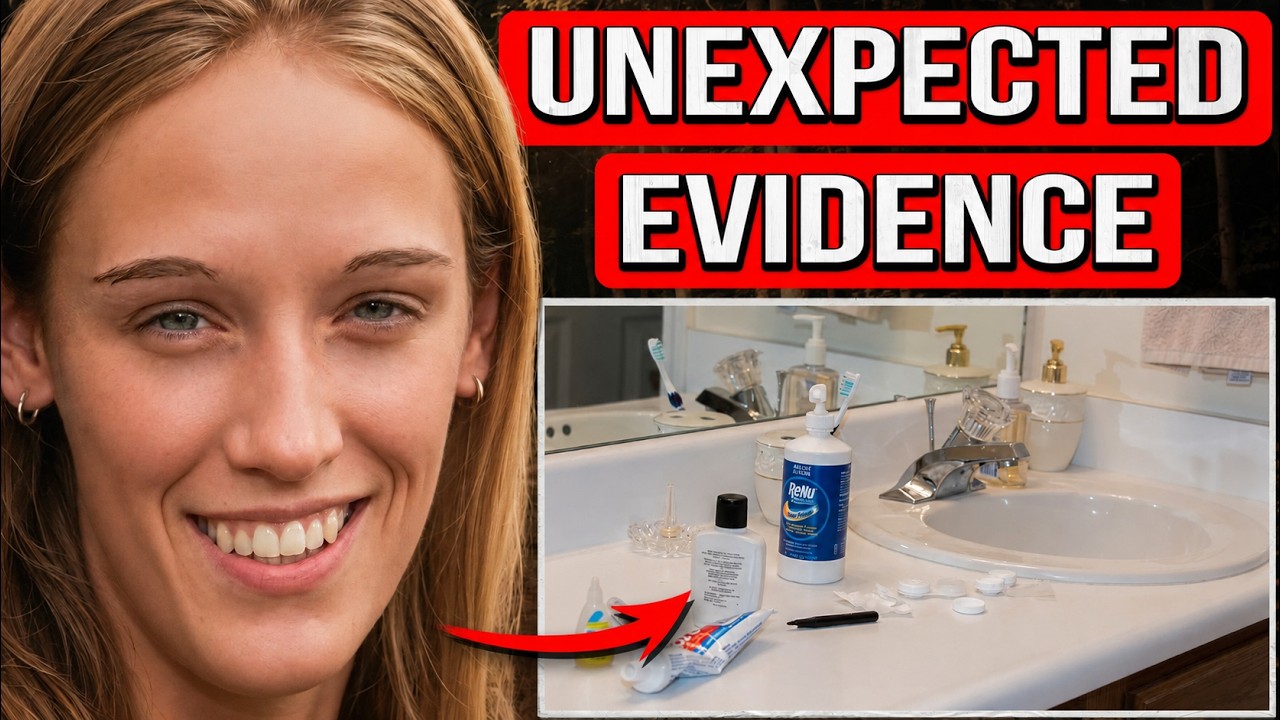
If so, she had not been getting ready for bed when Raven left, which was a major contradiction in the story. Then the detective noticed something else, and that observation became the turning point in the case. On a shelf in the bathroom, Janet’s contact lens case was sitting open. Based on that, Detective Soul believed the lenses were not inside, which meant Janet clearly could not have been in bed getting ready for sleep while still wearing her contacts.
Anyone who wears contact lenses knows they have to be taken out before bed, or the eyes will be badly irritated by morning. Police now had strong reasons to believe Raven had given them false information. Detective Soul decided to look for proof that would be impossible to argue with. He contacted an ophthalmology expert and asked whether, after all those years, it would still be possible to detect contact lenses on Janet’s eyes.
The expert confirmed that it was. Police obtained a warrant to exhume Janet’s body, and all they could do was wait for the results. The examination was expected to take about six months because the process was extremely complex. Since there was almost nothing left of the lenses or the eyes themselves, the expert had to run an entire experiment.
He placed contact lenses on pig eyes and buried them in the ground for at least six months so he would know what to look for. While waiting for results, Soul noticed another strange detail. The couple had two dogs that lived inside the house, but at the time of the murder, for some reason, they were in the backyard with the door closed behind them. If Raven was telling the truth and Janet really had been going to bed when he left, why would she have left the dogs outside?
And why had Raven himself not noticed it? These details clearly did not help Raven, but police still had serious obstacles. The fingerprint, DNA on the door frame, and shoe print found at the crime scene had never been matched to anyone, and that created a real problem. Detective Soul understood the fingerprint and DNA sample may not have been connected to the murder at all.
The genetic material on the door frame could have been left there by anyone long before Janet was killed. The same was true of the fingerprint on the cabinet door. But the shoe print near Janet’s body was much harder to explain because it had been made in blood, which meant there was a strong chance it had been left by the killer. Soul decided to check it.
He started looking into everyone who had entered that room after the body was found, and before long, he made a fairly unexpected discovery. The print matched the shoe of one of the paramedics who had arrived at the scene before police. The man had apparently accidentally stepped in a pool of blood, and police had recorded the shoe print as evidence. Based on all this new information, Detective Soul decided to arrest Raven and try to bring the case to justice.
He knew they didn’t have a single piece of direct evidence against him, but the long list of circumstantial evidence gave prosecutors hope that they could hold him accountable. Raven was taken into custody on February 1, 2010, almost five years after Janet’s death. He continued to insist he was innocent, and prosecutors began preparing the case for trial. At the same time, they were still waiting for the ophthalmology results.
In July 2010, the expert finally announced that Janet had indeed been wearing contact lenses when she died. Police now had reliable confirmation that Janet could not have gone to bed with her contacts still in, which meant Raven had lied to them. The trial did not begin until three years later, and Raven spent all that time behind bars. He was charged with first-degree murder, but the prosecutor chose not to seek the death penalty, a decision made at Janet’s family’s request.
They didn’t want Janet’s son to end up with two dead parents. During the trial, the prosecution argued that Raven had killed his wife because he wanted out of the marriage without taking a financial hit. If they divorced, he would not only have to split assets but also pay child support. Prosecutors also pointed to the life insurance policy as another possible motive.
The $500,000 policy could have solved all his financial problems. On top of that, Janet may have discovered she was pregnant and told Raven, which could have meant another financial obligation, including child support, and may have only strengthened his motive. According to the prosecution, everything happened before Raven left to play soccer. Janet may have been downstairs washing dishes when Raven called her up to the office on the second floor.
When she was there, he immediately stabbed her three times, catching her completely off guard, which would explain why there were no signs of a struggle. After that, he went to the game, stopped at a gas station to buy a drink and create an extra layer of alibi, then returned home and staged the 911 call. The defense pointed to the lack of direct evidence and argued that police had done a very poor job investigating. They emphasized that after all those years, investigators still had not identified the person who left the DNA and fingerprint found at the crime scene.
Raven’s attorneys insisted those traces could have belonged to the real killer. Vanessa, the defendant’s second wife, also testified at the trial, telling the court about the problems in their relationship, his aggression, and the time he had physically abused her. The trial lasted five weeks, but in the end, everyone involved was met with an unpleasant turn. Eleven jurors voted to find Raven guilty, while one believed there was still reasonable doubt.
Since the verdict had to be unanimous, the judge was forced to declare a mistrial, and both sides began preparing for a new trial. That second trial never happened. The prosecutor decided to offer Raven a deal: plead guilty to second-degree murder and receive a much shorter sentence. The deal involved a special type of plea where the defendant technically continues to maintain his innocence but admits the prosecution has enough evidence to convict him.
Under that deal, Raven would have faced about 24 years in prison, but he refused. The prosecution understood that in a second trial, their chances of securing a conviction might be even lower. So, a year later, they offered him another deal, this time on a manslaughter charge. Raven accepted, but explained he was only doing it because he didn’t believe he could get a fair trial and didn’t want to spend the rest of his life in prison for a crime he said he had not committed.
Before the sentence was handed down, he once again insisted he had not killed his wife. The judge sentenced him to 95 to 123 months in prison. By that point, Raven had already spent several years behind bars, and that time was credited toward his sentence. As a result, he was released in late 2017, about three and a half years after reaching the plea agreement.
He was thirty-eight at the time of his release and soon returned to Utah. He changed his last name and continued raising his son, who had been in the custody of Raven’s mother while he was incarcerated. Janet’s relatives tried to have custody transferred to them, but those efforts went nowhere. As of now, Raven remains a free man.
He continues to live in Utah and keeps himself away from media attention, even though journalists still try to interview him from time to time. In 2025, he agreed to answer reporters’ questions and said he still insists he is innocent. He also agreed for the first time to take a polygraph test, and the examiner found no signs of deception. His son, now an adult, said he has never considered the possibility that his father was involved in his mother’s murder and believes the accusations against him are unfair.
In total, Raven spent eight years behind bars, and that fact was deeply painful for Janet’s relatives. Still, they had agreed to the deal themselves when the prosecutor presented it as an option, because they were exhausted after the first trial and did not want to go through a second one, especially knowing that Raven had a real chance of being acquitted and walking away without any punishment at all. In the end, the case reached a conclusion, even though some people still believe Raven may truly have been innocent.
