In 1949, an aging cowboy named Jim McDaniels signed a sworn affidavit that would challenge one of the most famous deaths in American history. McDaniels, a man who had ridden with the Jesse Evans gang during the Lincoln County War, declared with absolute conviction that he could face any stranger and know, without a doubt, whether he was looking at Billy the Kid. If McDaniels was telling the truth, then Sheriff Pat Garrett, the coroner’s inquest, and every history book ever written about the Old West were wrong. The accepted story had been a meticulously maintained falsehood.
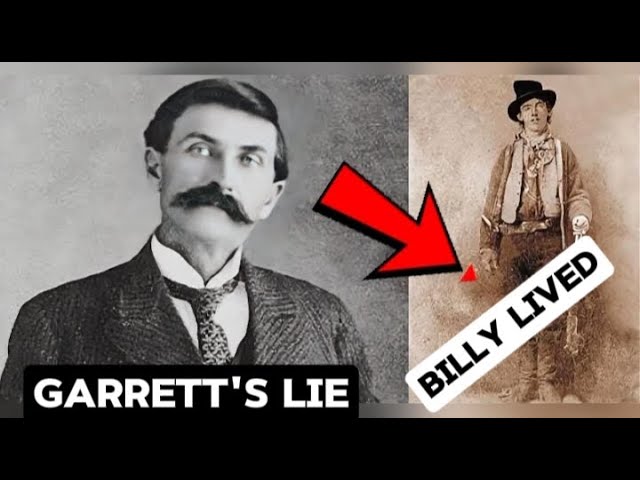
The official account was straightforward. On the night of July 14th, 1881, in Fort Sumner, New Mexico, Sheriff Pat Garrett stepped into the pitch-black bedroom of Pete Maxwell after midnight. A young man entered the darkness from outside and asked, in Spanish, “Keness? ” Garrett fired his pistol twice into the gloom.
Billy the Kid fell dead at the age of twenty-one. A coroner’s jury affirmed the identity of the body. The corpse was buried the following day. For nearly seven decades, no one with any real authority had ever seriously challenged this sequence of events.
Then a Texas attorney named William Morrison began looking for witnesses who had actually known the outlaw during his lifetime. Jim McDaniels was no casual old-timer telling tall tales. He had been present in December 1875 when his gang traded gunfire with US cavalry soldiers in a saloon at Las Cusus, leaving multiple men dead. He had stolen cattle from John Chisum’s ranch, fought in range conflicts, and managed to outlive nearly all of his companions.
By 1949, living quietly in Round Rock, Texas, he was among the last living men who could honestly claim to have known Billy the Kid personally from those violent years. Morrison had found McDaniels while investigating an extraordinary assertion. In 1948, an elderly Florida resident named Joe Hines told Morrison that Billy the Kid was still alive, living in Texas under the alias of “Brushy Bill” Roberts. Hines claimed that he himself was actually Jesse Evans, McDaniels’s former gang leader.
Morrison located Brushy Bill, who ultimately confessed to being Billy the Kid. The old man alleged that Pat Garrett had killed the wrong person—a gunfighter named Billy Barlow—and covered up the mistake to collect the reward money. Morrison needed corroboration. He arranged for Brushy Bill to meet the men who had known Billy during the war years.
In 1949, Jim McDaniels stood face to face with the grizzled Texan claiming to be the legend. McDaniels scrutinized him intently. Brushy Bill carried twenty-six bullet and knife scars that matched the wounds Billy the Kid was said to have received over his violent career. He could escape from handcuffs, a trick that Billy was famously able to perform.
He recounted detailed stories of the Lincoln County War, described his escape from the courthouse, and knew particulars that only an insider could have known. McDaniels posed probing questions. What happened at this location? Who was there during that incident?
He was testing whether this man was genuine or merely a clever impostor who had memorized published reports of the Kid’s life. Then McDaniels signed a sworn statement declaring his belief that Brushy Bill Roberts was Billy the Kid. He committed his reputation to paper in a legal document affirming that this was Henry McCarty, the same outlaw he had known seventy years earlier. Three other men provided similar sworn testimony.
Seog Galagos, Marshall Aels, and José Montoya, all of whom had personally known Billy, also endorsed Brushy Bill. Two additional witnesses refused to sign the statement, but neither man contested the claim either. Four elderly witnesses, veterans of the Lincoln County War, had identified an old man as Billy the Kid. On one side sat Pat Garrett’s 1881 story and generations of written history.
On the other sat four sworn affidavits from 1949 and memories stretching back seventy years. The uncertainties surrounding Garrett’s tale were genuine. Deputy John Poe allegedly told Garrett that he had shot the wrong man. Deputy Tom McKini also doubted the identification.
Garrett himself maintained that he had recognized Billy’s voice in the dark. The burial had been completed within a day. No relative ever confirmed the identity of the corpse. But Brushy Bill’s account had its own inconsistencies.
Official documents indicated his birth year was 1879, not 1859, which would make him far too young to be Billy the Kid. Scholars highlighted chronological discrepancies in his stories. Questions were raised about his ability to read and write. Despite these doubts, William Morrison submitted an application for a pardon for his client.
Governor Thomas Mabry denied the request on November 29th, 1950. Four weeks later, Brushy Bill died of a heart attack in Hico, Texas. Jim McDaniels died around 1950 as well. He never retracted his claim that he had looked into the face of Billy the Kid one final time.
In 1990, researchers from the University of Texas concluded that Brushy Bill was a 93 percent match for Billy the Kid using facial comparison software. Skeptics responded that the computer analysis was not conclusive proof. The question persists. Could Jim McDaniels genuinely have identified Billy the Kid after seven decades of separation?
The historical consensus is largely settled. Most academics support the 1881 account. Billy died young in Fort Sumner, and the case has been considered closed. Yet the notion that he evaded death and grew old under an alias is a profoundly compelling one.
Jim McDaniels was convinced. He put his name to a sworn affidavit attesting to it. Whether correct or mistaken, his statement endures as one of the most fascinating clues regarding the true events in Fort Sumner. The document is still held at the Billy the Kid Museum in Hico, Texas.
Four aged men, survivors of the Lincoln County War, pledged their honor by signing their names for Brushy Bill Roberts. Were they accurate? We will likely never know for certain, but Jim McDaniels went to his grave maintaining that Billy the Kid lived on, and that he had clasped his hand one final time. In a museum in Hico, Texas, there lies a piece of paper that invites the visitor to question everything.
A document signed by men who had nothing left to gain and everything to lose by telling a lie. Perhaps the real end of Billy the Kid isn’t found in a grave in Fort Sumner, but in a mystery that lives on—the question of what would have happened if the Kid got away, and if the last man who truly recognized him was telling the truth all along.
