On the morning of June 4, 1942, American dive bombers came screaming down from the sky above the Japanese carrier force stationed north of Midway Atoll. In a span of six minutes, three of the Imperial Japanese Navy’s finest carriers—Akagi, Kaga, and Soryu—took bomb hits that ripped straight through their flight decks. All three were finished. The flames that engulfed them could not be extinguished.
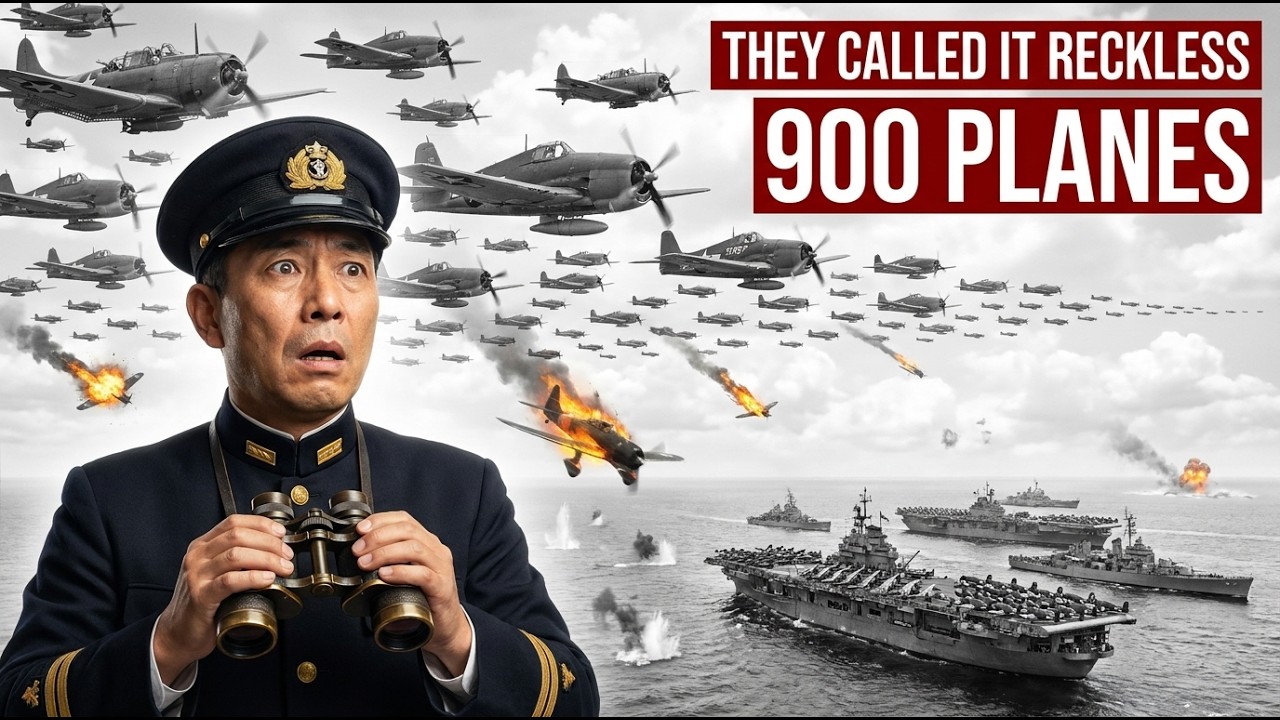
The two navies had confronted the same hazard and come away with completely opposite answers. Japanese officers observing an American flight deck in 1942 saw nothing but carelessness: loaded aircraft left out in plain view, fuel lines running across an exposed surface, a single lucky strike enough to set the whole thing ablaze. The Imperial Japanese Navy tucked its planes behind steel walls, shut inside enclosed hangars beneath the deck where weather and enemy fire could not reach them. The Americans took the gamble and left their aircraft up top, where they could be shifted, armed, and sent aloft in a hurry.
The Japanese solution had taken shape back in the 1920s, when the first generation of fleet carriers was on the drawing board. To the men who designed Akagi and Kaga—both rebuilt from battlecruiser hulls after the Washington Naval Treaty outlawed finishing them as battleships—the flight deck was nothing more than a runway. Planes were supposed to stay below in hangars running almost the full length of the ship, walled in on every side, where they could be serviced, fueled, and armed away from wind and spray. Akagi housed her air group in two stacked hangar levels divided by thin steel decks, with elevators that lifted one or two planes at a time.
Ventilation was mechanical, forced, and in short supply. The walls could not be opened to the sea. Kaga followed the same pattern. Soryu and Hiryu, designed as carriers from the keel up, likewise had enclosed hangars.
The design rested on a firm belief: armed and fueled aircraft belonged behind steel walls. The American method arose from a different set of pressures. The U. S.
Navy had fewer carriers than Japan, and through most of the 1930s they were smaller. The Yorktown class, which came into service in the late 1930s, had just one hangar beneath the flight deck, smaller than the combined Japanese hangar spaces and holding fewer planes on its own. But the American hangar possessed something the Japanese ones did not: folding steel curtains running along both sides of the ship, set in tracks and worked by hand to let outside air in. Once open, the hangar stopped being a tightly sealed compartment.
Fuel vapors, heavier than air and inclined to collect in enclosed spaces, could escape upward through the flight deck gratings rather than building up inside. The American system also allowed a practice the Japanese found unacceptable. Aircraft that would not fit in the hangar were left on the flight deck, wings folded where the design permitted, armed and fueled in rows with barely enough room for the next launch. They called it deck parking.
It handed American carriers a significant operational edge: each ship could carry and operate a larger air group than the hangar alone could accommodate. A Yorktown-class carrier could manage roughly 80 to 90 aircraft with the deck full, while Japanese fleet carriers of comparable displacement, working from enclosed hangars without permanent deck parking, usually ran 60 to 65. Beyond capacity, deck parking brought flexibility. American deck crews could rearm and refuel planes in the open, handling several machines at once without waiting on the elevator cycles that dictated everything inside an enclosed hangar.
The price was genuine, and the Japanese were correct to spot it. An armed, fueled aircraft sitting on an open flight deck was ammunition waiting for a spark. One bomb or a stray fragment of anti-aircraft shrapnel could set off a chain of fires and explosions across the whole deck. Aviation gasoline does not so much burn as detonate when its vapor mixes with air in the right proportion.
Every American carrier captain knew this. The Navy accepted the arrangement because the alternative meant fewer planes per ship, and in the spring of 1942, with Lexington lost at the Coral Sea and Saratoga in a repair yard on the West Coast, the fleet lacked enough flight decks to absorb that reduction. The Japanese system carried its own price, less visible because it was paid in time rather than on the deck. Arming, fueling, and servicing aircraft inside enclosed hangars, then bringing them up to the flight deck by elevator one or two at a time, was slow.
The bottleneck was the elevator, not the pace of the crew. On an American carrier, rearming took place on the flight deck in open air, with ordnance crews working on half a dozen aircraft at once. The Japanese cycle ran slower not because Japanese sailors were slower, but because the design squeezed operations into spaces that permitted only a few aircraft to move at a time. On the morning of June 4, that clock ticking inside the Japanese hangars became one of the deciding factors at Midway.
Vice Admiral Chuichi Nagumo, commanding the First Air Fleet from Akagi, had sent 108 aircraft against Midway Island at dawn and had gotten word that a second strike was needed. He had held back a reserve strike force armed for attacks on enemy ships. Torpedo planes aboard Akagi and Kaga carried torpedoes; the reserve dive bombers carried bombs suited to hitting ships. No scouts had yet reported enemy surface vessels.
Around 7:15, Nagumo gave the order to rearm the torpedo planes with land-attack bombs for a second strike on Midway. The rearming got underway inside the enclosed hangars. Then a scout plane from the cruiser Tone, which had launched late because of a catapult malfunction, reported American surface ships to the northeast. The report was vague and made no mention of carriers.
Nagumo wavered, then called off the rearming order. A correction came through: there was a carrier in the American formation. Nagumo now faced a decision historians have argued over ever since: strike at once with whatever could be readied, or recover the returning Midway strike force and mount a coordinated attack. He chose to recover first.
The planes in the hangars had been fueled and armed, and ordnance handling was in progress. The American carriers faced no such dilemma that morning. Enterprise and Hornet started launching their strikes shortly after 7:00, pushing aircraft off the flight deck where they had sat armed and fueled since before dawn. The process was slow and chaotic, with deck crews wrestling loaded aircraft across a steel surface slick with oil and salt spray.
Yorktown launched her group separately about an hour later. The American system was slower at getting a full strike airborne than the Japanese system at its best, but the aircraft that took off carried what they had, with no need to go below and swap weapons. The dive bombers came in from two directions at almost the same instant. Lieutenant Commander Wade McClusky, leading the Enterprise air group, had flown to the expected position of the Japanese fleet and found nothing but empty ocean.
A large number of his airmen had already flown past the point where they could be sure of getting back. Acting on instinct, McClusky swung his formation to the southwest and widened the search, until a white streak etched across the sea far below caught his eye. It was the wake of the destroyer Arashi, which had left the formation that morning to depth-charge the American submarine Nautilus and was now racing at top speed to catch up with the carriers. McClusky turned to follow that wake, and it brought him straight to Kido Butai.
Around 10:22, Lieutenant Richard Halsey Best, commanding Bombing Squadron Six from Enterprise, nosed his Douglas SBD Dauntless over into a steep dive at the closest carrier beneath him. Since takeoff Best had been flying with a defective oxygen breathing apparatus; the soda lime canister that was supposed to purify the recycled air was leaking caustic powder into his mask. For most of the climb he had been coughing up blood. He kept flying regardless.
As he started his dive, he noticed that the scout squadron ahead had already gone after Kaga, so he swung his three aircraft toward the next carrier in the line. That ship was Akagi, the flagship from which Nagumo directed the whole strike force. Akagi took a single direct hit amidships that punched through the flight deck into the upper hangar, along with two near misses that did damage. What followed is not in dispute.
The blast ripped through a hangar packed with aircraft. Fuel from ruptured lines and wing tanks fed the flames. Munitions that were being handled during the rearming started to go off in the heat. The enclosed hangar, built to shield the planes from weather and salt spray, held the heat and smoke inside.
The steel bulkheads let temperatures climb. The mechanical ventilation system, which had moved air all morning, now drove superheated air and smoke back through the very same ducts. Within the hour the hangar was burning from bow to stern, and the ship could not be saved. In those same minutes, Kaga took four bomb hits from other Enterprise dive bombers.
Every bomb traced the same route through the flight deck into the enclosed hangar. One bomb landing near the island and bridge killed Captain Jisaku Okada and many of the ship’s senior officers, crippling damage control. A fuel truck on the flight deck caught fire, spreading burning fuel along the bow. Kaga burned for nine hours before she went down, carrying more than 800 of her crew with her, the heaviest death toll of any ship lost at Midway.
At almost the same moment, three bombs from Yorktown’s Bombing Squadron Three struck Soryu. The squadron commander, Lieutenant Commander Maxwell Leslie, had lost his bomb to an electrical failure on the way in and dived on Soryu without one, holding his dive steady to lead his pilots. They did not miss. Three hits, three penetrations into the hangar, the same fire in the same enclosed space.
Within minutes Soryu was engulfed by fires and secondary explosions that could not be controlled. She went down that evening with more than 700 of her crew. Captain Ryusaku Yanagimoto stayed aboard and perished with the ship. By 10:30, three of the six carriers that had struck Pearl Harbor six months before were burning past any hope of recovery.
The attacks had lasted no more than six minutes. The enclosed hangars had turned each hit into a death sentence. Once fire reached a Japanese hangar full of fueled aircraft, the loss of the ship was all but certain. The only carrier of the Japanese force to survive, Hiryu, had been stationed several miles north of the other three.
That afternoon her air group commander sent two counterstrikes against the American carriers. Eighteen dive bombers located Yorktown around noon and landed three hits, one of which tore through the boiler uptakes and put out the fires in two boilers. Yorktown lost power and came to a dead stop, smoke pouring from her. Her crew set to work with a speed and discipline that showed their training and doctrine.
Damage control parties sealed the ruptured uptakes, relit the remaining boilers, connected steam lines, and shifted power around. Within an hour she was making 19 knots; within two, she was up to 20 knots and flying aircraft again. The gasoline lines had been purged with carbon dioxide, following the procedure worked out after Lexington was lost. Admiral Nimitz’s report on Midway later observed that the lack of gasoline fires aboard Yorktown was probably the result of the effective use of carbon dioxide in the fuel system.
Yorktown had taken three bomb hits and lived because her crew had a procedure derived from studying an earlier loss, and because her hangar could be ventilated. Japanese pilots returning for the second strike saw a carrier under way and conducting flight operations and took it for a different ship. Ten torpedo planes attacked; two torpedoes struck Yorktown’s port side. She heeled sharply to port, reaching 26 degrees, and the captain, fearing she would capsize and trap the crew below, gave the order to abandon ship.
Yet Yorktown did not go down. She stayed afloat through the night and into the following day. A salvage party came aboard on June 6, and that afternoon the Japanese submarine I-168 located her and put two torpedoes into her hull. Yorktown finally capsized and sank on the morning of June 7, three days after the first bomb struck her flight deck.
Hiryu herself was discovered late that afternoon. Her deck was crowded with aircraft being readied for a third strike when four bombs from Enterprise’s air group found her. The enclosed hangar that had destroyed Akagi, Kaga, and Soryu now destroyed Hiryu. The fires burned through the night.
Rear Admiral Tamon Yamaguchi, who had commanded the Second Carrier Division from Hiryu’s bridge and had launched the day’s only counterstrikes, decided to stay aboard. Captain Tomeo Kaku remained with him. Both men went down with the ship when she was scuttled the next morning, together with nearly 400 of her crew. The pattern could not be mistaken.
Four fleet carriers, all with enclosed hangars, all struck by American bombs that broke through the hangar deck, all destroyed by fires that could be neither ventilated nor controlled. The loss of those four carriers cost Japan more than 2,000 men. The closed hangar, the fueled and armed aircraft, the secondary explosions, and the weaker Japanese damage control all played a part in the destruction. No one factor accounts for Midway, but the enclosed hangar made every hit unsurvivable.
The American system showed its worth once more on June 19, 1944, at the Battle of the Philippine Sea. The Japanese fleet carrier Taiho, built with an armored flight deck and improved damage control, was the newest and largest carrier Japan had ever constructed. She had been reinforced against bomb damage on the basis of Midway’s lessons, but her hangars were still enclosed. Hit by a single torpedo from the submarine Albacore near the aviation fuel tanks, she suffered cracked fuel lines.
At first the damage looked minor; Taiho kept up flight operations. The damage control officer, trying to clear the gasoline vapors, ordered the ventilation system opened and the forward elevator pit used as a vent. The result was the reverse of what he intended. The vapors traveled through the ventilation system across the whole ship.
Roughly six hours after the torpedo struck, a spark set off the pooled vapors. The blast was devastating. Taiho, struck by just one torpedo and never even engaged by an American plane, went down approximately ninety minutes later. In that same engagement, the Japanese sent out about 450 aircraft in four waves against an American fleet of 15 carriers holding roughly 900 planes.
American radar picked up the Japanese planes at 60 to 70 miles out, which gave the combat information centers over 30 minutes to vector fighters at each wave as it came in. F6F Hellcats, armored and fitted with self-sealing fuel tanks, intercepted the Japanese formations well before they could close on the American ships. Of the aircraft Ozawa sent out that day, close to 300 never came back. American losses in the aerial fighting totaled 29 planes.
The Americans nicknamed it the Great Marianas Turkey Shoot. For the Japanese, the tactical gamble had rested on range. Japanese carrier planes had been built to outdistance their American rivals, trading armor for reach. Admiral Ozawa intended to hit the American fleet from a distance beyond Mitscher’s reach.
None of it mattered. Deck parking, radar-guided fighter direction, the American training pipeline, and the sheer quantity of Hellcats aloft rendered the range advantage worthless. Being able to strike from farther out meant nothing if those strikes were wiped out before they ever got to the ships. At dusk on June 20, Mitscher threw a strike at extreme range, fully aware his pilots would have to come back in the dark and that many would run out of fuel before reaching the carriers.
They located and sank the carrier Hiyo, struck by a torpedo from a TBF Avenger, and damaged several other vessels. The flight home was the ordeal Mitscher had foreseen. He gave the order for the fleet to light up—every searchlight, navigation light, and deck-edge lamp—knowing Japanese submarines might spot them. Pilots had to ditch beside the carriers because the decks could not take them in quickly enough.
Hellcats were shoved over the side to clear space. Destroyers wove among the sinking planes, pulling pilots out of the water. That evening Mitscher lost around 80 aircraft and nearly 50 aircrew to fuel starvation and darkness. It was a calculated exchange of equipment and lives for the opportunity to wipe out the enemy fleet.
The American carrier system could soak up that kind of loss. No other navy in 1944 could take such losses and still be operating the following morning. The soda lime that had scarred Dick Best’s lungs never recovered. He coughed up blood during the dive on Akagi and for weeks after.
Diagnosed with tuberculosis in 1943, his flying days were over. He was medically retired from the Navy in 1944 at 34, bearing the Navy Cross and the Distinguished Flying Cross, and he never flew a Navy aircraft again. He went on to work as a civilian researcher, first with Douglas Aircraft and afterward with the RAND Corporation, and died at home on October 28, 2001, at the age of 91. Admiral Nagumo, who had watched the crisis play out in the enclosed hangars below him, took his own life on Saipan on July 6, 1944, two weeks after the Battle of the Philippine Sea, as the island fell to American troops.
The Japanese had been correct in 1941 that an armed and fueled aircraft sitting on an open flight deck was a danger awaiting a spark. The Americans saw that same danger and drew a different lesson. The solution was not to hide aircraft below decks behind steel walls. The solution was more aircraft, more flight decks, tougher damage control, radar-directed air defense, and an industrial and training system capable of replacing losses faster than the enemy could cause them.
The closed hangar sought to keep fire out, and when it failed, it made survival impossible. The open hangar treated fire as unavoidable and gave the crew a fighting chance against it. Midway demonstrated how catastrophic a carrier could become once bombs tore into hangars packed with fueled and armed aircraft. The Philippine Sea demonstrated the operational payoff of the large deck, the radar-guided defense, and the growing industrial machine.
By 1944, when Japanese pilots surveyed the American formation and tallied the aircraft overhead, they counted more planes above those flight decks than the whole Japanese carrier force had brought into the battle. The Imperial Navy had looked at the American fleet in 1941 and branded it reckless. They had neglected to count the decks.
By 1944, there were enough decks to settle the argument, and every one of them carried more aircraft than any Japanese carrier ever had.
