The famous pink suit, the pillbox hat, the perfect smile frozen in grainy footage from Dallas. That is the image most people hold of Jacqueline Kennedy. But behind that carefully composed surface was a woman who carried secrets that would have shocked the public if they had ever come to light. She was a chain-smoker who hid three packs a day from the cameras, a wife who took money to stay married, and a woman whose own husband allegedly arranged for topless photographs of her to be published.
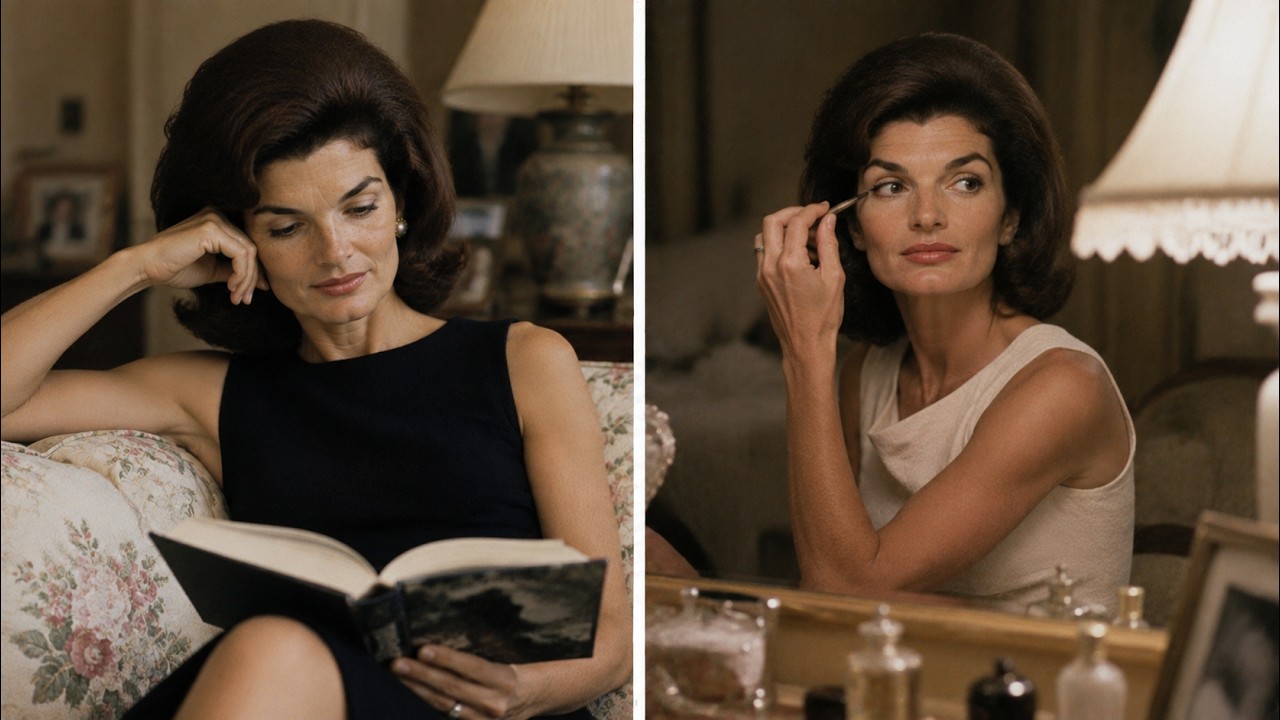
Her life, compiled from the accounts of those closest to her, reveals fifteen strange truths about the private world of Jackie Kennedy. Jackie Kennedy was among the most photographed women on the planet in the early 1960s, yet there was one thing none of those thousands of images ever captured: a cigarette in her hand. She was a heavy smoker, consuming three packs a day for more than forty years, and she went to extraordinary lengths to keep her habit out of sight. Long before image control became standard practice, Jackie understood its power.
She knew that being photographed smoking would damage the elegant, pure persona she had worked so hard to build. Her methods were direct. She would literally ask photographers to put their cameras down if she wanted to smoke, and Secret Service agents were instructed to help her conceal it whenever she lit up in public. Even at private events where cameras might be present, she stayed vigilant.
Close friends and family knew about the habit, of course, but the general public remained largely unaware of how severe her addiction was. That lifelong addiction finally caught up with her in 1994 when she was diagnosed with non-Hodgkin’s lymphoma, a cancer that spread to her brain and liver. Doctors believed her decades of heavy smoking played a significant role in her illness. Jackie died on May 19, 1994, at age sixty-four, and only then did the full extent of her smoking habit become widely known to the public she had so carefully kept it from.
Her marriage to John F. Kennedy was far from the fairy tale it appeared to be in public. By the mid-1950s, it had reached a breaking point due to his constant infidelities, and she was seriously considering divorce. This created a serious problem for the Kennedy family.
An absolute politician had almost no chance of winning the presidency in that era if he was divorced, and John Kennedy’s father, Joseph Kennedy Sr. , had already invested enormous sums of money and political capital into making his son president. When Joe Kennedy learned that Jackie was preparing to end the marriage, he realized he had to move quickly to prevent a scandal that could destroy everything he had worked for. He made Jackie an offer she could not refuse: one hundred thousand dollars if she agreed to stay married to John and help him win the 1960 election.
Adjusted for inflation, that sum is worth more than a million dollars today, an enormous amount to pay someone simply to remain in a marriage. Jackie accepted the deal, but she did not do so quietly or without conditions of her own. She made clear this was a purely commercial arrangement, and she expected certain things in return for playing the role of the devoted political wife. The payment became an open secret within the Kennedy inner circle and fundamentally changed her relationship with the family.
She now held leverage, which she used to negotiate a level of freedom and independence she had never known before. Joe Kennedy kept his promise and made sure Jackie received the money, and Jackie kept her side of the agreement by staying in the marriage and becoming one of John Kennedy’s most effective political assets. Jackie was not naive about her husband’s affairs, and she certainly was not the type to sit and wonder what was happening behind closed doors while she was away. She came up with a solution that was both clever and surprisingly bold: she planted her own informant inside the office of Evelyn Lincoln, John Kennedy’s personal secretary.
This was not simply gathering gossip. Jackie had someone whose specific job was to monitor the president’s activities and report to her who came and went, especially the women who visited the Oval Office and how long they stayed. This arrangement gave Jackie an intelligence network at the heart of the White House, allowing her to keep track of her husband’s extramarital activities without having to confront him directly or rely on rumors. Evelyn Lincoln was fiercely loyal to John Kennedy and managed his schedule with total discretion, which made her office the perfect vantage point for observing everything that happened.
Jackie’s spy would note down suspicious appointments, late visits, and any women who seemed to have frequent, unusual access to the president. This information was quietly passed along to Jackie, giving her a comprehensive picture of what her husband was doing at any given time. The existence of this surveillance system shows how far Jackie was willing to go to maintain a sense of control in a marriage that had long since lost any claim to fidelity. It also proved she was far savvier and more politically astute than many people at the time believed.
Rather than simply accepting her situation or causing emotional scenes that could damage the Kennedy presidency, she gathered information and used it to protect her own interests and make informed decisions about how to handle her increasingly complicated role as First Lady. Jackie Kennedy’s seemingly effortless elegance and perfect figure were not entirely natural. She was born with one leg shorter than the other by a quarter of an inch, a condition known as leg length discrepancy, which can cause problems with balance, posture, and even back pain if left uncorrected. Most people with this condition simply live with it or occasionally wear a lift in one shoe.
But Jackie took a far more comprehensive approach. She had custom lifts built into every single pair of her shoes, ensuring her posture stayed perfectly straight and her walk remained completely natural no matter what she wore or where she went. This was not just a few pairs of formal shoes. Jackie had an enormous collection of footwear, and every pair had to be specially modified to accommodate the difference in her leg lengths.
The lifts were carefully designed to be invisible from the outside, so no one would ever suspect she was wearing anything other than ordinary shoes. Her shoemakers and personal staff were sworn to complete secrecy about this detail, because Jackie was extremely protective of her privacy regarding any physical imperfection. The fact that she managed to keep this hidden for so long is remarkable, given how closely she was watched and photographed throughout her adult life. Fashion magazines analyzed every detail of her outfits, and shoe designers tried to imitate her style.
Yet none of them noticed or mentioned the custom modifications built into her shoes. This level of attention to detail shows how committed Jackie was to maintaining a flawless public image, even if it meant going to extraordinary lengths to conceal something as minor as a slight difference in leg length. Long before she became a symbol of elegance and refinement, little Jacqueline Bouvier was a handful for her teachers and school administrators. Her teachers at Miss Chapin’s school in New York described her as diabolical, a harsh criticism for educators in the 1930s to level at a student from a wealthy family.
Jackie was intelligent and curious, but she also had a mischievous streak that got her into trouble frequently, especially during geography lessons, which she found exceptionally boring. She would disrupt class by talking out of turn, passing notes to classmates, or simply refusing to pay attention to anything the teacher was explaining about maps and countries. Her behavior became such a recurring problem that she was sent to the headmistress’s office on numerous occasions, something that would have been deeply embarrassing for most students but did not seem to affect Jackie much. The headmistress would lecture her about proper behavior and the importance of setting a good example for the other girls, but these conversations rarely had any lasting effect.
Jackie would return to class, behave for a short while, and then find herself in trouble again before long. Her teachers noticed she was clearly intelligent and capable of producing excellent work when she actually applied herself, which made her disruptive behavior all the more frustrating for them. Part of the problem was that Jackie was genuinely bored by subjects that did not interest her, and she saw no reason to pretend otherwise just to please her teachers. This rebellious streak and refusal to conform to expectations actually served her well later in life, when she had to navigate the complex worlds of politics and high society on her own terms.
Jackie Kennedy’s relationship with photographer Ron Galella became one of the most famous bitter battles between a celebrity and a paparazzo in American history. Galella was obsessed with photographing Jackie. He followed her everywhere, jumping out from behind bushes, chasing her through the streets, and even following her children to school and the playground. His tactics became so aggressive and intrusive that Jackie finally decided to take legal action against him in 1972, filing a lawsuit aimed at putting a permanent end to his harassment.
The first trial resulted in a restraining order requiring Galella to stay at least fifty yards away from Jackie and seventy-five yards away from her children. But he violated those terms repeatedly, continuing to photograph her whenever he got the chance. Jackie had to take him back to court in 1981 after he kept breaking the restraining order. This time, the judge had no patience at all for his excuses.
The second ruling was far more severe. Galella was forbidden from photographing Jackie or her children ever again under any circumstances. If he violated this order, he would face serious legal consequences, including the possibility of jail time. This effectively ended his ability to make money from pursuing the Kennedy family, which had been his primary source of income for years.
The legal battle lasted twenty-six years in total and cost both sides enormous sums in legal fees. But Jackie was determined to protect her privacy and her children’s safety, no matter the cost. Galella later claimed he was just doing his job as a photojournalist, but the courts disagreed and upheld Jackie’s argument that his behavior went beyond journalism into harassment and stalking. One of the most shocking betrayals Jackie Kennedy experienced did not come from strangers or enemies.
It allegedly came from her own husband, Aristotle Onassis. In 1972, topless photographs of Jackie sunbathing on Skorpios, Onassis’s private Greek island, suddenly appeared in an Italian magazine and quickly spread to publications worldwide. The photos caused a scandal and were deeply humiliating for Jackie, who had always been careful to maintain her dignity and privacy. What made the situation worse was that many people close to the couple believed Onassis himself had orchestrated the entire thing as a form of revenge against Jackie for her uncontrollable spending habits.
By that point in their marriage, Jackie was spending enormous sums of Onassis’s money on clothes, jewelry, and art, reportedly running up bills of more than a million dollars in a single year. Onassis was furious about this spending and felt Jackie was exploiting him, but instead of confronting her directly, he allegedly decided to humiliate her publicly by arranging for paparazzi to gain access to his supposedly secure private island. The timing of the photos was too perfect to be coincidence, and several of Onassis’s staff members later indicated he had deliberately allowed the photographers onto the property. Jackie was devastated by the betrayal and the fact that her private photos were now being published in magazines around the world for everyone to see.
The incident permanently damaged her relationship with Onassis, and although they remained married until his death in 1975, the trust between them never fully recovered. After leaving the White House and later ending her marriage to Aristotle Onassis, Jackie surprised many people by choosing a career in book publishing, eventually becoming an editor at Doubleday. One of her most unexpected projects came in the mid-1980s when she was assigned to work on Michael Jackson’s autobiography, later published as Moonwalk in 1988. Michael Jackson was at the height of his fame following the enormous success of Thriller, and he was notoriously difficult to reach, let alone convince to sit down for the detailed conversations required for a memoir.
Doubleday’s editors were frustrated because Jackson kept ignoring their phone calls and canceling scheduled meetings, making the book nearly impossible to write. That was when Jackie stepped in, using her unique combination of charm, patience, and genuine interest in Jackson’s story to get him talking. She seemed to be the only person at the publishing house who could actually connect with Michael Jackson on the phone when needed, spending hours conducting interviews with him about his childhood, his music, and his experiences in the entertainment world. Jackson seemed to trust Jackie in a way he did not trust others in publishing, perhaps because she understood what it meant to live under constant public scrutiny and invasion of privacy at every turn.
Jackie worked closely with Jackson throughout the writing process, helping him organize his thoughts and memories into a coherent narrative while respecting his desire to maintain control over his own story. The book became a bestseller when it was finally published, and Jackie’s role in achieving that proved she had genuine skills as an editor, not just a famous name Doubleday wanted on its staff. The wedding of Jackie Bouvier to John F. Kennedy in September 1953 was a major social event, and her wedding dress has since become one of the most famous bridal gowns in American history.
The dress was designed by Ann Lowe, a Black designer from New York who was one of the most talented fashion designers of her era, though she often did not receive the recognition she deserved. The gown featured an intricately detailed bodice and a voluminous skirt made of fifty yards of ivory silk taffeta, and it took Lowe and her team two months to complete. By any objective standard, the dress was a masterpiece of mid-century bridal fashion. But Jackie hated it completely from the moment she saw herself wearing it.
She complained to friends and family that the dress made her look like a lampshade because of the way the skirt billowed out from her small waist, creating a silhouette she found unattractive and almost comical. Worse, Jackie was self-conscious about her relatively flat chest, and she felt the fitted bodice of the dress only drew more attention to the very feature she wished to hide. She would have preferred something more fitted and elegant with clean lines that showcased her height and slim figure, rather than the volume and ornamentation the dress actually had. The problem was that the wedding was not about what Jackie really wanted.
It was a Kennedy family production, and her future mother-in-law had very specific ideas about what a Kennedy bride should wear. Jackie had to wear the dress and smile for all the photographs, but she never looked back on that day with nostalgia, and she rarely spoke about her wedding in later years, except occasionally to remark on how much she hated that dress. Jackie Kennedy’s distinctive way of speaking, that breathy, whispery tone, became one of her most famous traits, but it was never actually her natural voice. That delicate, almost childlike tone that set her apart from other women in politics was something she learned to cultivate during her years at Miss Porter’s School, an elite boarding school for girls from wealthy families.
The school taught what was known as the Mid-Atlantic accent, a deliberately artificial way of speaking that combined elements of British and American English to create a style that sounded refined and upper-class. This was not a regional dialect people naturally acquired from growing up in a particular area. It was a learned speech pattern that required conscious effort to maintain, especially the soft, breathy delivery Jackie made her trademark. Voice coaches at schools like Miss Porter’s taught young women to speak this way because it was considered elegant and sophisticated, and it helped them stand out from women who had not received the same expensive private education.
Jackie took these lessons very seriously and worked hard to master this style, even though it meant practically suppressing her natural voice and replacing it with something entirely artificial. People close to Jackie said her real voice was actually deeper and stronger than her public version, but she rarely allowed that true voice to be heard in any recorded interview or public appearance. The breathy tone made her seem more fragile and less threatening, which was useful for a woman in her position, as it allowed her to wield considerable influence while still conforming to the expectations of that era about how women should present themselves in public. When Jackie Kennedy was diagnosed with non-Hodgkin’s lymphoma in January 1994, she realized her time was limited and that she needed to control how her story would be told after she was gone.
Three months before her death, while she was still strong enough to do the work, Jackie made a deliberate decision to destroy a massive collection of personal letters and correspondence she had accumulated throughout her life. These were not just random notes or casual messages. The collection included letters from some of the most important people in her life, including intimate correspondence from John F. Kennedy during their courtship and marriage, letters from various lovers and romantic partners over the years, and personal correspondence from friends and family members who had shared their deepest thoughts with her.
Jackie spent hours going through boxes of these letters, reading them one last time before throwing them into the fire or tearing them up, making absolutely certain that no one would be able to access this material after her death. She was fully aware that historians and biographers would be eager to examine every scrap of paper related to her life, and she was determined to maintain control over her legacy by removing anything that might contradict the image she wanted to leave behind. Some of her friends and family members were shocked when they learned what she had done, arguing that these letters were important historical documents that belonged in archives where scholars could study them. But Jackie did not care about preserving history.
Her concern was protecting her privacy and the privacy of the people who had trusted her over the years. By destroying these letters, she ensured that certain stories would die with her, and that future generations would never have access to the full, unfiltered truth about her relationships and private thoughts. Jackie Kennedy was well aware of her husband’s relationship with Marilyn Monroe, and unlike John Kennedy’s other extramarital affairs, this one genuinely worried her because of Monroe’s apparent emotional instability and struggles with mental health. Jackie never met Monroe personally, but she had heard enough stories and seen enough news coverage to recognize that the actress was deeply troubled and potentially dangerous, both to herself and to John Kennedy’s political career.
At some point during the affair, Jackie confronted her husband directly and told him in no uncertain terms that Marilyn Monroe was a suicide waiting to happen, and that he needed to end things with her immediately before the situation spiraled out of control. She was not only concerned about the political scandal that would result if the relationship became public. Jackie was genuinely worried that Monroe’s mental state was deteriorating so rapidly that something terrible was going to happen, and she did not want John Kennedy to be anywhere near the actress when it did. Jackie begged her husband to stop seeing Monroe and to cut off all contact with her, warning him that the woman was unstable enough to do something drastic that would destroy his presidency.
John Kennedy seems to have ignored Jackie’s concerns at first, but the relationship with Monroe did eventually end, though the reason, whether it was Jackie’s warnings or something else, remains unclear. Then, just a few months later, on August 5, 1962, Marilyn Monroe was found dead in her home from a barbiturate overdose, and Jackie’s prediction proved tragically accurate. Monroe’s death was ruled a probable suicide, though conspiracy theories about the circumstances have persisted for decades. Jackie never publicly commented on Monroe’s death, but those close to her said she felt her assessment of the actress’s mental state had been correct, though she took no satisfaction in being right about something so terrible.
Jackie Kennedy gave birth to her son John Jr. on November 25, 1960, only a few weeks before her husband’s inauguration as president in January 1961. The pregnancy and delivery had been difficult, and Jackie’s recovery was slower than hoped, leaving her physically exhausted and emotionally drained at the very moment she needed to be at her best for one of the most important events of her life. The presidential inauguration was not just a single ceremony.
It involved days of events, parties, and formal occasions that required Jackie to stand for hours at a time, smiling and mingling with thousands of people while wearing heavy, expensive dresses and high heels. There was simply no way she could get through all these obligations in her current state of exhaustion without some kind of pharmaceutical help. So Jackie’s doctors prescribed Dexedrine, an amphetamine-based drug that was commonly used in that era to combat fatigue and provide energy, though it is now understood to be highly addictive and potentially dangerous. She took the drug to get through the inauguration festivities, receiving the artificial energy boost she needed to appear alert and engaged, even though she was actually completely drained.
Jackie managed to attend all five inaugural balls and perform all her duties as the incoming First Lady without any public indication that she was suffering from exhaustion or relying on medication to function. The use of Dexedrine and similar amphetamines was far more common in the 1960s than most people realize, and doctors prescribed these drugs freely for everything from weight loss to fatigue without fully understanding the long-term consequences or the potential for addiction. After Joe Kennedy offered Jackie one hundred thousand dollars to stay married to John and help him win the presidency, she did not simply accept the money and agree to go along with things quietly. She used the negotiations as an opportunity to completely redefine the terms of her marriage and establish ground rules that gave her far more freedom and independence than she had ever enjoyed before.
One of the key conditions Jackie insisted on was that if she was going to have to put up with John Kennedy’s constant infidelities and pretend to be a happy wife in public, then she should be allowed to do whatever she wanted in her private life as long as she was discreet about it. In essence, Jackie was demanding the same freedom to have extramarital relationships that her husband had been exercising throughout their marriage, which represented a dramatic shift in the balance of power between them. John Kennedy and his father agreed to Jackie’s terms because they needed her cooperation far more than she needed them, and they could not risk losing her at such a critical moment in John’s political career. This agreement meant Jackie could pursue relationships with other men without worrying about John’s anger or jealousy, as long as she was careful not to cause any public scandals that might damage his presidency.
The arrangement remained in effect throughout John Kennedy’s time in office, and numerous rumors have circulated over the years about romantic relationships Jackie may have had during that period, though she was extremely careful to maintain her public image and never gave journalists any concrete evidence of these affairs. This arrangement shows just how much Jackie’s marriage to John Kennedy had become a relationship based on mutual interest and business by the time they entered the White House, with both parties understanding they were maintaining a political partnership rather than a romantic one. The assassination of President Kennedy on November 22, 1963, traumatized Jackie in ways that never fully healed. Every year as the anniversary approached, she suffered from intense anxiety and emotional distress that manifested in physical ways.
One of the most visible signs of her annual distress was that she would bite her nails down to the flesh throughout the entire month of November, a nervous habit she could not control no matter how hard she tried. Jackie was extremely concerned about her appearance and always made sure her hands were perfectly manicured, but in November all that changed, as she compulsively bit her nails in response to the overwhelming stress and painful memories that the anniversary brought flooding back. The problem was not just her own memories of that terrible day in Dallas. It was also the fact that every newspaper, magazine, and television station ran extensive coverage of the assassination as the anniversary approached, meaning Jackie could not escape those memories even if she wanted to.
Journalists would request interviews, documentaries would be broadcast, and conspiracy theorists would publish new books claiming to have solved the mystery of who really killed John Kennedy. This media attention forced Jackie to relive the worst day of her life over and over again, year after year, and there was nothing she could do to stop it. Her children noticed her behavior changing every November, and they learned to be gentler and more supportive during this difficult time. Friends would try to distract her with trips or social events, but nothing worked until the anniversary had passed and December arrived.
Only then would Jackie finally relax enough to stop biting her nails and begin the slow process of regaining her emotional balance, until the next November came around and the cycle started all over again.
