On March 5th, 2015, Sheriff Julian Whittington stood before the cameras in Bossier City with the victim’s sister beside him. He had been waiting to say this for thirty-four years, one month, and five days. The waiting was over. Carol Anne Cole was coming home.
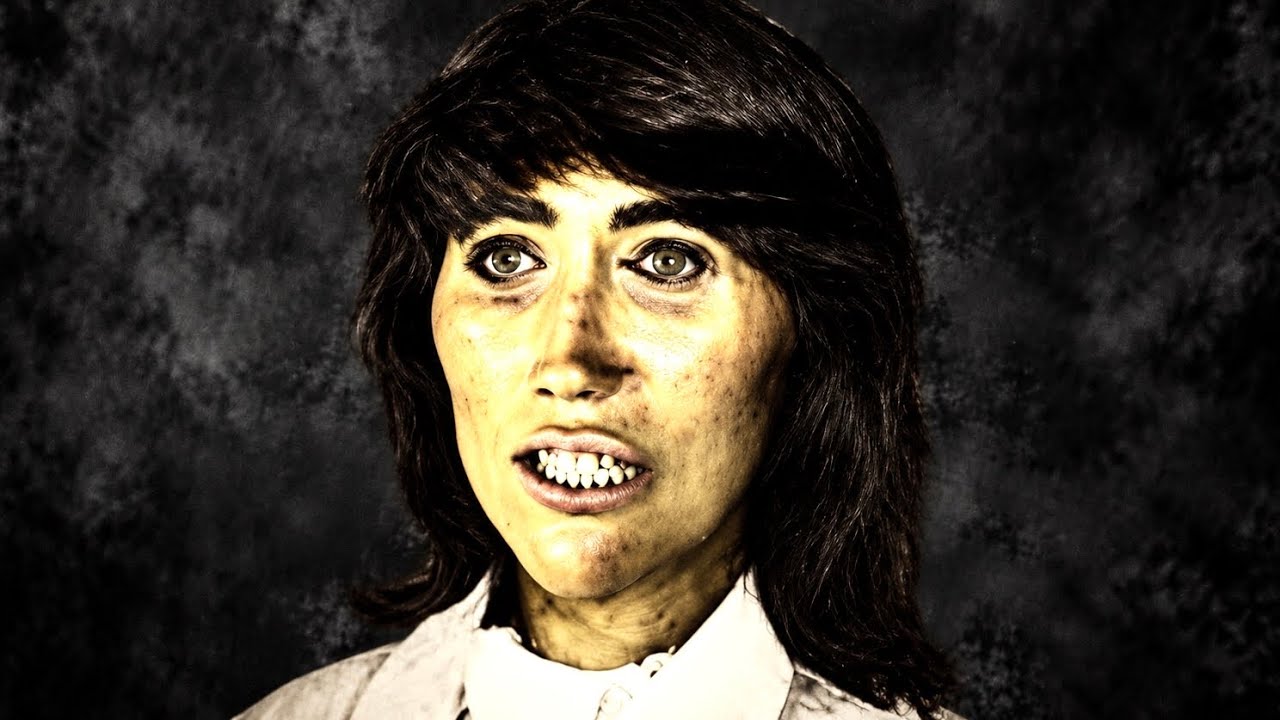
The sister, Jeannie Phelps, had flown down from Michigan. For most of her life she had believed there was still a chance her sister was alive somewhere and simply hadn’t come back. She stood there and said what she had to say. “I feel sad.
You know, I want to hold my sister. I want to hug her. I can’t hug a bag of ashes. ”
Five weeks earlier, none of this had seemed possible.
The girl in the woods had not had a name since 1981. But a 911 dispatcher looking at Craigslist at three in the morning had just changed everything. The story began on January 28th, 1981, when a man named John Chesson drove his two children out on a hunting trip to a piece of woods in the northeast corner of Bossier Parish, Louisiana. They parked on an old logging road off Highway 157, fifteen miles from Shreveport.
His son and his thirteen-year-old daughter walked off the road and went into the trees. About a mile and a half in, the kids found a body. She was lying under a pile of leaves. She had been out there somewhere between four and six weeks, and there was almost nothing left to work with.
Authorities couldn’t tell what color her eyes had been and couldn’t get a usable look at her face. She was young and small, and somebody had left a kitchen knife stuck in the ground beside her. She wasn’t carrying identification. Nobody in the parish had reported a girl missing.
In the days after she was found, nobody called to ask about her. The Bossier Parish Sheriff’s Office gave her a name of their own. They called her Bossier Doe. She would stay Bossier Doe for the next thirty-four years.
The coroner put her age somewhere between fifteen and twenty-one. She was around five-foot-six, about a hundred thirty pounds, with straight blonde hair down to her shoulders. Her fingernails were painted. He counted nine stab wounds.
Her teeth were the strangest part of it. She had worn braces at some point, but she wasn’t wearing them when she was found. The way that hardware had come off was not the way an orthodontist takes it off. There was still bonding material stuck to her teeth.
Somebody had pulled those braces off with their hands. She was dressed for cold weather. She had on blue Levis and a white long-sleeve t-shirt with thin pink, blue, and yellow stripes, and over that a beige hooded button-up sweater. Her socks were white athletic ones with blue and yellow running through them.
There was no jewelry on her at all. What she did have around her waist was a brown leather belt with a big silver buckle shaped like a buffalo nickel. On her feet were a pair of white size seven deck shoes from Sears. Those shoes turned out to be the most interesting thing at the scene, because somebody had written on them.
There were names in ink: Michael Brisco, David Russia, and separately in marker, D. Davies. Four names on one pair of shoes, and not one of them belonged to the girl wearing them. The sheriff’s office put photos of those shoes out over and over, hoping somebody would look at them and think, “I wrote that.
Those are my best friend’s shoes. ” Nobody ever did. Investigators started building a list. They pulled the names of every missing girl they could find who was anywhere close to the right age and size, and worked through them one at a time as the coroner ruled them out.
The list would eventually run to something like a hundred names. In 1984, investigators thought they finally had it. Henry Lee Lucas was in custody in Texas by then, confessing to killings all over the country. Bossier Parish detectives went and asked him about the girl in the woods.
They drove him out to the logging road. He looked around and told them he recognized the area. Then he admitted he killed her. He couldn’t tell them who she was.
He said she had a southern accent and he thought he had picked her up hitchhiking somewhere around Dallas. That was as much as he could give them, consistent with how he described the rest of it. He said he just picked women up as he moved across the country and didn’t tend to learn their names. On May 1st, 1984, a Bossier Parish grand jury indicted Henry Lee Lucas for first-degree murder in the death of Bossier Doe.
But Lucas was confessing to hundreds of murders around that time, and investigators working those cases eventually started checking his stories against ordinary paperwork: gas receipts, pay stubs, time cards. A lot of those confessions fell apart, and this one went with them. Records showed he could not have been in the area when she was killed. He was never tried for it.
He died of heart failure in a Texas prison in 2001. Also in 1984, somebody built a clay model of her face from her skull, and the sheriff’s office released a photograph of the model. For the next twenty-five years, that picture was all anybody had of her. Then in 2005, the old Bossier Parish coroner’s office burned down, and most of the physical evidence in the case burned alongside it.
The shoes with the four names on them were in that building. Dr. George McCormack, the coroner who had worked on the case back in 1981, died that same year in September. By 2009, the file was twenty-eight years old.
Investigators had sent her fingerprints to the FBI. Somebody had gone through dental records. None of it had ever produced a name. That January, the sheriff’s office tried the one thing left: make a better picture of her.
They sent what they had to Mary Manhein at the LSU FACES lab in Baton Rouge. They didn’t have the skull anymore; by then it was gone. They sent a photograph of the skull with tissue depth markers on it. Manhein and the artist she worked with, a woman named Eileene Barrow, had to build the face off that picture.
They showed it at a press conference on January 28th, 2009, exactly twenty-eight years after the body was found. The part that never made sense to investigators was the silence. What normally happens after a body turns up is that somebody comes forward and says the girl belongs to her family. In twenty-eight whole years, nobody had.
The new picture got some coverage. Then nothing happened for six more years. In September of 2014, Sheriff Whittington told his detectives to go back through the Bossier Doe case with whatever modern forensics could do for it. The case landed with a lieutenant named Shannon Mack.
Mack went at it in the ordinary way first. She read the whole file, ran the description through missing person databases and DNA comparisons. She called law enforcement agencies, newspapers, and television stations across nine parishes in Louisiana, asking anybody to look at their own old missing girls and check. A few things came back.
None of them went anywhere. In November, her lab finished a complete DNA profile on the victim, which was more than the case had ever had before. But a DNA profile is only worth something when there is a second profile to compare it against, and there wasn’t one. In December, she sat for media interviews.
Nothing came of those either. By the end of it, Mack would say they had eliminated just about everybody and there was nothing obvious left to try. So out of what she would later describe as desperation, she went to forensics with an idea. What if they just gave Bossier Doe a Facebook page, like she was a real person?
This wasn’t a tip line, and it wasn’t a sheriff’s office post about a cold case. It was an account with a face on it. They ran into a problem right away: Facebook won’t let anybody open an account under the name Jane Doe. So they used the name the parish had been calling her since 1981.
On Friday, February 6th, 2015, an account went up under the name Bossier Doe. The profile picture was the FACES lab reconstruction from 2009. Almost right away it started moving. Within a few days, more than five hundred people had friended her.
Within a week, over a thousand. By the middle of the month, around three thousand. One of the people who saw it that first day was a woman named Linda Ericson. Ericson worked as a 911 dispatcher in Bossier Parish, so the case itself was not new to her.
The face was. Six days later, at three in the morning, Ericson was scrolling through Shreveport Craigslist listings and stopped on a post with a photograph of a teenage girl inside it. The post was titled “Help bring Carol Anne home. ”
That Craigslist post started with a phone call between two women in November of 2014, the same month the Bossier Parish lab finished its DNA profile.
One of them was Jeannie Phelps, Carol Anne Cole’s younger sister. She had been looking for her since 1981, when she was fourteen years old. Phelps had spent decades calling police departments in Texas and Louisiana. At some point in the 1980s, she talked to Shreveport police ten separate times over about six months.
She looked at Jane Doe cases wherever she could find them. She would later say they had looked at so many that she thought she had already looked at her sister’s before and just passed over it. The other woman on the phone was Patty Thorington. Thorington lived in Davenport, Iowa, and she was not related to Carol Anne at all.
She was Jeannie’s best friend from childhood, and she had been searching alongside her the entire time. Thorington used to go to the library and look up the mailing addresses of police departments so she could write to them one by one. Most of those letters never got answered. On that call in November of 2014, the two of them agreed to buckle down and work harder.
In January of 2015, Patty Thorington posted Carol Anne’s photograph to Craigslist in Shreveport. It was one of roughly a hundred posts she put up in city after city, all with the same title: Help bring Carol Anne home. The post had been sitting there about a month when Ericson noticed it. She looked at the photo on Craigslist, then at the reconstruction on the Facebook page.
What caught her was the jawline. She had seen that jawline before. She checked the dates, and the dates lined up. She picked up the phone and told a detective she thought she knew who Bossier Doe was.
On February 13th, 2015, somebody at the Bossier Parish Sheriff’s Office emailed Patty Thorington about Bossier Doe. Detectives worked with the Kalamazoo Township Police to collect reference samples from the girl’s parents. That was the phone call Sue Cole got in Kalamazoo, Michigan that February. They wanted a DNA sample from her and one from her ex-husband.
They explained why they were asking. She gave them a swab. Then there was nothing to do but wait. The samples went to the North Louisiana Criminalistics Laboratory to be run against the profile finished back in November.
In late February, the results came back. They matched. Carol Anne Cole was born in Kalamazoo, Michigan on November 5th, 1963. Her parents divorced when she was small, and she and her brother and sister were raised mostly by their grandmother.
Jeannie was four years younger. The two of them used to play at being Laura and Mary from Little House on the Prairie, and spent their time on jump rope, hide and seek, and card games. It was a pretty ordinary childhood. In 1979, when Carol Anne was fifteen, her mother decided to move from Kalamazoo down to San Antonio.
Her brother and sister stayed behind in Michigan. Carol Anne asked to go with her mother, and she went. It went bad almost immediately. She started running away.
After a while, her mother placed her in a girls’ home. In October of 1980, a few weeks short of her seventeenth birthday, Carol Anne ran away from that, too. Somewhere around that time, she pulled her own braces off her teeth. Where she went was Shreveport, Louisiana, about four hundred miles from San Antonio.
Nobody has ever established how she got there or who she went with. She did call her grandmother and wrote letters. She told her grandmother she was staying with a family and babysitting for them. Her mother spoke to her about once a week on the phone and told her she was welcome to come home and that they still loved her.
One of her aunts got a call from her as well. Jeannie Phelps would later describe how that one went: as soon as it got to “where are you,” the phone went dead. The last time anyone in the family heard from her was December of 1980. Carol Anne’s grandmother did not sit on that.
She went and got the phone bill, found the Shreveport number her granddaughter had been calling from, and dialed it herself. Somebody picked up. They told her Carol Anne had been staying with them and that she had gone to a party and had not come back. That was the last thing the family learned about her for thirty-four years.
The grandmother spent the rest of her life looking. She died before it was solved. There was one other place detectives thought Carol Anne might have been, based on the shoes. There was a religious girls’ home in Arcadia, Louisiana called New Bethany Home for Girls.
By 2015, a lot of former residents had come forward with accounts of what went on inside it. One of the things they described was that girls at New Bethany were made to write their names in marker inside their shoes. The striped athletic socks Carol was wearing looked like the socks New Bethany required, and nobody running that place was likely to file a missing person’s report on a girl who left it. Bossier Parish detectives started asking questions about the home on February 9th, 2015.
Four days later, the man who founded it died. There was also a photograph. A picture had surfaced of a group of girls sitting at New Bethany, taken around the time Carol Anne went missing. Jeannie Phelps looked at one of the girls in it and thought it was her sister.
Nothing was ever proven. There is still no conclusive evidence that Carol Anne Cole was ever inside that building. The family had done something in the first week of January 1981, before the body was ever found. They called authorities and asked for help finding her.
Then the body turned up on January 28th. When Bossier Parish investigators started trying to put a name to it, the first thing they did, the way they always do, was build a list of missing girls. All of that was ordinary police work, and none of it was unreasonable. But it was nothing compared to what the sheriff’s office would confirm three weeks after the DNA came back.
Within a year of the body being found, Carol Anne Cole’s name was on the list. Lieutenant Bill Davis confirmed it in March of 2015. Her name had been sitting on that list of missing girls almost from the beginning, along with a dozen or so others. And George McCormack, the parish coroner, had ruled it out.
The reason McCormack gave was that there were numerous differences. He never wrote down what the differences were. Nobody at the sheriff’s office in 2015 could say what they had been, and McCormack had been dead for almost ten years. There was no way to ask him.
Her age matched. Her height and build both fell inside the range. She had worn braces. Davis also said investigators didn’t even notice her name sitting on that old list until after DNA samples had already been collected from her family and sent off for testing.
Then there was the matter of the dental records, which Jeannie Phelps only found out about in 2015. Investigators had asked for Carol Anne’s dental records back in 1981. What got sent to them was a dental chart, a diagram marking where a person’s cavities are. That is not enough to identify a body.
What that comparison needs is X-rays. Phelps does not know whether anybody ever asked for X-rays. She does not know whether any were sent. She would say she had spent thirty-five years wondering where her sister was, and that it left her family wondering for a lot longer than they had to.
In March of 2015, the identification was all over the news in northwest Louisiana. A woman named Francis O’Con saw Carol Anne Cole’s photograph on television and recognized her instantly. She told KSLA and KTBS that in the fall of 1980, when she was a kid, a girl who looked like that had come to their house. She said the girl had slept in her bed with her, cleaned around the place, and helped look after her and her brother.
And one day the girl was gone. What O’Con was told was that relatives had come and picked her up. Francis O’Con is the same thirteen-year-old girl who walked off that road into the trees on January 28th, 1981. Her father was John Chesson.
She has said publicly that she believes her father killed Carol Anne Cole, and she went to Bossier Parish detectives in 2015 and told them so. She has also said two things about that morning in the woods. The first is that her father did not hunt with them. That particular trip, she said, was the only time it ever happened.
The second is what he did once they got there. He stayed on the road, walked along it, stopped a little ahead of the truck, and stood there watching the two children go into the trees. He never followed them in. She has described screaming when they found the body and not understanding what she was looking at, turning back to look for her father, and seeing him still standing in the road.
That is certainly strange. But none of it is proof of anything. Here is what John Chesson has actually been convicted of. In February of 1997 in Coushatta, Louisiana, he killed a seventy-four-year-old woman named Lucindy Thibodeaux, the former mother-in-law of his wife.
He cut her throat. According to the appellate record, he had told his own daughter that he dreamed the devil told him to kill someone. He was convicted of second-degree murder in 2002 and sentenced to life without parole. The conviction was upheld on appeal in 2003.
He has never been charged in the death of Carol Anne Cole. Lieutenant Shannon Mack put it about as carefully as it can be put. She would say he was definitely a person of interest, and that she could not move him over into being a suspect number one because there were still other avenues to go down. She also said he was not dropping off the list anytime soon.
Detectives interviewed him more than once. He never admitted to anything. There was one person out in those woods that morning who might have been able to say something about it: Francis O’Con’s brother, the other child who found the body. He took his own life in 2008.
The murder of Carol Anne Cole has never been solved. Nobody has ever been arrested for it, and no prosecutor has ever charged anyone with it. Bossier Parish detectives are still asking a fairly specific question: whether anybody remembers a teenage girl in Shreveport in the fall of 1980, around the 1200 block or the 6800 block of Fairfield Avenue, babysitting for a family. Somebody in that city knew her name in 1980, and somebody let her use a phone to call Michigan.
The Facebook account the sheriff’s office opened in February of 2015 was never taken down. It is still up. Somebody went in and changed the name on it. It reads Carol Anne Cole now.
And right after that, Bossier Doe. Carol Anne was cremated. Her sister kept some of her ashes and put them into a small silver charm she wears on a necklace. The rest of her was buried at Maple Grove Cemetery in Comstock, Michigan on June 18th, 2015.
Jeannie Phelps picked that date on purpose. June 18th was her grandmother’s birthday. There is a gray headstone out there with a pair of angel wings carved into it. It carries two names.
The first one is Carol Anne Cole. The second one, underneath it in smaller letters in parentheses, says Bossier Doe.






