The first sound Isaiah Cole heard that night was not a gunshot or a shout. It was the distant pounding of hooves, faint at first, then growing steadily louder beneath the approaching storm. He stood beside the western drainage ditch, watching the cane leaves tremble in the wind. Beyond the fields, the sky had turned almost black, and occasional flashes of lightning revealed the outlines of trees bending beneath the weather.
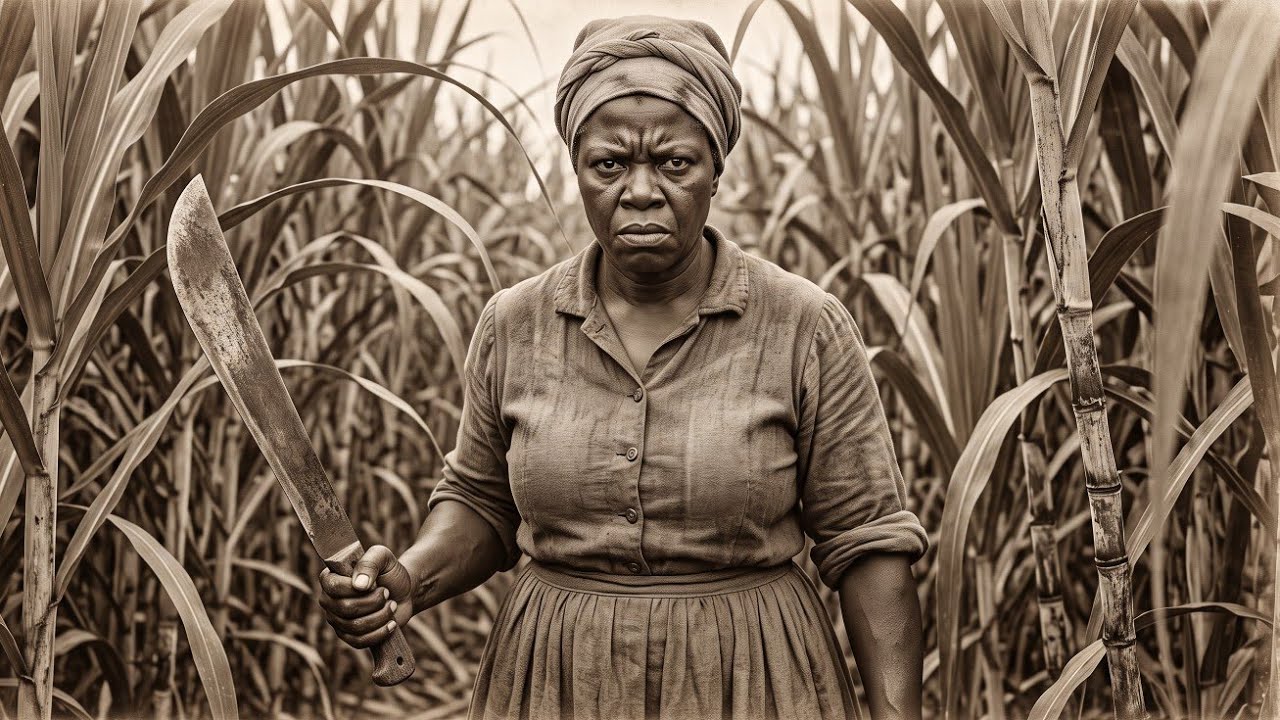
The riders were coming. He had known for days that they would come. Eighteen armed men, led by a man named Silas Crowe, had gathered beyond the western boundary of the Bellamy plantation, planning to terrorize the workers who had grown too confident, too bold, too willing to demand wages and decide their own futures. Isaiah had heard Crowe speak the threat himself, hidden behind the trees while the riders made their plans.
And he had spent every hour since then learning the land better than any man who rode a horse could ever know it. Behind him, the plantation cabins had grown unusually quiet. Samuel Reed had spent the evening moving between families, making sure the children stayed close to their parents and that the elderly were prepared to leave if the situation became dangerous. Joseph Turner and two other trusted workers were waiting near the old shed, ready to guide families toward safer ground.
No one knew exactly what the next few hours would bring, but everyone understood that the familiar world they had known could change before sunrise. Isaiah had given them one instruction above all others. Nobody was to risk a life merely to protect a possession. A few minutes earlier, he had watched a mother wrap her sleeping child in a blanket while her husband gathered their most important belongings into a small sack.
The woman had asked Isaiah whether the riders would burn their cabin. He had wanted to tell her no. Instead, he had looked directly into her frightened eyes and said, “If they come here, you take your children and follow Samuel. Don’t wait for anyone to tell you twice.
”
She nodded, but he could see that she was trying to memorize his face. Perhaps because she feared she might never see him again. The Civil War had ended six years earlier, and slavery had been abolished, but freedom in rural Louisiana remained dangerous and uncertain. Formerly enslaved people were trying to build lives, reunite families, and earn wages from their labor.
Yet many white landowners refused to accept the new reality. Armed groups terrorized black communities, threatening workers, attacking families, and punishing anyone who challenged their authority. The Ku Klux Klan had become one of the most feared instruments of that violence, using nighttime raids and disguises to spread terror while making it difficult for victims to identify their attackers. On the Bellamy plantation, that terror had begun to grow.
The land belonged to a wealthy former Confederate officer named Nathaniel Bellamy, who spoke publicly about order and prosperity but privately despised the idea that black workers could decide their own futures. He still expected the people on his land to obey his commands, even when those commands had no legal authority behind them. Workers who demanded payment for their labor were threatened. Families who considered leaving were warned that the roads beyond the plantation were dangerous.
Anyone suspected of helping others escape intimidation risked becoming a target. Isaiah had watched this situation worsen for months. He knew Bellamy was meeting with armed visitors after dark, but he did not know the full extent of their plans. Sometimes riders arrived shortly after midnight and disappeared before sunrise.
The following morning, workers would whisper about burned cabins, missing livestock, and families who had fled their homes in fear. Then, one evening, Isaiah saw eighteen riders gather beyond the western boundary of the plantation. He had been returning from a drainage ditch when he noticed the horses standing beneath a cluster of oak trees. Their riders wore dark clothing, and several had pale cloth coverings over their faces.
Lanterns swung from saddle hooks, casting restless shadows across the road. Their leader sat on a tall black horse and spoke with the confidence of a man accustomed to being obeyed. His name was Silas Crowe. He was known throughout the surrounding parishes as a ruthless organizer of nighttime intimidation.
He rarely raised his voice because he understood that quiet threats could frighten people more effectively than shouting. He had a narrow face, cold eyes, and a habit of studying anyone who spoke to him as though he were searching for a weakness. That evening, Isaiah heard Crowe tell Bellamy that the plantation workers had become too confident. “They think the law has changed everything,” Crowe said.
“They think they can leave, demand wages, and refuse the men who once controlled them. ”
Bellamy glanced toward the distant cabins. “Then remind them what happens when they forget their place. ”
Crowe gave a small nod.
“Eighteen men will ride through here before the week is over. By morning, every family on this land will understand the cost of defiance. ”
Isaiah remained behind the trees, scarcely daring to breathe. He could not hear every word that followed, but he understood enough.
The riders were planning another attack, and this time the plantation workers were their intended victims. He returned to the cabins after dark, carrying the news in his mind like a stone pressing against his chest. Inside the largest cabin, an elderly worker named Samuel Reed sat beside a small oil lamp, repairing a torn shirt. Samuel had spent most of his life working the surrounding land.
He had survived slavery, the war, and the uncertain years that followed. His hair had turned almost entirely white, and his left knee troubled him whenever the weather changed, but his memory remained sharp. Isaiah waited until the others had settled before speaking. “Eighteen riders are coming,” he said quietly.
Samuel’s hands stopped moving. “When? ”
“Before the week is over. Crowe is leading them.
”
The old man’s face tightened. He had heard the name before and knew what it meant. “We should warn the families along the river,” Samuel whispered. “Some of them may have a place for us.
And if they don’t, then we keep moving. ”
Isaiah looked toward the cabin door. Beyond it, children were sleeping while their parents prepared for another day of work. Several families had only recently reunited after years of separation.
Others had saved money to purchase tools, clothing, and small pieces of land. They had very little, but what they possessed mattered to them. “If we run tonight,” Isaiah said, “some will make it, others won’t, and the riders will return when they find another place to frighten. ”
Samuel studied him.
“What are you thinking? ”
Isaiah did not answer immediately. He had spent years learning the plantation’s terrain. He knew which drainage channel filled first when rain arrived, where old wagon roads vanished beneath the cane, and which paths could carry a person from one side of the fields to the other without passing the main buildings.
He also knew the riders believed their horses and weapons gave them control over every road they entered. “They think these fields belong to them after dark,” he finally said. “They think nobody here can see them clearly enough to know what they’re doing. ”
“And what will you do about it?
”
Isaiah looked at the lamp flame. “I’ll make sure we aren’t waiting helplessly when they come. ”
Samuel wanted to ask more, but Isaiah had already risen. He stepped outside and walked toward the cane fields where the stalks moved beneath the night breeze.
The smell of damp soil filled the air, mixed with the distant odor of smoke from the plantation’s sugar mill. He remembered his father, who had taught him to read the weather by watching the clouds and to recognize safe ground by studying the plants growing around it. His father had died before Isaiah was old enough to understand how much knowledge he had carried. His mother had disappeared during the chaos of the war, and Isaiah had never discovered what happened to her.
Those losses had taught him that waiting for powerful men to show mercy was not a plan. He returned to the fields at first light and began studying the ground that crossed them. He observed the workers’ movements, the wagon tracks, and the places where the soil softened near the irrigation channels. He spoke with Samuel and two trusted workers, asking them to help warn the families without attracting Bellamy’s attention.
No one was told to confront the riders. Their first responsibility was to protect the children and elderly people who would be most vulnerable if violence came to the cabins. Over the next two days, rumors spread that Crowe’s men had been seen near neighboring farms. One family reported hearing horses outside their home shortly after midnight.
Another said masked men had threatened a laborer who refused to reveal where his brother was staying. Each new report confirmed Isaiah’s fear that the coming attack was part of a larger campaign of terror. Then, on the third evening, a young worker named Daniel arrived at the fields with blood on his shirt. He had been sent to deliver a message to a neighboring settlement, but riders had stopped him on the road.
They struck him, searched his belongings, and warned him that anyone carrying information between black families would be punished. Daniel’s hands trembled as he told Isaiah what had happened. “They said they would come tomorrow night,” he whispered. “All eighteen of them.
Crowe told the men to make an example of this plantation. ”
Isaiah looked toward the western boundary. Tomorrow night. The time he had hoped to gain was gone.
The riders were coming sooner than expected, and the workers had less than a day to prepare. He helped Daniel reach Samuel, then walked alone into the cane fields. The sun was sinking behind the distant trees, turning the leaves bronze and the narrow paths dark. Far away, a horse called from beyond the plantation road.
Isaiah stood still and listened. He was afraid. He understood the danger better than anyone. And he knew that courage did not make a man invulnerable.
Eighteen armed riders could destroy homes, injure innocent people, and turn a quiet community into a place of terror before anyone could summon help. But fear could not be allowed to make every decision. Isaiah lowered his eyes to the earth beneath his boots. He knew these fields, every bend and ditch, every hidden path and patch of unstable ground.
The riders might have weapons, horses, and the confidence of men who had never been challenged, but they did not know the land as he did. He turned toward the cabins where Samuel and the other workers were waiting. “Tonight,” Isaiah said, “we prepare everyone to reach safety. No family will be left behind.
”
Samuel studied his face and saw that the quiet man he had known for years had reached a decision. Now the riders were coming, and the storm was opening above the plantation. Rain cascaded through the cane leaves. The wind grew stronger, and the fields filled with a continuous rushing sound.
Rain struck the riders’ hats and coats, ran down their faces, and turned the road into a muddy ribbon. Crowe swore under his breath. “Keep moving,” he shouted. “We are not turning back because of a little rain.
”
The first riders entered the western cane rows. Almost immediately the landscape changed around them. The open road disappeared behind towering stalks, and their lanterns illuminated only narrow sections of the path ahead. The horses moved more cautiously as the ground softened beneath their hooves.
Water flowed through the low channels, carrying leaves and small branches toward the plantation’s lower fields. One rider called out that he had lost sight of the man ahead of him. “Stay close,” Crowe ordered. But the storm made his voice difficult to hear.
The cane leaves slapped against the riders’ shoulders, and the wind carried sounds in confusing directions. A horse stumbled in a muddy depression, forcing its rider to dismount and lead it forward. Another animal refused to cross a narrow channel until its rider pulled hard on the reins. The group slowed.
Crowe looked back, counting the lanterns again. He could see several lights, but the others had disappeared behind bends in the rows. “Bring them together,” he commanded. A rider disappeared between the stalks to deliver the message.
For a few minutes, Crowe waited beneath a cluster of broad leaves while rain ran down the brim of his hat. Then he heard a shout from somewhere to his left. “Over here! ”
Crowe turned sharply.
“Who said that? ”
No answer came. A moment later, another voice called from farther away, followed by the sound of hurried footsteps in the mud. Crowe’s men began speaking over one another, each trying to determine where the others had gone.
The fields were not an open battlefield where a leader could see every movement. They were a maze of narrow passages, low ditches, and thick vegetation that concealed anyone standing only a few yards away. Crowe suddenly understood why Isaiah had spent so much time studying the land. The plantation worker was not simply preparing the families to flee.
He was using the landscape to deny the riders the advantage they expected from their numbers. That realization made Crowe angrier than the storm. “Cole! ” he shouted into the darkness.
“I know you’re out there. ” His voice traveled through the cane rows, but no answer followed. “You think hiding makes you powerful? ” Crowe continued.
“Come out and face me. ”
Only the rain replied. At the cabins, Samuel heard the shouting and signaled Joseph to begin moving the first group of families away from the exposed buildings. Women carried sleeping children while older workers supported those who struggled to walk.
The group followed the route behind the abandoned shed, moving carefully along the raised ground Isaiah had identified earlier. No one ran unless they had to. Panic could separate a family or send someone into a flooded ditch, and Samuel refused to let fear dictate their movements. Joseph walked beside a frightened young boy who kept looking back toward the cabins.
“Will the men find us? ” the boy whispered. Joseph glanced toward the dark fields. “We’re going somewhere safer,” he answered.
“Keep your hand on your mother’s coat. ”
The boy obeyed. Meanwhile, Isaiah remained near the western boundary, listening to the riders struggle with the terrain. He could not see every man, and he knew the storm created dangers for everyone, including the families he was trying to protect.
A flooded channel could become a deadly obstacle, and a frightened horse could injure someone without warning. He had no desire to turn the fields into a place where innocent people might be harmed. His purpose was to buy time, confuse the riders’ movements, and keep them away from the cabins long enough for the vulnerable families to reach safety. But Silas Crowe was not a man who abandoned his plans easily.
After several minutes, he managed to gather some of his riders near a slightly higher section of ground. Their horses were muddy, their lanterns flickered in the wind, and their patience was disappearing. Crowe studied the narrow paths ahead. “He wants us separated,” one rider said.
“Then we stop acting like frightened fools,” Crowe replied. “We move in pairs, keep our eyes open, and search every passage. Cole cannot hide forever. ”
He ordered the men to continue deeper into the fields, promising that they would find the man responsible for the confusion.
Then he made a decision that would place his entire group at greater risk. Instead of withdrawing to the open road and reorganizing, Crowe chose to push forward into the darkest section of the cane fields, where the old drainage channels crossed beneath the thickest growth. He believed that pressing deeper would force Isaiah to reveal himself. What Crowe did not realize was that the man he was hunting had already anticipated this possibility.
From his concealed position, Isaiah watched the lanterns move farther into the cane. He counted what he could see, listened for the horses, and tried to determine which riders were still following Crowe and which had become separated. The rain had made everything more dangerous, but it had also exposed the riders’ greatest weakness. They knew how to frighten families along open roads.
They knew how to use their weapons and their reputation to control people who had nowhere to hide. Here, surrounded by towering cane and uncertain ground, they were no longer in complete control. Isaiah took one last look toward the cabins. Through the rain, he could see Samuel guiding the final group away from the buildings.
The children were leaving. The elderly workers were moving. The families had not been abandoned. For the first time that night, Isaiah allowed himself a brief breath of relief.
Then a lantern appeared on the path directly ahead of him. A rider had moved closer than he expected. Isaiah stepped behind a thick cluster of cane as the horse approached. The rider slowed, examining the ground with suspicion.
His hand rested near his weapon, and his lantern swung from side to side as he searched the darkness. “Cole,” the man called. “I know you’re here. ”
Isaiah remained motionless.
The rider dismounted and took several cautious steps toward the drainage channel. His boot slipped in the mud, and he grabbed a cane stalk to steady himself. Then he heard a horse whinny somewhere behind him. He turned toward the sound, uncertain whether it came from one of his companions or from the deeper fields.
That moment of hesitation gave Isaiah the opportunity to move away unseen. By the time the rider turned back, the narrow passage was empty. Across the fields, Silas Crowe heard the distant call of another man and realized that his group had become more scattered than he had intended. His confidence had begun to crack, but pride would not allow him to admit that the plantation worker might be controlling the situation.
He raised his weapon and pointed it toward the darkness. “Find him! ” he shouted. “Search every row if you have to.
”
Eighteen riders had entered the cane fields, believing they would bring terror to a helpless community. Now, beneath the midnight storm, they were searching for a man who knew every hidden path they had crossed. And Isaiah Cole had not yet decided how far he would go to stop them. The storm had turned the cane fields into a world of darkness and confusion.
But Silas Crowe refused to admit that his men were losing control. He stood beneath the dripping leaves, his black horse shifting nervously behind him, and listened to the scattered voices echoing through the plantation. Somewhere beyond the narrow rows, a rider shouted for his companions. Farther away, another man cursed as his horse struggled through the mud.
The sounds seemed to come from every direction, making it impossible to determine exactly where the men were standing. Crowe hated uncertainty. For years, he had built his reputation on making other people feel uncertain. Families heard his name and locked their doors.
Workers saw masked riders approaching and abandoned their arguments before a single threat was spoken. His men depended on that fear. They believed that people who feared them would never dare to challenge them, and that belief had made them careless. Tonight, the cane fields were stripping away that confidence.
“Bring the men back together,” Crowe shouted. A lantern appeared through the stalks, followed by a rider leading his horse by the reins. The animal’s legs were coated in mud, and its breathing came in short, nervous bursts. “We’ve lost the main path,” the rider reported.
“The water has covered part of the ditch, and the rows all look the same. ”
Crowe seized the man’s coat. “You’ve ridden through these fields before. ”
“Not in this weather.
The ground has changed. ”
Crowe released him with a shove. “Then find higher ground and stop behaving like a child. ”
The rider moved away, but Crowe could see the uncertainty in his posture.
The man had entered the plantation expecting an easy night. He had not expected to spend hours fighting mud, rain, and a landscape that seemed to swallow every sound. Crowe turned toward the darkness and tried to reconstruct the layout of the fields from memory. The western road should have led toward the old sugar mill, and the mill should have provided a clear reference point.
But the rain had blurred the tracks, while the towering cane concealed the buildings. Without a clear view of the surrounding land, he could not be certain which direction his men had taken. He suspected Isaiah had deliberately led them away from the cabins. What disturbed him most was the possibility that the workers had already escaped.
If the families reached neighboring settlements, the story of this raid would spread beyond Bellamy’s plantation. People would learn that Crowe’s men had been unable to control a group of workers they expected to frighten into submission. His reputation, carefully built through years of intimidation, could suffer a blow that no number of threats would easily repair. He decided that the raid could not end until he had found Isaiah.
Across the fields, Isaiah moved along the raised strip of ground near the drainage channel. He kept low whenever a lantern appeared and avoided unnecessary movement through the flooded areas. His clothing was soaked, and the cold rain had begun to stiffen his fingers, but he continued to listen carefully. He could hear the riders arguing among themselves.
Some wanted to return to the road. Others insisted that Crowe would punish anyone who abandoned the search. A few believed Isaiah had escaped and that the remaining men were wasting their time. Their disagreements told Isaiah something important.
The riders were not a single disciplined force. They were individuals held together by fear of their leader and the expectation that everyone else would obey him. As long as they believed Crowe could guarantee their safety, they would follow him. If that belief disappeared, their confidence might collapse.
Isaiah did not intend to provoke a pointless confrontation. He knew that a single reckless decision could endanger the workers who were still moving toward safety. Instead, he focused on understanding where the riders were and keeping them away from the road behind the abandoned shed. He reached a low wooden bridge spanning one of the drainage channels.
Years earlier, wagons had crossed it while transporting harvested cane to the mill. The bridge remained standing, but several boards had rotted, and the rising water was beginning to press against its supports. Isaiah examined it carefully before stepping across. On the opposite side, he found fresh hoof prints leading toward a narrow passage.
The marks were deep and uneven, suggesting that a horse had struggled there. He followed them only far enough to confirm that a rider had moved toward the eastern fields. Then he heard a voice behind him. “Stop right there.
”
Isaiah turned. A masked rider stood between the cane rows, holding a lantern in one hand. His other hand rested near his weapon. Rain ran from the brim of his hat, and his eyes moved quickly over Isaiah’s soaked clothing.
For several seconds, neither man moved. “Your name is Cole,” the rider said. Isaiah remained silent. “I asked you a question.
”
“You already know who I am. ”
The rider stepped forward. “Crowe wants you. ”
“Then he should have stayed on the road.
”
The man’s expression hardened. He moved closer, apparently expecting Isaiah to retreat. When Isaiah remained where he was, the rider glanced toward the drainage channel behind him. “You think you’re clever because you know a few paths?
”
“No,” Isaiah answered. “I think you made a mistake by coming here without understanding where you were going. ”
The rider raised his lantern, attempting to see beyond Isaiah into the darkness. At that moment, a horse called out somewhere to the north, followed by a distant shout.
The rider hesitated. Isaiah used the moment to step sideways into the thick cane. The stalks closed around him, and within seconds, the rider could no longer see him clearly. “Come back!
” the man shouted. Isaiah continued moving away. The rider followed for several steps, then stopped when the ground dipped beneath his boots. Water rushed through the channel ahead, and the narrow passage was too dark to inspect safely.
He swore, turned around, and hurried toward the sound of his companions. Isaiah watched from a distance until the lantern disappeared. He had avoided a direct fight, but the encounter had revealed how close the riders were getting to the paths used by the families. He needed to ensure that no one followed those tracks toward the hidden route.
Near the cabins, Samuel Reed was guiding the last of the vulnerable families toward a sheltered location beyond the eastern boundary. The rain had weakened, but the ground remained slippery and progress was slow. Joseph Turner carried a small child whose mother had twisted her ankle. Two other workers helped an elderly man who struggled to walk without support.
Every few minutes, Samuel stopped to count the people behind him. He refused to lose anyone in the darkness. When they reached a stand of trees, a frightened woman named Ruth Carter realized that her teenage son, Benjamin, was missing. She turned toward the plantation, calling his name before Joseph gently took her arm.
“He was helping your father,” Joseph said. “He may be with the others, but I saw him near the cabins. ”
Samuel returned several steps along the path, searching for any sign of the boy. His heart sank when he heard movement coming from the direction of the western fields.
A lantern flickered between the trees. One of Crowe’s riders had left the main group and was moving toward the route used by the families. Samuel quickly directed everyone farther into the trees. Joseph helped Ruth move behind a fallen trunk while the other workers continued toward shelter.
Samuel remained behind long enough to see the rider pass the entrance to the hidden path without noticing it. He did not attempt to confront the armed man. His priority was keeping the families out of sight. When the rider disappeared, Samuel hurried after the others.
Meanwhile, Crowe had gathered several men near a slightly elevated section of the fields. Their faces were wet, their tempers short, and their patience nearly exhausted. One rider demanded to know why they were still searching for a laborer when they could return to the road and attack the cabins directly. Crowe turned on him.
“Because Cole is the reason this night has become a disaster. ”
“He may not even be here anymore. ”
Crowe stepped closer until the man lowered his eyes. “Then we’ll search until we know.
”
Another rider looked toward the eastern boundary. “What if the families have already left? ”
Crowe did not answer immediately. The possibility hung between them, more frightening to him than the rain or the unfamiliar ground.
If the families had escaped, the raid would have failed to deliver the lesson he intended. Worse, his men might have spent the entire night chasing shadows while the people they wanted to intimidate reached safety. He ordered two riders to return toward the western road and check the route to the cabins. The others would continue searching the fields.
It was the decision Isaiah had hoped Crowe would make, though not for the reason the leader imagined. Dividing the riders further would make their movements harder to coordinate and reduce the pressure on the families leaving through the eastern side. But Isaiah also understood that the situation was becoming more dangerous. The storm had begun to ease, and the first signs of dawn were still several hours away.
If Crowe realized the families had escaped, he might abandon the search and direct his men toward the neighboring settlements. Isaiah could not allow the night to end with the riders free to attack another community. He moved toward the old sugar mill, keeping to the higher ground. From there, he hoped to discover whether Crowe was preparing to withdraw or planning another attack.
When he reached the edge of the clearing, he saw the leader standing beside his black horse. Three riders waited nearby while the others remained scattered throughout the cane. Crowe was studying a muddy trail that led toward the eastern fields. Isaiah immediately recognized the danger.
The trail was not the route the families had taken, but it pointed in the same general direction. If Crowe followed it far enough, he might discover evidence of their escape. Isaiah stepped from the shadows. Crowe spun around, his hand moving toward his weapon.
For the first time that night, the two men stood face to face. Crowe examined Isaiah’s soaked clothes, his scarred forearm, and the steady expression on his face. “So, you’re the man who thinks he can make fools of my riders. ”
“I didn’t make them fools,” Isaiah replied.
“They came here believing they already knew everything. ”
Crowe’s jaw tightened. “You have caused trouble for men who won’t forget it. ”
“You came here to frighten families who were trying to live in peace.
”
“I came to remind them who holds power. ”
Isaiah glanced toward the distant cabins, then back at Crowe. “Power isn’t the same as control. ”
For a moment, the only sound between them was the water dripping from the cane leaves.
Crowe smiled coldly. “Then let us see how much control you have when my men find the people you’re protecting. ”
He raised his voice and called for the riders to gather. From the darkness came scattered replies, followed by the sound of horses moving through the wet fields.
Isaiah knew the confrontation had entered a new and more dangerous stage. Crowe was no longer interested in simply searching the cane. He intended to use the families as leverage, forcing Isaiah to choose between revealing the hidden routes and allowing the riders to pursue those who had escaped. Isaiah looked at the leader and understood that the next decision could determine everything.
The fields had confused the riders, weakened their confidence, and delayed their plans. But the night was not over, and Silas Crowe had finally found the man he had come to punish. Isaiah Cole stood in the rain-soaked clearing, facing Silas Crowe as the distant sounds of approaching horses grew louder. For the first time that night, the two men could study each other without the darkness completely hiding their faces.
Crowe was taller than Isaiah had expected, with a narrow jaw, pale eyes, and an expression that suggested he had never seriously considered the possibility of being defeated. His black coat clung to his shoulders and water ran from the brim of his hat, but he seemed unaware of the storm around him. “You have made a serious mistake,” Crowe said. “You should have stayed in your place.
”
Isaiah looked past him toward the cane fields. “My place is wherever I can protect the people you came here to hurt. ”
Crowe gave a humorless laugh. “You believe these people will thank you for this.
When my men are finished, they will blame you for bringing trouble to their doors. ”
“They were already in danger before I ever saw your riders. ”
For a moment, Crowe’s expression hardened. He disliked being reminded that his men had arrived with the intention of intimidating innocent families.
In his mind, violence was not an act of cruelty but a method of maintaining authority. He had convinced himself that black people who demanded wages, moved freely, or resisted white control were creating disorder. By frightening them, he believed he was restoring the world he wanted. Isaiah recognized that there was little point in arguing with a man who had built his entire identity around such beliefs.
Instead, he watched Crowe’s hands and listened for the approaching horses. Three riders emerged from the cane, followed by two more. Their weapons were visible beneath their wet coats, and their faces showed a mixture of anger and exhaustion. One of them pointed toward Isaiah.
“There he is. That’s the man we’ve been searching for. ”
Crowe raised a hand to silence him. “No one moves until I say so.
”
The riders stopped. Their horses shifted restlessly in the mud while Crowe continued studying Isaiah. “You have two choices,” he said. “You can tell me where the families have gone, or you can watch my men search every cabin, every shed, and every field until we find them ourselves.
”
Isaiah felt anger rising inside him, but he forced himself to remain calm. He knew Crowe wanted him to react emotionally. If Isaiah attacked him or attempted to flee recklessly, the riders might turn their attention toward the cabins and the families who were still making their way to safety. “You already searched the plantation,” Isaiah said.
“You found nothing. ”
“Because you helped them hide. ”
“I helped them leave a place where you intended to hurt them. ”
Crowe stepped closer.
“You cannot protect everyone. ”
Isaiah knew the statement was true. No man, regardless of his strength or courage, could guarantee the safety of every person in a community threatened by armed attackers. He had spent the night making decisions with incomplete information, hoping each choice would buy the families a little more time.
But Crowe was using that truth as a weapon. “No,” Isaiah replied. “I can’t protect everyone from everything. But I can refuse to help you find them.
”
The leader’s face darkened. Before he could respond, a shout came from the eastern side of the clearing. One of the riders had discovered fresh footprints in the wet ground. Another claimed he had seen movement between the trees.
Crowe immediately turned toward the noise. “Find out where that trail leads. ”
Several men moved away, leaving only a few riders near the clearing. Isaiah watched them go and understood that the situation was changing again.
The families had left traces in the mud, and the rain that had helped conceal their movements was beginning to weaken. He needed to keep Crowe occupied without allowing the leader to direct every rider toward the eastern boundary. Then a voice came from behind the old sugar mill. “Silas.
”
The men turned. Henry Pike stepped into the clearing, soaked and trembling. He had been trying to avoid the riders since returning from his meeting with Crowe, but he could no longer bear the thought of what might happen if the families were caught. His guilt had grown heavier with every passing hour.
Crowe stared at him. “What are you doing here? ”
Henry looked at Isaiah, then at the armed men surrounding the clearing. “I need to tell you something.
”
“Speak. ”
Henry swallowed. “I told you about the paths Isaiah was studying. I thought you might postpone the raid if you knew the plantation was prepared.
I didn’t know you would send so many men into the fields. ”
Crowe’s eyes narrowed. “You told me what I needed to know. ”
“I didn’t tell you where the families were going because you don’t know.
”
Henry lowered his head. He had hoped that admitting his mistake might persuade Crowe to stop the raid, but the leader’s response made it clear that he had no intention of showing mercy. “You’ve made yourself useful once,” Crowe said. “Don’t mistake that for protection.
”
Henry looked at Isaiah. Shame and fear were written across his face. “I thought I was keeping them safe,” he whispered. Isaiah felt anger, but beneath it, something else arose, an understanding of how fear could persuade ordinary people to make terrible decisions.
Henry had not joined Crowe because he wanted to hurt his neighbors. He had betrayed them because he believed obedience might spare them from violence. But the consequences remained. “You should have warned us,” Isaiah said.
“I know. ”
“Now you can help us. ”
Henry looked up, surprised. Isaiah pointed toward the western side of the clearing.
“Tell Samuel what happened. Then help the families reach the next shelter. Don’t stop to explain yourself until everyone is safe. ”
Crowe laughed in disbelief.
“You think he can simply walk away after betraying you? ”
“He can choose what he does next. ”
For the first time, one of Crowe’s own riders looked uncertain. He had expected Isaiah to threaten Henry, perhaps strike him or demand that he prove his loyalty.
Instead, Isaiah had given the frightened man a responsibility. Crowe noticed the reaction. “Enough,” he snapped. “Pike stays here.
”
Henry took a step backward. “No. ”
The word was quiet, but everyone heard it. Crowe stared at him as though he had spoken in a language the leader could not understand.
“What did you say? ”
Henry’s hands trembled. He was not a strong man, and he carried no weapon. His face was pale beneath the rain, but he forced himself to look at the riders.
“I said no. I have done enough to help you hurt people who never harmed me. ”
Crowe moved toward him. One of the riders reached for Henry’s arm, but before he could seize him, Joseph Turner appeared at the far edge of the clearing.
He had returned from guiding the families because he had realized Samuel would need help with the injured and elderly. Joseph saw Henry surrounded by armed men and stopped. For one terrible moment, nobody moved. Then Joseph stepped forward.
“Let him go,” he said. Crowe turned his attention toward the newcomer. “Another hero. ”
Joseph’s face tightened, but he did not retreat.
“No. Just a man who is tired of watching you frighten people who are trying to live. ”
Crowe looked from Joseph to Isaiah, then toward the cane fields where the rest of his riders were searching. He had come to the plantation believing that fear would keep everyone obedient.
Now a frightened informant had refused him, and a worker who had spent the night protecting his neighbors was standing directly in front of him. The scene threatened the authority Crowe depended upon. He drew his weapon. “Step aside.
”
Joseph froze. Isaiah moved slightly, placing himself between Crowe and the other man. “Your quarrel is with me,” Isaiah said. Crowe raised the weapon toward him.
“You have no idea how easily I could end this. ”
Isaiah held his ground. “Then why are you still talking? ”
The words struck Crowe harder than an insult.
His face flushed with anger, and his finger tightened around the weapon. Behind him, two riders exchanged uneasy glances. They had expected Isaiah to beg, run, or attack blindly. His refusal to surrender left Crowe with no easy way to demonstrate the authority he claimed to possess.
Then a sudden shout interrupted them. One of the riders had fallen near the drainage channel, and his horse was struggling in the soft ground. Another man rushed to help while a third shouted that the water was rising around the lower path. The confusion spread quickly as the men tried to determine whether their companion was injured.
Crowe glanced toward the sound. Isaiah recognized the moment for what it was. The riders were distracted, their attention divided between the confrontation and the worsening conditions in the fields. He turned toward Joseph.
“Go,” he said. “Take Henry and get back to Samuel. ”
Joseph hesitated. “What about you?
”
“Go now. ”
Henry needed no further instruction. He hurried after Joseph, disappearing behind the old mill before Crowe could stop him. One rider started to follow, but Crowe ordered him to remain where he was.
The leader had finally realized that Isaiah was not simply trying to survive the night. He was trying to prevent the riders from controlling the choices of everyone around them. Crowe lowered his weapon slightly, though his expression remained murderous. “You have turned my own men against me.
”
“No,” Isaiah replied. “They’re beginning to see what you are. ”
Crowe stepped closer until only a few feet separated them. “This isn’t finished.
”
Isaiah looked toward the dark rows of cane where scattered lanterns still moved between the stalks. “I know. ”
Crowe signaled for his remaining riders to gather around him. The night had become more complicated than he had anticipated, and the weather was making the fields increasingly dangerous.
Yet his pride would not permit him to retreat. While Isaiah remained standing, he had come to punish a community. Now he was determined to punish the man who had refused to be afraid of him. As the riders began regrouping, Isaiah understood that the brief confrontation had bought the families valuable time, but it had also pushed Crowe toward a more desperate decision.
The leader would no longer be satisfied with frightening the plantation workers. He wanted to defeat Isaiah personally, believing that the community’s resistance would collapse if its strongest defender fell. Isaiah turned toward the eastern trees and listened for the sounds of Samuel’s group. He heard nothing but wind, rainwater, and the distant movement of horses.
He hoped that silence meant the families were reaching safety. Then Crowe mounted his black horse and raised his weapon toward the deepest section of the cane fields. “Bring every man you can find,” he ordered. “We finish this before dawn.
”
Eighteen riders had entered the plantation, expecting an easy victory. Now their leader was gathering them for one final confrontation, determined to prove that nobody could challenge him without paying the price. Isaiah knew the next stage would be the most dangerous of all. The families were moving.
Henry had finally chosen to make amends. And the riders were beginning to lose their confidence. But Silas Crowe still had weapons, men who feared him, and enough cruelty to turn his humiliation into another act of violence. Isaiah looked into the darkness.
He had helped his people survive the first part of the night. Now he had to find a way to ensure that Crowe’s anger did not follow them into the morning. The storm began to weaken shortly before midnight, but the danger surrounding Isaiah Cole grew more intense with every passing minute. Rainwater streamed through the drainage channels, and the cane leaves dripped steadily onto the muddy ground.
Somewhere beyond the old sugar mill, Silas Crowe was gathering his scattered riders, determined to recover the control he had lost. Isaiah knew what the leader intended. Crowe would not leave the plantation while he believed the workers had challenged his authority. If he could not frighten the entire community into submission, he would try to make an example of the man who had helped them escape.
Isaiah had to prevent that from happening without allowing the families to become targets again. He moved away from the clearing and followed a narrow passage toward the eastern fields. He needed to reach Samuel Reed, confirm that the families had escaped, and discover whether Crowe’s men had found another route toward them. The ground was slippery beneath his boots, and his soaked clothes clung heavily to his body.
Every movement demanded care, because one careless step could send him into a flooded ditch. As he approached the trees, he heard hurried footsteps. Henry Pike emerged from the darkness, breathing heavily. Joseph Turner followed a few steps behind him.
“Samuel has taken most of the families beyond the eastern boundary,” Joseph reported. “They’re sheltering near the old timber road. Two people are injured, but everyone we counted is alive. ”
Isaiah felt the tension in his chest loosen slightly.
“And the others? ”
“Samuel is checking the final group. He wouldn’t leave until he was certain nobody had been separated. ”
Isaiah nodded.
Samuel had always been stubborn about protecting the vulnerable, even when his own safety was at risk. Henry looked down at the muddy ground. “I know the riders are looking for the eastern route,” he said. “I heard Crowe order them to search it.
”
“Did you tell him where the families went? ” Isaiah asked. “No. I swear I didn’t.
”
Isaiah studied him for a moment. Henry’s fear was obvious, but so was his shame. The man had already betrayed the workers once, and Isaiah could not afford to trust him blindly. “Then you can help us now,” Isaiah said.
“Take Joseph along the timber road and tell Samuel what Crowe is planning. Stay with the families. If the riders appear, help everyone move farther away. ”
Henry nodded quickly.
“And you? ” Joseph asked. “I’ll keep Crowe occupied as long as I can. ”
Joseph’s expression hardened.
“You can’t face eighteen men alone. ”
“I’m not trying to defeat eighteen men with my bare hands. I’m trying to stop them from reaching those families. ”
There was a difference.
And Isaiah needed Joseph to understand it. He did not believe he was invincible. He knew that a bullet, a frightened horse, or a single mistake could end his life. The stories people might later tell about courage meant nothing if the people he was trying to protect were caught because he had taken an unnecessary risk.
Joseph finally nodded and led Henry toward the eastern trees. Isaiah watched until their silhouettes disappeared. Then he turned back toward the cane fields. The riders had begun to regroup near the western clearing, but their formation was no longer orderly.
Several horses were exhausted, and the muddy ground had slowed their movements. The men argued over which paths led back to the main road. Some accused others of abandoning them, while a few insisted that Crowe had deliberately led them into a trap. Crowe heard the accusations and responded with threats.
“Anyone who leaves before I give the order will answer to me. ” His voice carried through the wet fields, but it no longer produced the immediate obedience he expected. One rider looked toward the road, clearly considering whether to leave. Another refused to dismount from his horse, keeping the animal pointed toward the way they had entered.
Crowe noticed their hesitation. He had built his influence by convincing men that he was always in control. Now the storm, the darkness, and Isaiah’s knowledge of the land had exposed the limits of that illusion. He ordered his riders to search in pairs and remain within calling distance.
But the narrow rows made even that instruction difficult to follow. A man could hear a voice without knowing whether it came from ten yards away or from the opposite side of a drainage channel. The riders moved deeper into the fields. One man heard what sounded like hoof beats to his right and called out to his companion.
When no answer came, he turned toward the sound and raised his lantern. A shadow moved between the stalks, and he shouted for the others to stop. A second rider appeared ahead of him. “Who goes there?
”
“It’s me. ”
“Then why didn’t you answer? ”
“I couldn’t hear you over the storm. ”
The men approached each other suspiciously, their nerves stretched thin by the darkness.
A third rider emerged from another passage, startling both of them. For a few moments, all three spoke at once, each convinced that the others had wandered away from the group. They had begun to mistake confusion for betrayal. Isaiah watched from a distance, moving carefully along the raised ground.
He did not need to frighten the riders with threats. Their own uncertainty was already weakening their ability to act together. But he also understood that confusion could become dangerous. A frightened man holding a weapon might fire at a sound he could not identify.
If the riders began shooting blindly into the cane, anyone who remained in the fields could be hurt. Isaiah decided he needed to draw Crowe’s attention away from the eastern boundary before that happened. He moved toward the old sugar mill where the western clearing opened onto a stretch of firmer ground. From there he could make himself visible without leading the riders toward the families’ escape route.
When he stepped into the open, a lantern immediately swung toward him. “Cole! ” someone shouted. The cry traveled through the fields.
Several riders turned, and within moments Crowe appeared at the edge of the clearing. “There you are,” the leader said. Isaiah stood still. “Your men are lost,” he replied.
“You should take them home. ”
Crowe’s face twisted with anger. “You think this is a game? ”
“No.
That’s why you should leave. ”
Crowe gestured toward the cane. “My men will find every person who helped you. We’ll return tomorrow if we have to.
”
Isaiah felt the threat settle heavily between them. Even if the families escaped tonight, Crowe might try to attack neighboring settlements or return when the workers believed the danger had passed. “You can keep threatening people,” Isaiah said. “But you cannot make them believe you own their lives.
”
Crowe stepped forward. “You have no idea what I can do. ”
“I’ve seen what you do. That’s why nobody trusts you.
”
Several riders were close enough to hear the exchange. One looked away while another lowered his lantern. Crowe noticed their reactions and became even more furious. He wanted Isaiah to appear frightened.
He wanted his men to see the plantation worker retreat, apologize, or beg for mercy. Instead, Isaiah stood calmly before him, refusing to treat Crowe’s reputation as proof of his power. The leader drew his weapon. “Get on your knees.
”
Isaiah did not move. “Do it. ”
“No. ”
For a moment, Crowe seemed unable to believe the answer.
He had threatened people for years, and resistance usually disappeared once a weapon was pointed at someone. He had never understood that fear could coexist with courage, or that a person could recognize danger without surrendering every decision to the man creating it. Crowe raised his weapon higher. Before he could act, a sharp crack sounded from somewhere in the fields.
One of the riders had fired into the darkness after mistaking movement between the cane rows for an approaching enemy. The sound echoed across the plantation. Horses reared and stamped. A rider shouted for everyone to hold their fire while another demanded to know who had fired.
Several men turned toward the noise, convinced that someone was attacking them. Crowe spun around. “Who fired that shot? ”
Nobody answered immediately.
The rider who had pulled the trigger finally emerged from behind the stalks, his face pale. “I thought someone was coming toward me. ”
“Did you see anyone? ”
“No.
”
Crowe stared at him in disbelief. “You fired without seeing a target. ”
The man lowered his head. “I thought…… I thought……”
“You thought nothing.
”
Crowe’s anger spread through the group, but his shouting could not restore the confidence the men had lost. They were tired, frightened, and increasingly unsure whether the person approaching them was a companion or an enemy. Isaiah recognized that the situation could become catastrophic if Crowe continued pushing them forward. He stepped closer to the clearing’s edge.
“Look at your men,” he called. “You brought them here to frighten families. Now they don’t even know who they’re standing beside. ”
Crowe turned toward him, his face filled with hatred.
“You did this? ”
“No. You brought them into a place you don’t understand and told them they couldn’t leave. ”
For several seconds, Crowe said nothing.
The rain had almost stopped, and a faint breeze moved through the cane. The clearing seemed unnaturally quiet after the gunshot. Then a rider near the back spoke. “Silas, we should get back to the road.
”
Crowe glared at him. “We are not leaving. ”
Another man shook his head. “We’ve been searching for hours.
We don’t know where the families are, and we keep losing the paths. ”
“Are you refusing my orders? ”
The rider hesitated before answering. “I’m saying this isn’t working.
”
That simple admission seemed to strike Crowe harder than Isaiah’s insults. His authority depended on the belief that his orders would be obeyed, regardless of their consequences. Now one of his own men had openly questioned him in front of the others. Crowe looked around the clearing and realized that the night was slipping beyond his control.
Yet he was too proud to retreat. He turned back toward Isaiah and lowered his weapon only slightly. “You may have won a few hours,” he said. “But this ends when I decide it ends.
”
Isaiah looked toward the eastern trees where the families were moving farther from the plantation. “No,” he answered quietly. “It ends when you stop deciding that everyone else must suffer because you refused to accept their freedom. ”
Crowe’s jaw tightened.
He mounted his horse and ordered the remaining riders to gather near him. Some obeyed immediately while others took their time, casting uneasy glances toward the fields. The group began moving toward the western road. Isaiah waited until the final lantern had disappeared between the trees before leaving the clearing.
His body ached, his hands were numb, and exhaustion weighed heavily on his shoulders. But the families had escaped the immediate danger, and the riders had failed to reach them. As the darkness slowly thinned, Isaiah walked toward the eastern boundary to find Samuel and confirm that everyone was safe. He had not defeated racial terror in a single night.
He knew that other armed men could arrive tomorrow and that the wider world beyond the plantation remained dangerous. But something had changed. For the first time in a long while, the people of Bellamy’s plantation had seen a man stand against those who tried to rule them through fear. They had watched the riders lose their confidence, their unity, and their certainty that everyone would obey.
And as Isaiah approached the trees, he knew that the most important victory of the night was not what had happened to the eighteen riders. It was the fact that the families they had come to terrorize were still alive, still together, and still free to choose where they would go next. The first gray light of dawn crept across the Louisiana plantation as Isaiah Cole reached the eastern timber road. His boots were caked with mud, his clothes were soaked, and every muscle in his body ached from hours of moving through the cane fields.
Yet he barely noticed the pain. His thoughts remained fixed on the families who had fled during the night and on the man who had promised to return. Samuel Reed stood beneath a large oak tree, leaning heavily on his walking stick. Behind him, several families rested near a weathered timber shed.
Mothers held their children close. Older workers sat against the tree trunks, and Joseph Turner moved between the injured, checking their wounds. Some people were crying quietly. Others stared toward the distant plantation as if expecting the riders to appear again at any moment.
When Samuel saw Isaiah approaching, he hurried forward. “Everyone we could find is here,” he said. “We counted them twice. A few have bruises, and Ruth’s ankle is badly swollen, but nobody is missing.
”
Isaiah closed his eyes briefly. For hours, he had carried the fear that one family might have been separated in the darkness. Hearing Samuel confirm that everyone had reached the shelter brought him a relief so powerful that he had to steady himself against the tree. “Did you see the riders leave?
” Samuel asked. “Some of them went toward the western road. Crowe was with them. ”
“And you think he will come back?
”
Isaiah looked toward the plantation. The rising sun illuminated the upper leaves of the cane fields, making them appear peaceful again. The storm had passed, leaving the air damp and heavy with the smell of wet earth. “Yes,” he answered.
“A man like Crowe doesn’t easily forget being challenged. ”
Samuel studied him. “Then we cannot stay here. ”
“No.
We need to get the families somewhere safer before he decides what to do next. ”
The group began preparing to move. Some wanted to travel toward a nearby black settlement where they had relatives. Others hoped to reach a town where they could find paid work and avoid the plantation altogether.
Their choices were difficult because leaving meant abandoning cabins, clothing, tools, and whatever small possessions they had managed to collect. Isaiah refused to pressure anyone into following a single plan. He helped Samuel organize the families according to their needs, making sure that those with children or injuries would not be forced to travel faster than they could manage. Joseph and Henry volunteered to accompany the slower group, while several stronger workers went ahead to ask for assistance from people living along the timber road.
Henry remained unusually quiet. His earlier betrayal still weighed on him, and he knew that the families had good reason to distrust him. When a woman passed him without speaking, he lowered his eyes rather than demand forgiveness. Isaiah noticed but said nothing.
Henry would have to prove through his actions that his decision had changed. An apology could begin that process, but it could not erase what he had done. By mid-morning, the families had begun leaving the shelter in small groups. Isaiah stayed behind with Samuel long enough to examine the road and make certain no riders were approaching.
Then a distant figure appeared beyond the trees. At first, Isaiah thought it was a traveler. As the man drew closer, he recognized Nathaniel Bellamy’s carriage driver riding a tired horse. The driver stopped several yards away and looked nervously at the gathered workers.
“Mr. Bellamy wants to speak with you,” he said. Isaiah’s expression hardened. “Where is he?
”
“At the plantation house. ”
“Tell him I’m busy. ”
The driver hesitated. “He said this concerns what happened last night.
”
Isaiah glanced at Samuel. The old man shook his head slightly, warning him not to walk into a situation without understanding its purpose. “Tell Bellamy that if he wants to speak, he can come here himself,” Isaiah replied. “I’m not leaving these families.
”
The driver looked surprised, as though no worker had ever refused an instruction from the plantation owner. Then he turned his horse and rode away. Samuel watched him disappear. “You know Bellamy won’t like that.
”
“He hasn’t liked anything I’ve done since I stopped believing his threats. ”
A faint smile crossed Samuel’s face, but it faded quickly. “What if he comes with more riders? ”
“Then we’ll deal with that when we know what he’s bringing.
”
Isaiah understood that Crowe was not the only danger. Bellamy had provided the plantation, the access, and the social influence that allowed armed men to intimidate workers. Even if Crowe left the region, the owner might continue trying to control the people who had worked his land. The previous night had exposed more than one man’s cruelty.
It had revealed a system in which wealthy landowners could benefit from violence while pretending they had no responsibility for it. Isaiah intended to make that harder to hide. Shortly after noon, Bellamy arrived at the timber road in a closed carriage accompanied by two armed men. He stepped down wearing a clean dark suit and polished boots that looked absurdly out of place in the muddy surroundings.
His face showed irritation, but beneath it, Isaiah detected uneasiness. Bellamy had expected the workers to return to their cabins after the raid. Instead, the people had left, and the plantation was beginning to lose the labor on which its operations depended. He approached Isaiah without greeting the families.
“What exactly happened last night? ”
Isaiah stared at him. “You know what happened. You invited those men onto your land.
”
Bellamy’s face reddened. “Be careful what you accuse me of. ”
“Eighteen riders arrived here. Their leader spoke with you before the attack.
They came to frighten families who were trying to live peacefully. You don’t get to pretend you know nothing about it. ”
One of Bellamy’s armed companions moved forward, but the owner raised his hand to stop him. Several workers had gathered within hearing distance, and Bellamy realized that any attempt to intimidate Isaiah in front of them could make the situation worse.
“You have no proof of what you’re saying,” Bellamy replied. “I have people who heard the threats. I have families who saw the riders. And I have your own words about reminding us of our place.
”
Bellamy’s eyes flickered toward Samuel. The old worker stood silently beside Isaiah, his face revealing nothing. But Bellamy knew that the community had survived the night together. The people were no longer isolated in separate cabins where threats could silence them one family at a time.
“You have caused a great deal of trouble,” Bellamy said. Isaiah shook his head. “Your trouble began when you decided other people didn’t deserve to live freely. ”
For a moment, Bellamy appeared ready to strike him.
Instead, he looked around at the workers who had gathered near the road. Their expressions were no longer those of people waiting helplessly for an order. They were tired and frightened, but they were watching him openly. Bellamy understood that the plantation could not return to the way it had been before the raid.
Too many people had witnessed what happened, and too many families had begun making plans to leave. He turned toward the carriage. “This is not over,” he muttered. Isaiah did not answer.
Bellamy climbed inside, and the driver carried him back toward the plantation house. After the carriage disappeared, Samuel released a long breath. “You told him everything. ”
“He already knew what he had done.
But now he knows we won’t be quiet about it. ”
Isaiah looked at the families preparing to continue their journey. “That is the part he fears. ”
Later that afternoon, news of the failed raid began spreading through neighboring communities.
Travelers spoke of eighteen riders who had entered a plantation at midnight and emerged without accomplishing what they intended. Some accounts exaggerated the confusion, while others claimed Isaiah had defeated the entire group by himself. The truth was less dramatic and more important. He had helped the families escape, refused to surrender their whereabouts, and exposed the weakness of men who depended on fear to control others.
Yet the danger was far from over. Samuel warned Isaiah that Crowe still had friends in the surrounding parishes. A failed raid could make the leader more dangerous, not less. The authorities might not protect the families, and those who spoke publicly could face retaliation.
Isaiah listened carefully. “We need witnesses who can tell the same story,” he said. “We need to know where the families can go, and we need to make sure nobody is forced to return because they have nowhere else to live. ”
Samuel nodded.
The work ahead would require more than courage. It would require food, shelter, money, trustworthy neighbors, and a plan for rebuilding lives beyond the plantation. As evening approached, Isaiah walked alone to a rise overlooking the cane fields. The plantation stretched beneath the fading sunlight, its rows of cane moving gently in the breeze.
From a distance, it looked exactly as it had before the riders arrived. But Isaiah knew the land had witnessed a change that could not easily be undone. He remembered his father’s voice telling him that a strong man was not someone who never felt fear. Strength came from deciding what deserved protection, even when protecting it carried a cost.
For years, people had called Isaiah quiet, stubborn, and difficult to understand. Some had mistaken his patience for weakness. Others had assumed that a man who spoke so little had nothing to say. Now, the story spreading through Louisiana was different.
People were beginning to speak of a man who had stood against eighteen armed riders in the cane fields and refused to give them the families they wanted to terrorize. Isaiah did not think of himself as a legend. He thought of the frightened children who had escaped the cabins, the injured people who needed help, and the families who would have to begin again with almost nothing. He knew that the wider struggle would continue long after the plantation disappeared behind the horizon.
But when he turned away from the fields, he carried one certainty with him. Crowe could threaten him. Bellamy could condemn him, and their allies could spread whatever lies they wanted. They could not make Isaiah believe that the people he protected deserved to live in fear.
And they could not erase the night when eighteen riders discovered that the man they had come to punish would not surrender his community to them. The morning after the raid, the cane fields stood beneath a pale Louisiana sky, their leaves glittering with rainwater. The storm had passed, but its evidence remained everywhere. Deep hoofprints marked the western paths.
Broken stalks lay scattered beside the drainage channels, and several lanterns had been abandoned in the mud. To anyone passing the plantation, these might have seemed like ordinary traces of a difficult night. To Isaiah Cole, they were reminders of how close the families had come to losing everything. By the end of the week, most of the families who had escaped Bellamy’s plantation had reached safer places.
Some found relatives willing to shelter them, while others traveled to neighboring settlements where black communities were building new lives despite threats and uncertainty. They arrived exhausted, carrying bundles of clothing, small cooking pots, blankets, and whatever possessions they could save. Many had no money beyond a few coins hidden in their clothing. Some had nowhere permanent to sleep.
Yet they had survived. Isaiah traveled with Samuel Reed and several other workers, helping families find shelter and offering assistance wherever he could. He had never imagined leaving the plantation under such circumstances, but he understood that returning would expose the people to another attack. The land might have been familiar, but familiarity could not make it safe.
For several days, the group stayed near a settlement beyond the timber road. The residents welcomed them cautiously, knowing that helping families fleeing racial terror could bring unwanted attention. An older woman named Martha Bell opened the doors of her small home to Ruth Carter and her children. A local carpenter offered Joseph Turner temporary work repairing fences, while Samuel helped organize food and bedding for those who had arrived with nothing.
Isaiah spent much of his time listening to people explain what they needed. Some wanted to find paid work. Others hoped to reunite with relatives living farther south. A few were so frightened that they refused to travel anywhere without someone accompanying them.
He did not promise that danger had disappeared. Instead, he reminded them that they had choices and that those choices did not have to be made alone. Meanwhile, the story of the eighteen riders continued spreading through the surrounding parishes. At first, people described the raid in whispers.
Travelers repeated accounts of masked men who had entered the cane fields, intending to terrorize a plantation community, but had become separated in the darkness. Some claimed the storm had defeated them. Others said Isaiah had known every hidden passage and had guided the families away while the riders searched the wrong places. As the story traveled, details changed.
One person said Isaiah had faced the entire group without fear. Another claimed Crowe had ordered his men to retreat after realizing the plantation workers were no longer intimidated. A few even insisted that the riders had become so confused that they had mistaken their own companions for enemies. Isaiah never encouraged the exaggerations.
When someone asked whether he had defeated eighteen armed men, he answered simply, “The families got away. That was what mattered. ”
But his refusal to boast did not stop people from remembering what had happened. For many black families living under the threat of organized violence, Isaiah’s actions represented something they desperately needed to believe.
That fear did not have to determine every decision, and that a community could protect itself by working together. Silas Crowe, however, saw the growing story as a direct attack on his reputation. He had returned from the plantation with his pride wounded and his followers divided. Some riders blamed the weather for their difficulties, while others quietly admitted that they had underestimated the land and the people who knew it.
A few began avoiding Crowe altogether, unwilling to risk another humiliating night. Crowe responded with anger. He accused Isaiah of deception, claimed the workers had received outside assistance, and insisted that his men had withdrawn only because the conditions had become dangerous. He wanted the public to believe that the raid had been a calculated warning rather than a failure.
But his explanations could not erase the fact that the families had escaped. Nor could he easily discover where Isaiah had gone. Crowe asked questions at roadside taverns and sent men to investigate neighboring farms. He hoped someone would reveal the location of the settlement sheltering the workers.
Yet people who had once answered his questions quickly now seemed reluctant to speak. Some had heard the story of the cane fields. Others simply understood that assisting Crowe could make them complicit in another act of violence. His influence remained dangerous, but it was no longer unquestioned.
Weeks passed, and Isaiah helped several families find permanent arrangements. Joseph secured steady work with a carpenter who paid him in cash. Ruth and her children moved into a small house near relatives where she began earning money by washing and repairing clothes. Samuel stayed close to the older workers, helping them navigate unfamiliar roads and negotiate employment without surrendering their wages to dishonest employers.
Henry Pike also remained with the community. He knew that many people would never fully trust him again. He did not demand that they forget his betrayal, and he stopped making excuses for his decision to warn Crowe about Isaiah’s preparations. Instead, he volunteered for the difficult work that others often avoided.
He carried supplies, helped injured travelers, and accompanied families moving through unfamiliar territory. One evening, he approached Isaiah beside a wooden fence overlooking a field. “I keep thinking about what would have happened if you hadn’t let me help,” Henry said. Isaiah continued repairing the fence for several moments before answering.
“You cannot change what you did. ”
“I know. ”
“But you can decide what you do next. ”
Henry looked down at his hands.
“Do you forgive me? ”
Isaiah rested his hammer against the fence post. “Forgiveness isn’t something I can give you just because you want to feel better. You have to live with what happened, and the people you hurt have to decide what they can accept.
But you don’t have to make the same choice again. ”
Henry nodded slowly. He seemed disappointed, but he did not argue. That conversation marked the beginning of a different relationship between the two men.
Trust did not return overnight. It grew through small acts, through work completed without complaint, and through decisions made when nobody was watching. Isaiah understood that the community needed people willing to change. But he also understood that reconciliation could not be demanded from those who had suffered.
By the beginning of autumn, Isaiah had found paid work repairing fences and drainage channels on a farm several miles from the plantation. The work was familiar, and the wages were modest, but the owner agreed to pay him directly. For the first time in years, Isaiah could plan his days without waiting for an overseer’s permission. He saved what he could and helped others do the same.
Some families began discussing the possibility of purchasing small plots of land. Others wanted to move to towns where they could find more reliable employment. Their plans differed, but they shared one determination. They would not return to the plantation simply because Bellamy expected them to.
One afternoon, Samuel brought Isaiah a message from a traveler who had passed through the region. Nathaniel Bellamy had been telling people that his former workers were ungrateful and that Isaiah had encouraged them to abandon their obligations. Bellamy also claimed that the disturbance had been caused by outsiders who wanted to damage his property. Isaiah listened without surprise.
“He wants everyone to believe he was the victim,” Samuel said. “He wants people to forget why we left. What should we do? ”
Isaiah looked toward the families working and resting nearby.
“We keep building our lives. We tell the truth when someone asks, but we don’t let Bellamy decide what our future will be. ”
Samuel smiled faintly. “You sound like your father.
”
Isaiah had rarely spoken about his father, and the comparison caught him off guard. “What do you remember about him? ” he asked. Samuel leaned against his walking stick.
“I remember a man who believed that one day his children would have the right to choose their own lives. He didn’t know when that day would come, but he never stopped believing it was possible. ”
Isaiah looked toward the distant horizon. For years, he had carried the memory of his father as a mixture of grief and unfinished questions.
Now, as he watched children play near the settlement and families work toward a future of their own choosing, he understood something he had not fully understood before. Freedom was not only the moment when a person escaped a place of cruelty. It was the long work of building a life afterward. The cane fields remained part of his memory, but they no longer defined the limits of his world.
As autumn deepened, stories of the raid continued traveling across Louisiana. The number eighteen became inseparable from Isaiah’s name in the retellings. Some called him the most fearless man in the region, though those who knew him personally understood that he was not driven by a desire to frighten others. He was a man who had learned the cost of silence and decided that protecting his community mattered more than preserving his own safety.
The legend grew because people needed a story of resistance. But the truth behind it was built from ordinary acts of courage: families helping one another escape, neighbors offering shelter, workers refusing to abandon the injured, and frightened people choosing not to cooperate with cruelty. Years later, the plantation’s old cane fields would change. Some paths disappeared beneath new growth, and the abandoned shed slowly collapsed.
The drainage channels filled with leaves while the wooden bridge eventually rotted away. The land kept no written record of the night eighteen riders had entered it. But the people who survived carried their memories forward. They remembered the storm, the shouting, the frightened horses, and the moment they realized they could leave together rather than wait helplessly for someone else to decide their fate.
They remembered Samuel guiding the elderly through the darkness, Joseph refusing to abandon his neighbors, Henry struggling to make amends, and Isaiah standing before Crowe without surrendering the location of the families. And they remembered that the riders had arrived expecting obedience. They had left without it. Isaiah never claimed that one night had ended the racial terror surrounding them.
He knew that violence would continue in other places and that many families would face dangers he could not prevent. He also knew that courage did not guarantee victory, and that survival often depended on people helping one another when institutions failed to protect them. Still, he believed the night had mattered. It had shown the workers that they were not powerless, even when the men threatening them possessed weapons, money, and influence.
It had shown frightened people that they could make plans, protect their families, and refuse to surrender their future. And it had shown Silas Crowe something he had never wanted to learn. A reputation built on fear could not control everyone forever. The cane fields of Louisiana eventually returned to their ordinary silence, but the story of Isaiah Cole continued wherever people gathered to speak about courage and freedom.
He was remembered not because he had become invincible, but because he had chosen to stand beside people who needed help when standing with them was dangerous. The riders had entered the fields believing that terror would make them masters of the night. Instead, the night exposed the limits of their power. And long after the hoofprints vanished from the mud, the people who escaped carried a different lesson into their new lives.
A man might threaten a community, scatter its families, or make its future uncertain, but he could not erase the determination of people who refuse to stop helping one another. That was the truth.
