In the years after 1808, a plantation ledger in the upper South might list a newborn infant in the same column as a litter of pigs and a bushel of corn. The child’s name, if one was recorded at all, mattered less than the column it filled: increase. Beneath that single word sat a brutal arithmetic that would shape millions of lives. The transatlantic slave trade had just been outlawed, and enslavers, barred from importing human beings from Africa, had discovered something they considered even more efficient.
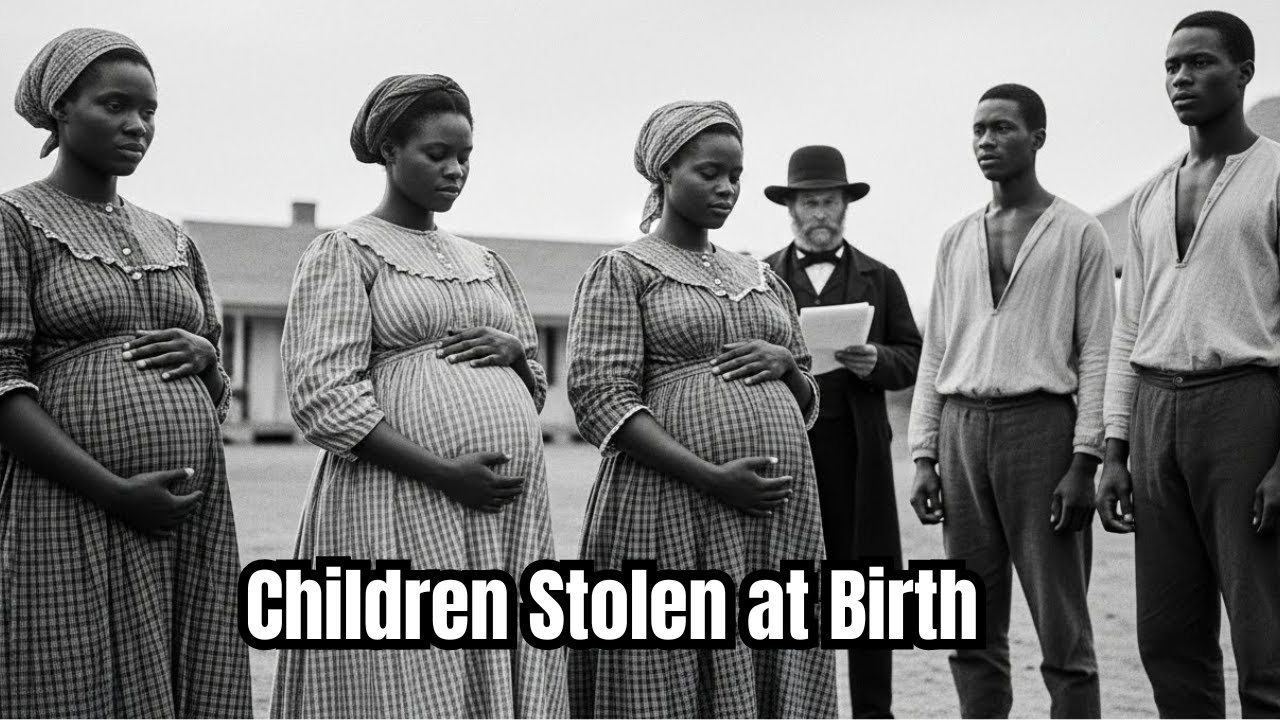
They could produce enslaved people at home. Children inherited the enslaved status of their mother. No contracts, no exceptions. Every birth automatically belonged to the enslaver.
A woman forced to bear children repeatedly increased her owner’s wealth with each delivery. Those children could labor, be rented out, or be sold. Human life became a line item, and the bodies of enslaved women became the machinery of profit. This was not a secret system.
Plantation records openly tracked increase, listing births next to livestock counts and crop yields. Enslavers calculated future earnings by estimating how many children a woman might bear. A young girl’s puberty marked not a transition to adulthood but a shift in market value. Once deemed capable of childbirth, pressure followed quickly.
Frequent pregnancies were encouraged. Recovery time was ignored. Pain was irrelevant. The language of the ledger revealed how enslavers thought.
In plantation records, enslaved women were not described as daughters, wives, or mothers. They were described as prime, healthy, strong, and good breeders. The same words used for animals were applied to human beings. This was not metaphorical.
It was literal accounting practice. A woman who produced many children was labeled valuable. One who could not was punished, sold, or discarded. The legal system supported this completely.
Enslaved women could not testify against white men in court. There was no crime to report. Sexual assault was not a violation of the law because enslaved women, in the eyes of that law, could not be raped. Property by definition could not refuse its owner.
This legal reality created an environment where abuse required no secrecy. Sexual violence was carried out openly, repeatedly, and without consequence. It was a tool of domination, humiliation, and reproduction all at once. For enslavers, sexual access reinforced power.
It reminded enslaved men and women that resistance was futile. It destroyed family bonds. It bred fear. And in many cases, it produced children who would themselves be enslaved, further enriching the system.
On some plantations, enslavers actively interfered in relationships, preventing bonds that might encourage loyalty between enslaved people rather than obedience to the owner. Emotional attachment was seen as dangerous. Love was a liability. Some enslavers arranged forced pairings, pressuring men and women to have children regardless of emotional connection.
Others relied entirely on coercion and assault. Either way, consent never entered the equation. Enslaved men were also victims of this system. They were forced to watch partners assaulted, children fathered by enslavers, and families fractured by violence.
They were powerless to stop it. This psychological cruelty was intentional. It reinforced submission through helplessness. And yet, within this terror, enslaved women resisted in extraordinary ways.
Resistance did not always look like rebellion. Often it was quiet and desperate. Some women attempted to control their fertility using dangerous herbal methods. Others avoided relationships altogether.
Some formed secret emotional bonds, clinging to humanity where they could. Others resisted internally, refusing to let enslavers define their worth even when their bodies were violated. Resistance came with punishment. Women who rejected sexual advances could be beaten, starved, or sold.
Sale was one of the most feared consequences, not just because of physical danger but because it meant permanent separation from children, parents, or partners. Pregnancy did not bring safety. In many cases, it increased exploitation. Pregnant women continued heavy labor.
Miscarriages were common. Infant mortality was devastatingly high. Many women were sent back to the fields weeks or even days after giving birth. Infants were sometimes left unattended while mothers worked, leading to illness and death.
Even motherhood offered no safety. Children born into slavery were never guaranteed to stay with their parents. They were often seen as future currency. A child could be sold to pay debts, fund expansion, or reward loyalty.
Love did not matter. Biology did not matter. Profit did. Children born from sexual violence carried lifelong consequences.
They were reminders of trauma for their mothers. They were also caught between worlds, sometimes lighter skinned, sometimes acknowledged by enslavers, sometimes rejected entirely. Their existence exposed the hypocrisy of a society that preached morality while profiting from abuse. This violence fed directly into an even larger engine of destruction: the domestic slave trade.
After 1808, enslavers in the upper South realized a new profit opportunity. They could sell enslaved people to the deep South for labor on cotton, sugar, and tobacco plantations. States like Virginia, Maryland, and Kentucky became major exporters of human lives. Families were torn apart systematically, not as a byproduct of slavery, but as part of a deliberate economic system.
Children were prime assets. Boys and girls alike were evaluated for their future labor potential. Infants were not spared. Often children were sold at auctions while parents were forced to watch, powerless to intervene.
Mothers screamed as babies were carried away. Fathers were restrained, sometimes physically, sometimes by threat. These scenes were common across the South, recorded in advertisements, estate inventories, and newspapers. The phrase sold down the river was literal, a euphemism for forced relocation often thousands of miles away from family and home.
Parents were forced to endure unbearable loss repeatedly. Some children were sold as infants, others as toddlers, and some as teenagers. Even when families were allowed to stay together temporarily, the looming threat of sale created constant fear. Every embrace was tinged with dread.
Every lullaby was a reminder that separation could come at any moment. Spouses were routinely separated, leaving marriages unprotected and unstable. Because marriage among enslaved people was not legally recognized, family structures could be reshaped or dissolved at will. Mothers and fathers lost not only their children but also the partners they depended on.
The emotional devastation was intentional. By breaking familial bonds, enslavers weakened emotional loyalty among the enslaved population, ensuring obedience and minimizing collective resistance. Auction houses, riverports, and plantation markets became tools of psychological warfare. Wealthy buyers openly competed for the best enslaved individuals, sometimes inspecting families and children as if evaluating livestock.
This commodification reinforced the idea that human beings were assets, not people. Enslaved people developed extraordinary resilience and strategies to survive under these conditions. Some formed surrogate families among neighbors or distant relatives. Some tried to hide children during sales, though punishment for this was severe.
Others relied on spiritual practices and community networks to maintain emotional strength and a sense of continuity. Letters, secret messages, and clandestine visits were methods of keeping bonds alive. Parents learned to grieve in advance. They celebrated milestones quietly, knowing that joy could be taken away at any time.
Children learned early to understand that their bodies and futures were not their own. The lessons of fear and vigilance became survival skills, skills that would be carried across generations long after emancipation. This terror extended beyond the immediate threat of sale or physical abuse. It shaped relationships, self-perception, and the sense of what was possible in life.
Enslaved people had to navigate an environment in which trust was dangerous, attachment could bring pain, and resistance carried deadly risk. The mental burden was relentless. The constant threat of violence and family separation created a psychological environment designed to enforce submission. Enslaved people were taught to anticipate loss, to expect betrayal, and to restrain their emotions.
Love and family ties were simultaneously encouraged and punished. Mothers loved their children but could not protect them. Fathers tried to guide their families but had no legal authority. Even the strongest bonds could be broken at the whims of a buyer or overseer.
Children growing up in slavery were forced to internalize these harsh lessons early. They learned that their parents could not always protect them. They observed injustice and cruelty and realized that the world they lived in would not be fair or safe. Relationships were scrutinized, manipulated, and sometimes broken outright to prevent unity that might threaten the authority of the enslaver.
The enslaved population was kept in a state of perpetual instability, ensuring that resistance would be fragmented and survival would remain the primary goal. Yet even in this environment of fear, enslaved people found ways to resist psychologically and emotionally. Secret rituals, spiritual practices, and storytelling became tools for maintaining identity and hope. Families nurtured one another in subtle ways, sharing knowledge, teaching children values, and preserving culture despite constant threats.
These small acts of defiance helped sustain humanity in the face of systematic dehumanization. This psychological warfare had long-term consequences. Trauma passed down from generation to generation shaped communities, social structures, and cultural memory. Patterns of caution, emotional restraint, and survival strategies were inherited because the experiences of slavery were too profound to simply vanish.
The past did not end with emancipation. Its echoes are everywhere, in family structures, economic inequality, social dynamics, and collective memory. Generations of families were torn apart, stripped of agency, and forced to navigate a system that devalued their humanity. Children learned fear, caution, and resilience as survival strategies, and those lessons were passed down.
Communities developed coping mechanisms, cultural practices, and traditions that carried both the weight of survival and the strength of endurance. The economy of slavery was built not just on physical toil, but on the commodification of life itself. Enslavers sought to control not just work output, but reproduction, love, and identity. They treated children as property, families as assets, and women as production units.
Despite unimaginable cruelty, enslaved people resisted, survived, and maintained their humanity. They protected each other in whatever ways they could, nurtured family bonds against all odds, and preserved cultural memory. They resisted with courage, intelligence, and ingenuity. The full reality of this history has been softened, minimized, or erased entirely.
The comforting myth that slavery was simply a labor system, or that families existed freely within it, does not survive contact with the records. Enslaved people loved fiercely despite a system designed to destroy those bonds. The destruction of those bonds was not accidental. It was a deliberate strategy of control, carried out through law, accounting, sexual violence, and the sale of children away from their parents.
Understanding this history matters because inequality in America is not accidental. It is the result of centuries of deliberate systems of control. The scars of slavery run deeper than bruises or cuts. The most enduring damage was in the mind and spirit, silently shaping lives across decades.
The stories of enslaved people, of their suffering, resilience, and humanity, were almost erased. But they were recorded, in ledgers and newspapers, in the testimony of those who survived, and in the traditions they carried forward. Remembering them is the first step toward understanding what was built on their labor and their loss.
