The Woodward name once carried the weight of American royalty. William Woodward Sr. built the dynasty from the granite vaults of the Hanover National Bank, an institution that operated less like a community lender and more like a financial guillotine, holding the debts of nations and the fate of industries. He was known in trade circles as the cotton baron, extracting profit at every stage from plantation to textile mill.
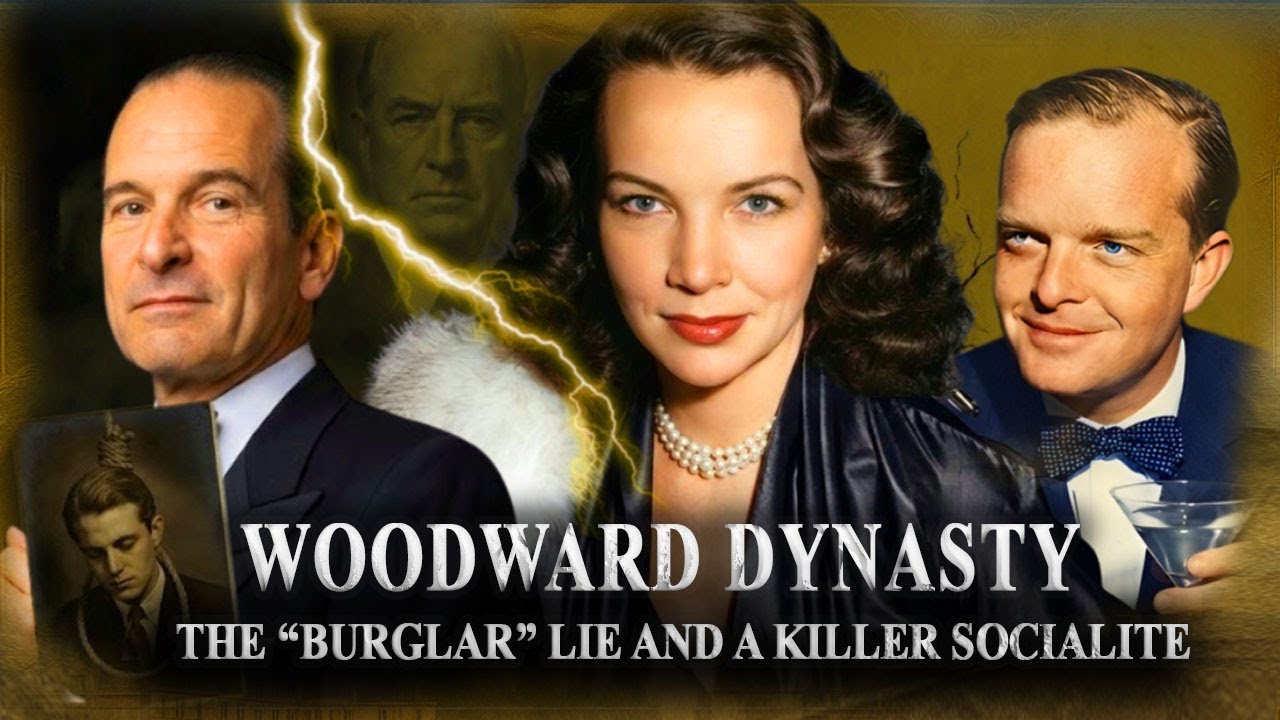
To him, commodities were abstract figures on a ledger. The fortune he amassed found its most grotesque expression at Belair Stud in Maryland, where horses were treated like citizens and humans like serfs. During the Great Depression, while America starved, Woodward poured millions into equine genetics and achieved something never matched in history, breeding the only father-and-son pair to both win the Triple Crown: Gallant Fox in 1930 and Omaha in 1935. A horse with a cracked hoof received better care than a coal miner with a crushed lung.
Woodward ruled the Jockey Club, the governing body of American horse racing, with an iron fist. He decided who was socially acceptable and who was trash, keeping new money and the wrong sort outside the gates. But the walls of his own home were crumbling. His only son, William “Billy” Woodward Jr.
, was the target of his cold contempt. William Sr. did not want a son; he wanted a clone. Instead, he got Billy, a tall, handsome, fundamentally soft young man who preferred the company of women to the warfare of the bank.
The father treated his son with a disdain he would never show his prize stallion. He kept Billy on a financial leash, providing a lavish lifestyle but denying true independence, ensuring his son never learned how to survive. He crippled him with luxury. William Sr.
‘s wife, Elsie Woodward, was the scalpel to her husband’s hammer. She guarded the Woodward bloodline like an immune system fighting a virus. When Billy brought home Anne Eden, a showgirl from Kansas with a fabricated past, Elsie did not see a daughter-in-law. She saw a pathogen.
She never spoke to Anne directly during the first year of the marriage, addressing Billy as if the woman beside him were a piece of rented furniture. She rearranged seating charts to isolate Anne at dinner parties, ensured she was blackballed from exclusive committees, and used the family purse strings as a choke collar. She kept the couple on a short leash, threatening to cut Billy off if he did not bring his wife to heel. She preferred a miserable, hate-filled marriage behind closed doors to a messy public separation.
She knew the marriage was a disaster, knew Billy was drinking heavily and Anne was unstable, but she refused to allow a divorce because Woodwards do not divorce. Anne Eden was born Angeline Lucille Crowell in Pittsburgh, Kansas, to a broken home. She scrubbed the Kansas accent from her voice, replaced her name, and worked as a model, radio actress, and showgirl. When she met Billy in 1943, she did not see a soulmate.
She saw the Woodward name, the Belair stud, and the Hanover Bank. The marriage immediately began to rot. Anne realized Billy was not a king but a weak, alcoholic boy. The social rejection from Elsie and the Swans, the legendary circle of high society matriarchs led by Babe Paley, Slim Keith, and CZ Guest, triggered a desperate transformation.
Anne became obsessed with etiquette, spent fortunes on clothes, and berated Billy in public for his weakness. He retreated into the bottle and began clumsy affairs. By 1955, the marriage was a corpse walking. Billy was reportedly making moves to legally separate.
By the autumn of 1955, the neighborhood of Oyster Bay was gripped by a prowler scare. There were reports of a burglar roaming the wealthy estates of the Gold Coast. Anne latched onto the idea of the prowler with fanatical intensity. She insisted on keeping weapons in the bedroom, including a custom-made double-barreled shotgun designed to stop a charging boar.
On the night of October 30, 1955, the couple attended a dinner party honoring the Duchess of Windsor. Observers noted a manic, brittle energy in Anne. They returned to the Oyster Bay estate around 1 a. m.
and went to separate bedrooms. At exactly 2 a. m. , the shotgun went off.
Billy stepped out of his bedroom door, defenseless and groggy. Standing less than ten feet away in the gloom, Anne did not call out a challenge. She did not ask who was there. She did not fumble for a light switch.
She raised the weapon and pulled the trigger. The blast struck him directly in the face, obliterating his identity in a fraction of a second. He crumpled onto the carpet. Anne stood amidst the carnage, screaming “I shot him.
I thought he was a prowler. ” But whispers from the first officers on the scene painted a colder picture, a delay, a pause just long enough to verify the kill. The shotgun was double-barreled. She fired both barrels.
One hit Billy. The other went wide, striking the wall, a miss some forensic skeptics argued was calculated to sell the story of uncontrollable fear. The Nassau County police arrived to find the scene already contaminated by wealth. The family doctor was summoned before the medical examiner.
The Woodward lawyers arrived with terrifying speed, erecting a wall of silence around Anne. She was sedated, shielded, and moved to a hospital. In a poor neighborhood, she would have been handcuffed by sunrise. In Oyster Bay, she was treated as the victim.
The grand jury refused to indict her. The official verdict was accidental shooting. But the dark hypothesis persisted. The prowler, Paul Worth, was a real petty criminal who had been burglarizing homes in the area.
He was later arrested and confessed to being near the estate that night. But Anne did not need to see him. She only needed the narrative of him. A divorced Anne would be cast out of the kingdom, stripped of the name, the money, and the title.
A widow retains everything. The cold calculus of survival dictated that Billy was worth infinitely more to her dead than alive. Elsie Woodward likely knew her daughter-in-law had executed her son. But she understood a murder trial would drag the family name through the gutter.
The Hanover Bank could not afford a murderess. So she paid for the best defense lawyers to protect the woman who killed her son. It was not mercy. It was a life sentence.
Elsie bought silence to save the dynasty. Justice arrived in the form of Truman Capote. He cultivated a friendship with Anne in the years following the shooting, listening to her paranoid justifications. To Anne, he was a sympathetic ear.
To Capote, she was raw material. He called her “Mrs. Bang Bang” and wrote a chapter titled “La Côte Basque, 1965,” scheduled for publication in Esquire magazine in November 1975. The story depicted Anne as a sociopathic opportunist who waited in the dark and, in Capote’s legendary phrase, “shot him affectionately through the head.
” When advanced copies circulated in October 1975, the reaction was nuclear. For Anne, the publication meant the end of her fragile social quarantine. On the night of October 10, 1975, just days before the magazine’s release, Anne Woodward retreated to her Fifth Avenue apartment and swallowed cyanide. Cyanide is not a common household poison.
It is a tool of spies, a break-glass-in-case-of-emergency exit strategy. The suicide was interpreted by the world not as a tragedy but as a confession. Innocent people fight back. Guilty people swallow poison.
The tragedy did not end with her. The boys, Woody and Jimmy Woodward, had slept down the hall while their mother blew their father’s face off. Jimmy succumbed to schizophrenia and jumped from a window in 1976, surviving but physically broken. In 1999, 44 years after the shotgun blast, Woody checked into the Essex House Hotel in Manhattan and threw himself out the window.
The Woodward dynasty effectively ceased to exist. The bank, the stud, the society pages, it all ended in broken bodies and a corpse filled with cyanide. The house is empty now, the horses are gone, and all that remains is the echo of a shotgun blast in a dark hallway.
