A man rode into Fort Worth in the summer of 1878 with a dead body roped across his pack mule. Flies worked the corpse as he walked into the sheriff’s office and dropped a warrant on the desk. He asked for his money. The sheriff counted out the bills and did not ask how the fugitive had died.
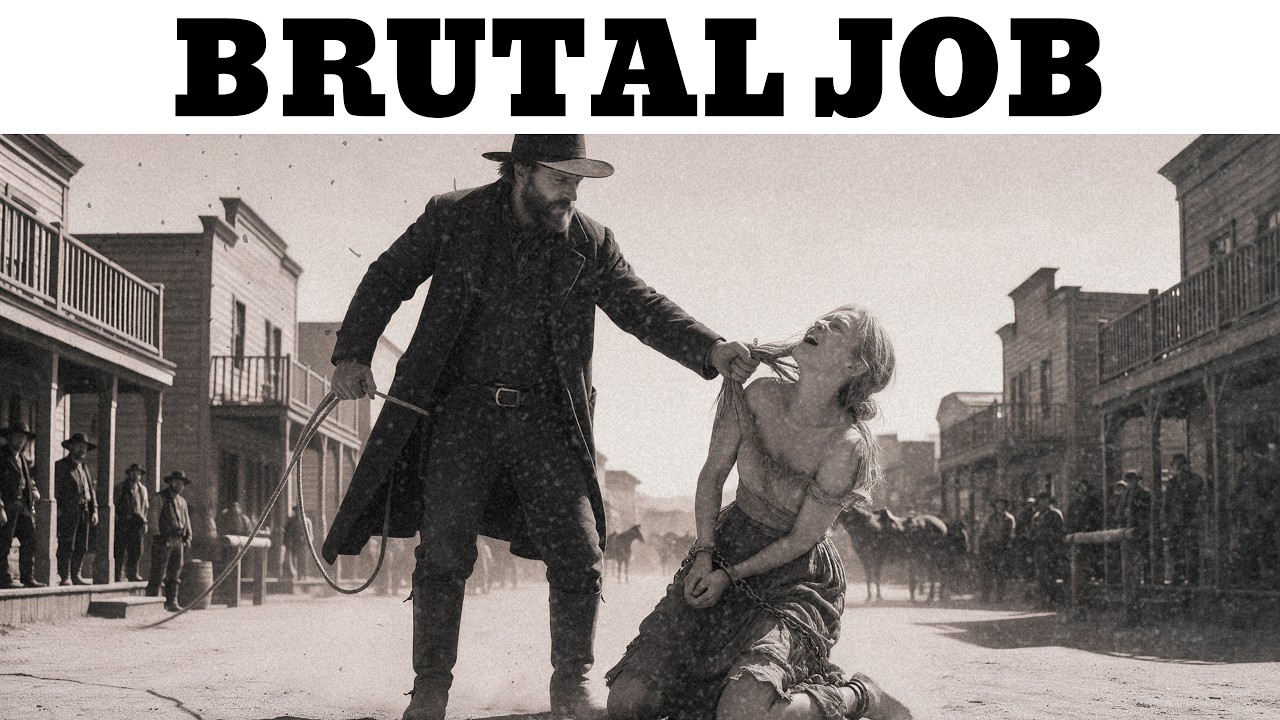
Hollywood has spent a century making that moment look like rough justice with a code. The truth was rougher, and it had nothing to do with justice. The legend buried its deepest secret so well that even now, most Americans have never heard it. Start with the money, because the first lie the legend tells is that the work paid.
In 1876, a posted bounty in southern Arizona might read $25 for a horse thief. Twenty-five dollars for a man who could ride two hundred miles of canyon country tracking that name and come back with nothing. He bought his own cartridges, fed his own horse, slept in the dirt with his saddle for a pillow. If the trail went cold, he ate the loss and rode home poorer than he left.
Nobody reimbursed a bounty hunter for failure. A ranch hand in Texas that same year earned about thirty dollars a month for steady work and a bunk to sleep in. The bounty hunter earned nothing until a body or a prisoner was delivered, and delivery could take weeks over country that did not forgive mistakes. The territorial warrants on file in Pima County show the full range: twenty dollars for assault, fifty for robbery, a hundred for murder.
That hundred-dollar murder warrant sounds like real money until you subtract the horse feed, the ammunition, three weeks of provisions, and the miles. Men who chased the top warrants regularly cleared less than a cotton picker earned in the same season. The risk was total. The margin was thin.
Failure paid nothing at all. The men who hunted warrants for a living were not gunslingers. They were broke, in debt, men who could not get steadier work or who owed someone who would not wait. The dime novel cover showed a man in leather with a rifle across his saddle riding the horizon.
The truth was a man in a threadbare coat counting his last cartridges and hoping the name on the paper had not already crossed into Mexico. In most territories west of the Mississippi, any man who could lay hands on a warrant could call himself a bounty hunter. There was no application, no examination, no training. No authority stood behind him except a scrap of paper from a local court, often signed by a justice of the peace who had never seen the accused and never would.
A merchant could take a warrant off the board. A farmer could take one. A man fresh off his own criminal trouble could take one if nobody cared to check. In some counties the warrants hung on a nail inside the sheriff’s office like a general store notice board.
The profession did not exist inside the law. It existed in the space where the law had not yet reached. No one trained these men in the use of force. No one watched what they did fifty miles from the nearest settlement.
No one asked a single question about what happened between the day they took the paper and the day they came back with the result. That silence was the cradle. Every atrocity that followed was born inside it. A bounty hunter who killed his man forty miles from the nearest town had a practical problem.
He needed proof, and proof meant the body. In summer heat across the Arizona territory or the Texas Hill Country, a corpse begins to swell within hours. By the second day the smell travels a quarter mile on a still wind. Flies find the dead before the first night ends.
Some hunters packed the body in whatever salt they could find. Others wrapped the dead man in soaked canvas and dragged him behind a horse across open ground. Some gave up on the full corpse entirely and cut off the head. In 1882, a deputy marshal working Indian territory brought a wagon back to Fort Smith loaded with six dead men stacked flat like fence rails.
He collected his fees from the court clerk and rode out again within the week. That wagon rolling into town under an August sun, the flies, the stink drifting across the street, was not a story anyone told at the bar. That was the job. No film has ever put a camera on that ride.
It does not sell tickets. You know the phrase from every wanted poster Hollywood ever printed: dead or alive. Those words were not an invitation to choose. They were permission to kill.
A living prisoner had to be fed, guarded through the night, watched at every river crossing, kept from running in country that offered a hundred places to vanish. A dead man needed none of that. Dead was lighter. Dead was quieter.
Dead did not grab for your pistol at a water stop. The fee ledgers from the Western District of Arkansas tell a story that never made the screen: more fugitives came back to Fort Smith dead than alive. The courts almost never asked how. No inquest, no sworn questions about the manner of death.
The warrant said dead or alive, and the hunter heard only the first word, because the first word was easier and the pay was identical. He was not punished for choosing it. He was rewarded the same either way. That was not a defect in the system.
That was the system running the way the men who designed it knew it would. A wanted poster of the 1870s carried a woodcut portrait, or more often nothing but words. Medium height, dark hair, scar on the left hand. That description fit a hundred men in any town between the Red River and the Pecos.
A bounty hunter who had been riding two weeks on bad food and worse sleep was not inclined to study the difference between close enough and certain. He wanted the money. He wanted to go home. The face in front of him matched the paper well enough.
The description problem was not incidental. It was structural. A contested warrant in Bexar County from 1872 describes the wanted man as five-foot-nine and brown-haired, a notch cut from his left ear. Three different men with notched ears lived within a day’s ride of San Antonio.
The record does not tell us what became of the other two when the hunter arrived. That is not an anomaly in the archive. That silence is the archive. Frontier courts kept almost no records of mistaken kills because they did not investigate them.
When a hunter brought in the wrong man dead, there was no trial and no consequence. The dead man’s family had no legal remedy. No official came to the door with an explanation. Hollywood shows a bounty hunter studying a clear photograph and chasing a face he knows by heart; the real frontier never possessed that precision.
It ran on vague descriptions and exhausted guesses, and the wrong guess cost an innocent man his life while the man who guessed wrong collected his fee and left. The line between bounty hunter and outlaw was one bad season. Henry Plummer proved it in Montana territory in the winter of 1863. Plummer served as the elected sheriff of Bannack.
He wore the star. He signed warrants. He also led a gang of road agents who robbed gold shipments on the trail between Bannack and Virginia City. The same man who represented the law by day ran a robbery operation by night.
When the local vigilance committee caught up with him, they hanged Plummer from his own gallows on January 10, 1864. He was not alone in working both sides. The skills were identical: tracking men across rough country, knowing which way a frightened man will ride, reading the ground, reading the weather, reading a camp. The difference between a bounty hunter and a fugitive was which name appeared on the warrant that week.
The profession attracted men who could handle violence without flinching, and that quality did not switch off when the warrant ran out. Some of those men never needed a warrant to begin with. They simply chose whichever side of the paper was paying. A bounty hunter who found his man in a canyon camp a hundred miles from the nearest settlement had a choice the law never imagined.
Bring the prisoner in and collect the posted reward, or take the fugitive’s money instead and ride the other way. No one would know. There was no second pair of eyes out there, no telegraph, no report to file with anyone. A man alone in the wilderness with a frightened prisoner and an empty pocket answered to exactly one authority: his own appetite.
Newspapers in Missouri and Kansas throughout the 1860s and 1870s published complaints from sheriffs who suspected certain hunters of selling warrants back to the men they were supposed to catch. Suspicion was easy. Proof was impossible, because no one was positioned to gather it. The system gave private citizens lethal authority and then deliberately looked away.
The men who took bribes never wrote about it. The men who paid them had every reason to stay quiet. And the law kept handing the next warrant to the same men, because there was no one else to hand it to. When a full corpse could not be hauled across open country, the system accepted pieces of one.
Severed heads delivered to a sheriff’s desk are documented in more than one territory. So are ears. So are hands. A bounty hunter could ride into a county seat carrying a burlap sack and a sworn affidavit and walk out with his money.
The justice of the peace would open the sack, examine the contents, and stamp the payment. This was not some rogue practice on the fringe. It was procedure. The legal system west of the Mississippi was too thin and too broke to send its own officers into the back country, so it hired freelancers and accepted whatever those freelancers carried home.
The courts had no alternative, and they knew it. Hold on to the logic of that arrangement, because it scales. If a government is willing to pay a private man for a severed head and call it justice, then paying him for a scalp is not a leap. It is the next line item on the same invoice.
The most dangerous assignment a manhunter could draw was Indian territory, present-day Oklahoma. Federal law there ran through one courthouse in one man: Judge Isaac C. Parker at Fort Smith, Arkansas. Between 1875 and 1896, Parker’s court processed over 13,000 criminal cases.
He dispatched more than 200 deputy marshals into the territory to bring fugitives back alive or otherwise. Sixty-five of those deputies never returned—shot from ambush on a creek bank, knifed in a nighttime camp, left in a ditch alongside a road that had no name on any map. Deputy Marshal Bass Reeves worked that territory for over thirty years. He is documented as having arrested more than 3,000 fugitives and killed fourteen men in self-defense.
But for every Bass Reeves who survived to retirement, there was a man like Deputy Jacob Heirs. Heirs was killed in the Creek Nation in 1876. No witness came forward. No inquest was held.
His name appears once in the Fort Smith Ledger and nowhere else. These deputies did not draw salaries. They earned fees per arrest, per mile ridden, per body delivered to the clerk’s office. Strip the badge away, and the job description was identical to bounty hunting.
They rode into country with no sheriff, no jail, no way to send word if something went wrong. The most lethal law enforcement posting in American history was, underneath the paperwork, a bounty operation funded by the head and managed by one exhausted judge. Parker earned the title Hanging Judge. The men he sent into that country earned a pine box and a name scratched into a courthouse ledger that most Americans will never read.
Women worked the bounty trade, and Hollywood did them no favors in either direction—erasing them entirely or dressing them in tight corsets with a pistol on each hip. Neither version came within a mile of the truth. The real women who pursued fugitives for pay operated inside the same system that offered no protections and no backup. They carried the same firearms across the same hard miles and faced the same desperate men at the end of the trail.
But the surviving record on female bounty hunters is thin, and most of what fills the silence is invention. What the evidence supports is not the empowerment tale anyone wants to hear. It is a desperation story. These women entered the trade for the same reasons the men did: debt they could not outrun, a husband dead and nothing left but a horse and the knowledge of where certain men like to hide, a family that needed feeding faster than any respectable occupation could provide.
The movies wanted a heroine. The dime novels wanted spectacle. The real women wanted to survive until next month. That is not the poster anyone prints, but it is what the record says.
Allan Pinkerton built the first private law enforcement corporation in America, founding his agency in Chicago in 1850. Within twenty years it employed more armed operatives than the standing army of the United States. The Pinkertons hunted fugitives across state lines when no local sheriff had authority to follow. They infiltrated the Molly Maguires in the Pennsylvania coal country during the 1870s and put ten men on the gallows.
They chased the James gang and the Reno brothers and assembled case files that no local court could match. But they also broke strikes for the men who paid their fees. In 1892, 300 Pinkerton agents arrived by barge at the Homestead Steelworks in Pennsylvania. Before sundown, seven workers and three agents were dead on the bank of the Monongahela River.
In 1875, Pinkerton men threw an incendiary device through the window of Jesse James’s mother’s farmhouse in Clay County, Missouri. The explosion killed her eight-year-old half-brother, Archie Samuel, and blew off her right arm. No Pinkerton agent was ever charged. The agency ran its own press office, and the newspapers printed what the press office sent them.
Here was the first mythmaker: a private corporation that dressed hired violence in the language of public safety and sold the story so effectively that the name Pinkerton still sounds like law to most Americans today. The company that owns that brand now is the Swedish security giant Securitas. The name survived. The legend held.
The record underneath it is still waiting for most people to read. Bounties did not come with an age limit. A warrant for a horse thief did not state whether the accused was forty or fourteen. The frontier legal system made no meaningful distinction between an adult fugitive and a child when it came to the posted reward.
In territories where magistrates needed a steady flow of cases to justify their federal appointments, warrants were issued generously and returned without close scrutiny. A bounty hunter who dragged a boy into Fort Smith or Prescott or Santa Fe faced no additional questions from the clerk. The paper said wanted. The hunter delivered.
The fee was identical. Court records from Parker’s western district show defendants as young as fifteen standing trial under the same criminal code that governed grown men. The same gallows waited outside. The same cells held them.
The same bounty was paid to the man who brought them in. The system treated every body as equal to the price written on the warrant. It did not pause to consider whether the body it paid for had finished growing. A bounty hunter who could not find his man sometimes found the man’s family instead.
The frontier had no Miranda warning, no right to counsel, no legal shield between a civilian and a man with a warrant and a question. A hunter who rode up to a homestead and met silence at the door had no one listening and no rule preventing what followed. Territorial court records contain formal complaints from citizens describing bounty hunters who threatened them, struck them, and destroyed their property when they would not reveal a fugitive’s location. These were not interrogations conducted under any authority.
They were private violence against people who had committed no crime and held no warrant over their heads. The woman at the door, the children behind her, the old man sitting on the porch with no weapon and no knowledge worth a beating—none of them owed anything to any court. But the law gave them nothing to stand behind when a hunter came through the gate. That is the truth the movies never touched.
Not the gunfight on Main Street. The quiet terror at a cabin door, visited on people who had nothing to do with any of it. And here is where the list changes shape. The first professional bounty hunters in America did not ride across the Great Plains.
They rode into free states carrying shackles and a piece of federal paper. The Fugitive Slave Act of 1793 created the mechanism. A slaveholder or his appointed agent could cross a state line, seize a person claimed as property, and bring that person before a magistrate for return to bondage. A private citizen with no badge, a financial reward waiting at the end, a warrant authorizing the pursuit, capture, and forced transport of a human being.
That is the legal architecture of bounty hunting, and it was set into American law sixty years before anyone pinned a wanted poster in Abilene. The men who did this work were called slave catchers. The name bounty hunter came later, but the job was the same in every detail that mattered. By the 1840s, slave catching was a full profession.
It had its own agents, its own networks, its own supply lines running from the deep south to the Ohio River and beyond. Men built their livelihoods on tracking human beings who had run for freedom, riding them down and dragging them back in irons for a fee. On September 11, 1851, a Maryland farmer named Edward Gorsuch rode into Christiana, Pennsylvania. He had a federal marshal at his side and a party of armed catchers behind him.
He carried warrants for four men who had walked off his farm two years before. The men refused to be taken. Gorsuch was shot and killed on the spot. His son Dickinson was wounded and left in the road.
The four men reached Canada. Thirty-eight people were charged with treason for resisting the capture. Not one was convicted. But the mechanism that sent Gorsuch to that door was still intact when the shooting stopped.
It kept running the next week and the week after that. The tracking was identical to what came later on the frontier. The violence was identical. The authority was identical.
Only the name ever changed. Every gunfighter bounty hunter who followed, every deputy marshal, every Pinkerton operative worked inside a legal machine that was first assembled in Congress for one purpose: to catch people who wanted to be free. The Fugitive Slave Act of 1850 made the machine worse by design. It added federal enforcement.
It compelled ordinary citizens to assist in capture under penalty of law. And it built a payment structure that guaranteed corruption on a national scale. The federal commissioner who heard each case received ten dollars if he ruled the captured person was a fugitive slave. He received five dollars if he ruled them free.
That arithmetic was not an accident. It was a standing financial incentive to send every captured person south, regardless of the truth. And the fraud arrived exactly as the math predicted. Free black men, women, and children living in northern states were seized by catchers who swore under oath they were runaways.
Some of those people had been free for decades. Some had never been enslaved a single day. Solomon Northup was a free man living in Saratoga Springs, New York, when he was drugged and kidnapped in 1841 and sold into slavery in Louisiana. He survived twelve years of bondage before he was identified and freed.
His published memoir told America what the system had allowed. But the system itself was not broken. It was running exactly as the men who wrote the law intended. The commissioners were paid double to rule against freedom, so they ruled against freedom.
That is not a loophole in the machinery. That is the machinery. Multiple states and territories posted official bounties on human scalps. The state of Chihuahua began in the 1830s: one hundred pesos for the scalp of an Apache man, fifty for a woman, twenty-five for a child.
Sonora posted its own schedule. Portions of Texas followed. The payment was per scalp delivered to a government office, and no identification was required. No proof the dead person had ever committed a hostile act.
No proof the scalp belonged to an Apache at all. That was the fatal flaw baked into the contract from the first day. An Apache scalp and a Mexican farmer’s scalp were physically indistinguishable. There was no test, no examination, no method to separate the two once the hair was cut.
The system guaranteed the slaughter of innocents because it had no mechanism to prevent it and no interest in building one. These were not rogue bounties nailed to a tree by vigilantes. They were state contracts drafted in government buildings, signed by elected officials, paid from public treasuries, and recorded in public ledgers. The frontier did not stumble into the scalp trade.
It budgeted for it line by line and kept the receipts. Tom Horn served as an army scout, worked for the Pinkerton agency, and then settled into his true vocation as a range detective in Wyoming. That title was polite. The work was assassination.
The cattlemen’s associations of the 1890s hired Horn to remove suspected rustlers from the range—not through the courts, but through a rifle fired from a ridge at first light. Horn worked alone and left no living witness. His signature was a flat stone placed beneath the dead man’s head. On the morning of July 18, 1901, a fourteen-year-old boy named Willie Nickell stepped out of his father’s house wearing his father’s hat and his father’s coat.
A bullet killed him before he reached the gate. Tom Horn was arrested. A deputy U. S.
marshal testified that Horn had confessed while drinking. Horn denied it. The jury believed the deputy. Horn was convicted of murder and hanged in Cheyenne on November 20, 1903.
He was forty-two years old. The cattlemen who had paid Horn for years did not appear at trial. They did not send a lawyer. They closed their ledgers and went quiet.
Horn was the plainest example of what bounty hunting looked like at its most refined: not a dusty gunfight in the street, but a paid killing carried out at distance, on schedule, by a professional whose employers never intended to share the consequences. The men who wrote those checks were never charged. The boy never came home. In 1849, John Joel Glanton rode into Chihuahua City and signed a contract with the state government to deliver Apache scalps for a per-unit bounty.
He delivered. Then he kept going. Glanton’s gang killed Apache fighters first, then Apache women and children, then Mexican villagers and townspeople whose scalps could pass as Apache at the collection desk. Samuel Chamberlain rode with the gang and years later wrote an eyewitness memoir called My Confession.
His pages describe the destruction of unarmed settlements, the scalping of people whose only offense was living within reach, the casual murder of travelers who had nothing to do with any war. When the government of Chihuahua discovered what Glanton was actually delivering and revoked his contract, he did not stop killing. He moved west to the Yuma crossing on the Colorado River, seized the ferry there, and began robbing and murdering anyone who tried to cross. In April of 1850, the Quechan people attacked his camp at dawn and ended it.
Glanton and most of his men died on that riverbank. The Glanton Gang is the purest demonstration of what happens when a government outsources killing to private men, pays by the piece, and asks no questions about the product. The violence did not spin out of control. It followed the incentive exactly where the incentive led.
The contract said scalps. It never said whose. Before Glanton, there was Kirker. James Kirker was born in County Antrim, Ireland.
He came to America young, moved west into the fur trade, and by the early 1840s held contracts with the state of Chihuahua to deliver Apache scalps at one hundred pesos each. Ralph Adams Smith spent years in the Mexican archives and published the result as Borderlander, the most documented account of Kirker’s career. The evidence is in ink: state payment ledgers showing scalp after scalp redeemed for coin, military letters praising Kirker’s efficiency, eyewitness accounts of raids on villages where the dead included women, children, and men who had no connection to any Apache band. Kirker operated across a wide stretch of northern Mexico and the American Southwest for years.
Chihuahua celebrated him, paid him repeatedly and generously, never arrested him, never questioned his receipts. Kirker is not a failure of the system. He is the system performing as designed. The state posted a price per scalp.
Kirker filled the order. The state did not ask where the scalps came from, and Kirker did not explain. That is not the story of one violent man. It is the story of a government contract signed and honored in full that turned mass killing into a payroll expense.
And now the truth the legend buried deepest. In 1793, the United States Congress passed the first Fugitive Slave Act. That law established a right that had never existed before in American statute. A private citizen could cross a state line, seize another human being, and haul that person before a magistrate for return to slavery.
No badge. No government office. A private man armed with a warrant and a profit motive, authorized by federal law to hunt, capture, and use force against another person for money. That is the legal definition of bounty hunting.
And that is where the trade was born in America. Not in Dodge City. Not in Tombstone. In the United States Congress, half a century before the first cattle drive.
In 1842, the Supreme Court made it permanent. Justice Joseph Story, writing for the majority in Prigg v. Pennsylvania, ruled that the right to recover a fugitive slave was a constitutional guarantee. He ruled that no state law could obstruct it.
He ruled that the federal government held that authority exclusively and completely. That decision cleared the path for slave catchers to operate in every jurisdiction in the country without any state interference at all. The legal logic Story committed to paper in 1842 is the same logic bail enforcement agents cite today. They cross state lines without a judicial warrant and call it constitutional.
The road was built in 1842. The Supreme Court built that road. Commercial bounty hunting has been traveling it ever since, and most of the people who use it have never read the case that paved it. The Fugitive Slave Act of 1850 expanded the system with federal commissioners, compulsory civilian cooperation, and the ten-dollar versus five-dollar fee split that made fraud more profitable than truth.
That law industrialized slave catching and created a national bounty hunting profession a full generation before any wanted poster appeared west of the river. Every legal principle that later governed the frontier bounty hunter descends directly from those statutes: the right of pursuit across jurisdictions, the authority to detain, the right to use force, the acceptance of a body as proof, payment per head. Not one of those principles was invented on the frontier. Every one of them was written into slave catching law and carried west by the men who used them.
Then came the mythmakers. In 1958, Steve McQueen starred in a television series called Wanted: Dead or Alive. It ran three seasons and fixed an image in the American mind that has never left: a handsome loner in a clean hat doing hard work for rough justice. That show premiered exactly one century after the 1850 act turned slave catching into the most lucrative manhunting trade on the continent.
The dime novelists had already laid the groundwork, dressing the bounty hunter in buckskin and handing him a hero’s motive the real men never carried. And the bail bond industry, which inherited the legal architecture whole and still operates inside it today, has spent 150 years separating its public face from the slave catching origin. In forty-six American states right now, a bail enforcement agent can break down a door without a warrant issued by any judge. The legal authority behind that kick traces straight back to 1793.
The most disturbing truth about the Wild West’s most disturbing job is not a single killing on this list. Not the Glanton Gang. Not Tom Horn. Not the scalp bounty ledgers.
It is that the entire mechanism was never built for justice. It was built to enforce slavery. When slavery ended, the mechanism did not die with it. It pivoted, found new targets, and survived.
The United States is the only developed nation on Earth where commercial bounty hunting remains legal. The frontier’s most disturbing job did not end with the frontier. It changed its clothes and kept working. The men who did this work have been rewritten as rough heroes on a poster: leather and long rifles and a slow ride into the sunset.
The system that made those men was designed to drag human beings back to chains. When the chains came off, the system did not vanish. It found new hands to do the same work under a different name. Somewhere in America tonight, a man with a warrant and no badge is standing outside a stranger’s door.
He is the last living descendant of the frontier’s ugliest trade. Nobody ever put that in a movie.
