The afternoon of February 8, 1887, was about to become the most famous in Fort Worth’s short and violent history. Jim Courtright, the city marshal whose name had become a curse and a threat across the cattle town, stood outside the White Elephant Saloon, his hand resting near the pearl-handled revolvers he wore in their reversed holsters. Across from him stood Luke Short, the gambler who had refused to pay the marshal’s protection money. Courtright had built his reputation on making men cave when he faced them down, but Short was not the sort of man who caved.
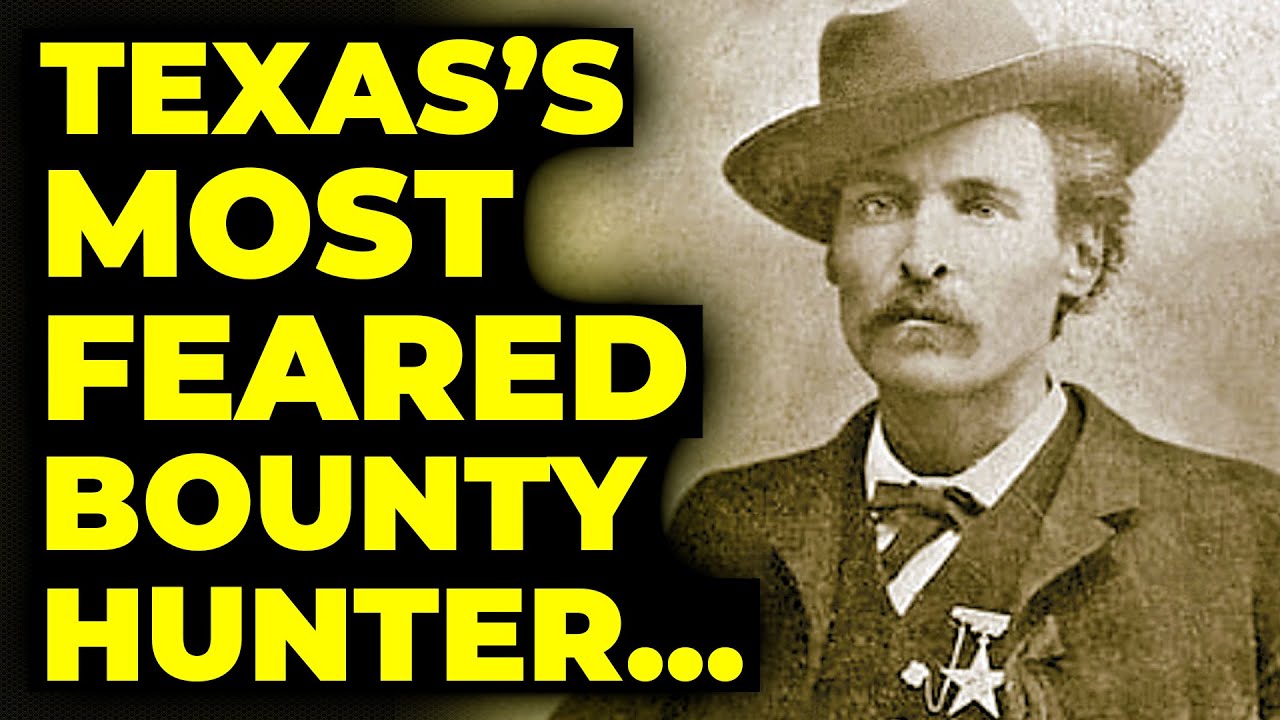
Courtright stepped forward, tall and confident, hoping to provoke his smaller opponent into drawing first. Within seconds, both men’s pistols were out, and the marshal’s body was crumpling to the boardwalk with two bullets in him. By the time the smoke cleared, the most feared lawman in Texas was dead, killed by a man he had underestimated. The question of how Courtright had risen so high and fallen so violently is the story of the American frontier itself.
The American frontier was a vast, untamed territory stretching from the Mississippi River to the Pacific Ocean. For most European settlers, it was largely unexplored land, a place that promised both opportunity and chaos in equal measure. The middle of the nineteenth century saw the peak of westward expansion, driven by the doctrine of Manifest Destiny, the belief that Americans were destined to spread across the entire continent. But this movement collided violently with Native peoples, Mexican landowners, and competing settlers, creating near-constant conflict.
At the heart of this lawless environment was a simple fact: formal law enforcement barely existed. The federal government controlled only fragments of the frontier, leaving settlers to fend for themselves. Towns sprang up rapidly around mines, railroads, and cattle trails, often with no official government at all. As populations boomed, the need for law enforcement became critical, yet sheriffs and marshals were few and far between.
Local law enforcement agencies frequently lacked the resources to keep the peace. Their jurisdiction was often limited, and criminals simply fled across county or state lines, making justice nearly impossible. This vacuum gave rise to the bounty hunter. These individuals operated outside official law enforcement, but they played a crucial role in maintaining some semblance of order.
They were paid to track down criminals, often working from wanted posters issued by lawmen or local governments offering rewards. The Wild West was full of outlaws, thieves, cattle rustlers, and killers who found the barren wilderness a perfect hiding place, which made bounty hunters essential for chasing fugitives across rugged mountains, deserts, and vast plains. Alongside the criminal terrain, the frontier was shaped by its saloons, gambling halls, and brothels, which became hubs of social interaction and criminal activity. Towns like Dodge City and Tombstone gained wide fame for their gunfights and raucous nightlife.
Violence was common, and disputes were often settled with a gun instead of a court of law. The absence of legal infrastructure meant personal quarrels frequently turned deadly, further cementing the frontier’s reputation as a chaotic place. Despite the harsh conditions, the frontier attracted people from all walks of life. Some came to get rich through gold mining or cattle ranching, while others sought a fresh start, escaping the stricter social structures of the eastern United States.
But the promises of wealth and freedom were often tempered by hardship, as the frontier offered little safety or certainty. Settlers had to face not only outlaws but also hostile wildlife, disease, and unpredictable elements. Droughts, brutal winters, and scarce resources made survival a constant struggle. The lawless environment also spawned a particular kind of individual: the vigilante.
Vigilante groups often formed in towns where law enforcement was ineffective or completely absent. These groups took justice into their own hands, sometimes carrying out brutal punishments on suspects. However, vigilante justice often blurred the lines between right and wrong, and innocent people occasionally fell victim to hasty judgments. Jim Courtright was born in 1848 in Sangamon County, Illinois, a largely rural area where hunting and gun culture were part of everyday life.
As a young boy, he was fascinated by firearms, practicing for hours to improve his accuracy and speed. His obsession with guns became a defining trait of his early years. While many boys his age were playing, Courtright was already developing the skills that would later make him one of the fastest shooters in the West. He reportedly learned to shoot with two pistols at once, a rare skill that gave him an advantage in gunfights, and he carried his revolvers in reversed holsters for a faster draw.
At seventeen, while the American Civil War was raging, Courtright lied about his age to enlist in the Union Army, joining the 7th Iowa Infantry. Although the war was a brutal and horrifying experience, it shaped Courtright’s early understanding of violence and survival. He fought in some of the most intense and bloody battles, including the Siege of Vicksburg and the Battle of Fort Donelson. His conduct in these battles earned him a reputation as a fearless soldier.
His skill with a rifle and quick decision-making saved his life on multiple occasions. During this time, Courtright’s reputation for courage grew, drawing the attention of his superiors. The most notable incident in his military career came when he saved the life of General John A. Logan, a Union commander, during a skirmish.
A bullet intended for the general hit Courtright instead. The heroic act cemented his reputation. The general, mishearing Courtright’s name amid the noise of battle, began calling him Jim instead of his real name, Timothy, and the nickname stuck. After the Civil War, Courtright found it difficult to return to normal life.
The experience had left him hardened and restless, drawn to the lawless life of the frontier. Instead of settling down, he traveled widely, spending time in various parts of the American West, including Kansas and Nebraska. His wanderlust eventually led him to Texas, a state still suffering from violence, land disputes, and outlaw activity in the war’s aftermath. Texas’s chaotic, fast-growing towns attracted Courtright, and here he began his transformation from soldier to gunman and lawman.
Courtright’s ability to handle firearms, combined with his bold demeanor, quickly made him a force to be reckoned with. His transition to law enforcement was less a calling than a way to channel his experience and skills into something profitable. The post-war frontier was a place where violence and power went hand in hand, and Courtright knew how to navigate these treacherous waters. As a bounty hunter, he excelled at tracking down criminals and outlaws who had eluded traditional lawmen, and his reputation soon grew beyond Texas’s borders.
When Courtright arrived in Fort Worth in the late 1870s, the city was undergoing rapid transformation. It had become a thriving hub for cattle drives along the Chisholm Trail, and the combination of money, cowboys, and saloons made it a magnet for trouble. Hell’s Half Acre, a notorious district of gambling, prostitution, and drunken brawls, was a hotbed of violence and lawlessness. The city was in desperate need of a figure to impose some semblance of order, and Courtright, with his established reputation for ruthlessness and gun skill, seemed the perfect candidate.
As city marshal of Fort Worth, Courtright was given the authority to clean up the streets. He quickly gained a reputation for using fear and intimidation to control not just the outlaws but also the citizens of the town. His style of law enforcement was brutal. He did not hesitate to shoot anyone who challenged his authority.
Courtright was known for his exceptional marksmanship and his ability to draw his weapon before his opponents could react, making him a formidable presence. His tactics were often described as swift and deadly, and his record in dealing with criminals was unmatched by any lawman of his era. Outside his role as a lawman, Courtright operated in a moral gray zone, using his position to create a system of forced protection. Business owners, especially in Hell’s Half Acre, were compelled to pay kickbacks to Courtright for protection, a fee that ensured their businesses would not be harassed by criminals, or worse, by Courtright himself.
This extortion scheme was known to everyone, but few dared to challenge him because of his deadly reputation. Those who refused to pay often found themselves staring down the barrel of his gun, or even worse, they disappeared entirely. Under Courtright’s rule, the criminal elements of Fort Worth lived in constant fear. He imposed strict control over the local saloons, brothels, and gambling halls.
His authority was unquestioned, and he used it to bolster his influence. His dual role as both protector and predator blurred the lines between law enforcement and criminal activity. But for many in Fort Worth, this system worked, at least for a while. Businesses stayed open, and the streets became less chaotic, even if the peace was maintained through fear and violence.
Courtright’s grip on the city was not limited to Hell’s Half Acre. His influence stretched throughout Fort Worth as he built relationships with powerful figures in society, further cementing his control. But his methods began to breed resentment among certain factions, especially those who saw him as more of a tyrant than a lawman. His reputation grew, but so did the opposition to his ruthless enforcement tactics.
Courtright’s tenure as marshal was marked by a growing tension between maintaining order and enriching himself through intimidation, a balance that was destined to collapse. In 1887, the stage was set for one of the most famous confrontations in the history of the American West. Courtright, who had built a reputation as a ruthless enforcer in Fort Worth, turned his attention to Luke Short, a gambler, gunfighter, and saloon owner whose reputation rivaled his own. Short had recently opened the White Elephant, a prominent establishment that attracted the wealthy and the famous figures of the city alike.
Courtright, seeing the success of Short’s business, decided it was a perfect target for his protection extortion scheme. He demanded payment, as he had with many other businesses. But Luke Short was not the type of man to be easily intimidated. Short had a reputation as a deadly gunman and a man who would not back down from a fight.
Born in Mississippi and raised on the dangerous streets of Dodge City, Short had already survived numerous gunfights and walked away victorious. By the time he reached Fort Worth, he was a master of the art of survival. His connections to other well-known figures like Bat Masterson and Wyatt Earp made him not just a businessman but a central figure in the broader power dynamics of the Old West. Tensions escalated quickly between the two men.
Courtright, his pride wounded by Short’s refusal to comply, confronted his opponent outside the White Elephant Saloon on February 8, 1887. Eyewitnesses reported that Courtright, towering over Short in height, seemed confident as he approached with his hand near his pistol, trying to provoke Short into making the first move. Courtright’s plan was simple. He wanted Short to draw first so he could claim self-defense after killing him.
However, Luke Short was no novice in gunfights, and he had mentally prepared himself for the confrontation. What made this confrontation so tense was Courtright’s history of overcoming his opponents, often drawing his weapon faster than they could react. He had already gained a deadly reputation, but this time he underestimated Short’s composure under pressure. According to accounts, Courtright reached for his pistol, but he fumbled slightly as he tried to intimidate Short by drawing his weapon from its holster.
That brief moment of hesitation proved fatal. Luke Short, known for his calmness in life-or-death situations, drew his pistol quickly and fired, hitting Courtright in the chest. As Courtright staggered, another shot rang out. This time, a bullet struck Courtright’s thumb with precision, rendering him unable to return fire.
He fell to the ground, mortally wounded. The entire exchange lasted only seconds, but in that short time, one of the most feared figures in Fort Worth lay dying. Courtright’s death marked the end of his reign in Fort Worth and cemented Luke Short’s status as a man not to be trifled with. News of the shootout spread quickly throughout Fort Worth and beyond.
It became one of the most talked-about events of the era, with newspapers covering every detail. The fact that Short, the smaller man known primarily as a gambler, had taken down a dangerous figure like Courtright elevated his standing even further. The aftermath of the duel left an indelible mark on the history of the West. Short was acquitted of any wrongdoing, given the clear evidence of self-defense.
Courtright’s reputation, both as a lawman and a criminal, was colored by the circumstances of his death, and the duel outside the White Elephant Saloon became legendary, a prime example of the deadly politics of the Wild West. Jim Courtright’s legacy remains deeply complex, characterized by his dual roles as lawman and outlaw. His ability to instill terror made him one of the most influential enforcers of his era. But his methods, often violent and self-serving, blurred the line between justice and criminality.
Courtright was a master of manipulation, using his authority as marshal to increase his wealth through protection rackets, effectively becoming the very thing he was supposed to fight. His efficiency in dealing with outlaws earned him respect, but his corruption alienated many, making him a figure of both fear and contempt. Courtright’s legacy is also defined by his contradictory nature. While some remember him as a symbol of order in times of chaos, others see him as a predator who exploited the frontier’s weaknesses.
His downfall, embodied in his deadly confrontation with Luke Short, highlighted the inevitable end of men who made violence their primary tool of influence. His life reflects broader truths about the American frontier, where power was often enforced by force, and the line between hero and villain was razor thin.
