On the morning of October 30, 2002, police in Danville, Virginia, arrived at a house that would never be the same. Inside, they found the bodies of Julian Clifton Lewis Jr. , 51, and his son Charles, 25, dead in their beds, their lives ended by shotgun blasts fired while they slept. Nearby stood Teresa Lewis, the wife and stepmother, visibly shaken but ready to talk.
Almost immediately, she confessed, her voice trembling as she told officers a story of a robbery gone wrong. She claimed intruders had broken into the house, killed her husband and stepson, and left her helpless. Her story did not hold up for long. As investigators dug deeper, they uncovered something far more calculated.
Teresa had purchased the very shotguns used in the murders just days before and handed them to two men, Matthew Shallenburger and Rodney Fuller. On the night of the killings, she had left the back door of the house unlocked so the men could slip in without resistance. Perhaps most chilling was a phone call she had made to her daughter Kathy hours before the murders, in which she said, “I might not see you for a while. ” The evidence pointed to premeditation.
Teresa stood to collect a $250,000 insurance payout from policies on Julian and Charles. By 2003, all three were in custody, facing trial for the double homicide. But Teresa Lewis’s story did not begin with that bloody October morning. It stretched back to 1969, when she was born into poverty in Danville, a quiet town in southern Virginia that had never seen violence like this.
Her parents worked tirelessly at the Dan River Textile Mill, a sprawling factory that dominated the local economy, but their efforts could not lift the family out of hardship. Teresa’s education ended abruptly at 16 when she dropped out of school, a decision shaped by the limited prospects around her. She married young, hoping to carve out a stable future, but that first marriage quickly unraveled. Battles with alcohol and painkillers became a constant presence in her life, pulling her deeper into a cycle of despair as she tried to numb the pain of a broken life.
It was during this time, working at the same textile mill that had defined her family for generations, that she met Julian Clifton Lewis Jr. He seemed to offer a chance at redemption. Their marriage in the late 1990s brought her a stepson, Charles, and a semblance of normalcy. But beneath the surface, trouble was brewing.
In 2000, a chance encounter at a Walmart parking lot changed everything. Teresa crossed paths with Matthew Shallenburger and Rodney Fuller, two men who would later play a fateful role in her life. For two years, the connection simmered, until 2002, when Teresa’s desperation took a deadly turn. Driven by the promise of that $250,000 insurance payout, she hatched a cold-blooded plan.
She offered Shallenburger and Fuller a mix of sex and money to carry out the killings. On the night of the murders, she left the door unlocked and waited elsewhere while the two men entered and shot Julian and Charles in their sleep, ending their lives with ruthless efficiency. The courtroom in Pittsylvania County became the stage for a case that would grip the community and ignite a national debate. Prosecutors presented Teresa as the mastermind, arguing that her actions—offering money and sex to her accomplices, buying the weapons, and orchestrating the plan—made her the driving force behind the crime.
Her defense team fought back, highlighting her low IQ of 72, which placed her on the borderline of intellectual disability. They argued that her limited mental capacity made her vulnerable to manipulation by Shallenburger, whom they claimed was the true architect of the plot. Despite this, the court was not swayed. The judge labeled Teresa “the head of this serpent,” holding her more accountable than the men who had actually pulled the trigger.
In a shocking outcome, Teresa was sentenced to death, while Shallenburger and Fuller received life in prison without parole. The disparity would fuel fierce debate for years to come. Eight years later, on September 23, 2010, Teresa Lewis woke up inside Greensville Correctional Center in Jarratt, Virginia, knowing it would be her last day alive. The 41-year-old mother had just 24 hours left before her execution, a moment that had been looming ever since her death sentence was handed down.
Inside the cold, gray walls of the prison, she tried to find some comfort in the little time she had left. She spent the morning with her family, including her daughter Kathy, who had stood by her despite the pain of the past. They shared quiet moments, likely filled with tears and whispered words of love, as Teresa tried to make peace with those she held dear. Around midday, she was offered her final meal: fried chicken, peas, and a slice of apple pie, simple foods that perhaps reminded her of better days in Danville, before her life had taken such a dark turn.
After eating, she met with the prison chaplain, clutching a Bible, her hands trembling as she spoke softly, asking for strength to face what was coming. As the clock ticked closer to 9:00 p. m. , Teresa’s mental state was a tangled mix of emotions.
With an IQ of 72, her cognitive limitations likely made it harder for her to fully process the gravity of her situation. Fear surely gripped her, fear of the unknown, of the pain, of leaving her daughter behind. Her limited understanding might have amplified her anxiety, leaving her to grapple with a reality she could not entirely comprehend. Outside the prison walls, the world was watching.
Protesters gathered in the fading light, holding signs that called for clemency, their voices echoing with demands for justice. Among them were advocates who argued that executing someone with Teresa’s mental capacity was a violation of morality, especially after the 2002 Supreme Court ruling in Atkins v. Virginia, which banned the execution of the intellectually disabled. Though the definition of intellectual disability remained murky, high-profile figures, including author John Grisham, had publicly pleaded for her life to be spared, pointing to the gender bias in her sentencing.
Why was Teresa facing death while the men who actually pulled the trigger were serving life sentences? The debate raged on, but Virginia’s governor denied her clemency, sealing her fate. At 9:00 p. m.
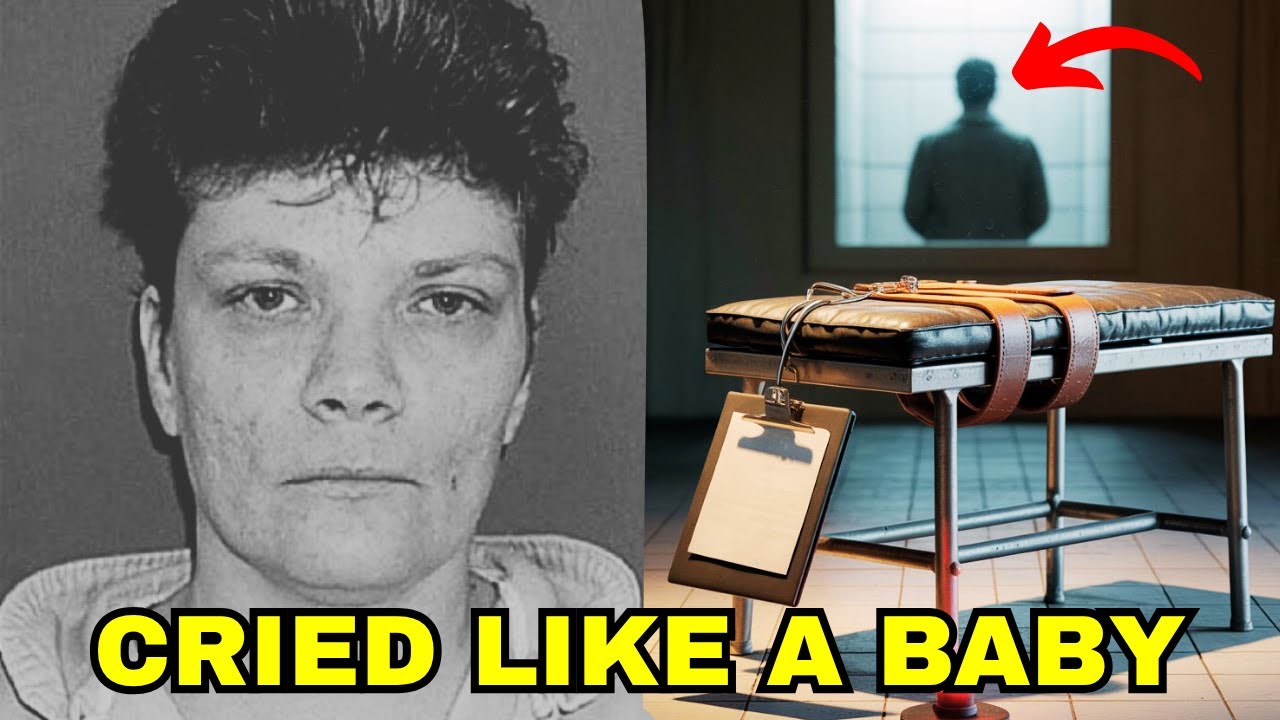
, prison officials escorted Teresa to the execution chamber, a sterile room where a gurney awaited. She was strapped down, her arms extended as IV lines were inserted. Witnesses, including media representatives and state officials, sat in silence behind a glass window. Before the lethal drugs began to flow, Teresa spoke her final words, her voice steady but filled with emotion: “I just want Kathy to know I love her and I’m very sorry.
” Moments later, the injection started, a combination of chemicals that stopped her heart within minutes. By 9:13 p. m. , Teresa Lewis was pronounced dead.
She became the first woman executed in Virginia in nearly a century. Her death left behind a grieving daughter, a divided public, and a lingering question about whether justice had truly been served. Teresa Lewis’s execution marked the end of her life, but it was only the beginning of a firestorm of controversy that echoed far beyond the walls of Greensville Correctional Center. At the heart of the debate was her mental capacity, a documented IQ of 72 that placed her on the borderline of intellectual disability.
This number was not just a statistic; it raised profound questions about her culpability in the murders. Critics of her sentence argued that Teresa’s limited cognitive abilities made her an unlikely mastermind, that she was far more vulnerable than the court had acknowledged, potentially manipulated by Matthew Shallenburger, one of the men who carried out the killings. Shallenburger himself later confirmed these suspicions in a chilling revelation before his death by suicide in 2006 while in prison. He admitted that he had used Teresa, exploiting her for the promise of money, knowing her desperation for the insurance payout made her an easy target.
He claimed he was the true planner of the murders, a confession that cast a shadow of doubt over Teresa’s role as the so-called “head of the serpent. ” Yet despite this admission, Teresa had already been sentenced to death while Shallenburger and his accomplice Rodney Fuller were serving life sentences. The disparity fueled outrage among those following the case. Why was the woman who never pulled the trigger facing the ultimate punishment while the men who committed the act were spared?
Some argued that this reflected a deep-seated societal bias against women, particularly those who defied traditional roles. Teresa was not the grieving widow or the nurturing mother society expected. She was a woman who had orchestrated a crime, offered sex and money to her accomplices, and stood to gain financially from her family’s deaths. To some, her sentence seemed to carry the weight of judgment not just for her actions but for her failure to fit the mold of what a woman should be, a bias that may have tipped the scales toward a harsher punishment.
Beyond the courtroom, Teresa’s case sparked a broader conversation about the death penalty itself, especially for individuals with intellectual disabilities. Just eight years earlier, in 2002, the US Supreme Court had ruled in Atkins v. Virginia that executing people with intellectual disabilities violated the Eighth Amendment’s ban on cruel and unusual punishment. But the ruling came with a catch: it left the definition of intellectual disability up to the states, creating a gray area into which Teresa’s case fell.
Her IQ of 72 was just above Virginia’s legal threshold at the time. But many experts argued that such a narrow margin failed to account for the nuances of her mental capacity, her susceptibility to manipulation, and her inability to fully grasp the consequences of her actions. Advocates for Teresa believed her execution exposed the flaws in a system that struggled to balance justice with fairness, especially for those whose minds worked differently. Her death became a rallying cry for those pushing to abolish the death penalty altogether, with protests and vigils held in her name and her story featured in news headlines around the world.
At the heart of the story are the victims, Julian and Charles Lewis, whose lives were stolen in their own home. Their family suffered an unimaginable loss, a tragedy that cannot be overlooked amidst the legal arguments and public outcry. Their deaths remind us of the human cost behind every headline, a pain that lingers for those left behind. Teresa Lewis’s story leaves a haunting question: where do we draw the line between justice and mercy, especially when the mind behind the crime struggles to understand its full weight?
It is a question that challenges us to think deeply about the systems we trust to deliver fairness.
