In the middle of the night, a woman named Tiffany listened to her ex-husband’s voice on a recording she had made in secret. He was telling her that the man who killed Courtney Coco was Anthony Burns, his own close friend. He said Burns had done it for the money, and that Burns’s mother had washed the blanket used to wrap the body. He said all of this with certainty, repeating the name sixteen times.
Then he added something that made the blood run cold: he described what Courtney’s body had looked like, bruised and blue from head to waist. Tiffany asked him how he could possibly know that. Her ex-husband hesitated and said he must have heard it in the news. But the detail had never been published anywhere.
And in that moment, a case that had been cold for fifteen years began to crack open. Courtney Coco was born on March 30, 1985, in Alexandria, Louisiana. She was the youngest of three girls and, as the baby of the family, she received a great deal of attention and love. She was especially close to her father.
When she was eight years old, he died suddenly, and the loss struck her deeply. She helped with the funeral arrangements and chose his burial spot in the cemetery herself. Afterward, she told her family that she wanted to be buried beside him someday. In her childhood and teenage years, Courtney was highly active.
She played baseball and softball, joined the cheerleading squad, and practiced gymnastics. Even before finishing high school, she was attending classes at a college in a neighboring town. She became interested in forensic science and soon began thinking seriously about building a career in that field. She loved writing down the details of various crimes on paper and solving them step by step, as if working on a real investigation.
After high school, her older sister helped her get a job as a receptionist at a local dental clinic. Around the same time, wanting more independence, Courtney rented a small house and moved out of her mother’s home. Still, she remained very close to her mother and visited whenever she could. On Friday, October 1, 2004, Courtney stopped by her mother’s house to see her and her stepfather before the weekend.
Her parents were preparing to go camping, so her mother asked Courtney to feed the dogs while they were away. She also asked Courtney to use up the milk and bread left in the refrigerator so they wouldn’t spoil. But when Courtney’s mother returned home on Sunday evening, she noticed something strange right away. The dog bowls were empty, and the animals were behaving as though they hadn’t been fed in a long time.
The milk and bread were still in the refrigerator. The house looked as if Courtney had never been there at all. Even at that moment, her mother didn’t panic. Courtney was nineteen, and her mother assumed she had probably gotten caught up with friends or work.
She figured Courtney must have fed the dogs on Saturday at least, or perhaps earlier that morning. So she set the thought aside and went about her day normally. But the next day, Monday, Courtney’s mother received a phone call. The caller was Sergeant Green from the local police department.
He asked whether Courtney was at home, and her mother told him that Courtney lived alone. Then she asked what was going on. The sergeant explained that he had received a call from officers in a small town called Winnie, Texas, about 180 miles from Alexandria, where police had found the body of a young woman. She carried no identification and nothing that clearly identified her, except for a ring on her finger.
The ring was engraved with the name of Alexandria High School, along with a single name: Courtney Coco. Courtney’s mother refused to believe the body could be her daughter’s. She told the sergeant there was no reason Courtney would be that far from home and that Courtney had no connection to Texas at all. Then she remembered something else.
Just a few weeks earlier, Courtney’s house had been broken into several times, and various items had been stolen. Her mother immediately thought that Courtney’s class ring might have been among the stolen goods and had somehow ended up in Texas with a complete stranger. In fact, those burglary reports were the reason Sergeant Green had found Courtney’s mother’s phone number in the first place. When he entered Courtney’s name into the department’s system, those reports came up.
But he also told her that the police in Texas had not yet been able to identify the young woman, because the ring was their only real piece of evidence. According to the investigator, earlier that morning a farmer in Winnie had been driving his tractor near an abandoned building when he thought he saw a human body inside. He reported it to the police, and a local investigator who lived nearby went to check the area. At first, he thought the farmer might be mistaken, or that he had seen something else and imagined it was a body.
Murder was almost unprecedented in their small town, so the investigator found it hard to believe the situation was as real as it seemed. But once he reached the abandoned building, he realized the farmer had been right. There was a young woman’s body inside, and it was already in an advanced state of decomposition. Her clothes were missing from the lower half of her body, and her shirt was pulled up.
She was lying with her feet pointing toward the entrance. To the investigator, it looked as though someone had placed her that way deliberately, as if they wanted someone to find her in that position. Because the local police had little experience with murder investigations, they immediately requested help from the Texas Rangers, who took over the case. There was no handbag beside the victim, no ID, nothing that immediately pointed the investigators toward her identity.
The only items crime scene technicians found were tire tracks near the abandoned building, a few shoeprints left in the dust on the floor, and a beer bottle, though they had no way of knowing whether the bottle was connected to the crime. The investigators also noted that the body was in an advanced state of decomposition, but at the same time, they had serious doubts that it had been lying in that building for several days. People regularly drove past that location, and the police believed that if the body had been there that long, someone would have noticed it much sooner. So the crime scene seemed to point in one direction: the young woman had likely been killed somewhere else, and then her body had been transported by car to the abandoned building and placed with her feet toward the entrance.
The lead investigator believed the killer might have tried to make the scene look like a sexual assault, which made him wonder whether the real motive was something entirely different. There was another strange detail: there were no clear signs of injury. The medical examiner examined the body and found no visible wounds, no signs of strangulation, no obvious injury that explained her death. After Courtney’s mother received the call from the police, she began calling relatives and acquaintances, trying to find out whether anyone had seen Courtney over the weekend.
To her horror, she realized no one had heard from Courtney since late Friday night. Then she remembered the empty dog bowls and the food still in the refrigerator, and her panic grew worse. Still, she kept hoping it was all a terrible misunderstanding and that her daughter was fine. The investigators in Texas asked a family member to come to the morgue to identify the body, but neither Courtney’s mother nor her sisters could do it.
In the end, Courtney’s uncle made the trip to Texas. Her mother told him that Courtney had a butterfly tattoo on her back and had recently gotten braces. Then he went to the morgue while the rest of the family gathered at Courtney’s mother’s house, waiting for news. When the phone finally rang, Courtney’s mother was too afraid to answer, so her sister picked up.
After a brief silence, she turned to the family and said they needed to start preparing for a funeral. It confirmed what everyone had feared. The young woman found in Texas was Courtney. The investigators were still waiting for the medical examiner’s reports, hoping they would clarify the cause of death.
But in the meantime, they began trying to trace Courtney’s last movements. The biggest question was how she had ended up so far from home. So the investigators started at her house. The first thing they noticed was that Courtney’s car was missing.
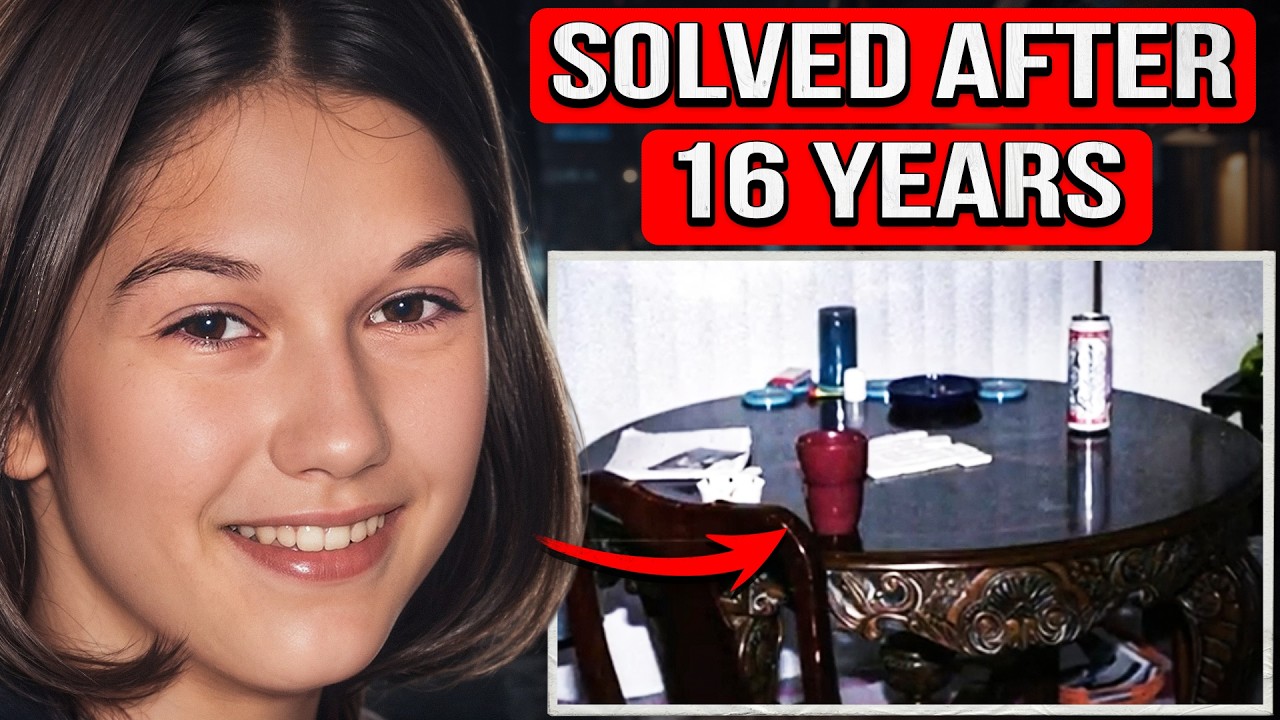
Then they saw that all the doors were locked, with no signs of a break-in. In the living room, they found dominoes lined up on the table, along with a beer can and an ashtray. There was also a notebook with three names written inside: Courtney, Jackie, and Lewis. It looked as though Courtney had been sitting there playing games with her friends and had simply left everything as it was.
Otherwise, the living room looked normal. Nothing seemed immediately suspicious. But when the investigators entered the kitchen, they saw that the trash can was overturned, which could be a sign of a struggle. Then they reached Courtney’s bedroom, where things became more alarming.
Her clothes were lying on the floor, including her jeans and sneakers. Since none of these items had been found with her body, the investigators began to wonder whether Courtney had been killed in her bedroom, then moved to her car and transported to Texas. The blanket was missing from her bed, and the shower curtain was also gone. The investigators believed these items might have been used to wrap her body so it could be removed from the house without drawing attention.
They also found a small safe under the bed. It was open, but instead of money, it contained only an empty cigarette pack. Because of this, the police began looking into a possible financial motive, and they also considered the possibility that Courtney’s death was connected to the earlier break-in incidents. But there was an obvious problem with that theory.
The earlier incidents involved someone breaking into the house, whereas this time it looked as though Courtney might have let the killer in herself. There were no signs of a break-in, and based on the crime scene, it seemed likely that Courtney was in her bed when she was attacked. That meant the killer was already inside the house. For the investigators, this was a strong indication that Courtney knew the person.
The investigators went to speak with Jackie, Courtney’s best friend, and her boyfriend Lewis, whose names were written in the notebook on Courtney’s table. Jackie said she and Courtney had spent Friday evening together. According to her, she and Courtney met around 7:00 p. m.
, then went to the restaurant where Lewis worked. After his shift ended, they all returned to Courtney’s house, where they played dominoes and talked. Jackie said Courtney seemed completely normal that night, nothing strange about her behavior. Then Jackie said Courtney drove her and Lewis home around 2:30 a.
m. The next day, Courtney was supposed to pick Lewis up for work, but she never showed. The investigators studied the possibility that Jackie or Lewis was involved, but from the start, that theory wasn’t very plausible. Jackie had brought her children with her that night, and they were at Courtney’s house the whole time.
Moreover, the police found no evidence that Jackie or Lewis had gone to Texas. The trip would have taken most of the day, and both appeared to have been in Alexandria the entire weekend. The next person the investigators looked into was a man named Floyd Williams, who had been dating Courtney shortly before her death. He was Jackie’s brother.
According to those close to Courtney, the relationship had been very volatile. They were constantly breaking up and getting back together. But the investigators soon learned that this was only part of the story. When they spoke with Courtney’s sister, Lees, she told them that Floyd was selling drugs.
She also said she had once seen bruises on Courtney’s arms and had tried to ask where they came from. Courtney avoided the question at first, but later told her sister that if anything ever happened to her, Floyd would be responsible. That was more than enough for the investigators to begin treating Floyd as a primary suspect. They brought him in for questioning, and as the interview went on, he seemed increasingly suspicious.
When asked where he had been on the night of Courtney’s death, Floyd couldn’t give a clear answer. He said he had been somewhere in the city, drifting from place to place, which already seemed odd. Then he began insisting that he and Courtney had broken up long ago and that he had no reason to kill her. At the same time, the investigators learned that Floyd was currently dating another woman.
This led to an interesting detail. When the police examined Courtney’s phone records, they saw that the last call made from her phone was to that woman’s number. So the investigators began to wonder whether there was a love triangle and whether the motive lay in that part of Courtney’s life. The fact that Floyd already had a criminal record related to drugs made him look even more suspicious.
Nevertheless, Floyd denied any involvement in Courtney’s death, and without strong evidence, the investigators couldn’t move forward. They took his fingerprints and a DNA sample, then continued searching for other suspects. Shortly afterward, the police learned about another man named Fred, who had also dated Courtney shortly before her death. During questioning, Fred said the relationship had never been serious and that he had no reason to hurt her.
He also agreed to give the investigators a DNA sample and his fingerprints. After that, he was released. Some time later, the investigators got a new lead. Courtney’s phone SIM card suddenly showed activity in Houston, about 60 miles from where her body had been found.
The police traced the phone’s activity to an apartment building in one of the city’s most dangerous neighborhoods. They couldn’t yet determine which apartment the phone was in, but they got lucky. When officers arrived at the building, they saw a teenager in the hallway, and as soon as he noticed them, he started running. The officers chased him down and found Courtney’s phone in his pocket.
The teenager insisted he had nothing to do with the murder and said he had bought the phone from local criminals. He also mentioned that he had been driving a dark green car, and the investigators immediately wondered whether it was Courtney’s missing vehicle. The investigators issued an alert for the car, and a few days later, someone called with information. A similar car had been spotted in the same area, and the police soon confirmed it was Courtney’s car.
It turned out that since the crime, her car had been abandoned in the streets of that neighborhood, used by different people whenever they wanted, including for drug dealing. The police tried to find out who had left the car there in the first place, but they could never identify them. Several people said they had seen two men driving it, but no one could identify them. The investigators believed those men might have been directly involved in Courtney’s murder and that they had deliberately abandoned her car in that neighborhood.
If that was the plan, it was a clever way to destroy the value of anything the killer might have left inside the vehicle. Different people were getting in and out of the car, leaving behind fingerprints and DNA, and any evidence that had existed on the night of Courtney’s murder was buried under all of it. If that was the goal, it had worked almost completely. When crime scene technicians examined the car, they found a huge number of smudged fingerprints.
Because so many people had been inside it, they couldn’t extract a clean DNA profile from the interior, but the trunk provided some evidence to work with. The investigators found several dried stains that looked like blood, and they also recovered DNA from the trunk lid. When experts compared that DNA with samples collected from various suspects, they got a match. The profile belonged to Fred, Courtney’s former boyfriend.
The investigators brought Fred in for questioning immediately, but he continued to deny any involvement in Courtney’s death. When they told him his DNA had been found on the trunk lid, he said there was a simple explanation. He had been in Courtney’s car many times, and at some point he might have opened the trunk to put something inside, like groceries. The investigators weren’t ready to simply believe him, but they also didn’t have enough to prove he had killed Courtney.
As for the blood in the trunk, DNA testing showed it belonged to Courtney. At first, that seemed strange. As previously noted, there were no obvious wounds on her body, and the medical examiner still hadn’t determined her exact cause of death. The investigators had been waiting for a more detailed medical report.
Several weeks after Courtney’s body was found, the results finally answered some of the biggest questions in the case. First, there were no signs of drugs or large amounts of alcohol in her system, which ruled out an overdose. Second, despite the manner in which her body had been found, experts found no evidence of sexual assault. This reinforced the investigators’ belief that the killer had deliberately arranged the crime scene, trying to make the police think the case involved a sexual assault and steer the investigation in the wrong direction.
As for the cause of death, the experts reached the only conclusion that seemed logical. Courtney had been suffocated. But the method the killer used hadn’t left the obvious type of marks they would normally expect. Perhaps it was a pillow, or even just a hand covering her mouth and nose.
Because of the condition of her body, it was impossible to see any marks on her face. There was one question the experts couldn’t explain at first. Why was Courtney’s body in such an advanced state of decomposition? She had been found only two days after her death, so they expected her body to be in much better condition.
But once the investigators found her blood in the trunk of her car, the pieces of the case began to come together. They believed Courtney’s body had been transported in the trunk and may have remained there for some time. Under the blazing Texas sun, the temperature inside the car could rise above one hundred degrees, causing the body to decompose more quickly. But none of that brought them any closer to identifying who was responsible.
For several months, the investigation made little progress. A year and a half passed, and Courtney’s family grew increasingly frustrated, feeling the police weren’t doing enough to solve the case. They blamed Sergeant Green, who was leading the investigation, and accused him of unprofessionalism and negligence. Eventually, the family began looking into matters themselves.
They tried to gather evidence, talk to witnesses, and find any information that might lead to the killer. From time to time, they presented what they considered promising leads, and the police would check them out. But every lead ended in a dead end. Then one day, the phone rang in Sergeant Green’s office.
When he picked up, the caller said three words only: follow the money. Then the line went dead. Green found the call so strange that he asked other officers to trace its source. To his surprise, they discovered it had come from the home of Courtney’s grandfather.
He began checking this information, and he soon uncovered something no one had ever told him before. When Green examined Courtney’s finances, he found large payments being sent in her name, and he quickly traced their source. Shortly before Courtney’s father died, he had lost one of his legs in a work accident. As part of the settlement, the employer had agreed to pay a substantial amount of money to him over several decades.
But after his death, Courtney became the sole beneficiary. The reason was simple: he was not the biological father of Courtney’s two older sisters. They were from her mother’s previous marriage. Because Courtney was only eight years old when her father died, her mother controlled the payments for the next ten years.
But once Courtney turned eighteen, the money began going directly into her own account. Sergeant Green learned that she had been receiving $1,500 every month, plus a much larger payment every five years. And just a few weeks before her murder, Courtney had received $20,000, which she had withdrawn in cash. That made Green think immediately of the empty safe under Courtney’s bed.
Suddenly, the pieces began to fall into place. Perhaps the real motive had been that money, because Courtney certainly wouldn’t have spent the entire amount in just a few weeks. But that raised two important questions. Who in Courtney’s life knew she was receiving those payments?
And why hadn’t anyone in her family told the police about the money during a year and a half of investigation? Green began looking at the case from a different angle. Now the behavior of Courtney’s family was starting to concern him. He began to seriously wonder whether someone close to her was involved, and whether all those reports they kept filing with the police were actually intended to steer the investigation away from the truth.
After digging deeper into the payments Courtney had been receiving, Sergeant Green learned that in the event of Courtney’s death, her mother would become the beneficiary. So he brought her in for an interview. From almost the beginning, he made it clear that he viewed her as a potential suspect. But Courtney’s mother insisted she had nothing to do with her daughter’s death.
According to her, she had no idea the payments would go to her if Courtney died. She said she had always assumed the next beneficiary would be someone from her ex-husband’s side of the family. Green also realized that if Courtney’s mother truly had a financial motive, she wouldn’t have needed to take money from Courtney’s safe, because the payments would have come to her legally. Beyond that, he found it hard to believe a mother would kill her own daughter.
What he suspected more than anything was that she knew more than she was saying. But Courtney’s mother kept insisting she was telling the truth. So Green turned his attention to Courtney’s sister, Lees. As previously noted, she was the one who had told the police she had seen bruises on Courtney’s arms and that Courtney had once said that if anything happened to her, Floyd would be responsible.
The problem was that investigators had never been able to confirm that account. Green also learned that Lees had a criminal record, including charges related to burglary and assault. At that point, he began to seriously wonder whether Courtney’s sister had been involved. He asked Lees to come to the station, telling her there were new developments in the case.
But when she was in his office, Green began interrogating her. Lees denied any involvement in her sister’s death and even agreed to take a lie detector test. But as soon as the investigator asked her whether she was the one who had killed Courtney, Lees broke down in tears, tore off the sensors, and ran out of the room. This reaction seemed highly suspicious.
But the next day, Lees returned to the station and agreed to retake the test. This time she answered all the questions, and the investigator found no indicators that she was lying. Lees explained that she had a medical condition and was taking medication for seizures. Because the interview had gone on for so long and she was under extreme stress, she had missed a dose of her medication.
Even so, Sergeant Green didn’t fully trust her. To him, Lees’s behavior was strange. He thought she answered questions with excessive hesitation and caution, as if she wasn’t really interested in helping the police solve her sister’s murder. But he couldn’t do anything about it, because there wasn’t a single piece of evidence linking Lees to the crime.
Shortly after the interviews with Lees, Green was informed that he would no longer be handling Courtney’s case. It turned out that Courtney’s mother had gone to the police chief and complained about Green’s treatment of the family, saying he had overstepped boundaries and was harassing them. She wanted him removed from his job, but the chief didn’t go that far. Instead, Green was taken off the investigation, and the case was handed to another investigator.
That investigator tried to find new leads but made no real progress either. In the end, the case was closed as unsolved for years. Courtney’s family continued trying to move forward on their own. They kept looking into the case, conducting interviews, holding memorial events, and doing everything they could to keep Courtney’s memory alive.
But none of it brought them any closer to an answer. Then in 2015, a new investigator took another look at the case and sent a preserved sample of Courtney’s blood for analysis. In 2004, experts had found no trace of drugs or a large amount of alcohol in her system. But this time, the results were different.
The sample showed traces of a powerful prescription drug combined with a high level of alcohol. Based on this dangerous combination, the medical examiner concluded that Courtney might not have been suffocated after all, and that her cause of death could have been an overdose. For Courtney’s family, this was a complete shock. For years, they hadn’t seriously considered that possibility.
Now, investigators were telling them that because of this new finding, there was no point in continuing the investigation. But key questions remained unanswered. Someone had transported Courtney’s body to another state, and someone had taken the money from her safe. Courtney’s loved ones refused to believe the overdose theory, but for the police, it was the end of the road.
And so the case faded away again. This situation continued for several more years. All the while, Courtney’s family kept pushing for the case to be reopened, trying to shine as much light on it as possible. Then in 2019, they contacted a former state police investigator named Woody Overton.
By that time, Overton had retired and launched a podcast in which he used his law enforcement experience to analyze criminal cases in detail. Overton became interested in Courtney’s story and began researching it himself. He soon came to the conviction that the overdose theory was baseless. To him, it didn’t seem like a real explanation, but rather an excuse the police had latched onto because the investigation hadn’t reached any conclusion.
He then requested the case files, and while reviewing them, he realized it would be almost impossible to solve Courtney’s case without outside help. Overton believed there was someone who knew more than they were saying. So his goal became simple: spread Courtney’s story to as many people as possible, hoping that someone would finally come forward with a real lead. He began airing podcast episodes about the case in September 2019.
The series soon became the talk of Alexandria. The podcast immediately brought Courtney’s murder case back to the forefront. Her old friends, acquaintances, and locals who remembered the case began talking about it online, sharing theories, and trying to piece together what had happened. But there were also people who clearly didn’t want the case to advance.
At one point, someone smashed the windows of Overton’s car. On another occasion, someone cut its internal wires. Even with these obvious threats, Overton had no intention of stopping. Once the podcast came out, Overton received many calls and messages.
Most reports were vague and led nowhere. But after about three weeks, a real lead finally came in. A woman named Tiffany called Overton, and instead of offering a vague theory or a simple piece of information, she told him something much bigger. She said she had known the killer’s name for years and had no doubt about it.
According to Tiffany, Courtney had been killed by the close friend of her ex-husband, a man named Anthony Burns. She said that at the time, her husband Sheamus had told her that Anthony was behind the crime, because Anthony had confessed to him directly. Overton realized that Tiffany’s account could be the key to finally solving the case. But her word alone wasn’t enough.
For one thing, she was relaying something someone else had told her. For another, there was an obvious question: if she had known this for years, why had she stayed silent all that time? So Overton asked whether she was ready to find out what had happened to Courtney. Tiffany agreed.
He asked her to meet with her ex-husband, turn on a recording device, and try to get him to talk about the case. If Sheamus said on the recording that Anthony had killed Courtney, they would finally have evidence much stronger than mere hearsay. Tiffany agreed and did exactly what Overton asked. She brought up the new podcast and told Sheamus that people all over Alexandria were listening to it.
She said he needed to listen to it too, and she asked him to tell the host what he knew about the person who had killed Courtney. Sheamus replied that it was Anthony Burns and that he didn’t need to listen to any podcast because he knew it for certain. He even added that Anthony had done it for the money, and that Burns’s mother had washed the blanket he had used to wrap Courtney’s body. Altogether, Sheamus mentioned Anthony’s name sixteen times.
For Overton, that seemed like the breakthrough the case had been waiting for. But there was something else on the recording as well. A specific comment made Sheamus’s account seem more credible while raising more questions at the same time. When Tiffany asked how Anthony had killed Courtney, Sheamus said he didn’t know, but he added that her body had looked badly beaten and blue from head to waist.
Tiffany immediately asked him, “How do you know what her body looked like? ” At that point, Sheamus hesitated. He said he must have heard it somewhere in the news. But Overton quickly checked and found that this detail had never been made public.
Part of Courtney’s body had indeed turned blue after her death, but that information wasn’t even included in the official autopsy report. So Overton called Tiffany again and asked whether she remembered where Sheamus had been when Courtney was killed. Then she remembered something strange. Sheamus had been gone the entire weekend and had never told her where he was.
He returned home at midnight on Monday, and when Tiffany came out to greet him, she was hit by a terrible stench coming from him. At the time, she didn’t know how to describe it, but she said it smelled like death. Later, she also found women’s underwear in his work trailer, next to a roll of plastic wrap. All of this made Sheamus seem increasingly suspicious.
Overton began to wonder whether he had helped his close friend dispose of Courtney’s body, or perhaps even participated in the murder itself. There was another detail that drew attention. Sheamus frequently traveled to Texas for work, and his route sometimes passed through Winnie. At one point, he had even gone to a local hospital there, confirmed by records.
So Sheamus knew the area well and could have suggested it as a place to leave Courtney’s body. Finally, Tiffany added that shortly before the murder, Sheamus and Anthony had gone riding four-wheelers and had brought Courtney along with them. That meant all of them knew each other. Now Overton needed to find out exactly how Anthony was connected to Courtney.
And here the case took another unexpected turn. To his surprise, he discovered that at the time Courtney was killed, Anthony had been engaged to her older sister, Lees. Overton immediately contacted Investigator Tanner at the local police department and handed over everything he had. After reviewing Tiffany’s statement and Sheamus’s recording, Tanner began the investigation almost from scratch, and he soon came to believe that Anthony might indeed be the person responsible for Courtney’s murder.
Before questioning Anthony, Tanner decided to meet with Courtney’s family and tell them the investigation was active again and that there was finally a real chance of progress. Then he mentioned Anthony’s name and explained that he was now the primary suspect. The reaction in the room was strong and intense. Courtney’s mother couldn’t believe it and rushed out.
Lees, Anthony’s former fiancée, couldn’t speak a single word. For the family, absorbing the accusation was almost impossible. When Courtney died, Anthony had been treated almost like one of them. He had helped carry Courtney’s casket and had even placed a cross at the spot where her body was found.
Later, once Lees had managed to calm down, Investigator Tanner began asking her about Anthony. To his surprise, she told him a great deal that investigators had never heard before. According to Lees, on the Friday when Courtney was still alive, a big fight broke out between her and Anthony. After that, Anthony left the house for the entire weekend and didn’t return until Monday evening.
But that was just the beginning. Fifteen years after Courtney’s death, Lees suddenly said she believed Anthony and Courtney might have been having a secret relationship, and that she had suspected it even before the crime. According to Lees, she had once called Anthony and heard Courtney’s voice in the background. She also noticed that Anthony and Courtney often disappeared at the same time.
Lees said she had asked them if something was going on between them, but they insisted it wasn’t true. Some time after Courtney’s death, the police returned her belongings to the family, and among them Lees noticed a gold ring. It looked familiar to her. Then she realized Anthony had given her a ring that looked exactly like it.
When she compared them, she believed they were matching lover’s rings, which strengthened her conviction that Anthony and Courtney had been in a secret relationship. Finally, Lees said that about four years after the crime, she entered Anthony’s house and saw his mother sitting on a chair wrapped in a blanket. According to Lees, the pattern of the blanket was very similar to the blanket missing from Courtney’s house. Despite all of this, Lees insisted she had never suspected Anthony, and that was why she hadn’t told the police any of these things.
But the investigators had serious doubts about that explanation. It wasn’t just her strange silence. The bigger problem was what Sheamus had said on the recording Tiffany had made in secret. In his podcast, Overton hadn’t revealed every detail of that recording, but the police listened to the full version and clearly heard what Sheamus said.
He repeated: “Lees and Anthony did it for the money. ” So Sheamus was accusing Courtney’s sister of being involved in her murder. Based on what the investigators already knew, that no longer seemed impossible. Still, they had spoken with Lees more than once and realized they wouldn’t get a confession from her.
So instead, they began working on the case from other angles. While examining the old case files, the investigators found something interesting. There was a statement from a Winnie resident named Jad Wilson, who said he had driven past the abandoned building around 10 p. m.
and saw a dark green car leaving the area, nearly colliding with him. At the time, Jad thought someone might be stealing copper from the building, so he tried to remember the license plate number and catch a glimpse of the driver. He only caught a brief side view of the driver, but he remembered some details from the license plate: two letters matching his own initials, the number eight, and that it was from Louisiana. But there was one problem.
Jad said this had happened on September 27, 2004, about a week before Courtney was killed. The investigators called Jad and asked whether he was sure about the date. He admitted he might have gotten that part wrong, but he was certain of one thing: it had happened the day before Courtney’s body was found. Because for the people of Winnie, it was impossible to forget something like that.
The investigators believed Jad had most likely seen Courtney’s car, because the part of the license plate he remembered matched her car. If that was true, then the person behind the wheel was probably the killer. So they asked Jad whether he still remembered anything about the driver’s face after all these years. To their surprise, Jad said he had a photographic memory.
He was also an artist, and at the time he had drawn the driver’s face from the side. When the investigators looked at the drawing, it did indeed look like Anthony. So they placed Anthony’s photo in a lineup with several other men and showed it to Jad, who pointed to Anthony. With that, the police finally went to speak with the suspect.
When they asked where he had been that weekend, he said he had spent it at home with Lees and that they had been in bed most of the time. But that directly contradicted what Lees had told them. According to her, Anthony had left the house on Friday and didn’t return until Monday. Then the investigators asked Anthony to take a voice stress test, and he agreed.
This method isn’t considered entirely reliable; it essentially looks for changes in a person’s voice that might indicate they aren’t telling the truth. Anthony took the test, but his answers to the key questions were rated as deceptive. Even then, the investigators couldn’t arrest him because they didn’t have enough evidence. But shortly afterward, they found something else.
They were still digging through the old case files, and there were several boxes of them. To their surprise, they found reports from several different witnesses who had told the police that Anthony Burns had confessed to killing Courtney. He allegedly said this to a woman he met at a bar and to one of his friends, both of whom reported it to the police. According to those testimonies, Burns said he had killed Courtney, described how he had suffocated her, wrapped her body in a blanket, and transported her to Texas.
But at the time, the police hadn’t taken these witnesses seriously. For one thing, they weren’t considered entirely reliable. They had criminal records and struggled with addiction. In any case, it was assumed Anthony had made these confessions while heavily intoxicated.
So the officers didn’t treat his words as conclusive evidence. Now the police had three different witnesses who confirmed hearing Anthony’s confession, along with Jad Wilson’s testimony identifying him as the man driving Courtney’s car near where her body was found. Putting it all together, prosecutors decided they finally had enough to take the case to court. Preparing the case took months, but in April 2021, seventeen years after Courtney was killed, Anthony Burns was finally arrested.
According to prosecutors, Anthony and Courtney had indeed been in a secret relationship, and at some point he may have learned about the large amount of money she had recently received. They also believed jealousy may have played a role. It was possible Courtney wanted to end the relationship, and that became part of his motive for killing her. Prosecutors believed Anthony had attacked Courtney in her bedroom and suffocated her, most likely using a pillow.
After that, they said, he wrapped her body in the missing blanket and shower curtain, transported her body in the trunk of her own car, and drove to Texas. At the same time, prosecutors didn’t have enough evidence to charge Anthony’s friend, who may have helped him move the body, or Lees, Courtney’s sister. So their possible involvement wasn’t part of the trial, and both testified as witnesses. Anthony denied any involvement in Courtney’s death, and his defense attorneys focused heavily on the fact that there was no physical evidence linking him to the crime.
They also tried to challenge the credibility of the witnesses and argued that the police hadn’t done enough to investigate other suspects, including Courtney’s former boyfriends. The trial ended in late October, and the jury unanimously found Anthony guilty of second-degree murder. As a result, the judge sentenced him to life in prison without the possibility of parole. Immediately afterward, his lawyers appealed the sentence, but the appeal was denied.
The court agreed that the evidence against Anthony was circumstantial, but said that when taken together, it was sufficient to support the verdict. And so Anthony remains in prison, serving a life sentence. The possible involvement of his friend or Courtney’s sister was never proven, and the case is now officially closed. Yet Courtney’s case hasn’t faded from the internet entirely.
Much debate still centers on Lees, and whether she played a direct role in her sister’s murder or truly didn’t know what her fiancé had done.
