The drill sergeant stood at the front of the room and gave the terrified recruits their orders. They had exactly twelve minutes to eat. No talking, no seconds. Clean your tray or go hungry until dinner.
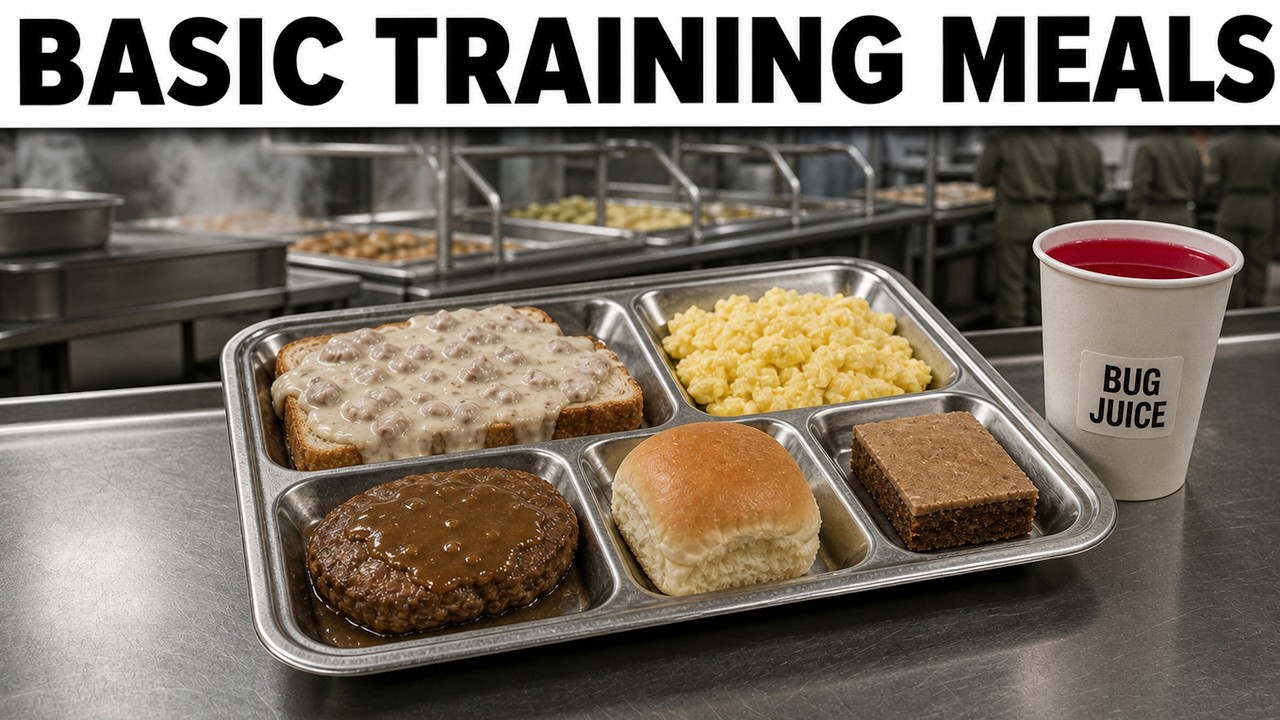
It was 1952 at Fort Benning, and the men staring down at the steel trays in front of them had no idea yet that what sat on that metal would become the taste of an entire generation of American soldiers. For nearly four decades, the food that came out of army mess halls would define basic training more than any obstacle course or drill field. Some of it made grown men gag on their first morning and crave it for the rest of their lives. One dish in particular carried a nickname too crude to print, and one more was remembered not as a meal at all, but as the moment everything changed.
The first thing every recruit met was the powdered scrambled eggs. Any man who went through basic between 1950 and 1975 remembered the first time he saw them. They came out of a ten-pound can, mixed from yellow powder and water, whipped into a slurry, and cooked in a sheet pan the size of a car hood. They came out pale, rubbery, and slightly green at the edges, sitting in a shallow pool of water as if weeping on their own.
Cooks ladled them onto steel trays by the pound, and the men ate them because the alternative was nothing. A single can of dried egg fed an entire company for a morning and cost the army almost nothing compared to shell eggs that broke and spoiled. Recruits salted them, peppered them, drowned them in hot sauce and ketchup, and choked them down before the whistle blew. Nobody ordered them again after discharge.
But for forty years, powdered eggs were the first taste of army life at four-thirty in the morning. To wash them down came bug juice. It went by a dozen different names, but every barracks in America knew it. The powdered fruit drink was mixed by the gallon in stainless steel dispensers along the mess hall wall.
Cherry, grape, orange, lime, each one a shade so bright it looked radioactive. Every recruit swore the same story was true, that the powder used to sweeten it was the same powder used to strip the wax off the mess hall floors. Whether fact or legend, nobody drank it for the flavor. They drank it because it was cold, it was wet, and it was there.
A single pouch made five gallons for pennies. The purple kind stained your tray, the red kind stained your teeth. On a July afternoon in South Carolina after a five-mile march, a paper cup of ice-cold bug juice tasted like the best thing a man had ever had. Then he went home and never touched it again.
The army ran on coffee, and the coffee ran thick, black, and merciless. Percolated in urns that held gallons and rarely got cleaned all the way down, mess hall coffee developed a flavor men described as scorched, bitter, and faintly metallic. They called it battery acid, and they called it worse. It came out so strong that a spoon practically stood up in it, and the cooks kept it going from before dawn until the last man left after supper.
A recruit learned fast to drink it black, because the powdered creamer clumped and the sugar never quite dissolved. It did not taste good. It was not supposed to. It was fuel poured into exhausted men at zero dark thirty to get them through a day of drilling.
Veterans who came home from the fifties and sixties often kept drinking their coffee that way, black and brutal for the rest of their lives, because anything weaker never felt like the real thing. For the Southern boys, grits were a taste of home. For everyone north of the Mason-Dixon line, they were a mystery served in a beige heap that nobody had ordered. Ground hominy boiled in enormous kettles until it thickened into a pale porridge, grits showed up at breakfast in army mess halls across the South, especially at Fort Jackson, Fort Benning, and Parris Island.
A pat of margarine melted into the middle, salt and pepper if you wanted it. Some men swore by them, dragging their toast through the bowl. Others stared at them like they had been served wet cement. Grits cost almost nothing, filled a stomach cheaply, and stuck to a recruit through a morning of physical training.
The men who grew up eating them were grateful. The men who did not learned to eat them anyway, because in basic training, you did not get to be picky about what showed up on the steel. Long before anyone thought of corn as a side dish to scrape to the edge of the plate, army cooks turned canned creamed corn into a hot filling meal by ladling it steaming over slices of toasted white bread. Creamed corn on toast was sweet, thick, and cheap, and it came together in the time it took to open a case of number ten cans.
The corn soaked into the toast until the bottom turned soft and almost custardy, and a hungry recruit could put away three servings without slowing down. It was the kind of dish nobody talked about because it seemed too humble to remember. But it was the sort of thing that appeared on a Tuesday night when the budget was tight and the company was large, and it did exactly what it was built to do. It filled young men who were burning four thousand calories a day and asking for more.
The army did not make pancakes. The army manufactured them. Poured in rows onto a griddle the size of a dining table, flipped by a cook working two spatulas like a machine, they came off in stacks that fed a line of men moving through at a dead run. They were dense, a little rubbery, and if you got them from the middle of the batch, a little pale in the center.
But drowned in that thin amber army pancake syrup that tasted more of sugar than of maple, they were glorious. A recruit learned to grab the ones from the edge of the griddle, the brown ones, and to move fast before the whistle. Flapjacks were cheap flour, water, and powdered milk stretched to feed hundreds, and on a cold morning at Fort Dix, they were the warmest thing a homesick eighteen-year-old had felt all week. Oatmeal in a civilian kitchen is a warm bowl of comfort.
Oatmeal in a 1950s mess hall was a survival ration disguised as breakfast. Cooked in vats until it turned to gray paste, ladled out thick enough to hold a spoon upright, army oatmeal was designed to sit in a man’s stomach and keep him upright through a morning that would break a civilian in half. There was no brown sugar swirl, no raisins, no cinnamon, unless you counted the sugar you spooned in yourself. It was fuel, plain and heavy, and the men who ate it did so because they had learned in their first week that skipping breakfast was a mistake you only made once.
A drill instructor did not care that you did not like the oatmeal. He cared that you could still run at ten hundred hours, and oatmeal, whatever it lacked in charm, made sure you could. No meal built the American soldier more reliably than a pan of baked beans. Navy beans, soaked overnight in barrels, baked slow with salt pork and a little molasses until the sauce turned thick and dark and the beans went creamy.
They showed up at breakfast alongside the eggs, at lunch beside the franks, and at supper on their own with a wedge of cornbread. They were cheap, they were filling, and they delivered the protein and calories that hard physical labor demanded, which is exactly why the military had leaned on them since the Civil War. A recruit learned to love them, or at least respect them, because the beans were always there and always the same. Men who bunked together joked endlessly about what the beans did to a barracks full of eighteen-year-olds after dark, but nobody ever left them on the tray.
You ate the beans. The beans kept you going. Mess hall cornbread was baked in slabs and cut into squares with a knife the length of a man’s forearm. It was denser and less sweet than the kind a Southern grandmother made, but it did the job.
It went beside the beans, it went under the chili, it got crumbled into soup and dragged through gravy and eaten plain out of a pocket during a break in the training day. Cornmeal was one of the cheapest things the army bought, and a single sheet pan of cornbread fed a platoon for pennies. It came out golden on top and pale gold inside, a little dry on its own, which is why it was almost never served on its own. Recruits used it to sop up every last bit of whatever was on the tray, because wasting food in basic training was the kind of thing that got a man noticed by exactly the person he did not want noticing him.
Here is what the recruiting posters never showed you. Salisbury steak was the army’s answer to a hard problem. How do you serve something that feels like a steak dinner to thousands of men on a budget that would embarrass a school cafeteria? You take the cheapest ground beef available, mix it with breadcrumbs and onion to stretch it, press it into ovals, bake it in sheet pans, and drown the whole thing in a brown gravy thick enough to hide anything.
That gravy was the genius of the operation. It made cheap beef taste rich, it kept the meat from drying out under the heat lamps, and it turned a two-cent patty into something that felt like a real supper. Ladled over mashed potatoes that came from a box, Salisbury steak was the closest a recruit got to a proper meal on a weeknight. It was economics you could eat.
The men called it many things, most of them unprintable, but they cleaned their trays every time. When the mess hall wanted to fill a lot of men fast and cheap, out came the beef and noodles. Chunks of stewed beef, the tough cuts that needed hours to break down, simmered until tender and served over a mound of egg noodles in a thin brown gravy. It was heavy, it was plain, and it was exactly the kind of thing a nineteen-year-old wanted after a day on the obstacle course.
The noodles doubled the volume of the beef for almost nothing, which is why the army loved it and served it constantly. A recruit could put away a plate and a half and go back for the noodles alone. It tasted like something your grandmother might have made if your grandmother had been cooking for four hundred people at once and had exactly forty minutes to plate it all. Nobody wrote home about beef and noodles, but everybody ate it and everybody remembered it.
Then came the one that made grown men gag on their first morning and crave it decades later. Liver and onions was the meal that separated the recruits who could eat anything from the ones who thought they could. Beef liver sliced thin, dredged in flour, and fried fast in sheet pans, while mountains of sliced onions caramelized alongside. It hit the mess hall with a smell that turned some stomachs before the tray was even in hand.
But the army had good reasons. Liver was one of the cheapest cuts a quartermaster could buy, and it was loaded with iron, B vitamins, and protein that kept exhausted men from wearing down. Done wrong, and it often was, it turned tough and bitter, which is why a generation of veterans claimed to hate it. But done right, mild and rich with those sweet, soft onions piled on top, it was one of the best things on the weekly menu.
Plenty of old soldiers spent years afterward looking for liver that tasted the way the mess hall got it on a good day. Somewhere along the way, some army cook combined chili and macaroni in a single pan, and the result became a barracks legend. Chili mac was ground beef browned with beans, canned tomatoes, and chili powder, then stirred through a vat of elbow macaroni until every noodle carried the flavor. It was spicy by mess hall standards, which is to say barely, but to a recruit, it was a jolt of flavor in a week of beige food.
It was hearty. It stretched a little meat across a lot of men and it reheated well, which meant leftovers showed up again the next day, and nobody minded. Chili mac cost almost nothing per serving and delivered a full plate of calories and protein, exactly the arithmetic the army lived by. Men who served in the fifties and sixties still make it at home, in a single pot, the way they learned to want it, because some tastes get wired into you at eighteen and never quite let go.
Spanish rice was long-grain rice cooked down with canned tomatoes, onions, a little ground beef, and whatever seasoning the cook felt like reaching for. It was the mess hall’s way of turning a few cheap ingredients into a full meal that actually had some color to it. It showed up as a main dish on the lean nights and as a side on the richer ones, and either way, it filled a tray corner with something warm and faintly tangy that broke up the monotony of gravy and starch. The rice soaked up the tomato until it turned a dull orange, and the little bits of beef scattered through gave a hungry man just enough to feel like he was eating meat.
It was cheap, it was filling, and it was one of those dishes that seemed to appear on the menu whenever the budget got tight near the end of the month. Recruits ate it without complaint, because by week three they had learned that complaining changed nothing. Here is something the army understood that food companies spent millions trying to make you forget. You can feed anyone anything if you put it in a cream sauce and pour it over toast or biscuits.
Chicken à la king was the fancy name for a very practical trick. Chopped chicken, the cheap parts, folded into a thick white sauce with peas and pimentos for color, then ladled steaming over toast points or split biscuits. It sounded like something you would order in a hotel dining room. It was actually one of the most economical dishes the mess hall made, a way to stretch a small amount of chicken across a very large number of men while making them feel like they were being treated.
The cream sauce did the heavy lifting. It coated the tongue, it satisfied hunger, and it made a few scraps of poultry taste like a real dinner. Recruits who had never eaten anything with a French-sounding name in their lives suddenly found themselves going back for seconds. Every recruit met the meatloaf, and the meatloaf met every recruit.
Baked in loaf pans by the dozen, sliced thick, and served with a slick of ketchup-based glaze on top, it was ground beef stretched with bread, oatmeal, onion, and egg until one pound of meat became two pounds of dinner. The army had been stretching meat this way since the Depression, and the technique was flawless. The bread soaked up moisture, so the loaf held together and did not dry out under the heat lamps, and the filler doubled the yield for a fraction of the cost. A slab of meatloaf, a scoop of mashed potatoes, a ladle of gravy over both, and a recruit had a plate that actually looked like the Sunday dinner he had left behind at home.
It was comfort food built on an accountant’s math, and it worked. Old veterans still order meatloaf in diners and shake their heads because it never quite tastes the way the mess hall made it. Cheap, fast, and impossible to ruin. Franks and beans was the meal that showed up when the mess sergeant needed to feed the company and get everybody back to training with no fuss.
Frankfurters sliced into coins and simmered into a pan of baked beans until the whole thing went smoky and sweet, served with a square of cornbread and not much else. It cost almost nothing per man. The hot dogs were the cheapest protein in the walk-in, the beans came in number ten cans by the case, and the two together made a full hot meal in the time it took to open them and heat them through. A recruit could put away a heaping tray and go back for more, and plenty did.
It was the kind of dinner nobody bragged about and everybody ate, the reliable workhorse of the weekly menu, the meal that appeared on the nights when the budget had already been spent on something better. Not to be confused with the more famous version coming later, plain beef gravy on toast was a mess hall staple in its own right. Ground beef browned in a pan, a scoop of flour stirred in to catch the fat, then milk or stock poured over and simmered until it thickened into a rich brown gravy studded with meat. All of it poured over slabs of toasted white bread.
It was heavy, it was savory, and it turned a few slices of bread and a handful of beef into a meal that stuck to a man’s ribs through a long afternoon. The army made it because it was fast, cheap, and forgiving. You could not really overcook it, and it fed a crowd from a single pan. Recruits ate it for breakfast and for supper, depending on the week, and the ones who grew up poor recognized it immediately, because their mothers had made the very same thing to get a large family through a lean stretch.
When the weather turned cold and the training got hard, the mess hall brought out the stew. Chunks of tough beef simmered for hours with potatoes, carrots, onions, and celery until everything went soft and the broth turned deep and savory, thickened just enough to coat a spoon. It was the clean-out-the-walk-in meal, the one that used up whatever vegetables were on hand, which meant no two batches ever tasted quite the same. For a recruit coming in soaked and freezing from a day in the field, a tray of hot beef stew and a wedge of bread was as close to being taken care of as the army got.
It cost little, since the toughest and cheapest cuts were exactly the ones that stew turned tender, and it delivered everything a worn-out body needed in a single bowl. Men remembered that stew for the rest of their lives, not because it was fancy, but because of when it showed up, on the days they needed it most. Baked in enormous flat pans and cut into squares with a ruler and a knife, mess hall sheetcake was the small mercy at the end of a hard week. Yellow cake or chocolate spread with a thin layer of frosting, sliced into perfect rectangles, and handed down the line.
It was nothing a bakery would have been proud of. But to a recruit who had spent five days eating gravy and starch and choking down bug juice, that dry little square of cake was a reminder that something sweet still existed in the world. It cost the army almost nothing, flour and sugar and shortening stretched across hundreds of servings, and it appeared often enough to become a genuine morale tool. A drill instructor knew that a company fed a little cake on a Friday marched a little easier on Monday.
The men knew it too. They ate their square, and for two minutes, basic training felt almost survivable. Here is the secret the army knew that nobody talks about anymore. Nothing was ever thrown away.
Bread pudding was the proof. All the stale bread, the heels of the loaves, the leftover rolls that had gone hard, none of it hit the trash. It went into deep pans, soaked in a custard of milk, powdered eggs, sugar, and cinnamon, then baked until it set into a warm, sweet, golden pudding that tasted far better than anything made from garbage had a right to. A drizzle of thin vanilla sauce over the top, and it became the kind of dessert that made a homesick recruit go quiet for a minute.
The army had been running its kitchens on this principle since long before anyone thought to write it down. Waste nothing, stretch everything, and turn yesterday’s leftovers into tomorrow’s comfort. Bread pudding was economy and kindness baked into the same pan, and for a lot of young men, it was the first time they understood that the two things were not opposites. Six days a week, the mess hall fed you to keep you moving.
On the seventh, if you were lucky, it fed you to remind you that you were still a person. Sunday fried chicken was the meal recruits counted down to all week. Pieces dredged in seasoned flour and fried up crisp and golden, served with mashed potatoes and gravy and a vegetable, and on a good week, that square of sheetcake to finish. It was the closest the army came to a home-cooked Sunday dinner, and the cooks knew it.
So even in a kitchen built for speed and thrift, they took a little more care with it. For a young man a thousand miles from home, a hot piece of fried chicken on a Sunday afternoon carried more weight than the calories on the tray. It tasted like the kitchen he grew up in. It tasted like the promise that this was temporary, that there was a life waiting on the other side of all this and that he was going to make it back to it.
Here is the one with the nickname too crude to print. The dish so infamous that its polite name is the least memorable thing about it. Officially, it was creamed chipped beef on toast. Every soldier who ever lived called it something else, three letters, the middle one standing for a word that could not be repeated in polite company.
Thin slices of dried, heavily salted beef torn into strips and folded into a thick white sauce of butter, flour, and milk, then poured over toast. The salt from the beef seasoned the whole thing without any extra effort, and the cream sauce turned a few cents of preserved meat into a hot, filling breakfast that could feed an army. Literally, every man who came through basic training between 1950 and 1975 ate it, complained about it, mocked it, and then years later quietly started making it at home. It became the single most iconic military meal in American history, remembered with a strange mix of disgust and deep, aching affection.
Nothing captures the whole experience better. Cheap, plain, universal, and somehow unforgettable. When the mess hall wanted to send men off to bed with something gentle in their stomachs, out came the rice pudding. Leftover rice, and there was always leftover rice, simmered slow with milk, sugar, and a handful of raisins until it thickened into a warm, creamy, faintly sweet pudding dusted with cinnamon or nutmeg.
It cost almost nothing, since it was built entirely from things the kitchen already had on hand, and it turned the humblest scraps into a dessert that felt like comfort itself. For a recruit far from home, a bowl of warm rice pudding was one of the few soft things in a world that had gotten very hard very fast. It asked nothing of him. It just sat there, warm and sweet, a small kindness at the end of a brutal day.
The men who ate it remembered it not for how it tasted, though it tasted fine, but for the way it made a barracks feel for one quiet minute, almost like a home. At the top of this list is not a dish at all, and that is the point. The most important thing every recruit remembered was not the powdered eggs or the SOS or the Sunday chicken. It was the long steel tables, the trays sliding down the line, the roar of hundreds of young men eating fast under a clock, the friend across from you who had been a stranger a week ago and would be a brother for life.
The food was cheap, the food was plain, the food was made to feed the maximum number of men for the minimum number of dollars. And by every standard of fine dining, it failed. But that was never what it was for. Those meals fed a generation of American men at the exact moment their lives split in two, the last taste of the boys they had been and the first taste of the men they were about to become.
They ate it shoulder to shoulder, exhausted and homesick and eighteen years old. And decades later, they would remember the flavor of that bug juice and that gravy with a tenderness that surprised them. Not because the food was good, but because of who they were when they ate it.
