In the spring of 1941, as Britain stood alone against the German war machine, the Royal Air Force pinned its hopes on an American-built bomber that promised to change the course of the air war. The Boeing B-17C Flying Fortress, a four-engine heavy bomber designed to fly higher and faster than anything in the European theater, was seen as the answer to Britain’s desperate need to strike deep into the heart of Nazi Germany. The RAF acquired twenty of these aircraft from the United States, designating them Fortress Mark I’s, on the condition that Boeing would receive detailed reports on how the bomber performed under the harsh realities of combat. The first of these aircraft began arriving in the United Kingdom in early 1941, and Prime Minister Winston Churchill took a personal interest in their arrival.
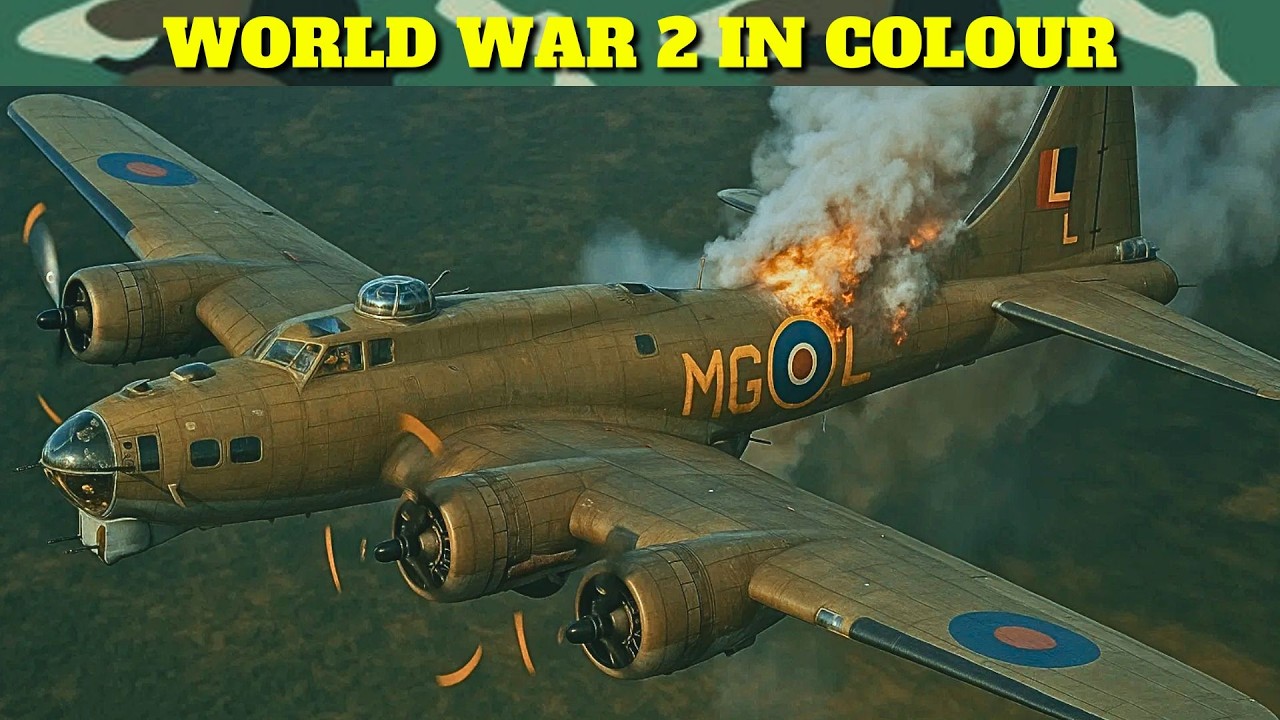
The B-17C was an imposing machine, armed with seven machine guns, equipped with self-sealing fuel tanks and armor protection, and capable of reaching altitudes that British planners believed would place it beyond the reach of German anti-aircraft fire and fighters. The crews of Number 90 Squadron, selected to fly these new bombers, were briefed on a radical new strategy that would come to be known as the stratosphere raid. The idea was simple in theory: fly so high that the enemy could not respond, and deliver precision bombs on vital targets from a safe altitude. The reality would prove far more complicated.
On July 9, 1941, the first of these ambitious missions was launched against the German U-boat base at Wilhelmshaven on the North Sea coast. The British media had built up expectations of a devastating strike from heights never before attempted, and three Fortresses lifted off with the hopes of the RAF riding with them. The aircraft were supposed to operate at 35,000 feet, but the crews soon discovered that the B-17C was not up to the task at such extreme altitudes. Mechanical problems plagued the aircraft, forcing them down to 28,000 feet, and the mission ended in disappointment.
The precedent was set for the challenges that would define the Fortress’s troubled career in British service. A second ambitious mission followed on July 23, this time targeting Berlin itself, the heart of the Reich. Three Fortresses set out on the high-risk operation, but a thunderstorm and thick cloud cover forced the aircraft to turn back without releasing their bombs. On September 8, four Fortresses attempted a daring strike on the German pocket battleship Admiral Scheer in Oslo Harbor.
This mission failed more disastrously. Two of the four aircraft were shot down by German fighters, and the target remained undamaged. By the end of September 1941, Number 90 Squadron had conducted 51 sorties, but half of these missions had to be aborted. The RAF had lost eight Fortress Mark I’s to a combination of combat losses and mechanical failures.
The early operations exposed the fundamental flaws in both the aircraft and the strategy. The B-17C struggled to operate effectively at the extreme altitudes that had been promised, and its defensive armament, which lacked powered turrets and paired guns, proved inadequate against German fighter opposition at lower operating altitudes. The Sperry bombsight, hailed as a marvel of precision technology, proved useless in the conditions the crews encountered. The RAF’s own tactics compounded these problems.
Based on early war experiences in which large formations had suffered heavy losses, Bomber Command had shifted toward operating in small groups or individual sorties. This approach deprived the Fortresses of the mutual defensive firepower that larger formations provided, leaving the bombers dangerously exposed to the Luftwaffe. The investigation that followed was thorough and sobering. Bomber Command was forced to reconsider the role of the Fortress Mark I entirely.
The conclusion was clear: daylight bombing raids with these aircraft were untenable. The RAF decided to abandon the experiment and shift its focus to night saturation bombing, an approach where it had already achieved some success. This decision represented a significant strategic realignment and effectively ended the Fortress’s career as a daylight bomber in British service. But the story of the Flying Fortress in RAF hands did not end there.
The RAF sought new applications for the aircraft it had already purchased, and the B-17 found a second life in an entirely different role. Coastal Command became the new home for the Fortress Mark I’s, where the bombers were repurposed for long-range maritime patrol duties. This was a far cry from their original bombing missions, but it took advantage of the aircraft’s range and endurance in the fight against the U-boat threat in the Atlantic. In this role, augmented by the later Fortress Mark II’s, the B-17 found renewed purpose.
RAF Fortresses patrolled the sea lanes, protected vital convoys, and were credited with eleven U-boat kills during the course of the war. Some Fortresses were also drawn into the emerging field of electronic warfare, conducting radio countermeasures operations that involved jamming German ground controller broadcasts to night fighters. The bombers that had once been intended to strike the heart of Germany now played a critical role in the covert war of signal jamming and maritime patrol, guarding the convoys that carried supplies across the Atlantic. The lessons learned by the RAF through its difficult experience with the B-17C were not wasted.
Boeing received detailed feedback from British operations, and the findings prompted significant improvements to the bomber’s design. The most important of these was the B-17E model, a substantial evolution from the earlier C version. The new variant featured enhanced armament, including powered turrets, and design refinements that dramatically increased its survivability against fighter opposition. These changes were a direct response to the combat realities that the RAF had faced, ensuring that the hard lessons of 1941 were translated into tangible improvements.
The contrast with American employment of the B-17 could not have been sharper. The United States Army Air Corps, having observed the RAF’s early struggles, adopted an entirely different approach. American doctrine called for massive formations of bombers flying in tight defensive boxes, where the sheer volume of mutually supporting fire provided by dozens of aircraft posed a serious threat to attacking fighters. This strategy, made possible by the improved defensive capabilities of the B-17E, would prove far more effective in the daylight bombing campaigns over Europe.
The RAF’s early experience with the Fortress Mark I was costly and filled with setbacks. Forty years before the arrival of the American Eighth Air Force in force, British crews had learned through trial and error what the B-17 could and could not do in the unforgiving skies of Europe. The lessons were expensive in both aircraft and lives, but they shaped the future of strategic bombing for the remainder of the war.
The Fortress that had failed Britain’s high expectations would go on to become one of the most iconic American bombers of the conflict, and the hard-won knowledge gained in 1941 played an important role in that transformation.
