Some of the most feared figures in Mexico’s drug war were women. They commanded hit squads, orchestrated prison breaks, moved tons of cocaine across borders, and made hardened killers tremble at their names. The cartels that recruited them, trained them, or underestimated them created some of the most dangerous operators the drug world had ever seen. In Honduras in the early 2000s, the cartels didn’t just move through the country; they owned it.
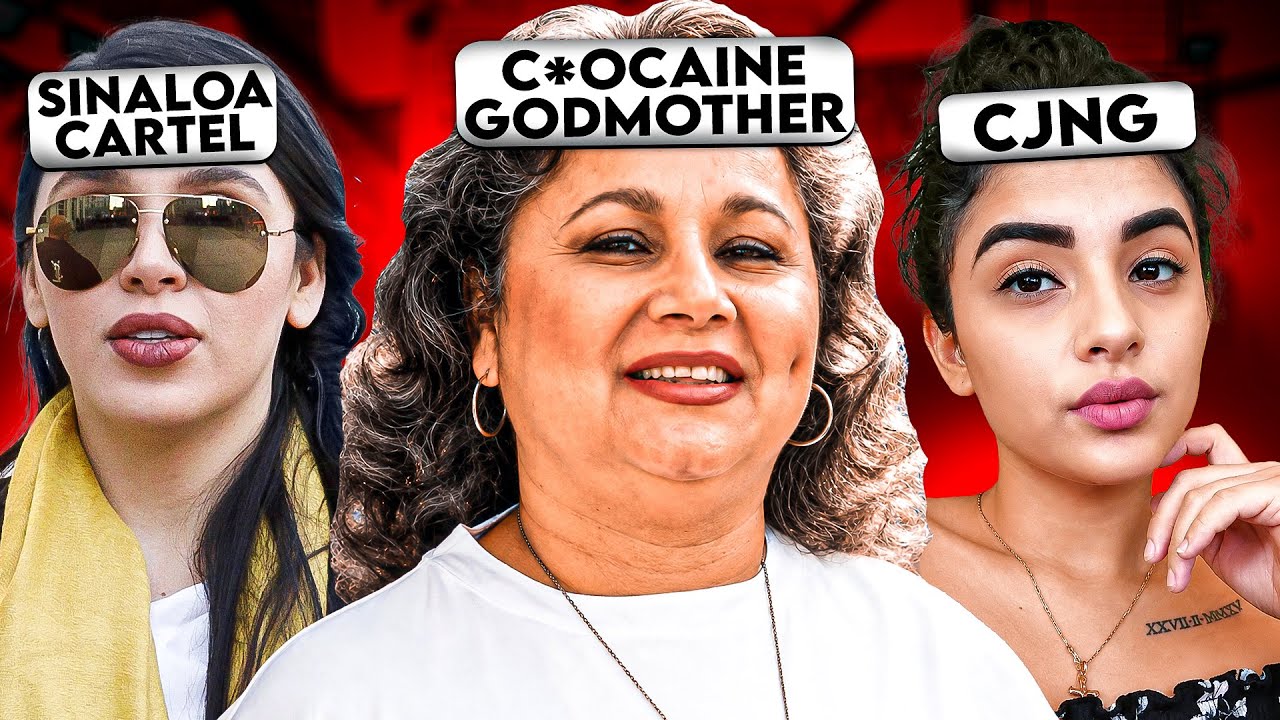
Towns, politicians, and police were on the payroll. In the middle of that chaos, the Valle family rose to power, and Digna Valle helped build their criminal empire. She was considered one of Central America’s most prolific traffickers, not just a lieutenant or a boss’s wife but a co-architect of an organization that stretched across borders and fed cocaine into supply chains reaching the United States. Her network operated with military precision.
Investigators eventually coordinated a takedown, and when Digna was arrested, her fall marked the beginning of the end for one of Central America’s most entrenched trafficking dynasties. But the routes she helped establish did not disappear with her arrest. She had built something designed to outlast her, and in many ways it did. Sebastiana Colloton Vasquez built her empire from nothing.
She was a poor woman in rural Mexico raising five children alone after her first husband left her. To survive, she started selling illegal goods, small-time at first. Her second husband, Juan Alberto Ortiz Lopez, was already a drug lord. When he died, most people assumed the operation would die with him.
Instead, Sebastiana inherited the business and walked into rooms full of hardened traffickers and announced she was in charge. Her connection to Joaquín “El Chapo” Guzmán transformed her from a regional operator into something far more significant, plugged into the most powerful trafficking network on the planet. She was known for brutal tendencies and a hands-on approach. She went from struggling single mother to cartel plaza boss connected to El Chapo himself, proof that in the narco business, power has nothing to do with where you start.
Emma Coronel Aispuro fooled the entire world. She showed up to her husband’s federal trial in designer outfits and luxury handbags, appeared on television, and promoted fashion brands. All the while, she was one of the key operators keeping the Sinaloa Cartel running from the inside. Born on July 2, 1989, in Santa Clara, California, she was an American citizen by birth but was raised on La Tuna Ranch in Canelas, Durango, deep in Mexico’s Golden Triangle.
Her father was a member of the Sinaloa Cartel. She was a teenager, a beauty queen competing in a local festival, when El Chapo, more than 30 years her senior, noticed her. They married on her 18th birthday in 2007, even while he was actively hunted by Mexican and American authorities. What pushed Emma from cartel wife into a different category was the prison break.
In July 2015, El Chapo escaped from Altiplano, one of Mexico’s most secure maximum-security prisons, through a tunnel dug directly into his cell. Investigators found she acted as a key intermediary, carrying messages between El Chapo, his sons, and cartel collaborators to coordinate the escape. At his trial, El Chapo’s former right-hand man testified directly about her role. She helped organize the escape, and investigators found evidence she then tried to organize a second attempt after El Chapo was recaptured.
In February 2021, she was arrested at Dallas International Airport. She pleaded guilty to conspiracy to distribute cocaine, methamphetamine, heroin, and marijuana in the US, money laundering, and violating the Kingpin Act. She was sentenced to three years in federal prison and four years of supervised release and forfeited $1. 5 million.
She was released in September 2023 and is currently living in the United States on parole. Enedina Arellano Félix didn’t need a husband or a famous name beside hers. She took a cartel that was falling apart and held it together. Born April 12, 1961, in Mazatlán, Sinaloa, she came from a family connected to the creation of the modern Mexican drug trafficking system.
Her uncle was Miguel Ángel Félix Gallardo, El Padrino, the Godfather. Her six brothers founded the Tijuana Cartel. Instead of staying in the background, she earned a bachelor’s degree in accounting and turned it into a weapon. After the Guadalajara Cartel collapsed in 1989, her brothers moved in to claim their piece of the vacuum and founded the Tijuana Cartel.
Enedina became its financial advisor, managing finances and hiding assets from law enforcement. Throughout the 1990s, the cartel controlled drug flows into the United States through the Tijuana and Mexicali border crossings, and behind the logistics and money laundering stood Enedina. One by one, her brothers fell: Ramon killed, Francisco Rafael arrested, Benjamin captured and extradited to the US, Carlos imprisoned, Eduardo arrested, Francisco Javier in hiding. The cartel should have collapsed into bloody chaos.
Instead, Enedina stepped up. By 2000, she had become the brain of the entire operation. Mexican magazine Proceso described her as the head of the Tijuana Cartel, and according to US anti-drug authorities, she was the first woman to lead a major Mexican drug cartel in history. Today, decades later, she remains a fugitive.
She didn’t rule with fear the way her brothers did. She ruled with intelligence. Sandra Ávila Beltrán, La Reina del Pacífico, became a legend. Born October 11, 1960, in Mexicali, Baja California, she was narco royalty from birth.
Her uncle was Miguel Ángel Félix Gallardo, the founder of the Guadalajara Cartel. Her family connections extended to the Beltrán Leyva Organization and Rafael Caro Quintero. As a child, she spent so much time counting her family’s money that as an adult she could hold a stack of bills and tell you exactly what it was worth without counting. She tried to walk away, enrolling at the Autonomous University of Guadalajara to study communication sciences, but the world she was born into pulled her back.
Two police commander husbands, both killed by hired assassins, surrounded her with violence. When she finally committed to the narco world, she did it completely. She became the critical link between the Sinaloa Cartel in Mexico and the Norte del Valle Cartel in Colombia, moving tons of cocaine between two of the most powerful trafficking organizations in the Western Hemisphere. She was careful to never use the drugs she trafficked, keeping her mind sharp.
In September 2007, she and her partner were arrested in Mexico City after a business associate allegedly tipped off authorities. She was charged with organized crime and drug trafficking conspiracy, extradited to the United States in 2012, deported back to Mexico, arrested again on money laundering charges, and sentenced to five more years. She was finally released in 2015 after seven years in prison, including two in isolation. Today she lives in Guadalajara, published a book, and her story became the blueprint for the TV series Queen of the South.
María Guadalupe López Esquivel, La Catrina, the Dame of Death, was only 21 years old when she became commander of a hit squad for the Jalisco New Generation Cartel. The CJNG, led by Nemesio Oseguera Cervantes, known as El Mencho, waged open warfare against the Mexican government and rival cartels. La Catrina joined through her boyfriend, a prominent figure in the cartel’s leadership, and climbed fast. She became part of a gang of sicarias, female assassins who used their youth and appearance to operate where male killers couldn’t.
She rose to command the unit and then became one of El Mencho’s high-ranking regional lieutenants. In October 2017, her squad ambushed Mexican police executing a warrant, killing 13 officers and injuring multiple others in a coordinated massacre. After the killing, the squad set fire to vehicles to block roads and hinder emergency response. But the social media presence that helped build her legend also made her findable.
María Guadalupe López Esquivel was killed in a shootout at age 21. In those 21 years, she had climbed higher in one of the world’s most violent criminal organizations than most men do in an entire career. And then there is the woman who stands above them all. Pablo Escobar himself reportedly said, “The only man I was ever afraid of was a woman named Griselda Blanco.
” Born in Cartagena, Colombia, into severe poverty, Blanco found the narco world instead of waiting for it. By the time she was a young girl, she was involved in criminal activity on the streets of Medellín, and her first murder is believed to have occurred when she was just 11 years old. She moved to the United States and built one of the most profitable and violent drug trafficking operations in American history. Her base was Miami, her product was cocaine from Colombia, and her method combined brilliant logistics with absolute merciless brutality.
She was linked to approximately 200 murders, murders she personally ordered, planned, and in some cases wanted carried out in specific ways. She innovated the motorcycle assassination, hitmen on motorcycles moving through Miami traffic targeting rivals and enemies, shaping the violence that gave Miami its most terrifying reputation. Her enterprise generated hundreds of millions of dollars annually, and it took American law enforcement nearly a decade to build a case that could stick. The vast majority of her murders never became charges.
She was arrested in 1985, released, arrested again, and deported to Colombia. On September 3, 2012, she was shot and killed outside a butcher shop in Medellín at age 69, killed by the same kind of sudden violence she had visited upon so many others. From a peasant single mother in rural Mexico to a Colombian-born killer who terrified Pablo Escobar, these women proved that in the narco world the most dangerous person in the room isn’t always who you expect.
Underestimated, overlooked, dismissed, each time that was the last mistake anyone made.
