In the small hours of February 21st, 1960, a bedroom door was pushed open in Jesselton, the British colonial capital of North Borneo, and those who entered found Edwina Mountbatten dead. She had retired the previous night and simply never stirred again. She was fifty-eight, thousands of miles from the homes her wealth had purchased and from the name she had taken in marriage. Beside the bed, on the table, lay a bundle of old letters.
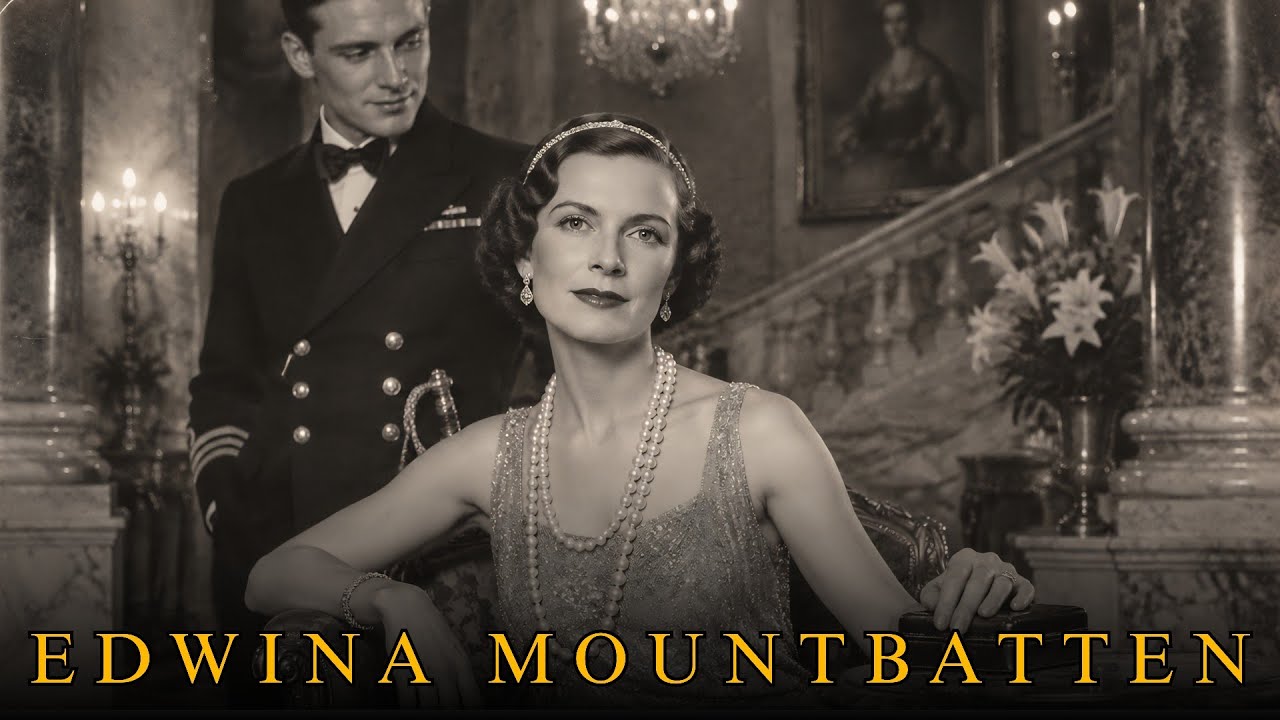
A few of them, the ones she had evidently been reading, had slipped onto the bedcover itself. According to those who discovered her, every single one had been written by Jawaharlal Nehru, the Prime Minister of India. The tale that reached its end in that room had actually started thirty-eight years before, with a deal. In 1869, a seventeen-year-old from Cologne called Ernest Cassel stepped off in Liverpool with empty pockets and a gift for numbers.
He was the offspring of a Jewish banker from the Rhineland, and back home he had begun working as a boy at a small bank. England offered him a stool in a Liverpool grain merchant’s office—a humble enough start, which he accepted regardless. When a position came up at a bank in Paris, he took that as well. The Franco-Prussian War shut the bank down, and he crossed the Channel to London, securing a place with the banking house of Bischoffsheim and Goldschmidt.
There he built himself up by tackling what older men had abandoned: unsnarling bad loans in Sweden, Turkey and Latin America, and settling accounts that no one else could put right. By 1884 he had a firm of his own, and from that point the money flowed exactly as he directed it. The roster of what Ernest Cassel financed reads like a chart of the world in the making. Railways, mines, heavy industry.
Loans to the governments of China, Morocco and half of South America. Major holdings in Sweden, South Africa and the United States. He helped establish the National Bank of Egypt and supplied the funds for the first great dam across the Nile at Aswan, standing at its inauguration in December 1902 to watch the river perform the work he had paid for. Having retired from business in 1910, he left behind an estate valued at over seven million pounds.
Along the way he acquired a London residence on Park Lane and had eight hundred tons of Tuscan marble poured into its hall and staircase alone. The property, known as Brook House, had gone up in the 1860s and passed to a family that had run out of funds; Cassel purchased it from them in 1904 and devoted three years to making it his own. King Edward VII appointed him private financial adviser and counted him among his closest friends—so close that society nicknamed the banker Windsor Cassel. He was sworn into the Privy Council in 1902, taking his oath on a Catholic Bible after converting at his wife’s insistence, though many in London still saw him as a Jew.
He wed Annette Maxwell in 1878. She died in 1881, leaving him with an infant daughter, Maud, whom he brought up with assistance from his widowed sister Wilhelmina. Maud grew up and married a politician named Wilfrid Ashley, a great-grandson of the Earl of Shaftesbury. It was a union of old English title and fresh German fortune, and the era understood it perfectly.
Their first child, Edwina, arrived in London on November 28th, 1901. A second daughter, Mary, came next. Edwina’s earliest years were all movement. She and Mary were shuttled between the family’s various homes, looked after by nurses and governesses, and her biographer would later describe her as leading an unusually peripatetic existence.
Her father had hoped for a boy. When none arrived, he kept his distance from his daughters. Her mother was frail and consumptive, and in 1911 Maud Ashley died. Edwina was nine.
She bore it, by one account, like a small grown-up, watching over her younger sister and drawing solace from her animals. In 1914 her father remarried. His new wife, Muriel Forbes-Sempill, known as Molly, had previously been married to a rear admiral. A friend of Edwina’s would later describe her as thoroughly unkind; Edwina’s future husband was more direct, calling her a wicked woman.
In 1916 Edwina was packed off to boarding school, to The Links at Eastbourne on the Sussex coast. It was wartime, the schedule rigid, the food sparse. The other girls had figured out who her grandfather was, and in an England at war with Germany, there was nothing worse for a girl’s grandfather to be. He was wealthy, German and Jewish.
They made sure she knew it every day. Edwina described it as sheer hell. When the pressure became unbearable, she did what she would do repeatedly for the rest of her life: she sat down and wrote a letter, begging her grandfather to come and take her away. He came, and she departed The Links after a single year, returning to the marble house on Park Lane.
She learned to manage a rich man’s dining table before she learned to manage her own life, with one more finishing school and a grand tour of Italy bankrolled by her grandfather behind her. When she returned, she did not go to her father and stepmother. She went to Brook House, where Ernest Cassel, a widower in his late sixties, required a hostess. She took her place at the foot of a long table and ran his extravagant dinners, learning who ought to be seated next to whom and who must never be placed near whom.
A contemporary recalled her conversation as clever and quick, frequently phrased as questions, and remarked on her immense curiosity about life. She was nineteen, and highly skilled at it. Elsewhere in London, a young man was working to rebuild his family’s name. Born on June 25th, 1900, at Frogmore House in Windsor, he had been christened Prince Louis of Battenberg, the last of Queen Victoria’s numerous godchildren; his family called him Dickie.
His father, also Prince Louis, had wed a granddaughter of the Queen and climbed to the highest position in the Royal Navy, First Sea Lord. Then came 1914. England went to war with Germany and observed that its First Sea Lord had been born a German prince. He was forced to resign, a humiliation the entire country witnessed.
His son, fourteen and at naval college, would be propelled for the rest of his life by the drive to restore the family’s standing. In 1917 the royal family renamed itself Windsor, and the Battenbergs became the Mountbattens. The princely titles were stripped away. Dickie became Lord Louis Mountbatten, a younger son with a new surname, a lieutenant’s prospects in the navy, and a salary of £310 a year.
He possessed everything a royal name could bestow except money. She had money. They met at a ball at Claridge’s in October 1920, introduced, by one account, by the American debutante Grace Vanderbilt, which would have been apt given how much money filled the room. By 1921, they were courting.
That September, both of the elderly men standing behind them passed away, ten days apart. Ernest Cassel died at Brook House on September 21st, aged sixty-nine. His gross estate was assessed at £7,333,411, in all likelihood the greatest fortune any British Jew had yet left behind. Edwina’s portion came to 25/64, held in trust for her during her lifetime.
Once bequests, expenses and duties of roughly £2.9 million were deducted, about £1.6 million flowed into that trust. Her sister Mary was left 15/64.
The houses were still not hers: Brook House and two country properties passed for life to her great-aunt Wilhelmina, with Edwina holding the reversion. Her biographer would describe her as the richest heiress in the world. At nineteen she possessed what Dickie Mountbatten could never have acquired on his own. He possessed what her grandfather had spent fifty years earning the right to stand beside.
Each of them carried something the other could repair. Her money would restore comfort to his name. His name would lend respectability to her money. On October 26th, 1921, the renowned sailed from Portsmouth with the Prince of Wales, heir to the throne, aboard for a long tour of India and Japan.
Among his staff was his cousin and friend, Lord Louis Mountbatten. Edwina Ashley intended to follow him. On Valentine’s Day, 1922, at the Vice Regal Lodge in Delhi, a young officer and the heiress slipped away from the dancing into a small sitting room. He asked for her hand.
She accepted. Twenty-six years afterward, Mountbatten would stand up in Delhi and declare that the room had been number 13. The day after her yes, they drove out of the city in darkness; Dickie recorded in his diary that they motored to the vast tomb of King Humayun, viewed at three in the morning by moonlight. The vicereine, Lady Reading, who had watched the girl beneath her roof, said flatly, I am afraid she has made up her mind about him for sure.
Back in England, Wilfrid Ashley heard of the engagement before the young man’s letter requesting permission had arrived, and he was displeased. It changed nothing. His daughter’s money was no longer his to grant or refuse. They were married on July 18th, 1922, at St.
Margaret’s, Westminster. Over 8,000 people attended. King George V and Queen Mary came, along with Queen Alexandra, widow of the king whose friend her grandfather had been. The best man was the Prince of Wales.
Crowds packed the streets, a newsreel camera rolled, and the newspapers dubbed it the wedding of the year. The reception took place at Brook House, and Edwina covered much of its cost from her inheritance. A girl whose grandfather had landed in Liverpool with nothing, whose schoolmates had tormented her for being German and Jewish, walked up the aisle while two queens looked on and the heir to the throne waited at the altar. The bridegroom had accomplished something equally striking: five years after his family had been stripped of its German name and princely titles, he stood before all of society with his royal cousins about him and a fortune on his arm.
The honeymoon ran about six months. They started at Broadlands, her father’s house, toured the royal courts of Europe, then crossed the Atlantic, where the United States lost its head. President Warren Harding received them, they visited Niagara Falls because every honeymooning couple did, and they watched Babe Ruth play in a World Series game. In California they met Mary Pickford and Douglas Fairbanks; Charlie Chaplin made a small silent film with them titled Nice and Friendly, never shown publicly.
The San Francisco Chronicle observed that Lady Mountbatten wore her skirts just about as short as any seen on Broadway. A lieutenant’s pay would not have covered the first week. The bills for all of it landed with one person. A lieutenant’s pay amounted to £310 a year, and it did not stretch to polo ponies.
Dickie owned a great many polo ponies, and in time a yacht, costly cars, a speedboat shipped from America, and a grand house on Park Lane. Every penny of it was funded by the trust Ernest Cassel had left his granddaughter. One historian, summarizing the couple’s papers, set out the arithmetic bluntly: in a single month, Edwina received ten times what her husband earned in a year. By the 1930s, their combined pre-tax income reached £113,000 annually; Mountbatten himself later told his elder daughter that before the war there were years when they struggled to spend the £60,000 remaining after tax.
When Dickie was posted to the Mediterranean Fleet in 1926, they took a second house on Malta so that a naval officer’s wife would never have to live like one. Their first daughter, Patricia, was born on February 14th, 1924, Valentine’s Day once more, two years to the day after the proposal in Delhi. When Wilhelmina Cassel died in 1925, Brook House became Edwina’s outright, and they redecorated the old banker’s palace in a naval theme, as though the house itself had been commissioned into the fleet. The biographer Andrew Lownie, who has delved furthest into their private papers, describes the arrangement without sentiment: Dickie loved her money.
Edwina loved his connections. Dickie was methodical, exacting, a man of lists and procedures; his guests were instructed in the precise way to eat strawberries. In private, Edwina, all zest and spontaneity, found him a bore. She had been handed a fortune at nineteen, and the only work she had ever done had ended the day her grandfather died.
Now she had a husband, a baby daughter, and nothing in the world she was obliged to do. During the general strike of 1926, she took a position as a receptionist, the first hint of something that would take her another fifteen years to discover. For the remainder of the decade, one account says, she gave free rein to her desires, whether material possessions or romantic conquests, and her friends often came away with the impression that she was dissatisfied. In 1925, three years into the marriage and one year after their first child was born, Dickie discovered where some of that restlessness had gone.
Pamela Mountbatten, their younger daughter, would later put it plainly: when her father first learned that her mother had taken a lover, he was devastated. The Mountbattens left an extensive paper trail of their private lives, and their biographer found evidence of their affairs in their own correspondence, draft divorce papers, and records kept by the National Archives and the Library of the House of Lords. Two names matter more than the others: Hugh, and Laddie. Laddie was an American, Stephen Sanford, heir to a carpet fortune and a polo player who rode for the Meadowbrook Polo Club and a team called the Hurricanes.
It is difficult to imagine a man better built to make Dickie feel small. Edwina did not pretend otherwise. At some point she wrote to her husband about those two affairs, and her words survive: I suppose my affairs with Hugh and Laddie were what you would call serious. Then she told him they had never in any way altered her affection and respect for him.
A letter from Dickie to her has also come down to us: I wish I knew how to flirt with other women, and especially with my wife. And then, I wish I had sown many more wild oats in my youth and could excite you more than I fear I do. Divorce was being discussed. For a cousin of the king in the 1920s, divorce spelled ruin.
So they chose another path. By 1929 the understanding was settled: Edwina might carry on her romances provided she did so discreetly. The marriage would endure, the name would endure, and the money would keep funding the life that came with them. Pamela later described it with considerable delicacy: her parents had found a way through the crisis by drawing on their deep reserves of mutual affection.
This was no marriage fading into silence and separate bedrooms. It was a treaty. That same year, on 19 April, their second daughter, Pamela, was born. Three years afterward, his turn arrived.
A married Frenchwoman in her twenties, Yola Letellier, became the central attachment of Dickie’s life from 1932 onward and stayed so, in one fashion or another, until the end of his days. Edwina met her and wrote to her husband, Your girl is sweet, and I like her, then took the girl out to lunch. Years later Mountbatten would put the whole arrangement bluntly, as his biographer records: Edwina and I spent all our married lives getting into other people’s beds. Edwina referred to the men as her ginks; her biographer compiled a list of at least eighteen.
There was a newspaper editor, Mike Wardell; a golfer, Bobby Sweeney; an actor, Larry Gray; a young guards officer called Bunny Phillips, who broke her heart by marrying a woman Edwina herself had introduced him to. Pamela recalled a remark from those years about the traffic through her mother’s rooms: Mr. Larry Gray is in the drawing room. Mr.
Sanford is in the library. Mr. Ted Phillips is in the boudoir. Even so, the men were never the entire story.
Starting in 1928, Edwina took up travel, long demanding journeys to places her class did not visit, usually in the company of her sister-in-law Nada, the Marchioness of Milford Haven. She went to Mexico, Guatemala, Honduras. To Jerusalem, Damascus, Baghdad, Tehran. She called on the archaeologist Ernst Herzfeld at his excavation of Persepolis, trekked over the Andes to the Chilean side, climbed to Machu Picchu, and studied the Maya ruins in Yucatan.
One of her male admirers watched her leave and observed that it was as though she wanted to escape men for a time. In 1932, a Sunday paper called The People ran a paragraph about a scandal which has shaken society to the very depths, involving one of the country’s leading hostesses. Her association with a colored man, the paper claimed, had grown so conspicuous that they were the talk of the West End, and it hinted that the palace had advised the lady to remove herself abroad. Mayfair supplied the names: Lady Louis Mountbatten, then in Malta, and the man, so the gossip went, was Paul Robeson.
King George V read the paragraph and instructed the Mountbattens to return to London and sue for libel. The case came up in July in the court of the Lord Chief Justice, beginning at half past nine in the morning before reporters even knew it was listed, and was heard, in effect, unobserved. Edwina entered the witness box and told the court she had never met Paul Robeson. Dickie followed and said she had never been exiled; she was in Malta because he was stationed there as an officer of the Royal Navy.
Their counsel, Norman Birkett, branded it the most monstrous and most atrocious libel. The People had spent £25,000 hunting for evidence and could not mount a defense; its own barrister conveyed the owners’ genuine and deep regrets. Edwina was granted her full costs and turned down damages. That evening, the Mountbattens threw a party at the Café de Paris.
The following day, the King and Queen invited them to lunch at Buckingham Palace. According to accounts that surfaced long afterward, the gossip had the right story and the wrong man. The man had never been Paul Robeson; his wife, Essie, found it most incredible that anyone could link his name with an English noblewoman. He was Leslie Hutchinson, known throughout London as Hutch, born in Grenada, a pianist and singer who had been among Edwina’s longer-lasting companions.
After the summer of 1932, Hutch’s world began to contract. He was never again invited to play a royal command performance, Lord Beaverbrook ordered his name kept out of his newspapers, the BBC dropped him, and theaters stopped calling. In 1967 he sold his house in Belsize Park for £13,037, with £10,000 going straight to his debts. Two years later he died of pneumonia at the Royal Free Hospital, leaving £1,949 and no will.
On the day Hutch was buried, Lord Mountbatten, by then a widower and an earl, offered to pay for his grave and headstone at Highgate Cemetery. No one ever explained why. In 1931, Edwina put Brook House on the market. Taxes, upkeep.
A house built for another era, when a banker could afford a palace and never feel the cost. The buyer was a builder, and then the wreckers arrived. Between 1933 and 1935, a new Brook House went up on the same corner, a trim Georgian-style block of flats; the Mountbattens took the top, a penthouse completed in 1937, two floors served by a private express elevator. Edwina was living, quite literally, above the ruins of her grandfather’s house.
She does not appear to have mourned it, at least not on paper. In 1939, two things happened in quick succession. Her father died, leaving her Broadlands in Hampshire and Classiebawn Castle on the Atlantic coast of County Sligo. And in September, the war arrived.
In November 1939, she became County President of the St. John Ambulance Brigade in London, the sort of post ladies of her class often held as decoration. She treated it as a job. When the Blitz came, she descended into the shelters, inspected them in the Underground stations and basements where Londoners slept, and campaigned for better conditions.
She established what she called the shelter first aid post and rest center scheme, making sure every borough in London had enough volunteers to staff its posts. The Brigade’s report for 1940 credited the work to the inspiring leadership of Lady Louis Mountbatten. Her volunteers remembered that her uniform was always immaculate, that she took a personal interest in everything, and that she refused to wear a tin hat. In 1941, Edwina crossed America with her husband and stood up in twenty-eight states to say thank you.
America had not yet entered the war, but its citizens had already been collecting funds for British relief, and who was better placed to express gratitude than the king’s cousin and his celebrated wife? She gave speeches, and she gave them well. One onlooker noted that she spoke from the heart and that her listeners were stirred. That same month, Dickie paid a visit to Pearl Harbor, not long before the Japanese struck.
When Lorna Atkinson, the Brigade’s lady superintendent-in-chief, passed away in 1942, Edwina was named to succeed her as superintendent-in-chief of the St. John Ambulance Brigade, the organization’s highest position, which she would keep for eighteen years, right up to her death. In 1943 she was appointed a Commander of the British Empire. By September of that year, Dickie had been dispatched east as Supreme Allied Commander of the campaign against Japan in Southeast Asia, with headquarters in Ceylon.
His troops referred to themselves as the Forgotten Army; he summed up his mission for them in three words: morale, malaria, and monsoon. In 1944, Edwina started inspecting Allied hospitals across France, northern Europe, and Italy, trailing the armies as they advanced. In the summer of 1945, shortly after touring St. John units and hospitals in India, Burma, Ceylon, and China, she was called upon to assist with the war’s conclusion in the east.
Scattered throughout Southeast Asia, in camps stretching from Burma to Sumatra, lay tens of thousands of Allied prisoners of war and civilian internees. St. John’s own records mention roughly 90,000 prisoners recovered from 230 camps distributed over some 3,000 miles of jungle and coastline. She flew close to 33,000 miles, walking through camps in Rangoon, Bangkok, Sumatra, and Singapore, alongside the men, together with the volunteers she commanded.
The arrival of the Supreme Commander’s wife walking through the gate meant the war was over. She wrote that she wished to give special recognition to the invaluable work they carried out within the prison camps themselves. On January 1st, 1946, she was appointed a Dame Commander of the Royal Victorian Order and a Dame Grand Cross of the Order of St. John.
And during one of those journeys through the East, in Singapore, a crowd rushed forward and swept her off her feet. One of the two men who forced their way through to help her up was named Jawaharlal Nehru. Nehru was present because Dickie had arranged it, diverting his route so the two of them could meet at the YMCA. When the crowd sent his wife tumbling, Nehru and Mountbatten took each other’s arms and pushed through to get to her.
Nehru’s daughter Indira recalled that moment years afterward. Later the three of them dined together. Dickie would claim it marked the beginning of their friendship, and that they discussed everything imaginable. In August 1946, Dickie was elevated to viscount.
Then Clement Attlee’s government handed him the most difficult assignment in the British Empire: to travel to India as its final viceroy and transfer the country to its own people. According to Andrew Lownie, the Mountbattens had only just resolved to divorce; the offer of the viceroyalty came at practically the same instant. Dickie accepted, the couple reunited, and an entirely new chapter opened. They arrived in Delhi on March 22nd, 1947, accompanied by Pamela, then seventeen, and discovered a country in upheaval, its communities pitted against one another, violence already spreading.
The Viceroy’s house, the enormous palace at the center of New Delhi, had struck Edwina in 1945 as impossible to live in: vast, with corridors of marble stretching on endlessly. Here she was once more, dwelling in a marble house constructed for an empire in its final days. Somewhere else in the city was room number 13. Dickie conducted negotiations with Nehru and the Congress on one side and Jinnah and the Muslim League on the other.
Edwina’s role was informal and immense. She made it her aim to earn the confidence of the women behind the men, the wives, daughters, and sisters of the leaders of every community, and she succeeded. A member of the Viceroy’s staff put it plainly: she was quite marvelous. On August 15th, 1947, India gained independence, and Pakistan was created alongside it.
Dickie remained as the first Governor-General. Then the country tore apart. The violence that accompanied partition forced enormous numbers of people from their homes, and the refugee camps swelled faster than anyone could bring order to them. Edwina entered the camps, inspected hospitals, coordinated aid, drew fifteen separate relief organizations together beneath one umbrella body, and arranged cholera vaccinations and sanitation.
Nehru observed her, and a writer who knew him set down the phrase he used: her healing touch. At Mashobra in the Himalayan foothills, they met in the garden each morning, and in the evenings they stayed up late. Something shifted during those days, and Nehru described it in words, tracing it to a weekend in Simla in the middle of May 1948. He wrote of a deeper attachment between us, and spoke of an uncontrollable force drawing them together.
After returning to Delhi he wrote once more: life is a dreary business, and when a bright patch comes, it rather takes one’s breath away. Edwina replied in the same spirit. Following one parting she told him she had hated watching him drive off, and that he had left her with an odd sense of peace. He was fifty-eight, she was forty-six.
From the beginning they addressed each other as Jawaharlal and Edwina. Dickie was fully aware of it and appears to have been delighted. He wrote to their elder daughter Patricia that they really dote on each other in the nicest way. Years afterward he told a historian that he and Edwina got on marvelously.
That made a great difference. A tale took hold that he had deployed his wife to charm Nehru, a seduction operation conducted for the crown; it belongs among the myths of that summer. Historians in Pakistan have contended that her influence swayed the viceroy toward India on the partition questions; the accusation has never been resolved. The person best positioned to say what it truly was was the seventeen-year-old girl who had witnessed it.
Pamela Mountbatten observed everything and set it down many years later: I have often been asked whether I think Nehru and my mother were in love. The answer undoubtedly is yes. But Pamela held that the love was of a different sort: in Nehru her mother discovered the companionship and the equality of spirit and intellect she had longed for, and the two were seldom alone. Mountbatten’s biographer is certain it was a passionate affair.
The historian Philip Ziegler supplied the most honest response: it depends what you mean by affair. Nobody seriously questions that a close friendship existed while Mountbatten was still viceroy. In June 1948, the Mountbattens’ time in India drew to a close. Before departing, Edwina handed an emerald ring to Nehru’s daughter Indira, instructing her that should her father ever find himself in financial difficulty, she was to sell it on his behalf.
It was the one present Edwina could be certain he would take, since he would never realize he had taken it. At the farewell, Nehru rose and addressed her straight on, before everyone, lauding her looks, her mind, her allure, and then something further: the human touch, the love of humanity, the drive to serve those who suffer. On June 20th, 1948, Edwina returned home to England. From the day she departed, she wrote to him daily, placing each letter inside a second envelope and numbering the envelopes.
His answers arrived via the diplomatic bag of the Indian High Commission, lengthy and poetic, filled with other men’s verse, Yeats and Swinburne, Auden and Joyce and Blake. If a letter failed to arrive when it ought to have, she would place a telephone call across half the globe simply to hear his voice. She had discovered something she dreaded losing, and she had grown cautious. In October, Nehru flew to Britain for talks among Commonwealth leaders on his way to the United Nations.
Mountbatten arranged to leave the two of them alone for a meeting at midnight; Edwina wrote two words in her diary afterward: Too lovely. The week that followed was nearly a second honeymoon carried out in public. Nehru came down to Broadlands, where he made lion faces for Patricia’s little sons until they shrieked. They went together to the studio of the sculptor Jacob Epstein, sat through Euripides’ Medea.
One evening they slipped away to a Greek restaurant in Soho and found press photographers waiting; Krishna Menon had tipped them off. At the end of October the Mountbattens left for Malta, where Dickie was going back to sea. Nehru came to the airfield at Northolt to see them off. Edwina wore dark glasses so the cameras would not see her crying.
The fortune that had paid for every year of her life was shrinking. By the end of the war, the government took nineteen shillings and sixpence of every pound at the top of the scale, 97.5 percent. The great fortune, the 25/64 that had made her the richest heiress in the world, now left her about £4,500 a year after tax.
Before the war it had been about £40,000. She seems to have minded very little. She had found the thing it could not buy. Dickie, meanwhile, was climbing: Fourth Sea Lord in 1950, Commander-in-Chief of the Mediterranean Fleet in 1952, First Sea Lord in April 1955, the very post his father had been forced to give up for being German nearly forty-one years before, and then Admiral of the Fleet, the highest rank the Navy had to give.
In 1952, Edwina was taken ill with a hemorrhage, and the doctors told her she needed a dangerous operation. Before she went into hospital, she gathered up Nehru’s letters to her, sealed them in an envelope, and gave it to her husband with a note, its words surviving in slightly different versions: Jawaharlal has meant a very great deal in my life in these last years and I think I in his. She survived. Dickie wrote to Nehru that she needed a rest but would never take one; Nehru wrote back, the only way, apparently, for her to get some rest is to come to India.
She went almost every winter for the rest of her life, often for weeks at a time, and on every visit but one, without her husband. Nehru sent her gifts from around the world; once a book of photographs of erotic sculpture, confessing they had taken his breath away for an instant. She replied that she was not interested in sex as sex; there must be much more to it, beauty of spirit and form and in its conception. She called what they had a treasured bond.
But her body was failing. In 1956, angina. In 1957, a heart specialist told her to cut back her work and traveling; she did not listen. In 1958, a small stroke, then a severe case of chickenpox from one of her grandchildren, nothing to a child, a great deal to a woman of fifty-six with a weak heart.
In October 1959, Dickie became Chief of the Defense Staff. In November, Nehru turned seventy, and Edwina stood up and gave the tribute at his London celebration. The last tour went east in February 1960, to Cyprus and Karachi, Delhi and Malaya, Singapore, and then North Borneo. A St.
John Ambulance tour like dozens before it, too many engagements in too many places in too few days. In North Borneo she was a guest at Jesselton and carried out a demanding round of inspections despite the pains in her chest. On the night of February 20th, she went to bed. She never woke, dying of heart failure in the early hours of February 21st, 1960, at fifty-eight.
When they came into her room they found, by the accounts that have come down, that she had been reading. On the table beside the bed was a pile of old letters, and a few had fallen across the bed, the ones she had been reading. They were from Jawaharlal Nehru. It was 3:00 in the morning when the telephone rang for Dickie.
He called it, afterward, a poleax blow. In Delhi, Nehru heard through the British naval authorities, sent a telegram asking for details at once, whether her body was being taken to England, and that fresh flowers be laid on his behalf wherever she was. The Queen Mother offered her own epitaph: dear Edwina, she always liked to make a splash. Under her will she was to be buried at sea.
Her body was flown home, and on February 25th she was buried at sea off Portsmouth from the Royal Navy ship Wakeful, with the Archbishop of Canterbury reading the service. Nehru had ordered an Indian Navy frigate, the Trishul, to sail with her; when the coffin went down, the Indian ship cast a wreath on the water. Her gross personal estate was valued at £589,655; death duties came to £333,153; the net figure, £478,618. Dickie reckoned he would end up with about one shilling in the pound.
The value of the Cassel trust itself was never published. That same November, the company into which her grandfather had moved £3 million of shares shortly before his death was finally wound up, thirty-nine years after the old man died. Nehru lived four more years, dying in 1964, still Prime Minister. When his body lay in state in Delhi, the first British visitor to stand beside it was Lord Louis Mountbatten.
Dickie outlived him by fifteen years. On August 27th, 1979, while on holiday at Classiebawn, the castle Edwina had inherited from her father, a bomb planted by the Provisional IRA blew up his boat off Mullaghmore, killing him and his grandson Nicholas. He was buried at Romsey Abbey near Broadlands. Her grandfather’s will had given her 25/64 of everything he had.
Her whole life was spent discovering what it could never purchase. In the end, in a room that wasn’t hers on the opposite side of the globe, the only things she kept close were the letters.
