The message crossed the Atlantic against the backdrop of a brutal Canadian cold snap. The only son of Princess Alexandra, Duchess of Fife, was dead at twenty-eight. The official account was a tragic accident: a drunken night that ended in hypothermia beside an open window. For his mother, the explanation was too tidy, too convenient to cover a loss so immense, and questions that would never be answered.
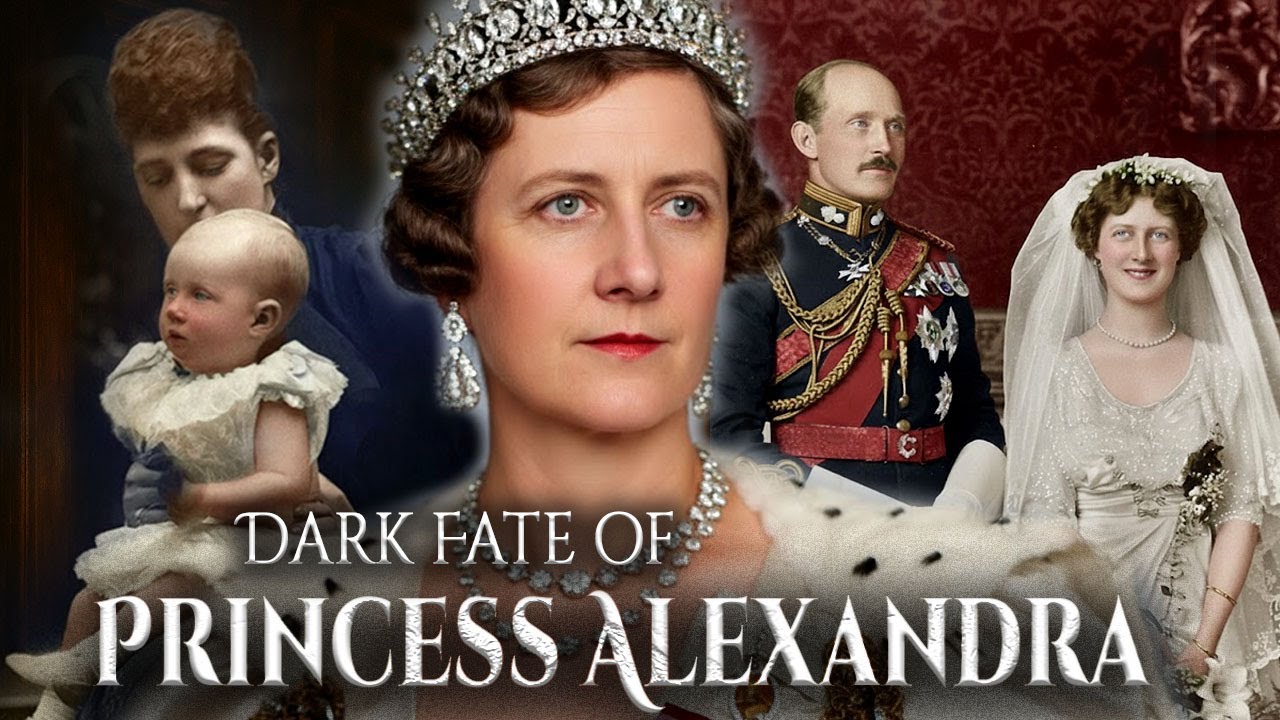
Behind the dignified silence of the royal family, whispers of a darker truth began to take root, a mystery that would haunt the princess for the rest of her life. Alexandra was twenty-one when she lost her father, the 6th Duke of Fife, to pneumonia contracted in Egypt. At the beginning of 1912, the family withdrew into mourning. She, her younger sister Ma, and their widowed mother, the shy Princess Royal, formed a quiet, self-contained female household standing apart from the bustling court of their uncle, King George V.
The period of deep mourning removed them from the social world, giving Alexandra time to learn the steep curve of her new role. She spent more and more time in Scotland, poring over ledgers with estate managers, learning agricultural tenancies, salmon fishing rights, and forestry. It was a man’s world, and she navigated it with quiet determination that belied her youth and gentle demeanor. This practical education, so different from the deportment and drawing lessons of her girlhood, solidified the serious, capable side of her nature.
It grounded her, giving her purpose rooted not in London society but in the ancient landscape of her father’s homeland. Those two years, from the start of 1912 to the summer of 1914, were a strange, dreamlike interlude. The last breath of the old world, a final feverish waltz on the edge of a precipice. For a woman of her rank, life was a sequence of carefully choreographed social events, tempered by recent mourning: quiet dinners, family gatherings at Sandringham and Balmoral, and the ever-present unspoken question of marriage.
As a duchess in her own right, a princess of the United Kingdom, and a great-granddaughter of Queen Victoria, she was arguably the most eligible woman in the country. Suitors, British and foreign, were considered, but her unique position and reserved character called for a very particular kind of man. He appeared in the form of Prince Arthur of Connaught. Arthur was the perfect dynastic and personal match.
He was her first cousin once removed, a grandson of Queen Victoria through her third son, Prince Arthur, Duke of Connaught, placing him firmly in the inner circle of the family. More importantly, he was a man of impeccable character, a career soldier with the 2nd Dragoons, the Royal Scots Greys, who had served in the Second Boer War. Unlike his cousin, the famously restless Prince of Wales, Arthur embodied duty, stability, and quiet competence. He was handsome in a solid, dependable way, and his reserved nature perfectly complemented Alexandra’s own.
As a grandson of the monarch in the male line, he carried the higher royal rank of Royal Highness, neatly solving questions of precedence. Their courtship was not a whirlwind romance but a slow, gentle, private affair that evolved out of shared social circles and mutual family approval. The attraction was based not on passionate fire but on deep personal compatibility. In Arthur, Alexandra found a kindred spirit, a man who understood the weight of history and lineage but was not defined by it.
For Arthur, she was gentle, kind, and intelligent, with a strength of character he admired. Theirs was a union promising stability in a world growing increasingly unstable. Their engagement was announced in the summer of 1913 and met with universal approval. King George V, who had deep affection for his five nieces, readily gave his formal consent as required by the Royal Marriages Act of 1772.
He understood that the days of using relatives as pawns in European diplomacy were over. A happy, stable marriage to a respected British prince was far better than a miserable foreign alliance. On the 15th of October 1913, Princess Alexandra and Prince Arthur of Connaught were married in the Chapel Royal at St. James’s Palace, the traditional venue for more private royal weddings.
The guest list was a dazzling roll call of the old European order: the King and Queen, Alexandra’s grandmother the beloved Queen Alexandra, and a host of cousins, uncles, and aunts representing the royal houses of Spain, Denmark, and Norway. As Alexandra walked down the aisle, now to be styled Her Royal Highness Princess Arthur of Connaught, Duchess of Fife, she seemed to have fulfilled her destiny. She had a loving husband, a clear path of public duty, and the security of her own great title and fortune. For a brief shining moment, her future seemed unimpeachably secure.
Yet this glittering ceremony was, in retrospect, a ghost at the feast. It was the last great royal wedding of the old world. As the royals celebrated in London, the armies of Europe were sharpening their bayonets. The Balkan Wars had concluded, leaving bitterness and instability in southeastern Europe.
In Ireland, the crisis over home rule pushed the nation toward civil war. The Triple Entente of Britain, France, and Russia, and the Triple Alliance of Germany, Austria-Hungary, and Italy, grew ever more rigid. The glorious sunlit afternoon of Alexandra’s wedding was in reality the deep twilight of an era. The spark came in a city most Britons could barely place on a map.
On the 28th of June 1914, in Sarajevo, a Serbian nationalist assassinated Archduke Franz Ferdinand, heir to the Austro-Hungarian throne. At first it seemed like just another distant Balkan crisis, but the dominoes had long been set. An Austrian ultimatum to Serbia, a Russian mobilization to protect its Slavic brethren, a German declaration of war on Russia, and then France. Germany’s Schlieffen Plan required a swift invasion of France through neutral Belgium.
Britain, honoring a treaty to protect Belgian neutrality, issued an ultimatum to Germany. It was ignored. On the 4th of August 1914, Great Britain declared war on Germany. The long Edwardian summer had come to a violent end.
The initial reaction in Britain was not fear but euphoric patriotic fervor. Crowds gathered outside Buckingham Palace singing “God Save the King. ” Young men rushed to enlist, convinced the war would be a grand adventure, over by Christmas. For the royal family, the war was deeply personal.
This was a family feud that had escalated into global slaughter. King George V’s first cousin was Kaiser Wilhelm II. His other first cousin was Empress Alexandra of Russia, married to Tsar Nicholas II. The King of Norway was his brother-in-law.
The Queen of Spain was his cousin. The intricate network of blood that had been Queen Victoria’s pride had become a source of immense tragedy. As the horrifying reality of industrial warfare became clear, life in Britain transformed. The initial jingoism gave way to grim determination.
The lists of dead and wounded grew ever longer. The monarchy adapted. King George V and Queen Mary worked tirelessly, visiting troops, inspecting factories, bestowing medals, even instituting rationing at Buckingham Palace. The aristocracy followed.
London houses became hospitals. Women of the upper classes, Alexandra included, swapped ball gowns for nurses’ uniforms. Driven by the same profound sense of duty that defined her character, Alexandra enrolled in a nursing course at St. Mary’s Hospital, Paddington.
She trained alongside ordinary women and qualified as a state registered nurse. She worked long, grueling hours on the wards, tending to horrifically wounded men returning from the trenches of Flanders and the Somme. The stench of gangrene, the screams of men in agony, the quiet despair of the permanently maimed. She was no longer Her Royal Highness Princess Arthur of Connaught.
She was Nurse Connaught, cleaning wounds, changing dressings, comforting dying men. She qualified as a state registered nurse in 1919 and later ran the Fife nursing home in London during the Second World War. In the midst of this darkness, there was a single ray of light. On August 9th, 1914, just five days after Britain declared war, Alexandra gave birth to her first and only child, a son.
He was named Alistair Arthur. His birth in the opening days of the greatest conflict in history was a beacon of hope. He was the heir to his mother’s dukedom of Fife and, after his father and grandfather, to the dukedom of Connaught. A future duke, a great-grandson of one king-emperor, and a great-nephew of the reigning one.
His future seemed limitless. As the war dragged on, rising anti-German sentiment swept Britain. The royal house itself was the House of Saxe-Coburg and Gotha, a name inherited from Queen Victoria’s husband, Prince Albert. With German Gotha bombers flying over London, the name became a liability.
On the 17th of July 1917, King George V issued a royal proclamation changing the family name to Windsor, taken from the castle that had been the heart of the monarchy for centuries. At the same time, new letters patent restricted the use of the titles prince and princess and the style Royal Highness to the children of the sovereign, the children of the sons of the sovereign, and the eldest living son of the eldest son of the Prince of Wales. This had a direct consequence for Alexandra’s young son. As the son of a prince who was the son of a sovereign’s son, Alistair was in line for the title.
However, as the rules were tightened and the family streamlined, he was not styled as a prince of the United Kingdom. He was known by his father’s senior courtesy title, the Earl of Macduff. It was a subtle legalistic distinction, sensible in the context of creating a smaller monarchy. But for a young boy growing up among cousins who were princes and princesses, it may have sown the seeds of a future identity crisis, a sense of being royal but not quite royal enough.
While the House of Windsor secured its identity at home, their Romanov relatives faced total annihilation. The war had been a catastrophe for Russia. Military defeats, food shortages, and political incompetence led to widespread unrest. In March 1917, Tsar Nicholas II was forced to abdicate.
He, his wife Alexandra, a granddaughter of Queen Victoria, and their five children were placed under house arrest. King George V was put in an impossible position. The Tsar was his first cousin, a man he resembled so strongly they could have passed for twins. Family loyalty dictated he should offer asylum in Britain.
An initial offer was extended, but the move was deeply unpopular at home. The Tsar was seen as a bloody autocrat, and there were genuine fears that harboring him could spark revolution. The King, who always placed the stability of his own throne above all else, withdrew the offer under immense political pressure. It was a pragmatic decision born of fear, and it would prove fatal for the Romanovs.
The Bolsheviks under Vladimir Lenin seized power in the October Revolution and plunged the country into civil war. In the early hours of the 17th of July 1918, exactly one year to the day after the founding of the House of Windsor, the Romanov family was woken in their cellar prison in Yekaterinburg and brutally executed by a firing squad. The news sent a shockwave of horror through every royal court in Europe. For Alexandra, these were her relatives.
Her own beloved grandmother, the Dowager Queen Alexandra, was the sister of the murdered Tsar’s mother, the Dowager Empress Marie Feodorovna, who had managed to escape. The grief within the family was personal, profound, and terrifying. After four long, brutal years, the war came to an end. At the eleventh hour of the eleventh day of the eleventh month of 1918, the guns on the Western Front fell silent.
Nearly a million men from Britain and its empire were dead. The old certainties had been shattered. Princess Alexandra was now twenty-seven. The frivolous world of her debutante years was a distant memory.
She had witnessed the end of the great European empires and the murder of her own kin. She had found purpose not in a palace drawing room but on a hospital ward. The end of the war did not bring a return to the world that had existed before. The Roaring Twenties arrived, a time of contradictions, of frantic celebration and collective trauma, of glittering prosperity and social unrest.
Women found new freedom. In 1918, the Representation of the People Act granted the vote to women over thirty. Fashion became a declaration of independence: shorter hemlines, bobbed hair, the Flapper. For Princess Alexandra and Prince Arthur, however, the 1920s were not a decade of jazz-fueled hedonism.
In 1920, Arthur was appointed Governor General of the Union of South Africa. For Alexandra, this meant uprooting her life and her young son and taking on the demanding public role of Vicereine. Life in South Africa was a world away from Scotland. They resided in Government Houses in Pretoria and Cape Town, their lives a relentless schedule of public engagements.
For a woman naturally shy and protective of her privacy, this life in the public glare must have been a strain, yet she performed her duties flawlessly, focusing her charitable work on hospitals and child welfare. This formal colonial environment was the backdrop for the early childhood of her son, Alistair. He was raised almost exclusively by nannies and tutors, seeing his parents at designated times. His life was governed by a level of formality that was stifling even by royal standards.
He grew up a lonely boy in a sun-drenched gilded cage. The weight of expectation was on his small shoulders from the beginning: heir to two dukedoms, the future of two great family lines. In these formative, isolated years in South Africa, we can perhaps see the origins of the rudderless, insecure man he would become. When they returned to England in 1923, they settled back into royal life.
Alistair was by all accounts a bright and charming boy. He was sent on the traditional path: preparatory school, Eton College, then the Royal Military College, Sandhurst. On the surface he progressed as expected. He was popular, intelligent, and excelled at languages.
Yet beneath the charming exterior were hints of a more troubled, rebellious, self-destructive nature. He seemed to lack a core sense of purpose. He was the Earl of Macduff, soon to be a duke, yet he was not a prince. He was famous for who he was, not for anything he had done.
While Alexandra navigated raising her adolescent son, the world slid toward crisis. The Wall Street crash of 1929 plunged the world into the Great Depression. In 1933, Adolf Hitler came to power in Germany. The 1930s were lived under a gathering cloud of dread.
In 1936, King George V died. The new king’s affair with Wallis Simpson plunged the monarchy into its greatest crisis in modern history, ending in abdication in December 1936. But for Alexandra, these great events were about to be eclipsed by a more intimate tragedy. Her husband, Prince Arthur, had been in failing health for some time, diagnosed with stomach cancer.
For months, Alexandra nursed him, drawing on the skills she had learned on the hospital wards twenty years earlier. On the 12th of September 1938, just as the crisis over Hitler’s annexation of the Sudetenland was pushing Europe to the brink of war, Prince Arthur of Connaught died, only fifty-five years old. Alexandra was a widow at forty-seven. Her world, once so grand and expansive, shrank to a single anxious focus: her son Alistair, now twenty-four, adrift, and she alone, facing an uncertain future with the drums of war beating louder across the continent.
The final, most devastating act of her life’s tragedy was about to begin. For Alexandra, the death of her husband was not just the loss of a partner. It was the extinguishing of the central steadying light of her life. Her public role diminished.
Her private world became more isolated than ever. She was still Her Royal Highness, still the Duchess of Fife, but she was now defined by a new, profoundly lonely title: widow. Her focus converged with intense energy onto one point: Alistair, now twenty-four, charming, handsome, and intelligent, but adrift. He had been commissioned into his father’s old regiment, the Royal Scots Greys, but it seemed a role he was playing rather than a life he was choosing.
He was known in London society as a good-time companion, fond of parties, fast cars, and increasingly heavy drinking. The outbreak of the Second World War on September 3rd, 1939 should have been the clarifying event. This time there was no naive flag-waving. The generation that had to fight, and the parents who had to send them, knew the true face of modern warfare.
For Alexandra, it must have felt like a recurring nightmare. She threw herself into voluntary work, becoming a leading figure in local war-related charities near Mar Lodge, organizing scrap metal collections, knitting comforts for troops, assisting with the welfare of evacuees. For Alistair, the war proved to be not a source of purpose but of profound frustration. For reasons that remain opaque, he was officially deemed not physically robust enough for active combat.
He was sidelined. Whether due to genuine health concerns, temperament, or a quiet decision to protect a royal from harm, the effect was the same: deep private humiliation. While his contemporaries were sent to fight, he was shuffled between dreary staff posts in the UK. His sense of uselessness festered, fueling his reliance on alcohol as an escape.
Then in January 1942, his paternal grandfather, the old Prince Arthur, Duke of Connaught, the last surviving son of Queen Victoria, died at ninety-one. Alistair’s father had predeceased the old Duke, making Alistair the direct heir. At twenty-seven, he inherited the title: His Grace Alistair, 2nd Duke of Connaught and Strathearn, and Earl of Sussex. It was one of the grandest titles in the kingdom, but the inheritance was hollow.
It came with no new responsibilities, no great estates. The family seat of Bagshot Park reverted to the Crown. It was just another grand costume, another heavy cloak of expectation draped over his increasingly weary shoulders. A plan was hatched.
He was to be sent to Canada as aide-de-camp to the Governor General, the Earl of Athlone, the younger brother of Queen Mary, and thus Alistair’s great-uncle by marriage. The Governor General’s wife was Princess Alice of Albany, a granddaughter of Queen Victoria. He would live at Rideau Hall in Ottawa, surrounded by family. It was presented as a fresh start.
Alistair arrived in Ottawa in late 1942. The plan quickly began to unravel. Far from a fresh start, the posting felt like gilded exile. As aide-de-camp, he was little more than a glorified personal assistant, his days filled with ceremonial duties he found tedious and demeaning.
The harsh Canadian winter plunged the city into months of deep snow and bitter cold. His relationship with the Athlones was strained. Princess Alice, a formidable no-nonsense Victorian matriarch, attempted to impose strict discipline, but he bristled under her authoritarian attempts. He felt patronized, trapped, alone.
His drinking spiraled out of control. There were stories of erratic behavior, of disappearing for days on alcoholic binges. Beneath the surface, an even more dangerous secret may have been festering. The candid diaries of the London society figure Sir Henry “Chips” Channon contain several entries strongly hinting that Alistair was bisexual.
In an era when homosexuality was a criminal offense, a source of profound shame, and a constant threat of blackmail, this would have been an almost unbearable secret. The immense pressure of living a double life, combined with the weight of his other insecurities, could well have been the breaking point. The final act began on the night of April 25th, 1943. It was a Saturday.
Alistair had been out attending a party, drinking heavily. He returned to his rooms at Rideau Hall late, stumbling, heavily intoxicated. The next morning, a member of staff, concerned by his failure to appear, entered his room. The fire in the hearth had burned out.
The room was deathly cold. On the floor, beneath a wide open window looking out onto the frozen grounds, lay the lifeless body of the second Duke of Connaught. The discovery sent a seismic shock through Rideau Hall. The immediate priority was not truth but control.
Control of the scene, control of the staff, control of the narrative. In the midst of a global war, with national morale a fragile commodity, a royal scandal was unthinkable. The first calls were not to the local Ottawa police but to the highest echelons of the Royal Canadian Mounted Police and to the Earl of Athlone himself. A physician was summoned, confirming no wounds, no evidence of struggle.
The conclusion of hypothermia, exacerbated by extreme intoxication, presented itself as a tidy, convenient, non-scandalous explanation. The decision to forego a formal coroner’s inquest was the most telling move of all. For an ordinary citizen, an inquest would have been mandatory. But a public inquiry would have meant witnesses, sworn testimony, uncomfortable questions about the Duke’s state of mind and his activities on the night of his death.
With the full authority of the Governor General and the tacit approval of London, the matter was handled internally. The official cause of death was registered. The book was closed. An ocean away, Princess Alexandra was entirely unaware her world had just been shattered.
The news came through a cold, formal channel: a telegram from the Governor General’s office, a senior court official tasked with informing her. A few stark typewritten words confirming the unbelievable. Her son Alistair was dead. The impact on a woman who had already lost her father and her husband is almost impossible to comprehend.
In an era of wartime travel restrictions, there was no question of her rushing to his side. She was utterly powerless, forced to rely on filtered secondhand information. She had to accept the story she was given: the story of an accident. But was it that simple?
Alistair was known to drink to excess. Alcohol impairs judgment, slows the body’s responses, lowers core temperature. It is entirely plausible that in a drunken stupor he opened the window for air, stumbled, hit his head, and lost consciousness. That explanation requires the fewest assumptions.
Yet the neatness of it is precisely what makes it unsettling. Why was the window wide open in the dead of a Canadian winter? How could a duke, living in the official residence of the Governor General, be left so completely alone that he could freeze to death over several hours? Surely protocol would have ensured someone checked on him.
The second possibility is that Alistair’s death was not an accident at all but suicide. The evidence is circumstantial but compelling. Here was a young man who, despite grand titles, felt like a failure: a soldier denied the chance to prove his courage, a duke with no role or purpose, an exile unhappy and isolated, grappling with a secret sexuality that could have led to ruin. In this context, the open window ceases to be a random detail and becomes a potential instrument.
It would have been a quiet, lonely, ambiguous end, one easily disguised as an accident. The third possibility, that of a cover-up, is not necessarily a contradiction of the first two. It is almost a certainty. The establishment had a profound interest in ensuring the official story was one of accidental death.
Suicide in the 1940s was a sin, a crime, a source of profound shame. The suicide of a royal duke during the darkest days of the war would have been a catastrophic blow to the prestige of the monarchy and to national morale. The decision to seal the records and bypass an inquest was almost certainly conscious. The goal was not to uncover the truth but to protect the institution he represented.
The funeral arrangements were a final poignant reflection of Alexandra’s isolation. Due to the dangers of wartime transatlantic travel, it was deemed impossible for her to journey to Canada. She could not attend her own son’s funeral. His remains were ultimately interred at St.
Ninian’s Chapel, Mar Lodge, in Scotland. With Alistair’s death, an entire line of the royal family was extinguished. He died unmarried and childless. The royal dukedom of Connaught and Strathearn became extinct.
The dukedom of Fife, which he had been destined to inherit, would now pass on her death to her nephew, James Carnegie, the son of her sister Ma. For Alexandra, the aftermath was a new permanent state of being. The war still raged, her duties continued. She appeared in public, a serene, dignified figure in black, but her private world had been hollowed out.
She had lost the three central men in her life: her father to the sea, her husband to disease, and now her son to a tragedy shrouded in silence. She was the last of her immediate line. The end of the Second World War in 1945 was met not with delirious jubilation but profound exhaustion. In the general election of July 1945, the British people voted out Winston Churchill and ushered in a radical Labour government under Clement Attlee.
A new, more egalitarian Britain was to be forged. For Alexandra, the end of the war did not bring her son home. It only confirmed the permanence of his absence. In the years that followed, she retreated almost completely from the public eye.
Her life became a quiet, predictable rhythm divided between her London residence and Mar Lodge. In Scotland, amidst the ancient beauty of the Cairngorms, she found solace. She was a skilled angler, finding meditative peace fishing for salmon on the River Dee. She oversaw the running of the vast Fife estates.
She continued her charity work, serving as the devoted president of the Royal Alexandra Hospital for Children in Brighton. Her hospital visits were not fleeting formal affairs; she would spend hours on the wards, comforting sick children and their parents. She remained a senior member of the royal family. In 1947, she attended the wedding of Princess Elizabeth to Philip Mountbatten at Westminster Abbey, seeing not just her young cousin but the ghost of her own wedding thirty-four years earlier.
In June 1953, she took her place in Westminster Abbey for the coronation of Queen Elizabeth II, one of the few people present who could remember the reign of Queen Victoria. The immense strain of her life’s tragedies began to take a physical toll. She was afflicted with severe rheumatoid arthritis, a painful condition that made movement increasingly difficult. Her world grew smaller, her public appearances rarer.
Her beloved younger sister Ma had died during the war in December 1945. Alexandra had outlived them all: her father, her mother, her sister, her husband, and her son. In February 1959, at her home in London, Princess Alexandra, Her Royal Highness Princess Arthur of Connaught, 2nd Duchess of Fife, died peacefully in her sleep at sixty-seven. Her funeral was a private affair attended by the Queen and other members of the royal family.
She was laid to rest in the quiet solitude of St. Ninian’s Chapel on her private estate at Mar Lodge, alongside her husband and her parents, her family united at last in the Scottish earth she had loved so deeply. With her death, the dukedom of Fife passed to her nephew, and one of the last personal links to the glittering, confident, and ultimately doomed court of King Edward VII was broken forever. She had lived a life of almost perfect paradox.
Born to immense privilege, she endured immense suffering. Destined for a life in the public eye, she craved only privacy. A princess who found her truest calling not on a throne but in a hospital ward. A mother whose only child was taken from her in a tragedy that was never fully explained.
In an age of revolution, war, and relentless change, she did not rebel or abdicate. She endured. Her story is not a grand epic of power and politics, but a quiet counternarrative to the public spectacle of twentieth-century royalty. It is the quiet, enduringly human story of a duchess who possessed all the material wealth the world could offer, but who lost the one thing that truly mattered.
And in that silence, in the unanswered questions that will forever surround her son’s death, lies her true and lasting legacy: a powerful reminder of the fragile beauty, the profound suffering, and the quiet, unbreakable courage of a human life.
