In the summer of 1976, a photograph circulated through magazines and the trade press: a grinning, trimmer Brian Wilson, out of the house, out of the robe, back behind a microphone with his brothers. The headline was the same everywhere: Brian’s back. The picture was sold quite literally as a comeback. What the frame cut off was the man standing just out of view, a psychologist named Eugene Landy, less than a year into a relationship with Wilson that would eventually consume sixteen years of his life.
What nobody reading that headline over breakfast knew was that this recovery would collapse within months over an unpaid bill, and that it was only the first of two nearly identical cycles Wilson would live through with the same man. The record shows something the caption never said: that “back” was the wrong verb entirely. He wasn’t coming back. He was being managed.
It starts in Hawthorne, California, in a small house on West 119th Street. Brian Wilson was the oldest of three boys born to Murray and Audrey Wilson. The house ran on Murray’s temper. A machinist by trade and a failed songwriter by ambition, Murray Wilson was described by biographers, band members, and Brian himself as physically and verbally abusive: belt beatings, screamed rehearsals, and a partial hearing loss in Brian’s left ear that he attributed at different points to either a childhood blow from his father or to illness, a question that has never been fully settled.
What is settled is this: music was the one place in that house where Brian could produce something his father couldn’t simply overpower. He learned that arranging a sound is not a personality trait; it’s a job, with structure and a right answer that could be found by working hard enough in a house where almost nothing else worked that way. That skill, translating feeling into architecture before anyone could interrupt him, would carry him to Pet Sounds. It would also, decades later, make him exactly the kind of person a controlling adult could walk back into and take over.
The bond that built the Beach Boys was real. In 1961, Brian, his younger brothers Dennis and Carl, their cousin Mike Love, and family friend Al Jardine started rehearsing harmonies in the Wilson music room. The blend, the stacked voices, Brian teaching his brothers their parts by ear—it was chemistry nobody was faking. Dennis, the only genuine surfer among them, pushed Brian toward the subject that would define the band’s early run.
Brian wrote the arrangements; Carl, barely a teenager, played the guitar lines. It worked because they loved making the sound together, not despite the family they came from but partly because of it. Five young men had found in three-part harmony a version of order that home didn’t offer. The band’s early success moved fast, and so did the first documented incident that matters.
Murray Wilson became the Beach Boys’ first manager in 1961. By early 1964, his sons and the band had had enough of his hovering at sessions, his interference, his temper in front of engineers and label staff, and Brian fired him. It was by most accounts the first time Brian stood up to his father directly, the first time the record shows him trying to draw a boundary around his own work. In December of that same year, Brian had a nervous breakdown on a flight to Houston: crying, shaking, unable to continue the tour.
He stopped touring with the band permanently and retreated into the studio. That decision produced, two years later, the album that made his reputation permanent: Pet Sounds. It was not a straightforward story of illness derailing a career, but a young man discovering that the only environment where he could function was one he built and controlled entirely himself: four walls, a control booth, no crowd. In July 1965, Murray Wilson, still the band’s publisher even after being fired as manager, wrote to Brian asking him to formalize what he called a verbal understanding: sole ownership of Sea of Tunes, the publishing company that held the copyrights to Brian’s songs.
According to biographer Keith Badman, Brian agreed largely to make his father stop pressuring him about it. It was the first documented instance of a pattern that would define the next three decades: trading away control of something valuable in exchange for a few months of peace. In the second half of 1969, with the band’s finances strained and Brian telling the press they might be facing bankruptcy, Murray sold Sea of Tunes—holding Surfer Girl, Don’t Worry Baby, Good Vibrations, decades of Brian’s writing—to Irving Almo Music for a reported $700,000, without the consent of the band members who actually wrote the songs. Brian later said his signature on some of the paperwork may have been forged.
Mike Love estimated the catalog would eventually be worth well over $100 million. It was the template for everything that followed: a father deciding unilaterally what happened to the interior of his son’s mind once it had been turned into property. The version most casual fans know is that Brian Wilson had a breakdown in the mid-70s, went into treatment, and came out the other side ready to lead the band again. Almost all of that first half is true.
Here is the piece the campaign leaves out. In October 1975, Brian’s first wife, Marilyn Wilson, hired Eugene Landy to run one of his signature 24-hour therapy programs on her husband, who was by then reclusive, overweight, and heavily dependent on drugs and alcohol. Landy’s method was not outpatient sessions; it was total supervision, with staff embedded in the house and control over diet, sleep, and contact with the outside world. It worked in the narrow sense that Brian reemerged enough to co-produce 1976’s 15 Big Ones, his first album with sole production credit since Pet Sounds.
That is the photograph. What it leaves out is that Landy was already inserting himself into band meetings and pushing his own creative opinions on a group that hadn’t hired him, and that within roughly a year, a dispute over Landy’s fees ended the arrangement entirely. Brian’s back was not a resolution. It was round one of a fight that would resume in a much darker form.
Brian’s health declined again through the late 1970s, and after a drug overdose in 1982, his family and bandmates made the decision to bring Landy back, this time with none of the boundaries of the first arrangement. By 1983, Landy was not Brian’s therapist anymore in any narrow sense. He was simultaneously his executive producer, his business manager, his credited co-songwriter, and his business adviser. He co-produced and co-wrote Brian’s 1988 solo debut and reportedly ghost-wrote large portions of Brian’s own 1991 memoir.
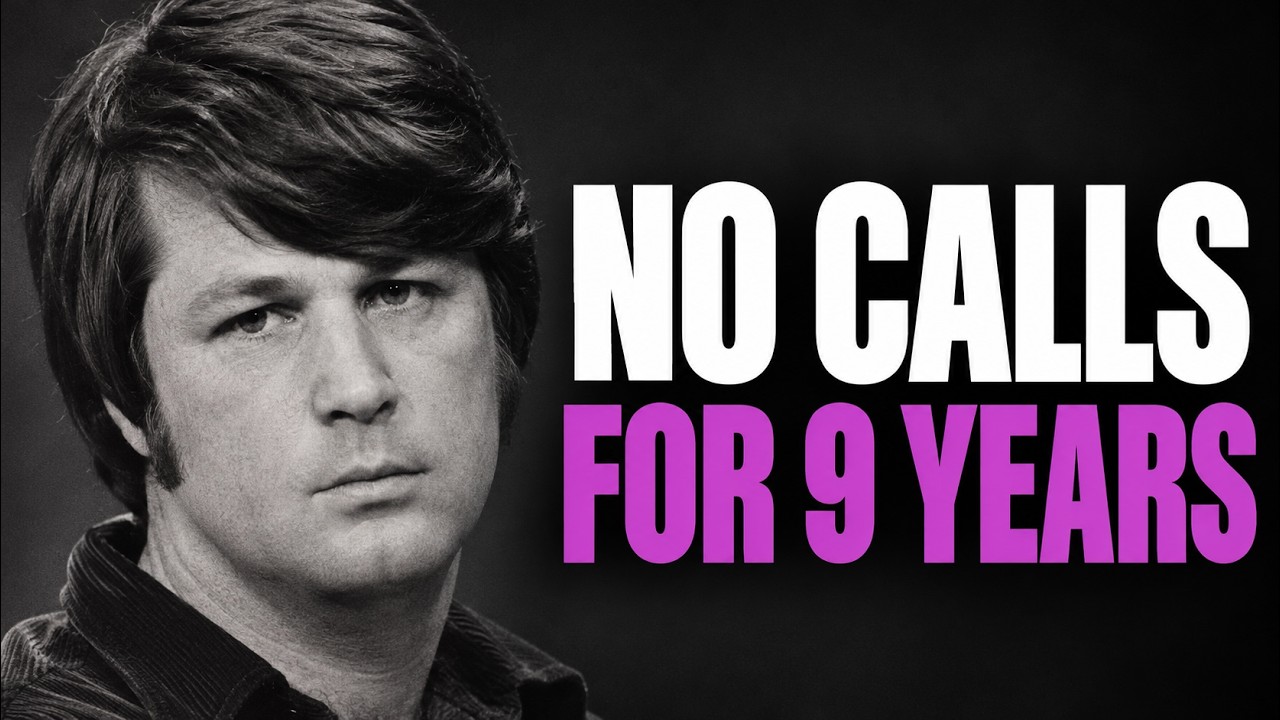
Wilson later told NPR, describing this period specifically: “He wouldn’t let me talk to my family on the phone for 9 years. He had power over me. ” That is a documented restriction on a grown man’s ability to speak to his own mother and brothers, imposed by the person simultaneously producing his records and drawing a salary from his income. The most sympathetically repeated myth is that whatever Landy’s excesses, he genuinely believed he was saving Brian’s life, and that is why the family tolerated him for so long.
The record complicates that reading considerably. In the late 1980s, Melinda Ledbetter, a Cadillac saleswoman Brian met after visiting a dealership without Landy present, began quietly untangling what had been done to him. Working with Brian’s family, she came across a version of Brian’s will that named Landy as chief beneficiary, in line to inherit up to 70% of his estate. “It seemed to me that Brian was worth more to Landy dead than alive,” she said later.
Treat that specific framing as her recollection rather than a courtroom finding, but the will itself and Landy’s position in it are documented. Whatever Landy told himself about his own motives, the paperwork was pointed in a very particular direction. The unwinding was not a single dramatic scene. It was a slow legal siege.
In 1989, the California Medical Board revoked Landy’s professional license over ethics violations connected to his treatment of patients, Brian included. That should have ended it. It didn’t. Landy simply shed the psychologist title and kept the business titles, staying on as Brian’s producer and manager for three more years.
It took the Wilson family filing a wave of conservatorship petitions through the early 1990s, and finally a restraining order in 1992 barring Landy from any contact with Brian whatsoever, to physically separate them. Between the license revocation and the restraining order sits nearly three years in which a man legally forbidden from practicing psychology on anyone else in California continued to run the finances and career of one of the most successful songwriters of the twentieth century. After the restraining order, a court-appointed conservator named Jerome Billet oversaw Brian’s affairs for a few years, an arrangement that itself ended in a lawsuit. Then Melinda Ledbetter stepped fully into the role Landy had occupied, not as a business manager extracting value, but by Brian’s own account for the rest of his life as what he called his savior.
They married in 1995. Under her care, Brian did something almost nobody expected: he went back to work on his own terms. He completed and performed Smile, the album that had broken him in 1967, and toured steadily from 1999 into 2022. In 2014, the biopic Love and Mercy dramatized both eras of his life, with the Landy years played with the coldness the record supports.
Brian’s later years were not simply a triumphant epilogue. Melinda Ledbetter died in January 2024, and within a month Brian’s family, his managers, his children, and his doctors filed for a new conservatorship, stating publicly that he had a major neurocognitive disorder and could no longer reliably provide for his own basic needs. A Los Angeles judge granted it in May 2024. Brian, by then 81, agreed to the arrangement himself.
The man who spent sixteen years fighting through lawyers and restraining orders to escape being legally supervised by someone else ended his life voluntarily accepting exactly that kind of supervision, this time from people who by every account actually had his interests at heart. Brian Wilson died on June 11, 2025, at 82. His death certificate listed respiratory arrest as the primary cause, with sepsis and chronic conditions tied to years of declining health as contributing factors. Think about who has actually gotten to shape how that whole story gets told.
For most of the 1980s, it was Landy himself, producing the records, ghostwriting the memoir, shaping the version of Brian the public got to see. After 1992, it became the family, and specifically Melinda, who managed his image and his archives for the rest of his life. Since her death and since Brian’s, the estate and the surviving children have become the primary custodians of what gets released, what gets said, and what gets left in the vault. The breakup that mattered was never really Brian versus the Beach Boys.
It was a decades-long argument over who got to hold the pen on Brian Wilson’s own life: his father, his doctor, his bandmates, his wife, or, for one brief window, almost nobody but the man who controlled his phone calls. Go back to that photograph one more time. Summer of 1976, Brian smiling, the headline promising he was back. Now you know what the frame cut off: a therapist already billing for control he hadn’t earned, a family that would spend the next sixteen years fighting to get that control back, and a version of recovery that would have to happen twice before it finally held.
Fans think they remember a comeback. What they actually remember is the beginning of an exile lasting long enough that nobody even noticed it as it was happening.
