Lewis Burwell Puller Jr. was twenty-two years old when a booby trap detonated under his command group in Quang Nam province, Vietnam. The explosion killed several Marines around him, tore away both of his legs, and severely damaged his left hand. He survived, but the name he carried, the name of the most decorated Marine in the history of the Corps, would never be the same.
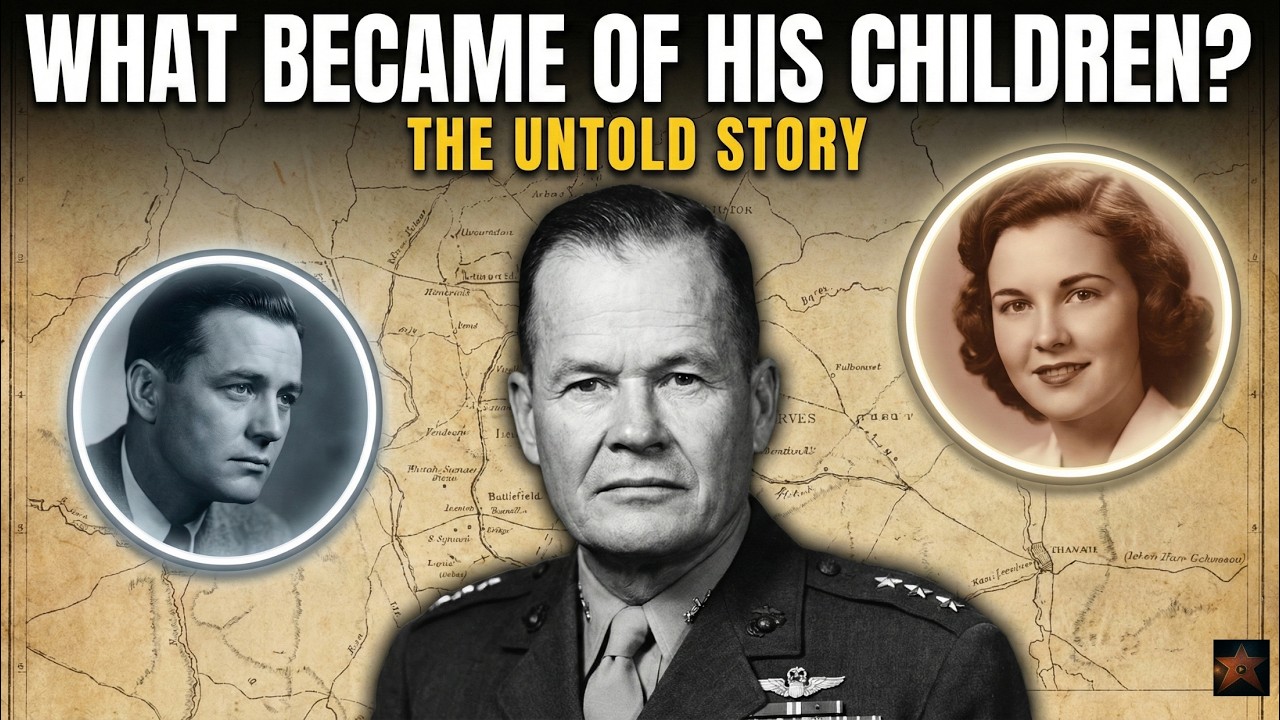
His father, Chesty Puller, had built that name through decades of combat in Nicaragua, the Pacific, and Korea, earning five Navy Crosses and a reputation for aggression and endurance that turned him into a living legend. Lewis Jr. carried that legend into war with him. He came home carrying its wounds instead.
Lewis Jr. was born in 1945 at Camp Lejeune, North Carolina, the twin son of Chesty Puller and his wife, Virginia Montague Evans. His father had married Virginia in 1937, a quiet school teacher whose temperament stood in sharp contrast to the hard-edged Marine officer who would spend most of the next two decades claimed by the Corps. Their first child, a daughter named Virginia McCandlish Puller, had been born in Shanghai in 1940 while Chesty served with the 4th Marines in China, arriving into a world already drifting toward global war.
Five years later, the twins Martha Lee and Lewis Jr. completed the family. The Puller children grew up following the Marine Corps across the map. China, Hawaii, San Diego, New Orleans, Camp Lejeune.
Between tours, the family returned to the rural stability of Virginia. Their father was often absent, or present in the intense, focused way of a man whose real work waited overseas. Their mother became the fixed point of the household, enforcing discipline when necessary and softening the hard edges of a life lived in the shadow of war. The children learned early that uniforms, orders, and sudden departures were as ordinary as bedtime stories.
To the wider world, Chesty Puller was a symbol of invincibility. Inside the family, his children saw something else. They saw a man haunted by the memories of men lost and battles survived, a man whose decades of combat had etched a visible toll into his body and temperament. The eldest daughter, Virginia, became the emotional counterweight to that returning silence.
She learned to read the weight in her father’s gaze and the sudden shifts in mood that came from years of witnessing death up close. She never spoke publicly about those years, but the quiet responsibility placed on her shaped the choices she made as an adult. Virginia married a Marine combat officer, choosing a life that echoed the structure and discipline she had known since birth. Her adulthood was marked not by public recognition but by service in the understated, essential sense: supporting her husband’s career, maintaining the family’s connection to Chesty’s legacy without turning it into spectacle, and preserving the dignity of a name many outside the family treated with near religious reverence.
She remained the least public of the Puller children, the most private witness to the complexities of a father whose legend grew larger after his death than it had been during his life. Through her, the Puller story becomes something more than battle honors. It becomes a reminder that the cost of heroism is often borne by those standing just beyond the battlefield’s edge. Lewis Jr.
carried a different burden. From the start, he inherited not only his father’s name but the expectations that followed it. Expectations set not by Chesty himself, who rarely boasted, but by the sheer weight of a reputation so enormous that the Corps recited it like scripture. For a boy growing up in that shadow, every achievement felt predetermined, and every moment of hesitation felt like failure.
He also saw the side of his father the public rarely imagined: a man haunted by the dead, a war hero whose home was not always a place of peace. In 1967, Lewis Jr. chose to follow his father into the Marines and into combat. He deployed to Vietnam as a young lieutenant, carrying with him a fierce determination to prove worthy of the name.
Less than a year later, the booby trap in Quang Nam province changed everything. He lost both legs, much of his left hand, and nearly his life. Survival marked the beginning of a far harder battle. Lewis returned home to years of surgeries, rehabilitation, and emotional devastation.
The physical pain was constant; the psychological wounds were deeper still. Guilt over the Marines killed beside him, grief for the life he had expected, and the unbearable sense that he had failed the Marine Corps legacy written into his name. Alcohol became both refuge and enemy. His marriage strained under the weight of trauma.
His father, by then retired and ailing, watched helplessly as his son fought a war no amount of discipline or courage could conquer. When Chesty Puller died in 1971, Lewis inherited not only his medals and memorabilia but the unresolved burden of being the son of the Corps’ most revered warrior. And yet Lewis rose again. He turned his suffering into testimony, becoming an advocate for veterans’ rights at a time when Vietnam veterans were often disregarded or misunderstood.
In 1991, he published Fortunate Son, a memoir of such candor, pain, and insight that it won the Pulitzer Prize. The book revealed the truth behind the curtain of heroism, not to diminish his father’s legend but to complete it. Through Lewis’s words, Americans confronted the long shadows cast by war: the cost carried in body and mind, and the reality that courage is not limited to the battlefield. But his victories remained fragile.
The injuries, the ghosts of Vietnam, and the strain of decades proved overwhelming. In 1994, at the age of forty-eight, Lewis Jr. took his own life. It was a loss that shook the Marine Corps community and forced a reckoning with the unseen wounds borne by generations of service members.
His life, though marked by tragedy, transformed the national conversation about veterans, trauma, and the price of valor. The story of Chesty Puller and his two children does not end with medals, ranks, or battlefield slogans. It ends in the softer, more complicated terrain where legends cast their longest shadows, in the lives of those who inherit a name forged in war. Chesty Puller embodied Marine Corps grit, a warrior whose reputation grew into myth even before he laid down his sword.
But the weight of that myth did not rest on his shoulders alone. It settled quietly, steadily, and irrevocably onto the lives of the people who called him father. His daughter Virginia lived her life just outside the beam of that spotlight, carrying herself with a steadiness and discipline learned in a house shaped by deployments and duty, building a life rooted in service rather than spectacle. Through her, the quiet side of military heritage becomes visible: the constancy, the sacrifice, the resilience never captured in war films or parade ground speeches.
His son Lewis Jr. carried a different burden, one made heavier by the public expectation that he would become the next chapter in a heroic lineage. Instead, he became something far more important. The truth teller.
In surviving Vietnam, confronting trauma, and writing with painful honesty about the cost of service, he completed a story his father could never have told. Through him, the Puller legacy expanded from battlefield victories to the far more difficult terrain of emotional survival. Together, the lives of these two children reveal what history often hides. Greatness is rarely simple.
It demands more than most families can easily give. And the consequences of war reach far beyond those who fight it. Chesty Puller’s legend shaped the Marine Corps. But his children shaped our understanding of the human realities behind that legend: the loves, the losses, the long shadows, and the quiet strengths.
Every soldier’s myth is built not only from what he did on the field, but from what his family carried long after the guns fell silent.
