December 1939. St. James’s, London. The headquarters of the British Secret Service.
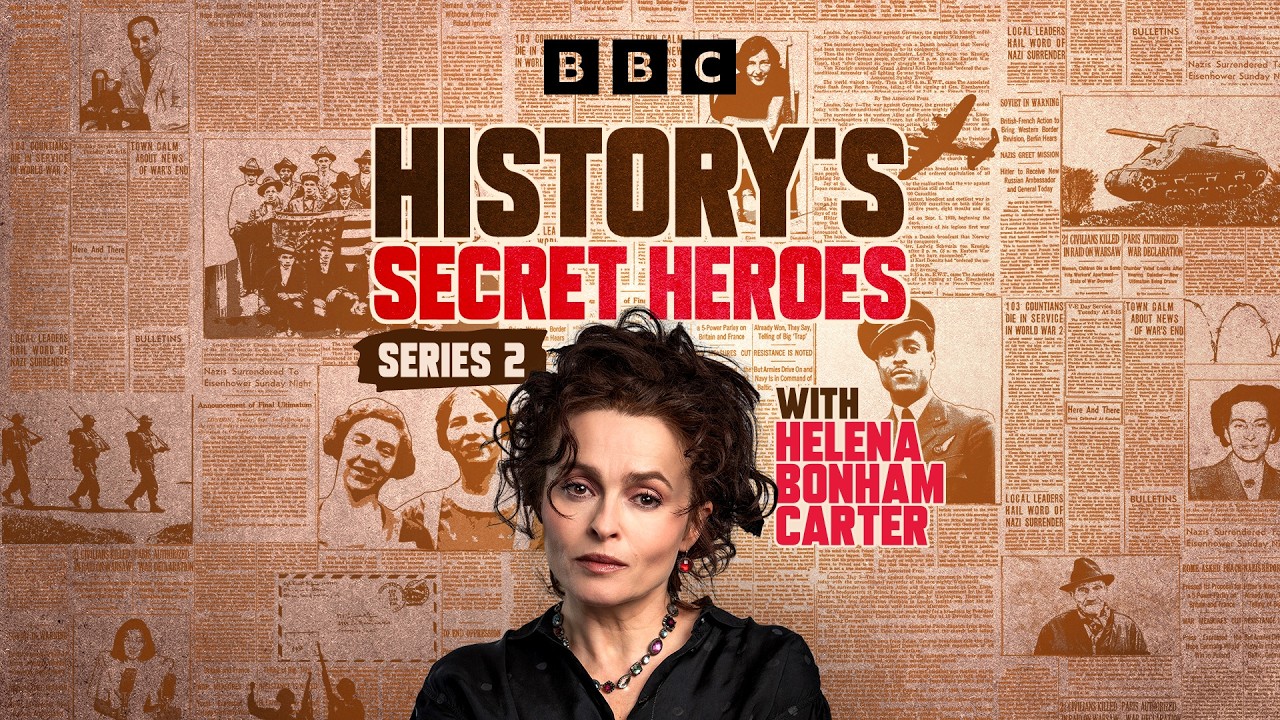
George Taylor was told that a member of the public had just stormed into the foyer. She wanted to speak to a senior agent. She was banging on the door, not so much volunteering as demanding to be taken on. Reluctantly, Taylor agreed to see her.
He rounded up some colleagues. The doors swung open to reveal a young woman of extraordinary charisma. In his notes, Taylor described a very smart-looking girl, simply dressed. Her name was Countess Christina Skarbek.
A Polish national. The first thing you have to be to work for the British Secret Intelligence Service is a British national. She was disqualified immediately. Yet Taylor was intrigued.
They asked her about herself. She had good English, but with a strong French accent, perfect French, and a bit of German. She had Jewish heritage; her mother had been born Jewish. Britain had been at war with Nazi Germany for three months.
Skarbek knew how desperate the Allies were to find out what was happening inside Poland, the first country occupied by the Nazis. They wanted troop numbers, locations, clues as to what Adolf Hitler might be planning next. The British had some contacts inside Poland. The problem was they had no way of being in touch with them.
No communications. Skarbek already had a plan to infiltrate Poland and gather intelligence. What she was offering to do was to ski in, in the first winter of the war, over the high Carpathian Mountains in minus forty degrees. Taylor’s eyebrows rose.
A foreigner who had just minutes ago walked in off the street, offering to ski over dangerous mountains. Someone with Jewish heritage prepared to venture into Nazi-occupied Poland. Above all, in Taylor’s mind, a woman blithely taking on a man’s job. It was a suicide mission.
But Skarbek demanded to be taken seriously. She knew the right contacts. She was an aristocrat, with connections all over the country, people who would help her, support her, and trust her. And she knew how to get in and out of Poland under the radar.
Before the war, she did a lot of skiing, leaving the menfolk far behind. And when she got bored of that, she used to smuggle cigarettes across the border, across the mountains. She was just doing it for the thrill, just for kicks. To Taylor and his colleagues, this woman was a revelation.
The assistants could hardly jot down notes quickly enough. They noted that she was a flaming Polish patriot, an expert skier, and a great adventuress, as well as being absolutely fearless. And one of those men had scribbled in the margin in pencil: “She absolutely terrifies me. ”
By the end of the short meeting, Taylor knew he could not let this prize slip through his fingers.
Skarbek was recruited as Britain’s first female spy in World War II, assuming the English name Christine Granville. Her work would change the course of the war. Three months earlier, Poland. The summer of 1939 had been wonderfully hot.
The corn was ripening in the fields. There were blue flowers everywhere. And although there were clear tensions in Europe, war was not anticipated. Twenty years earlier, Poland had won its independence from the Russian Empire.
Now it was enjoying peace. But on the first day of September that year, Nazi forces invaded. The Germans used their Stuka dive bombers. They had their tanks.
They were highly mechanized and made very fast progress. It was a great shock to the Polish nation. Just seventeen days after the Nazi German invasion, the Soviets invaded from the border in the east. The Poles faced war on two fronts simultaneously.
And they knew at that point that they would not be able to maintain their nation’s independence. Five thousand miles away, a Land Rover sprayed up dust as it drove across dry, rolling plains. Granville was in South Africa with her second husband, a diplomat. As news of Hitler’s invasion of Poland reached them, they turned the car around.
She was a very deep patriot. Her response was absolute horror that just twenty years after her country had fought for and won its freedom, it had been invaded again. And also horror that she herself was not at home and was not able to contribute to the defense of her nation. Granville and her husband boarded a ship sailing to Southampton.
It would be a perilous voyage, dodging German U-boats. Within two days of arriving in England, Granville had identified the location of the Secret Service, barged in, and had herself recruited as a spy. Christine Granville’s addiction to danger had emerged early in life. She always had a slightly naughty streak.
At school, she had decided it would be fun to play with a box of matches and set light to the cassock of a priest whose sermons were rather boring. Her father was a war veteran, an action man who had rather dissolved into drink. She was used to a lot of freedom and a lot of adoration. Her father taught her to ride a horse.
One of his horses was called Satan, because it had broken the legs of the grooms. It could not be trained. And one day, Satan was not in his stable. Her father turned around, and there was Christine, riding it bareback.
Granville had been brought up in an environment of great privilege. Her mother had been born Jewish, part of a well-known goldsmith family, a banking family. Her father was Count Skarbek. Christine became the absolute apple of her father’s eye.
He taught her how to shoot a gun at an early age. She was always trying to impress him. But Granville’s idyllic childhood faded into more difficult teenage years. Her father’s heavy drinking became worse.
When he died, it transpired he had squandered the family fortune. Granville had to find work. She got a job in a Fiat car showroom. They sold very fast Fiat cars, and wealthy young Poles would come in.
One of them proposed to her, and that was her first husband. Her first husband made his money in soft furnishings. He was looking for a wife who would be a good hostess, and she was looking for freedom and adventure, including sexual freedom. She was a very passionate woman.
After the wedding, Granville continued to party, enter beauty contests, and amuse herself by smuggling cigarettes across the mountains. Unsurprisingly, the marriage lasted less than two years. As a divorcée, Granville faced some social stigma. Yet she seized her chance to play the field.
She had many lovers. Men would follow her around. She called them her lame dogs. One day she was out skiing.
The skis they used were very heavy wooden skis, with no metal, no neat edges, incredibly hard to control. She was caught in a blizzard, and her skis started going off in the wrong direction. She was caught by another man, a very self-possessed man, nearly fifty, and he liked what he saw. She later called him her Svengali.
The diplomat married Granville in November 1938. The Gizyckis were a glamorous couple. They were together in South Africa when war broke out. Keleti station, Budapest, Hungary.
December 1939. Thick snow had brought the city to a standstill. A French journalist carried her suitcase along the platform. She struggled through the drifts up the steep hill on the Buda side of the Danube until finally she reached her apartment.
Carefully she locked the front door behind her before opening the case. Inside was British propaganda to be taken into occupied Poland. Weeks after her recruitment by British intelligence, Granville already had a new identity. She was Madame Marchand, meant to be a French journalist.
Her French was perfect. Hungary, as yet, was a neutral country. Large numbers of journalists were convening in Budapest to report on the war. She was very quickly in contact with members of the Polish resistance.
The Polish resistance was one of the largest national resistance movements in occupied Europe, ultimately involving hundreds of thousands of people. It was unlikely that its well-organized members would automatically trust an agent who reported to the British. Granville’s first target was a dashing Polish lieutenant, Andrzej Kowerski. In the crowded basement of a Budapest bar, this woman approached.
She had dark hair and flaming eyes, and a kind of crackling vitality seemed to emanate from her. They spent the night together, and in the morning they were still getting to know each other. He asked what her plans were. She said, “Well, I’m going to ski into Nazi-occupied territory.
” And he was absolutely against it. He was not going to let this fantastic woman he had just found undertake this perilous journey. Kowerski set Granville up with a fellow Pole, Janek Marusarz, a former Olympic skier, who he hoped would help her cross the mountain safely. Marusarz agreed to accompany Granville on what would be the toughest journey of her life.
It would take two weeks of trekking and skiing for them to cross the Tatra Mountains, rising to two thousand meters above sea level on the border between Slovakia and Poland. They would face armed enemy troops, deadly blizzards, and wolves. That first winter was particularly harsh, minus forty degrees in the mountains. They said it was enough to freeze the birds on the branches of the trees.
When Christine went in on that first occasion, she actually skied past the bodies of two people, a man and a woman, who had been skiing the other way, trying to get out of occupied territory. They had not been caught by a border patrol. They had not been shot. They had simply frozen to death.
When Granville had finally crossed the range and was skiing down towards Zakopane in occupied Poland, she felt elated. A few days later, wearing new clothes and fresh lipstick, she boarded a train to Warsaw. From her seat, Granville could hear the sounds of boots and voices. A Gestapo officer entered the carriage and sat next to her.
He was searching bags. But Christine Granville got in ahead of him. She asked him to carry her package to help her avoid trouble, explaining that it was just a small package of black-market tea. Had the Germans caught her, she was part Jewish and a British special agent.
She would have been shot. The Gestapo officer took the package, put it in his suitcase, and carried it for her all the way to Warsaw. She was incredibly quick-thinking. She could talk her way in and out of situations.
In the very sexist 1940s, women were not expected to be doing this stuff. And Nazi Germany certainly, early on, never conceived that women were carrying messages hidden inside their gloves or under potatoes in their bags, or that the women chatting to them in bars and cafés could have an ulterior motive. Warsaw had been devastated by Nazi bombing three months earlier and was now occupied by the Nazis. The city’s Jewish population, including Granville’s own mother, was in great danger.
In the streets of Warsaw, Granville saw Jews harassed, beaten, and even shot. Granville began two months of building a network, delivering propaganda, and working out the German military structures and troop numbers. She would have been talking to, probably largely, other women: how many loaves of bread are you delivering to the barracks, who is washing those uniforms and doing the mending, the women who were entertaining the Germans in the bars and cafés. All of these people would have provided that kind of intelligence information that she would then have brought back out.
Granville made three successful trips into Poland along these lines. Then in November 1940, she set out on a special mission. She was being sent in to get a very specific microfilm. The microfilm contained information on Nazi military installations in Poland, aerodromes and factories, as well as plans for new torpedoes and new boats.
Many Poles had risked their lives to collect this vital information. By this point, the situation in Poland was desperate. People were facing serious food shortages. She was traveling in with another courier for the Polish resistance, Count Wladyslaw Ledóchowski.
Ledóchowski became another of Christine’s lovers. Her lover’s life overlapped with Christine’s life for two months. But he was specially told that they had to keep the relationship secret, because she had a husband, remember, and she was working for the British, and he was working for the Polish. They should not have any sort of complications, and they should keep this secret.
Like so many men before, he fell hopelessly in love with Granville. Before they set off across the mountains, Count Ledóchowski gave his lover a special gift. He bought her some glass beads as a present, and other bits of jewelry, which she was very appreciative of. When they arrived in Warsaw, Granville collected the roll of microfilm from her contacts in the Polish resistance.
It was small enough that she could hide it inside her gloves. Before Granville and Ledóchowski left for Hungary, Granville paid a final visit to her mother in Warsaw. She tried to persuade her to leave Poland. Despite all the risk, and the fact that Jews in Warsaw were then being forced into a ghetto, her mother would not go.
Granville had no choice but to leave her behind. A year later, at the beginning of 1942, her mother would be rounded up along with other civilians and taken to Pawiak prison. She would never be seen again. Now though, Granville had to set off for the mountains with Ledóchowski.
It was very hard territory, torrential rain, and she developed a fever. She suggested they follow the branch line of a railway. She kept saying, “Oh, I’ve hurt my leg. ” Their orders were not to use trains, not to go to railway stations, not to go anywhere near the Gestapo.
But in the event, he gave way, and they did take a train, and they got off at the last railway station. The station master’s dog heard them and went out barking. The station master came out, armed, and unfortunately his sympathies were with the Nazi Germans. While he went to summon the Gestapo, he left Granville and Ledóchowski with armed guards.
The men went through her bag, through her pockets. She thought, these men are not just motivated by politics or ideology. They are motivated by greed. And that gives me something.
She remembered the glass necklace under her shirt. She suddenly went hysterical, saying, “Oh dear, oh dear, this is all terrible. I just can’t cope. ” She started grabbing at her necklace, and all the glass beads fell off.
She said, “Oh, my diamonds, my diamonds. ” The guards were down on their knees, scrabbling to get what they thought were diamonds. Ledóchowski kicked the gun to one side. She got rid of the torch, and they ran into the forest.
They managed to get to the safety of the trees before bullets started shredding the leaves above their heads. When they reached Budapest, the Gestapo were everywhere. Moreover, Granville had developed pneumonia. Feverish and too weak to stand, she called on her old flame, Lieutenant Andrzej Kowerski.
But as they caught up on the second night, there was a banging on the door, and within moments the door had been forced open and German officers marched in. Kowerski and Granville were taken to the police station, where they were interrogated and beaten in separate cells. Though she was desperately weak, Granville thought fast. She decided to make a virtue of her apparent weakness: her hacking cough and her temperature.
She bit her own tongue, not a little, but repeatedly and hard, until her mouth filled with blood. Then, when she coughed during the interrogation, it looked as though she was coughing up blood. The main symptom of tuberculosis, for which in 1941 there was no cure. The disease was highly contagious and a death sentence.
The Germans threw her out. And rightly believing that Kowerski was her lover, they threw him out as well. As they stumbled down the street, Granville and Kowerski knew they were being followed. When they reached their flat, they quickly realized the phone was tapped too.
Kowerski had a car hidden in a nearby greenhouse and drove out of the country. By now, though, Granville’s face was known to the Nazis. It was too risky for her to travel in the open. She was smuggled out in the boot of the British ambassador’s car.
The microfilm was still safe inside her gloves. When the prime minister, Winston Churchill, received the information from this microfilm, he was stunned. What it showed was the massing of tanks and troops on what was then the German side of the German-Soviet wartime border. The file suggested the Germans were planning an invasion of the Soviet Union.
Few at the time thought this feasible. Along with other sources, Granville’s intelligence led Churchill to make contact with Stalin, giving him advanced notice of the major turning point of the war. A few months later, in June 1941, Germany invaded the Soviet Union in a move codenamed Operation Barbarossa. The Soviet Union joined the Allies to fight Germany.
After the war, there was going to be a film about Christine’s life. An English actress called Sarah Oliver was going to play her, and she was Winston Churchill’s daughter. She was asked in an interview why she so wanted to play Christine, and she said, “Because in 1941, my father said she was his favorite spy. ”
It was too dangerous for Granville to keep going back to Poland.
Instead, she was deployed by Special Operations Executive in Cairo, Egypt. By July 1944, though, with the tide of the war turning, she was ready to serve in occupied France. The Allied forces were already coming in in the north of the country. She was parachuted into the south to prepare for the push back against the Germans, back towards Berlin.
Granville parachuted in with colleagues from the Special Operations Executive. Her photograph was being circulated by the Gestapo, with a reward offered for the arrest of this notorious spy. Granville’s mission was to disrupt German movements and communications, support sabotage operations, and prepare the ground for the arrival of troops. But while she was out there, she also undertook some self-appointed missions that she knew would be of huge value.
She hoped to make the first contact between the French resistance and the Italian partisans on the other side of the Alps. She was in the mountains, dressed as a local, with sandals and a skirt and a headscarf. Granville walked past a German garrison and realized that a number of the German soldiers at that garrison were Polish, working under duress, serving under duress, or had Polish heritage. She spotted an opportunity, and later she returned.
This time, although she was dressed as a local, she carried a megaphone, clearly giving away that she was in the resistance, and she carried the colors of Poland, white and red, in a silk scarf. She climbed up towards the garrison and called out in Polish. She announced herself to the German garrison as a Pole working for the Allies. This was risking death.
And luckily it was the Poles, the soldiers rather than the German commanders, who heard her. She had about two hours talking with them, urging them, giving them the case to serve with the Allies. She persuaded the Poles that they should sabotage German military installations, desert their posts, and join the French resistance. They agreed that in a week’s time they would come down the mountain bringing all the weapons they could carry, the small arms.
They would disable the larger arms, take out the breech blocks so they could not be used, and they would join the Allied force. Granville single-handedly secured the defection of an entire Nazi garrison. Her handler at Special Operations Executive called her the Poles’ avenging angel. Granville risked her life again and again for Poland’s freedom.
After the war, though, Poland was not free. It remained under Soviet control. The Soviets would not welcome a former spy, even one who worked for the Allied cause. Instead, she went to London.
She was single again, alone, and hard up for money. She took various different jobs. She was a hat-check girl at Harrods. She worked as a waitress in various places.
Eventually she ended up becoming a bathroom stewardess, cleaning the toilets on a passenger ship. One day the captain of the ship asked if any of the crew who were veterans wanted to wear their medals on board. A number of servicemen, of course, had the war medal. But she had this array of ribbons that any general would be proud of, because she served in three theaters of war.
She had the army medal, she had the OBE, the Croix de Guerre, and the George Medal. And people did not believe her. In 1956, Ian Fleming wrote what would be the first of his James Bond novels, Casino Royale. It was thought by some that he had modeled Bond’s beloved, dangerous Vesper Lynd on Christine Granville.
By the time the book was published, though, Granville was dead. Her brilliant life was cut horribly short in 1952. In the hallway of a London hotel, a man who had been stalking her ambushed her and stabbed her to death. He was apprehended and would later hang for her murder.
Decades later, Christine Granville would be celebrated as a war hero like no other. In 2020, a blue plaque commemorating her was unveiled at 1 Lexham Gardens, London, her address for the last three years of her life. She was so quick-witted, so imaginative. She was brilliantly skilled with a knife and a rope in her bare hands.
But the tool that really distinguished her was her intelligence.
