The night of the fire, the house on Pine Hollow Road was gone before anyone could do a thing about it. The blaze was spotted just after midnight on June 12, 1917, and by the time the neighbors and the volunteer fire brigade reached the Blackwell place, the flames had already taken the entire structure. The roof collapsed in on itself. The Victorian farmhouse that had stood on that property since the family settled there after the Civil War was reduced to a smoking shell within the hour.
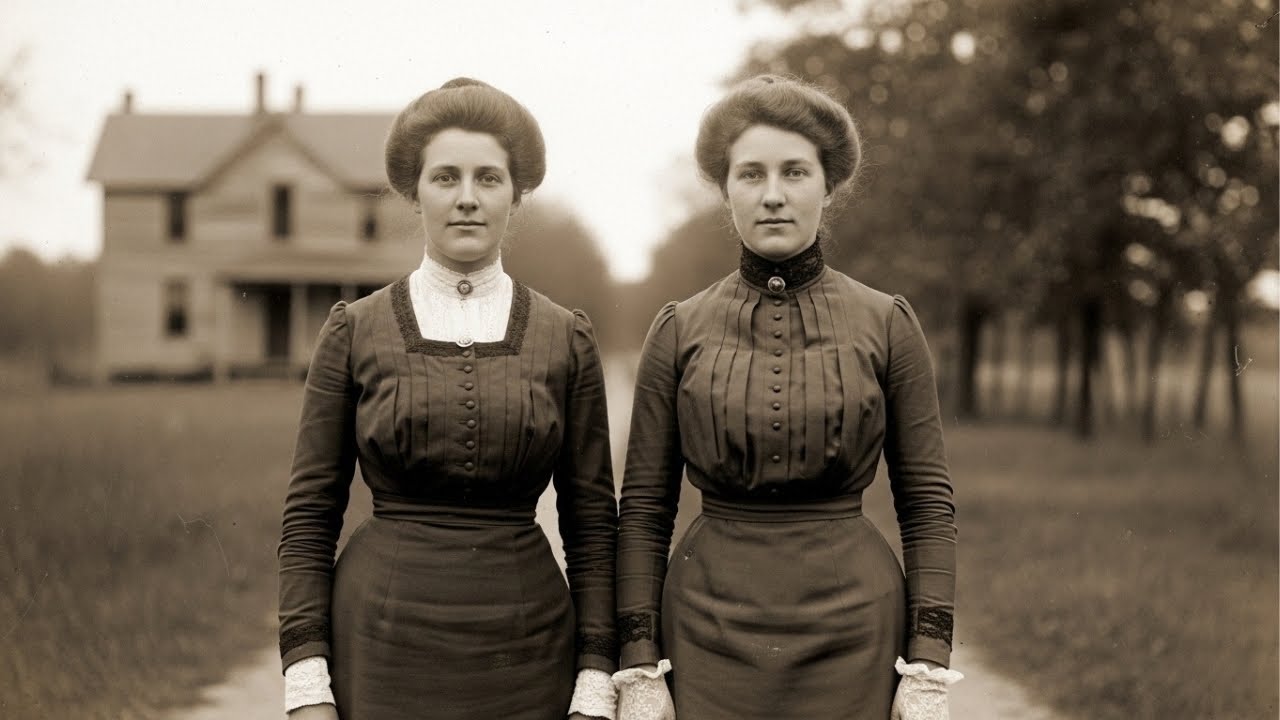
In the days that followed, the people of Blackwell Springs, Missouri, had only questions. The two sisters who lived there, Martha Blackwell, twenty-eight, and Elizabeth, twenty-four, were nowhere to be found. No remains were recovered from the wreckage in the initial search, which led many to believe the sisters had simply abandoned the house before the fire. It would take three days before the workers sifting through the ashes discovered what lay in the cellar.
The cellar had been converted into something the workers did not expect. Shelves of glass bottles, medical instruments of unknown purpose, and handwritten journals, most of them too badly damaged by water and fire to be read, suggested the sisters had built a kind of research space beneath their home. But it was in the far corner of the cellar that the workers made the most troubling discovery. Two bodies, presumed to be Martha and Elizabeth Blackwell, sat facing each other.
According to the sheriff’s report, the bodies were wrapped heavily in medical gauze, particularly around the hands, arms, and facial area. The fire had reached several places in the cellar, yet the bodies themselves showed only minor fire damage, suggesting the sisters had died before the flames ever broke out. James Fletcher, one of the volunteer firemen who helped recover the bodies, would later describe the scene in a recorded testimony for the Ozark Historical Society in 1951. It was not the gauze that struck him, though there was a great deal of it.
It was the posture. The two bodies sat facing one another, backs straight, hands extended toward each other but not quite touching. They seemed frozen in the middle of some ritual. Neither body showed any sign of resistance or attempt to escape the fire.
The expressions visible beneath the partial wrapping of the faces could not exactly be called calm, he said, but they seemed to reflect intention, as if the two women were intensely focused on something invisible to everyone else. The Blackwell sisters had been part of the fabric of this small Ozark town for years. They lived alone in the aging Victorian house at the end of Pine Hollow Road, about three miles east of the town square, property that had belonged to the family since 1873, when their grandfather, a former Union soldier, settled in the region after the war. The town’s local newspaper, the Blackwell Springs Gazette, described the sisters as reserved but friendly.
They were often seen at church gatherings and town meetings, though they generally kept a private life. They had been orphaned in 1912, when typhoid swept through the region and took both of their parents. Martha and Elizabeth, left to manage the old house on their own, settled into a quiet existence that few in town found remarkable. What set the Blackwell sisters apart was not their reclusive nature, but something far stranger.
The local physician, Dr. Samuel Harrison, had documented what he called an unprecedented physiological phenomenon in his medical notes dated October 12, 1916. According to Harrison’s meticulous notes, preserved in the archives of the Missouri Historical Society until their mysterious disappearance in 1964, the Blackwell sisters possessed an unusual ability to diagnose illness in others through physical proximity. The first documented case occurred when Martha Blackwell approached Abigail Winters, the baker’s wife, at a church social event.
Martha told Mrs. Winters she felt something dark in her abdomen after briefly touching her hand. Three weeks later, an specialist in Springfield diagnosed Mrs. Winters with advanced ovarian cancer.
It might have been dismissed as coincidence had it not repeated with alarming consistency. Elizabeth Blackwell approached Thomas Miller, the local blacksmith, in the general store and told him his heart was beating irregularly. Miller, a burly man with no prior health complaints, suffered a mild heart attack the following month. Dr.
Harrison’s notes grew more detailed as he began documenting these cases with scientific interest rather than superstitious fear. In an entry dated November 3, 1916, he wrote: “The Blackwell women appear to possess an exceptional sensitivity to physiological abnormalities in others. The accuracy of their diagnoses defies traditional medical understanding. I have begun to consider the possibility that they possess a refined sense, perhaps able to detect subtle changes in body temperature, patterns of perspiration, or even olfactory indicators of disease that remain imperceptible to others.
”
The initial fascination with the sisters’ apparent gift gradually turned into something more complicated. City council minutes from late 1916 indicate growing unease among some residents. The question of the Blackwell property and its occupants appears repeatedly in meeting agendas, though the specific discussions were never recorded in detail. What emerges from later newspaper clippings is that by December 1916, the sisters had begun withdrawing further from community life before becoming wholly reclusive.
Several documented interactions between the Blackwell sisters and community members illustrate the strange nature of their abilities. Caroline Dunham, wife of the local postmaster, told Dr. Harrison that when she delivered a package to the Blackwell home in early November, Martha grasped her hand and her face suddenly went pale. Mrs.
Dunham later recounted in a letter to her sister in Kansas City, preserved in the family collection, that Martha looked at her with great concern. “She asked if I suffered from headaches and dizziness. I had not told anyone about those episodes, not even my husband. Three days later, I collapsed in the kitchen.
The doctor in Springfield said my blood pressure was dangerously high, which could have led to a stroke. ”
A record from Pemberton’s Pharmacy in Blackwell Springs shows that from October to December 1916, the Blackwell sisters purchased unusual quantities of medical reference books by special order. The titles included Gray’s Anatomy, recent medical journals from Johns Hopkins University, and several volumes on neurology and sensory perception. The shop owner, Frederick Pemberton, noted in his personal diary that Elizabeth had specifically requested any available texts on the relationship between tactile sensitivity and internal awareness, a phrase he found interesting enough to record.
As winter settled over the Ozarks, the rundown farmhouse on Pine Hollow Road became increasingly isolated. The sisters were rarely seen in town, and according to postal records, they stopped receiving their mail after December 18. James Morley, a local mail delivery boy who was fifteen at the time, gave testimony to the Blackwell County Historical Society in 1958 describing his last visit to the Blackwell home. Morley recalled that the house felt different that day, colder somehow, despite smoke rising from the chimney.
Miss Martha opened the door, but only partially. She did not take the parcel from his hands directly; instead, she asked him to leave it on the porch step before closing the door. He noticed her fingers. They were all wrapped in cloth, as if she had burned herself badly.
She would not look at him directly either. Another witness, Edith Claymore, a housekeeper who worked for several prominent families in Blackwell Springs, corroborated Morley’s account. In a recorded interview with the Ozark Folklore Society in 1962, she described encountering Elizabeth Blackwell on the forest path connecting Pine Hollow Road to the main road in mid-December. “Miss Elizabeth was standing like a statue, staring at her hands,” Claymore said.
“It was cold enough to see your breath, but she was not wearing gloves. When she noticed me, she hid her hands in her coat pockets quickly. I asked if everything was all right at the house, and she said something that has stayed with me all these years. She said: ‘We have begun to see what is beneath the skin, Mrs.
Claymore. It is both amazing and terrifying. ‘ Then she hurried past me without another word. I remember noticing a difference in her gaze, as if she was looking at something far away, even though she was staring right at me.
”
What happened between December 1916 and February 1917 remains largely undocumented. The harsh winter isolated many homes in the Ozarks, and communication between remote properties and the town center was limited. The diary of Reverend Thomas Grayson provides a notable exception, recording his attempt to visit the Blackwell home in early January after church members expressed concern about the sisters’ absence from Christmas services. Grayson wrote: “The journey to Pine Hollow was treacherous due to recent snowfall.
Upon arriving, I found the house appearing occupied, smoke rising from the chimney, lamps visible inside. However, I received no response to my repeated knocking. As I was preparing to leave, I clearly heard a woman’s voice from inside, though I could not make out the words. The tone suggested distress, or perhaps intense concentration.
I left a basket of provisions on the porch and made a mark in the snow to indicate my presence. When I returned a week later, I found my marks covered by new snow, but the basket remained exactly where I had left it. ”
The next significant entry concerning the Blackwell sisters appears in Dr. Harrison’s journal under the date February 23, 1917, following a house call made at Elizabeth Blackwell’s request, who had sent a brief note with a passing lumberman.
Harrison’s entry from that date runs several pages, but the most relevant note reads: “Found Martha in a state of great distress. She refused to undergo a medical examination and remained confined to the second floor of the house. Elizabeth appeared thin, severely underweight, and showing signs of prolonged sleep deprivation. Most concerning were the heavy bandages covering both women’s hands.
Elizabeth refused to allow me to examine these wounds, saying only that touch has turned inward. I left them with pain medication and sedatives, though I fear something more serious than physical illness afflicts this house. ”
A subsequent entry, dated February 26, records that Harrison returned uninvited to the Blackwell home, worried by what he had seen. “Arrived unannounced and found Elizabeth in the sitting room surrounded by anatomical drawings unlike any I have seen in medical texts.
When I asked, she explained they represented interior views, as she called them, detailed renderings of human organs, tissues, and cells, but with unfamiliar annotations in a symbolic language I could not decipher. More troubling was her claim that these drawings were not inspired by medical references but from direct perception gained through her and Martha’s ability to see inside themselves by touch. She demonstrated this by placing her bandaged hand on her abdomen and describing, with alarming accuracy, the state of her digestive system. Medical knowledge alone cannot explain this detailed awareness of internal functions.
”
Harrison’s notes indicate he tried to persuade Elizabeth to accompany him to Springfield for examination by specialists, an offer she firmly refused. Before leaving, he asked to see Martha, but she again declined. He recorded hearing a rhythmic tapping from the upstairs of the house, though Elizabeth offered no explanation for the sound. The local newspaper said nothing about the sisters until March 15, 1917, when a small article noted that Elizabeth Blackwell had been seen at Caldwell’s General Store, purchasing unusual quantities of medical supplies, including gauze, alcohol, and opium.
The shop owner, Harold Caldwell, reported that Elizabeth’s appearance had changed considerably. She had lost a great deal of weight, and streaks of gray had appeared in her hair, which had been chestnut brown despite her youth. In 1965, an unpublished account by Sarah Caldwell, the shop owner’s wife, was found among a collection of personal papers she had donated to the Blackwell County Library. She described Elizabeth’s visit in greater detail, saying: “Her hands were still covered in those strange bandages, but what struck me most was the way she moved, cautious and deliberate, as if every motion required careful thought.
” When Harold asked about Martha, Elizabeth said her sister had made remarkable progress in their work. “She feels her heart beating, not just the pulse, but the contraction of the heart’s chambers, the opening and closing of the valves. ” Harold thought she was speaking poetically, but the look in her eyes suggested otherwise. Before leaving, she requested several small mirrors and fine sewing needles, items the store did not normally stock together.
By early April 1917, rumors were spreading through Blackwell Springs. Children returning home from school reported hearing strange sounds coming from the Blackwell house, like crying, but not quite, according to the account of ten-year-old Sarah Palmer, preserved in the margins of her family Bible and found decades later. Adults in the area noticed that the house, usually well-maintained, had fallen into neglect. The spring garden that Elizabeth had always tended with care was left unplanted, and the white fence surrounding the property had begun to deteriorate.
Joseph Cranmer, who ran a stable in Blackwell Springs, reported meeting Elizabeth Blackwell on April 12, 1917, while she was purchasing supplies at the feed store. Cranmer described Elizabeth in his account, later documented in a statement he gave to Sheriff William Tanner after the subsequent events, as having changed markedly in both appearance and demeanor. “Miss Blackwell seemed to have difficulty maintaining her balance,” Cranmer said. “When I offered to help carry her parcels, she recoiled as if my proximity caused her discomfort.
I noticed her bandages now extended from her hands to her forearms. What concerned me most was her response when I asked about her health. She said: ‘Mr. Cranmer, we have begun to understand that the body is not what we thought it was, and that its boundaries are more permeable than science has acknowledged.
‘ When I asked about Miss Martha, she only answered that her sister’s condition had improved further, and that she now spent most of her days in a state of internal observation. Before leaving, she asked me to deliver a message to Dr. Harrison that they had moved beyond diagnosis into therapeutic intervention. ”
On April 29, 1917, Dr.
Harrison made another visit to the Blackwell home, this time uninvited. His journal entry from that date contains perhaps the most troubling observations yet. “Elizabeth received me reluctantly, appearing to have aged years in a matter of months. The inside of the house no longer resembles the orderly home I remember.
Papers, what appear to be medical journals, and anatomical drawings cover every surface. Elizabeth’s arms are now wrapped entirely up to the elbows. She spoke in disjointed sentences about the progression of their condition. She repeatedly indicated that Martha’s condition had improved, but refused my request to see her sister.
Most troubling was Elizabeth’s insistence that they had begun to feel their bodies from within. When I inquired further, she became distressed and asked me to leave. ”
Harrison’s journal continues: “As I was preparing to depart, a sudden crashing sound came from upstairs, sending Elizabeth rushing toward the stairs. In that moment of distraction, I caught sight of what appeared to be an entrance to a root cellar, its door ajar.
Inside, I saw what can only be described as an improvised laboratory, tables covered with medical instruments, journals, and what appeared to be biological samples in glass containers. Before I could investigate further, Elizabeth returned and firmly escorted me out. Her final words stayed with me: ‘Doctor, we have discovered something profound about human perception. The body knows itself in ways science has not yet understood.
Martha has already crossed a threshold I am only beginning to approach. ‘”
After this visit, Dr. Harrison apparently contacted colleagues at the Washington University School of Medicine in St. Louis.
A letter dated May 7, 1917, from Dr. William Chambers, a professor of neurology, to Harrison exists in the university archives. It read in part: “Your description of the Blackwell case is most intriguing. The phenomenon you describe bears some resemblance to documented cases of heightened proprioception in the medical literature, though not to this extreme degree.
I would be very interested in examining these women personally, should they be amenable to scientific observation. ” This correspondence indicates that the medical community had taken an interest in the Blackwell case. However, no record exists of any follow-up visit by Dr. Chambers or any other physician.
Instead, local records indicate growing concern among townspeople regarding the sisters’ welfare. A Blackwell Springs police log, dated May 13, 1917, references a complaint from neighboring farmer William Decker, who reported unusual odors emanating from the Blackwell property and lights moving in the house at all hours. Sheriff Tanner’s response was recorded simply as: “Investigated. No evidence of illegal activity.
Occupants declined assistance. ”
A more detailed account appears in a letter Sheriff Tanner wrote to his brother in Jefferson City, found among family papers in 1972. “The Blackwell case has the town worried,” Tanner wrote. “I visited the property after Decker’s complaint and found the house in disarray, but no obvious cause for intervention.
Elizabeth received me at the door, showing signs of severe malnutrition. When questioned about the unusual activities reported by neighbors, she explained they were conducting personal research into sensory development. She refused to provide further details or allow me inside. I glimpsed Martha through an upstairs window, motionless, staring at her reflection in a large mirror.
Something about this case troubles me deeply, but in the absence of evidence of criminal activity, I have no recourse. ”
Reverend Grayson noted in his personal diary, found during church renovations in 1955, that he had attempted to visit the Blackwell home on three separate occasions in May 1917, receiving no response despite evidence of habitation. His final entry concerning the sisters, dated June 2, 1917, reads: “I have prayed at length about the Blackwell situation. This afternoon, I left an open Bible on the porch of their home, open to Ecclesiastes 1:18: ‘For with much wisdom comes much sorrow; the more knowledge, the more grief.
‘ As I returned to my wagon, I noticed Elizabeth watching from an upstairs window. She showed no interest in my presence, but I detected no hostility in her gaze either, only a profound weariness, like one who has seen too much. ”
The most illuminating account preceding the fire comes from Millicent Porter, a midwife who encountered Elizabeth Blackwell at Pemberton’s Pharmacy on June 8, 1917. In a statement she gave to Dr.
Eleanor Shipley during her investigation in 1932, Porter recalled: “Miss Elizabeth appeared at the counter while I was collecting medicine for Mrs. Taylor’s child. Her condition was dreadful. She was thin, her hair almost entirely gray, and her movements were jerky, as if she was in pain.
What concerned me most were her eyes; they seemed to focus on things that were not there, moving rapidly as if tracking invisible movements. ” When Mr. Pemberton asked about her health, she replied: “We have nearly completed our work. Martha can now control her heart rate and direct blood flow to specific areas.
I remain a few steps behind her, but I am progressing. ” Then she turned to Porter and said: “Mrs. Porter, you should examine Mrs. Taylor’s infant more carefully.
There is a shadow in the left lung. ” Porter had noticed no such problem, but at her next visit, she found the child suffering from pneumonia in exactly that location. The turning point in the Blackwell sisters’ story came on June 12, 1917. According to police reports filed with the county court, a fire at the Blackwell home was reported just after midnight.
By the time the neighbors and the volunteer fire brigade arrived, the house was fully engulfed. The report notes that despite efforts to search the property, no remains were found immediately, leading to early speculation that the sisters had abandoned the house before the fire. Three days later, workers sifting through the rubble discovered what Sheriff William Tanner described as an unusual design in the home’s cellar. Though the fire had partially destroyed the cellar, it contained evidence that it had been converted into what appeared to be a primitive medical facility.
Shelves of bottles, medical instruments of unknown purpose, and handwritten journals, most too badly damaged by water and fire to be deciphered, indicated that the sisters had established a kind of research space beneath their home. The workers did not make the most troubling discovery until they reached the farthest corner of the cellar. Two bodies, presumed to be Martha and Elizabeth Blackwell, were found seated facing each other. According to the sheriff’s report, the bodies were wrapped heavily in medical gauze, particularly the hands, arms, and facial area.
The report notes that although the fire had extended to several locations in the cellar, the bodies themselves showed only minor damage, suggesting they had died before the flames broke out. Dr. Harrison was called to examine the scene, and according to his final journal entry on the Blackwell case, he made several observations that were later struck from the official records. The entry, dated June 16, 1917, reads in part: “What I witnessed in the Blackwell cellar defies medical explanation.
The sisters’ bodies were arranged deliberately, hands extended toward one another but not quite touching. Upon carefully removing the thick bandages, no external wounds or burns were found, as had previously been assumed. Instead, the skin beneath appeared abnormally translucent with blood vessels clearly visible, as if the epidermis had atrophied in some manner while maintaining its integrity. Most mysterious was the presence of several intact notebooks recovered from a metal box.
The writings within document what appears to be a systematic attempt by the sisters to turn their diagnostic sensitivity inward, to map their own internal anatomies, as Elizabeth described it. ”
The final entry indicates the sisters believed they had achieved a form of complete internal awareness, able to sense and possibly influence their own physiological processes down to the cellular level. In an appendix to this entry, never previously published, discovered among Harrison’s personal effects after his death in 1943, he wrote: “The autopsy findings are most disturbing. The sisters showed unprecedented neural development in the somatosensory cortex, the region responsible for processing touch and proprioception.
More troubling were the self-made modifications apparent throughout their bodies. Using what appears to be a combination of acupuncture techniques and procedures of their own devising, they had systematically altered neural pathways through micro-punctures and what can only be described as the rerouting of neural connections. The technical skill required for such modification suggests a level of anatomical awareness that modern medicine considers impossible without visual aids and surgical training. How they achieved this through subjective experience remains incomprehensible.
I have suppressed these findings from the official records because they would certainly be dismissed as impossible by the medical community and would only increase the anxiety of the local population. ”
The official cause of death for the Blackwell sisters was recorded as asphyxiation due to smoke inhalation. Although Dr. Harrison’s private notes suggest he had significant doubts about this conclusion.
The bodies were buried in Blackwell Springs Cemetery on June 18, 1917, at a funeral attended by only a few people. Weeks after the funeral, Dr. Harrison accepted a position at a Chicago hospital, leaving Blackwell Springs abruptly after fifteen years of medical practice in the area. Local newspaper archives reveal that Harrison made one final visit to the Blackwell property before his departure.
The Blackwell Springs Gazette reported on June 25, 1917: “Dr. S. Harrison, accompanied by Sheriff Tanner, returned to the site of the recent tragic fire at the Blackwell home. Sources indicate they removed several items from the property’s cellar for further examination.
When asked about the nature of these items, both men declined to comment. ” The same article noted: “Dr. Harrison has tendered his resignation from medical practice in our area, citing a position offer in Chicago. He will depart at the end of the month.
”
A letter from Sheriff Tanner to Dr. Harrison, dated August 3, 1917, preserved in the Missouri State Archives, references the recovered materials. “As promised, I have destroyed the remaining notebooks and samples, as we agreed was most fitting. The final journals you requested for review should have reached you by courier.
I would emphasize the importance of discretion regarding their contents. The community has begun to recover from the tragedy, and speculation about the sisters’ activities has largely subsided. I believe this is for the best. Some information, as you yourself noted, may be too disturbing to be widely shared.
”
The Blackwell case might have remained merely a local tragedy had it not attracted the attention of Dr. Eleanor Shipley, a researcher in psychopathology at Johns Hopkins University. In 1932, while researching unusual cases of sensory perception, Dr. Shipley came across references to Dr.
Harrison’s notes on the Blackwell sisters. Her subsequent investigation led her to Blackwell Springs, where she interviewed the remaining residents who had known the sisters. Margaret Wilson was among those interviewed. Wilson had served as housekeeper for the Blackwell family before the parents’ deaths in 1912.
Her testimony, recorded in Shipley’s research notes, provides insight into the sisters’ early development. Martha and Elizabeth had shown unusual sensitivity from childhood. Their mother had once observed that Martha could detect when milk was beginning to spoil before any visible or olfactory signs appeared. Elizabeth showed a remarkable ability to locate lost objects by touch, running her fingers over surfaces until she could determine what lay beneath or behind them.
Their father, a practical man, discouraged what he called over-sensitivity, but their mother, who had trained briefly as a nurse before marriage, encouraged their natural talents. After their parents’ deaths, the sisters began systematically developing what they had previously considered incidental gifts. Dr. Shipley’s unpublished manuscript, titled “Exceptional Perception: The Blackwell Case Study,” completed in 1934, attempted to provide a scientific framework for understanding the sisters’ apparent abilities.
In this context, Shipley proposed that Martha and Elizabeth may have suffered from an acute form of synesthesia, a neurological condition in which stimulation of one sensory pathway leads to automatic, involuntary experiences in another. Shipley hypothesized that the Blackwell sisters may have experienced a unique form of this condition, allowing them to sense physiological abnormalities in others through subtle cues that most individuals do not consciously perceive. Shipley’s examination of journal excerpts found among Blackwell’s possessions proved more controversial. She wrote in her manuscript: “The sisters’ writings indicate they believed their unusual perception could be directed inward through concentrated effort.
The journals describe exercises they developed to enhance what they called internal vision, techniques bearing strong resemblance to certain meditative practices, although apparently developed in isolation from others. The sisters’ documents become increasingly technical while simultaneously carrying a paradoxical mystical tone, describing sensations and awareness that, taken literally, suggest perception at the cellular or even molecular level, physiologically impossible according to our current understanding. ”
Shipley’s notes include transcriptions of several partially preserved journal passages attributed to Elizabeth Blackwell, dated approximately May 1917. One reads: “Martha has moved beyond awareness to control.
What began as a subjective scientific experiment has gradually taken on the qualities of obsession, particularly in recent months. Today she demonstrated the ability to selectively restrict blood flow to her left hand through concentration alone. No physical pressure was applied. The hand visibly paled within thirty seconds of beginning the mental exercise, and returned to normal color when the focus ended.
She reports feeling every blood vessel as a separate pathway that can be individually addressed through focus. My own progress is less advanced, although I have begun to perceive the electrical impulses of my nervous system as discrete events rather than a continuous flow. This sensation defies description in conventional terms, perhaps closest to perceiving individual raindrops within a storm rather than mere precipitation. ”
Another passage, undated but apparently from a later period in their experiments, reads: “We have confirmed that our unusual sensitivity operates as a form of direct perception, not merely an enhanced interpretation of normal sensory input.
Tests conducted while blindfolded prove this conclusively. Martha correctly identified the contents of all twelve sealed containers by touch alone, including distinguishing between nearly identical organic compounds. More significantly, our growing certainty that this perception operates through a mechanism outside current scientific understanding, perhaps a form of direct cellular communication that bypasses traditional neural pathways. This would explain why our abilities have increased dramatically after systematically desensitizing our external touch receptors.
By reducing the noise of ordinary sensation, we have enhanced our access to deeper perceptual capacities. ”
Dr. Shipley’s work remained unpublished after her sudden death in a laboratory accident in 1936. Her research materials, including copies of the remaining Blackwell journals, were archived at Johns Hopkins University until 1964, when they were reported lost during a routine inventory.
This disappearance coincided with a similar disappearance of Dr. Harrison’s medical journals from the Missouri Historical Society, raising questions that remain unanswered. A former colleague of Shipley’s, Dr. Richard Tanner, no relation to the sheriff, provided additional context in a 1965 interview with the journal Science and Inquiry.
“Eleanor became increasingly secretive about her Blackwell research in the months before her death. She confided that she had begun attempting to replicate some of the techniques the sisters described for enhancing internal perception. She described achieving what she called preliminary results that both excited and troubled her. Her final letter to me, written hastily and delivered the day before her fatal laboratory accident, said only: ‘The boundaries are indeed more permeable than we believed.
The question now is whether knowing this constitutes progress or a fatal error. ‘” The official report attributed her death to accidental chemical exposure, but those close to her questioned how someone of her experience and caution could have made such a fundamental error in laboratory procedure. In 1952, the Ozark Land Development Company purchased the Blackwell property, which had remained abandoned since the fire. During excavation for a planned housing development, workers discovered a sealed metal container approximately twenty feet from the site of the original house.
The container held several glass slides containing what appeared to be human tissue samples, along with a handwritten note attributed to Elizabeth Blackwell. The note, authenticated by comparison with surviving documents, contained a single sentence: “We have seen what lies beneath, and now it sees through us. ” Construction was halted while researchers from the University of Missouri examined the slides. Their findings, documented in a brief paper published in the Journal of Pathological Histology in 1953, indicated that the samples showed unusual cellular structures that did not conform to any known classification of human tissue.
The paper was subsequently withdrawn without explanation, and requests to examine the samples were consistently denied. Dr. Lawrence Batfield, one of the researchers involved in the initial examination, broke his silence in a private letter to a colleague at Harvard Medical School in 1957, discovered recently in archived correspondence. “What we observed in the Blackwell samples defies conventional histological understanding.
The cellular structures displayed organizational patterns suggesting deliberate modification rather than pathological mutation, as if the tissue had been trained in some manner to form new configurations. More disturbing were the neural samples showing evidence of dendritic growth patterns entirely outside established models of neural development. These formations appeared to create alternative pathways for neural signal transmission, bypassing natural synaptic connections through what can only be described as cellular bridges. How such modifications could occur without surgical intervention remains inexplicable.
The decision to withdraw our paper came from administrative levels far above our department, with a clear implication that no further discussion of the findings would be tolerated. ”
The development project was eventually abandoned, and the land remains undeveloped to this day. Local residents report that vegetation grows with unusual density at the site of the former Blackwell home, creating an area that appears darker and more overgrown than the surrounding forest when viewed from nearby hillsides. In 1959, an anonymous donor provided funding to the University of Chicago to establish the Blackwell Initiative for Advanced Proprioception Research.
The program lasted only three years before being quietly discontinued. During its brief existence, the program published several papers on enhancing sensory perception in humans, focusing particularly on techniques for developing awareness of internal physiological processes normally considered involuntary. The final paper, titled “Limits of Conscious Physiological Control,” was withdrawn before publication. All records of the initiative’s activities were subsequently sealed under university archive protocols preventing access until 2059.
Perhaps most intriguing in the Blackwell case is what happened in 1968, when Dr. Victor Mansfield, a neurologist researching proprioceptive disorders, attempted to locate the graves of the Blackwell sisters for potential exhumation and modern medical examination. According to cemetery records, the sisters had been buried in adjacent plots in Section C of Blackwell Springs Cemetery. However, when Dr.
Mansfield arrived with the necessary permits, he discovered that although the graves were located on cemetery maps, there were no headstones or physical markers at those sites. Ground-penetrating radar later revealed that the soil at these sites showed no evidence of burial disturbance at the usual depth. This discovery prompted local authorities to conduct a brief investigation, concluding that record-keeping errors must have occurred following the 1917 burials. Alternative explanations, including the possibility that the bodies had been moved at some point for medical study, were never substantiated.
Dr. Mansfield’s subsequent request for access to any remaining physical evidence from the Blackwell case was denied by county officials, citing the absence of surviving materials. Mansfield’s research notes, shared with colleagues at a 1970 conference but never formally published, included a peculiar addition. “Following the disappointing findings at Blackwell Springs Cemetery, I made inquiries at several medical institutions known to maintain historical anatomical collections.
While I found no official record of the Blackwell remains, a curator at a prestigious Midwestern medical school, who requested anonymity, informed me that the institution had received an unusual donation in the late 1920s of specialized neural specimens accompanied by comprehensive documentation of experimental procedures. These materials reportedly arrived from a physician formerly practicing in Missouri. Access to these specimens was restricted shortly after their cataloging, and they were eventually transferred to a federal research facility under circumstances the curator described as irregular and troubling. My subsequent inquiries to government medical research departments were met with persistent denial of knowledge.
”
The last documented reference to the Blackwell sisters appears in the minutes of the Ozark Heritage Preservation Society dated September 8, 1968. The minutes record the majority opinion that despite historical significance, the Blackwell case remains insufficiently understood and potentially disturbing to public sensibilities. A minority report submitted by local librarian Margaret Whitley argued that the sisters represented a case of scientific importance deserving recognition regardless of the discomfort it might cause. A proposal to install a commemorative plaque honoring the sisters and their unique medical condition was ultimately rejected by a vote of seven to three.
In 1972, a graduate student discovered a long-unseen document in the National Archives: a confidential 1928 report from the then-emerging National Institutes of Health referring to specimens of exceptional neurological interest collected from a private medical collection in Illinois. The document referenced self-modifying neural structures and evidence of unprecedented voluntary cellular reorganization. Access to the full report was denied for reasons of national security, and subsequent Freedom of Information Act requests have been consistently refused. In 1981, a former NIH researcher, speaking on condition of anonymity, claimed knowledge of continued government interest in the Blackwell case.
“The sisters demonstrated capabilities that, if verified and replicated, would revolutionize our understanding of human physiology and consciousness. The implications extend far beyond medical science into areas of significant security importance, including the potential to perceive and influence internal biological processes at the cellular level. This represents a radical shift in concepts that certain agencies have quietly pursued for decades. Whatever Blackwell materials remain continue to inform classified research programs focused on expanding the boundaries of human perception and physiological control.
”
Today, little physical evidence remains of Martha and Elizabeth Blackwell. The dense Ozark forest has reclaimed the land where their house once stood. Some hikers in the area report an unusual silence surrounding the boundaries of the old property, though this may be attributed to the natural acoustic characteristics of the heavily wooded valley. Local historians maintain sparse records of the case, and many of Blackwell Springs’s current residents, whose population has grown significantly from its 1917 numbers, show no knowledge of the sisters or their story when asked.
Those who venture near the former Blackwell property sometimes report unusual physiological experiences, sudden awareness of their heartbeats, momentary perception of blood flow in their vessels, or fleeting sensations of internal organs normally outside conscious awareness. These reports are generally dismissed as psychosomatic responses influenced by knowledge of the site’s history, though no official studies have been conducted to verify this explanation. In 1994, during expansion of a hiking trail near the former Blackwell property, workers discovered a small metal box containing a single glass vial with preserved tissue and a handwritten note. County officials quickly confiscated the contents, reportedly turning them over to federal authorities.
No official statement was ever made regarding this discovery. A maintenance worker involved in the excavation later claimed the note contained only five words. In 2002, a neurophysiologist at the University of Washington published a paper examining historical cases of unusual sensory perception, including a brief reference to the Blackwell sisters. The paper suggested that some individuals may possess natural variations in neural structure enabling heightened interoception, the ability to perceive internal bodily states.
The researcher noted that the Blackwell sisters may have represented an extreme case of this variation, possibly amplified through deliberate practice and systematic desensitization to external stimuli. The paper speculated that modern neuroscience, with advanced imaging techniques, might have provided explanations for abilities that seemed mysterious in 1917. However, in the absence of surviving biological samples or detailed medical documentation, these theories remain speculation. An unconventional interpretation emerged in 2006, when anthropologist Dr.
Marjorie Clement published her book “Limits of Perception: Folk Practices and Medical Anomalies in Rural American Communities, 1880–1940. ” Clement proposed that the Blackwell sisters may have independently developed techniques similar to certain meditative practices documented in Eastern traditions, which focus on cultivating awareness of internal physiological processes. She noted similarities between the fragmented descriptions of the sisters’ methods and certain documented yoga practices aimed at developing conscious control over involuntary functions. Clement’s study suggested that the sisters’ isolation and intense focus may have facilitated breakthroughs in perceptual capability that, while exceptional, represent an extension of natural human capacities rather than supernatural phenomena.
In 2011, during renovation of the Blackwell Springs Public Library, workers discovered a sealed envelope hidden inside the cover of a 1919 medical reference book. The envelope contained several pages of what appears to be Elizabeth Blackwell’s journal, kept by former librarian Margaret Whitley, who had advocated for a memorial to the sisters decades earlier. The pages described experiments conducted in April 1917, just weeks before the fatal fire. “We have confirmed that the capacity for internal awareness extends beyond our physiological boundaries.
Yesterday, when Martha and I practiced synchronized internal focus while maintaining physical contact, I began to perceive her circulatory system as clearly as my own. Initially a vague impression, then with increasing clarity until I could distinguish individual vessels and their condition. Martha reported similar awareness of my respiratory function, accurately describing a small area of congestion at the base of my right lung that I had previously identified through self-examination. This suggests our unusual perception operates through a mechanism independent of traditional sensory pathways, perhaps a form of direct cellular communication not yet identified by science.
More troubling is the persistent sense that this awareness, once established, cannot be fully discontinued. Even when physically separate, faint and detached impressions of each other’s internal state remain available, as if a permanent communication channel has been established. We must ask whether these connections, once formed, can be severed permanently. ”
These pages underwent handwriting analysis, confirming their likely authenticity.
They now reside in the archives of the Missouri Historical Society, though researchers report difficulty obtaining permission to examine them directly. The latest development in the Blackwell case came in 2015, when Dr. Emily Tanner Wilson, granddaughter of Sheriff William Tanner, discovered a sealed container while cleaning out a family storage shed. Inside was a previously unknown final report from Dr.
Samuel Harrison, apparently sent to Sheriff Tanner shortly before Harrison’s death in 1943, with instructions to keep it sealed for twenty-five years, instructions that were apparently forgotten or deliberately ignored. The document contained Harrison’s final reflections on the Blackwell case. “As I approach the end of my life, I find myself returning constantly to the Blackwell sisters and what they represent for our understanding of human potential. Decades after their deaths, I have found nothing in the medical literature that adequately explains their abilities or their transformations.
My examination of their remains revealed physical modifications that would have been impossible to achieve without external intervention, yet the evidence indicated self-directed changes at the cellular level. The sisters’ journals documented a progression from unusual sensory sensitivity to something far deeper, a fundamental transformation in the relationship between consciousness and physiological processes. ”
Harrison continued: “What troubles me most, even now, is not what Martha and Elizabeth achieved, but what their achievement suggests about the nature of human consciousness and its limits. If perception and awareness can extend to the cellular level through deliberate practice, what does this imply about the conventional boundaries we assume between conscious and involuntary processes?
Between self and other? Between distinct living organisms? The sisters’ final experiments, particularly those suggesting perceptual bridges between their separate physiological systems, point to possibilities that modern science remains reluctant to consider. ” He wrote: “I kept samples and portions of the journals separate from those I provided to official archives, fearing their implications would lead to suppression or exploitation.
These materials suggest that in their final weeks, the Blackwell sisters were experiencing what can only be described as the dissolution of traditional boundaries of individual consciousness. A state in which the distinction between Martha’s awareness and Elizabeth’s awareness was fading. Their final documented experiment, conducted three days before the fire, involved attempting to modify each other’s physiological processes simultaneously through mental focus alone, reportedly achieving success. I cannot help but conclude that the Blackwell house fire was not an accident but deliberate.
A final act by two women who realized they had crossed a threshold from which return was impossible, whose implications for our understanding of human consciousness were too profound to be safely shared in 1917, or perhaps even now. ”
Dr. Tanner Wilson presented this document to the Missouri Historical Society, where it remains under access restrictions, available only to researchers with specific academic credentials and institutional affiliation. The physical samples referenced in Harrison’s final report were not found among the discovered materials.
Their whereabouts, if they exist, remain unknown. Harrison’s final journal entry, found among his personal effects after his death in 1943 and subsequently lost during transportation to a Chicago museum archive in 1961, perhaps best summarizes the enduring mystery: “I have practiced medicine for thirty years, committed to the principle that the human body operates according to fixed and discoverable laws. The Blackwell case has forced me to confront the possibility that our understanding remains fundamentally incomplete. What troubles me most is not what the sisters were able to perceive, but what their abilities suggest about the nature of human consciousness itself, that consciousness may extend into dimensions we have not yet understood.
And that such knowledge, once acquired, may exact a terrible price. ”
The graves of the Blackwell sisters, if they exist at all, remain unmarked somewhere in Blackwell Springs Cemetery. The town library contains no photographs of them. Their medical records have disappeared.
The land where they lived continues to resist development. All that remains is a story that science has been unable to explain, and perhaps will never be able to. A reminder that even in the rational world of the early twentieth century, there were cases that defied conventional understanding. Sometimes, medical researchers studying unusual cases of sensory perception or involuntary control still reference the Blackwell sisters as a curious historical phenomenon, an unverified but intriguing example of potential human capabilities beyond established norms.
Neurologists studying interoception, the sense of the internal state of the body, occasionally cite the Blackwell case as an early, if poorly documented, example of extreme internal awareness. Yet in the absence of surviving biological evidence or comprehensive records, the sisters remain primarily a footnote in medical history rather than a proven phenomenon. Some Ozark locals claim that on particularly quiet nights, visitors near the former Blackwell property report unusual sensory experiences, momentary awareness of their internal organs, fleeting perceptions of blood flowing through vessels, or sudden consciousness of normally automatic processes such as digestion or glandular secretion. Skeptics attribute these reports to suggestion and the power of narrative, while others wonder whether something of the Blackwell sisters’ extraordinary awareness might somehow linger in the place where they conducted their experiments.
In 2018, a graduate student in neuroscience allegedly obtained temporary permission to examine preserved tissue samples in a government archive believed by some to be connected to the Blackwell sisters. Before being denied further access, the student reported observing neural structures unlike anything in current medical literature, structures suggesting deliberate reorganization rather than natural development or pathological mutation. This account, published anonymously on academic forums, has never been officially verified or acknowledged by institutional authorities. Perhaps this is for the best.
As Elizabeth Blackwell purportedly wrote in her final journal entry, found fragmented in the cellar: “Complete vision means the loss of boundaries between observer and observed. Martha and I now understand that some veils do not hide truth but protect us from it. The human mind evolved with certain perceptual limitations for good reason. Perceiving too much, too directly, risks the dissolution of self.
Yet once this path is begun, return becomes increasingly impossible. We stand at a threshold where individual consciousness, as traditionally understood, may cease to exist. ”
The final question we must each answer for ourselves is whether what lies beyond represents transcendence or annihilation. The last official document referencing the Blackwell case is a confidential memo from a federal research division dated 1972, obtained through a partially successful Freedom of Information Act request in 2019.
Though heavily redacted, the visible portion reads: “Historical case B-17 continues to provide valuable insights regarding the extreme limits of human perceptual capacity and conscious physiological control. Techniques derived from surviving documentation have yielded promising preliminary results in controlled settings, although ethical considerations prevent progression to the advanced stages described in the original subjects’ records. The fundamental question remains: do the reported final outcomes represent a genuine breakthrough in human capability or merely documentation of a shared psychotic event? Current research protocols are designed to approach these boundaries while maintaining necessary safety constraints that the original subjects apparently disregarded.
”
The question remains: did the Blackwell sisters discover something profound about human perception and consciousness, or did they simply descend into a shared delusion? What remains is the possibility that the traditional boundaries of consciousness are more permeable than science typically acknowledges. And that within every human mind lies the potential for perception that extends beyond the limits usually considered fixed. For those who study the Blackwell case, one question remains paramount: if Martha and Elizabeth indeed developed the abilities described in the fragmented records of their work, what was the nature of the threshold they ultimately crossed?
And what might they have perceived on the other side? A deeper understanding of human consciousness, or something beyond the bounds of what we are meant to know? Visitors to Blackwell Springs sometimes mention that when standing near the site of the old house, there are moments when the boundary between self and surroundings feels thin. When the heartbeat becomes not merely a vague sensation but a distinct internal rhythm, when the distinction between observer and observed fades for a moment.
These experiences usually last only seconds before normal perception returns. Perhaps they are a fleeting glimpse of the world the Blackwell sisters sought to enter fully, and from which they never returned.
