On August 19, 2026, Kelly Lee Brower Sr. was officially taken into custody on a charge of murder in Texas, a warrant issued after more than four decades of silence surrounding the death of a 23-year-old woman named Yolanda Herrera. Brower was 68 years old, living in Arizona under his own name, exactly as he had for most of his adult life. The charge did not come from a witness who had finally come forward, nor from a confession that broke the case open on its own.
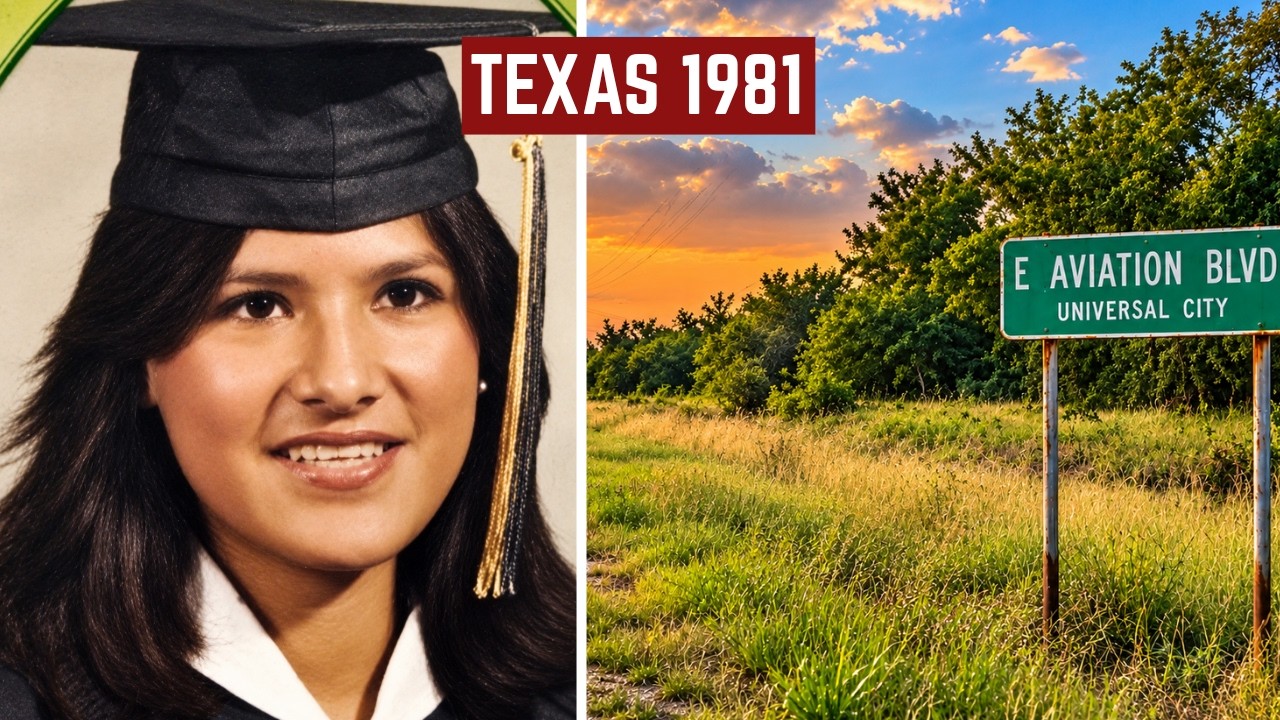
It came from a piece of biological evidence that had waited in storage since 1981, and from a scientific technique that did not exist when that evidence was first collected. In the spring of 1981, Yolanda Herrera lived in Universal City, Texas, a small community northeast of San Antonio, with her grandmother, who had played a central role in raising her. Her family later described her as strong, independent, and close to those around her. She worked at a local bar called Johnny N’s, a routine job in a town where the same faces appeared night after night.
On the night of April 10, 1981, Yolanda was at the bar as usual. By the time her shift ended, it was the early hours of Saturday, April 11. Around 2:30 a. m.
, witnesses saw her leave the building alone, walking toward home along a route she knew well. She never arrived. There was no word from her that Saturday or Sunday. On the morning of Monday, April 13, two children walking to school near East Avenue Drive noticed something off the road in a grassy area that was not easily visible to passersby.
They alerted an adult, and police were called. What they found was Yolanda. Investigators treated the scene as a murder investigation, and an autopsy concluded that she had died from blunt force injuries and that she had been assaulted before her death. During that autopsy, investigators collected physical evidence from her body, including scrapings from under her fingernails and a biological sample.
It was a standard procedure meant to preserve anything that might later identify a suspect, even though no method existed at the time to interpret it. In 1981, DNA testing did not exist as an investigative tool. Investigators had biological material directly linked to the person responsible for the crime, but they had no way to turn that material into a name. What they had instead was a timeline with a two-day gap, and no witness stepped forward to fill it.
Universal City was the kind of place where a young woman walking a familiar route in the early morning was not an unusual sight. This time, something interrupted her. With no scientific means to identify a suspect, investigators did what they could. They interviewed coworkers, acquaintances, and anyone who might have crossed paths with Yolanda in the hours before her disappearance.
They followed names, checked alibis, and pursued leads. None produced enough evidence to identify the person responsible. They also examined the physical scene and the route she would have taken from Johnny N’s, but without witnesses and without forensic science to link a stranger to the crime scene, that work yielded nothing further. The case went from an active investigation to an unsolved one, not because investigators stopped looking, but because they had reached the limits of what 1981 technology could offer.
The file was never closed, but it stopped moving forward. Decades passed before the case moved again. In late 2020, the Yolanda Herrera file was classified as eligible for an initiative under the Texas Department of Public Safety, a program designed specifically to take old, unsolved sexual assault cases and resubmit their evidence for modern forensic examination. Texas Rangers and the Universal City Police Department submitted the preserved evidence from Yolanda’s autopsy for advanced DNA analysis.
By 2021, forty years after her death, that test produced something investigators had never had: a usable male genetic profile. They compared that profile against every available database, built from arrests, convictions, and prior law enforcement contact across the country. There was no match. No name.
No prior record connecting the DNA to anyone in the system. That result created a new kind of problem. Investigators now had a genetic fingerprint directly linked to Yolanda’s case, but a DNA profile without a comparison point is only information. It could not be arrested, questioned, or made to say where to look next.
After the database search came up empty, investigators turned to a specialized laboratory called Bud Technology. In 2021, the lab ran a familial search on the profile, a genetic method that looks for family connections rather than a direct database match. That search revealed something: a thin thread pointing to a possible family surname associated with the unknown man. But there was a serious limitation.
The amount of usable DNA remaining from the 1981 sample was extremely small. Decades of storage, along with the minimal material that could be recovered in the first place, meant every test consumed part of what remained. Bud’s assessment was direct: continuing to test the sample at that time carried real risk. If another round of tests failed to produce a usable result, there might not be enough material left to try again, ever.
The thread they had was not strong enough to justify that risk. Investigators faced a decisive choice. Proceed now with limited genetic tools and risk losing the only physical evidence linking anyone to Yolanda’s case, or preserve what remained and wait for the science to improve. They chose to wait.
The case stayed open, and investigators continued working it by other means, but the DNA sample itself returned to storage untouched for several more years while the technology needed to finish the job caught up with what they already had. By 2025, the Yolanda Herrera case had become one of 13 priority cold case murders that the Texas Rangers were actively working to solve. That year, investigators sent the remaining DNA sample to a laboratory called Astreum, based in The Woodlands, Texas. Astreum specialized in exactly this kind of case: samples too small, too degraded, or too old for traditional forensic testing to handle.
By 2025, the lab had already helped identify suspects or victims in dozens of Texas cases using the same method. That method was investigative genetic genealogy. A standard database search looks for an exact match, someone whose DNA is already in the files. Genetic genealogy works differently.
It takes an unknown DNA profile and searches for genetic relatives instead, people who share portions of that DNA through family lines. Investigators then build family trees, branch by branch, narrowing possible identities until one name fits every piece of the puzzle. It is slower than a direct database match, and it depends heavily on how much documented family history is publicly available, but it works precisely in cases where a direct match never will, cases where the person responsible has no criminal record to search against. Despite the limited material, Astreum was able to build a profile strong enough to run through this process.
The search narrowed. It led investigators to a name that had never appeared at all during more than four decades of investigation: Kelly Lee Brower Sr. Genetic genealogy does not prove a conviction. It does not explain what happened, and it does not place a person at a crime scene.
What it does is point investigators toward a specific person, someone worth investigating directly out of millions of possible candidates. But a name from a family tree was not evidence in itself. Before investigators could treat Kelly Lee Brower Sr. as more than a lead, they had to connect him personally and directly to the DNA that had waited 44 years to be understood.
Investigators began to build a picture of who Kelly Lee Brower Sr. actually was. In 1981, Brower was 23 years old, the same age as Yolanda Herrera. Public records showed he was living in Universal City at the time of her death, in the same community where she had spent her entire life.
Records also showed his son was born in Bexar County in 1980, confirming he was living in the area a year before Yolanda’s death. Then, in early 1982, only months after Yolanda’s murder, Brower left Texas. He moved to Seattle, Washington, before finally settling permanently in Cottonwood, Arizona, where he continued to live under his real name for decades. When investigators looked into his background, they found almost nothing.
Brower had one prior recorded arrest for theft. Aside from that single incident, he had no other documented criminal history, no pattern of violence, no prior record of sex crimes. According to every available record, he spent four decades as an ordinary resident of three different states. He had a job.
He paid rent or a mortgage under his own name. He appeared in public records the way anyone does, simply by living his life, filing paperwork, registering a vehicle, and staying in one place long enough to become a neighbor. This created a real problem for investigators trying to understand the case. Genetic genealogy had pointed directly to him, and investigators now believed DNA linked him to a case that had remained unsolved since the year he left Texas.
But nothing else in his documented history suggested a reason for that. A family tree had found him. Proving that connection was real required something investigators did not yet have: his own DNA. A name from a family tree was not enough to move forward.
Investigators needed a direct comparison, a match between Brower’s DNA and the evidence preserved since 1981. Investigators traveled to Cottonwood, Arizona, and began surveillance on Brower’s home, confirming his identity and routine over several days. During that surveillance, investigators recovered a discarded Coors Light can from Brower’s trash and sent it for DNA analysis. That can was sent to Bud Technology, the same lab that had worked on the case years earlier, for a direct comparison with the male DNA profile preserved from Yolanda Herrera’s autopsy.
The results took months to arrive. In February 2026, the comparison came back. The DNA profile extracted from the Coors Light can matched the male DNA profile that had been preserved as evidence since 1981. Genetic genealogy had given investigators a name.
Now a lab had given them a direct DNA match. What it had not given them yet was an explanation. For that, they had to hear the truth from Brower himself. By August 2026, Brower was already in custody in Arizona on an unrelated matter.
On August 19, while still held on that separate charge, the Cottonwood Police Department conducted an initial interview with him about Yolanda Herrera. When asked, Brower denied knowing her. For investigators, that denial was not the end. It was only the starting point.
They had spent years building a case based on physical evidence, not statements, and the DNA already placed him at the heart of the investigation. Afterward, Texas Rangers and Universal City Police conducted their own interviews with Brower, separately from the first one. According to investigators, these were multiple sessions, each returning to the same underlying question: what happened to Yolanda Herrera in the early hours of April 11, 1981? During those interviews, Brower’s account changed.
According to Universal City Police, Brower confessed to killing Yolanda Herrera. Investigators did not publicly release the full contents of those interviews. Detective Caitlin Brown, one of the investigators on the case, described what they believe happened that night as a coincidence, not the result of any prior knowledge between the two. Brower was reportedly at the bar that night.
According to investigators, there was no indication either of them knew the other before that night. Texas Ranger Christopher Thomas prepared the case file for an arrest warrant, presenting the accumulated evidence, the genetic match, the surveillance results, and Brower’s confessions during interrogation to support a charge of murder. On that same day, August 19, 2026, once the warrant was issued, Brower was formally detained on the murder charge in Texas, separately from the other case that had led to his detention in Arizona. Because the charge originated in Texas, the case required extradition, the formal process of transferring a person from one state’s custody to another.
In cooperation with the Bexar County Sheriff’s Office, authorities arranged for Brower’s transfer to Texas jurisdiction. Brower was extradited to the Bexar County Jail, where he remained in custody. His bail was set at one million dollars. On August 25, 2026, six days after his arrest, the Universal City Police Department held a press conference to officially announce the outcome of the case to the public.
Investigators described the announcement as the product of a commitment that lasted four and a half decades, beginning with the original investigation in 1981, through the testing, the decision to preserve, and the genealogical work that finally tied Brower to the evidence. At the time of the report, it remained publicly unclear whether Brower had retained defense counsel. A pre-indictment hearing was scheduled for December 12, 2026, a procedural step preceding the formal filing of charges. Kelly Lee Brower Sr.
has been charged with murder. He has not been convicted. Under the law, he is presumed innocent unless the court determines otherwise. Whether the evidence will lead to a conviction is now a matter for the Texas judicial system to decide.
Behind the forensic timeline was a longer, more personal one, measured not in lab results but in years of family waiting. Assistant Chief of Police Steve Mahalsky had worked on the Yolanda Herrera case since 2009, seventeen years before an arrest was made. For him, the case was never closed, even in the years when there were no new leads to follow. He later described the outcome as gratifying, knowing that investigators had never given up on Yolanda or her family.
For Yolanda’s family, those same years carried a different weight. At one point, investigators told them that the person potentially involved in the case had died, a development that convinced the family the case might never be solved. It was a false lead. Yolanda’s cousins, Mary Gonzalez and Dwayne Scoggins, lived with that uncertainty for years.
When the arrest was finally announced, they spoke publicly for the first time about what it meant for their family, describing Yolanda not as a case file but as the person they remembered. Before the public announcement, investigators visited Yolanda’s grave to tell her first. The DNA linked to Yolanda Herrera’s case had existed since 1981. The man whose DNA it was had lived openly under his real name in Texas, then Washington, then Arizona, for more than four decades.
No one had connected the two for 45 years. At every stage, different limitations stood in the way. In 1981, DNA testing did not exist as an investigative tool at all. By 2021, it existed but required a match with someone already in a database, and nothing linked him to any of them.
That same year, the sample was too limited to risk further testing, so investigators chose to preserve it rather than exhaust it chasing an uncertain result. What changed was not the evidence. It was the technology designed to interpret it. Investigative genetic genealogy, developed and refined in the years since, gave investigators a way to search for family connections instead of waiting for a direct database match.
That capability did not exist when the DNA was first collected in 1981. It had to catch up. Forty-five years later, investigators say the evidence has finally been matched to a specific name.
What happens next now rests with the Texas court system.
